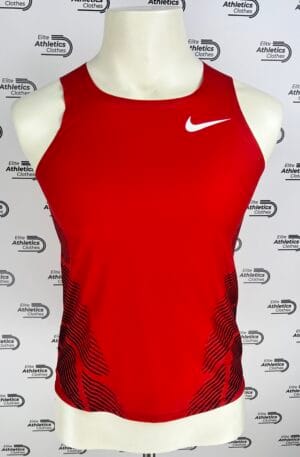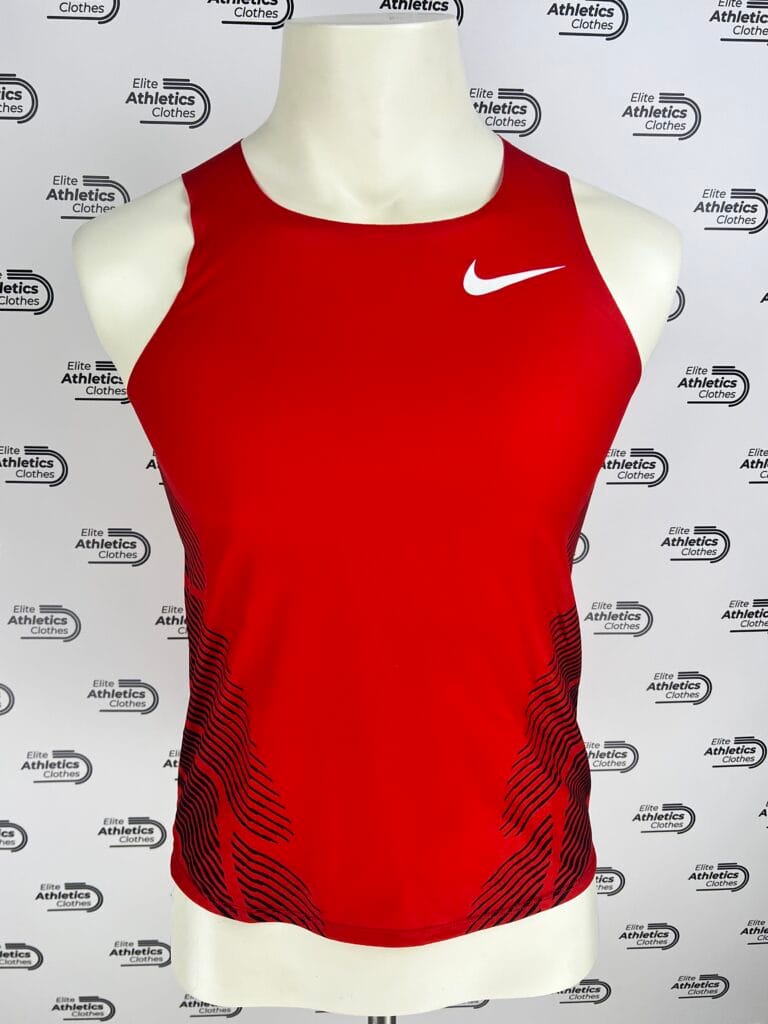
Nike Pro Elite Team 2011 Distance Singlet worn by professional athletes under contract with Nike International during the 2011 season.
Tap a crossed size and we write you the day one lands in it
Nike Pro Elite Team 2011 Distance Singlet worn by professional athletes under contract with Nike International during the 2011 season. 100% Authentic Color: Red/Black/White 100% Polyester Made in USA Worn condition
Ships from Switzerland, tracked · processed in 1–3 business days · free over €150
| Size | Chest | Waist | Hip |
|---|---|---|---|
| XXS | 72–80 | 57–65 | 72–80 |
| XS | 80–88 | 65–73 | 80–88 |
| S | 88–96 | 73–81 | 88–96 |
| M | 96–104 | 81–89 | 96–104 |
| L | 104–112 | 89–97 | 104–112 |
| XL | 112–124 | 97–109 | 112–120 |
| XXL | 124–136 | 109–121 | 120–128 |
Listed size: S · body measurements in cm, as published by Nike
Use the brand body chart as a starting point. Ask us for flat measurements of this exact piece to compare with a garment you already wear.
The Nike season of 2011 begins with a change of shirt. In February Mo Farah, an adidas athlete until then, announced he was moving to Portland to train under Alberto Salazar at the Nike Oregon Project; his first race in a Nike uniform was the New York City Half Marathon on 20 March. Galen Rupp, the group's American, had been there since turning professional with Nike in 2009.
The two nights that define the year came in pairs. In Monaco on 22 July, Farah won the 5000 m in 12:53.11, a British record, with Bernard Lagat one stride behind in 12:53.60, an American record: two Nike athletes, 0.49 s apart, both records in the same race. In Brussels on 16 September, Kenenisa Bekele — a Nike athlete for two decades — ran the fastest 10,000 m of the year, 26:43.16, and Rupp finished third in 26:48.00, an American record.
A distance singlet is a lightweight, sleeveless racerback vest built for one job: racing long, from the 5,000 m to the marathon. It trims a running top to the least fabric that still carries a national crest and two competition bibs — typically around 85 grams, roughly half the mass of an everyday cotton tee.
The version we archive is the race-issued one: the same federation kit an athlete pulls on in a World Championship final, not the replica hanging in a retail store.