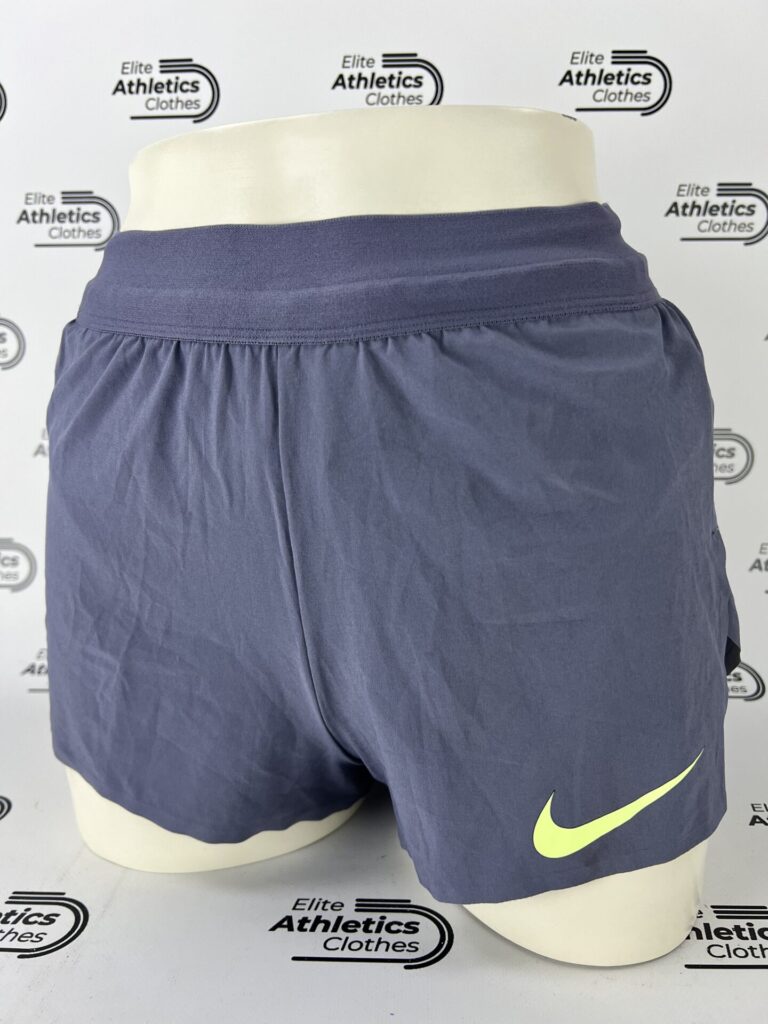
Nike Pro Elite Team 2024 Women Running Shorts used by the professional athletes contracted by the Nike International Team during the 2024 season.
Tap a crossed size and we write you the day one lands in it
Nike Pro Elite Team 2024 Women Running Shorts used by the professional athletes contracted by the Nike International Team during the 2024 season. 100% Authentic Color: Smoke Grey/Luminous Green 88% Polyester - 12% Spandex Dri-Fit ADV Inner Briefs Elastic waistband with drawstrings for a perfect fit Made in USA
Ships from Switzerland, tracked · processed in 1–3 business days · free over €150
| Size | Chest | Waist | Hip |
|---|---|---|---|
| XXS | 70–76 | 54–60 | 78–84 |
| XS | 76–83 | 60–67 | 84–91 |
| S | 83–90 | 67–74 | 91–98 |
| M | 90–97 | 74–81 | 98–105 |
| L | 97–104 | 81–88 | 105–112 |
| XL | 104–114 | 88–98 | 112–120 |
| XXL | 114–124 | 98–108 | 120–128 |
Listed size: XS · body measurements in cm, as published by Nike
Use the brand body chart as a starting point. Ask us for flat measurements of this exact piece to compare with a garment you already wear.
The 2024 generation had a launch, and the launch had an argument. On 11 April, at its Nike On Air show in Paris, Nike showed the Team USA track and field kit for the Olympic season — close to fifty pieces, twelve competition styles — and one of them, a women's unitard cut high enough on the mannequin to bare the hip, went around the world within hours. Lauren Fleshman called it a costume born of forces that no longer needed to be indulged to get eyes on women's sport; the steeplechaser Colleen Quigley said it was not made for performance. Nike's answer was the catalogue: athletes choose from the range, and pole vaulter Katie Moon, among others, said so publicly. The unitard was one option among twelve. It was also the first time in years that an athlete-issue kit had made the news for its cut.
Underneath the argument the cycle did what Nike cycles do: it went fast against the clock.
Racing shorts are lightweight split-seam shorts built for track and road racing: a woven shell of roughly 64–92 grams, a built-in brief liner instead of underwear, and an open outer seam that frees the leg at full stride.
The split itself has a birthday. British marathoner Ron Hill tore his side seams open in frustration, won the 1970 Boston Marathon, and founded Ronhill that September to sell the fix. Every race-issued pair in this archive descends from that pair of scissors.