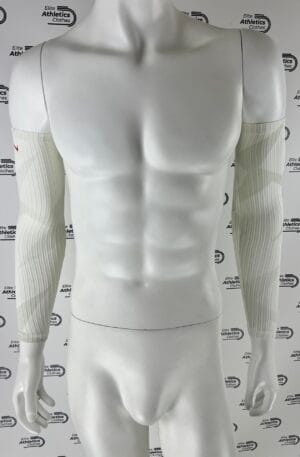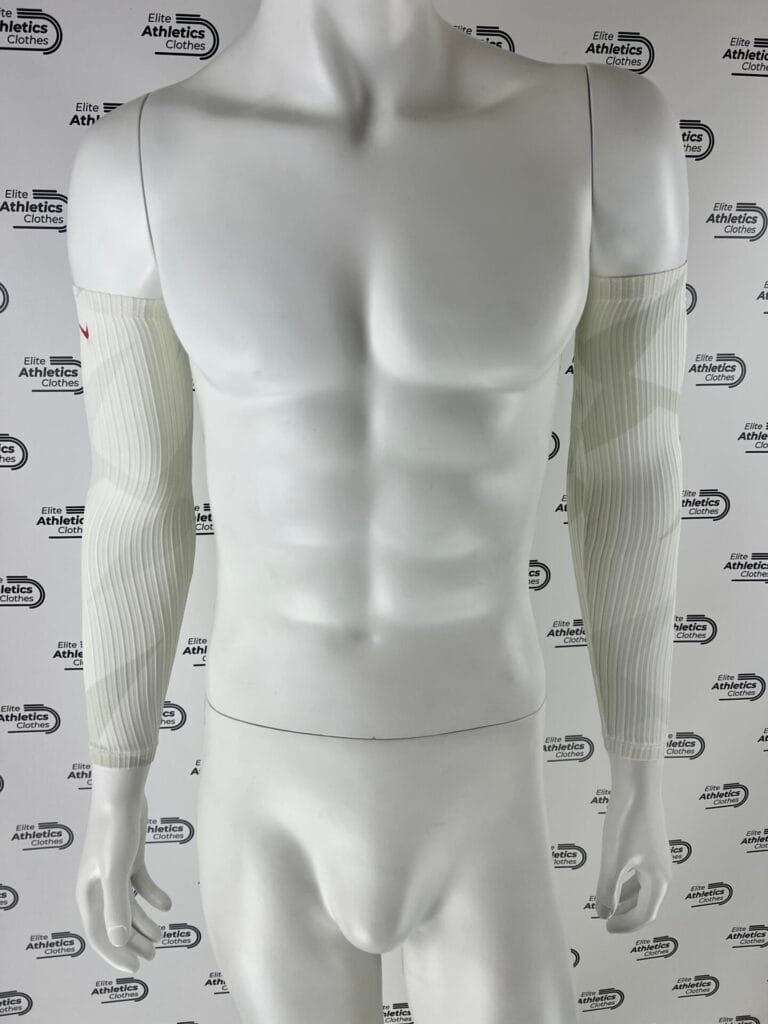
Nike NN Running Team Pro Elite 2022 Arm Sleeves worn by the professional athletes of the world famous NN Running Team during the 2022 season.
Tap a crossed size and we write you the day one lands in it
Nike NN Running Team Pro Elite 2022 Arm Sleeves worn by the professional athletes of the world famous NN Running Team during the 2022 season. • 100% Authentic • Color: White/ Neon-orange/Grey • 89% Polyester - 11% Elastane • Made in USA
Ships from Switzerland, tracked · processed in 1–3 business days · free over €150
Arm sleeves are sized by arm circumference. Ask us for measurements of this exact piece if you need help choosing.
Listed size: S
Ask which NN season was the strongest top to bottom and 2022 wins the argument: a world record, a Tokyo Marathon course record, a Dutch record at the home marathon, a London title and an Amsterdam course record — in the first year the kit carried the INEOS mark full-time.
The season opened with the January INEOS partnership and Kipchoge's Tokyo Marathon win, and closed with his second Berlin world record: 2:01:09 on 25 September. In between, the championships of July were raced in federation kit — Cheptegei in Uganda's, Gidey in Ethiopia's — and live in our country pages, not here.
The road wing matched them: Abdi Nageeye became the first Dutch winner of the NN Rotterdam Marathon in 41 editions, in a national-record 2:04:56; Yalemzerf Yehualaw won London at 23; and Almaz Ayana won Amsterdam with a course record that stood until a team-mate broke it two years later.
Arm sleeves are removable knit tubes from bicep to wrist that give runners adjustable warmth at cool starts, UPF sun protection, light compression and — worn singly — a sprint signature. They are the most modular piece in the race kit.
Their origin is basketball: Allen Iverson's trainer cut a compression stockinette for his elbow in January 2001, Iverson scored 51 that night, and the sleeve became a league staple before crossing to marathon start lines and single-armed sprinters.
The jobs are plural: warmth without a jacket, sun protection in UPF-rated versions that block around 98% of UV, light compression, and — not to be underrated — identity. A sleeve is the cheapest way a kit says something personal inside a federation uniform.
A pair weighs less than an energy gel, which is exactly why the cold-start calculus favours them.