
South Africa
Thirty Olympic medals split by a thirty-two-year silence: Africa’s first athletics gold in 1908, eight excluded Games, the lap of honour that reopened the world — and a 43.03 world record still standing ten years on. Counted honestly, canyon and all.
South Africa has won 30 Olympic athletics medals — 9 gold, 15 silver, 6 bronze — making athletics its most successful Olympic sport. The count runs from Reggie Walker’s 100 m gold at London 1908, still the youngest 100 m champion ever, to the Paris 2024 relay silver — with an eight-Games void in the middle, 1964 to 1988, when apartheid kept the country out entirely.
This is the whole story, counted honestly: the marathon 1–2 of 1912, the expulsion and the exiles, the Meyer–Tulu lap of Barcelona, Thugwane’s three seconds, Van Niekerk’s 43.03 from lane eight, Semenya’s titles and her fight, Simbine’s eleven sub-10 seasons — and the generation that just took over in Glasgow.
South Africa’s kit history has a hard edge for collectors: Puma has dressed the federation since April 2020, which makes the adidas South Africa team apparel of 2019 a closed chapter. Two pieces of it — a women’s crop top and team cap — lead the South Africa collection at Elite Athletics Clothes.
- Federation
- Athletics South Africa · kit by Puma since April 2020; Olympic Team SA kit contracted separately
- Olympic athletics medals
- 30: 9 gold · 15 silver · 6 bronze — the country’s top Olympic sport
- The first
- Reggie Walker, 100 m, London 1908 — at 19 years 128 days, still the youngest Olympic 100 m champion
- The void
- Eight straight Games missed (1964–1988) — IOC expulsion 1970, readmission 9 July 1991
- The world record
- 43.03 — Wayde van Niekerk, Rio 2016, from lane 8; still standing in 2026
- The closest marathon
- Thugwane, Atlanta 1996 — gold by 3 seconds, the tightest Olympic marathon ever
- The streak
- Simbine: 11 consecutive sub-10 seasons (2015–2025) — a world first
- The newest first
- Sekgodiso, Nanjing 2025: the first South African woman to win world indoor gold
The Origins: Africa’s First Athletics Gold
South African athletics owns a first nobody can take back: the first Olympic athletics gold ever won for Africa, at London 1908, by a 19-year-old from Durban. Reggie Walker won the 100 m in 10.8, equalling the Olympic record — and at 19 years and 128 days he is still, well over a century later, the youngest Olympic 100 m champion in history.
The same Games produced a stranger story. Charles Hefferon — English-born, a Boer War veteran working as a prison officer in Bloemfontein — led the London marathon until the final mile and a half, lost ground after accepting a celebratory drink of champagne, and finished second in the race the world remembers for Dorando Pietri being carried over the line. Pietri was disqualified; Hefferon’s silver stood.
Athletics has been South Africa’s most decorated Olympic sport ever since: 30 medals — 9 gold, 15 silver, 6 bronze — more than swimming, more than boxing. This article counts all of them, and the thirty-two years in the middle when there were none to count.
Marathon 1–2s and the First Golden Age (1912–1960)
Stockholm 1912 gave South Africa something no other nation managed in an Olympic marathon of that era: first and second. Ken McArthur — Irish-born, a Johannesburg policeman — and Christian Gitsham ran together at the front through brutal heat that felled half the field. Gitsham stopped for water at the last control expecting his teammate to wait, as he says they had agreed; McArthur pressed on and won by 58 seconds in an Olympic record 2:36:54.
Antwerp 1920 belonged to Bevil Rudd, grandson of the co-founder of De Beers and an Oxford man with a Military Cross from the war: gold in the 400 m, silver in the 4×400, bronze in the 800 — a full set at a single Games. Sydney Atkinson turned Paris 1924 hurdles silver into Amsterdam 1928 gold. And in 1952 the women arrived: Esther Brand won the high jump in Helsinki and Daphne Robb-Hasenjäger took 100 m silver at the same Games.
Malcolm Spence’s 400 m bronze in Rome 1960 reads, in the medal table, like any other line. It was the last one for thirty-two years.
South Africa’s Greatest Athletes
Six careers carry most of the modern story: a world record holder who rebuilt himself as a relay man, a two-time Olympic champion whose fight moved from the track to the courts, the most consistent sprinter of his generation, a coalminer who won the closest Olympic marathon ever, the woman whose lap of honour reopened the world, and a world champion the sport lost far too soon.
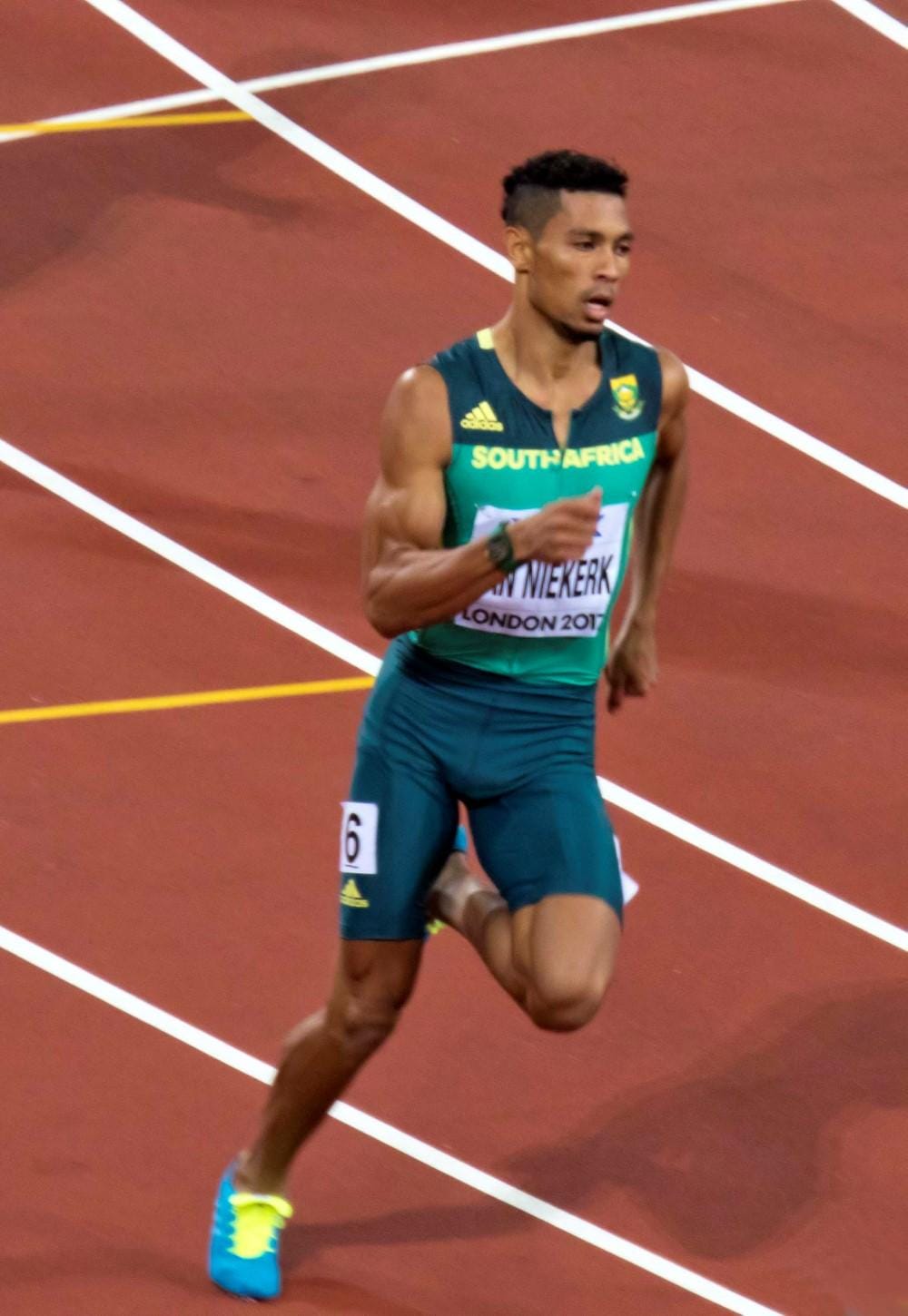
Wayde van Niekerk
The world record holder. 43.03 from lane eight in Rio 2016 — the run that broke Michael Johnson’s 1999 mark and still stands ten years later — plus world titles in 2015 and 2017. A torn ACL from a charity touch-rugby game in October 2017 took the rest of that version of him; the 4×400 bronze at the Tokyo 2025 Worlds, his first global medal in eight years, closed the loop.
Caster Semenya
Two Olympic and three world 800 m titles between 2009 and 2017 — the London 2012 and Daegu 2011 golds awarded after the doping disqualification of Mariya Savinova was finalised in 2017. Her 1:54.25 and 49.62 national records both still stand. Since the DSD regulations took effect in May 2019 she has not raced a championship 800 m; today she coaches, and her athlete Glenrose Xaba holds the national marathon record.
Akani Simbine
Eleven consecutive seasons under 10 seconds, 2015 to 2025 — no other man in history has more than ten. Fifth, fourth and fourth in three Olympic 100 m finals, the last a 9.82 national record that still missed the podium — and then, forty minutes short of heartbreak becoming a career theme, the Paris relay silver at last: 37.57, an African record, with him on the anchor.
Josia Thugwane
Atlanta 1996: gold by three seconds over Lee Bong-ju, still the closest Olympic marathon ever run — and the first Olympic title won by a Black South African. A coalmine worker from Bethal, he had been shot in a carjacking five months before the Games. He defended the national title he had won before Atlanta and retired into quiet legend.
Elana Meyer
The silver that reopened the world: Barcelona 1992, 10,000 m, behind Derartu Tulu — and the shared barefoot-to-flag lap of honour that became the image of Africa’s sporting reconciliation. World half-marathon champion in 1994; her 5000 m and 10,000 m national records from the mid-90s still stand.
Mbulaeni Mulaudzi
Athens 2004 silver, world indoor champion the same year, and world champion outdoors in Berlin 2009 at 1:45.29. He was killed in a car crash in October 2014, aged 34, driving to an Athletics South Africa meeting — the sport’s hardest loss of that decade.
The pattern across the six is the South African pattern in miniature: world-class speed and world-class adversity, rarely one without the other.
The Missing Eight Olympiads (1964–1988)
No history of this team is honest without its central absence. In 1964 the IOC revoked South Africa’s invitation to the Tokyo Games when its Olympic committee refused to renounce the state’s racial segregation of sport. A 1968 attempt at conditional re-admission collapsed under a continent-wide boycott threat within months. In May 1970 the IOC expelled South Africa’s Olympic committee outright, by 35 votes to 28 — and for eight consecutive Games, from Tokyo 1964 to Seoul 1988, there was no South Africa on an Olympic track.
Thirty medals, and a canyon in the middle
Every South African Olympic athletics medal, one block each, 1908–2024. The hatched band is the story no other athletics nation has at this scale: eight straight Games missed — not for lack of runners, but by exclusion. Hover or tab onto a Games for its medallists. Source: Wikipedia & Olympedia medal lists, cross-checked August 2026.
View the medal data
| Games | Medals | Detail |
|---|---|---|
| 1908 | 2 | London 1908 · Walker gold, 100 m (still the youngest champion) · Hefferon silver, marathon |
| 1912 | 2 | Stockholm 1912 · McArthur gold & Gitsham silver — a marathon 1-2 |
| 1920 | 3 | Antwerp 1920 · Rudd: 400 m gold, relay silver, 800 m bronze |
| 1924 | 2 | Paris 1924 · Atkinson silver (110 mH), McMaster bronze (10 km walk) |
| 1928 | 1 | Amsterdam 1928 · Atkinson gold, 110 m hurdles |
| 1932 | 1 | Los Angeles 1932 · Clark bronze, 80 m hurdles |
| 1936 | — | Berlin 1936 — no athletics medal |
| 1948 | — | London 1948 — no athletics medal |
| 1952 | 2 | Helsinki 1952 · Brand gold (high jump), Robb-Hasenjäger silver (100 m) |
| 1956 | — | Melbourne 1956 — no athletics medal |
| 1960 | 1 | Rome 1960 · Spence bronze, 400 m — the last medal before the door closed |
| 1992 | 1 | Barcelona 1992 · Meyer silver, 10,000 m — the return, and the shared lap of honour with Tulu |
| 1996 | 2 | Atlanta 1996 · Thugwane gold (marathon, by 3 seconds), Sepeng silver (800 m) |
| 2000 | 3 | Sydney 2000 · Cloete silver (HJ), Herbert & Kruger bronze |
| 2004 | 2 | Athens 2004 · Cloete silver (HJ), Mulaudzi silver (800 m) |
| 2008 | 1 | Beijing 2008 · Mokoena silver, long jump |
| 2012 | 1 | London 2012 · Semenya gold, 800 m — awarded after the 2017 doping disqualification of the winner |
| 2016 | 4 | Rio 2016 — the best Games ever · Van Niekerk gold + WR 43.03, Semenya gold · Manyonga & Viljoen silver |
| 2020 | — | Tokyo 2020 (2021) — no athletics medal; Simbine 4th in the 100 m |
| 2024 | 2 | Paris 2024 · The relay silver (37.57 AR) and Van Dyk’s javelin silver |
| 1964–1988 | 0 | Excluded: invitation revoked 1964, IOC expulsion by 35–28 vote in 1970, readmission 9 July 1991 |
The isolation years produced their own exile stories, none stranger than Zola Budd’s: a barefoot teenage prodigy who broke the 5000 m world best inside South Africa in 1984 — a mark the IAAF refused to ratify — was rushed to British citizenship by a newspaper campaign, collided with Mary Decker in the most replayed race of the Los Angeles Games (the jury cleared her), set a ratified world record and won two world cross-country titles in British colours, and finally ran for South Africa itself at Barcelona 1992. Readmission had come on 9 July 1991, after the repeal of the Population Registration Act.
The Return (1992–2009)
The return has one defining image. Barcelona, 7 August 1992: Derartu Tulu of Ethiopia wins the 10,000 m — the first Black African woman to take individual Olympic gold — and Elana Meyer of South Africa takes silver in her country’s first Games in 32 years. The two ran the lap of honour hand in hand. Meyer said later that it was not the 25 laps of the race that mattered, but the 26th.
Atlanta 1996 turned return into triumph. Josia Thugwane, a coalmine worker who had survived a shooting five months earlier, won the marathon by three seconds — still the closest Olympic marathon finish ever — and became the first Black South African Olympic champion, with Hezekiél Sepeng adding 800 m silver behind Vebjørn Rodal. Sydney 2000 brought three medals, Athens 2004 two more — including Mbulaeni Mulaudzi’s 800 m silver, upgraded to a world title in Berlin five years later. Sepeng’s 1:42.69 from 1999 still leads the national 800 m list; today he runs Athletics South Africa’s high-performance programme.
Wayde van Niekerk and Lane Eight
Rio de Janeiro, 14 August 2016. Wayde van Niekerk, drawn in lane eight where no one wins anything, ran the entire 400 m final blind to the field and stopped the clock at 43.03 — Michael Johnson’s seventeen-year-old world record gone by fifteen hundredths. No man has run faster since; in August 2026 the record is ten years old. Around it he stacked world titles in 2015 and 2017 and a 200 m world silver.
Fourteen months after Rio, a charity touch-rugby game at Newlands tore his right ACL, and the second half of his career became a long negotiation with what remained. The payoff finally came in Tokyo in September 2025: running the third leg of the 4×400 final, he anchored South Africa’s push to bronze in 2:57.83 — his first global medal in eight years, on a night Botswana won its first world title and the USA needed a photo-finish to stay second. He has since stepped away from the 400 as an individual event; a hip injury took him out of the 2026 national championships and World Relays, and at 34 he says he is resetting for what remains.
Caster Semenya: Titles, Courts and a Coaching Life
The facts first, because they need no decoration. Caster Semenya won the world 800 m title at 18 in Berlin in 2009, again in 2011 — awarded after the winner’s doping disqualification — and outright in London in 2017. She is a two-time Olympic champion: Rio 2016 on the track, London 2012 by reallocation after the same Russian athlete’s results were annulled in 2017. Her 1:54.25 over 800 m and 49.62 over 400 m are both still South African records.
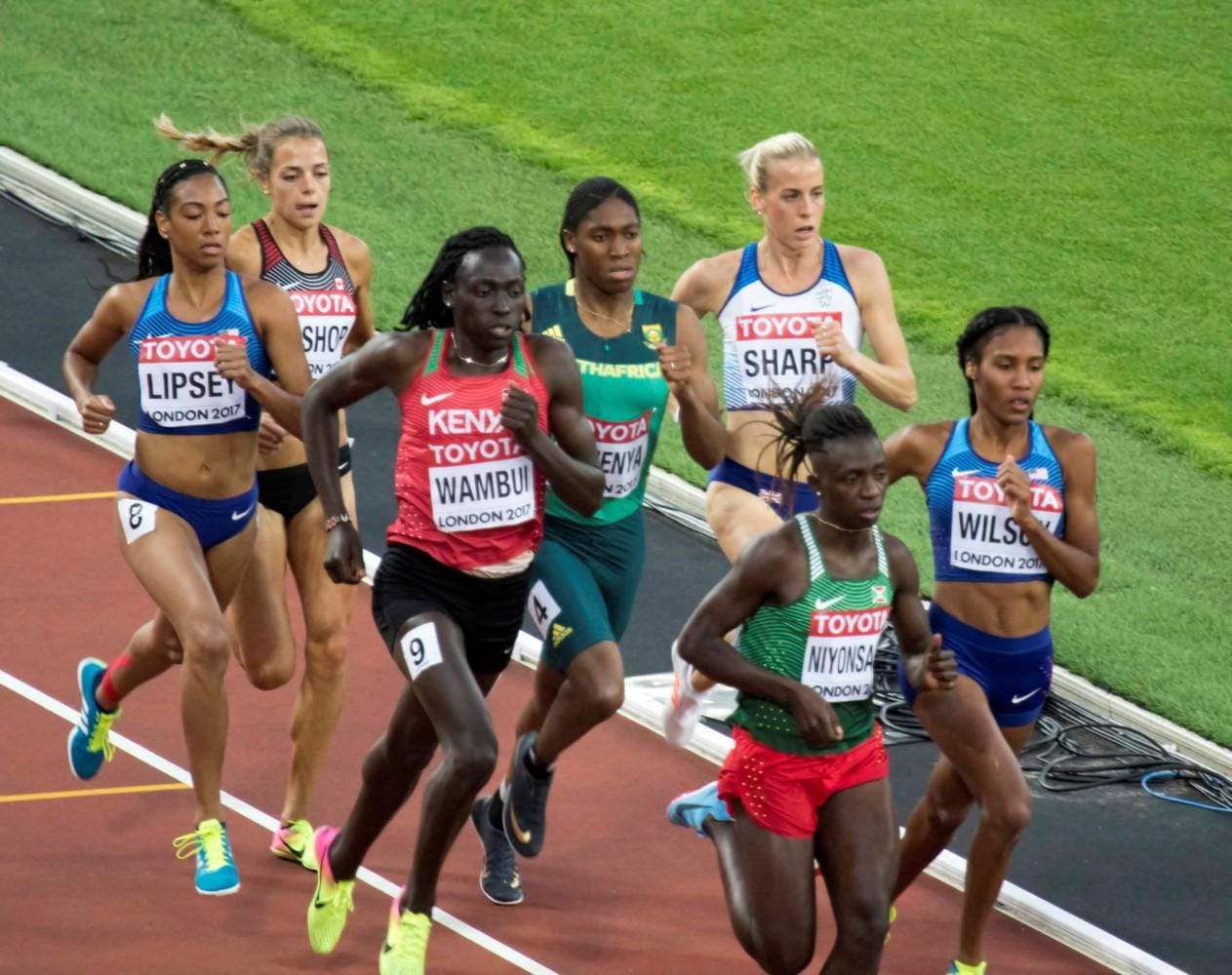
On 8 May 2019, World Athletics’ DSD regulations took effect, requiring athletes with certain differences of sex development to medically suppress testosterone to race the women’s 400 m through the mile. Semenya declined medication and has not run a championship 800 m since. Her legal challenge reached the European Court of Human Rights, whose Grand Chamber ruled 15–2 in July 2025 that Switzerland had denied her a fair hearing — a finding that did not strike down the regulations, which remain in force while the case returns through the Swiss courts. She has moved her competitive life to the other side of the stopwatch: among the athletes she now coaches is Glenrose Xaba, who broke the South African women’s marathon record in Cape Town in October 2024.
The Current State: Relays, Records and a Drought Broken
The present era answers to one name first. Akani Simbine has broken 10 seconds in eleven consecutive seasons, 2015 through 2025 — the only sprinter in history to do it, one clear of Usain Bolt — and spent most of that decade collecting fourth places in finals: fifth in Rio, fourth in Tokyo, fourth in Paris despite a 9.82 national record. The debt was paid on 9 August 2024: Bayanda Walaza, Shaun Maswanganyi, Bradley Nkoana and Simbine ran 37.57, an African record, for Olympic 4×100 silver — South Africa’s first athletics medal since 2016.
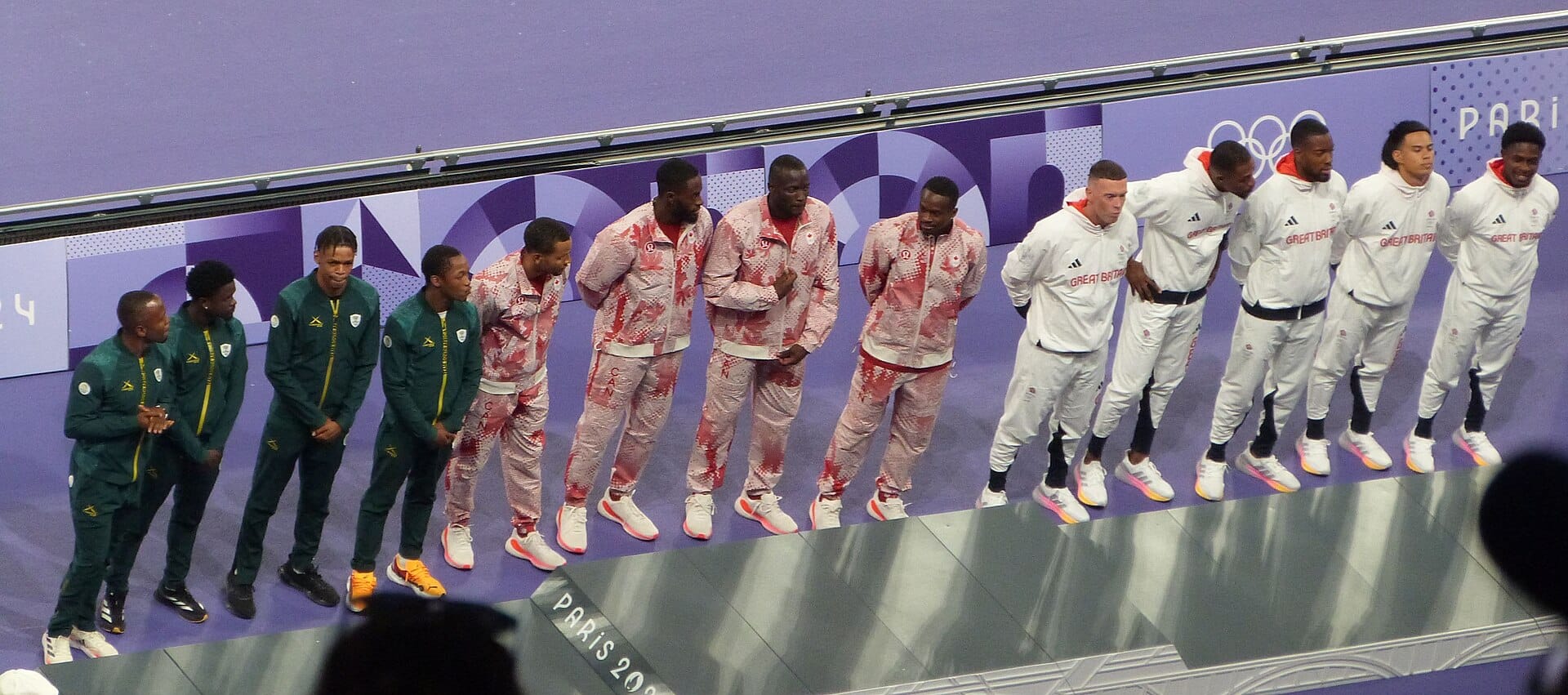
The momentum has held. At the 2025 World Relays in Guangzhou, Simbine anchored the 4×100 to gold in the country’s best-ever haul at the event. At the Tokyo 2025 World Championships the team won bronze in the 4×400 — Pillay, Okon, Van Niekerk, Nene — ending a medal drought at the Worlds that stretched back to London 2017, with two men in the 100 m final and Nene fifth over 400. In March 2025 Prudence Sekgodiso became the first South African woman to win world indoor gold, taking the 800 m in Nanjing in 1:58.40. And Luvo Manyonga — Rio silver medallist, 2017 world champion, then lost to addiction and a four-year whereabouts ban that ended in December 2024 — returned at 35 to jump 8.15 for African Championships gold in May 2026, one of the sport’s cleanest redemption arcs.
At the Glasgow 2026 Commonwealth Games, with Simbine deliberately stepping aside from the individual 100 m to give the next generation room, Sinesipho Dambile won the 200 m in 19.96 and Zakithi Nene took 400 m bronze. The pipeline behind them is the deepest since readmission: Walaza has already run 9.89 this year at 20.
The kit under all of this has its own timeline. Puma has dressed Athletics South Africa since April 2020 at world-level events, while the Olympic Team SA kit runs on a separate track — Mr Price Sport from Tokyo 2020 through Paris 2024. Which is exactly what makes a 2019-dated South Africa team piece a closed chapter: the South Africa collection holds adidas team apparel from the final season before the Puma era began — the season told in full in South Africa 2019.
Future Stars and Emerging Talents
For the first time since readmission, South Africa’s next generation arrived before the previous one left. The handover is happening in real time — Simbine literally stood aside in Glasgow to let it — and it is sprint-deep in a way the country has never quite been.
Bayanda Walaza
The Paris 2024 relay silver medallist ran 9.89 in 2026, among the fastest in the world this year, before a hamstring strain in the qualifying window cost him the Glasgow Commonwealth Games. Double world U20 sprint champion in 2024; the heir apparent Simbine has publicly made room for.
Sinesipho Dambile
Commonwealth champion in Glasgow in August 2026 with 19.96 — South Africa’s only athletics gold of those Games — after anchoring the World Relays-winning 4×100 in Guangzhou in 2025 and making the Tokyo 2025 world final.
Zakithi Nene
Fifth in the Tokyo 2025 world 400 m final in the rain, bronze on the closing leg of the world-championship 4×400 alongside Van Niekerk, and Commonwealth bronze in Glasgow 2026. The one-lap tradition — Rudd to Spence to Van Niekerk — has its next line.
Prudence Sekgodiso
The first South African woman to win world indoor gold: Nanjing, March 2025, 800 m in a world-leading 1:58.40. A hamstring injury wrecked her Tokyo 2025 outdoor campaign and kept her from defending the indoor title in 2026; she returned to racing in April.
Kyle Rademeyer
Commonwealth silver in Glasgow 2026 at 5.70 m — a podium in a discipline South Africa has rarely touched, on a team otherwise built on sprint lanes.
South Africa Records & Historic Milestones
The record book carries one line no other national list on earth can match — a reigning world record at the top of the 400 m — and, further down, marks that date every era of this story: the isolation years, the return, and a 2024–25 stretch in which the 100 m, 1500 m and both marathon records all fell.
Three milestones frame the rest. Walker’s 1908 sprint gold made him the youngest Olympic 100 m champion ever, a distinction he still holds. The Meyer–Tulu shared lap in Barcelona in 1992 remains the sport’s image of reconciliation, honoured by both athletes’ federations three decades on. And Van Niekerk’s 43.03 — ten years old, run from the worst lane on the track — is the only current men’s world record in the Olympic sprint events held by an African athlete.
Shop the South Africa Collection
South Africa is one of the nations with its own rail in the archive, and the two pieces that lead it are why: adidas South Africa team apparel dated 2019 — the last season before Puma took over the federation kit in April 2020, which makes the 2019 issue a closed chapter. Around them, the latest athlete-issued arrivals from the wider Pro Elite archive — real team-channel gear, never replicas.
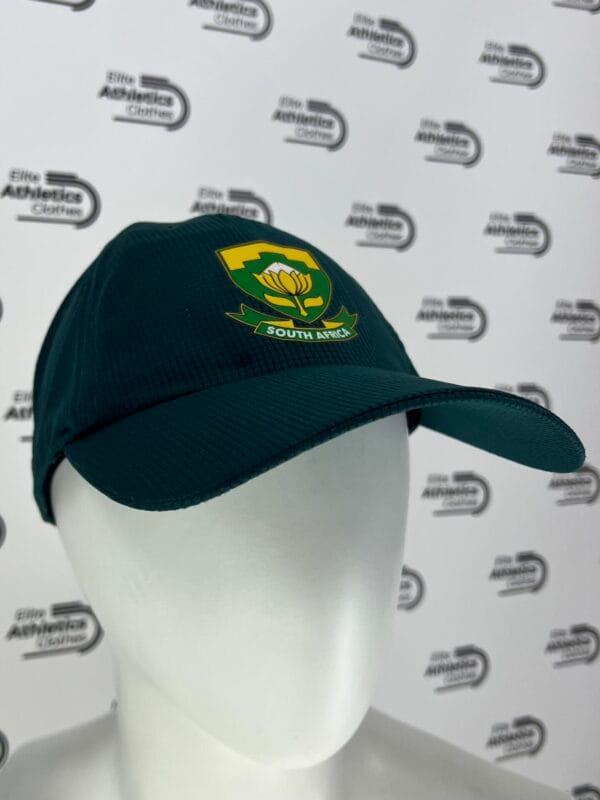 Adidas South Africa Pro Elite 2019 Running Cap120,00 €View Piece →
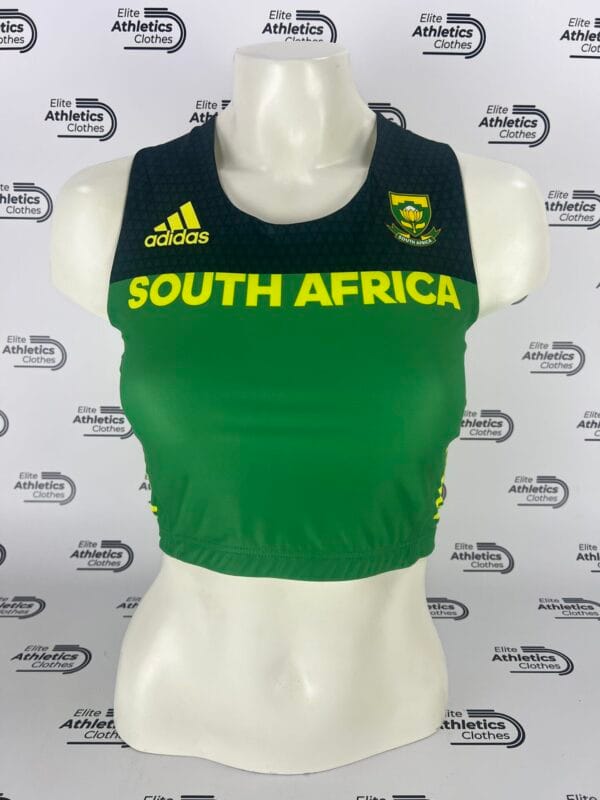 Adidas South Africa Pro Elite 2019 Women Crop Top120,00 €View Piece →
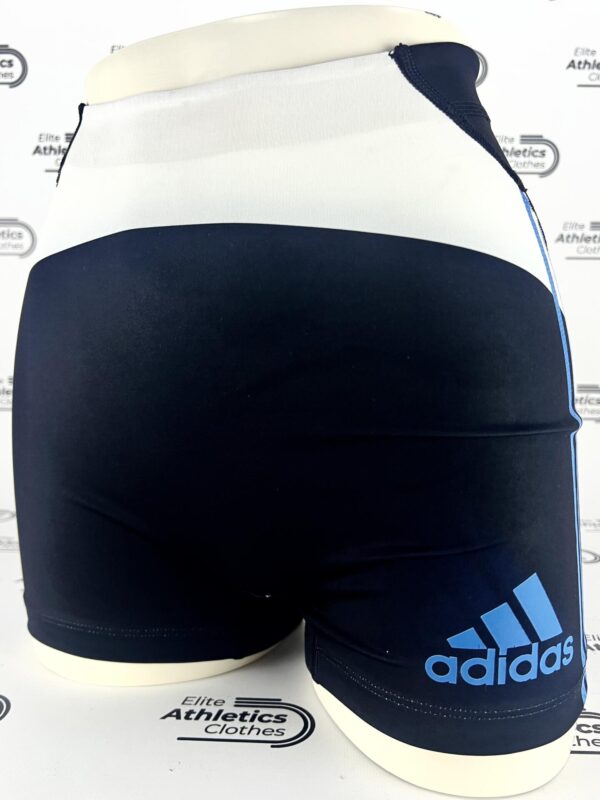 Adidas Pro Elite 2022 Women Booty Short Tights100,00 €View Piece →
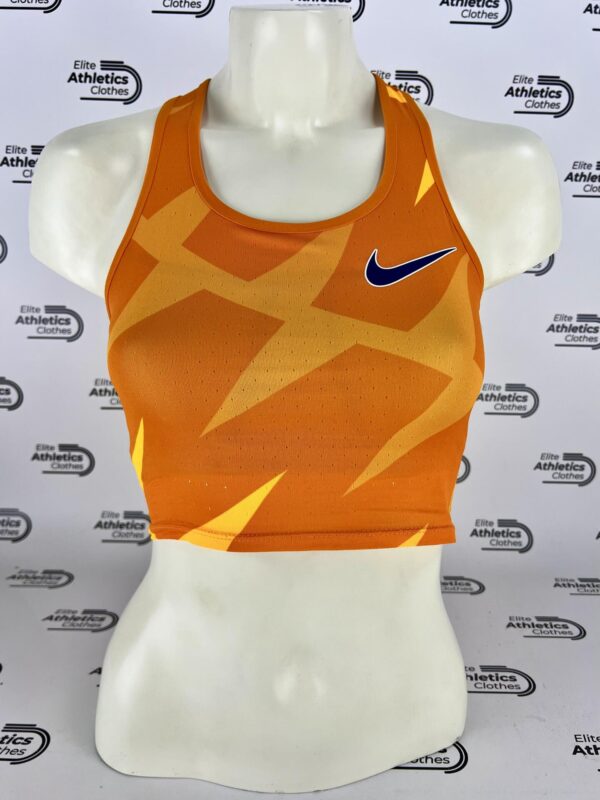 Nike Rosa & Co. Pro Elite 2020/2021 Women Crop Top140,00 €View Piece →
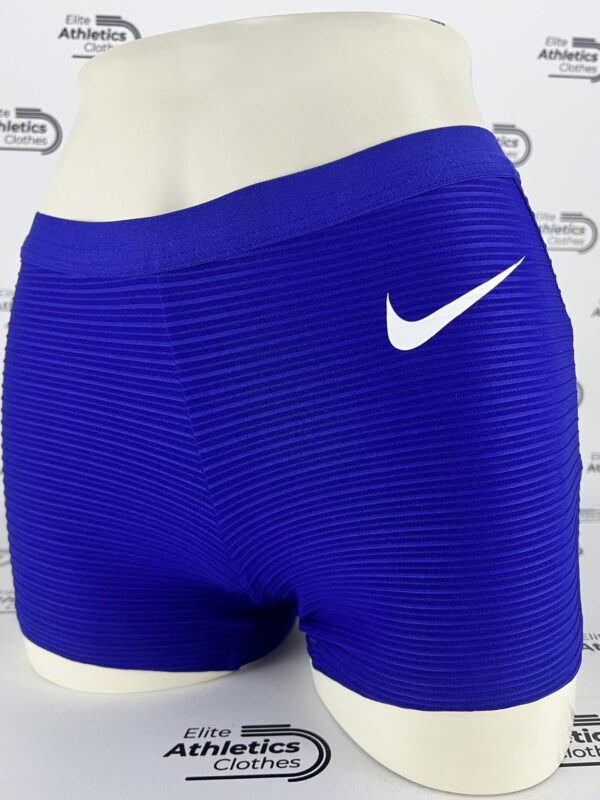 Nike Rosa & Co. Pro Elite Team 2023 Women Booty Shortly Tights150,00 €View Piece →
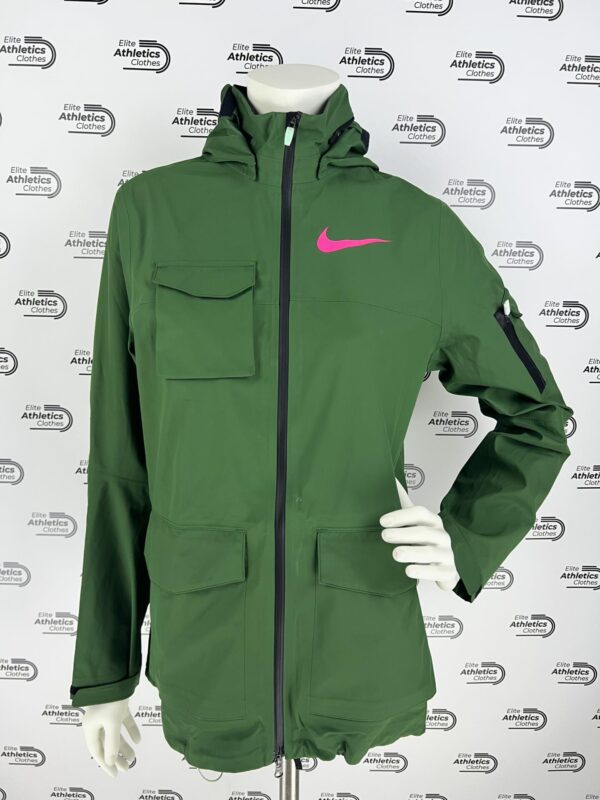 Nike Pro Elite 2023 Women Storm Fit Jacket150,00 €View Piece →
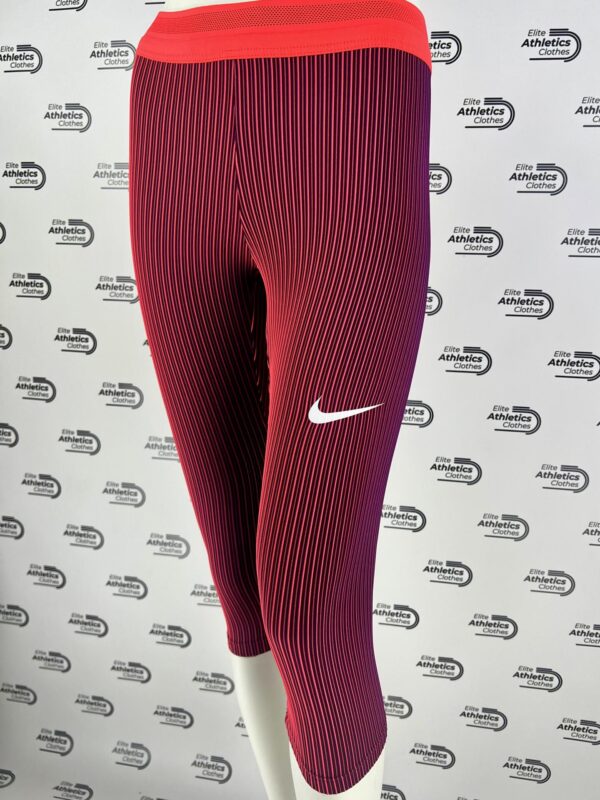 Nike Pro Elite Team 2022 Women Capri Long Tights140,00 €View Piece →
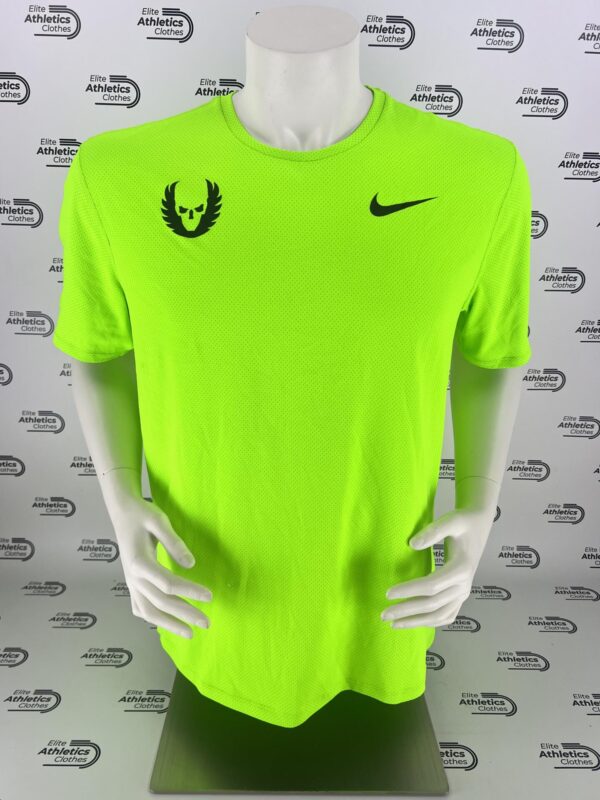 Nike Oregon Project Team Pro Elite T-Shirt240,00 €View Piece →
How many Olympic athletics medals has South Africa won?
Thirty: 9 gold, 15 silver and 6 bronze — making athletics South Africa’s most successful Olympic sport. The first came at London 1908 with Reggie Walker’s 100 m gold; the most recent are the two silvers of Paris 2024, the 4×100 relay and Jo-Ané van Dyk’s javelin.
Why did South Africa miss the Olympics from 1964 to 1988?
Because of apartheid. The IOC revoked the Tokyo 1964 invitation when South Africa’s Olympic committee would not oppose racial segregation in sport, expelled the committee altogether in 1970 by a 35–28 vote, and only readmitted the country on 9 July 1991 after the repeal of the Population Registration Act. Eight consecutive Games passed without a South African team; the return came at Barcelona 1992.
Is Wayde van Niekerk’s 43.03 still the 400 m world record?
Yes. Set in the Rio 2016 final from lane eight — breaking Michael Johnson’s 43.18 from 1999 — it remains the world record ten years on. Van Niekerk is still active at 34, though he has retired from the individual 400 m and won his most recent global medal in the 4×400 at the Tokyo 2025 Worlds.
What is Caster Semenya’s situation today?
She holds two Olympic and three world 800 m titles and still owns the national 800 m and 400 m records, but has been unable to race her event since the DSD regulations took effect in May 2019. In July 2025 the European Court of Human Rights ruled she was denied a fair hearing, though the regulations themselves remain in force. She now works as a coach.
Who is South Africa’s best sprinter right now?
Akani Simbine remains the benchmark — eleven straight sub-10 seasons, a world first, and the anchor of the Paris 2024 silver and 2025 World Relays gold quartets — but the succession is live: Bayanda Walaza has run 9.89 aged 20, and Sinesipho Dambile won the Glasgow 2026 Commonwealth 200 m title.
What kit do South African athletes wear?
Puma has supplied Athletics South Africa since April 2020 at world-level events, while the Olympic Team SA kit is contracted separately — Mr Price Sport dressed the team from Tokyo 2020 through Paris 2024. The South Africa collection at Elite Athletics Clothes holds adidas South Africa team apparel dated 2019, from the final pre-Puma season.
Where can I buy authentic South Africa athletics apparel?
Elite Athletics Clothes runs a dedicated South Africa collection, led by race-issued adidas South Africa 2019 team pieces — a women’s crop top and team cap from the closed pre-Puma chapter. Every piece is athlete-issued team gear, never a replica.
Sources and References
- South Africa at the Olympics (Wikipedia) — the 30-medal athletics count (9-15-6) and the full medal list.
- South Africa — Olympedia — independent cross-check of the athletics medal totals.
- Athletics at the 1908 Games, men’s 100 m (Wikipedia) — Walker’s gold in 10.8, equalling the Olympic record.
- Olympics.com — 100 m champions list — Walker as the youngest 100 m champion, a distinction still held.
- Charles Hefferon (Wikipedia) — the 1908 marathon silver and the champagne story.
- Athletics at the 1912 Games, men’s marathon (Wikipedia) — the McArthur–Gitsham 1-2 and the 2:36:54 Olympic record.
- Apartheid-era South Africa and the Olympics (Wikipedia) — the 1964 revocation, 1968 reversal, 1970 expulsion (35–28) and 1991 readmission.
- Zola Budd (Wikipedia) — the citizenship campaign, the Decker race, the records and the 1992 return.
- World Athletics Heritage — the Tulu–Meyer victory lap — Barcelona 1992 and the shared lap of honour.
- Josia Thugwane (Wikipedia) — Atlanta 1996: the three-second margin and the carjacking five months before.
- Mbulaeni Mulaudzi (Wikipedia) — the 2004 silver, the 2009 world title, and his death in 2014.
- Wayde van Niekerk (Wikipedia) — the 43.03 from lane 8, the world titles and the 2017 injury.
- Caster Semenya (Wikipedia) — the titles and reallocations, the DSD timeline, and her coaching role.
- White & Case — the ECHR Grand Chamber ruling — the 15–2 fair-hearing finding of July 2025 and what it did not change.
- Akani Simbine (Wikipedia) — the eleven sub-10 seasons, the Olympic finals and the Paris relay silver.
- EWN — Team SA ends medal drought in Tokyo — the 2025 world 4×400 bronze: Pillay, Okon, Van Niekerk, Nene, 2:57.83.
- The South African — Sekgodiso’s world indoor gold — Nanjing 2025: the first world indoor gold by a South African woman.
- Daily Maverick — Manyonga returns — the comeback after the ban that ended in December 2024.
- South Africa at the 2026 Commonwealth Games (Wikipedia) — Glasgow 2026: Dambile’s 19.96 gold, Rademeyer’s silver, Nene’s bronze.
- List of South African records in athletics (Wikipedia) — every national record cited, fetched 5 August 2026.
- ESPN — Puma announced as ASA kit sponsor — Puma dressing the federation from April 2020.
- SportBusiness — Mr Price Sport signs Team SA deal — the separate Olympic kit track, Tokyo 2020 through Paris 2024.