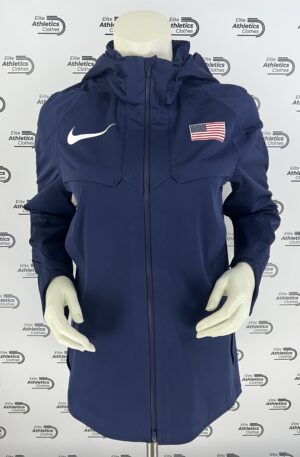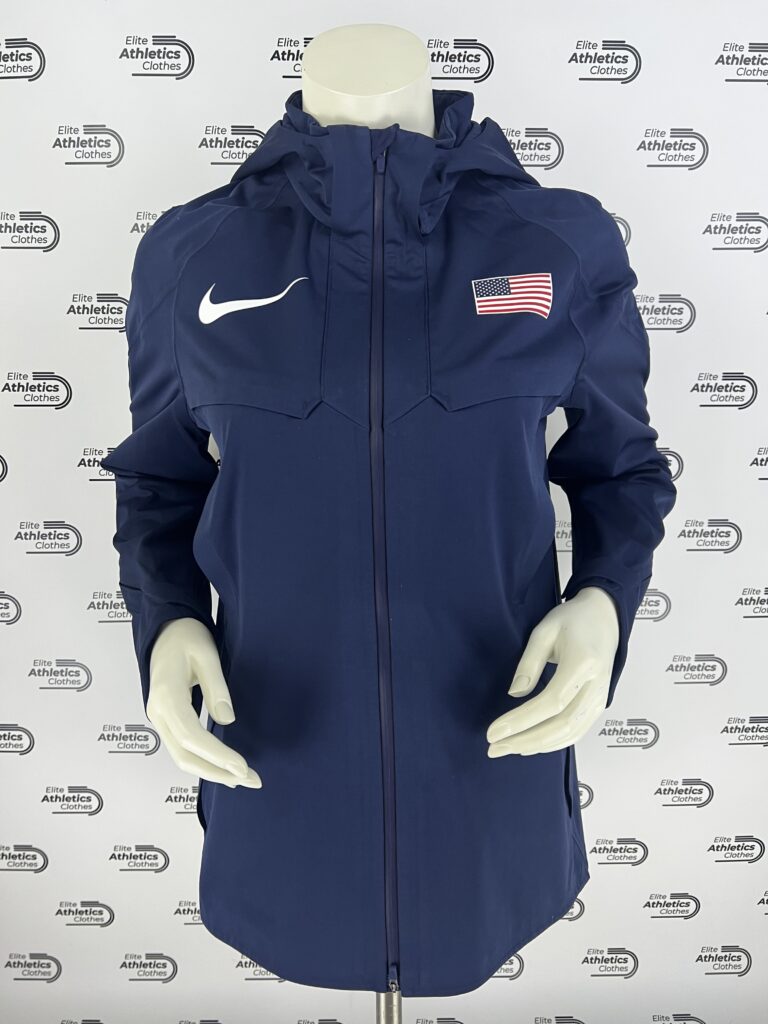
Nike USA Team Pro Elite 2026 Women Storm Fit Jacket worn by USA track and field team (USATF) athletes during the 2026 season.
Tap a crossed size and we write you the day one lands in it
Nike USA Team Pro Elite 2026 Women Storm Fit Jacket worn by USA track and field team (USATF) athletes during the 2026 season. Released for Paris 2024 Olympic Games. • 100% Authentic • Color: Obsidian / White • Jacket 100% Polyester. • Zippered pockets • Adjustable and removable hood • Velcro adjustment at wrists • Air Vents • Storm Fit • Perfect Condition • Made in Vietnam
Ships from Switzerland, tracked · processed in 1–3 business days · free over €150
| Size | Chest | Waist | Hip |
|---|---|---|---|
| XXS | 70–76 | 54–60 | 78–84 |
| XS | 76–83 | 60–67 | 84–91 |
| S | 83–90 | 67–74 | 91–98 |
| M | 90–97 | 74–81 | 98–105 |
| L | 97–104 | 81–88 | 105–112 |
| XL | 104–114 | 88–98 | 112–120 |
| XXL | 114–124 | 98–108 | 120–128 |
Listed size: S · body measurements in cm, as published by Nike
Use the brand body chart as a starting point. Ask us for flat measurements of this exact piece to compare with a garment you already wear.
The season opened with a world championship on American soil. On 10 January 2026, Apalachee Regional Park in Tallahassee staged the 46th World Athletics Cross Country Championships — 485 athletes from 52 nations, and the first time the event had been run in the United States since Boston in 1992, thirty-four years earlier.
The best American in the senior men's race was Parker Wolfe, twelfth in 29:28, a minute and ten seconds behind Jacob Kiplimo's 28:18 — the Ugandan's third consecutive title. Agnes Ngetich of Kenya won the women's race in 31:28. The mixed relay came fifth. The one American podium of the day belonged to the under-20 men, whose 75 points took the team bronze.
A team jacket is the layer worn over the race kit — through warm-up, the call room, between attempts and on the podium, never in the race. Federation kits issue a family of them: lightweight shells, weatherproof Storm layers, insulated cuts and ceremony pieces.
The wait it serves is timed to the minute: at a modern championship, first call comes 95 minutes before the start for pole vault and 40 for track events. The jacket keeps the warm-up's heat until the last of those minutes.