

Côte d’Ivoire
A West African nation whose athletics story runs on quiet determination and real sprinting talent — from a 1964 Olympic debut to a current generation of women chasing world medals.
Côte d’Ivoire’s athletics story is a sprinting one: Gabriel Tiacoh’s 400m silver at the 1984 Los Angeles Olympics was the country’s first Olympic medal, while Marie-Josée Ta Lou’s double sprint silver at the 2017 World Championships and Murielle Ahouré’s 2018 World Indoor 60m gold made the women’s sprints the nation’s signature strength.
From the nation’s first steps onto the international track in the 1960s to its modern sprinters chasing global honours, the history of athletics in Côte d’Ivoire is a compelling chapter in African sport. The emphasis has always fallen on speed — the 100m, 200m, 400m and the relays — where Ivorian athletes have carried the orange, white and green onto the world stage and, on the biggest occasions, defeated the very best on the planet.
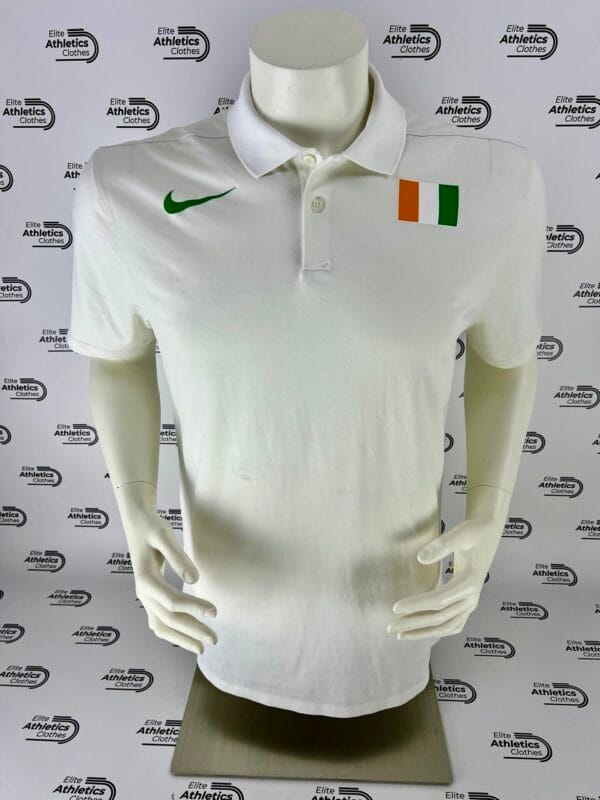
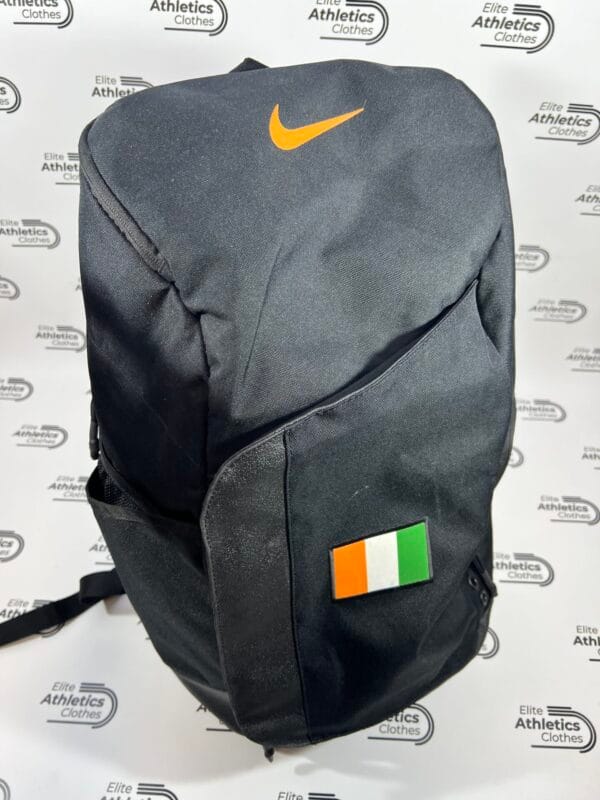
The Ivorian national team competes in authentic Nike Pro Elite kit, and you can own that same athlete-issued gear at Elite Athletics Clothes. Every polo and backbag is a genuine piece of Côte d’Ivoire athletics history.
- Federation
- Fédération Ivoirienne d'Athlétisme, member of World Athletics
- Olympic athletics medals
- 1: Gabriel Tiacoh’s 400m silver, Los Angeles 1984 (44.54) — the nation’s first Olympic medal in any sport, and still its only one in athletics
- The signature
- A World Championship sprint power with just one Olympic athletics medal in 60+ years — the identity is the near-miss
- The near-miss queen
- Marie-Josée Ta Lou: three Olympic 4th places (Rio 100m & 200m, Tokyo 100m); double Worlds silver 2017; African 100m record 10.72
- The only world title
- Murielle Ahouré: World Indoor 60m gold (2018, 6.97) — the country’s sole world athletics title; double Worlds silver 2013
- World Championship medals
- 5 outdoor (4 silver, 1 bronze), plus Ahouré’s World Indoor 60m gold
- The African record
- Ta Lou’s 10.72 (Monaco 2022) is the African women’s 100m record
- The modern man
- Arthur Cissé broke 10 seconds (9.94, 2018), the Ivorian record
The Origins of Track and Field in Côte d’Ivoire
Athletics arrived in Côte d’Ivoire during the French colonial era, when the territory formed part of French West Africa. French schools and missionary institutions introduced structured physical education from the late 19th century onwards, with running, jumping and throwing forming the backbone of competitive sport for young Ivorian men and women. This colonial model, which replicated French athletic traditions, laid the administrative and organisational groundwork for what would eventually become a fully independent national athletics programme.
Following independence in 1960, Côte d’Ivoire established itself rapidly in international sport. The country joined the International Amateur Athletic Federation — now World Athletics — and sent its first athletes to compete at regional and continental level. The newly formed national federation began organising inter-school and inter-city competitions, with Abidjan, the commercial capital, serving as the epicentre of Ivorian athletics development.
The 1960s and 1970s were a period of slow, steady progress. Côte d’Ivoire took part in its first Olympic Games in 1964 in Tokyo, four years after independence. The early emphasis fell on sprinting and field events — suited to a flat terrain, warm climate and a tradition of physical education that made the country a natural home for speed events.
The Golden Era: Sprinting to International Recognition
The 1980s and 1990s brought continental and international prominence. West Africa has long been one of the world’s great sprinting regions, and Ivorian athletes began to build a genuine identity in the short events. The pull of neighbours like Nigeria and Senegal, plus investment in infrastructure and coaching, raised the standard of competition inside the country.
During this period Côte d’Ivoire invested in national stadiums and training facilities. The Stade Félix Houphouët-Boigny in Abidjan — named after the country’s founding president — became a symbolic venue for athletics as well as football. The stadium and its surrounding sports complex allowed local athletes to train year-round under quality conditions, lifting national performance across multiple disciplines.
It was also during these decades that Ivorian athletes began performing consistently at the African Athletics Championships, the premier continental prestige event. Côte d’Ivoire started accumulating medals in the sprints and relays, establishing itself as one of West Africa’s most competitive athletics nations.
Côte d’Ivoire’s Greatest Athletes
Côte d’Ivoire has produced several athletes who have left a lasting mark on African and world athletics. Their stories embody the spirit of Ivorian sport — talent, perseverance and the drive to compete against the very best.
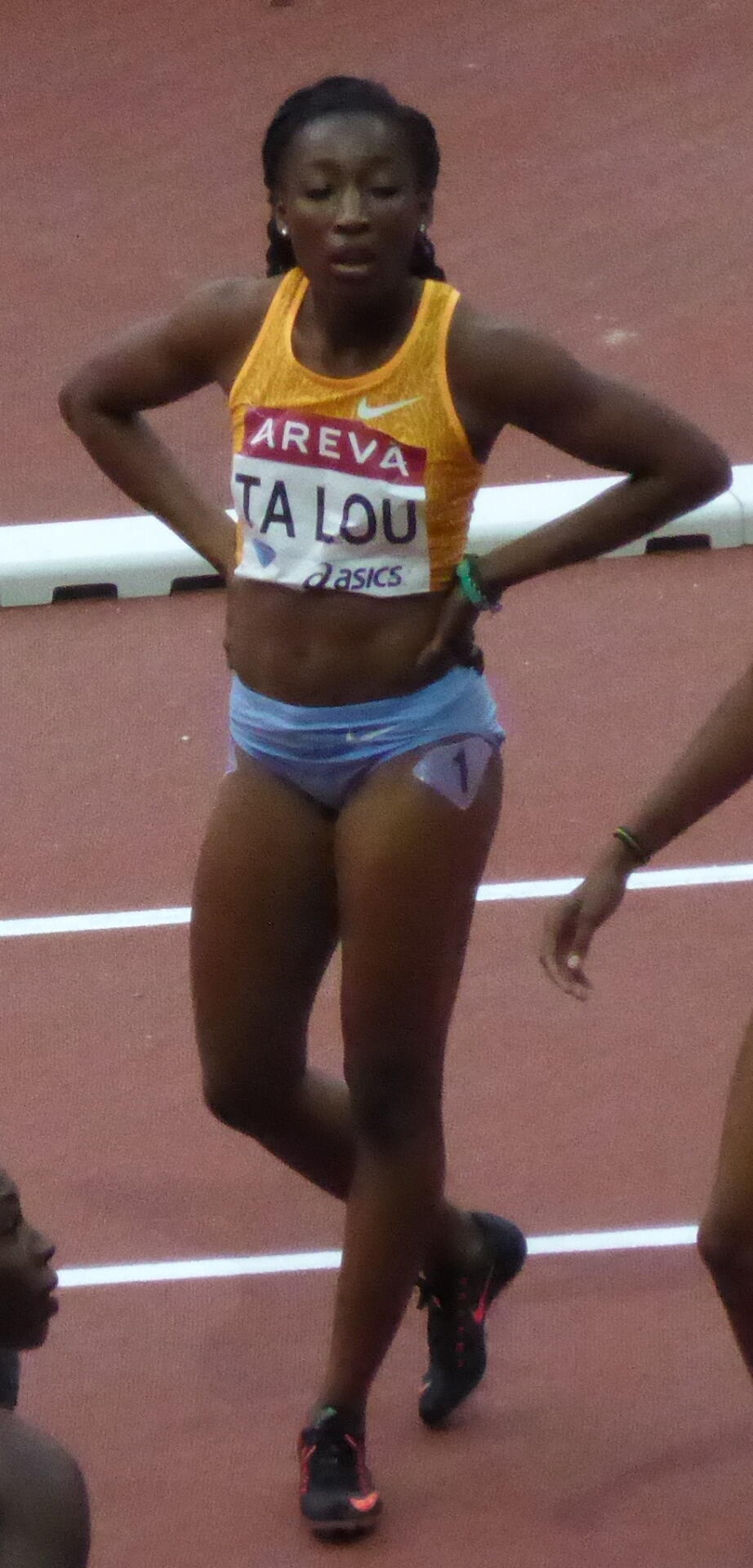
Marie-Josée Ta Lou
The fastest woman in Ivorian history. Born 18 November 1988 in Bouaflé, she took double silver over 100m and 200m at the 2017 World Championships in London and holds national records of 10.72 and 22.08.
Murielle Ahouré
Born 23 August 1987 in Abidjan, she won 60m gold at the 2018 World Indoor Championships in Birmingham — the first world athletics title in Ivorian history — with personal bests of 6.97, 10.78 and 22.24.
Gabriel Tiacoh
Won 400m silver at the 1984 Los Angeles Olympics in 44.54, an African record. It was Côte d’Ivoire’s first-ever Olympic medal and the first Olympic medal won by any West African country.
Ben Youssef Meïté
Côte d’Ivoire’s leading male sprinter of the 2000s and 2010s. His national-record 9.96 made him one of few Ivorian men to break ten seconds, and he reached the 100m final at the Rio 2016 Olympics, placing fifth.
Gue Gustave Conserve
Represents Côte d’Ivoire’s field-event side, with the triple jump and long jump drawing Ivorian competitors who set national records and reached African-championship level alongside the country’s sprinters.
Olympic Achievements
Côte d’Ivoire has competed at every Summer Olympics since its 1964 debut, one of West Africa’s most consistently represented nations in Olympic athletics. The Games have been both a proving ground and a stage for Ivorian talent.
So close: a nation of near-misses
Every Ivorian global-sprint final, placed by where it finished. Medals sit above the red line; the heartbreak sits just below it — and it is almost always at the Olympics.
White-ringed markers are Olympic finals; plain circles are World Championship finals (Ahouré’s 2018 gold is the World Indoor 60m). Côte d'Ivoire has never won an Olympic athletics gold; its one Olympic medal is Tiacoh’s 1984 silver. Sources: World Athletics; Wikipedia; Olympedia.
View the data
| Year | Athlete | Event | Result |
|---|---|---|---|
| 1984 | Gabriel Tiacoh | 400m | 2nd (Olympic) |
| 2013 | Murielle Ahouré | 100m | 2nd |
| 2013 | Murielle Ahouré | 200m | 2nd |
| 2016 | Marie-Josée Ta Lou | 100m | 4th (Olympic) |
| 2016 | Marie-Josée Ta Lou | 200m | 4th (Olympic) |
| 2017 | Marie-Josée Ta Lou | 100m | 2nd |
| 2017 | Marie-Josée Ta Lou | 200m | 2nd |
| 2018 | Murielle Ahouré | 60m indoor | 1st |
| 2019 | Marie-Josée Ta Lou | 100m | 3rd |
| 2020 | Marie-Josée Ta Lou | 100m | 4th (Olympic) |
Côte d’Ivoire makes its Olympic debut just four years after independence, arriving on the international athletics stage for the first time.
Gabriel Tiacoh wins 400m silver in 44.54, an African record — the nation’s first Olympic medal and the first for any West African country.
Marie-Josée Ta Lou announces herself as a genuine medal contender, narrowly missing the 100m podium; Ben Youssef Meïté reaches the 100m final, placing fifth.
Held in 2021, Ta Lou again competes fiercely in the sprints, reinforcing her position as one of the most consistent Olympic-level sprinters in the world.
Côte d’Ivoire’s athletics team competes once more, with Ta Lou among the most closely watched competitors in the women’s 100m.
World Championship Achievements
The World Athletics Championships have produced Côte d’Ivoire’s best results. The 2017 edition in London was the defining one: Marie-Josée Ta Lou’s double silver, in both the 100m and 200m, is a feat few athletes have matched, and it put the country on the front page of global athletics for the first time. She missed gold narrowly in both — a measure of how close Côte d’Ivoire came to the top.
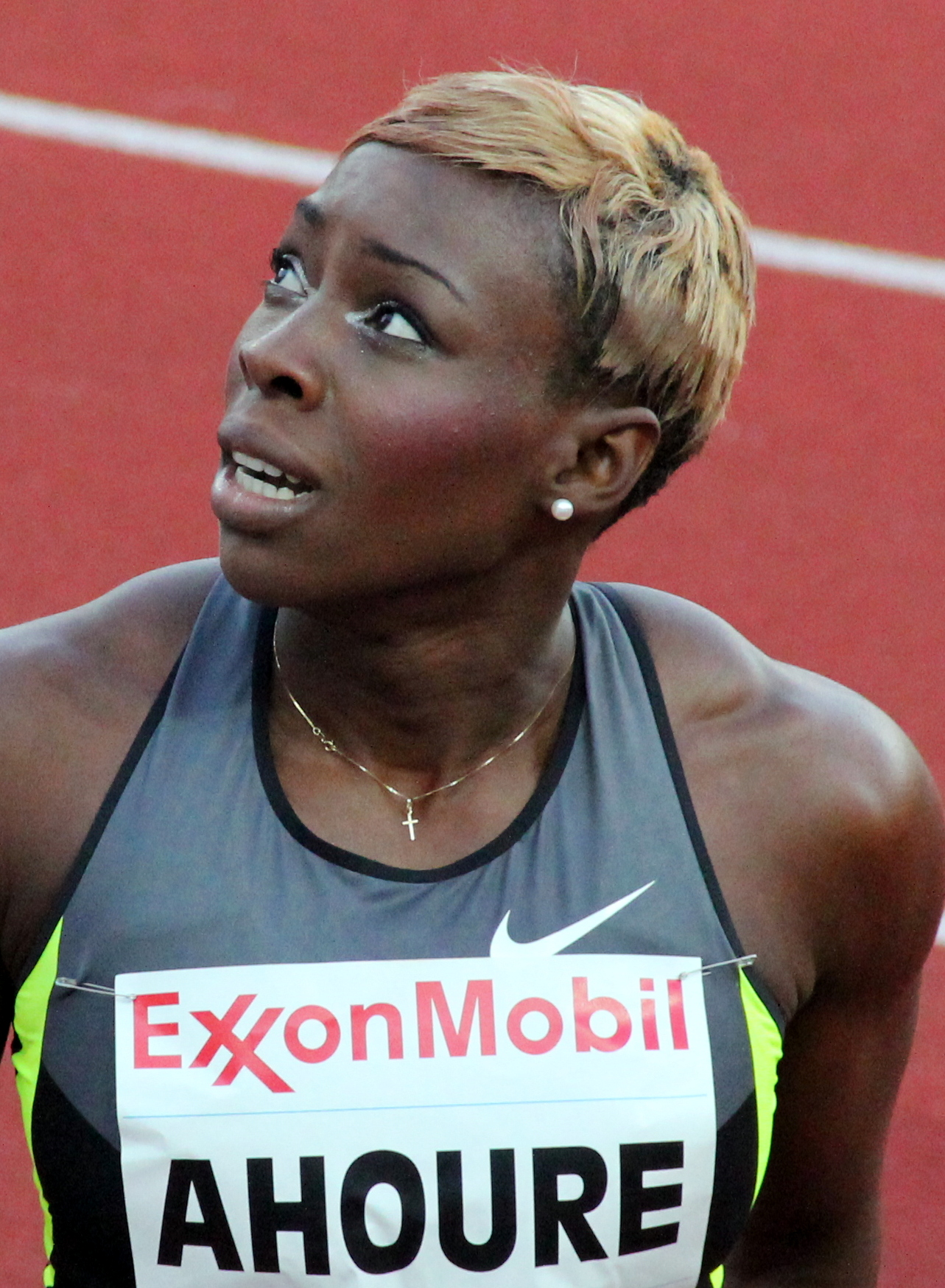
At the 2019 World Championships in Doha, both Ta Lou and Murielle Ahouré competed in the sprints, giving Côte d’Ivoire a powerful double threat in the women’s events. Ahouré’s world indoor gold in Birmingham in 2018 remains the country’s only gold medal at a global World Athletics championship. The 2022 championships in Eugene and the 2023 edition in Budapest continued to feature Ivorian athletes at a high level, while the women’s 4x100m relay squad has regularly qualified for major finals.
The Sprinting Identity of Ivorian Athletics
Speed has always been the defining characteristic of Ivorian athletics. The nation has consistently produced talented sprinters capable of competing at the highest levels, particularly in the 100m, 200m and 400m. This focus on short sprints is deeply embedded in the athletic culture, with schools and universities channelling promising young talent towards the track.
The relay events — particularly the 4x100m and 4x400m — have been areas where Côte d’Ivoire has historically performed strongly at continental level, combining individual speed with collective cohesion. It is a sprinting identity that runs from grassroots school competition all the way to the Diamond League circuit.
On the track that identity is unmistakable: Ivorian athletes race in Nike Pro Elite kit carrying the national colours of orange, white and green.
Running Culture and the Fédération Ivoirienne d’Athlétisme
Athletics in Côte d’Ivoire occupies a unique cultural space — simultaneously a grassroots school sport, a source of national pride and a pathway for social advancement. School competitions are central to Ivorian sporting life: the National School Games (Jeux Scolaires et Universitaires) have long served as the primary talent-identification system, bringing together young athletes from across the country’s regions.
Beyond schools, athletics clubs across Abidjan and secondary cities such as Bouaké, Yamoussoukro and San-Pédro provide development pathways for aspiring athletes, while road running and cross country attract growing fields at events like the Abidjan Marathon. The club system, though still developing compared with some European models, has grown significantly in both scale and quality.
The Fédération Ivoirienne d’Athlétisme (FIA) governs the sport, affiliated with World Athletics and the Confédération Africaine d’Athlétisme. In recent years the FIA has pursued an ambitious development agenda — raising participation, improving coaching standards, upgrading tracks and throwing and jumping facilities, and strengthening the pipeline from junior to senior competition, with a pragmatic strategic focus on the sprint events where the country has shown the greatest world-level potential.
The Current State of Côte d’Ivoire Athletics
As of the mid-2020s, athletics in Côte d’Ivoire is in a strong and optimistic position. The senior national team is well represented at global championships, with several athletes ranked inside the world’s top 20 in their events. Women’s sprinting in particular remains a genuine strength, with a depth of talent that is the envy of many larger athletics nations, while investment in junior athletics is beginning to produce tangible results at World Athletics U20 and U18 level.
At the professional level, several Ivorian athletes compete on the international Diamond League circuit, bringing prize money, world-ranking points and global media exposure back to the country. This integration into the world athletics economy is a key sign of the sport’s maturity. The national teams compete wearing Nike Pro Elite competition apparel, the distinctive orange, green and white of the flag making them immediately recognisable on the international circuit.
Future Stars and Emerging Talents
The future of Ivorian athletics looks bright. A new generation of sprinters, jumpers and throwers is emerging from the national development system, many trained under improved coaching structures and benefiting from better access to international competition and scientific preparation.
Next-generation women’s sprinters
Following Ta Lou and Ahouré, several junior women have shown strong potential at national and continental level, with marks that point to high ceilings by the late 2020s.
Emerging men’s sprinters
Several male athletes have recorded personal bests below 10.10 in the 100m and under 20.50 in the 200m at junior and youth level, hinting at a rising men’s programme.
Field-event prospects
The FIA is identifying and nurturing talent in the jumps and hurdles, aiming to broaden Côte d’Ivoire’s competitive profile well beyond the sprints.
Multi-event athletes
Developing competitive combined-event athletes is a longer-term federation goal that would signal the full maturation of Ivorian athletics as a comprehensive, multi-discipline programme.
Côte d’Ivoire Records & Historic Milestones
Shop Côte d’Ivoire Athletics Apparel
The Côte d’Ivoire rail is one of the smallest in the archive — athlete-issued Nike Pro Elite pieces from the Ivorian team channel surface rarely and in single units. Both pieces below are authentic, and once they sell they are unlikely to return.
Who is the greatest Ivorian athlete of all time?
Marie-Josée Ta Lou is widely considered the greatest, based on her 100m and 200m silver medals at the 2017 World Championships in London and consistent top-ranking performances at Olympic and Diamond League level. Murielle Ahouré, with her 2018 World Indoor 60m gold, is also among the all-time greats.
Has Côte d’Ivoire ever won an Olympic athletics medal?
Yes. Gabriel Tiacoh won silver in the men’s 400m at the 1984 Los Angeles Olympics, running 44.54 for an African record. It was Côte d’Ivoire’s first-ever Olympic medal and the first won by any West African country. Ta Lou has since come close with a series of Olympic finals appearances.
What events does Côte d’Ivoire excel in at the global level?
Côte d’Ivoire excels primarily in the women’s sprints — the 100m, 200m and 60m indoor — where Ta Lou and Ahouré have competed consistently at world-championship final level. The men’s 100m has produced sub-ten-second performers, and the relays have been a collective strength at African and international level.
What kit does the Côte d’Ivoire athletics team wear?
The national team competes in Nike Pro Elite apparel, the premium competition kit used by the world’s top athletics nations. The kit features the national colours of orange, white and green. Authentic Côte d’Ivoire Nike Pro Elite team gear — including polos and backbags — is available at Elite Athletics Clothes.
When did Côte d’Ivoire first compete at the Olympics in athletics?
Côte d’Ivoire first participated in the Olympic Games in 1964 in Tokyo, making its debut on the international athletics stage just four years after gaining independence in 1960. The country has competed at every Summer Olympics since then.
Who governs athletics in Côte d’Ivoire?
Athletics is governed by the Fédération Ivoirienne d’Athlétisme (FIA), affiliated with World Athletics and the Confédération Africaine d’Athlétisme (CAA). The FIA organises national championships, manages the national team, and oversees athlete development programmes across the country.
Who makes Côte d’Ivoire’s athletics kit?
The Ivorian athletics federation has no long-term kit supplier on public record — a common situation outside the sport’s biggest markets. For Paris 2024, the Ivorian Olympic delegation, including its athletes, was dressed by US brand NUBA under an Olympic-delegation deal. Authenticated athlete-issued Ivorian pieces surface at Elite Athletics Clothes when available.
Sources and References
- Marie-Josée Ta Lou-Smith — World Athletics profile — 100m personal best 10.72 (African record, 2022) and 200m national record 22.08 (2017).
- Hard work pays off in London for globe-trotting Ta Lou — World Athletics — Ta Lou’s 100m and 200m silver medals at the 2017 World Championships in London.
- Marie-Josée Ta Lou — Wikipedia — birth date (18 November 1988) and place (Bouaflé); Olympic results at Rio 2016, Tokyo 2020 and Paris 2024.
- Murielle Ahouré-Demps — Wikipedia — birth (23 August 1987, Abidjan); 60m best 6.97, 100m 10.78, 200m 22.24; 2012/2014 World Indoor silvers.
- 2018 IAAF World Indoor Championships – Women’s 60 metres — Wikipedia — Ahouré’s 60m gold in Birmingham, Côte d’Ivoire’s first global athletics title.
- Gabriel Tiacoh — Wikipedia — 400m silver at the 1984 Los Angeles Olympics, Côte d’Ivoire’s first Olympic medal.
- Ben Youssef Meïté — Wikipedia — 100m national record 9.96 and 5th place at the Rio 2016 Olympic final.
- Ivory Coast at the 1964 Summer Olympics — Wikipedia — Côte d’Ivoire’s Olympic debut in Tokyo, 1964.