
A Pro Elite singlet can survive a championship season. What it often doesn’t survive is the laundry room. Athlete-issue track and field kit is built from polyester and elastane technical fabrics, many finished with heat-transfer prints — materials that respond very differently to heat, detergent, and agitation than everyday cotton. Treat it like a regular T-shirt and the damage arrives quietly: wicking fades, elastic slackens, graphics crack. Treat it right and the same garment stays race-ready for years. This is the complete, verified washing protocol.
Key facts · Verified · updated August 2026
- Wash temperature
- Cold — 30 °C (86 °F) at most
- Cycle
- Gentle or delicate, garment inside out
- Detergent
- Mild, and slightly less than a normal load
- Fabric softener
- Never — it leaves a waxy film that kills wicking
- Drying
- Air dry flat or on a rack; no tumble dryer
- Printed graphics
- Heat softens the adhesive → cracking and peeling
- Ironing (ISO 3758)
- One dot = 110 °C max — and never on the print
- Storage
- Fold flat, fully dry, out of direct sunlight
Why This Matters More for Athlete-Issue Kit
If a retail training tee wears out, you buy another one. A federation-issue singlet, a team speedsuit from a specific season, an authentic pro elite piece — these are produced in limited runs for the athletes who wore them, and once a given nation-and-year edition is gone, it is gone. For the collector, careless washing erodes value that cannot be bought back. For the athlete, it erodes performance: the entire point of technical fabric is moisture management and stretch, and both are exactly what bad laundry habits destroy. Care is not an afterthought here. It is part of owning the piece.
The Pro Elite Washing Protocol
1. Wash Soon After Wearing
Don’t let a sweat-soaked singlet sit in your bag overnight. The University of Georgia Extension’s textile care guidance is blunt about the cost of waiting: perspiration stains “can weaken most fibers”, which is why it calls prompt treatment necessary. A garment stored damp also invites mildew. Get it into a wash soon after you train or race — and if stains have already set in, follow our step-by-step guide to removing sweat and deodorant stains from technical fabrics before they become permanent.
2. Cold Water, Gentle Cycle
Set the machine to cold — 30°C (86°F) at most — and choose the gentle or delicate cycle. This is the setting Nike recommends for its own workout apparel, and it matches the “machine wash cold” instruction printed on adidas care labels. Cold water and low agitation are kinder to elastane, to seams, and to every printed element on the garment.
3. Mild Detergent — and Less of It
Use a mild detergent, and use slightly less than you would for a normal load. That sounds backwards for a sweaty garment, but Nike’s care guidance is explicit: excess detergent leaves residue in the fabric, and that residue traps odor rather than removing it. A lighter dose rinses clean and leaves the fibers doing their job.
4. Turn It Inside Out
Wash every piece inside out, exactly as adidas care labels instruct. This protects the face fabric and — critically for pro elite kit — the heat-transfer prints, federation crests, and sponsor graphics from rubbing against the drum and against other garments during the cycle.
5. Never Use Fabric Softener
This is the single most damaging habit, and the mechanism is well documented. Nike’s care page explains that fabric softener builds up “a waxy substance” on workout fabrics “that causes fabrics to be less absorbent” — in other words, it coats the fibers and defeats the moisture-wicking behavior the garment was engineered for. adidas is just as blunt on its Climacool apparel: do not use fabric softener. A softener-washed singlet may feel pleasant on the shelf; on the track it holds sweat instead of moving it.
6. Air Dry — Skip the Dryer
Hang or lay the garment on a drying rack and let air do the work. Nike warns that dryer heat damages the fabric, causes shrinkage, and weakens the power of the elastic — three separate ways to ruin a fitted race garment in forty minutes. Technical polyester holds very little water, so air drying is fast anyway. Make sure the piece is fully dry before it goes back in the drawer: storing damp fabric invites mildew and leaves sweat residue working on the fibers.
How much heat the label actually allows
The care-label standard codes a whole ladder of temperatures. Authentic race kit is safe on the bottom rung and nowhere else.
Cold wash
30 °CThe whole protocol lives here
Warm wash
40 °CCommon default — already too warm
Hot wash
60 °CElastane, seams and prints all lose
Tumble dryer
—ISO codes the drum by dots, not degrees
Iron · 1 dot
110 °CLowest iron setting the standard defines
Iron · 2 dots
150 °CThe polyester setting
Iron · 3 dots
200 °CCotton and linen only
Data table — how much heat the label actually allows
| Step | Max temperature | On race kit |
|---|---|---|
| Cold wash | 30 °C | Where race kit belongs |
| Warm wash | 40 °C | Off the protocol |
| Hot wash | 60 °C | Never on race kit |
| Tumble dryer | Not coded in degrees | Never on race kit |
| Iron · 1 dot | 110 °C | Never on race kit |
| Iron · 2 dots | 150 °C | Never on race kit |
| Iron · 3 dots | 200 °C | Never on race kit |
Ironing and tumble-drying symbols per ISO 3758 care labelling (one dot 110 °C, two 150 °C, three 200 °C; the drum is coded by dots, not degrees). Cold-and-gentle washing and air drying per the Nike and adidas care guidance cited in this guide.
Quick Reference: Do and Don’t
| Do | Don’t |
|---|---|
| Wash cold (max 30°C), gentle cycle | Wash warm or hot |
| Use mild detergent, slightly less than usual | Overdose detergent — residue traps odor |
| Turn garments inside out | Wash prints facing out against the drum |
| Air dry on a rack | Tumble dry — heat damages fabric and elastic |
| Wash soon after wearing | Leave sweat sitting in the fibers |
| Use oxygen-based products if bleaching is needed | Use chlorine bleach or fabric softener — ever |
| Dry fully before storing | Store damp or dry-clean printed kit |
Special Notes for Printed Kit
Most authentic pro elite garments carry heat-transfer vinyl or screen-printed graphics — national federation lettering, sponsor marks, event badges. These printed elements have their own rules on top of the protocol above:
- Inside out, cold, mild detergent — the same core protocol, but here it is non-negotiable, because the print surface is what drum abrasion attacks first.
- Hang dry, never tumble. Dryer heat softens the adhesive under heat-transfer vinyl, which leads to peeling and cracking. adidas warns on its team wear that heat causes “cracking and peeling of vinyl plastisol lettering inks.”
- Never iron directly on a print. If a garment genuinely needs pressing, iron it inside out or through a cloth. adidas care labels state it plainly: “do not iron motif.”
- No dry cleaning. Dry-cleaning solvents attack the adhesive and plastisol that bond the print to the fabric. Water-based washing per the protocol above is the safe route.
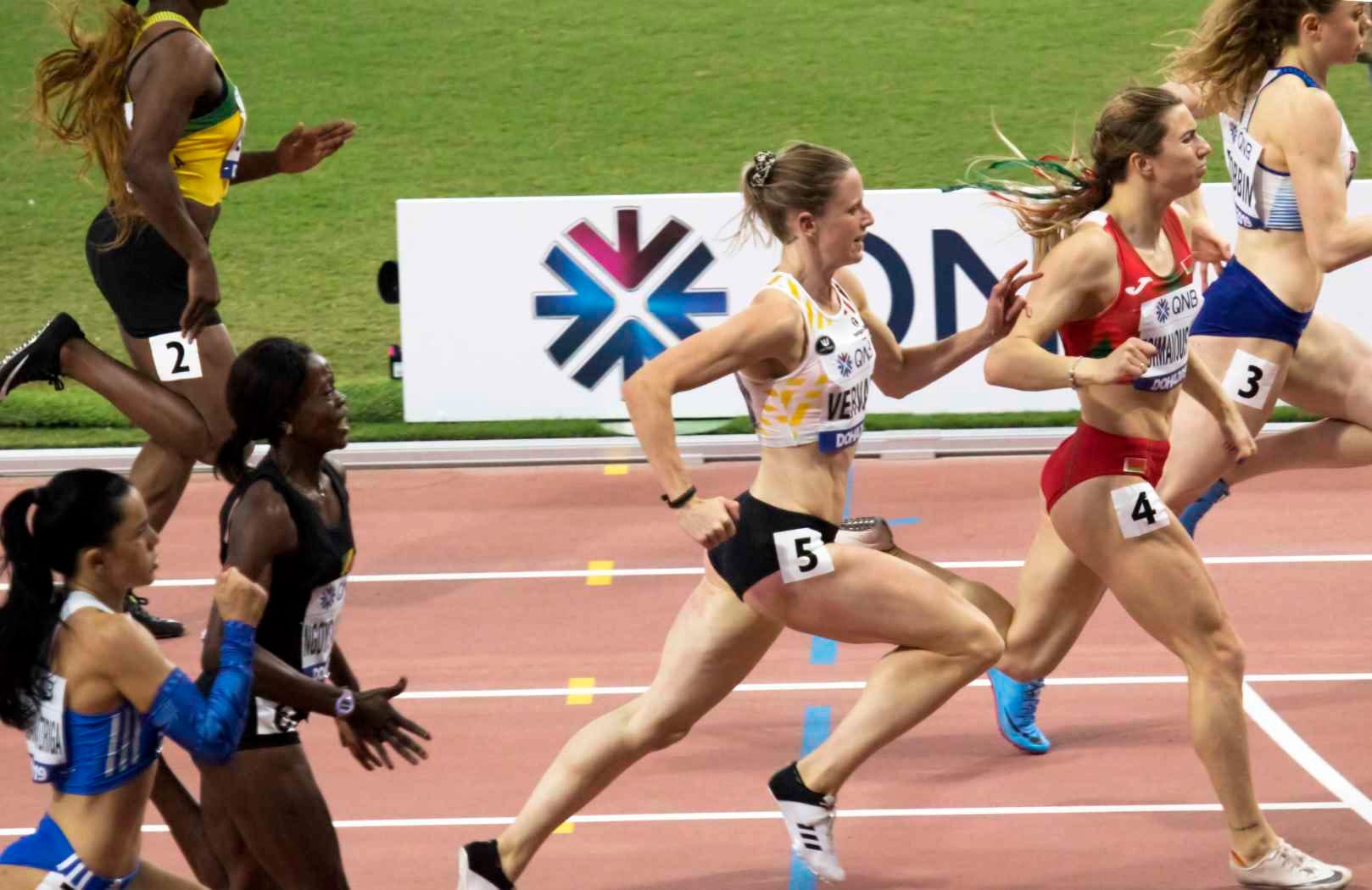
Between Washes: Storage Basics
Once the garment is clean and completely dry, fold it flat rather than hanging it. Conservation guidance from the Canadian Conservation Institute advises against hanging knits at all — flat storage frees the fibers from bearing the garment’s own weight. Keep pieces out of direct sunlight, whose damage to textiles is cumulative and permanent. For rare or retired pieces you no longer wear, museum-grade storage is a topic of its own — but the wash-dry-fold routine above is the foundation everything else builds on.
The Habits, in One Line
Cold and gentle, mild detergent and less of it, inside out, no softener, air dry, wash soon after wearing. Six habits, each verified against the care guidance of the brands and textile institutions that actually test these fabrics. Together they are the difference between a singlet that fades in a season and one that still looks issued a decade on. Want the failure modes spelled out one by one? Read our companion piece on the 6 things that destroy technical fabric.
Can I machine wash a pro elite singlet or speedsuit?
Yes — cold water (max 30°C), gentle cycle, mild detergent, garment turned inside out. That combination matches the care guidance from both Nike and adidas for technical apparel.
Why is fabric softener so bad for technical fabric?
Nike’s care guidance explains that softener builds up a waxy substance on the fabric that makes it less absorbent. That coating defeats the moisture-wicking behavior the garment is engineered around, so sweat stays on your skin instead of moving through the fabric.
Is it ever safe to tumble dry technical kit?
Air drying on a rack is the recommended route. Nike warns that dryer heat damages the fabric, causes shrinkage, and weakens the elastic — and on printed kit, heat also softens the print adhesive, leading to cracking and peeling.
How do I care for the printed graphics on federation kit?
Wash inside out in cold water with mild detergent, hang dry, never iron directly on the print (adidas labels say “do not iron motif”), and never dry clean — solvents attack the print adhesive.
What if the kit already has sweat or deodorant stains?
Treat them promptly, before another wash sets them further. We cover the verified methods — dishwashing-liquid treatment, diluted white vinegar, oxygen bleach — in our stain removal guide for technical fabrics.
Every piece in our catalog is authentic athlete-issue kit — which means every piece deserves this protocol. Browse the full collection of pro elite singlets, speedsuits, and tracksuits at eliteathleticsclothes.com/clothes, and keep whichever piece you choose in issued condition.