Half of all authentication disputes are really terminology disputes. A seller says “race worn”; the buyer hears “worn in a race”; the seller meant “race cut.” Nobody lied, but somebody overpaid. This glossary is the fix: every term used across the athlete-issued athletics kit market, defined the way the collector community actually uses it. Learn these and you can read any listing — including ours — and know exactly what is being claimed, and what proof that claim requires.
Key facts · Verified · updated July 2026
- The four tiers
- replica → athlete issue → race issue → race worn
- Where the ladder comes from
- football-shirt collecting, decades established
- Nike proof
- style code on the sewn-in label (documented: FN1826-618)
- adidas proof
- seam number + QR code — missing either kills the premium
- Race-worn standard
- photo-matching + documented provenance chain
- “Pro Elite”
- collector term — not an official Nike line
- Construction trio
- bonded seams · knit ventilation · printed necks
- The map
- 22 terms · 5 families
The map of the language
22 terms, 5 families — and the proof family is the one that decides what your money buys.
Data table — terms by family
| Family | Terms | Count |
|---|---|---|
| The Four Tiers | Replica, Athlete issue, Race issue, Race worn | 4 |
| The Proof Vocabulary | Style code, Seam number & QR, Photo-matching, Provenance, Kit allocation | 5 |
| The Construction Vocabulary | Bonded seams, Engineered ventilation, Printed neck, Bib holders | 4 |
| The Ecosystem | Pro Elite, Kit supplier, Federation kit, Agency kit, Seasonal SKU, AeroSwift | 6 |
| The Garments | Singlet, Speedsuit, Competition briefs | 3 |
Composition of this glossary; tier system adapted from football-shirt collecting.
The Four Tiers
The tier system is adapted from football-shirt collecting, where it has been established for decades. Every garment in this market sits on one of these four rungs, and the rung determines rarity, price and the standard of proof.
Replica (fan version)
Licensed retail product made for public sale. Standard fabric, looser cut, embroidered or standard crest. Real, official — but built for fans, not finals. A replica is not a fake; it becomes a problem only when it is sold as something higher up this list.
Athlete issue (player issue)
Kit built to elite athletes’ exact specification — lighter fabric, tighter cut, heat-applied badges — but not tied to any specific competition. Most authentic Pro Elite pieces on the market are this tier: real athlete kit from seasonal allocations that was never assigned to a particular race.
Race issue (match issue)
Athlete-issue kit prepared for a specific competition, with personalisation or event patches, but possibly never worn. One honest caveat the whole market should repeat: “race-issued” as used in athletics is collector-community convention, not a formally codified standard — a trustworthy seller will tell you which tier a piece is and how they know.
Race worn (match worn)
Issued and actually worn in competition — the top of the pyramid, and the tier that demands the most proof: photo-matched wear marks plus a documented provenance chain. Without both, a “race worn” claim is just a story with a higher price tag.
The Proof Vocabulary
Style code
The letters-and-digits code on the sewn-in label of a Nike piece, cross-referenceable against specialist archives. Documented example: the 2024 Pro Elite Team women’s distance singlet carries style code FN1826-618. A missing style code on a piece claimed as athlete issue is a serious problem; a present one is a data point you can verify.
Seam number and QR code (adidas)
adidas runs its own verification system for athlete-issue kit: genuine pieces must come with their adidas tags and a serial number stitched into the seams, accompanied by a QR code. In our archive’s experience authenticating adidas federation kit, a piece missing its seam number or QR is not one to pay athlete-issue money for.
Photo-matching
Verifying a race-worn claim by matching the garment’s unique details — wear marks, patch placement, creases — against photographs of the athlete in that specific competition. It is the standard of proof for any “worn” claim; personalisation alone does not meet it.
Provenance
The documented story of how a piece reached the market: which season, which programme, through whose hands. Since authentic athlete kit was never sold at retail, every legitimate piece has one — and in an era when good fakes replicate physical construction, provenance is the check that outranks the rest.
Kit allocation
The seasonal batch of kit a contracted athlete receives from their sponsor or federation. Athletes receive more than they use, and that surplus — filtering out through specialists and athlete networks — is the main legitimate route by which authentic pieces reach collectors.
The Construction Vocabulary
Bonded seams
Seams joined by heat rather than conventional stitching — nearly flat and clean when you run a finger along the inside. A genuine elite-kit marker, with a caveat: collectors documented in 2025 that high-fidelity counterfeits now replicate bonded construction convincingly. Construction can prove a fake; it can no longer prove an original.
Engineered ventilation
Airflow zones knitted directly into the structure of the fabric rather than added as mesh panels. Typical of competition-grade garments, where every gram and every seam is negotiated away.
Printed neck details
Size and care information printed directly onto the inside of the garment in place of hanging tags — one less seam, one less irritant at race pace. Common on athlete-issue pieces; another marker that good fakes have learned to copy.
Bib holders
Loops or tabs for attaching a competition number. Their presence and placement indicate a garment built for actual racing rather than retail sale — retail versions have no reason to carry them.
The Ecosystem
Pro Elite
The collector community’s name for Nike’s athlete-issue competition tier: kit produced in limited quantities for contracted elite athletes and national-team programmes, issued to sponsored athletes rather than sold through Nike retail. Nike never markets the line publicly — its scarcity is structural, not engineered.
Kit supplier
The brand contracted to manufacture a federation’s or agency’s competition apparel — Nike, adidas, Puma, Asics, New Balance. The supplier controls design, specification and branding within World Athletics kit regulations.
Federation kit (national kit)
The official competition apparel of a country’s athletics team: the national federation’s crest on the kit supplier’s design. The issued version is what athletes wear on the world stage; the replica version is what fans can buy.
Agency kit
Kit produced for the athletes of a professional management agency — with the agency’s logo stitched on — rather than for a national team. Alongside federation kit, one of the two great families of athlete-issued athletics apparel.
Seasonal SKU
Each competition season generates a unique set of product references that will never be reproduced — materials, colourway and logo placement all change. Once a season closes, production ends permanently: what exists is all that will ever exist.
AeroSwift
Nike’s retail pinnacle for racing apparel, sold openly with Dri-FIT ADV technology. It shares fabric technology with athlete kit — which gives counterfeiters a convenient template and buyers a convenient confusion. Excellent product; not Pro Elite.

The Garments
Singlet
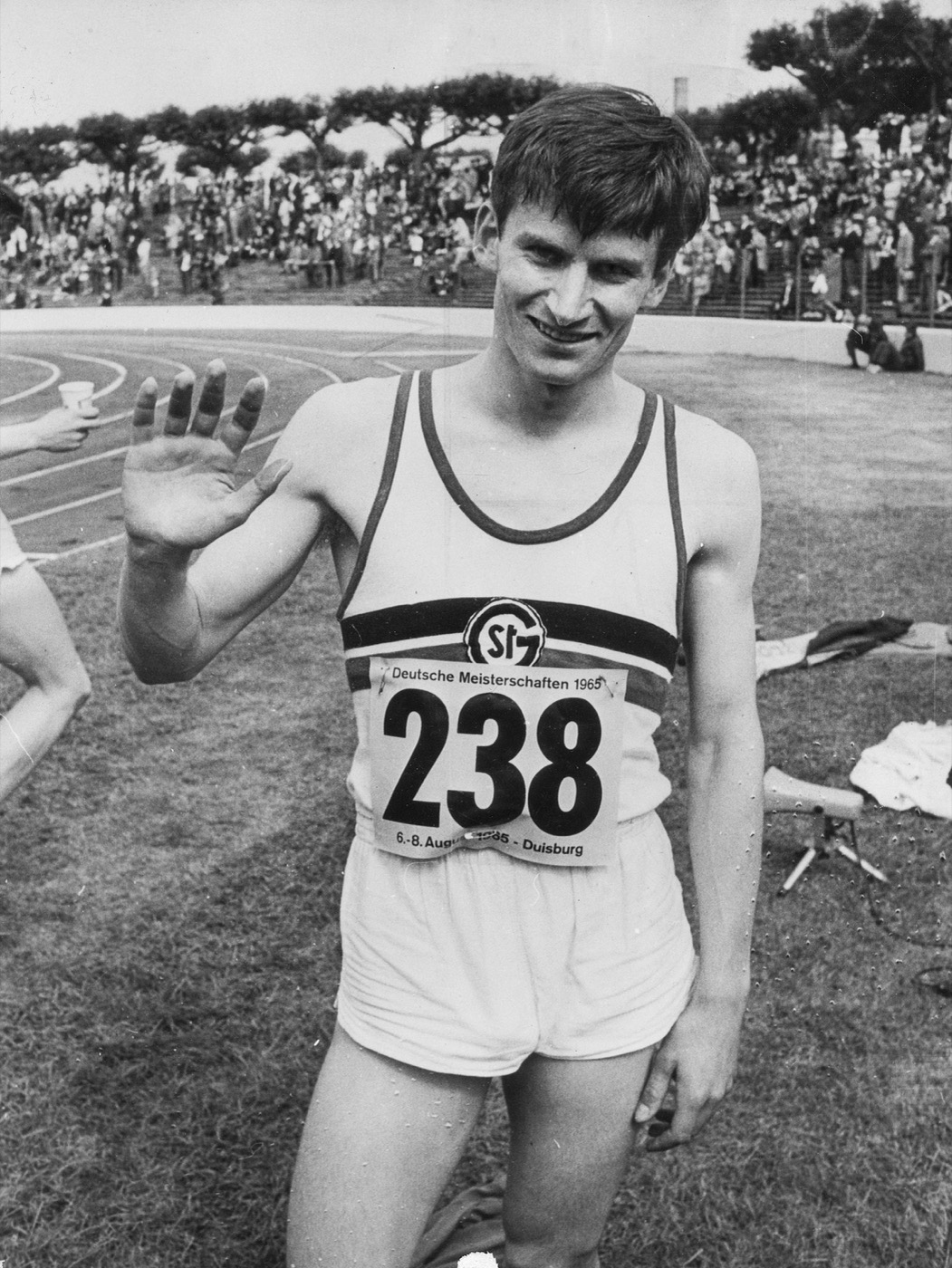
The sleeveless competition top of track and field, cut close to the body for full range of motion at minimal weight — leading elite racing vests weigh roughly 40 to 70 grams. The national singlet is the signature piece of any team’s kit.
Speedsuit (tech suit)
A skin-tight, aerodynamic racing garment — one-piece or two-piece — worn mainly by sprinters and jumpers. Among the most specification-sensitive athlete-issue pieces, and one that rarely has any true retail equivalent.
Competition briefs
Race-day briefs issued as part of a full competition kit, built from the same competition-grade fabric programme as the singlet they pair with.
Put It Into Practice
Vocabulary is the first leg of a confident purchase. The second is verification: our complete authentication guide (Real vs Fake) turns these terms into a working method — style codes, labels, construction and the red flags that end a deal. For the background on why this kit exists at all and why it never reaches shops, read Pro Elite Clothing Explained. And if you are choosing your first piece, start with the beginner’s buying guide and the sizing guide.
What does “race-issued” mean in athletics kit collecting?
Race-issued (match issue) means athlete-issue kit that was prepared for a specific competition — personalised or patched for the event — though possibly never worn. The term is collector-community convention adapted from football-shirt collecting, not a formally codified standard, so always ask a seller which tier they mean and how they know.
Is athlete-issue kit the same as race-worn kit?
No. Athlete issue is built to athletes’ specification but not tied to a competition; race worn was issued and actually worn in one. Race worn sits at the top of the pyramid and requires photo-matched wear marks plus a documented provenance chain to justify the claim.
What is a Nike style code and why does it matter?
It is the cross-referenceable letters-and-digits code on the sewn-in label — for example FN1826-618 on the 2024 Pro Elite Team women’s distance singlet. It matters because it can be verified against documented examples, and its absence on a claimed athlete-issue piece is a serious warning sign.
Why is a replica not a fake?
A replica is licensed, official retail product — a legitimate garment made for fans. It only becomes a problem when it is misrepresented and sold as athlete issue or race worn. The fakes to worry about are counterfeits and misdescribed replicas, which is what the authentication guide exists to catch.
Every listing in the Elite Athletics Clothes catalog states its tier in this vocabulary and is verified before it goes live — style code, label, construction and sourcing — so what you read is what you get.