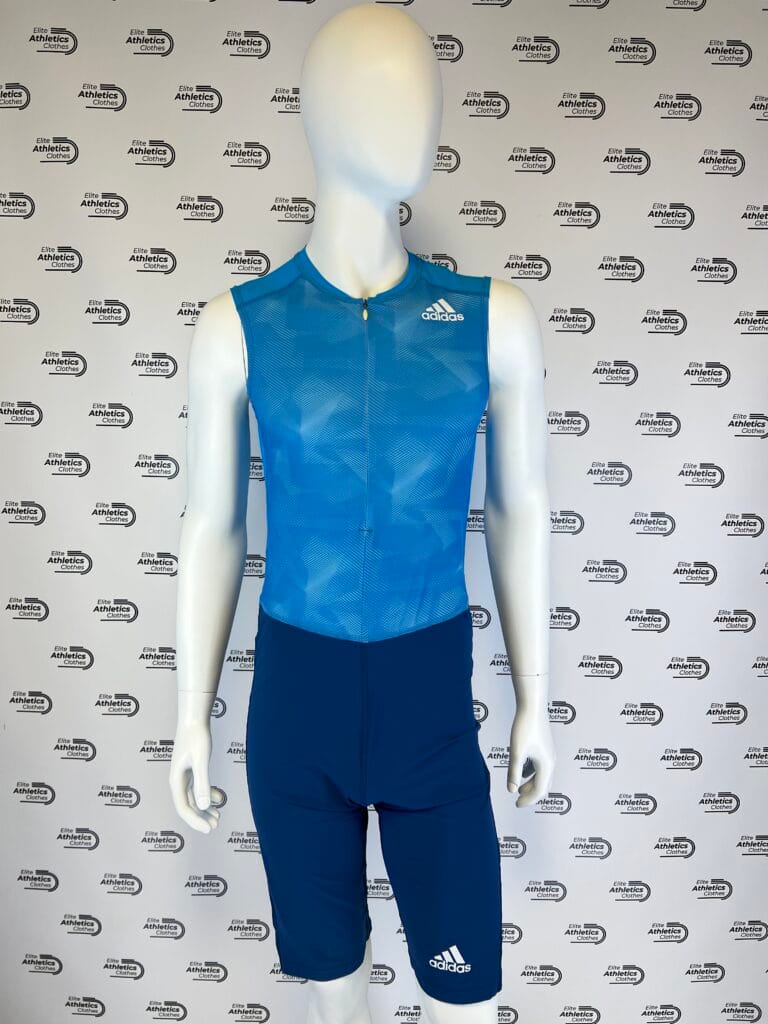
Adidas Pro Elite Team 2013 Sleeveless Speedsuit - Gold Medallist Edition used by professional athletes under contract with Adidas International Team who won a gold medal during the 2013 season.
Tap a crossed size and we write you the day one lands in it
Adidas Pro Elite Team 2013 Sleeveless Speedsuit - Gold Medallist Edition used by professional athletes under contract with Adidas International Team who won a gold medal during the 2013 season. 100% Authentic Color: Dark Blue/Blue/White 71% Polyamide - 29% Elastane Made in Portugal Shows signs of use from athlete wear, including a visible stain on the left shoulder. Worn by a professional gold-medallist athlete.
Ships from Switzerland, tracked · processed in 1–3 business days · free over €150
| Size | Chest | Waist | Hip |
|---|---|---|---|
| XS | 83–86 | 71–74 | 81–85 |
| S | 87–92 | 75–80 | 86–91 |
| M | 93–100 | 81–88 | 93–99 |
| L | 101–108 | 89–96 | 100–107 |
| XL | 109–118 | 97–106 | 108–116 |
| XXL | 119–130 | 107–119 | 117–124 |
Listed size: L · body measurements in cm, as published by adidas
Use the brand body chart as a starting point. Ask us for flat measurements of this exact piece to compare with a garment you already wear.
Adidas Pro Elite 2013 is the oldest adidas cycle in our archive — one sleeveless speedsuit in two blues, five years older than the navy 2018 issue that used to hold that title — and it comes from the season adidas changed its foam. On 27 February 2013 the Energy Boost went on sale in New York, the first running shoe built on the expanded-TPU material BASF had developed with the brand: thousands of fused foam capsules that gave back more energy than the EVA every racing flat had used until then.
The road results followed the launch through the year. Wilson Kipsang, an adidas athlete, raced London on 21 April in the new Adios Boost and finished fifth in 2:07:47; on 29 September in Berlin he ran 2:03:23, the world record and the first world record in athletics that year. Two weeks later Dennis Kimetto won Chicago in 2:03:45, a course record.
A speedsuit is a fitted one-piece track racing garment — singlet and shorts fused into a single skin-tight surface — worn by sprinters, hurdlers and relay squads to eliminate loose fabric entirely.
It is also athletics apparel's laboratory: Flo-Jo's 1988 one-leggers, Cathy Freeman's wind-tunnel-zoned Swift Suit at Sydney 2000, London 2012's dimpled TurboSpeed and the Paris 2024 unitards are all chapters of the same experiment. And in a race-issued archive, the one-piece is the scarcest garment of all.