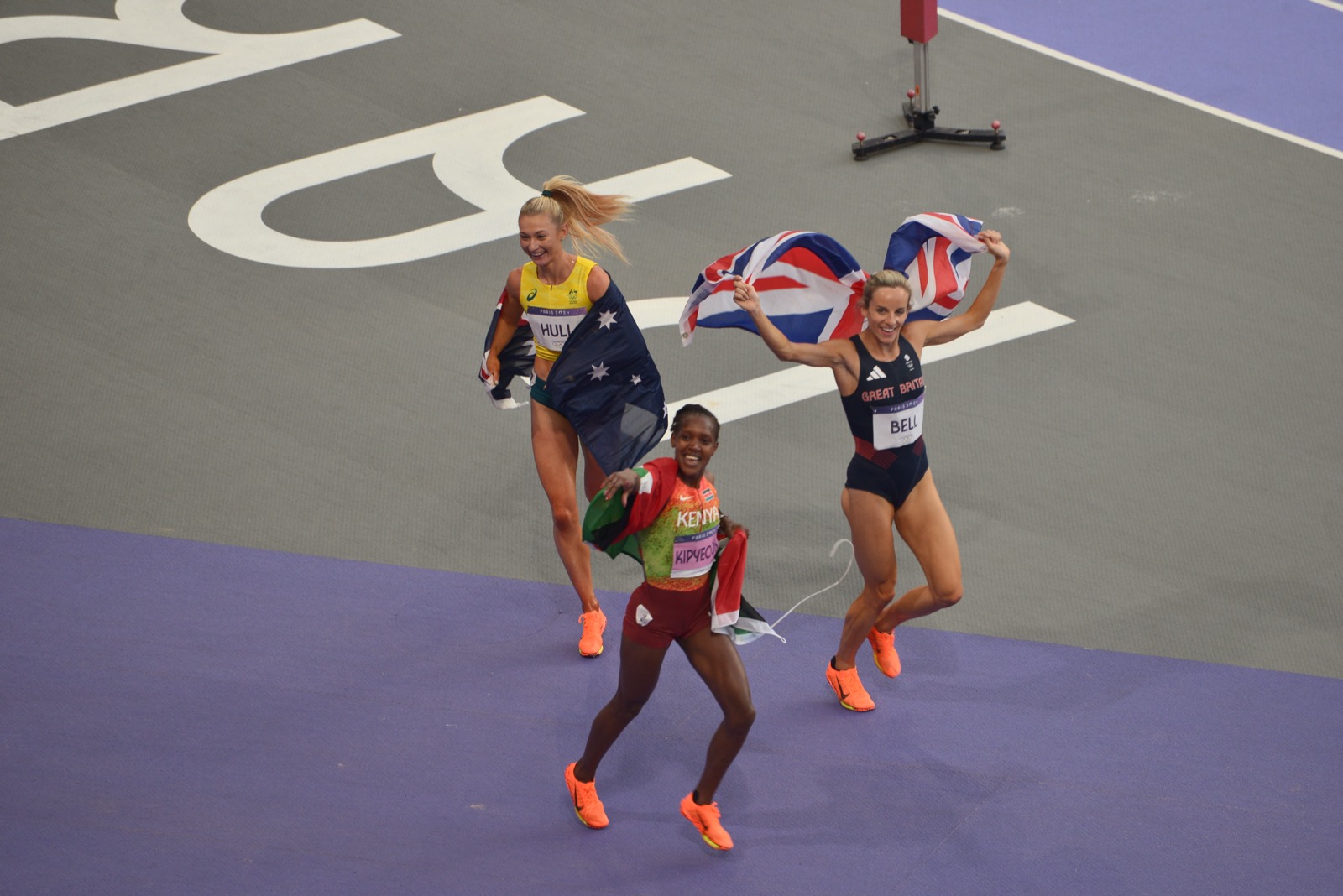
Every collection starts with one piece. Maybe you saw a singlet flash past in a championship final and wanted the real thing. Maybe you race yourself and want to toe the line in kit built to the same standard the pros wear. Either way, your first Pro Elite purchase is the one where mistakes are easiest to make — wrong garment, wrong size, or worse, a convincing fake. This guide walks you through the whole decision, in order.
Key facts · Verified · updated July 2026
- What “Pro Elite” is
- Nike’s athlete-issue tier — never sold at retail
- Documented style code
- FN1826-618 (2024 Pro Elite Team W distance singlet)
- The buy order
- 1 singlet → 2 shorts/half-tights → 3 tracksuit
- Typical singlet blend
- ≈85–90% polyester / 10–14% elastane
- Wearing casually?
- go one size up from usual
- Hardest to size remotely
- the speedsuit — not a first purchase
- Red flag #1
- a price far below market
- Rule of thumb
- one honest piece beats three bargains
First, Understand What You Are Actually Buying
“Pro Elite” is the name the collector community uses for Nike’s athlete-issue competition tier: kit produced for contracted elite athletes and national-team programs, made in limited quantities, and — as specialist resellers consistently describe it — issued to sponsored athletes rather than offered in Nike’s retail range. Nike itself does not market a “Pro Elite” line to the public; you will not find these pieces on nike.com, and the label’s status rests on collector-community knowledge rather than any official brand statement.
That distinction matters, because Nike does sell a genuine pinnacle retail racing line — AeroSwift with Dri-FIT ADV — through normal channels. It shares fabric technology with athlete kit, and it is excellent race apparel. But it is not the same thing as the athlete-issue pieces you see on championship start lines, and the two should never be priced or collected as if they were. When a piece is real athlete-issue, it typically carries a Nike style code on its sewn-in label — for instance, the 2024 Pro Elite Team women’s distance singlet is documented under style code FN1826-618.
So where do authentic pieces come from, if they were never sold in shops? The collector community’s answer: pieces typically reach the market via athletes’ seasonal kit allocations — athletes receive more kit than they can use, and surplus filters out secondhand through specialists and athlete networks. There is no official supply channel, which is exactly why provenance and seller reputation carry so much weight in this hobby.

What to Buy First: The Order That Works
1. Start with a singlet
The competition singlet is the gateway piece, and for good reason. It is the garment athletics is pictured in — the thing you actually see crossing finish lines — and the most versatile. You can race in it across virtually every event, display it flat, and it takes up no space. It is also the garment with the deepest secondary market, which means the widest choice of nations, years and sizes for a first-time buyer. Browse the full catalog and you will see why most collections are built around singlets.
2. Add shorts or half-tights
Once you own the top half, complete the race kit. Half-tights and race shorts from the same nation and cycle turn a singlet into a full competition outfit — and matched sets are noticeably more satisfying to own (and to resell) than orphan pieces.
3. Then the tracksuit
The podium tracksuit is the statement piece: the jacket athletes wear for medal ceremonies and warm-ups. It is the most wearable item in day-to-day life and often the most photographed, but it is also bulkier, scarcer in matched sizes, and a bigger commitment. Great third purchase; risky first one.
Choosing Your Nation and Year
The fastest way to narrow hundreds of options to one is simple: buy what you have a connection to. Your own country’s federation kit. The nation of an athlete you follow. The championship cycle you watched live. A piece with a story behind it gets worn, displayed and kept; a piece bought purely because it was available gets resold.
A few practical pointers:
- Federation kit is the heart of the hobby. National-team pieces tie a garment to a country, a season and a championship — that context is what separates collecting from shopping. Our international teams collection is organized to browse exactly this way.
- Kit changes by cycle. Brands issue fresh designs around major championship cycles, so the year defines the look. Nike’s own newsroom documents how national and federation kits are redesigned for each major season — pick the design era you love as much as the flag.
- Big federations are the easy entry point. Kits from major athletics nations surface more often on the secondary market, which means more size choice and easier comparison shopping for a first buyer. Rarer federations are wonderful — later.
Budget: What to Expect (Honestly)
We deliberately will not quote price ranges here — the secondary market moves, and any number printed today misleads you tomorrow. But the structure of pricing is stable, and understanding it is more useful than any figure:
- Athlete-issue costs more than retail. These pieces were never mass-produced, so scarcity — not fabric cost — sets the price. Expect a meaningful premium over even Nike’s top retail racing gear.
- Rarity drives the spread. Recent kit from major federations sits at the accessible end. Older cycles, smaller federations, speedsuits, and matched sets climb from there; anything with credible athlete provenance climbs steeply.
- “Too cheap” is a warning, not a bargain. A price far below the going market rate is one of the most reliable red flags for counterfeits. If a deal looks impossible, treat it as information.
Rule of thumb for a first purchase: buy one piece you love at honest market price rather than three suspicious bargains. One authentic singlet holds its value; three fakes hold nothing.
The price structure — no figures, on purpose
The market moves; the order doesn’t. Scarcity sets every step of this staircase.
Data table — price structure (ordinal)
| Tier | Position in the spread |
|---|---|
| Nike retail racing | 1 of 5 |
| Recent kit, major federations | 2 of 5 |
| Older cycles · smaller federations | 3 of 5 |
| Speedsuits · matched sets | 4 of 5 |
| Credible athlete provenance | 5 of 5 |
Ordinal structure as described in this guide; the post quotes no prices because the secondary market moves.
Getting the Fit Right
Athlete-issue kit is cut for competition, and race cut is unforgiving compared with retail. The essentials:
- A race singlet is meant to fit like a second skin — snug through the chest and torso, with the fabric’s elastane stretch (typical elite singlets blend roughly 85–90% polyester with 10–14% elastane) doing the accommodating.
- If you are buying to wear casually rather than race, consider one size up from your usual.
- Speedsuits are compression-like and the hardest garment to size remotely — not the ideal first purchase for that reason alone.
- Measurements beat size letters. Know your chest, waist and hip measurements, and ask for the garment’s flat measurements when in doubt.
We cover all of this in depth — garment by garment, with a measuring checklist — in our Pro Elite sizing guide. Read it before your first order; it is the ten minutes most likely to save you a return.
The Beginner’s Biggest Risk: Fakes
Because authentic Pro Elite kit is scarce and never sold at retail, counterfeiters have moved in — and the current generation of fakes is convincing, to the point that construction details alone are no longer conclusive proof of authenticity. As a first-time buyer you are the counterfeit market’s favorite customer: motivated, unfamiliar with the real thing, and price-sensitive.
Protect yourself with three habits. Buy from specialists with a track record rather than open marketplaces. Check that the piece carries a Nike style code on its sewn-in label and that the seller can tell you where the piece came from. And before you send money to anyone, work through our full authentication guide — it covers style codes, labels, construction markers, collector terminology and the complete red-flag checklist.
Is Pro Elite kit sold by Nike directly?
No. Pro Elite is the collector term for Nike’s athlete-issue competition tier, produced for contracted athletes and not offered in Nike’s retail range. Nike’s public racing line (AeroSwift / Dri-FIT ADV) shares fabric technology but is a separate retail product. Athlete-issue pieces reach collectors through the secondary market.
What should my very first Pro Elite purchase be?
A competition singlet from a nation or cycle you care about. It is the most visible, most available and most versatile garment — and the easiest to size correctly on a first order. Shorts or half-tights come next; save speedsuits and tracksuits for purchases two and three.
Can I actually race in athlete-issue kit?
Yes — it is competition apparel built for exactly that. Many buyers race in their kit; others keep it strictly for display. Just decide before you choose your size, because race fit and casual fit point to different choices.
How do I know a piece is authentic before buying?
Check for a Nike style code on the sewn-in label, insist on knowing the piece’s provenance, and buy from reputable specialists — modern counterfeits replicate visual details convincingly, so who you buy from matters as much as what you inspect.
Do I need to pick my own country’s kit?
Not at all. Buy the kit you feel a connection to — an athlete you admire, a championship you watched, a design you love. Connection is what makes a first piece a keeper.
Your first piece is waiting. Explore authenticated singlets, half-tights and tracksuits in the Elite Athletics Clothes catalog, or start with a federation you follow in our international teams collection — every piece vetted before it ever reaches a listing.