

Ethiopia
2014
Three world marks in fifteen days of February, a world indoor double in Sopot, and a marathon year Ethiopia turned out to have won long after the finish lines — the 2014 season, still holding a world record today.
Ethiopia's 2014 season had no outdoor Worlds to aim at — so it made its history early: Genzebe Dibaba broke three world marks in fifteen days of February, one of which, the 8:16.60 indoor 3000 m, is still the world record twelve years later.
This is the whole year: the February burst, Ethiopia's second place at the Sopot World Indoors, Bekele's 2:05:04 marathon debut, the four majors that ended up Ethiopian — and the adidas federation kit of that season, three pieces of which are in this archive.
Part of our Season Series — one year at a time. The full national story is in The History of Athletics in Ethiopia. Jump to the 2014 kit or browse the collection.
- The year
- No outdoor Worlds — the global stage was the World Indoors, Sopot, 7–9 March
- The burst
- 3 world marks in 15 days: 3:55.17 · 8:16.60 · 9:00.48 (1–15 Feb)
- Still standing
- The 8:16.60 indoor 3000 m — world record since 2014, current in 2026
- Sopot
- 2nd in the medal table (2-2-1): golds for Genzebe Dibaba and Mohammed Aman
- The debut
- Bekele wins Paris in 2:05:04 — course record, then the 6th-fastest debut ever
- The majors
- Ethiopian women hold 4 of the 6 2014 majors today — two via the Jeptoo disqualification
- The record rewrite
- Deba's 2:19:59 — declared Boston champion in Dec 2016, then the fastest in race history
- Kit
- adidas federation issue — emerald green, yellow collar, flag at the chest
Three Records in Fifteen Days
The Ethiopian season of 2014 peaked before most of the world had taken its gloves off. Between the 1st and the 15th of February, Genzebe Dibaba — the younger sister in the most decorated family in distance running — broke three world marks in three different events in three different countries: 3:55.17 for the indoor 1500 m in Karlsruhe, 8:16.60 for 3000 m in Stockholm five days later, and a 9:00.48 two-mile world best in Birmingham to close the fortnight. By Wikipedia's accounting, only Jesse Owens and Usain Bolt have compressed three world marks in three events into fifteen days.
Ring size is drawn to the seconds carved off the previous mark (≈3 s · ≈7 s · ≈6 s). Hover or tab onto a blast for the detail. Sources: World Athletics meeting reports and the ratified record lists, checked August 2026.
The three marks — table view
| Date (2014) | Venue | Event | Mark | Status in Aug 2026 |
|---|---|---|---|---|
| 1 Feb | Karlsruhe | 1500 m indoor | 3:55.17 WR | Fell 2021 (Tsegay 3:53.09 — still Ethiopian) |
| 6 Feb | Stockholm | 3000 m indoor | 8:16.60 WR | Still the world indoor record |
| 15 Feb | Birmingham | Two miles indoor | 9:00.48 world best | Still the world best |
The precision matters: the 1500 and 3000 were ratified world indoor records; the two miles is a world best, because the event does not carry an official record. And the Stockholm run was the outlier even inside its own streak — roughly seven seconds off Meseret Defar's record and more than thirty off Dibaba's own previous best. In August 2026 it is still the world indoor 3000 m record, twelve years old and counting.
Second in the World, Indoors
2014 had no outdoor World Championships, so the global stage was the World Indoors in Sopot, Poland, in the first week of March — and Ethiopia left it second in the medal table with two golds, two silvers and a bronze. Dibaba arrived as the record-breaker and converted: gold in the 3000 m in 8:55.04, clear of Kenya's Hellen Obiri.
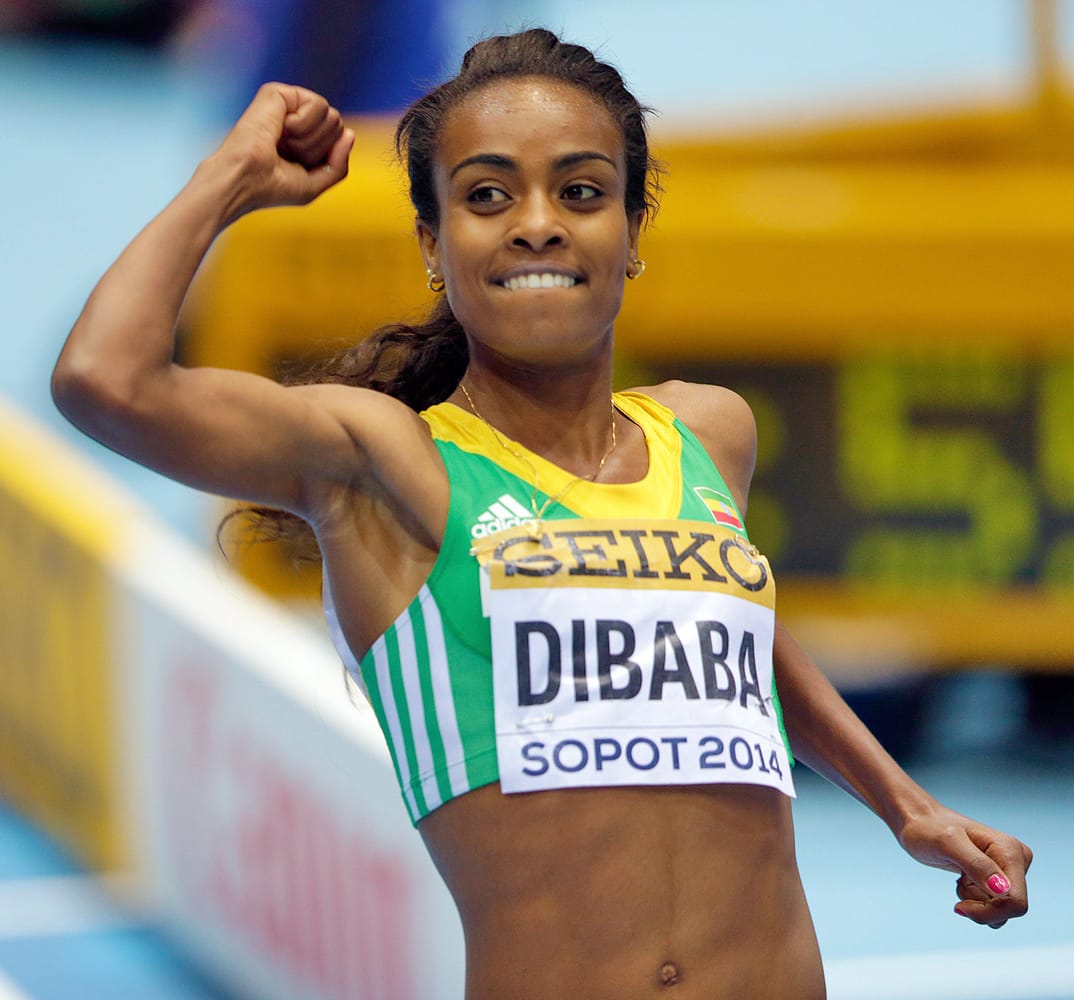
The other gold belonged to Mohammed Aman, who had given Ethiopia its first global 800 m title as a teenager in Istanbul in 2012 and defended it in Sopot, running down two Poles in the final fifty metres to win in 1:46.40. (His story has a hard coda: a doping-control violation from 2021 — made public only in 2025 — has him ineligible until October 2028.) Aman Wote took 1500 m silver, Axumawit Embaye ran a personal best 4:07.12 for silver in the women's 1500 — behind Abeba Aregawi, Ethiopian-born but competing for Sweden — and Dejen Gebremeskel added 3000 m bronze.
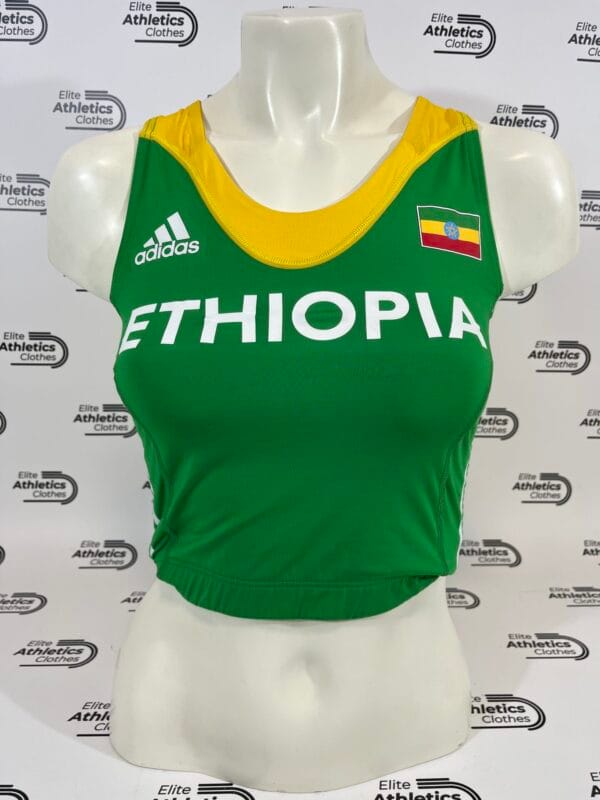 Adidas Ethiopia 2014 · in the archiveAdidas Ethiopia Pro Elite 2014 Women Crop TopThe racing crop from the same allocation — a season set from the federation channel that rarely survives together.Sold out · check back soonView piece →
The Year the Roads Changed Hands
The spring moved the story to the roads, and to a debut the sport had waited a decade for. On 6 April, Kenenisa Bekele — the greatest track distance runner of his era — ran his first marathon in Paris and won it in 2:05:04, a course record and then the sixth-fastest debut in history, quicker than the first marathons of Gebrselassie, Tergat or Wanjiru.
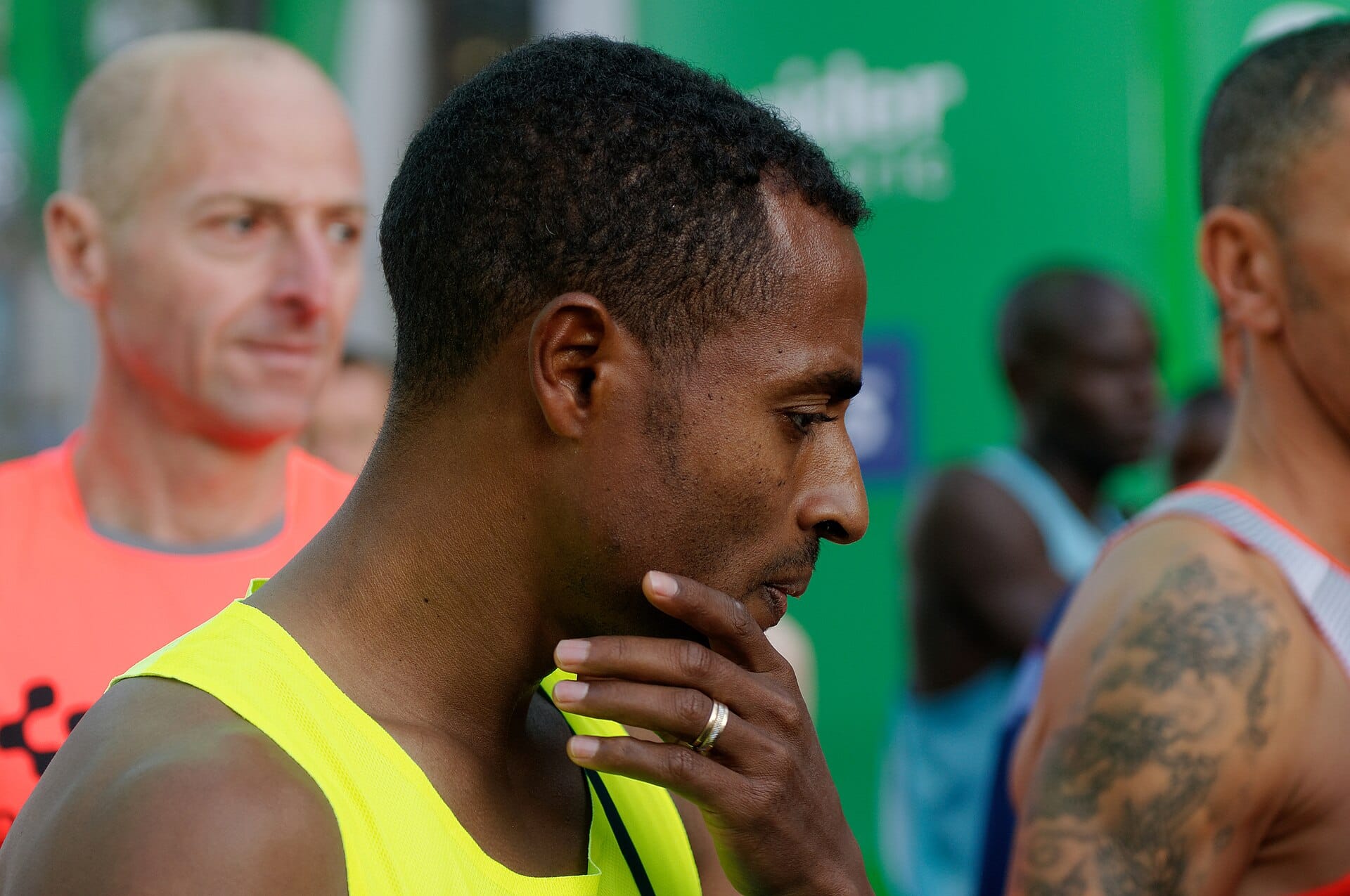
What nobody knew in 2014 was how much of the year's road racing Ethiopia had actually won. On the day, Ethiopian women took Tokyo — Tirfi Tsegaye, with a course record 2:22:23 — and Berlin, Tsegaye again in 2:20:18. The record books later added two more: when Rita Jeptoo's EPO positive erased her results, Buzunesh Deba was declared the 2014 Boston champion — her 2:19:59 then the fastest women's run in the race's 121-year history — and Mare Dibaba inherited Chicago. Four of the six majors of 2014 belong today to Ethiopian women. Deba's medal came in December 2016; part of her prize money took until 2024 to reach her, and not from the race organisers.
Two more threads complete the year. Tirunesh Dibaba made her own marathon debut in London — third in 2:20:35 — then announced in November that she would pause for the birth of her first child. And in Marrakech, a 22-year-old Almaz Ayana won the African 5000 m title in a championship record 15:32.72, then took the Continental Cup race by twenty-five seconds — the first big senior season of the woman who would break the 10,000 m world record in Rio two years later. Muktar Edris ran the world's fastest 5000 m of 2014 in Stockholm, 12:54.83, and Lelisa Desisa lost New York by seven seconds.
The Adidas Ethiopia Kit
The kit of that season is the one in the photographs from Sopot: adidas federation issue in emerald green mesh, a deep yellow collar, ETHIOPIA across the chest in white and the tricolour flag at the shoulder. adidas was then — and long remained — the Ethiopian Athletics Federation's kit supplier and biggest sponsor; a review of the federation's finances put the adidas payment at roughly half its annual income.
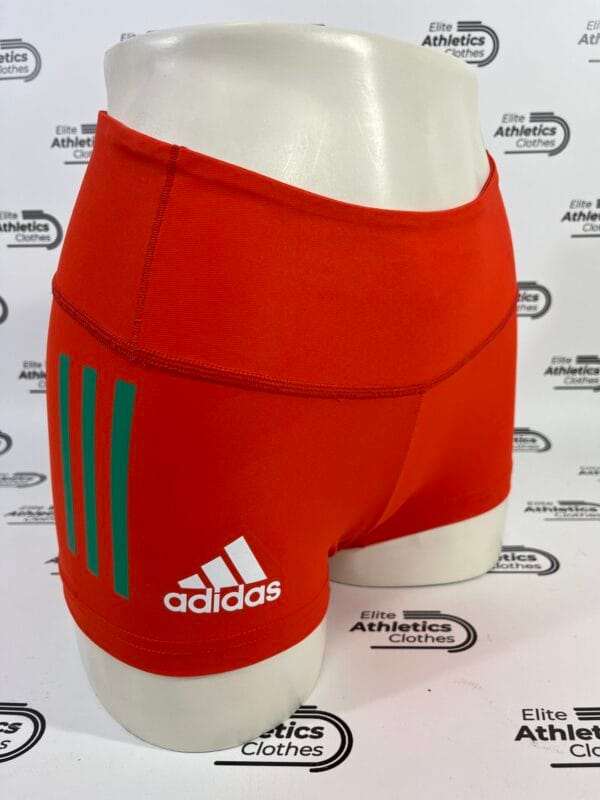
The three 2014 pieces in this archive are all women's federation issue from that allocation — distance singlet, crop top and booty short tights — in the green, yellow and red of the era. We describe them from the garments themselves; team kit from this channel surfaces rarely, and a matching season set almost never.
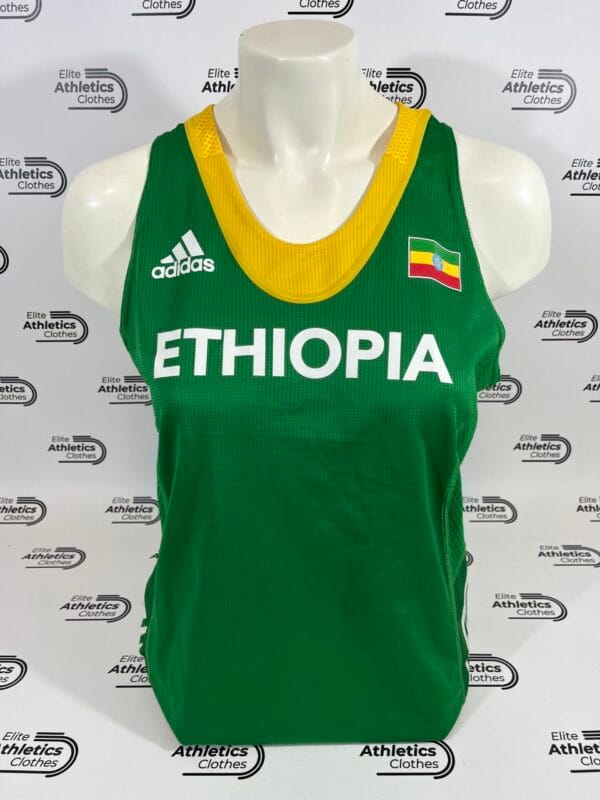 From this season · in the archiveAdidas Ethiopia Pro Elite 2014 Women Distance SingletThe emerald federation singlet of the 2014 cycle — adidas team issue with the yellow collar and the flag at the chest, the kit of the Sopot winter.80,00 €View piece →
Where the threads lead — Genzebe's outdoor 1500 record, Ayana's Rio explosion, Bekele's decade on the roads — is told in our history of athletics in Ethiopia.
Ethiopia 2014
Three women's pieces from the Ethiopian federation's 2014 allocation — distance singlet, crop top and booty short tights, all adidas team issue in the emerald and yellow of the Sopot winter. Federation kit from this channel rarely surfaces at all; a matching season trio almost never.
What did Genzebe Dibaba achieve in 2014?
Three world marks in fifteen days of February — 3:55.17 for the indoor 1500 m in Karlsruhe, 8:16.60 for 3000 m in Stockholm and a 9:00.48 two-mile world best in Birmingham — followed by the world indoor 3000 m title in Sopot. The 8:16.60 is still the world indoor record in 2026, twelve years on.
Is Genzebe Dibaba’s 8:16.60 still the world record?
Yes. It has stood as the world indoor 3000 m record since 6 February 2014 and was still current at the 2026 World Indoors. Her 1500 m record fell in 2021 — to another Ethiopian, Gudaf Tsegay (3:53.09) — and her two-mile world best also still stands.
How did Ethiopia do at the 2014 World Indoor Championships?
Second in the medal table: gold for Genzebe Dibaba (3000 m, 8:55.04) and Mohammed Aman (800 m, 1:46.40, defending his title), silver for Aman Wote and Axumawit Embaye over 1500 m, and bronze for Dejen Gebremeskel in the 3000 m.
What was Kenenisa Bekele’s 2014 marathon debut?
Paris, 6 April 2014: he won in 2:05:04, a course record and then the sixth-fastest marathon debut in history. At 43 he was still racing marathons in 2024, finishing second in London at age 41.
Why are Ethiopian women credited with four 2014 marathon majors?
Tirfi Tsegaye won Tokyo and Berlin outright. Boston and Chicago were re-awarded after Rita Jeptoo’s doping disqualification: Buzunesh Deba’s 2:19:59 made her the 2014 Boston champion — then the fastest women’s time in the race’s history — and Mare Dibaba inherited Chicago.
What kit did Ethiopia wear in 2014?
adidas federation issue — emerald green with a yellow collar, white ETHIOPIA lettering and the flag at the chest, as worn in Sopot. The Ethiopia collection holds three women’s pieces of the 2014 allocation: distance singlet, crop top and booty short tights.
Sources and References
- Wikipedia — Genzebe Dibaba — the three February marks, their dates and venues, and the Owens/Bolt comparison
- World Athletics — the Birmingham two-mile report — the 9:00.48 world best and the margin over Defar
- Wikipedia — 2026 World Indoors, women’s 3000 m — the 8:16.60 confirmed as the current world record in March 2026
- Wikipedia — 2014 World Indoor Championships — Ethiopia’s 2-2-1 and every Sopot result quoted
- World Athletics — Bekele wins his Paris debut — the 2:05:04 course record, then the sixth-fastest debut ever
- ESPN — Deba named 2014 Boston champion — the December 2016 re-award after Jeptoo’s disqualification, and the 2:19:59
- The Boston Globe — Deba’s overdue prize money — part of the Boston prize finally paid in May 2024
- World Athletics — Tirunesh Dibaba’s announcement — the London debut and the November 2014 maternity announcement
- Wikipedia — 2014 African Championships — Ayana’s 15:32.72 championship record and Ayalew’s steeplechase gold in Marrakech
- Running Magazine — Aman’s sanction — the ban to October 2028, made public in 2025
- Ethiopian Business Review — federation sponsorship — the adidas payment as roughly half the federation’s annual income