

France
A founding nation of the modern Olympic movement, France pairs a deep club tradition with world-record brilliance across sprints, middle distance, the decathlon, the pole vault and race walking.
France is a founding nation of modern athletics: Pierre de Coubertin revived the Olympic Games in 1896, Marie-José Pérec completed a 200m/400m double at Atlanta 1996, Kevin Mayer holds the decathlon world record, and Renaud Lavillenie broke the indoor pole vault world record — a history spanning every era of the sport.
No other country’s relationship with athletics reaches back further in the modern era. A Frenchman conceived the modern Games, and French athletes, from Michel Jazy and Alain Mimoun to Renaud Lavillenie and Christophe Lemaitre, have delivered some of the sport’s defining moments. This is the complete history of athletics in France.
Every era of French athletics excellence lives on in authentic, athlete-worn kit. Explore the France collection at Elite Athletics Clothes — real pro elite gear from the national team and France’s most storied clubs.
- Federation
- Fédération Française d’Athlétisme (FFA)
- The founder
- The modern Olympic Games are a French idea: Pierre de Coubertin revived them in 1896
- Olympic athletics medals
- 71: 13 gold · 28 silver · 30 bronze
- Host nation
- Paris has staged the Games three times: 1900, 1924 and 2024
- The saga
- Alain Mimoun: three silvers behind Zátopek, then marathon gold at Melbourne 1956
- La reine
- Marie-José Pérec · 3 Olympic golds: 400m in 1992, the 200m–400m double in 1996
- Modern icons
- Lavillenie (pole vault gold 2012, indoor WR 6.16m) · Mayer (decathlon WR 9,126)
- Kit supplier
- Asics · the tricolore worn at the Stade de France in 2024
The Origins of Track and Field in France
France’s relationship with athletics reaches back further than any other country in the modern era. It was Pierre de Coubertin — a Frenchman — who conceived and championed the revival of the Olympic Games, founding the International Olympic Committee in Paris in 1894 and staging the first modern Olympics in Athens in 1896. De Coubertin believed that sport, and athletics in particular, was central to the development of character, civilisation and international understanding — the foundation upon which French athletics would be built.
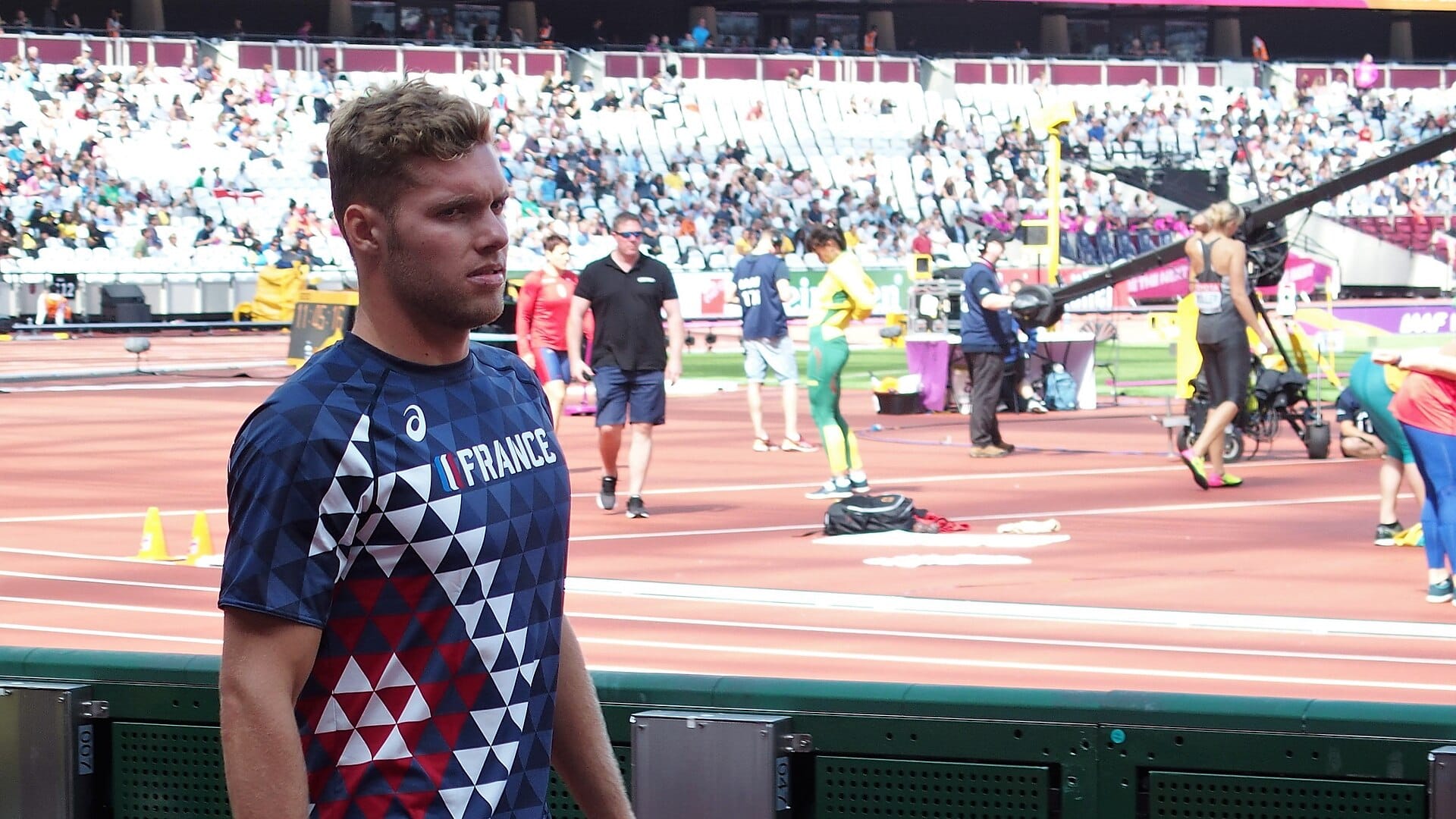
The Fédération Française d’Athlétisme (FFA) was established in 1920, giving French athletics an official governing body. But organised athletics had been flourishing well before then: the Union des Sociétés Françaises de Sports Athlétiques (USFSA), founded in 1887, had already been coordinating amateur competition across the country, and club athletics had taken root in Paris and the major provincial cities. By the turn of the 20th century, France was already producing athletes capable of competing with the best in the world.
The early structure of French athletics was shaped by a strong tradition of club competition. Clubs like Racing Club de France, founded in 1882, became pioneering forces in the sport — hosting meetings, developing talent and giving French athletes the infrastructure to train seriously. This club culture, which also gave rise to legendary outfits like CA Montreuil (CAM93), has remained a defining feature of French athletics to the present day.
France at the Early Olympic Games
France was one of the most active participants in the early Olympic Games, fielding athletes across multiple disciplines and hosting the Games in Paris on two separate occasions — in 1900 and 1924. The 1900 Paris Olympics were a somewhat chaotic affair, embedded within the World Exposition, but they produced important performances for French athletics. Alvin Kraenzlein of the United States dominated the sprints and hurdles, but French athletes acquitted themselves with distinction in the field events and distance races.
The 1924 Paris Olympics, the “Chariots of Fire” Games, were a far more polished event. France used the home Games to show its athletics strength, and the performances at Colombes Stadium set the tone for decades. British and American athletes took most of the headlines, but the French team made itself respected across the programme.
France returned to the Olympic podium at the 1948 London Games, where middle-distance runner Marcel Hansenne won bronze in the 800 metres, an early sign of the French middle-distance strength that would peak in the following decade.
France’s Greatest Athletes
France has produced athletes of the very highest calibre across virtually every discipline in the history of the sport. From the elegance of Michel Jazy to the dominance of Marie-José Pérec and the record-breaking feats of Kevin Mayer and Renaud Lavillenie, these figures stand out as the most historically significant contributors to French athletics greatness.
Marie-José Pérec
The greatest female athlete in French history. Born in Guadeloupe in 1968, she won 400m gold at Barcelona 1992 then, at Atlanta 1996, retained it and added the 200m for a double sprint gold. Her 48.25s stood as Olympic record for over two decades.
01Michel Jazy
The finest middle-distance runner France has produced. Born in Oignies in 1936, he took 1500m silver behind Herb Elliott at Rome 1960. In 1965 alone he broke four world records — the mile in 3:53.6, the 2,000m, the 3,000m and the two-miles relay.
02Kevin Mayer
The reigning decathlon world record holder. Born in Argenteuil in 1992, he won World gold in London 2017, then scored a world-record 9,126 points at the 2018 Décastar in Talence. He added Tokyo 2020 Olympic silver and World gold in Eugene 2022.
03Renaud Lavillenie
One of the greatest vaulters in history. He broke Sergey Bubka’s long-standing indoor world record with a 6.16m clearance at the 2014 World Indoor Championships in Donetsk, a mark that had stood since 1993. He also won Olympic gold at London 2012.
04Christophe Lemaitre
Made history in 2010 as the first athlete of European descent to run the 100 metres under 10 seconds, clocking 9.98s in Valence. He went on to win 200 metres bronze at the Rio 2016 Olympics, confirming his status as one of France’s most celebrated sprinters.
05Alain Mimoun
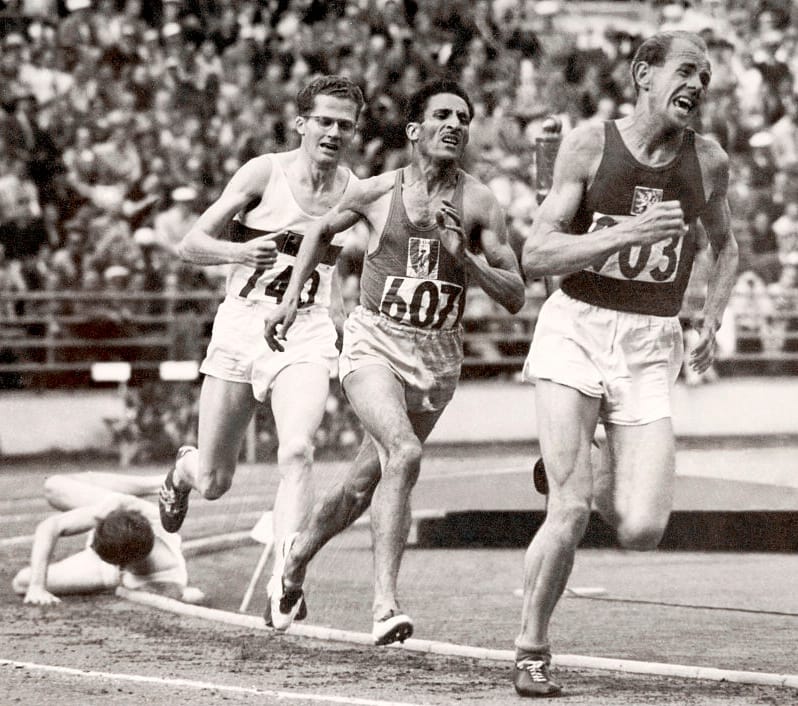
Born in Algeria and representing France, he won three Olympic silvers behind Emil Zátopek before finally taking marathon gold at Melbourne 1956. His finish-line embrace with his old rival became one of the great images in Olympic history.
06Olympic Achievements
France has participated in every Summer Olympic Games since the inaugural 1896 Athens edition, accumulating a rich and diverse collection of athletics medals — over 20 across the modern Games — in events ranging from the 400 metres to the decathlon, from the pole vault to middle-distance running.
The duel: Mimoun & Zátopek
London '4810,000m
Helsinki '5210,000m
Helsinki '525,000m
Melbourne '56Marathon
Four races, eight years, one friendship. Three times Mimoun crossed the line behind the same man; in Melbourne he finally won, and Zátopek, sixth that day, embraced him at the finish. Source: World Athletics, Olympics.com.
View the data
| Race | Zátopek | Mimoun |
|---|---|---|
| London 1948 · 10,000m | Gold | Silver |
| Helsinki 1952 · 10,000m | Gold | Silver |
| Helsinki 1952 · 5,000m | Gold | Silver |
| Melbourne 1956 · Marathon | 6th | Gold |
Marcel Hansenne took bronze in the 800 metres, signalling the growing strength of French middle-distance running.
Alain Mimoun won marathon gold, beating his old rival Emil Zátopek for the first time in a deeply moving victory.
Michel Jazy claimed 1500 metres silver behind Australia’s Herb Elliott, announcing himself on the world stage.
Marie-José Pérec won the 400 metres, her first Olympic title and the start of French sprinting dominance.
Pérec produced a stunning 200m/400m double, running 48.25 for a 400m Olympic record that lasted over two decades.
Renaud Lavillenie won pole vault gold, confirming France’s supremacy in the technical field events.
Christophe Lemaitre took 200 metres bronze, adding an Olympic medal to his pioneering sub-10-second sprint career.
Kevin Mayer won decathlon silver, extending France’s standing as a global power in the multi-events.
World Championship Achievements
France has been a consistent medal-winning nation at the World Athletics Championships since the inaugural edition in Helsinki in 1983. Kevin Mayer’s decathlon gold at the 2017 World Championships in London — followed by his even more dominant performance in Eugene in 2022 — represents the peak of France’s individual World Championship achievements in the modern era. Renaud Lavillenie’s World Indoor pole vault gold and multiple European titles cement France’s status as a world leader in technical field events.
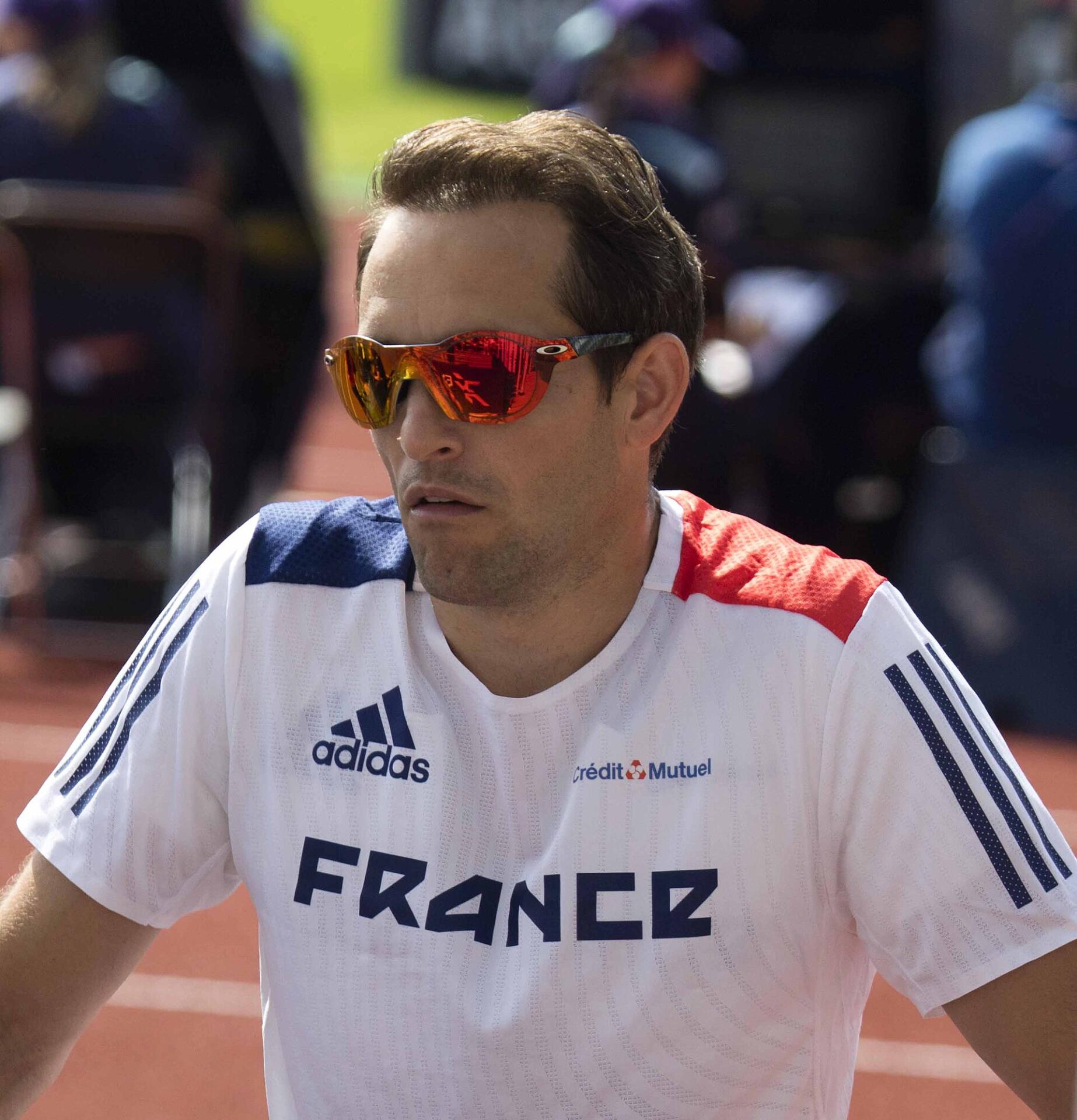
In the sprints, Marie-José Pérec’s 400 metres World Championship gold in Tokyo 1991 was a landmark performance that signalled her arrival as the dominant force in women’s quarter-mile running. More recently, Yohann Diniz established France as a world leader in race walking, winning the 50 kilometres race walk at the 2017 World Championships in London in a championship-record 3:33:12. France’s 4×400 metres relay teams, both men’s and women’s, have also consistently reached World and European finals, frequently challenging the dominant American and Jamaican squads.
Running Culture in France
France has a rich and deeply embedded running culture that extends far beyond the professional circuit. The Paris Marathon, first run in 1976, has grown into one of the largest and most prestigious marathons in the world, regularly attracting fields of over 50,000 runners from more than 150 countries. The race past the Louvre, along the Seine and beneath the Arc de Triomphe is one of the defining experiences in global distance running.
The country also has a rich tradition of cross-country running: the Cross du Figaro and the Cross de l’Acier are among the oldest such races in the world. The French scene is characterised by an authentic enthusiasm for the sport at every level — from elite competition to mass participation — supported by a strong network of athletics clubs spread across the country’s cities, towns and rural communities.
The French national team competes in the blue, white and red of the tricolore — a kit produced by Asics in its most recent iteration and a symbol of a proud athletics identity.
The French Club System
The French club athletics system is one of the most developed in Europe. With thousands of affiliated clubs organised under the Fédération Française d’Athlétisme, French athletics benefits from a grassroots infrastructure that consistently produces international-level talent.
Clubs like CA Montreuil 93 exemplify this tradition, having trained and developed athletes for more than eight decades and hosted international meetings as part of the prestigious Pro Athlé Tour circuit. Founded in 1943 in Montreuil, near Paris, CAM93 gained fame in the 1950s and 60s with athletes like Michel Jazy and Roger Bambuck, and remains a living example of how French club culture translates ambition and talent into world-class performances.
This grassroots strength feeds directly into the elite level. The depth of France’s domestic 400 metres programme, for instance, has produced a succession of talented quarter-milers capable of performing on the biggest stages, underpinning the country’s strong relay tradition.
The Current State of France Athletics
French athletics in the mid-2020s is in a strong period of development. The Paris 2024 Olympic Games gave the sport an enormous push, with the Stade de France in Saint-Denis hosting the athletics programme in front of huge crowds. For the first time in a generation France competed at a home Olympics — and came within a day of an athletics shutout, saved by Cyréna Samba-Mayela’s 100m hurdles silver on the final afternoon of track action. The reply came at the 2025 World Championships in Tokyo, where Jimmy Gressier out-leaned Yomif Kejelcha for a shock 10,000m gold and added 5,000m bronze six days later.
The Fédération Française d’Athlétisme has invested significantly in talent identification, youth development and high-performance coaching, with results visible across multiple disciplines. The sprints programme has benefited from emerging talent, the middle and long-distance sectors continue to produce championship contenders, and Kevin Mayer still owns the decathlon world record (9,126 points, Talence 2018), though a stubborn thigh injury kept him out of the Paris decathlon and the entire 2025 season. France is also a significant force in road running and race walking on the international circuit.
Future Stars and Emerging Talents
The future of French athletics looks exceptionally bright. A new generation is emerging from the club system and national academy programmes, with performances at European under-20 and under-23 championships consistently signalling that France is producing world-class talent across multiple disciplines — a pipeline expected to swell further after the home Paris 2024 Games.
Wilfried Happio
Has established himself as one of Europe’s most exciting 400 metres hurdlers, his technical ability and competitive instinct making him a strong candidate for future major championship medals.
New middle-distance generation
A fresh wave of French 800m and 1500m runners is making an impact at European level, continuing the tradition established by Michel Jazy six decades ago.
Emerging sprint prospects
Several young French athletes have been posting times that suggest a genuine challenge to the established European sprint hierarchy is on its way.
Decathlon pipeline
Behind Kevin Mayer, French multi-event athletics has invested heavily in the next generation, with several under-23 performers posting scores that point to continued strength.
France Records & Historic Milestones
Shop France Athletics Apparel
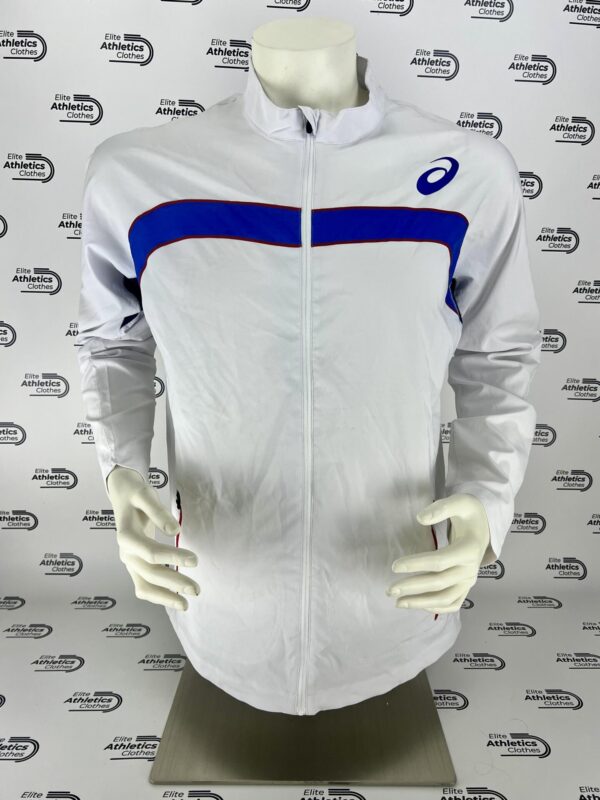
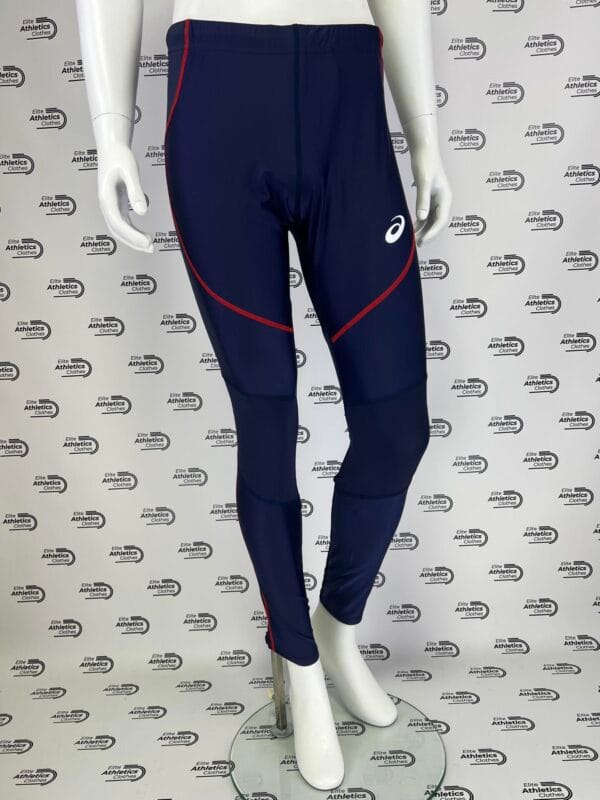
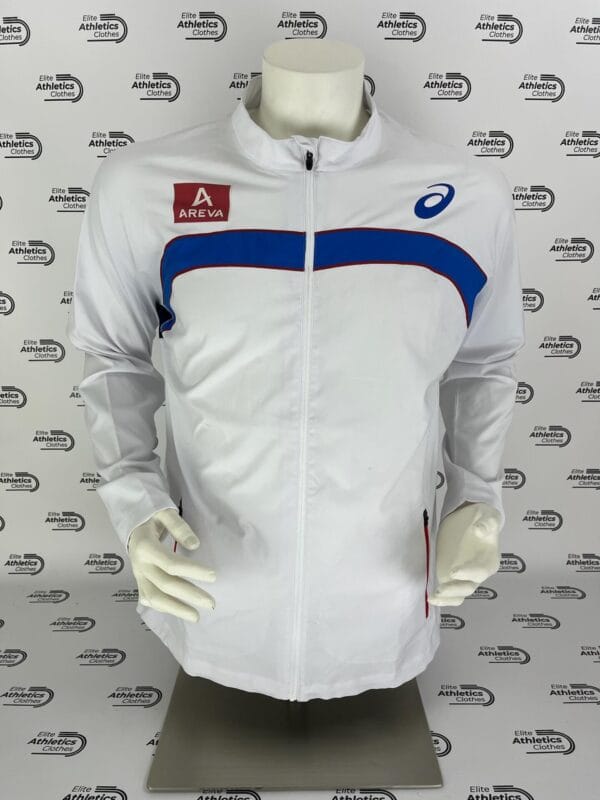
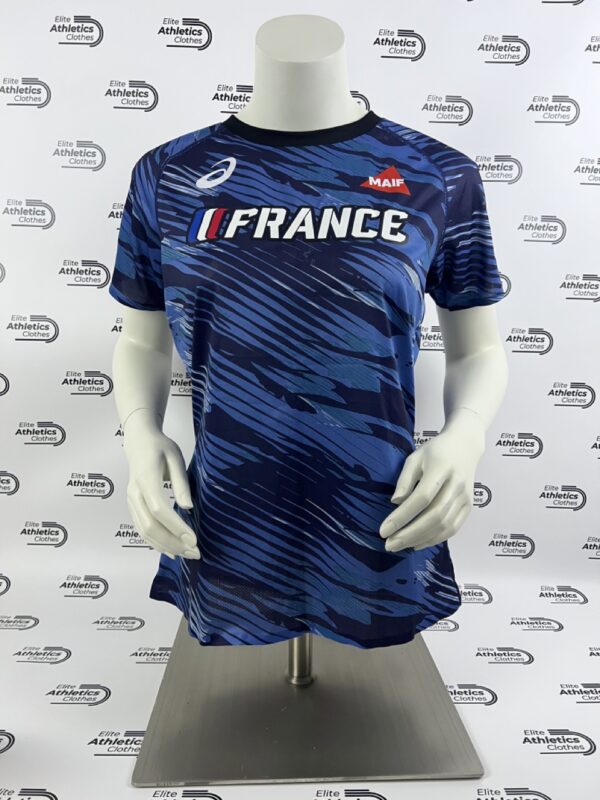
At Elite Athletics Clothes we carry authentic, athlete-worn France athletics apparel — the same gear worn by French national team athletes and iconic clubs like CA Montreuil 93 on the world stage. Real pro elite kit for collectors, fans and athletes alike.

Who is the greatest French athlete of all time?
Marie-José Pérec is widely considered the greatest, with three Olympic gold medals across the 200m and 400m, including a double sprint gold at Atlanta 1996. Michel Jazy, who broke four world records in 1965, is the greatest male athlete, while decathlon world record holder Kevin Mayer is France’s most decorated active champion.
Has France ever hosted the Olympic athletics programme?
Yes. France hosted the Olympic Games, including the athletics programme, in Paris in 1900, again in Paris in 1924, and most recently in Paris in 2024. The 2024 athletics programme was staged at the Stade de France in Saint-Denis, one of the most atmospheric settings in modern Olympic athletics history.
What is the French national record in the 100 metres?
The men’s 100 metres national record was set by Christophe Lemaitre in 2010, when he became the first European-born athlete to run under 10 seconds. His landmark time of 9.98 seconds remains one of the most significant performances in European sprint history.
What is the Paris Diamond League meeting?
The Paris Diamond League meeting — formerly the Areva Meeting — is one of the premier annual competitions on the World Athletics Diamond League circuit. Held at the Stade de France, it regularly attracts the world’s best track and field athletes and has been the setting for numerous world and national records.
What is CA Montreuil 93 (CAM93)?
CA Montreuil 93 is one of France’s most historic athletics clubs, founded in 1943 in Montreuil, near Paris. It has produced world-class athletes for more than eight decades, gained fame in the 1950s and 60s with figures like Michel Jazy and Roger Bambuck, and hosts international meetings on the Pro Athlé Tour circuit.
Where can I buy authentic France athletics apparel?
Authentic France athletics apparel — including French national team pro elite gear and CA Montreuil 93 club apparel — is available at Elite Athletics Clothes. The France collection features real, athlete-worn items from national team and club competition programmes, including Asics and Nike pro elite pieces.
Who makes France’s athletics kit?
adidas has supplied the French Athletics Federation (FFA) since 1 January 2022, returning after Asics held the contract from 2013 to 2021 — adidas had equipped the FFA for roughly four decades before that. Authenticated athlete-issued France pieces surface at Elite Athletics Clothes when available.
Sources and References
- Pierre de Coubertin (IOC official biography) — confirms Coubertin founded the International Olympic Committee in Paris in 1894 and revived the modern Olympic Games (Athens 1896).
- Alain Mimoun (Wikipedia) — confirms his 1956 Melbourne marathon gold, his three Olympic silvers behind Emil Zatopek, and the finish-line embrace.
- Marie-José Pérec (Wikipedia) — confirms her 400m gold at Barcelona 1992, the 200m/400m double at Atlanta 1996, and the 48.25 Olympic record.
- Three-time Olympic champion Marie José Pérec (World Athletics) — confirms her 1991 Tokyo 400m world title and Olympic achievements.
- Mayer breaks decathlon world record in Talence with 9126 (World Athletics) — confirms Kevin Mayer’s 9126-point decathlon world record at the 2018 Décastar in Talence.
- Kevin Mayer (Wikipedia) — confirms his 2017 London and 2022 Eugene world titles and his Tokyo 2020 Olympic silver.
- Renaud Lavillenie sets pole vault world record of 6.16m in Donetsk (World Athletics) — confirms the 2014 indoor 6.16m record surpassing Bubka’s 1993 mark, and his London 2012 Olympic gold.
- Christophe Lemaitre (Wikipedia) — confirms his 9.98 sub-10-second 100m in Valence in 2010 (first European-descent athlete) and 200m bronze at Rio 2016.
- Yohann Diniz (Wikipedia) — establishes that his 50km race walk world record of 3:32:33 was set at the 2014 European Championships in Zurich, correcting the article’s attribution to the 2017 London World Championships (where he won in 3:33:12).