

Italy
From Roman running traditions to the golden night of Tokyo 2020, Italian athletics has punched above its weight, mixing sprint speed, strength in the field events, and one of Europe’s busiest road-running cultures.
Italy’s athletics story runs from Pietro Mennea’s 19.72 200m world record in 1979 — a mark that stood for 17 years — to the golden summer of 2021, when Marcell Jacobs won the Olympic 100m in 9.80 and the Azzurri added 4×100m relay gold. Governed by FIDAL since 1906, Italy now stands among the sport’s leading nations.
Whether you are drawn to the elegance of Livio Berruti, the dominance of Sara Simeoni, the technical brilliance of Pietro Mennea, or the explosive speed of Marcell Jacobs, the story of Italian track and field is rich, layered, and endlessly compelling. It stretches from the physical ideals of Roman civilization through the birth of organized athletics in the late 19th century to a modern programme that, on a single August evening in Tokyo, claimed both Olympic sprint gold medals and announced Italy as one of the fastest nations on earth.
For athletics fans who want to wear a piece of that history, Elite Athletics Clothes offers authentic Italy athletics team apparel. Every item is race-grade competition gear worn by Italian athletes at the highest level.
- Federation
- FIDAL (Federazione Italiana di Atletica Leggera), member of World Athletics
- Olympic athletics medals
- 65: 24 gold · 15 silver · 26 bronze (track & field; 9th all-time)
- The hidden engine
- Race walking has produced about 10 of Italy’s 24 Olympic golds — nearly half — from Ugo Frigerio (1920s) to the Stano–Palmisano double in Tokyo
- The Tokyo record
- 5 athletics golds at Tokyo 2020, the most Italy has ever won at one Games: Jacobs, Tamberi, Stano, Palmisano and the 4x100m relay
- The 100m shock
- Marcell Jacobs, first Italian Olympic 100m champion, 9.80 (European record), then anchored the 4x100m relay to gold in 37.50
- The record that lasted
- Pietro Mennea’s 200m 19.72 (1979) stood ~17 years and is still the European record
- The high jumpers
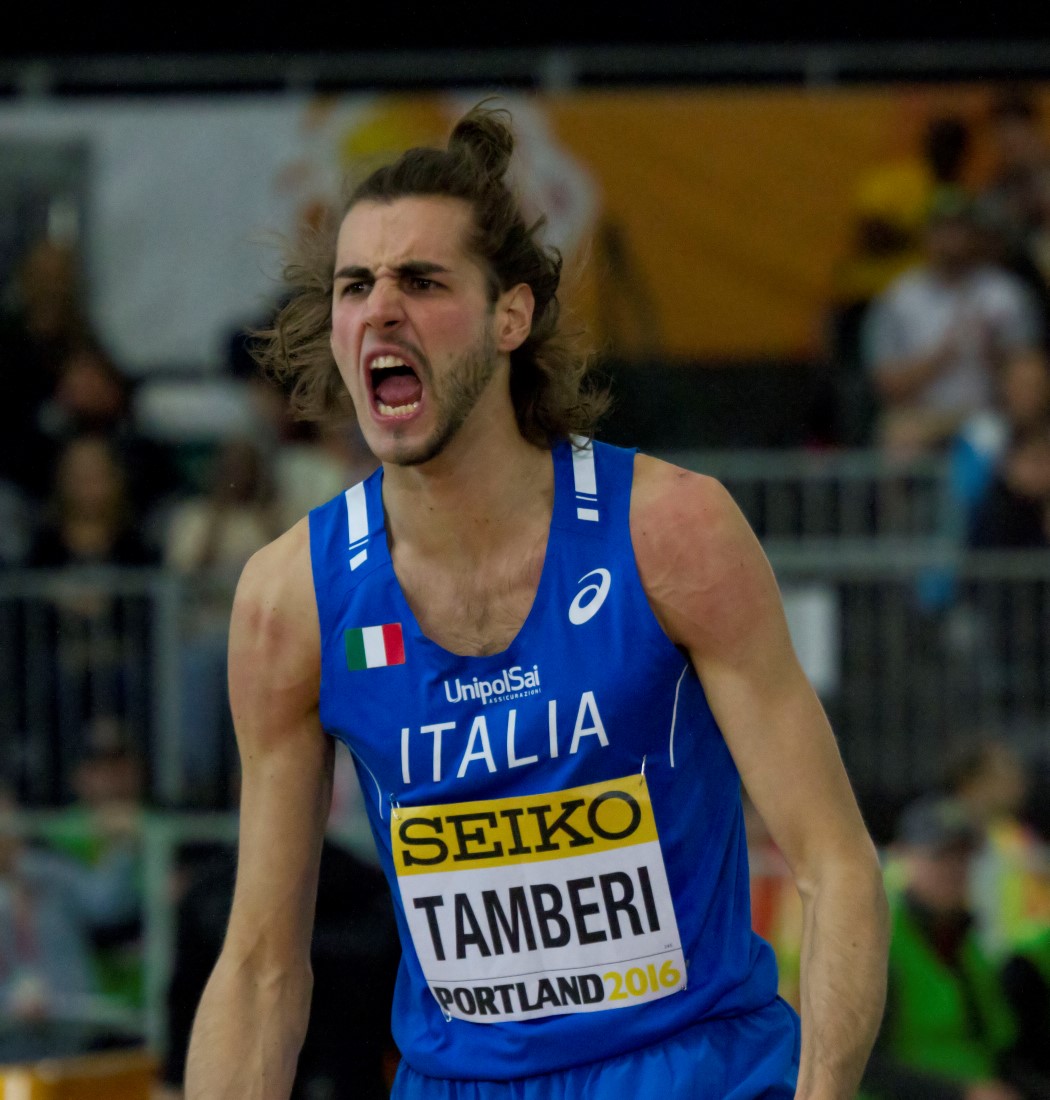
- Sara Simeoni (world record 2.01m, 1980 Olympic gold) and Gianmarco Tamberi (shared Tokyo 2020 gold, 2023 world champion)
- World Championships
- 58 medals, 14 gold (through Tokyo 2025), including Mattia Furlani’s 2025 long-jump title
The Origins of Track and Field in Italy
The relationship between Italy and athletic competition stretches back thousands of years. The Roman Empire placed enormous value on physical fitness, staging public games, military training exercises, and festival races that drew inspiration from the ancient Greek athletic tradition. While Roman sports culture leaned more toward gladiatorial combat and chariot racing than pure track and field, the physical ideals underpinning Roman civilization — strength, speed, endurance — echo through the centuries to the modern athletes who wear the blue and white vest of the Azzurri today.
Modern organized athletics in Italy began to take shape in the late 19th century. The federation now known as the Federazione Italiana di Atletica Leggera (FIDAL) was established in 1906, originally as the Federazione Podistica Italiana and renamed in 1926, giving Italian track and field a formal national structure. Italy participated in the early modern Olympics, sending athletes to the 1900 Paris Games and developing a domestic culture through university clubs, military programmes, and the growing network of sports societies in the industrial cities.
By the 1920s and 1930s, Italian athletics had its first genuine international stars. The country’s climatic diversity — from the flat plains of the Po Valley to the Alpine highlands — produced athletes across a wide spectrum of disciplines, while the emphasis on physical culture in the 1930s drove investment in athletics infrastructure that, despite its political context, helped build stadiums, tracks, and coaching systems that outlasted the era itself.
The Golden Age: Livio Berruti and the 1960 Rome Olympics
If one moment defined Italian athletics for a generation, it was the evening of 3 September 1960 at the Stadio Olimpico in Rome. In front of a home crowd of 90,000, a 21-year-old chemistry student from Turin, Livio Berruti, ran the 200 metres in 20.5 seconds — equalling the world record — to win Olympic gold. Berruti was the first European to win the Olympic 200m title, and he did it in dark sunglasses that became as well remembered as the run itself.
The 1960 Rome Olympics were a turning point for Italian athletics. Held on home soil, they gave the sport its biggest Italian stage, and Berruti’s gold — alongside Abebe Bikila’s barefoot marathon win along the Appian Way — produced two of the most lasting images in Olympic history. Berruti’s win drove a national interest in track and field that lasted for decades, and his name is still tied to Italian sprinting.
Italy’s Greatest Athletes
Italy has produced a deep roster of athletes across nearly every discipline, from sprinters and high jumpers to marathon champions. These are the figures who have defined Italian track and field over the decades.
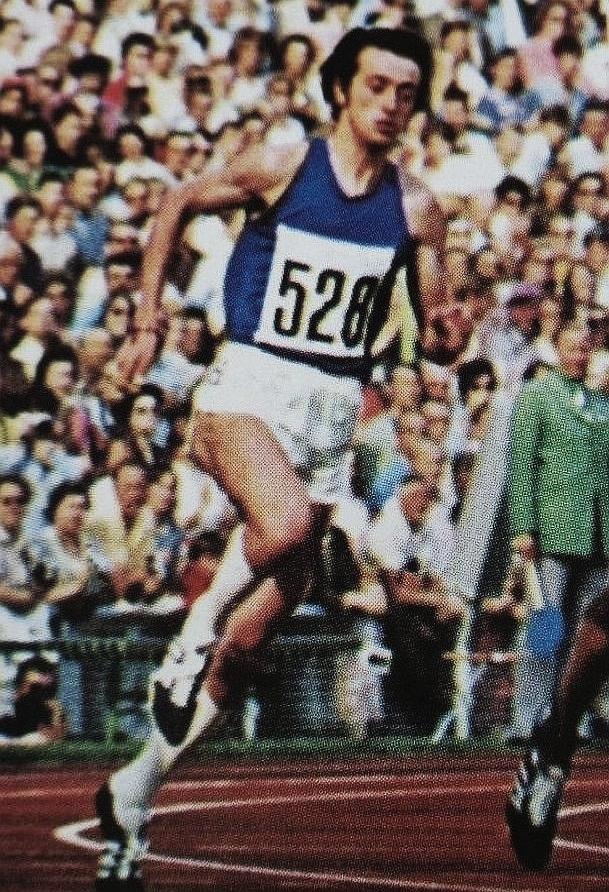
Livio Berruti
Born in Turin in 1939, Berruti won 200m gold at the 1960 Rome Olympics in 20.5 seconds, equalling the world record and becoming the first non-American Olympic 200m champion. A national hero forever.
Pietro Mennea
The “Arrow of the South” from Barletta won 200m bronze at Munich 1972 and gold at Moscow 1980. His 19.72 world record, set in Mexico City in 1979, stood for 17 years.
Sara Simeoni
The high jumper from Verona won Olympic gold at Moscow 1980 and silver at Montreal 1976, set the world record of 2.01m in 1978, and took European Championship gold in 1974 and 1978.
Antonietta Di Martino
The finest female high jumper of her generation outside Russia, she cleared over 2.00m, won World silver at Osaka 2007, bronze at Berlin 2009 and Daegu 2011, and finished seventh at Beijing 2008.
Gelindo Bordin
Bordin won the 1988 Seoul Olympic marathon and became European Marathon Champion, earning a place in the pantheon of great Italian endurance athletes and anchoring the country’s rich road-running tradition.
Marcell Jacobs
Born in El Paso and raised in Desenzano del Garda, Jacobs ran 9.80 to win Olympic 100m gold at Tokyo 2020, the first European champion since 1992, then anchored Italy’s 4×100m relay to gold the same night.
Olympic Achievements
Italy’s Olympic athletics record is one of steady success across generations and disciplines. The Azzurri have competed at the Summer Olympics since the earliest modern Games, and their track-and-field medals span the country’s range — from the sprints and high jump to the 1500m and marathon.
The quiet engine: a century of race-walk gold
Italy’s Olympic athletics golds, added up by discipline. Everyone remembers Jacobs’ 100m; the tallest line belongs to the race walkers.
Cumulative Olympic golds by discipline (23 of Italy’s 24 golds are name-attributed; both Wikipedia and Olympedia give the total as 24). Sources: Wikipedia (Italy at the Olympics in athletics), Olympedia.
View the data
| Discipline | Olympic golds | Span |
|---|---|---|
| Race walking | 10 | 1920–2020 |
| Sprints & relay | 4 | 1960–2020 |
| Distance & marathon | 5 | 1932–2004 |
| Jumps, hurdles & throws | 4 | 1936–2020 |
Livio Berruti wins 200m gold in 20.5 seconds on home soil, equalling the world record and becoming the first non-American Olympic 200m champion.
Pietro Mennea takes 200m bronze, the first Olympic medal in an eight-year climb that would end in gold.
Sara Simeoni takes high jump silver, announcing herself as one of the world’s premier field-event athletes.
A golden Games for Italy: Pietro Mennea wins 200m gold and Sara Simeoni takes high jump gold, two of the nation’s greatest Olympic triumphs.
Gelindo Bordin wins the Olympic marathon, cementing Italy’s place in the pantheon of great endurance nations.
Marcell Jacobs wins 100m gold in 9.80, then anchors the 4×100m relay to gold in 37.50 — both sprint titles on a single evening.
World Championship Achievements
At the World Athletics Championships — the sport’s premier event outside the Olympics — Italy has accumulated medals across multiple decades and disciplines. Antonietta Di Martino’s high jump silver in Osaka 2007 and her bronze medals in Berlin 2009 and Daegu 2011 rank among the finest consistent performances by an Italian athlete at the Worlds. The Italian 4×100m relay teams have also performed strongly at multiple editions, reaching finals and winning medals in the relay event.
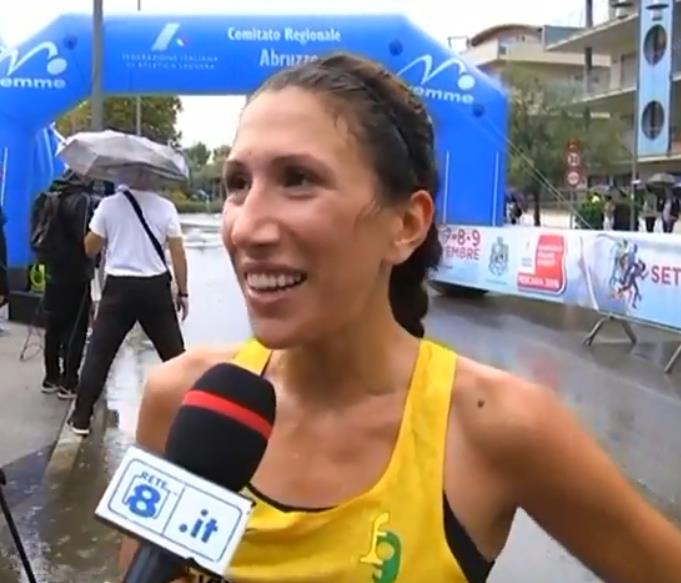
In more recent years, Marcell Jacobs brought World Indoor Championship 60m gold to Italy in Belgrade 2022, while a new generation of middle-distance runners and throwers has begun to make its presence felt at global championships. The depth of Italian athletics at the European Championships — where Italy consistently finishes among the top nations — provides a strong pipeline for world-level performance.
The Tokyo Miracle: Italy’s Greatest Athletics Night
1 August 2021 stands as the greatest single evening in Italian athletics history. At the Olympic Stadium in Tokyo, Marcell Jacobs crossed the line in the 100m final in 9.80 seconds to become the first Italian Olympic 100m champion and, that night, the fastest man in the world.
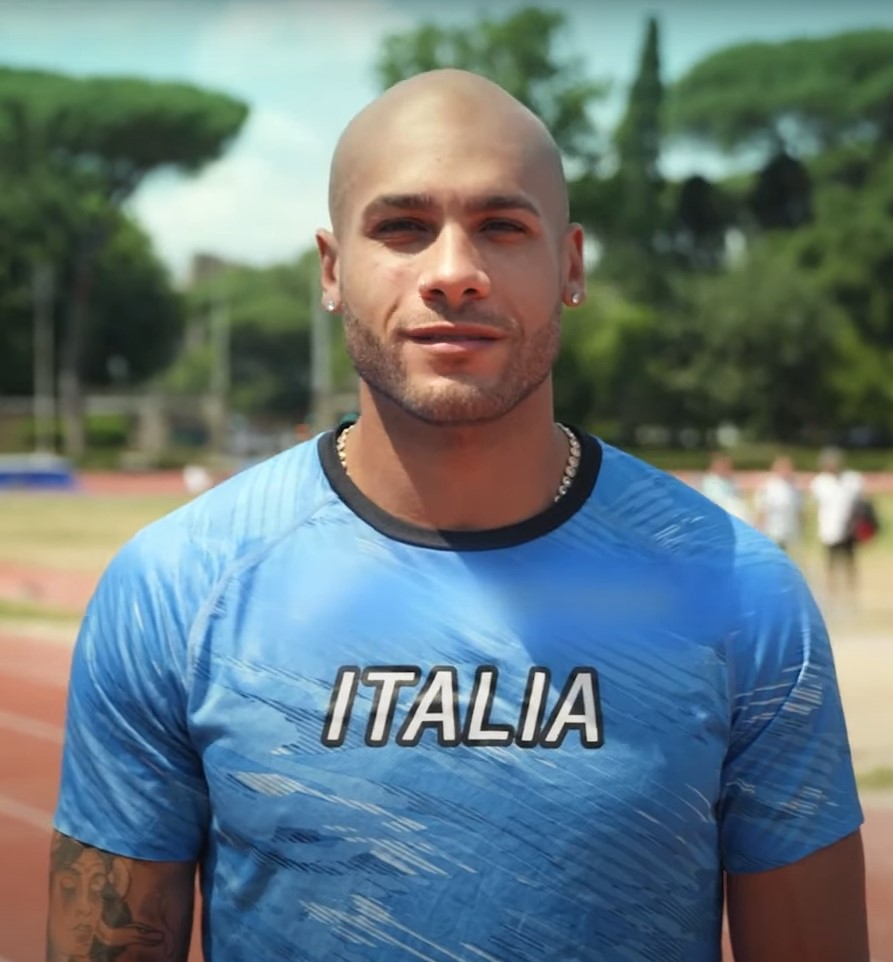
What made the night unforgettable was what came next. Less than two hours later, Italy’s 4×100m relay team — Lorenzo Patta, Marcell Jacobs, Fausto Desalu, and Filippo Tortu — ran 37.50 seconds to win relay gold, edging Great Britain by a hundredth of a second in one of the most dramatic finishes in Olympic history. Italy had won both sprint gold medals on the same evening, and the phrase “Siamo i più veloci del mondo” became a national motto.
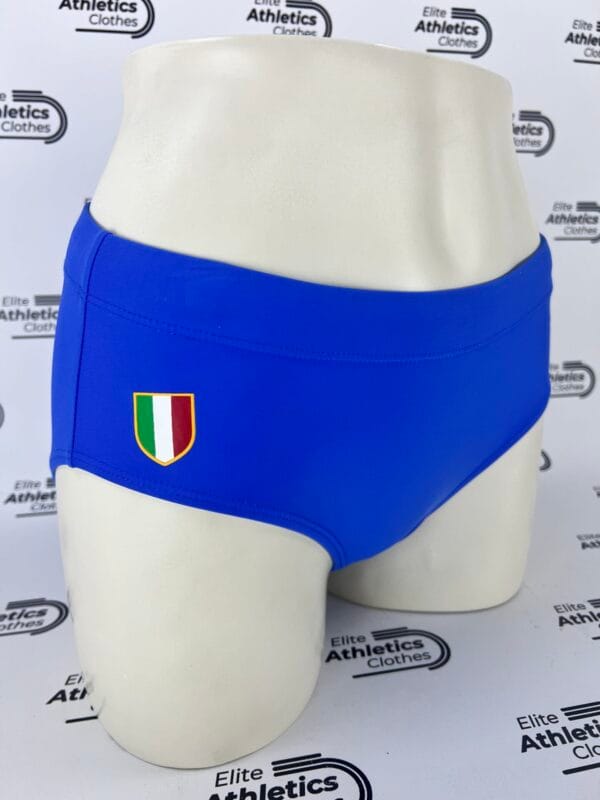
The team’s blue-and-white kit, with the Italian tricolore crest, became instantly recognisable — the look of the moment Italian athletics arrived on the world stage.
Running Culture in Italy
Italy’s running culture is one of the busiest in Europe. The country hosts several of the world’s leading marathons. The Venice Marathon, run through the streets and across the bridges of the lagoon city, draws elite fields and tens of thousands of amateurs each autumn. The Florence Marathon winds through the Renaissance centre, while the Milan and Rome Marathons pull big fields every year.
At club level, Italian athletics is organized through FIDAL, which governs thousands of affiliated clubs across the country. The annual Golden Gala Pietro Mennea in Rome — a Diamond League meeting named in honour of Italy’s greatest sprinter — brings the world’s finest athletes to the Azzurri each year, sustaining public interest in elite track and field.
Cross-country running is strong too, with the Campaccio and other events drawing elite fields in winter. Running clubs in the northern cities of Milan, Turin and Bologna have deep roots in their communities, providing the grassroots base that keeps producing top athletes generation after generation.
The Current State of Italy Athletics
Italian athletics in the mid-2020s is in one of the strongest positions in its history. The Tokyo miracle created a wave of interest and investment in track and field that has sustained the national programme through the subsequent years. FIDAL has benefited from increased funding, media attention, and public interest, and the domestic competition calendar has expanded to accommodate the growing number of young athletes drawn to the sport in the post-Tokyo era.
Marcell Jacobs continues to compete at the highest level, though injury interruptions have occasionally limited his season output. The wave keeps producing: at the Tokyo 2025 World Championships Italy took seven medals, headlined by 20-year-old Mattia Furlani’s long jump gold and Nadia Battocletti’s 10,000m silver. The relay programme remains strong, with Italy consistently competitive in the 4×100m at European and World level, while the middle distances and the historically strong throws programme continue to produce European-level competitors. The Golden Gala Pietro Mennea remains one of Europe’s premier Diamond League meetings.
Future Stars and Emerging Talents
The pipeline of Italian athletics talent has never looked stronger. A new generation of sprinters, middle-distance runners, and field-event athletes has emerged from the domestic club circuit, inspired by the golden moments of Tokyo 2020 and the European Championship successes that followed. FIDAL’s investment in regional academies, the national training centre, and the club system has built a structure capable of identifying and nurturing talent from an early age.
Filippo Tortu
A member of Italy’s gold-medal 4×100m relay at Tokyo 2020, Tortu ran the anchor leg that edged Great Britain by a hundredth of a second, and remains central to the sprint programme.
Fausto Desalu
A Tokyo 2020 relay gold medallist, Desalu ran 20.01 in the sprint relay squad and represents the depth of Italy’s continuing sprint generation.
Lorenzo Patta
The youngest member of Italy’s Tokyo 2020 relay gold team, Patta ran the opening leg and typifies the young talent emerging from the domestic club circuit post-Tokyo.
Italy Records & Historic Milestones
Shop Italy Athletics Apparel
At Elite Athletics Clothes, we offer authentic Italy athletics team apparel — the same race-grade competition gear worn by Italian athletes on the international stage. Our Italy collection connects you directly to the heritage and performance of the Azzurri.
Who is the greatest Italian athlete in track and field history?
Pietro Mennea is widely considered the greatest, his 200m world record of 19.72 seconds set in 1979 standing for 17 years. However, Marcell Jacobs, Olympic 100m champion at Tokyo 2020, has emerged as the defining Italian athletics figure of the 21st century.
Has Italy ever won the Olympic 100m title?
Yes. Marcell Jacobs won 100m gold at the Tokyo 2020 Olympics in 9.80 seconds, becoming the first Italian and first European to win the Olympic 100m since Linford Christie in 1992. Italy also won the 4×100m relay gold the same evening.
What is the Italian national federation for athletics?
The Italian national athletics federation is the Federazione Italiana di Atletica Leggera (FIDAL), founded in 1906. FIDAL governs all competitive athletics in Italy, from club level through to the national team programme and international competition at the Olympics and World Championships.
What major athletics events are held in Italy?
Italy hosts several prestigious events. The Golden Gala Pietro Mennea in Rome is a Diamond League meeting that brings the world’s finest athletes to the Stadio Olimpico each year. Major road races include the Venice, Florence, Rome, and Milan Marathons, all significant on the European running calendar.
What colour is the Italy athletics team kit?
The Italy athletics team traditionally competes in a royal blue vest featuring the Italian tricolore shield crest. The kit often incorporates white detailing and, depending on the brand and era, accents in yellow. Recent Italy kits have been produced by Joma and previously by Asics.
Where can I buy authentic Italy athletics team apparel?
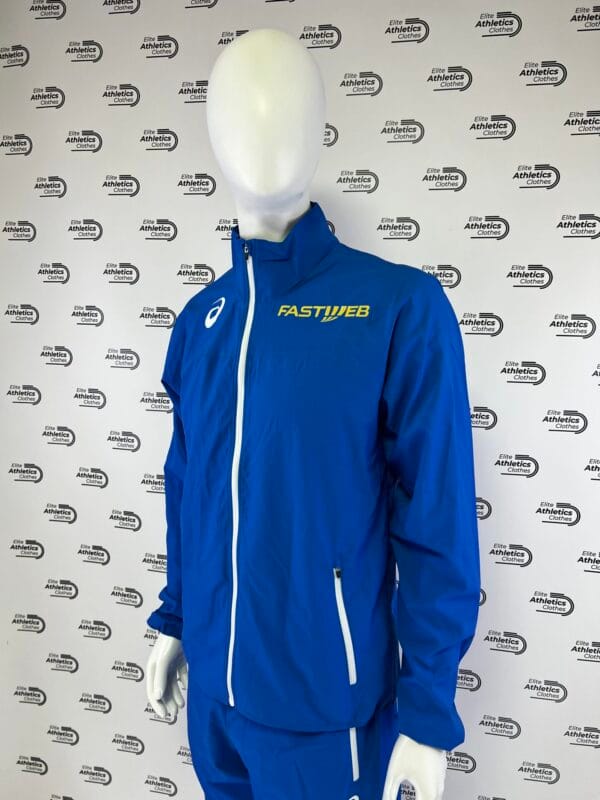
Authentic Italy athletics team apparel, including the Asics Italia Pro Elite Tracksuit and the Joma Italy Pro Elite Competition Briefs, is available at Elite Athletics Clothes. All items are 100% authentic competition-grade gear worn by Italian national team athletes at international championships.
Who makes Italy’s athletics kit?
On became FIDAL’s technical partner on 1 January 2026 (deal through 2029), replacing Joma, with the new Azzurri kit launched in early 2026. Authenticated athlete-issued Italy pieces surface at Elite Athletics Clothes when available.
Sources and References
- Livio Berruti — Wikipedia — Berruti’s 200m gold at the 1960 Rome Olympics, twin 20.5s runs equalling the world record, and his status as the first non-North-American Olympic 200m champion.
- Pietro Mennea — Wikipedia — Mennea’s 19.72 200m world record (Mexico City, 12 Sept 1979), its ~17-year duration, and the date Michael Johnson broke it (23 June 1996).
- Pietro Mennea — Olympedia — Mennea’s Olympic medals: 200m bronze at Munich 1972 and 200m gold at Moscow 1980.
- Sara Simeoni — Wikipedia — Simeoni’s high jump gold (Moscow 1980), silver medals (Montreal 1976, LA 1984), 2.01m world record (1978), and European titles.
- Antonietta Di Martino — Wikipedia — Corrects her championship record: 2007 Osaka World silver, 2009 Berlin and 2011 Daegu World bronze, and 7th place (no medal) at the 2008 Beijing Olympics.
- Gelindo Bordin — Wikipedia — Bordin’s 1988 Seoul Olympic marathon gold and his 1986 and 1990 European marathon titles.
- Jacobs stuns with Olympic 100m win — World Athletics — Marcell Jacobs’s 9.80 100m gold at Tokyo 2020, the first European Olympic 100m champion since Linford Christie (1992).
- Men’s 4×100m relay, Tokyo 2020 — Wikipedia — Italy’s 37.50 relay gold (Patta, Jacobs, Desalu, Tortu), beating Great Britain by 0.01s.