
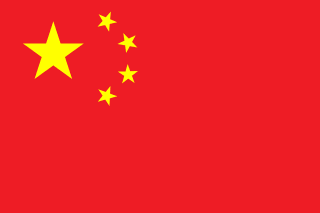
China
From missionary-school beginnings to Olympic gold, China has built one of the world’s most formidable athletics programmes, excelling in hurdles, race walking, women’s distance running and, increasingly, the men’s sprints.
China rose from modest early-twentieth-century beginnings to become a global athletics power: Liu Xiang won 110m hurdles gold at Athens 2004 and set a 12.88 world record in 2006, Wang Junxia ran a 29:31.78 10,000m world record in 1993, and Su Bingtian’s 9.83 Asian 100m record now leads the men’s sprints alongside race-walking strength.
This is the history of athletics in China: the athletes who defined generations, the marks that rewrote the record books, and the running culture now spreading across the world’s most populous nation. It runs from Liu Changchun’s solo trip to the 1932 Olympics to Liu Xiang’s world-record-equalling hurdles gold and Su Bingtian’s arrival among the world’s fastest sprinters.
Whether you’re a dedicated fan of Chinese athletics or simply looking to represent the nation in style, explore our full range of China athletics apparel at Elite Athletics Clothes. Every piece is crafted to match the ambition and performance of Chinese track and field.
- Federation
- Chinese Athletic Association, member of World Athletics
- Olympic athletics medals
- 43: 12 gold · 13 silver · 18 bronze (track & field; Wikipedia & Olympedia)
- The signature
- 7 of 12 Olympic golds come from race walking; 9 of 12 are won by women
- World Championships
- 22 world titles among ~75 medals · about 9th on the all-time table
- The barrier-breaker
- Liu Xiang: 2004 Olympic 110m hurdles gold in 12.91 (still the Olympic record) and a 12.88 world record in 2006
- The oldest record
- Wang Junxia’s 3,000m 8:06.11 (1993) is still the world record — the longest-standing mark on the women’s track
- The walking dynasty
- Yang Jiayu holds the 20km walk world record (1:23:49, 2021); China’s first (1992) and latest (2024) athletics golds are both women’s walks
- Asia’s fastest
- Su Bingtian’s 9.83 (Tokyo 2020 semifinal) — the first Chinese man in an Olympic 100m final
The Origins of Track and Field in China
Athletic competition in China has roots stretching back thousands of years, with ancient civilisations celebrating physical prowess in festivals, military training and formal competitions that incorporated running, jumping and throwing. Yet it was not until the late nineteenth and early twentieth centuries that Western-style athletics, what the Chinese came to call tianjing, literally “field and track”, began to take organised form on Chinese soil.
The first formal athletics competitions in China emerged through missionary schools and colonial sporting clubs in port cities such as Shanghai, Guangzhou and Tianjin. The Far Eastern Championship Games, first held in 1913, gave Chinese athletes their earliest international competitive platform, and China competed in athletics events with growing ambition throughout the tournament’s history.
By the time the Republic of China sent its first delegation to the Olympics in 1932, modern athletics had taken root across the country. Track and field was taught in physical-education programmes, military academies developed sprinting and endurance talent, and national championships began to formalise Chinese competition.
The Post-1949 Revolution and Return to the Olympic Stage
The founding of the People’s Republic of China in 1949 brought fundamental changes to sport. Athletics was elevated to a matter of national prestige, and the State Sports Commission undertook a systematic effort to identify and develop talent across the country’s vast population. Funded by the state and organised through a network of sports schools, Chinese athletics began its long march toward international respectability.
China boycotted the Olympic Games from 1956 to 1980 over political disputes concerning Taiwan’s representation, a period that significantly limited the nation’s exposure to top-level competition. Even during these isolated years, Chinese athletes trained intensively and set national records in virtually every discipline, while dedicated coaches quietly built the technical foundations that would later support Olympic success.
China’s return to the Olympics in 1984 in Los Angeles marked a turning point. Chinese athletes competed with fierce determination to reclaim their place on the world stage, and while no athletics gold medals were won that year, the experience galvanised a nation. Over the following decade, investment in track and field accelerated dramatically, and the results would soon follow.
China’s Greatest Athletes
China’s athletics history turns on a small group of figures whose results changed how the country — and Asia — saw its place in world track and field. From the hurdles to the shot put, from the sprint straight to the distance track, these are the athletes who moved the ceiling.
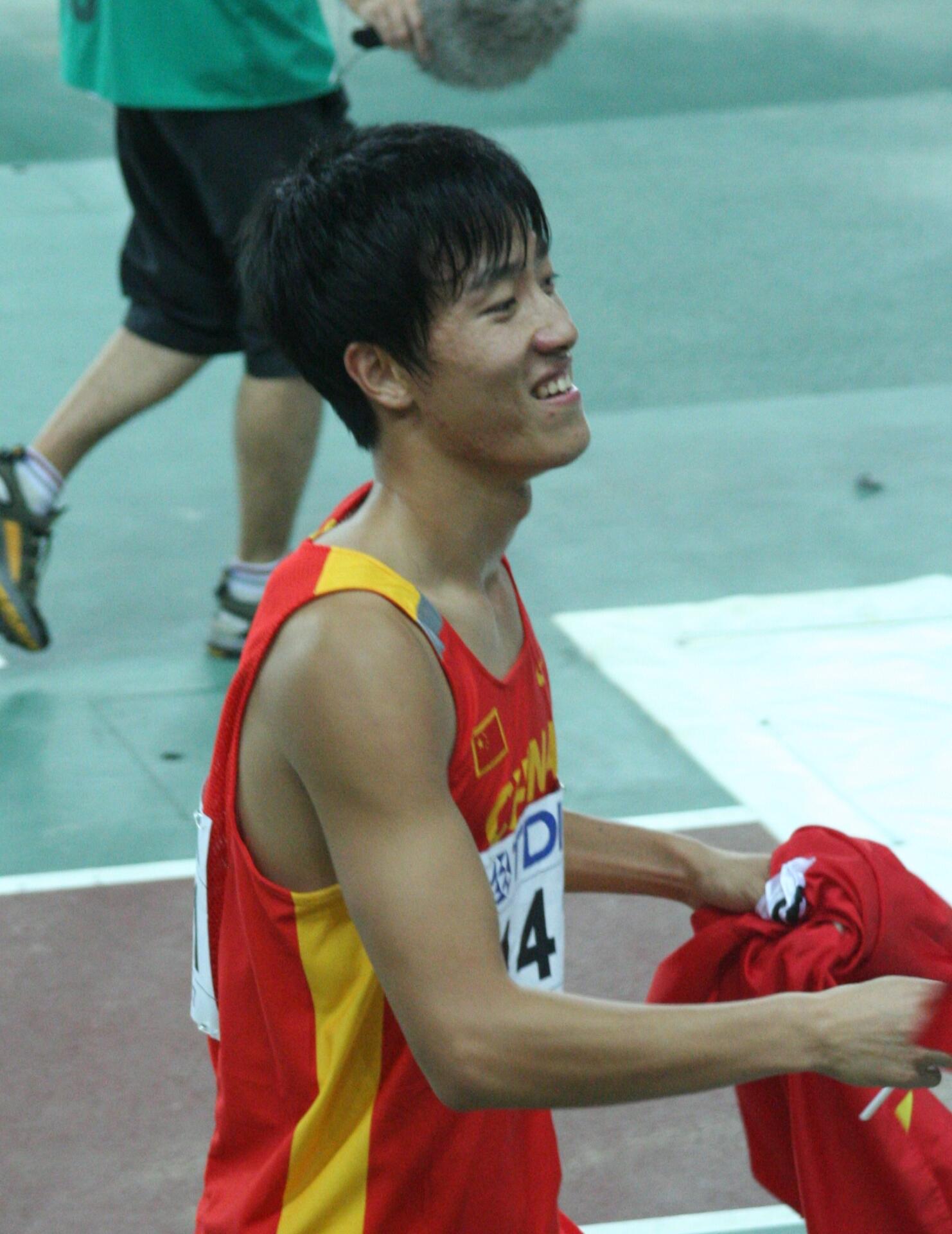
Liu Xiang
China’s greatest track and field athlete. Won Olympic gold at Athens 2004 in 12.91, equalling the world record, then set a 12.88 world record in Lausanne in 2006 and added World Championship gold at Osaka 2007.
Wang Junxia
Part of the celebrated “Ma’s Army”, she set a 10,000m world record of 29:31.78 in 1993 that stood over two decades, and won 5,000m gold and 10,000m silver at the 1996 Atlanta Olympics.
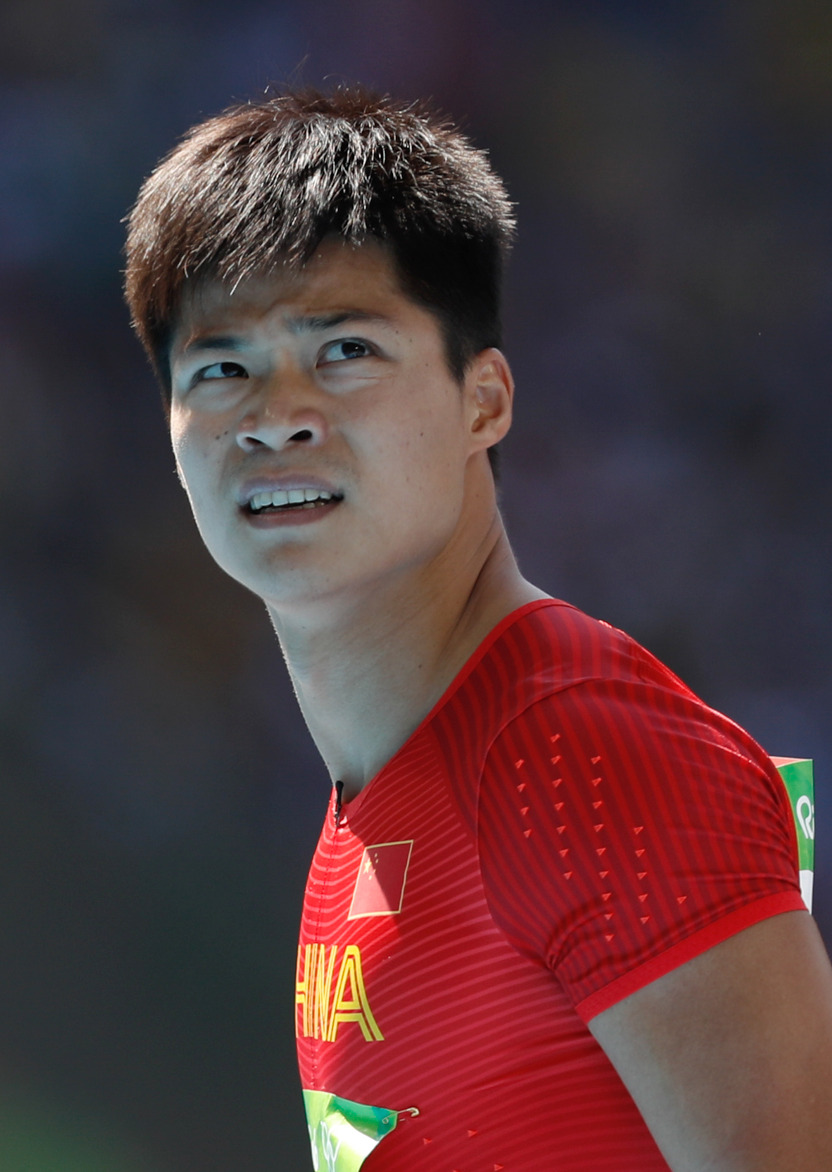
Su Bingtian
The first Chinese and first Asian man to break 10 seconds, running 9.99 at Eugene in 2015. He set a 9.83 Asian record in the Tokyo 2020 semi-final and reached the Olympic 100m final, running 9.98 for sixth.
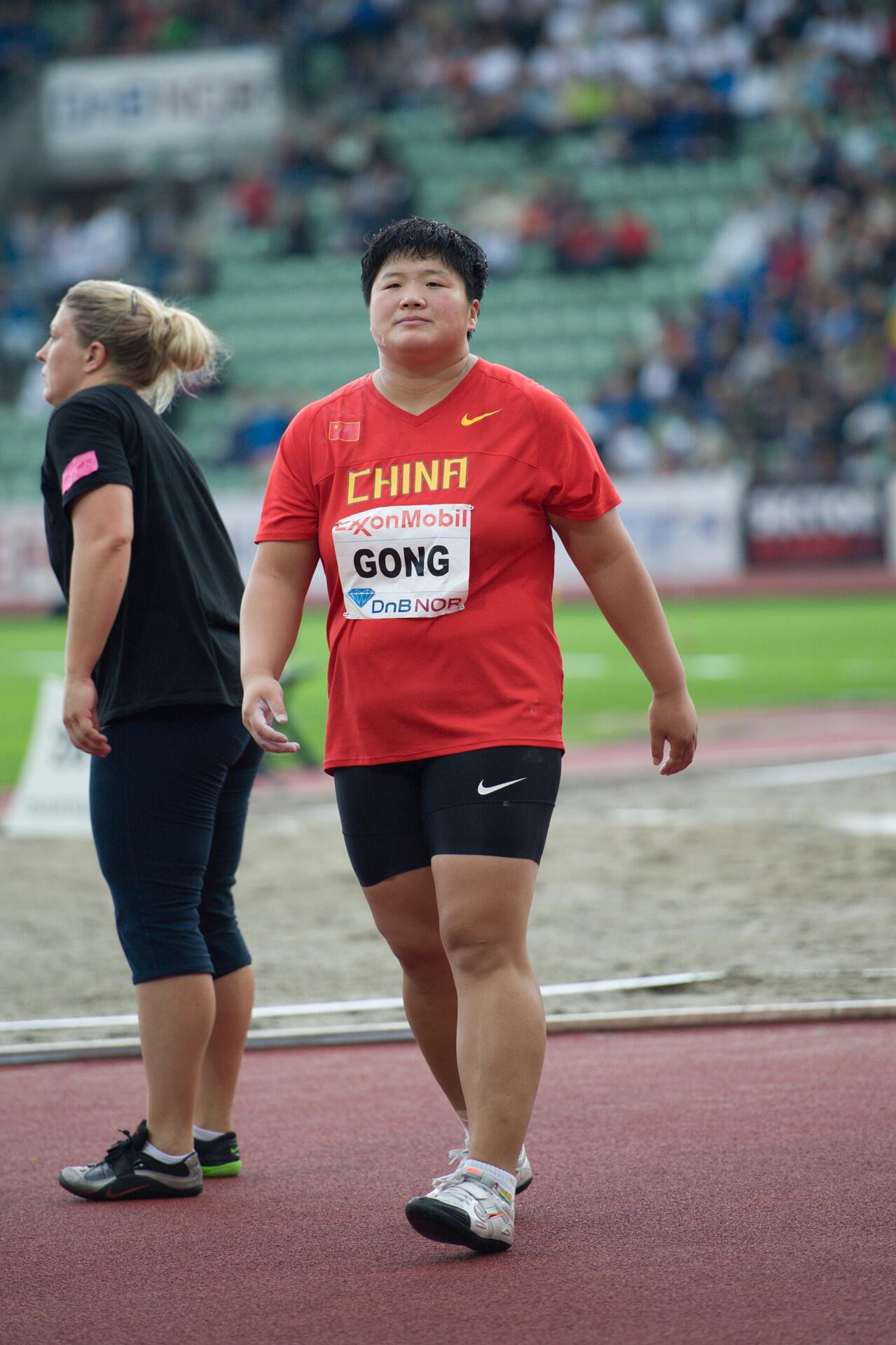
Gong Lijiao
One of China’s most decorated field athletes. She won Olympic silver at London 2012 and placed fourth at Rio 2016 before claiming gold at the Tokyo 2020 Games, combining raw power with sophisticated technique over a long career.
Qu Yunxia
Set a 1,500m world record of 3:50.46 at the 1993 National Games in Beijing, a mark that remained unbroken for more than twenty years. She had earlier taken 1,500m bronze at the 1992 Barcelona Olympics.
Chen Yueling
Won China’s first-ever Olympic gold medal in a women’s athletics event, taking the 10km race walk at the 1992 Barcelona Games and helping to establish race walking as a cornerstone of Chinese athletics identity.
Olympic Achievements
China’s Olympic athletics history runs from Liu Changchun’s lone appearance in 1932 to hosting the Games at Beijing 2008. The milestones below trace that record, with its clear strengths in race walking, women’s distance running, hurdles and field events.
Won from the margins — and mostly by women
Every Chinese Olympic athletics gold, one icon each, grouped by event. The road and the field, not the sprint straight, carry the story.
♀ women · ♂ men. The red-ringed icon is Liu Xiang’s 2004 hurdles gold, China’s only Olympic gold on the men’s track. Qieyang Shijie’s 2012 walk gold was reallocated in 2022 after doping disqualifications. Sources: Wikipedia (China at the Olympics), Olympedia.
View the data
| Year | Athlete | Event | Gender |
|---|---|---|---|
| 1992 | Chen Yueling | 10 km walk — Barcelona 1992 | Women |
| 2000 | Wang Liping | 20 km walk — Sydney 2000 | Women |
| 2012 | Chen Ding | 20 km walk — London 2012 | Men |
| 2012 | Qieyang Shijie | 20 km walk — London 2012 (reallocated 2022) | Women |
| 2016 | Wang Zhen | 20 km walk — Rio 2016 | Men |
| 2016 | Liu Hong | 20 km walk — Rio 2016 | Women |
| 2024 | Yang Jiayu | 20 km walk — Paris 2024 | Women |
| 1996 | Wang Junxia | 5000m — Atlanta 1996 | Women |
| 2004 | Xing Huina | 10,000m — Athens 2004 | Women |
| 2020 | Gong Lijiao | Shot put — Tokyo 2020 | Women |
| 2020 | Liu Shiying | Javelin — Tokyo 2020 | Women |
| 2004 | Liu Xiang | 110m hurdles — Athens 2004 | Men |
Liu Changchun became the first Chinese athlete to compete at the Olympics, representing a nation largely excluded from the global sporting community.
China returned to the Olympic Games after a long absence, with track and field athletes competing alongside a much larger Chinese delegation.
Chen Yueling won China’s first-ever Olympic gold in a women’s athletics event, taking the 10km race walk.
Wang Junxia won Olympic gold in the 5,000m, becoming China’s most decorated women’s distance runner at the Games.
Liu Xiang’s 110m hurdles gold, in world-record-equalling time of 12.91, became the most celebrated moment in Chinese track and field history.
As host nation, China staged the Games at the Bird’s Nest, though Liu Xiang’s injury withdrawal from the 110m hurdles brought national heartbreak.
Su Bingtian’s 100m final appearance and Gong Lijiao’s shot put gold headlined a strong Chinese athletics performance at the pandemic-delayed Games.
World Championship Achievements
China made its World Athletics Championships debut at the inaugural edition in Helsinki in 1983, and has been a regular medallist in the decades since. The nation’s most productive World Championship events have been the women’s middle and long-distance events, race walking, and the hurdles. Key highlights include Liu Xiang’s 110m hurdles gold at Osaka 2007 and Wang Junxia’s medals in the 1990s, alongside a string of race walking medals across multiple championships.
At the 2015 World Athletics Championships in Beijing, on home soil, Liu Hong won the women’s 20km race walk title, and Su Bingtian reached the 100m semifinal — an early sign of the sprint breakthrough that would define the following decade.
The China National Team Kit: Red, Gold and National Pride
The China national team competes in red and gold — the colours of the People’s Republic flag, and the most recognisable in Chinese sport. Those national colours have been worn by the country’s best athletes at every Olympic Games and World Athletics Championships.
Professional athletics kit draws on decades of sports science advancement, from aerodynamic fabrics and moisture-wicking technology to compression features and ergonomic construction, all designed to optimise performance on the track. China’s track and field clothing brings together this performance technology with the visual pride of representing one of the world’s great athletics nations.
A competition singlet in the classic red and gold carries the same heritage worn by China’s greatest athletes at Olympic Games and World Championships across the decades.
Running Culture: From State Sport to Mass Participation
For much of the twentieth century, competitive athletics in China was the preserve of state-sponsored athletes in the sports school system, talented individuals identified early, removed from mainstream education, and subjected to years of intensive, state-managed training.
That picture has changed sharply. A larger middle class, rapid urbanisation, rising health awareness and the pull of global running culture have built mass participation on a large scale. Chinese cities now stage dozens of major road races a year — the Shanghai International Marathon, the Beijing Marathon and the Chengdu Marathon among them — drawing hundreds of thousands of runners.
Running apps, fitness wearables and online communities have transformed running from a state athletic pursuit into a lifestyle choice for tens of millions of ordinary citizens. The popularity of professional-grade athletics kit has surged correspondingly, as runners seek high-performance clothing that mirrors what they see worn by their sporting heroes.
The Current State of China Athletics
Chinese athletics in the 2020s is in a period of renewed ambition and exciting transition. The retirement of Liu Xiang left large shoes to fill in the hurdles, but Su Bingtian’s sprint revolution has opened new horizons, while a generation of younger sprinters including Xie Zhenye and Tang Xingqiang push for sub-10-second times with greater consistency. In the field events, Wang Yu has delivered strong high jump results and Gong Lijiao retired in late 2025 after a career of 19 consecutive global finals and 13 global medals, Olympic gold among them — shoes as large as Liu Xiang’s to fill.
Institutional investment remains high. The Chinese Athletic Association, backed by state funding and a network of regional sports schools, continues to identify and develop talent systematically. The Tokyo 2025 World Championships showed the transition in progress: four medals but no gold — silver and bronze in the women’s hammer for Zhao Jie and Zhang Jiale, long jump bronze for Shi Yuhao and 20km walk silver for Wang Zhaozhao — a rare goldless worlds for the nation that owns the walks. With a massive population as its talent pool and a modernising sports science infrastructure, the foundations remain deep, further embedded by the country’s hosting of the 2015 World Athletics Championships and other major events.
Future Stars and Emerging Talents
The future of Chinese athletics burns brightly. Combining the Chinese Athletic Association’s youth development programme with increased international exposure through the Diamond League and World Athletics Continental Tour, a new pipeline of athletes is emerging, more technically sophisticated and internationally competitive than any previous generation.
Xie Zhenye
The Guangdong-born sprinter ran 9.97 seconds in 2018, becoming one of very few Asian men to break the 10-second barrier and representing genuine sprint potential at the highest level.
Wang Jianan
China’s leading long jumper, with marks in excess of 8.30 metres and appearances in Olympic finals, he represents China’s best hope for a global long jump medal in the coming cycle.
Chen Yang
A discus thrower of exceptional promise who broke the women’s Asian record and has been consistently competitive at Diamond League level, carrying forward one of China’s stronger field traditions.
Wu Huilan
A junior world champion in the high jump with enormous technical ability, whose consistent clearances at major international youth events suggest a promising senior career ahead.
China Records and Historic Milestones
Shop China Athletics Apparel
There are no China pieces in the athlete-issued archive right now — Chinese federation kit almost never leaves the team channel. Until one surfaces, these are the latest arrivals from the wider Pro Elite archive, all authentic athlete-issued competition kit.
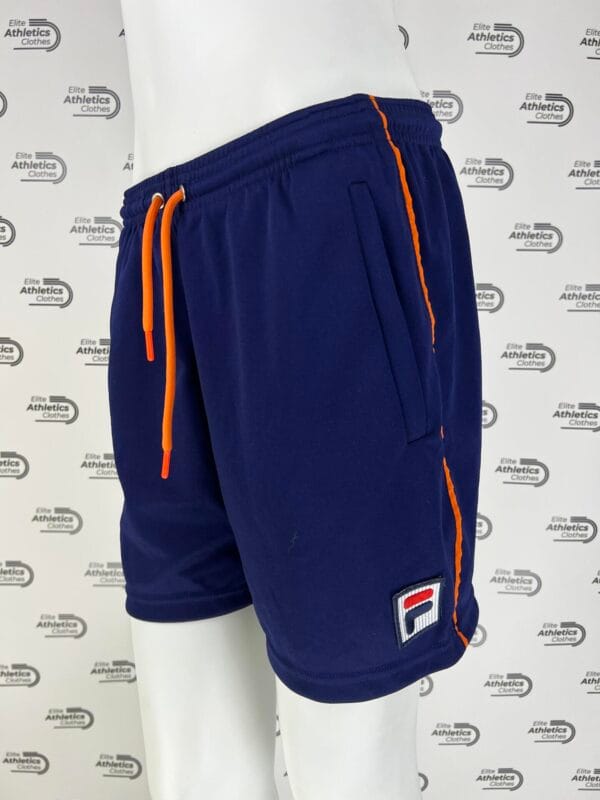 Fila Netherlands Pro Elite 2020 OLY Women Short Pants
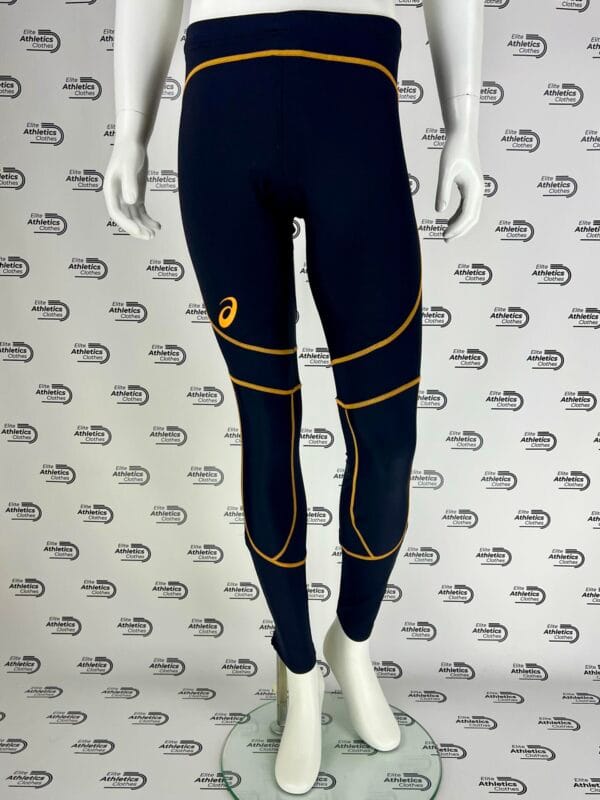 Asics Netherlands Pro Elite 2016 Long Tights
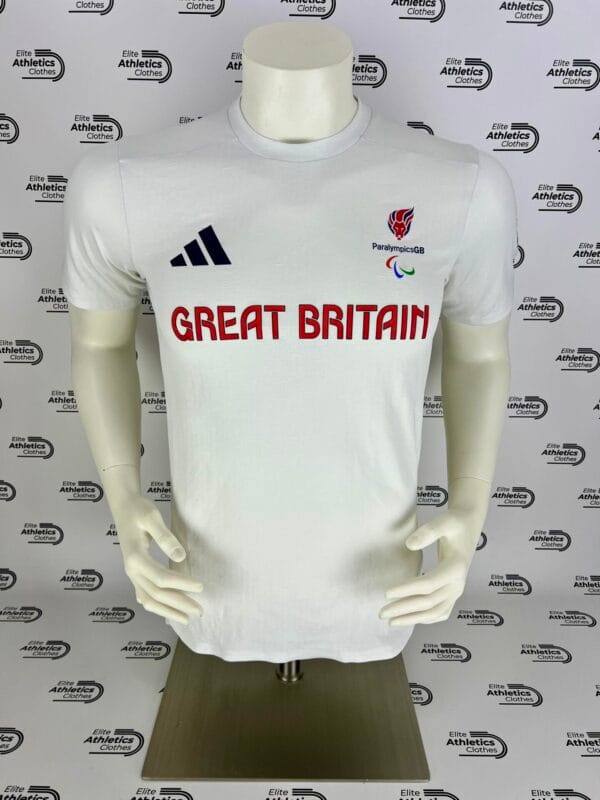 Adidas Great Britain Paralympics Team Pro Elite 2024 T-Shirt70,00 €View Piece →
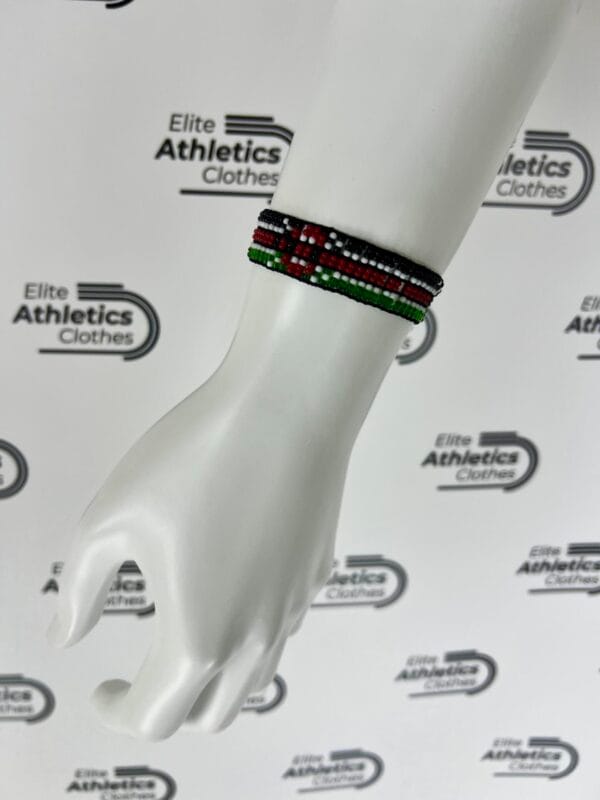 Elastic Kenya Running Bracelet – Handmade Kenyan Flag Beaded Bracelet50,00 €View Piece →
 Asics Netherlands Pro Elite 2018 Women Short Pants
 Adidas South Africa Pro Elite 2019 Running Cap120,00 €View Piece →
 Erima Austria Pro Elite 2019 T-Shirt100,00 €View Piece →
 Nike Côte D’Ivore Pro Elite 2019 Polo
Who is the greatest Chinese athletics athlete of all time?
Liu Xiang is widely regarded as the greatest. His Olympic 110m hurdles gold at Athens 2004, world record of 12.88 in 2006 and World Championship gold at Osaka 2007 made him the first and only Asian man to simultaneously hold the Olympic title, World Championship title and world record in a running event.
Has China ever won an Olympic gold medal in a track event?
Yes. Liu Xiang won gold in the 110m hurdles at the 2004 Athens Olympics, the first Olympic gold won by a Chinese man in a track event and the most celebrated moment in Chinese track and field history. China has also won golds in race walking and field events such as the shot put.
What is China’s strongest athletics discipline?
China has traditionally been strongest in race walking, both men’s and women’s, in women’s middle and long-distance running, and in the hurdles. In recent years the men’s sprints have emerged as an exciting area of growth, led by Su Bingtian’s Asian record of 9.83 seconds in the 100m.
What world records have Chinese athletes held in athletics?
Chinese athletes have held world records in the women’s 10,000m (Wang Junxia, 29:31.78, 1993), the women’s 3,000m (Wang Junxia), the women’s 1,500m (Qu Yunxia, 3:50.46, 1993), the men’s 110m hurdles (Liu Xiang, 12.88, 2006), and the women’s 20km race walk (Liu Hong). Several stood for decades.
Who are China’s current top athletics stars?
China’s leading stars include Su Bingtian (100m, Asian record holder), Gong Lijiao (shot put, Tokyo 2020 Olympic gold medallist), Wang Jianan (long jump, consistent Diamond League performer), Liu Hong (race walking, multiple World Championship and Olympic medallist), and Chen Yang (discus, Asian record holder).
Did China host the World Athletics Championships?
Yes. China hosted the 15th IAAF World Athletics Championships in Beijing in August 2015, held at the National Stadium, or Bird’s Nest, the same venue used for the 2008 Olympic athletics competition. The event attracted athletes from over 200 nations and was widely regarded as one of the best-organised in the championships’ history.
Who makes China’s athletics kit?
Nike has partnered with the Chinese Athletics Association since 2013, and the kit deal was extended long-term through 2033, covering multiple Olympic cycles. Authenticated athlete-issued China pieces surface at Elite Athletics Clothes when available.
Sources and References
- Liu Xiang (hurdler) — Wikipedia — Athens 2004 gold in 12.91 (equalling Colin Jackson’s WR), Osaka 2007 World title, 2008 Beijing withdrawal, 2015 retirement.
- Liu Xiang 12.88 World 110m Hurdles record — World Athletics — confirms the 12.88 world record was set in Lausanne on 11 July 2006 (not Stuttgart).
- Wang Junxia — Wikipedia — 10,000m world record 29:31.78 (1993); Atlanta 1996 5,000m gold and 10,000m silver.
- Qu Yunxia — Wikipedia — 1,500m world record 3:50.46 (Beijing, 1993); 1,500m bronze at Barcelona 1992.
- Chen Yueling — Olympedia — first Chinese women’s athletics Olympic gold, 10km race walk, Barcelona 1992.
- Su Bingtian — Wikipedia — 9.99 at Eugene 2015; 9.83 Asian record in the Tokyo 2020 semi-final; 9.98 for 6th in the Olympic final.
- Gong Lijiao — Wikipedia — London 2012 silver, Rio 2016 4th place, Tokyo 2020 gold with 20.58 m PB.
- Liu breaks 20km race walk world record in La Coruna — World Athletics — Liu Hong’s 1:24:38 women’s 20km race walk world record (2015).