Few nations punch above their weight quite like the Netherlands, where Fanny Blankers-Koen’s legend, Sifan Hassan’s range and Femke Bol’s record-breaking speed are all worn in one unmistakable shade of orange.
The Netherlands is one of athletics’ great overachievers: Fanny Blankers-Koen won four gold medals at the 1948 London Olympics, Sifan Hassan claimed 5,000m and 10,000m gold plus 1500m bronze at Tokyo 2020, and Femke Bol broke the indoor 400m world record in 2023 and has since lowered it to 49.17 — sprint and distance excellence in trademark orange.
This is the complete story of athletics in the Netherlands: its origins on nineteenth-century club tracks, the athletes who redefined what was possible, the Olympic and World Championship titles, and the orange vest that became the visual language of the country’s competitive identity. It runs from the first organised competitions on Dutch soil to the present day, when that orange is one of the most feared sights in world athletics.
Whether you are a Dutch athletics fan, a collector of authentic Pro Elite kit, or a lover of track and field history, you can own a piece of it through the Netherlands athletics apparel available at Elite Athletics Clothes.
The roots of organized athletics in the Netherlands stretch back to the second half of the nineteenth century, when a wave of sporting enthusiasm swept across Western Europe. Walking races, cross-country runs and early track meets began to appear in Dutch cities during the 1870s and 1880s. The first formal athletics clubs emerged in Amsterdam and Rotterdam, modelled partly on the British tradition of amateur sport already well established across the North Sea.
Running, jumping and throwing were first treated as physical training rather than competition, but the competitive instinct of Dutch athletes quickly turned exercises into contests. A flat, windswept country seems an unlikely nursery for speed, yet it produced a culture of hard work, tactical intelligence and resilience that still defines Dutch athletics.
The formation of the Koninklijke Nederlandse Atletiek Unie (KNAU) — the Royal Dutch Athletics Union — in 1901 marked the true birth of organized track and field in the country. The KNAU affiliated with the International Amateur Athletic Federation, now World Athletics, and began staging national championships that gave the best Dutch athletes a stage on which to compete.
In the early decades of the twentieth century, Dutch athletics grew steadily. The Netherlands participated in the Olympic Games from 1900 onward, and athletics was always among the sports fielded by Dutch delegations. The interwar period saw significant investment in infrastructure, with cinder tracks built at stadiums across the major cities.
The Olympisch Stadion in Amsterdam, built for the 1928 Summer Olympics, became a cathedral of Dutch sport. Hosting the Games while the country was still establishing itself as a sporting nation, the Netherlands watched world-class athletes compete on home soil. Dutch runners and field athletes did not dominate those Games, but the seeds were planted.
Through the 1930s, 1940s and 1950s the KNAU kept building the sport at grassroots level. Post-war reconstruction brought new energy, road running took off, and the Zevenheuvelenloop (Seven Hills Run) in Nijmegen, first held in 1983, grew into one of the most prestigious road races in the world.
What makes Dutch athletics interesting is its range: explosive sprinters, patient distance runners, dominant hurdlers, world-beating middle-distance specialists. The Netherlands has produced world-class athletes across most of the event programme, in several distinct eras.
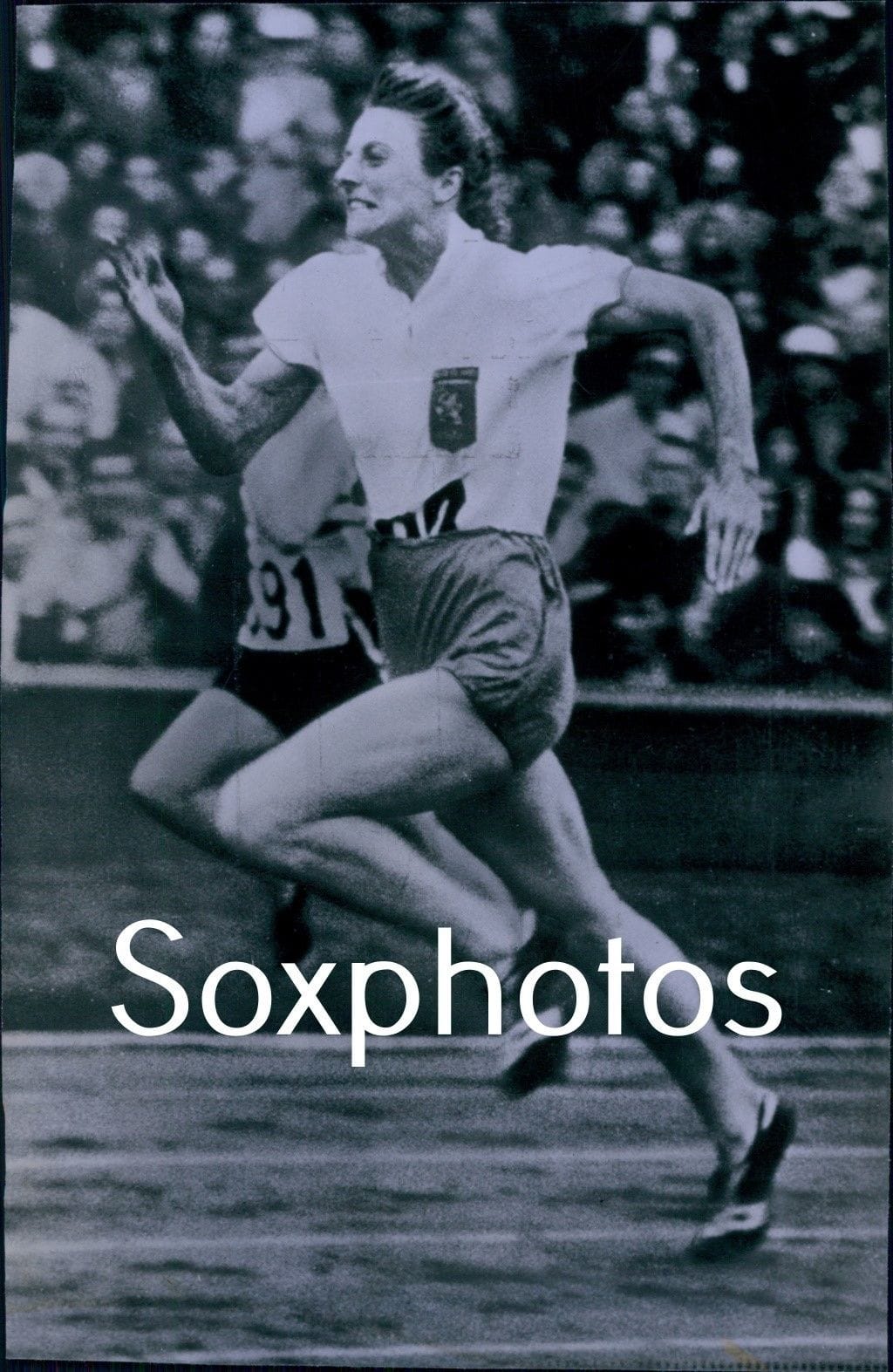
Born 1918 in Barendrecht, “the Flying Housewife” won four golds at the 1948 London Olympics — 100m, 200m, 80m hurdles and 4x100m relay. She held seven world records simultaneously and was named IAAF Female Athlete of the Century in 1999.
European heptathlon champion in 2012, she switched to sprinting and won 200m world gold in Beijing 2015 in 21.63, then defended the title in London 2017. She also took 100m silver in 2015, becoming a global sprint icon in Dutch orange.
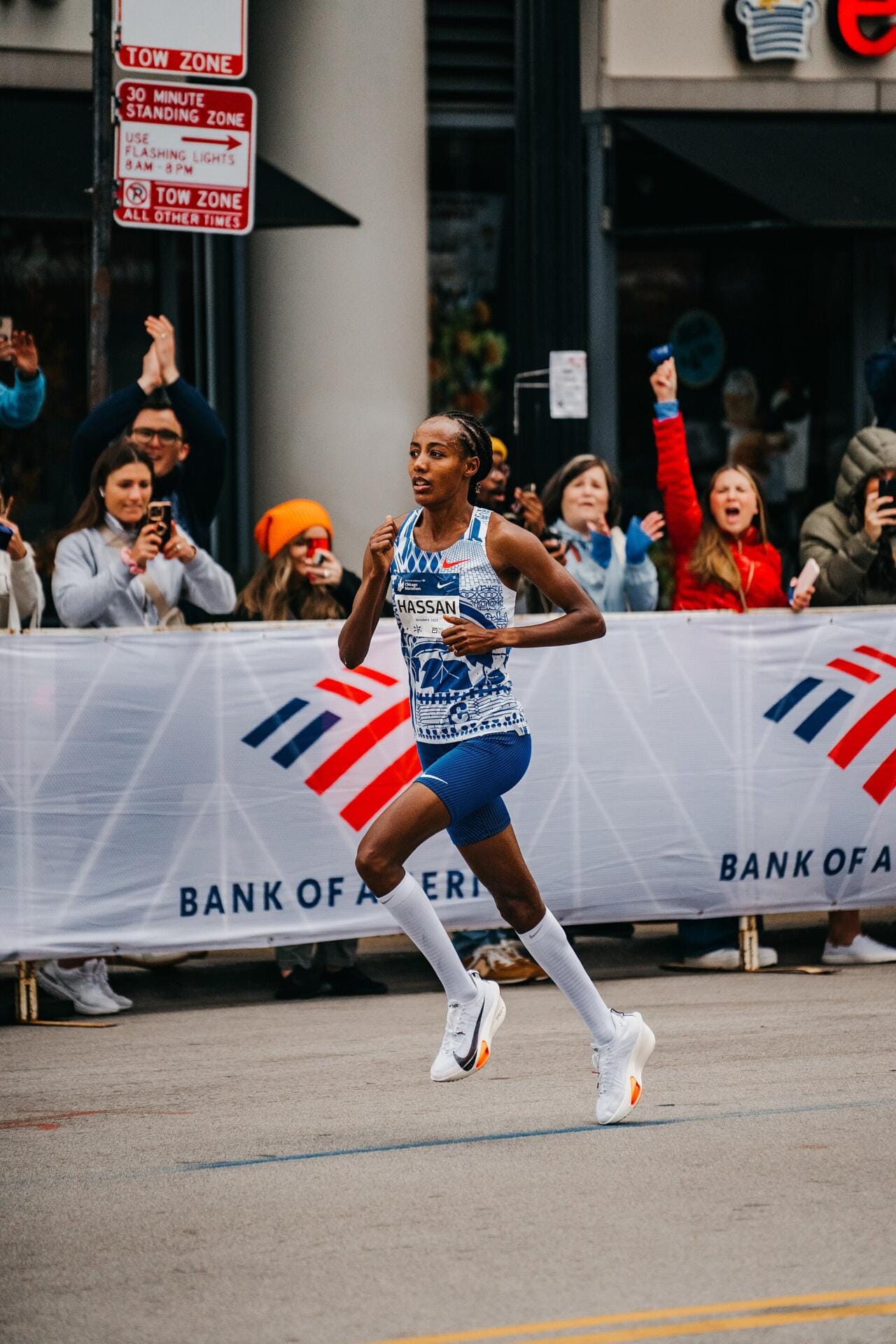
Representing the Netherlands from 2013, she became the first athlete to win 1500m and 10,000m gold at the same World Championships (Doha 2019). At Tokyo 2020 she took 5000m and 10,000m gold plus 1500m bronze, then won the 2023 Chicago Marathon in a course record and the Paris 2024 Olympic marathon in an Olympic-record 2:22:55.
Born 2000 in Amersfoort, Bol broke Jarmila Kratochvilova’s 40-year-old indoor 400m world record in 2023 and has since lowered it to 49.17 (Glasgow 2024). A back-to-back world 400m hurdles champion in 2023 and 2025, her relay anchor legs have become the stuff of athletics folklore.
Representing the Netherlands from the early 2000s, Kiplagat became World Half Marathon Champion three years running, in 2006, 2007 and 2008, one of the strongest stretches in Dutch distance-running history.
Som won 800m gold at the 2006 European Championships in Gothenburg, one of the standout Dutch performances of his era and a reminder of the strength of Dutch middle-distance running on the continental stage.
The Netherlands has a long and proud Olympic athletics tradition. The 1948 London Games remain the most celebrated chapter, thanks to Fanny Blankers-Koen’s quadruple gold, but Dutch athletes have continued to reach podiums in the decades since, even as competition from powerhouses like the United States, Jamaica and Kenya intensified.
Every Dutch Olympic athletics gold, by year. All ten have a woman at the centre, from Blankers-Koen’s four in a single Games to Bol’s anchor leg in Paris. Stalman (discus, 1984) admitted in 2016 to steroid use late in her career; the medal stands. Source: Wikipedia, Olympics.com.
| Year | Athlete | Event |
|---|---|---|
| 1948 | Fanny Blankers-Koen | 100m · 200m · 80m hurdles · 4x100m relay |
| 1984 | Ria Stalman | Discus |
| 1992 | Ellen van Langen | 800m |
| 2021 | Sifan Hassan | 5,000m · 10,000m |
| 2024 | Sifan Hassan · mixed 4x400m (Bol anchor) | Marathon · relay |
The Netherlands began its Olympic participation, with athletics always among the sports fielded by Dutch delegations from the Games onward.
The Netherlands hosted the Summer Olympics at the newly built Olympisch Stadion, staging a full athletics programme on home soil before passionate crowds.
Fanny Blankers-Koen won four gold medals — 100m, 200m, 80m hurdles and 4x100m relay — the most celebrated chapter in Dutch Olympic athletics history.
Held in 2021, Sifan Hassan claimed 5000m and 10,000m gold plus 1500m bronze, while the Dutch mixed 4x400m relay team also performed admirably.
Femke Bol anchored the Dutch 4x400m relays to memorable finishes, while Sifan Hassan competed in the marathon: the range of Dutch talent in one evening of athletics.
The World Athletics Championships have been a stage where the Netherlands repeatedly delivers. Dafne Schippers’ back-to-back 200m world titles in 2015 and 2017 are the best-known recent wins, but they are not isolated. Sifan Hassan’s double at the 2019 Doha World Championships, 1500m and 10,000m gold, is statistically one of the strangest and greatest ranges ever covered at a single championships. Lornah Kiplagat’s World Half Marathon titles added two more to the Dutch cabinet.
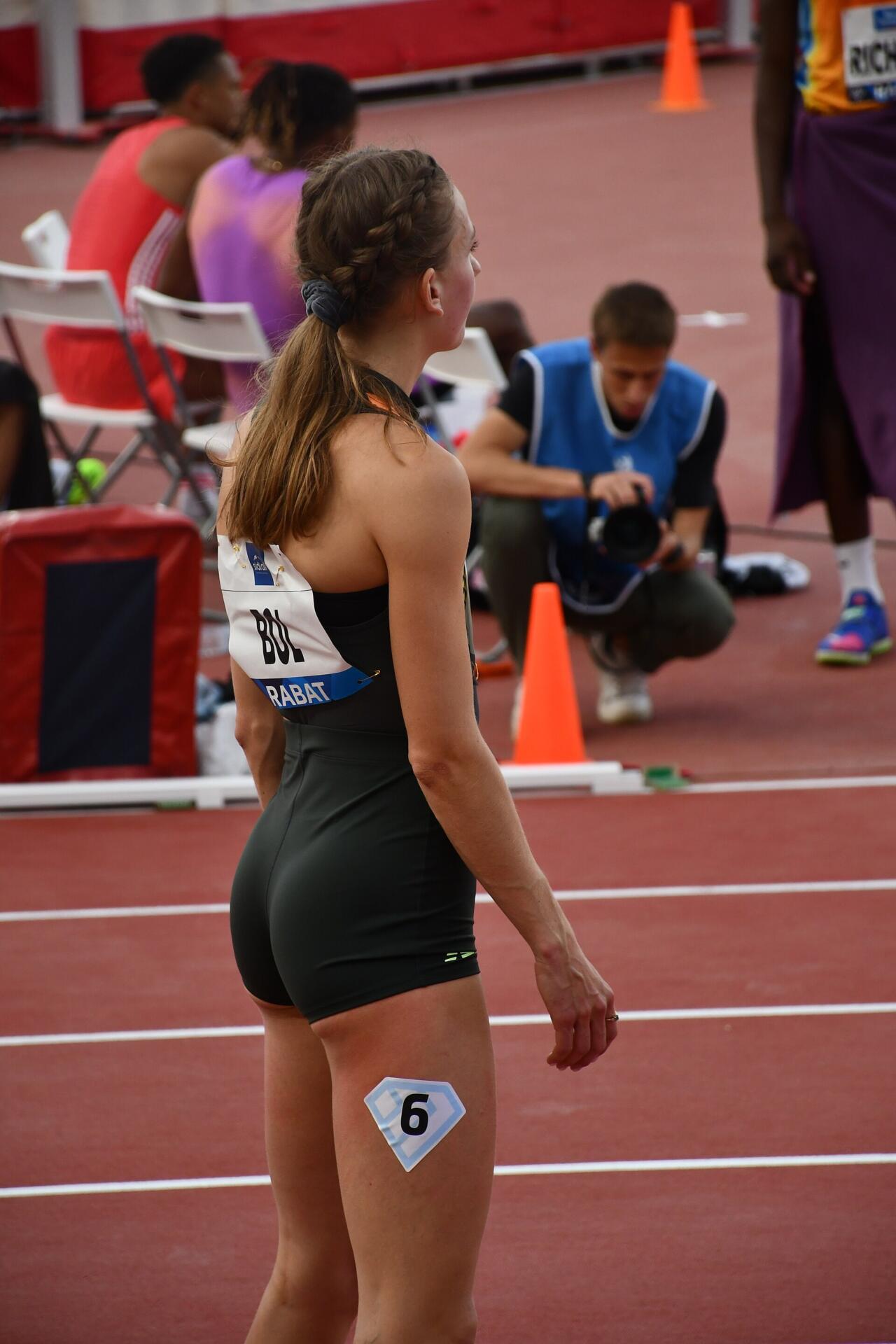
Femke Bol has collected World Championship medals across the 400m and the relays, with years of racing still ahead of her. The Netherlands is also a fixture at the European Athletics Championships, where Schippers, Hassan and Bol have all won multiple golds, and it consistently ranks among the top five athletics nations in Europe.
The Netherlands competes in orange, the colour of the House of Orange-Nassau and a symbol of Dutch identity for centuries. Dutch athletics kits have traditionally used bold orange with blue accents and white lettering, with “Nederland” across the chest of competition singlets. It is one of the most recognised looks in international athletics.
The partnership between Asics — the official supplier of Netherlands Pro Elite kit for much of the 2010s and early 2020s — and the KNAU produced some of the most distinctive and technically advanced athletics apparel in the world. Whether worn by Schippers at her sprinting peak or by Hassan and Bol on the biggest stages, the bold orange and blue scheme turned the Dutch vest into a symbol of speed and pride.
The same orange and blue Asics Pro Elite kit worn by the Dutch national team at the Olympics and World Championships is available as authentic, athlete-issued apparel at Elite Athletics Clothes.
Beyond the elite level, the Netherlands is a nation of runners. Flat terrain, excellent infrastructure and a culture of active outdoor living make it one of Europe’s most enthusiastic running countries, with mass events drawing tens of thousands. The Amsterdam Marathon is one of Europe’s most prestigious races, the Zevenheuvelenloop is a World Athletics Label road race that has hosted world records, and the Rotterdam Marathon is famous for its fast course.
At the grassroots level, athletics clubs throughout the country provide training and competition for athletes of all ages and abilities. The KNAU’s development programmes have been instrumental in identifying talent early and providing structured pathways from youth athletics to the senior national team.
The visibility of stars on social media and in national coverage has helped inspire participation at every level. When Femke Bol anchors a relay to gold on national television, or Sifan Hassan wins an Olympic marathon on the streets of Paris, millions of Dutch people see athletics as exciting, accessible and worth pursuing — inspiration that translates directly into increased participation.
Dutch athletics in the mid-2020s is in an exceptionally healthy state. The combination of established stars and emerging talents, strong club infrastructure and increasing media investment has created an environment in which the Netherlands can genuinely compete with the world’s strongest athletics nations. Femke Bol defended her world 400m hurdles title at Tokyo 2025 — part of a six-medal Dutch haul there — and makes the country a guaranteed force at every major championship, while Sifan Hassan, Olympic marathon champion at Paris 2024, continues to push the boundaries of distance running on the roads.
The Dutch relay teams — both men’s and women’s 4x400m — are among the strongest in Europe and regularly competitive globally. The KNAU has invested significantly in performance programmes, and the national team benefits from excellent facilities and coaching. Dutch athletes increasingly combine domestic training with stints at high-altitude camps in Kenya, Ethiopia and the United States, building the aerobic base and competitive experience needed to win at the highest level.
The next generation of Dutch athletics talent is already making its presence felt on the European and global junior circuit, with young sprinters, hurdlers and middle-distance runners posting performances that signal serious future potential. The KNAU’s structured talent identification programme ensures the most gifted young athletes receive the coaching, competition and support they need to develop into senior international performers.
Young sprinters training under coaches who worked with Dafne Schippers are absorbing both technical knowledge and competitive mentality on the European junior circuit.
A new generation inspired by Sifan Hassan is posting sub-4:10 1500m and sub-15:30 5000m times at junior level, suggesting serious senior potential within the decade.
Young Dutch athletes are posting standout performances at European Youth and Junior Championships, backed by the KNAU’s structured talent identification programme.
Looking ahead to the 2028 Los Angeles Olympics, a new wave of Dutch stars — names not yet widely known — is being prepared to carry the orange forward with genuine medal ambitions.
At Elite Athletics Clothes, we offer an exclusive collection of authentic Netherlands Pro Elite athletics apparel — singlets, T-shirts, tracksuits, jackets and more in the iconic orange and blue of the Dutch national team. Every piece is 100% authentic and athlete-issued, among the rarest and most collectible athletics garments available anywhere.
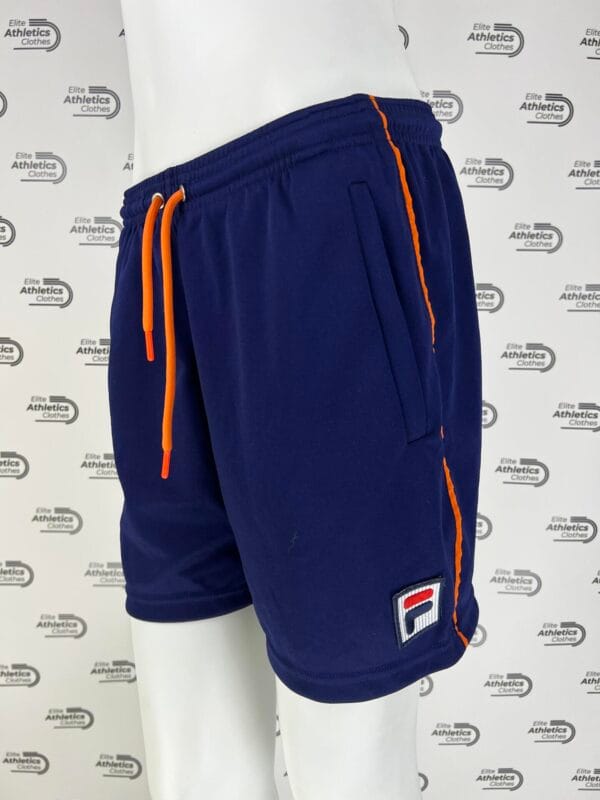 Fila Netherlands Pro Elite 2020 OLY Women Short Pants
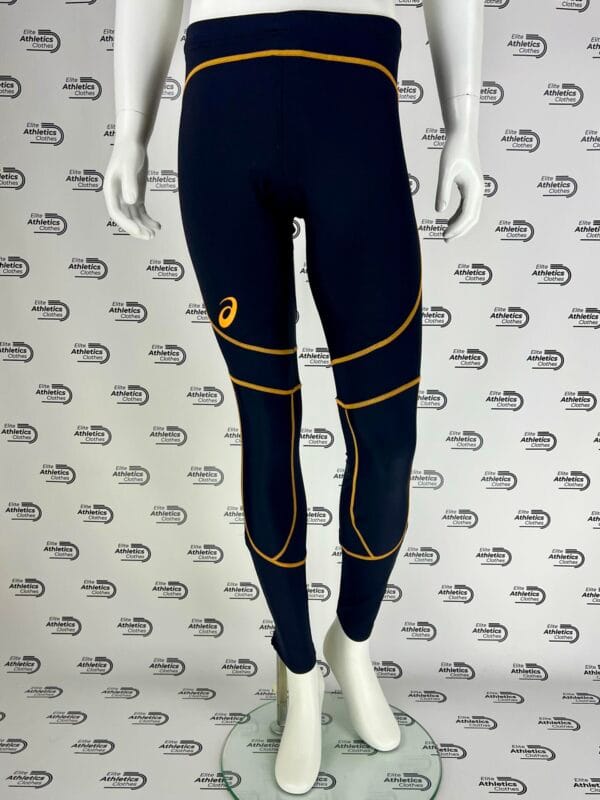 Asics Netherlands Pro Elite 2016 Long Tights
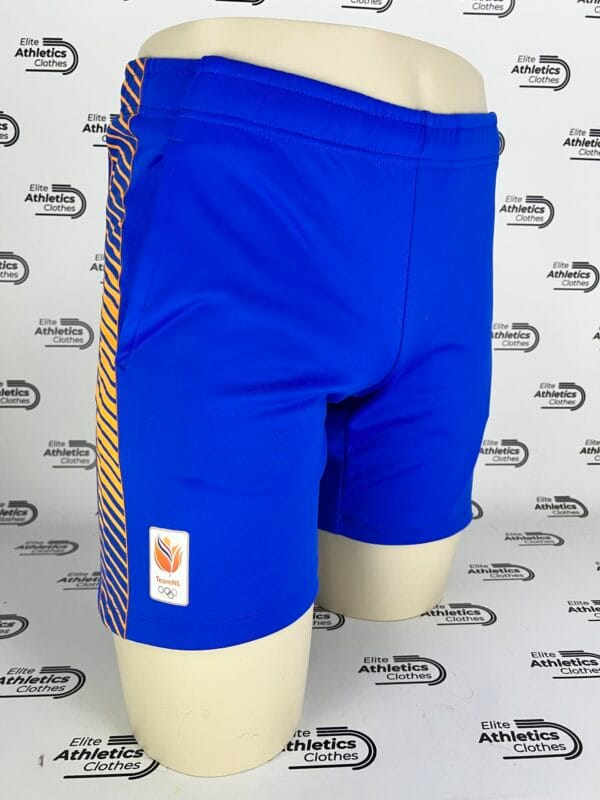 Asics Netherlands Pro Elite 2018 Women Short Pants
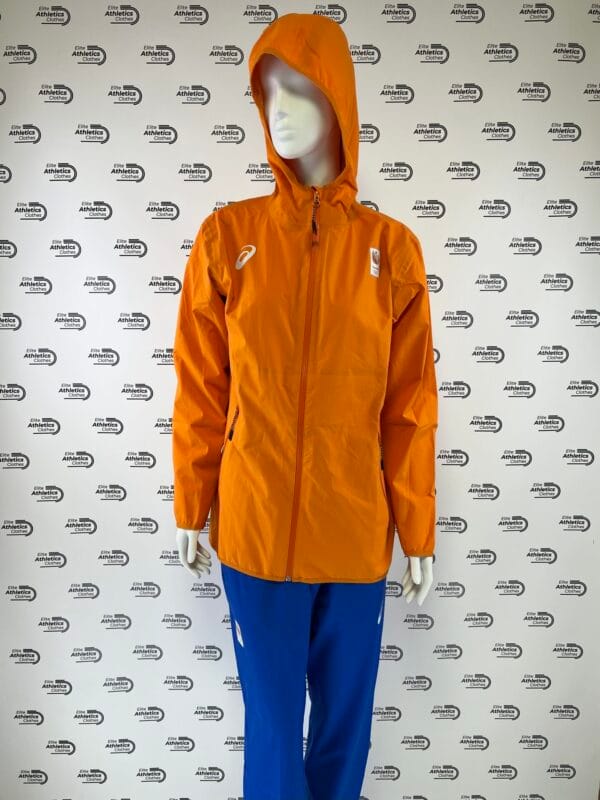 Asics Netherlands Pro Elite 2018 Women Storm Tracksuit220,00 €View Piece →
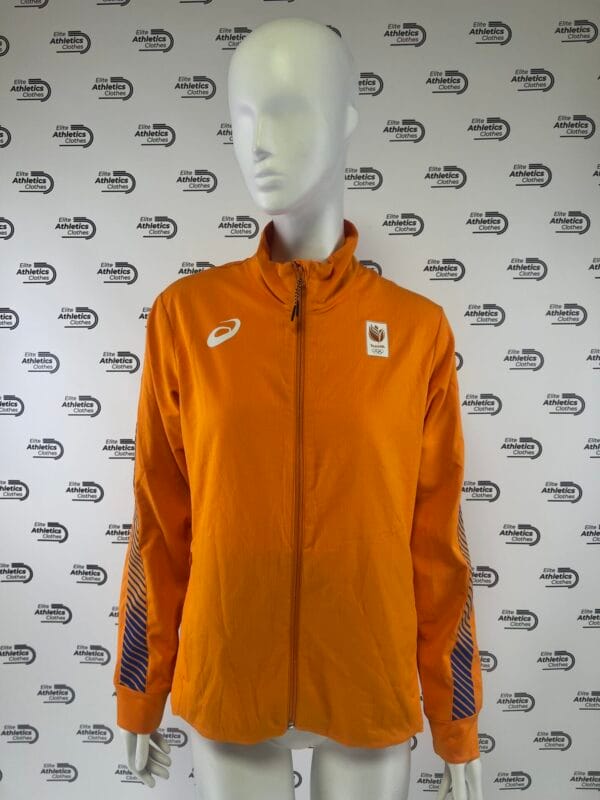 Asics Netherlands Pro Elite 2018 Women Jacket120,00 €View Piece →
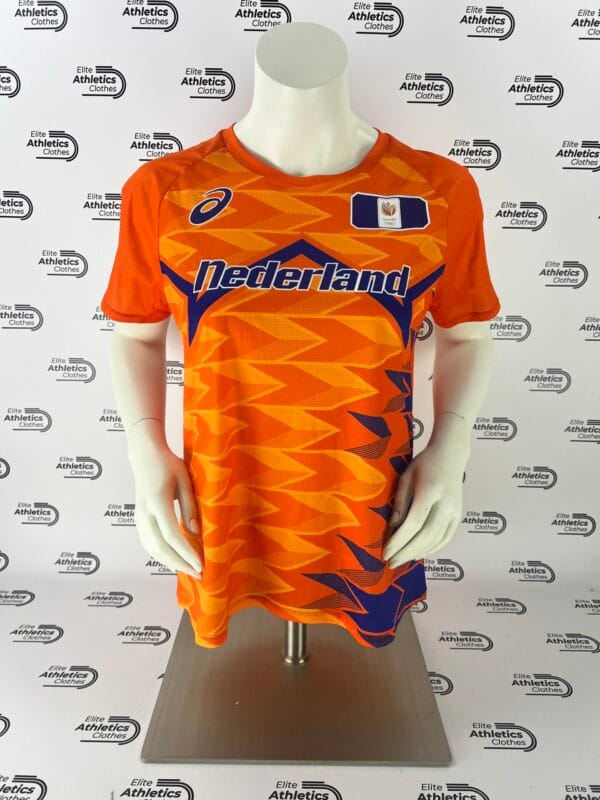 Asics Netherlands Pro Elite 2024 OLY Women T-Shirt150,00 €View Piece →
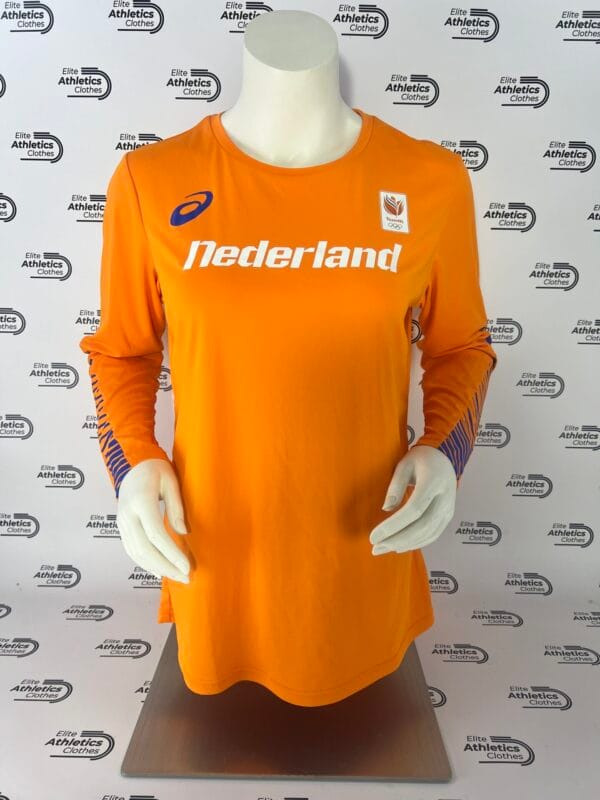 Asics Netherlands Pro Elite 2018 Women Long Sleeves T-Shirt
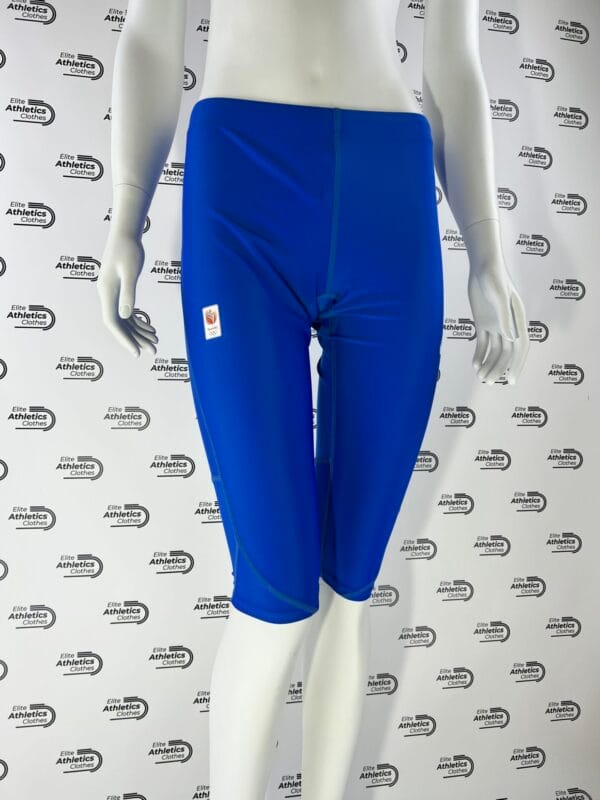 Asics Netherlands Pro Elite 2018 Women Capri Long Tights
Most athletics historians cite Fanny Blankers-Koen, whose four gold medals at the 1948 London Olympics and status as IAAF Female Athlete of the Century make her case almost unanswerable. In the modern era, Sifan Hassan’s Tokyo triple medal and extraordinary range from 1500m to the marathon place her in genuine contention.
The greatest moment remains Fanny Blankers-Koen’s four gold medals at the 1948 London Olympics. In the modern era, Sifan Hassan’s 5000m and 10,000m gold plus 1500m bronze at Tokyo 2020 stand as an extraordinary achievement, and the Netherlands has also won medals through athletes like Dafne Schippers and its relay teams.
Yes. The Netherlands hosted the Olympic Games in Amsterdam in 1928, which included a full athletics programme. The country has also hosted European Athletics Championships and World Athletics Label road races, including the Zevenheuvelenloop in Nijmegen and the Amsterdam Marathon.
The Netherlands competes in iconic orange — the national colour of the House of Orange-Nassau, a symbol of Dutch identity for centuries. Team kits traditionally feature bold orange with blue accents and white lettering, and the word “Nederland” across competition singlets has become one of the most recognized branding elements in international athletics.
Elite Athletics Clothes offers an exclusive collection of authentic Netherlands Pro Elite apparel, including items worn by Dutch national team athletes at the Olympic Games, World Championships and European Championships. All items are 100% authentic, athlete-issued garments from the Asics Pro Elite range.
Femke Bol holds the indoor 400m world record at 49.17 seconds, set at the 2024 World Indoors in Glasgow after she first broke the 1982 mark in February 2023. It is also the Dutch national record, and Bol has additionally broken Dutch national records in the outdoor 400m hurdles and 400m.
ASICS has been the Atletiekunie’s official supplier for all national selections since 1 January 2006. Supplier setups can also split by function: in recent Olympic cycles the Dutch delegation’s off-stadium kit has come from a separate brand — our archive has handled FILA-branded Dutch Olympic pieces alongside the ASICS competition kit. Authenticated athlete-issued Netherlands pieces surface at Elite Athletics Clothes when available.
We use cookies to run this store, remember your preferences and measure traffic. Accept or deny non-essential cookies below.