
Nike Pro Elite
2011
One red singlet from the season Mo Farah moved to Portland and swapped adidas for Nike — the year of two national records in one Monaco race, an American record in Brussels, and a British record that still stands.
Nike Pro Elite 2011 is the athlete-issue Nike competition kit of the 2011 season — a red distance singlet with a black speed-line graphic, issued to contracted athletes and never retailed — from the year Mo Farah joined the Nike Oregon Project and ran the British 10,000 m record that still stands.
This page reads the team's season first — the move to Portland, Eugene, Monaco, Brussels and the exit of Meb — then the cycle's design and the one archive piece.
Part of our Brand Series — the full story is in The History of Nike Pro Elite. Jump to the full cycle collection or browse the category.
- What it is
- The second-oldest Nike cycle in our archive — a red athlete-issue distance singlet from 2011
- The move
- Farah joins the Nike Oregon Project in February 2011; first race in Nike, NYC Half, 20 March
- Eugene, 3 June
- Farah 26:46.57 — still the British 10,000 m record in 2026
- Monaco, 22 July
- Farah 12:53.11 and Lagat 12:53.60, two national records 0.49 s apart
- Brussels, 16 Sept
- Bekele 26:43.16, fastest of the year; Rupp 26:48.00, American record
- The trophies
- Cheruiyot (5000 m) and Jeter (100 m) win Diamond League titles; Eaton's indoor heptathlon world record, 6568, in February
- The exit
- Meb Keflezighi not renewed — Skechers from August 2011
- In our archive
- 1 piece of the red 2011 issue
The Year of the Move
The Nike season of 2011 begins with a change of shirt. In February Mo Farah, an adidas athlete until then, announced he was moving to Portland to train under Alberto Salazar at the Nike Oregon Project; his first race in a Nike uniform was the New York City Half Marathon on 20 March. Galen Rupp, the group's American, had been there since turning professional with Nike in 2009. Within four months the move had produced the longest-lived number of this page: on 3 June, at the Prefontaine Classic in Eugene, Farah ran 26:46.57 for 10,000 m — a British and European record then, and still the British record in 2026, fifteen years later.
The three nights (table)
| Meeting | Event | First Nike athlete | Second Nike athlete | Gap | Status in 2026 |
|---|---|---|---|---|---|
| Monaco, 22 Jul 2011 | 5000 m | Farah 12:53.11 (BR) | Lagat 12:53.60 (AR) | 0.49 s | both broken in 2025 |
| Brussels, 16 Sep 2011 | 10,000 m | Bekele 26:43.16 (WL) | Rupp 26:48.00 (AR) | 4.84 s | Rupp's broken in 2022 |
| Eugene, 3 Jun 2011 | 10,000 m | Farah 26:46.57 (BR) | — | — | still the British record |
Monaco and Brussels
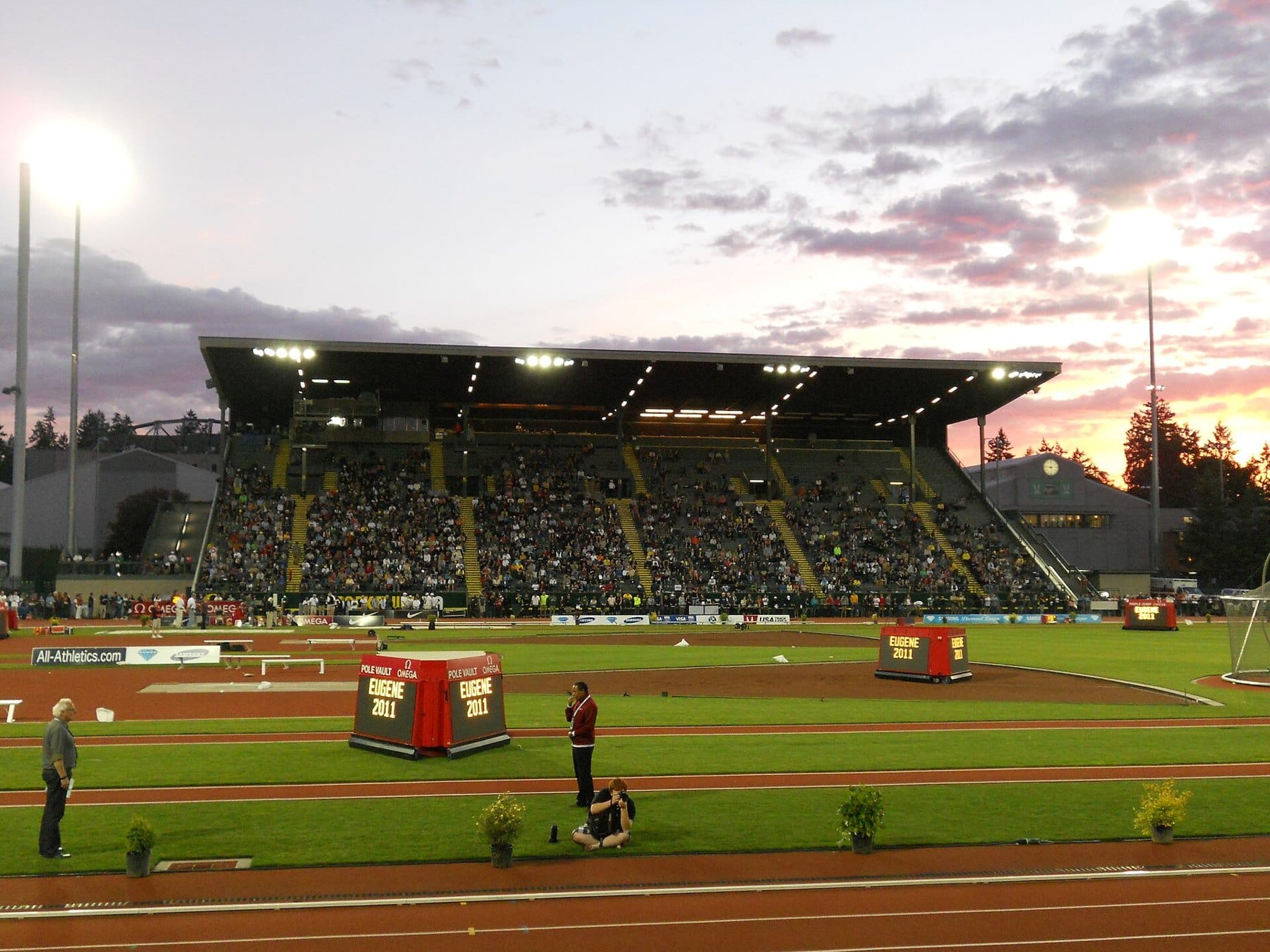
The two nights that define the year came in pairs. In Monaco on 22 July, Farah won the 5000 m in 12:53.11, a British record, with Bernard Lagat one stride behind in 12:53.60, an American record: two Nike athletes, 0.49 s apart, both records in the same race. In Brussels on 16 September, Kenenisa Bekele — a Nike athlete for two decades — ran the fastest 10,000 m of the year, 26:43.16, and Rupp finished third in 26:48.00, an American record. Both American marks and the British 5000 m mark have since fallen: Grant Fisher took Rupp's in 2022, Nico Young and George Mills took the two Monaco times within a day of each other in June 2025.
Elsewhere on the circuit Vivian Cheruiyot won the women's 5000 m Diamond Trophy, with wins in Shanghai, Eugene, Stockholm and Zürich; Carmelita Jeter, a Nike sprinter since her Compton days, took the 100 m trophy; and Sanya Richards-Ross ran 49.66 in London on 5 August. Indoors, on 6 February in Tallinn, Ashton Eaton set a world record of 6568 points in the heptathlon. The roads went the other way: Meb Keflezighi, a Nike athlete for twelve years, was not renewed, signed with Skechers in August, and finished sixth in New York in November; the year's marathon records in Boston and Berlin were run in adidas.
The Daegu World Championships in August and September belong to the federations, not to this page: Team USA topped the table in the Nike kit of USATF, Farah won his first global title in the vest of Great Britain, and those medals live in our country histories.
The Kit of the Cycle
The 2011 cycle is the last quiet issue before Volt. The distance singlet we hold is bright red with a black speed-line graphic sweeping the hip and side seam, a white Swoosh on the left chest and a mesh racerback; 100 percent polyester, made in the USA, style 416245-000, a men's small. One season later the same silhouette would come back in black with slate-grey panels and volt flashes for the London Games.
Construction follows the athlete-issue rules our authentication guide covers: competition-weight cloth, race cuts, no retail run. “Pro Elite” is the athlete-channel label collectors use — the programme Nike itself keeps off the shelves. Federation kit is a different contract: what USATF or Athletics Kenya wear at a Worlds lives in our country pages, not here.
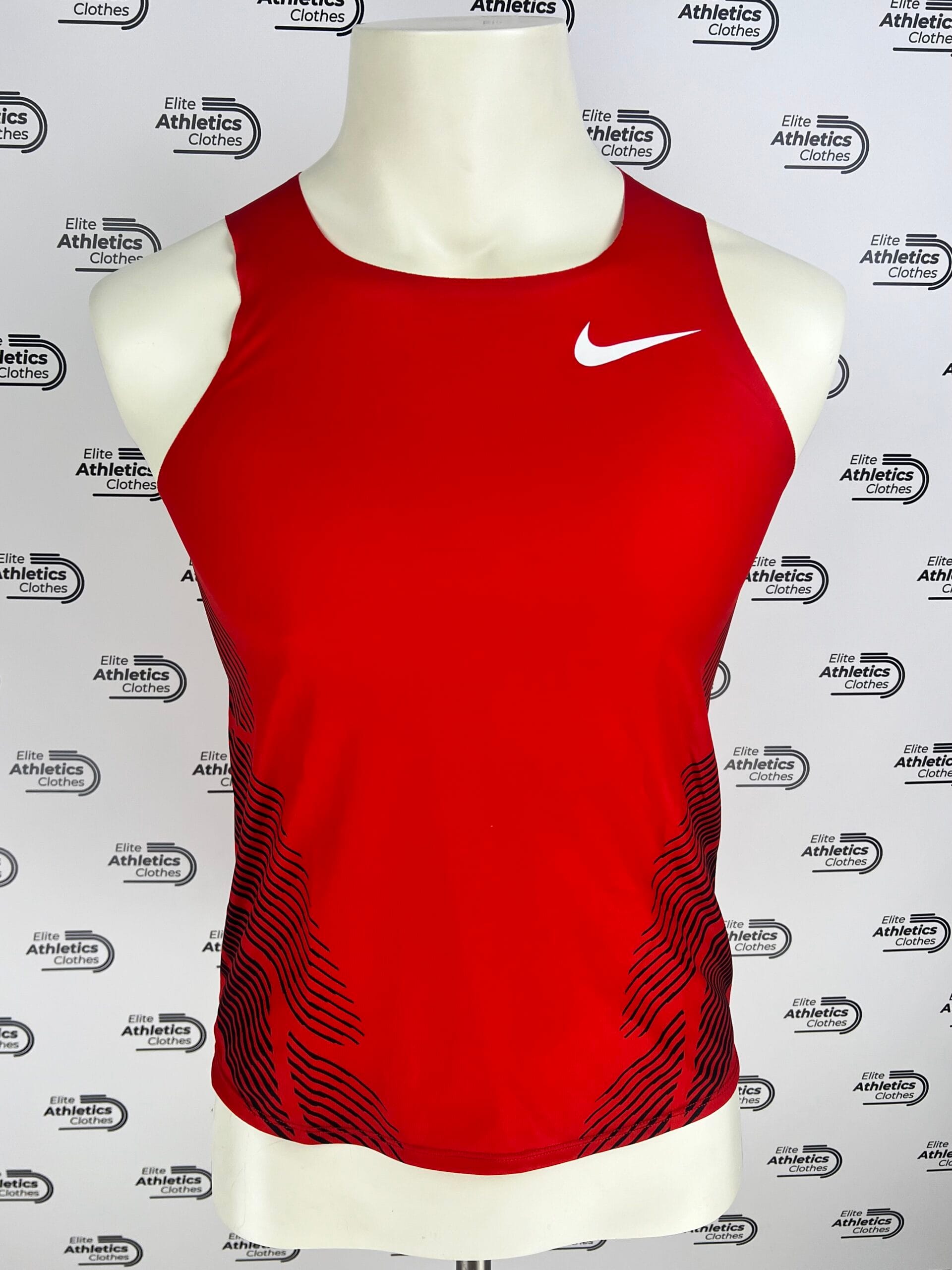 From this cycle · in the archiveNike Pro Elite Team 2011 Distance SingletThe red 2011 distance singlet — black speed lines at the hip, a white Swoosh, mesh racerback: the issue of the season Farah changed shirts.120,00 €View piece →
The Full Cycle in the Archive
Every piece we hold from the 2011 cycle, grouped by edition — in-stock first, sold pieces dimmed and documented, refreshed against live stock. The full brand story is in the Nike pillar.
What is Nike Pro Elite 2011 kit?
Athlete-issue Nike competition kit from the 2011 season — the red distance singlet with a black speed-line graphic and a white Swoosh, issued to contracted athletes and never sold at retail. It is the second-oldest Nike cycle in our archive, after the graphite 2009 issue.
What did Nike athletes do on the 2011 circuit?
Mo Farah, newly moved to the Nike Oregon Project, ran 26:46.57 in Eugene — still the British record — and 12:53.11 in Monaco, where Bernard Lagat ran an American record 12:53.60 in the same race. Galen Rupp set the American 10,000 m record, 26:48.00, behind Kenenisa Bekele in Brussels, and Vivian Cheruiyot and Carmelita Jeter won Diamond League trophies.
When did Mo Farah switch from adidas to Nike?
In early 2011, when he joined the Nike-funded Oregon Project under Alberto Salazar; he raced in Nike for the first time at the New York City Half Marathon on 20 March 2011.
How do I recognise a 2011 Nike athlete-issue piece?
Bright red, a black speed-line graphic across the hip and side, a plain white Swoosh, mesh racerback, made in the USA — no volt, no printed panels. Competition cut with no retail equivalent.
Sources and References
- RunBlogRun — Mo Farah to Nike Oregon Project (March 2011) — the switch from adidas, and the first race in Nike on 20 March 2011
- Wikipedia — Mo Farah — the 26:46.57 in Eugene and the 12:53.11 in Monaco
- Wikipedia — List of British records in athletics — 26:46.57 still the record; 12:53.11 broken by Mills in 2025
- Wikipedia — Bernard Lagat — the 12:53.60 American record in Monaco
- Wikipedia — Galen Rupp — the 26:48.00 American record in Brussels, third behind Bekele
- Wikipedia — List of American records in athletics — Fisher 26:33.84 (2022) and Young 12:45.27 (2025)
- Wikipedia — 2011 IAAF Diamond League — the Diamond Race winners of 2011
- Wikipedia — Ashton Eaton — the 6568-point indoor heptathlon world record, Tallinn, 6 February 2011
- The Shadow League — Carmelita Jeter on her career and Nike — Jeter as a Nike athlete
- FanHub — Meb: twelve years with Nike, twelve with Skechers — the non-renewal and the August 2011 Skechers deal
- ESPN — Nike extends USATF deal — Nike as USATF kit supplier since 1991 — the federation contract, distinct from athlete issue