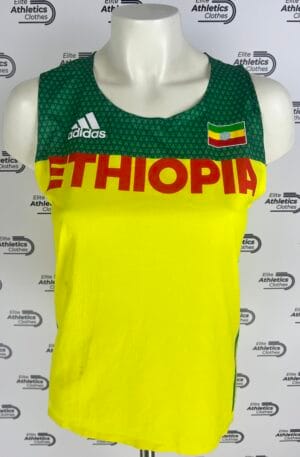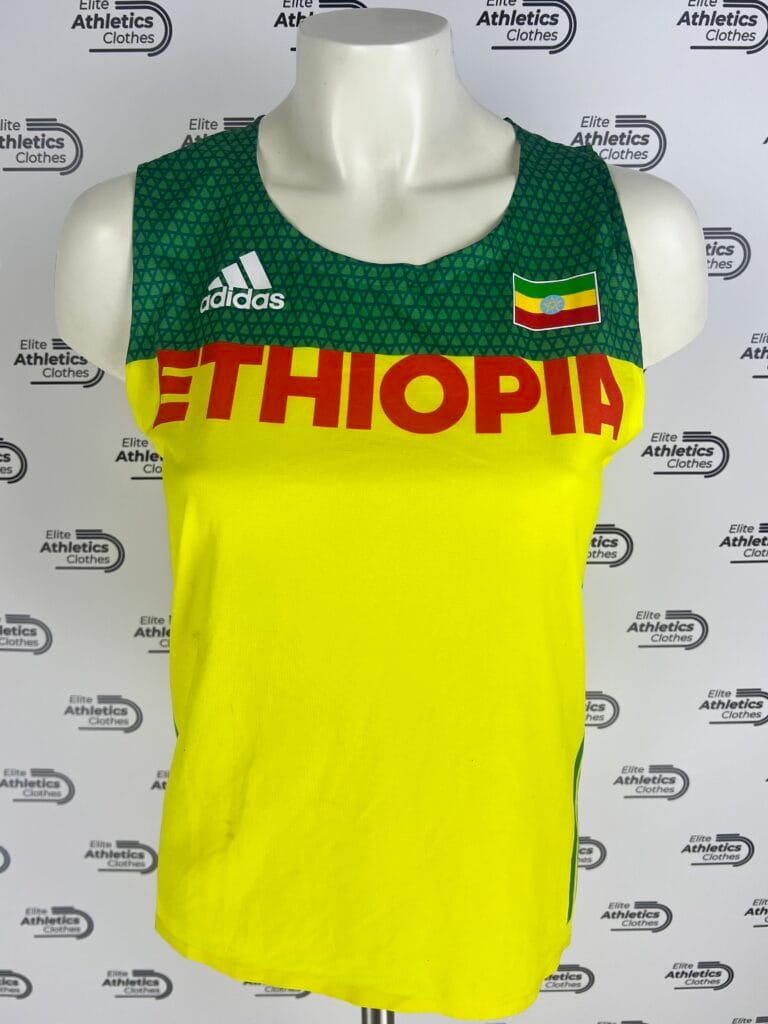
Adidas Ethiopia Pro Elite 2019 Women Distance Singlet worn by Ethiopian Pro International Athletes during 2017, 2018 and 2019 season.
Tap a crossed size and we write you the day one lands in it
Adidas Ethiopia Pro Elite 2019 Women Distance Singlet worn by Ethiopian Pro International Athletes during 2017, 2018 and 2019 season. 100% Authentic Color: Yellow/Green/Red/White 100% Polyester New with original tags
Ships from Switzerland, tracked · processed in 1–3 business days · free over €150
| Size | Chest | Waist | Hip |
|---|---|---|---|
| XS | 77–82 | 61–66 | 86–91 |
| S | 83–88 | 67–72 | 92–97 |
| M | 89–94 | 73–78 | 98–103 |
| L | 95–101 | 79–85 | 104–110 |
| XL | 102–109 | 86–94 | 111–117 |
Listed size: XS · body measurements in cm, as published by adidas
Use the brand body chart as a starting point. Ask us for flat measurements of this exact piece to compare with a garment you already wear.
Ethiopia took 37 athletes to the World Championships in Doha and came home fifth in the table with eight medals: two gold, five silver, one bronze. Every one of the eight came from 1500 metres upwards, which is the shape of Ethiopian athletics, and five of them were decided by less than a second.
The first gold was a defence. On 30 September Muktar Edris, world champion in London two years earlier, held off his own teammate Selemon Barega over the last 40 metres of the 5000 m final, 12:58.85 to 12:59.70. Two days earlier Letesenbet Gidey had run 30:21.23 for silver in the 10,000 m behind Sifan Hassan; on the final night Yomif Kejelcha took the men's 10,000 m silver in 26:49.34, 0.97 s behind Joshua Cheptegei. Gudaf Tsegay added a bronze in the 1500 m with a personal best of 3:54.38.
A distance singlet is a lightweight, sleeveless racerback vest built for one job: racing long, from the 5,000 m to the marathon. It trims a running top to the least fabric that still carries a national crest and two competition bibs — typically around 85 grams, roughly half the mass of an everyday cotton tee.
The version we archive is the race-issued one: the same federation kit an athlete pulls on in a World Championship final, not the replica hanging in a retail store.