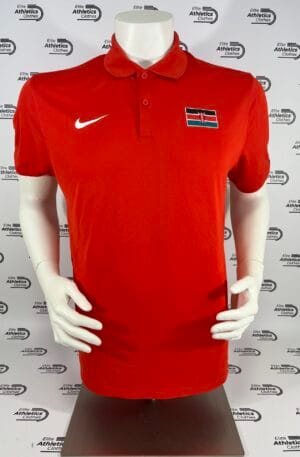
Nike Kenya Olympic Team Pro Elite 2024 Polo Shirt worn by Kenya International Team pro athletes during Paris 2024 Olympic Games.
Tap a crossed size and we write you the day one lands in it
Nike Kenya Olympic Team Pro Elite 2024 Polo Shirt worn by Kenya International Team pro athletes during Paris 2024 Olympic Games. 100% Authentic Color: Red/White/Green 100% Polyester Made in Thailand
Ships from Switzerland, tracked · processed in 1–3 business days · free over €150
| Size | Chest | Waist | Hip |
|---|---|---|---|
| XXS | 72–80 | 57–65 | 72–80 |
| XS | 80–88 | 65–73 | 80–88 |
| S | 88–96 | 73–81 | 88–96 |
| M | 96–104 | 81–89 | 96–104 |
| L | 104–112 | 89–97 | 104–112 |
| XL | 112–124 | 97–109 | 112–120 |
| XXL | 124–136 | 109–121 | 120–128 |
Listed size: M · body measurements in cm, as published by Nike
Use the brand body chart as a starting point. Ask us for flat measurements of this exact piece to compare with a garment you already wear.
Kenya took eleven medals out of Paris — four golds, two silvers, five bronzes, the best of any African nation in athletics — and the axis of it all was one 24-year-old from Kericho. Beatrice Chebet won the 5000 m on 5 August and the 10,000 m on 9 August: the Olympic distance double, completed inside one week. She had already hung a satellite in the sky in May — 28:54.14 in Eugene, the 10,000 m world record and the first time any woman had broken 29 minutes.
Faith Kipyegon took silver there — after a disqualification for contact with Gudaf Tsegay was overturned on appeal the same night — and then, on 10 August, won the 1500 m in 3:51.29, an Olympic record two seconds under her own. It was her third straight Olympic 1500 title: no athlete, man or woman, had ever won the same Olympic running event three times in a row.
A team t-shirt is the training and travel piece of an issued athletics kit — worn in the hotel, the bus and the warm-up area, never in the race. It carries the same federation badge as the competition kit, in street sizing and heavier knits.
The modern issue is polyester — 50 of the 56 tees in this archive declare it — because cotton holds twenty times the moisture. Cotton survives at the travel end of the set, where nobody sweats and softness wins.