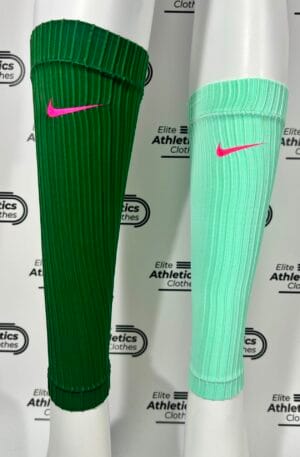
Nike Pro Elite 2023 Women Calf Warmers worn by professional athletes under contract with Nike during 2023 season.
Tap a crossed size and we write you the day one lands in it
Nike Pro Elite 2023 Women Calf Warmers worn by professional athletes under contract with Nike during 2023 season. 100% Authentic Color: Green / Hyper Pink / Tiffany Blue 89% Polyester - 11% Spandex Sold as a pair Designed to be worn over the calf. New Condition
Ships from Switzerland, tracked · processed in 1–3 business days · free over €150
Calf warmers are sized by calf circumference. Ask us for measurements of this exact piece if you need help choosing.
Listed size: XS, S
Every cycle has a headline athlete; 2023's wrote hers in seven weeks. Between 2 June and 21 July, Faith Kipyegon — a Nike athlete since her teens — broke three world records in 49 days, all of them at Diamond League meetings in her own race kit: Florence, Paris, Monaco. In September she closed the circuit by winning the Diamond League final in Eugene in 3:50.72.
The roads belonged to a 23-year-old in Nike shoes. On 23 April Kelvin Kiptum won London in 2:01:25, a course record sixteen seconds outside the world record, with Geoffrey Kamworor of the NN Running Team second in 2:04:23; the same morning Sifan Hassan — Nike — won her marathon debut in 2:18:33 after stopping to stretch a leg at the hour mark.
Eliud Kipchoge, the man Kiptum had displaced, had his hardest year and then his fifth Berlin.
Calf warmers and calf sleeves are footless tubes worn from ankle to knee. Warmers are loose thermal knits for keeping calves warm before racing; compression sleeves apply graduated pressure — typically 20–30 mmHg, tightest at the ankle — and are worn through races and recovery.
The science splits cleanly: no measurable performance gain across 51 studies, but moderate, real recovery benefits. Paula Radcliffe — who raced Berlin 2011 in calf sleeves — made the look part of distance running; team-issued warmers made it part of the kit.
The warmer is a loose thermal knit: a warm-up accessory that keeps the calf and Achilles warm on cold tracks and slips off before the gun. The compression sleeve is a tight, graduated-pressure garment worn through the race itself.
Being footless is the point: unlike compression socks, sleeves and warmers leave the foot free, so athletes keep their preferred racing socks and spikes untouched.