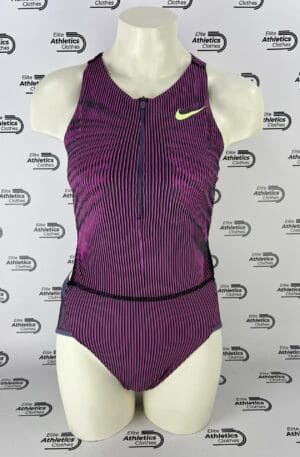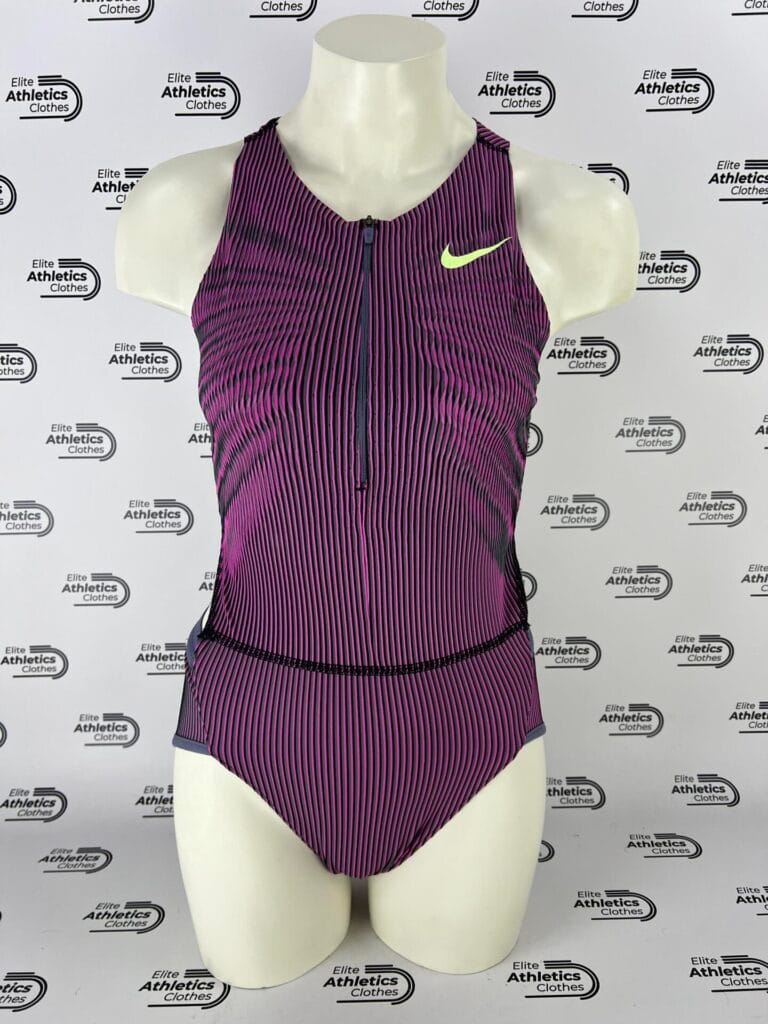
Nike Pro Elite 2024 Women Speedsuit worn by pro elite sponsored athletes throughout the 2024 season, this exclusive speedsuit combines cutting-edge design with advanced performance technology, delivering the perfect blend of style, comfort,
Tap a crossed size and we write you the day one lands in it
Nike Pro Elite 2024 Women Speedsuit worn by pro elite sponsored athletes throughout the 2024 season, this exclusive speedsuit combines cutting-edge design with advanced performance technology, delivering the perfect blend of style, comfort, and functionality for those who push the limits of sport. Inspired by the relentless pursuit of excellence, the 2024 design transitions from cool, dusky neutrals into vibrant, diffused neon shades, capturing the intensity, energy, and unwavering dedication of elite athletes. This fusion of elegance and dynamism reflects the discipline and repetition required to reach peak performance. 100% Authentic Color: Purple/Yellow/Violet Body/Corps: 83% Polyester – 17% Spandex/ Panels: 85% Polyester – 15% Spandex / Lining: 88% Polyester – 12% Spandex Zip Closure at chest Made in USA Excellent Condition
Ships from Switzerland, tracked · processed in 1–3 business days · free over €150
| Size | Chest | Waist | Hip |
|---|---|---|---|
| XXS | 70–76 | 54–60 | 78–84 |
| XS | 76–83 | 60–67 | 84–91 |
| S | 83–90 | 67–74 | 91–98 |
| M | 90–97 | 74–81 | 98–105 |
| L | 97–104 | 81–88 | 105–112 |
| XL | 104–114 | 88–98 | 112–120 |
| XXL | 114–124 | 98–108 | 120–128 |
Listed size: S · body measurements in cm, as published by Nike
Use the brand body chart as a starting point. Ask us for flat measurements of this exact piece to compare with a garment you already wear.
The 2024 generation had a launch, and the launch had an argument. On 11 April, at its Nike On Air show in Paris, Nike showed the Team USA track and field kit for the Olympic season — close to fifty pieces, twelve competition styles — and one of them, a women's unitard cut high enough on the mannequin to bare the hip, went around the world within hours. Lauren Fleshman called it a costume born of forces that no longer needed to be indulged to get eyes on women's sport; the steeplechaser Colleen Quigley said it was not made for performance. Nike's answer was the catalogue: athletes choose from the range, and pole vaulter Katie Moon, among others, said so publicly. The unitard was one option among twelve. It was also the first time in years that an athlete-issue kit had made the news for its cut.
Underneath the argument the cycle did what Nike cycles do: it went fast against the clock.
A speedsuit is a fitted one-piece track racing garment — singlet and shorts fused into a single skin-tight surface — worn by sprinters, hurdlers and relay squads to eliminate loose fabric entirely.
It is also athletics apparel's laboratory: Flo-Jo's 1988 one-leggers, Cathy Freeman's wind-tunnel-zoned Swift Suit at Sydney 2000, London 2012's dimpled TurboSpeed and the Paris 2024 unitards are all chapters of the same experiment. And in a race-issued archive, the one-piece is the scarcest garment of all.