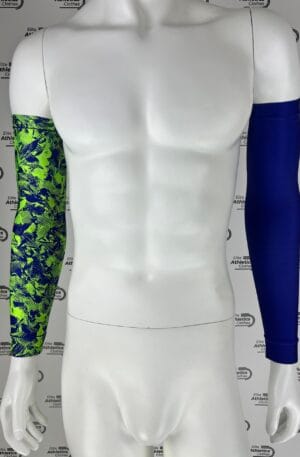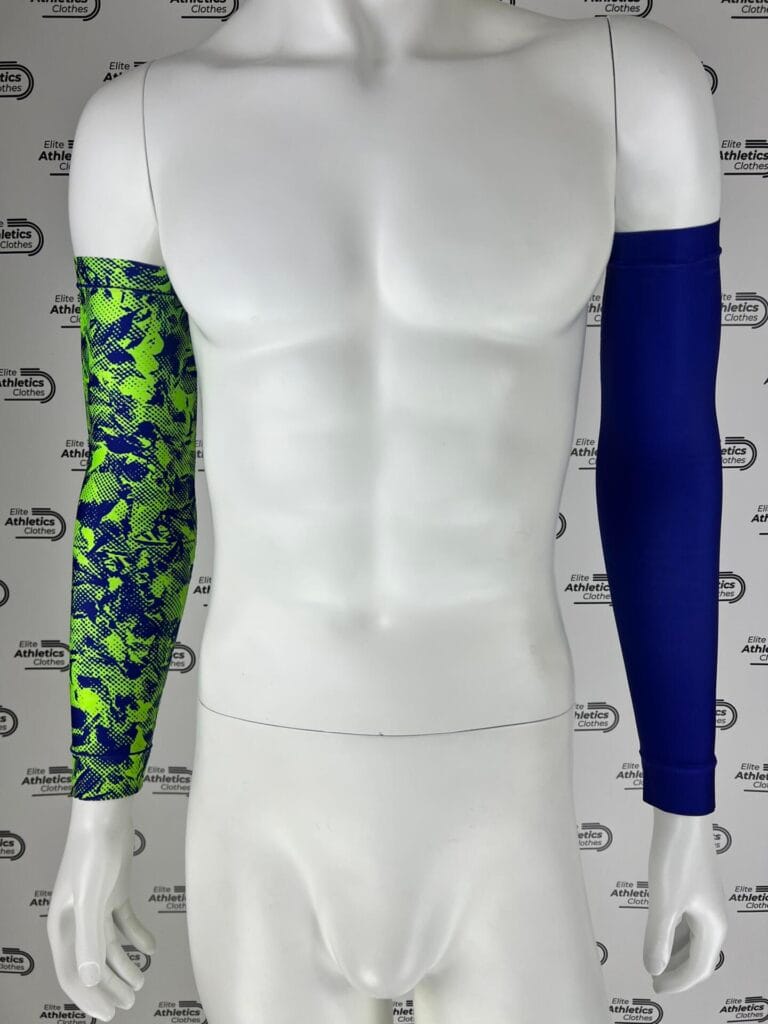
Nike Pro Elite Team 2019 Arm Sleeves worn by professional athletes under contract with Nike International during the 2019 season.
Tap a crossed size and we write you the day one lands in it
Nike Pro Elite Team 2019 Arm Sleeves worn by professional athletes under contract with Nike International during the 2019 season. 100% Authentic Color: Deep Royal Blue/Electric Green 100% Polyester Made in USA Worn Condition
Ships from Switzerland, tracked · processed in 1–3 business days · free over €150
Arm sleeves are sized by arm circumference. Ask us for measurements of this exact piece if you need help choosing.
Listed size: S
Ask a collector which Pro Elite generation matters most and the answer is usually 2019 — and the reason is not a medal table. It is what Nike race kit did on the roads that year, most of it inside eleven weeks of autumn: a world record for the half marathon, a marathon two seconds off the world record, a women's marathon record by eighty-one seconds, a world 10 km record, and a man covering the distance in under two hours.
It started in April: Eliud Kipchoge won London in 2:02:37, then the second-fastest marathon ever run. The autumn began in Copenhagen on 15 September, when Geoffrey Kamworor took the half marathon world record to 58:01. Two weeks later Kenenisa Bekele won Berlin in 2:01:41, two seconds outside Kipchoge's record, with a 34-year-old's second half. Then Vienna, 12 October: on a closed loop in the Prater, behind a rotating phalanx of pacers, Kipchoge ran 1:59:40.
Arm sleeves are removable knit tubes from bicep to wrist that give runners adjustable warmth at cool starts, UPF sun protection, light compression and — worn singly — a sprint signature. They are the most modular piece in the race kit.
Their origin is basketball: Allen Iverson's trainer cut a compression stockinette for his elbow in January 2001, Iverson scored 51 that night, and the sleeve became a league staple before crossing to marathon start lines and single-armed sprinters.