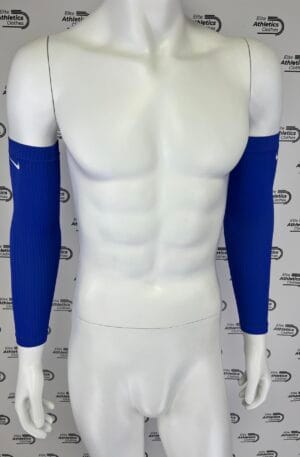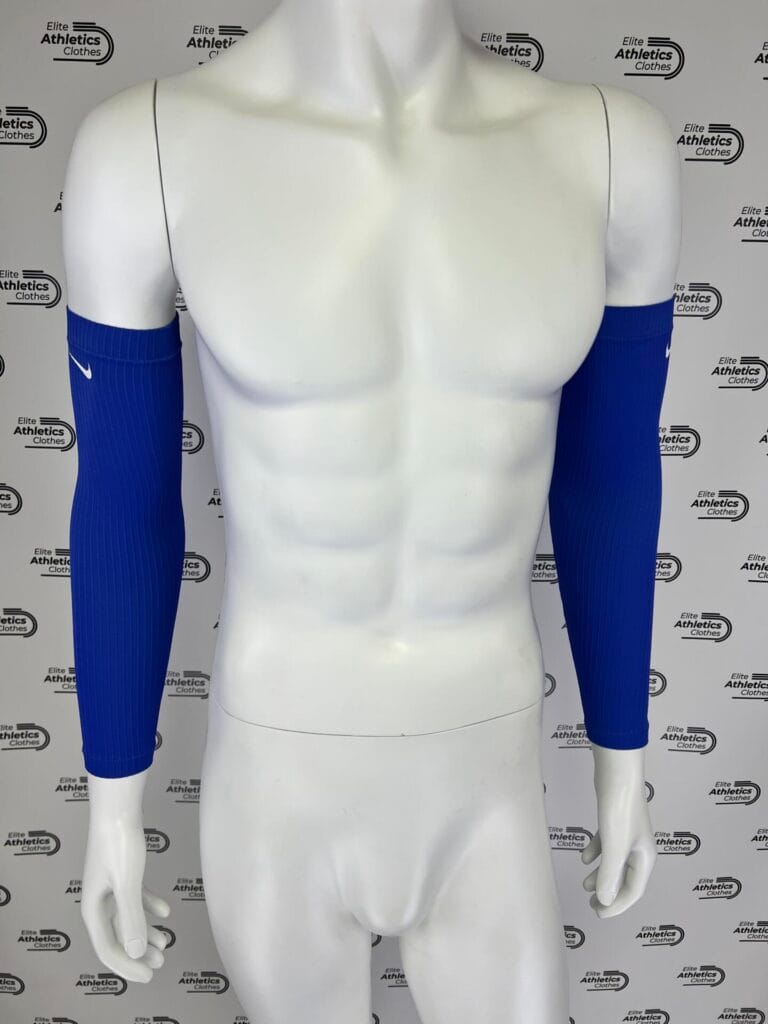
Nike Rosa & Co. Pro Elite 2024 Arm Sleeves worn by professional athletes contracted by Nike and represented by Nike Associati during the 2024 season.
Tap a crossed size and we write you the day one lands in it
Nike Rosa & Co. Pro Elite 2024 Arm Sleeves worn by professional athletes contracted by Nike and represented by Nike Associati during the 2024 season. 100% Original Color: Game Royal / White 83% Polyester - 17% Elastane Dri-Fit ADV Made in USA
Ships from Switzerland, tracked · processed in 1–3 business days · free over €150
Arm sleeves are sized by arm circumference. Ask us for measurements of this exact piece if you need help choosing.
Listed size: XS
The Rosa group's best year. Beatrice Chebet ran 28:54.14 for 10,000m in Eugene, the first woman under 29 minutes, then took double Olympic gold in Paris over 5,000m and 10,000m — the first Kenyan woman to manage that double. She closed the year with 13:54 for 5km on the road in Barcelona, the first woman under 14 minutes on any surface. Jacob Kiplimo retained his world cross-country title in Belgrade that March.
World Athletics · Olympics.com
Arm sleeves are removable knit tubes from bicep to wrist that give runners adjustable warmth at cool starts, UPF sun protection, light compression and — worn singly — a sprint signature. They are the most modular piece in the race kit.
Their origin is basketball: Allen Iverson's trainer cut a compression stockinette for his elbow in January 2001, Iverson scored 51 that night, and the sleeve became a league staple before crossing to marathon start lines and single-armed sprinters.