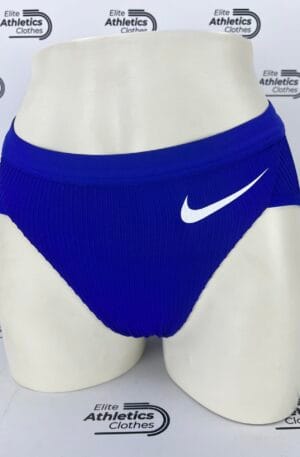
Nike Rosa & Co. Pro Elite 2024 Competition Briefs worn by professional athletes contracted by Nike and represented by Rosa Associati during the 2024 season.
Tap a crossed size and we write you the day one lands in it
Nike Rosa & Co. Pro Elite 2024 Competition Briefs worn by professional athletes contracted by Nike and represented by Rosa Associati during the 2024 season. 100% Authentic Color: Blue/White Body/Corps: 83% Polyester – 17% Spandex/ Panels: 88% Polyester – 12% Spandex Made in USA Excellent Condition
Ships from Switzerland, tracked · processed in 1–3 business days · free over €150
| Size | Chest | Waist | Hip |
|---|---|---|---|
| XXS | 70–76 | 54–60 | 78–84 |
| XS | 76–83 | 60–67 | 84–91 |
| S | 83–90 | 67–74 | 91–98 |
| M | 90–97 | 74–81 | 98–105 |
| L | 97–104 | 81–88 | 105–112 |
| XL | 104–114 | 88–98 | 112–120 |
| XXL | 114–124 | 98–108 | 120–128 |
body measurements in cm, as published by Nike
Use the brand body chart as a starting point. Ask us for flat measurements of this exact piece to compare with a garment you already wear.
The Rosa group's best year. Beatrice Chebet ran 28:54.14 for 10,000m in Eugene, the first woman under 29 minutes, then took double Olympic gold in Paris over 5,000m and 10,000m — the first Kenyan woman to manage that double. She closed the year with 13:54 for 5km on the road in Barcelona, the first woman under 14 minutes on any surface. Jacob Kiplimo retained his world cross-country title in Belgrade that March.
World Athletics · Olympics.com
Competition briefs — race briefs, or “bun huggers” — are the snug, minimalist bottom half of the classic two-piece athletics kit, worn with a crop top or singlet by sprinters, hurdlers and jumpers for full hip movement with zero loose fabric.
No rule mandates them: World Athletics TR5 names no garment at all. The brief earned the start line on fit through the 1980s, survived a real argument about who decides what women race in, and remains the choice of most championship sprinters today.