
TEAM
T-SHIRTS
The kit nobody sees on TV: the badge of the race kit on the garment that never races. What the team tee is, why it left cotton behind, and how to choose one.
A team t-shirt is the training and travel piece of an issued athletics kit — worn in the hotel, the bus and the warm-up area, never in the race. It carries the same federation badge as the competition kit, in street sizing and heavier knits.
The modern issue is polyester — 50 of the 56 tees in this archive declare it — because cotton holds twenty times the moisture. Cotton survives at the travel end of the set, where nobody sweats and softness wins.
This is Kit Anatomy, our series on each garment in the Pro Elite archive. Jump to the team tees in stock, or read on for the fibre ledger.
- What it is
- The training and travel tee of an issued kit — same badge, never raced
- The rule
- World Athletics TR5 covers the race uniform only — the tee sits outside it
- The fibre
- Polyester: regain 0.4% vs cotton's 8.5% at 20°C / 65% RH
- The archive split
- 50 of 56 declare polyester; 8 mention cotton — the travel cuts
- Typical mass
- ~155 g in cotton; lighter in technical knits (singlet: ~85 g)
- The cuts
- Crew tee, long-sleeve and polo — street sizing, not race fit
- Race-issued vs retail
- One cycle alongside the race kit, team-room quantities, no restock
- In the archive
- 56 tees and polos catalogued
View the data
| Fibre | Moisture regain | Where it lives in the kit |
|---|---|---|
| Wool | 13–17% | Heritage warm-ups; 1972 Olympic uniforms were virgin wool |
| Silk | 11% | Not used in issued athletics kit |
| Cotton | 8.5% | Travel and casual tees — 8 of the 56 tees in this archive |
| Nylon | ~4.2% | Woven shells, some shorts |
| Polyester | 0.3–0.4% | The modern team tee — 50 of the 56 in this archive |
What the team tee is
The team tee is the piece of an issued kit that never starts a race. It is what athletes wear in the hotel, on the bus, in the food hall and through the warm-up — the working uniform of everything around competition. It carries the same federation or team badge as the race kit, which is why it belongs to the same issued set and why collectors treat it as kit rather than merchandise.
World Athletics' uniform rule, TR5, governs what an athlete competes in: the federation-approved uniform, clean and non-transparent even when wet. The tee sits outside that rule entirely. Nobody legislates the hotel corridor — which is exactly why the tee is where team kit relaxes: heavier knits, plainer cuts, and the one place cotton is still allowed to exist.
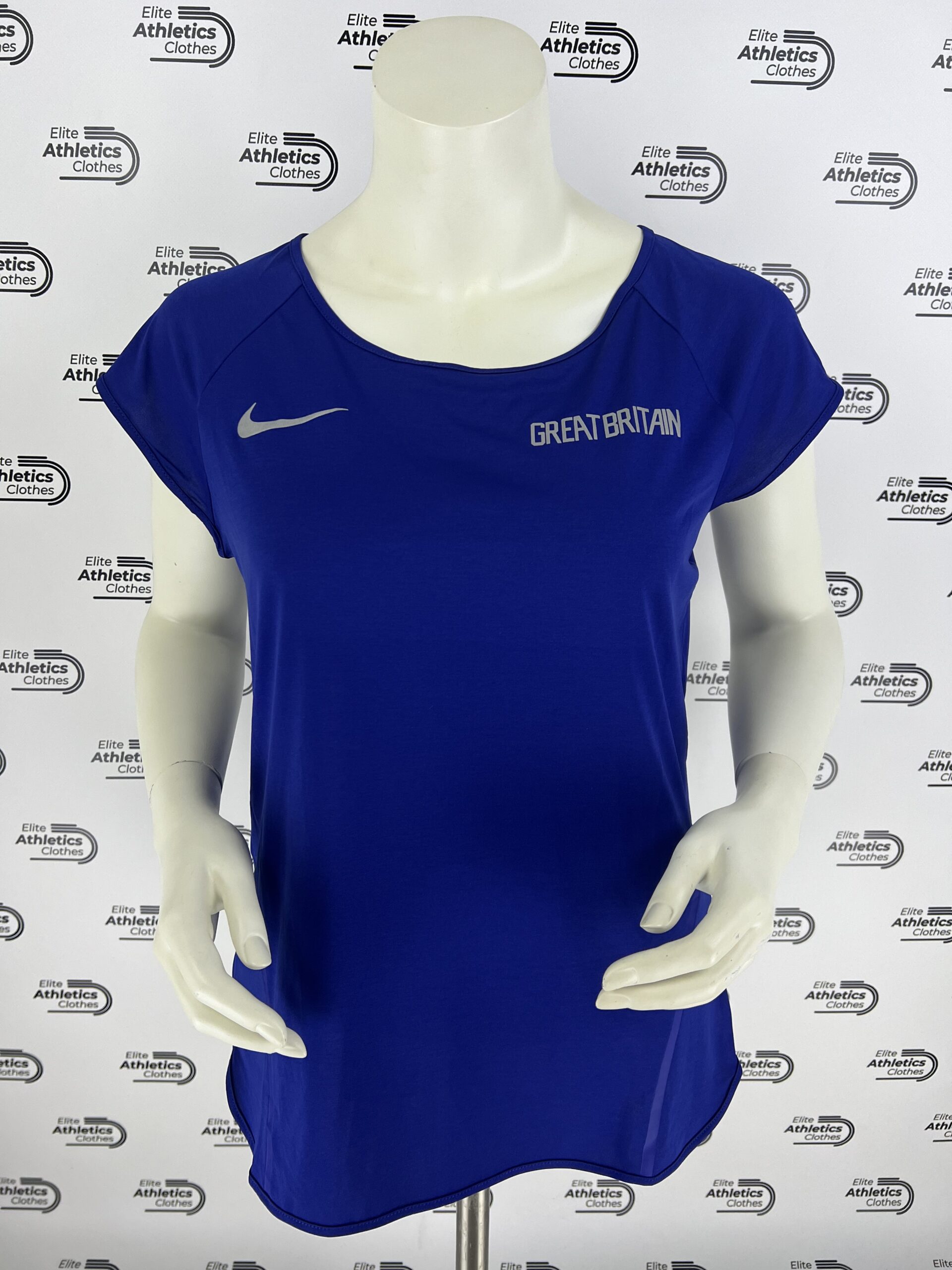 From this series · in the archiveNike Great Britain Pro Elite 2019 Women Training T-ShirtA federation training tee — the badge of the race kit on the garment that never races.70,00 €View piece →
A cotton tee weighs about 155 grams against the 85 of a distance singlet — nearly double — and the mass is the smaller half of the difference. The bigger half is water, and the ledger above shows it.
Why it left cotton behind
Every fibre has a standard number for how much moisture it holds at equilibrium — regain, measured at 20°C and 65% relative humidity. Cotton sits at 8.5%. Polyester sits at 0.4%. That single gap explains most of what happened to the team tee over the last thirty years.
A cotton tee soaked in sweat holds the water against the skin and gets heavier as the session goes on; a polyester knit moves it to the surface and dries. So the issued tee migrated: of the 56 tees and polos in this archive, 50 declare polyester in their fabric tag and only 8 mention cotton at all. The cotton pieces that survive are the travel and casual cuts — worn where nobody sweats, which is the one place cotton's softness wins on merit.
The fibre also explains the polo. Asics and Nike both issued team polos — Team Europe 2019, NN Running training staff — and they are exactly what they look like: the formal end of the tee family, for press days and official functions, cut from the same technical knits.
How a tee is built
The construction is simple by design — the tee is the least engineered garment in the set.
- The knitLightweight polyester jersey, often with a few percent elastane — the fabric tags in this archive run from plain poly to poly-spandex blends.
- The badgeThe federation crest or team mark, printed or embroidered — the same identity as the race kit, which is what makes it issued kit and not merchandise.
- The cutsCrew tee, long-sleeve, and polo — men's and women's blocks, sized like streetwear rather than race kit.
- The mass~155 g in cotton, lighter in technical knits — against ~85 g for a distance singlet and under 60 g for an elite race vest.
- The printSponsor and supplier marks sit looser here than on race kit — TR5 and its advertising rules stop at the start line.
- The lifeIssued for one cycle alongside the race kit, in team-room quantities — then replaced when the kit turns over.
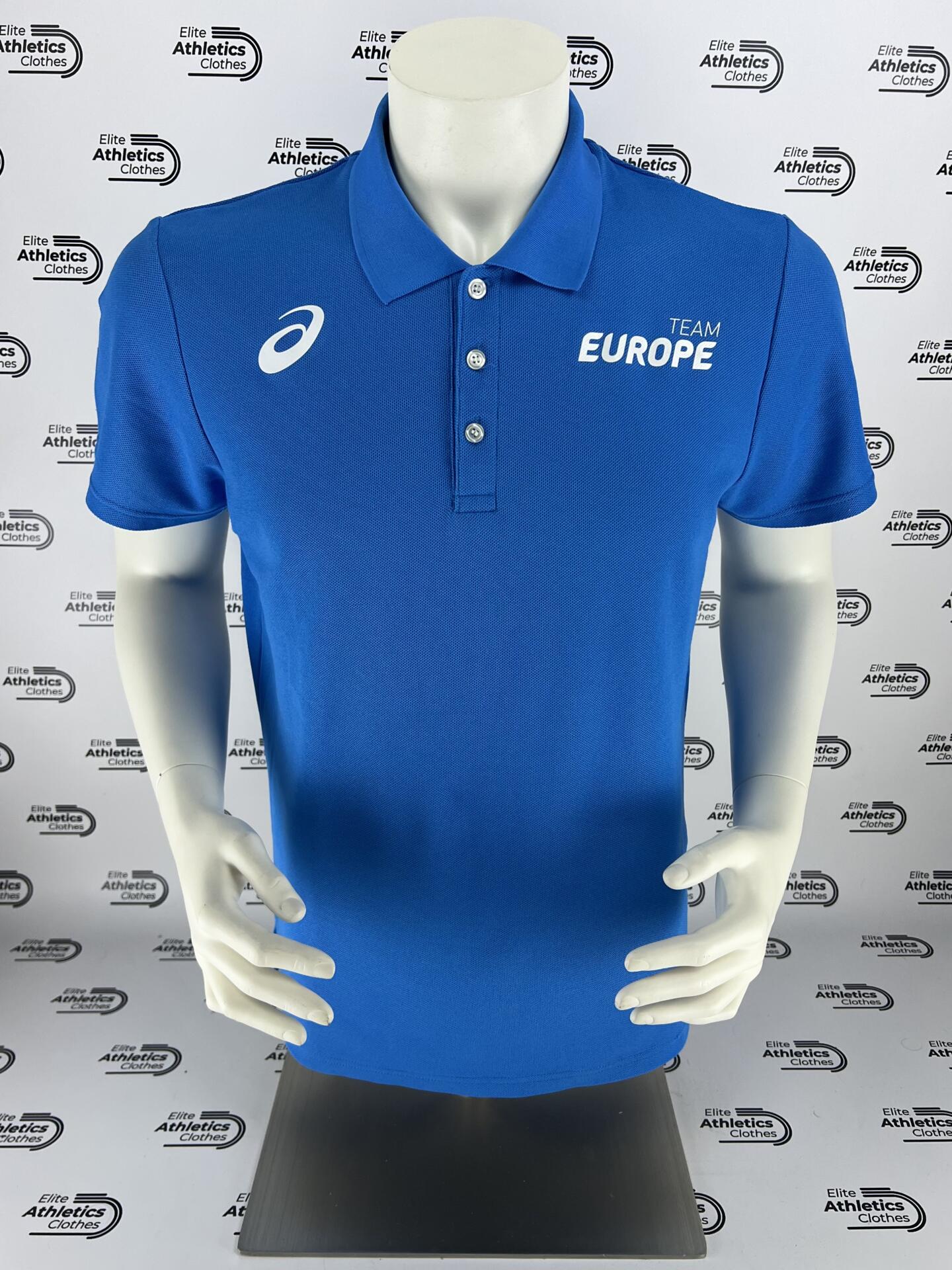 From this series · in the archiveAsics Team Europe Pro Elite 2019 Polo ShirtA team polo — the formal end of the tee family, cut from the same technical knit.150,00 €View piece →
Because the tee is unregulated, it is also where design drifts first: special editions, promo runs and one-off colourways almost always reach the tee before they reach a singlet.
How to choose yours
Choosing a team tee is mostly choosing what it documents.
- Match the cycleA tee carries the same year and kit cycle as the race pieces — pair it with the singlet or briefs of its season and you have the set.
- Fit is street fitTees size like ordinary clothing, not like compression kit — your usual size, no race-fit gamble.
- Read the fabric tagPolyester means training wear; cotton means the travel cut — both are legitimate parts of the issued set, they just did different jobs.
- Long sleeves for coldThe long-sleeve tee is the between-seasons piece — warmer than a tee, lighter than a half-zip.
- Polos are the rare cutFar fewer polos were issued than tees — press and staff pieces surface less often.
- Worn is honestA training tee lived in team rooms and airports — light wear is its provenance, not its flaw.
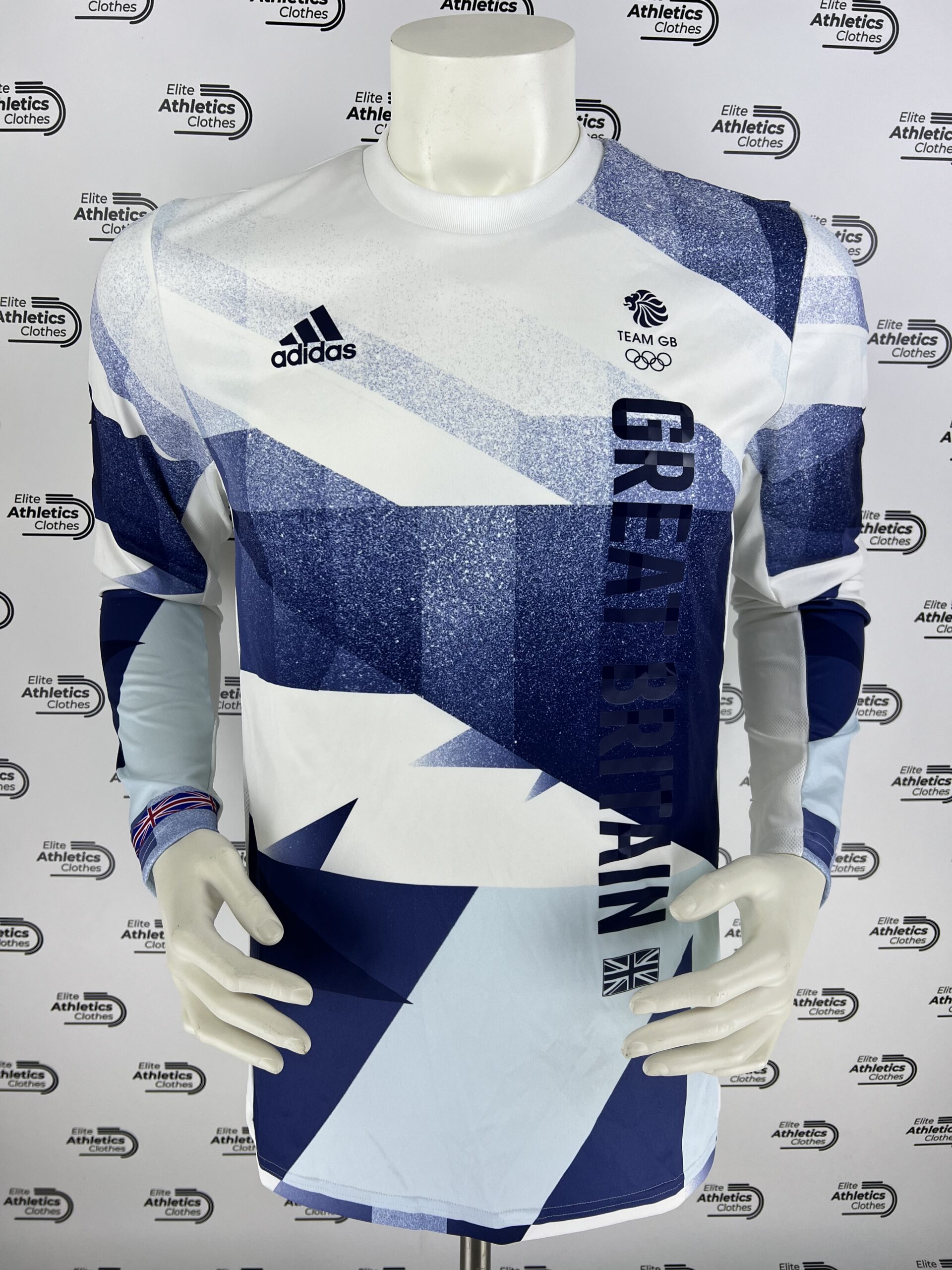 From this series · in the archiveAdidas Great Britain Pro Elite Tokyo 2020 Long Sleeves T-ShirtA long-sleeve issue — the between-seasons cut of the same badge.80,00 €View piece →
The tee is the cheapest door into any team's issued set — same badge, same cycle, street sizing — which is why it is usually the first piece a collector buys and the last one still in stock.
Team T-Shirts in the Archive
Federation and pro-team tees and polos — the training and travel half of issued kits, made for a single cycle and matched to the race pieces in this archive. In-stock first; sold-out pieces stay listed because the runs are small and rarely return.
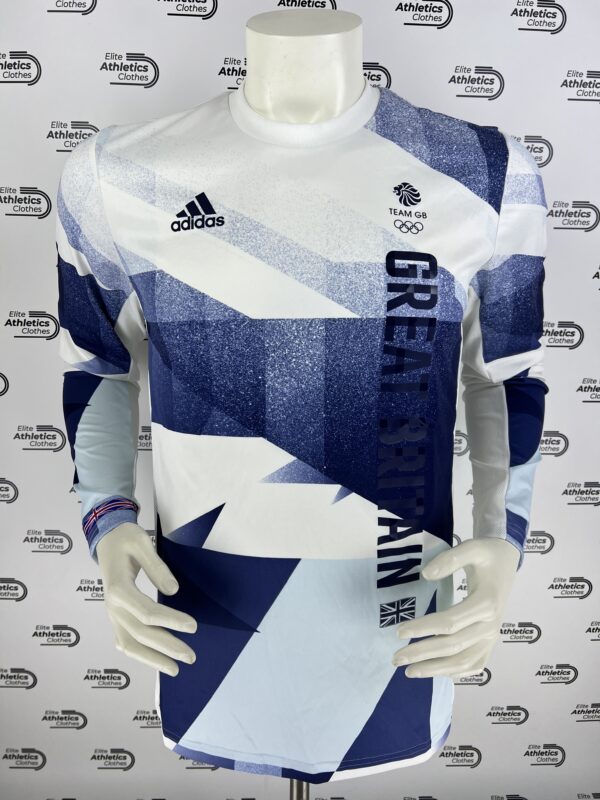 Adidas Great Britain Pro Elite Tokyo 2020 Long Sleeves T-Shirt80,00 €View Piece →
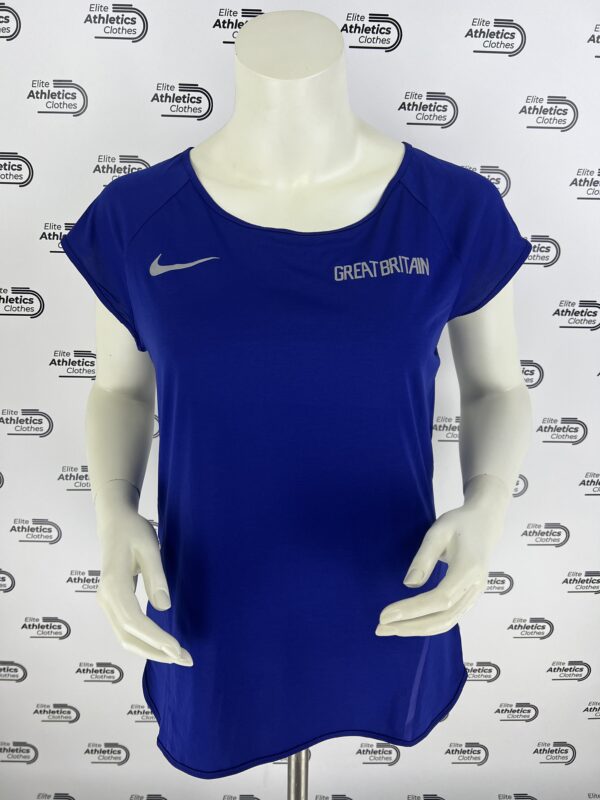 Nike Great Britain Pro Elite 2019 Women Training T-Shirt70,00 €View Piece →
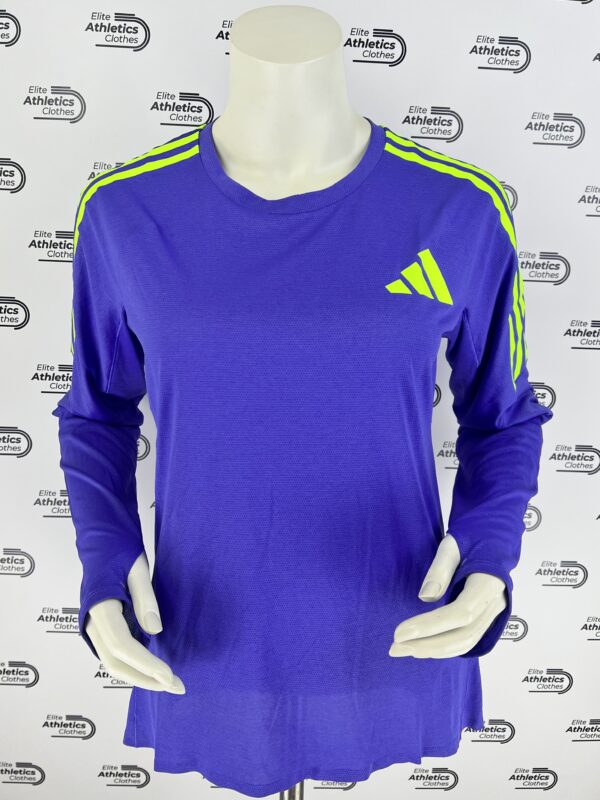 Adidas Pro Elite 2024 Women Long Sleeves Shirt – SPECIAL EDITION120,00 €View Piece →
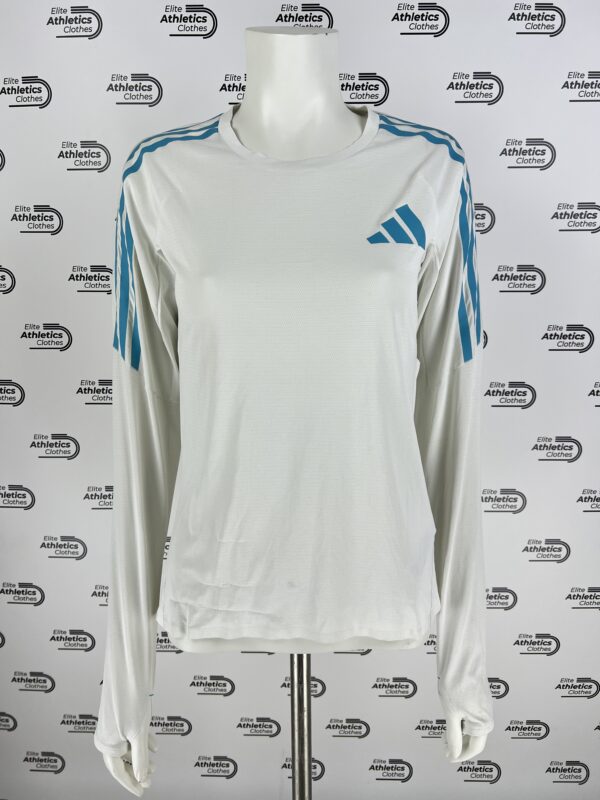 Adidas Pro Elite Team 2023 Women T-Shirt – PROMO EDITION140,00 €View Piece →
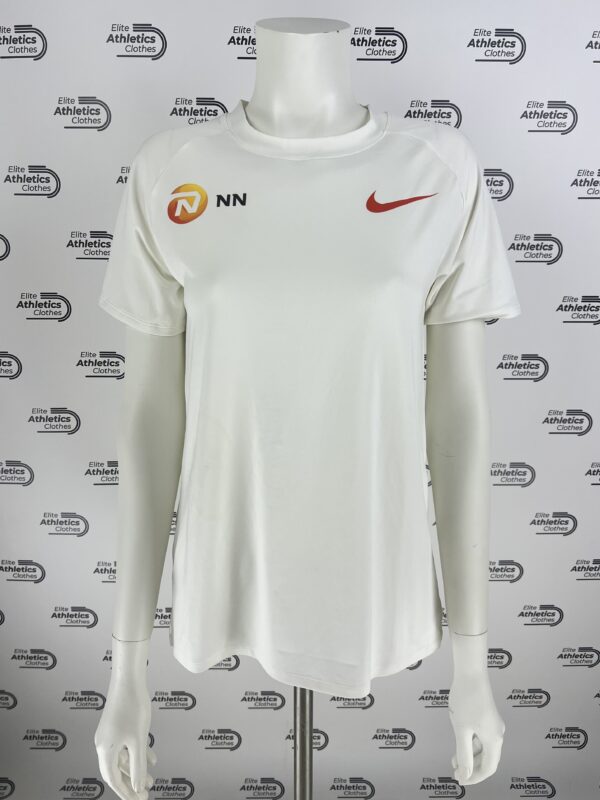 INEOS X Nike NN Running Team Pro Elite 2022 Women T-Shirt150,00 €View Piece →
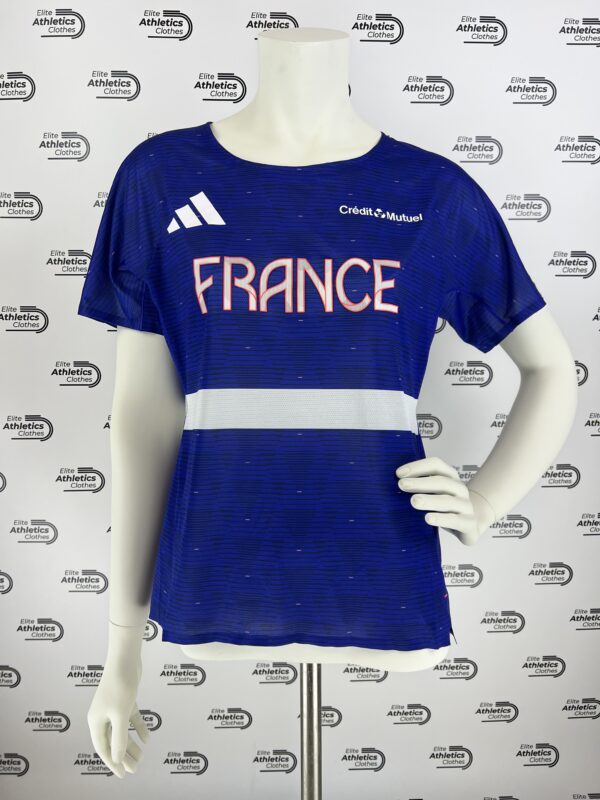 Adidas France Pro Elite 2024/2025 Women T-Shirt150,00 €View Piece →
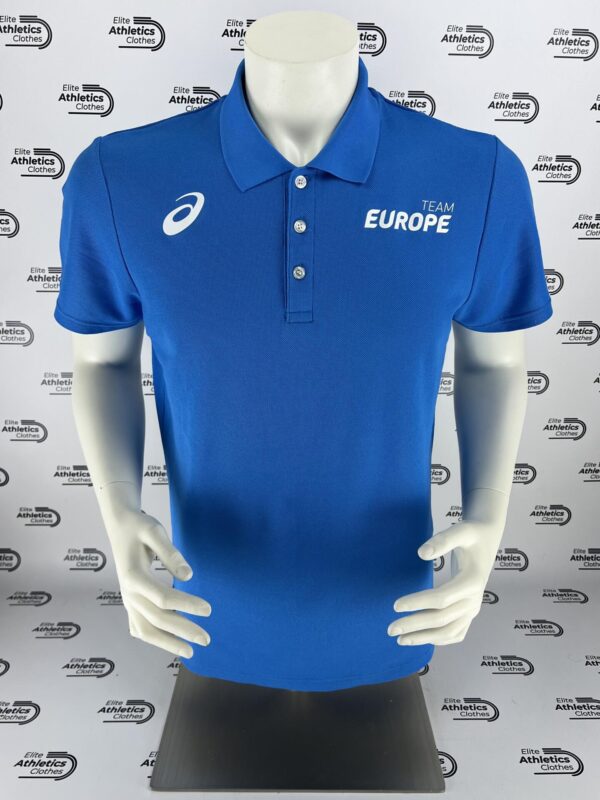 Asics Team Europe Pro Elite 2019 Polo Shirt150,00 €View Piece →
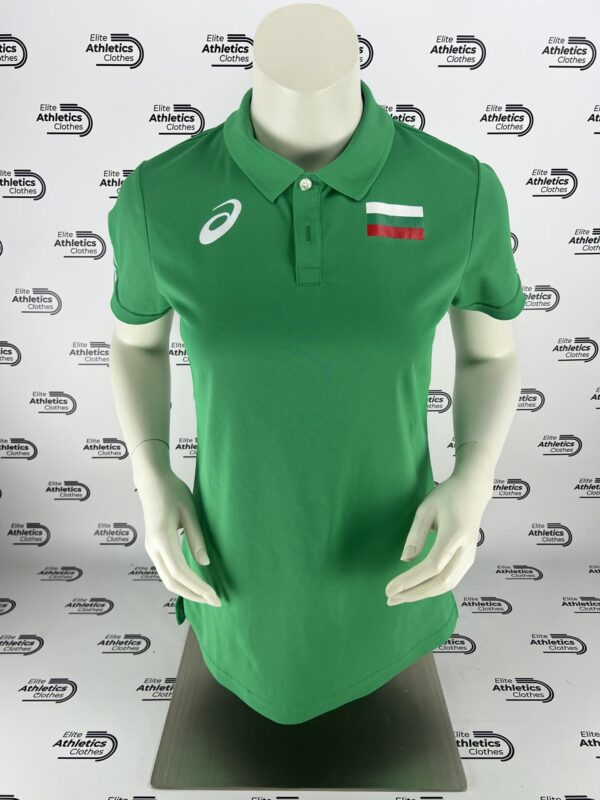 Asics Bulgaria International Team Pro Elite 2018 Women Polo Shirt70,00 €View Piece →
What is a team t-shirt in athletics?
The training and travel piece of an issued team kit: worn in the hotel, on the bus and in the warm-up area, never in the race. It carries the same federation or team badge as the competition kit, which is why it belongs to the same issued set.
Why are modern team tees polyester instead of cotton?
Moisture. At the textile standard atmosphere cotton holds 8.5% of its weight in water while polyester holds 0.4% — a sweat-soaked cotton tee stays wet against the skin, a polyester knit dries. Of the 56 tees in this archive, 50 declare polyester and only 8 mention cotton.
Do the rules of athletics cover t-shirts?
No. World Athletics TR5 governs the competition uniform — what an athlete actually races in. The tee sits outside it, which is why team tees carry looser prints, special editions and casual cuts that would never appear on a race singlet.
How should a team t-shirt fit?
Like ordinary clothing. Tees and polos are cut in street blocks, not compression fits — order your usual size. Only the race kit itself runs tight.
Are team polos part of the issued kit?
Yes — the formal end of the tee family, issued for press days and official functions in the same technical knits and team colours. Fewer were made than tees, so they surface less often.
Sources and References
- ASTM D1909 — standard commercial moisture regains for textile fibres — regain values by fibre
- Moisture regain of cotton vs polyester at 65% RH — cotton 8.5% / polyester 0.4%
- World Athletics — Technical Rules (TR5, athletic clothing) — scope of the uniform rule
- Coach — running top weights tested — tee ~155 g vs singlet ~85 g