
THROW
SHOES
The only competition shoe in athletics with no spikes at all — because inside the circle, grip is the enemy. How rotational and glide shoes differ, why javelin wears a spiked boot, and how to choose.
Throw shoes are the circle footwear of shot put, discus and hammer: smooth, low-friction rubber soles for controlled rotation, stiff flat chassis, and locked-down uppers — and, uniquely in athletics, zero spikes. The javelin is the exception: thrown off a runway, it wears a spiked, ankle-supporting boot with pins up to 12 mm.
Every other shoe in this series exists to add grip to a running stride. This one exists to remove it in the right amounts — which is why a good rotational shoe feels wrong everywhere except inside a concrete circle.
This closes Spike Series No. 05 inside Kit Anatomy. The other families: sprint · middle distance · distance · jumps. Or browse the spikes in the archive.
- Events
- Shot put, discus and hammer — all thrown from a concrete circle
- Pins
- 0 — the only competition shoe in athletics designed without spikes
- The sole
- Smooth low-friction rubber for rotation; glide-technique models keep some texture
- The chassis
- Stiff and flat — closer to a lifting shoe than a trainer, with strap or cable lockdown
- The exception
- Javelin: a spiked boot with forefoot and heel pins and ankle reinforcement
- Javelin pin limit
- 12 mm — the longest allowed in athletics, shared only with the high jump
- Reference models
- Nike Zoom Rotational 6 (spin), Zoom SD 4 (glide), Puma evoSPEED Javelin Elite 2.0 (11 pins)
- Sole limit
- 20 mm max, the same field-wide ceiling as every event since 1 Nov 2024
Chart data as a table
| Footwear | Events | Pins |
|---|---|---|
| High jump shoe | High jump | Up to 11, heel included |
| Javelin boot | Javelin | 11 (reference model) |
| Sprint spike | 60–400 m + hurdles | 7–10 |
| Middle distance spike | 800–3000 m | 6–8 |
| Distance spike | 3000–10,000 m | 4–6 |
| Throw shoe | Shot put, discus, hammer | 0 — smooth rotational sole |
The shoe with no spikes
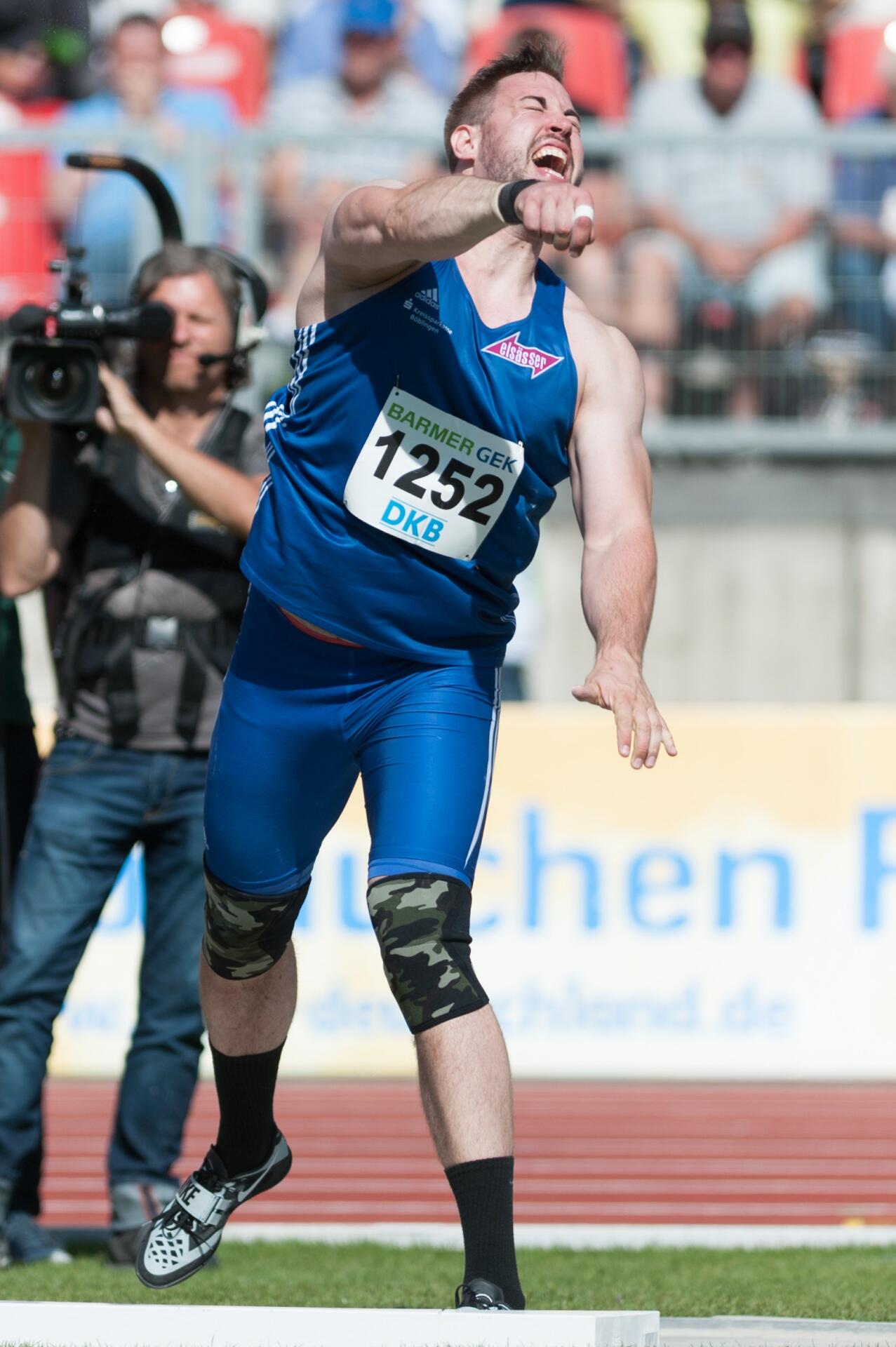
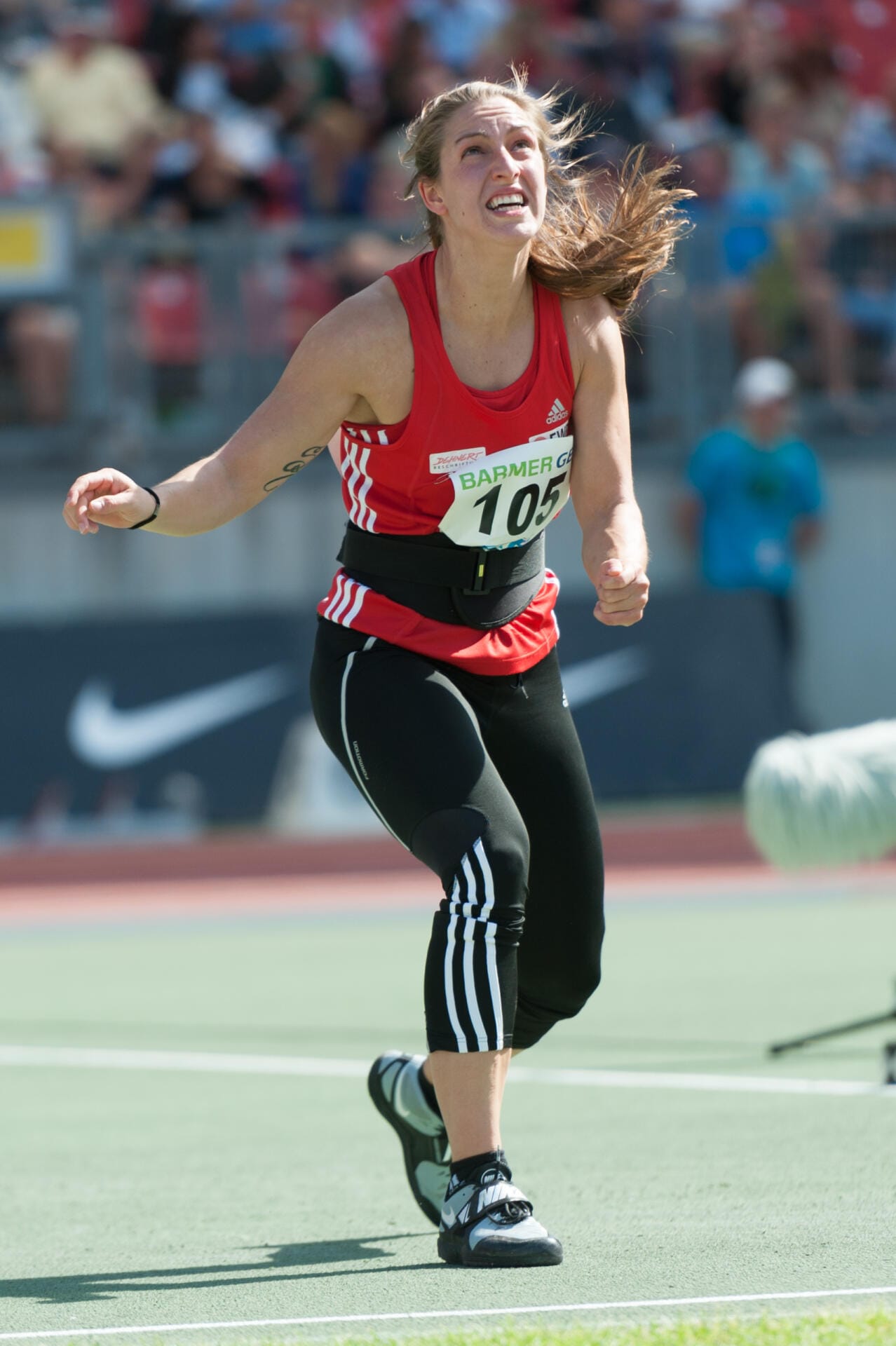
Shot put, discus and hammer are launched from a concrete circle, and that one fact designs the whole shoe. A thrower generating power spins or glides across the circle, and what a spinning athlete needs from the ground is not grip — it is a controlled amount of slip. So the rotational throw shoe wears a smooth, low-friction rubber sole, a stiff chassis that will not fold under load, and a strap or high collar to lock the foot while everything above it rotates.
That makes it the outlier of this whole series: the only competition shoe in athletics with zero spikes, in a sport where every other shoe exists to add them. The ladder above runs the counts from eleven down to none.
The pin families each have their own chapter — sprint, middle distance, distance and jumps — and the full map lives in our complete track spikes guide.
Rotational, glide, and how they are built
Inside the circle there are two techniques, and the sole tells you which shoe belongs to which.
- RotationalFor spinners in shot, discus and hammer: the smoothest sole in the sport, minimal tread, maximum glide through one and a half turns. The reference is Nike's Zoom Rotational 6, with a Pebax plate and a midfoot cable system.
- GlideFor glide shot putters, who drive across the circle in a straight line: a touch of texture returns to the sole, because they trade spin speed for linear drive. Nike's Zoom SD 4 is the type specimen.
- The chassisStiff and flat — a throw shoe should feel closer to a weightlifting shoe than a trainer. Power leaks through a soft sole.
- The lockdownStraps, high collars, cable systems: the foot is the axle of the throw, and axles do not slide inside their bearings.
- The mixed and entry modelsPuma's evoSPEED Throw 10 covers both techniques; Nike's Rival SD 2 and Asics' Hyper Throw line are the honest starter shoes.
- The rulebookThrows sit under the same 20 mm sole ceiling as every field event, receptacles included — not that a spikeless sole is ever near it.
One buying habit peculiar to throwers: many rotate their competition shoe to keep the sole pristine. A rotational sole that has done a season of gritty warm-up circles spins differently from a fresh one — slicker in the wrong places, grippier in others.
The javelin exception
The javelin is the exception that proves the whole design. It is grouped with the throws, but nothing about its footwear is: a javelin thrower sprints down a runway and then stops dead on a braced front leg, and the shoe that survives that is a boot — spiked at the forefoot and the heel, reinforced around the ankle, built like a piece of protective equipment.
The rules agree it is special. Javelin boots share with high jump shoes the longest pin allowance in athletics — 12 mm, against 9 mm everywhere else outdoors — because both events plant a heel in ways no runner does. Puma's evoSPEED Javelin Elite 2.0 carries eleven replaceable pins per boot, the legal maximum.
So within one event group you get both extremes of this series: the only shoe with no spikes at all, and a boot running the maximum count at the maximum length. Same rulebook, opposite answers — because the circle asks for slip and the runway asks for an anchor.
How to choose yours
Choosing throwing footwear starts with your technique, not your event.
- Spinners go smoothRotational shot, discus and hammer: buy a rotational sole and treat its smoothness as a spec, not a defect.
- Gliders keep textureGlide shot putters want the SD-type sole — full smoothness makes the drive phase feel like ice.
- Javelin is a boot decisionPrioritise ankle support and heel pins; this is the one throw where footwear is safety equipment.
- Fit like a platformFlat, stiff, locked down. If it feels comfortable to jog in, it is the wrong shoe.
- Mind the surfaceCircles vary — concrete texture, paint, weather. Champions carry a worn pair and a fresh pair and choose on the day.
And if you also run or jump, resist the multi-tasking urge: nothing about a throw shoe transfers. The families that do are linked above.
Spikes in the Archive
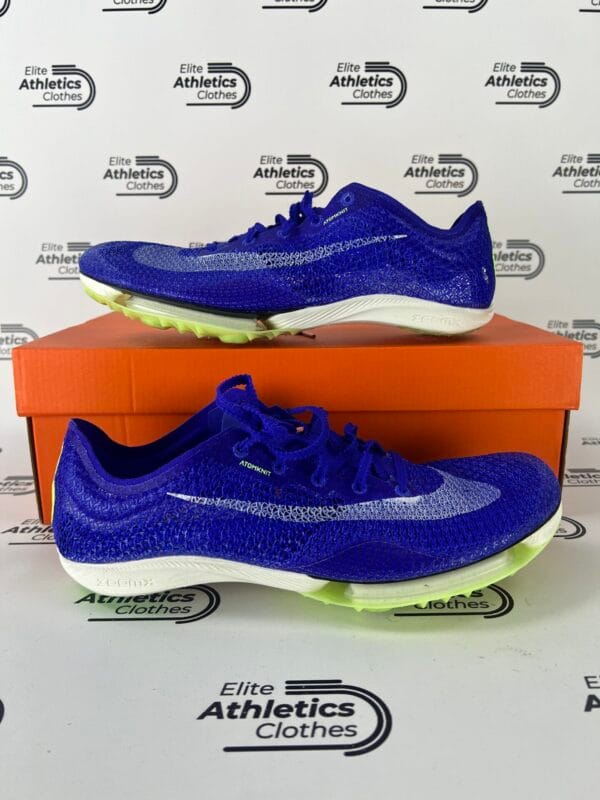
Footwear is the newest wing of this archive, and it is honest about its size: one race spike so far, listed exactly as it surfaced. The grid updates itself as new pairs come in — the clothing side of the Pro Elite archive is where the depth lives today.
Why do throwing shoes have no spikes?
Because shot put, discus and hammer are thrown from a concrete circle, and the thrower needs controlled rotation, not grip. Throw shoes use smooth, low-friction rubber soles so the athlete can spin fast and predictably — the only competition footwear in athletics designed without spikes.
What is the difference between rotational and glide throwing shoes?
Rotational shoes, for spinners, have the smoothest possible sole. Glide shoes, for shot putters who drive linearly across the circle, keep some sole texture because they need traction more than spin speed. Mixed models like Puma's evoSPEED Throw 10 split the difference.
Do javelin throwers wear throwing shoes?
No — javelin is thrown off a runway, not from a circle, so javelin throwers wear spiked boots with pins at the forefoot and heel plus ankle reinforcement, built to survive a full-speed run-up and a violent braced stop.
How long can javelin boot spikes be?
Up to 12 mm under World Athletics rules — the longest pin allowance in the sport, shared only with high jump shoes. Every other outdoor event is capped at 9 mm.
Can you throw in normal trainers?
Beginners often start that way, but a soft, grippy trainer fights both techniques — it sticks mid-spin and folds under load. Entry-level throw shoes exist precisely to make the first proper season affordable.
Sources and References
- Running Warehouse — best throw shoes guide — rotational vs glide anatomy and reference models
- Running Warehouse — throw events guide — circle technique context
- TrackBarn — what throwing shoes are for — low-friction sole rationale
- World Athletics — C2.1A Athletic Shoe Regulations (in force 1 Jan 2026) — 12 mm javelin/high jump pin allowance, 20 mm sole ceiling