Here is the uncomfortable truth about authenticating Pro Elite kit in 2026: the fakes got good. A few years ago, a heavy fabric and a crooked label gave a counterfeit away in seconds. Today, collectors on running forums report high-fidelity fakes of current Nike elite athlete vests shipping out of China — pieces that replicate the construction details that used to be conclusive. Authentication has not become impossible; it has become a discipline. This guide is that discipline in full: the physical checks that still carry weight, the vocabulary that keeps sellers honest, the red flags that end a deal, and the one factor that now outranks everything else — provenance.
Key facts · Verified · updated July 2026
- Documented style code
- FN1826-618 (2024 Pro Elite Team W distance singlet)
- Genuine Nike stitching
- ≈8–10 stitches per inch, tight and even
- Weight sanity check
- race vests 40–70 g — a “heavy elite singlet” is suspect
- Blend sanity check
- ≈85–90% polyester / 10–14% elastane
- “Made in USA” label
- a collector-observed pattern — supporting evidence, not proof
- The 2025 shift
- counterfeits now replicate bonded seams, knit vents, printed necks
- The decisive layer
- provenance + seller reputation
- Red flag #1
- a price far below market
Why Pro Elite Is Worth Faking
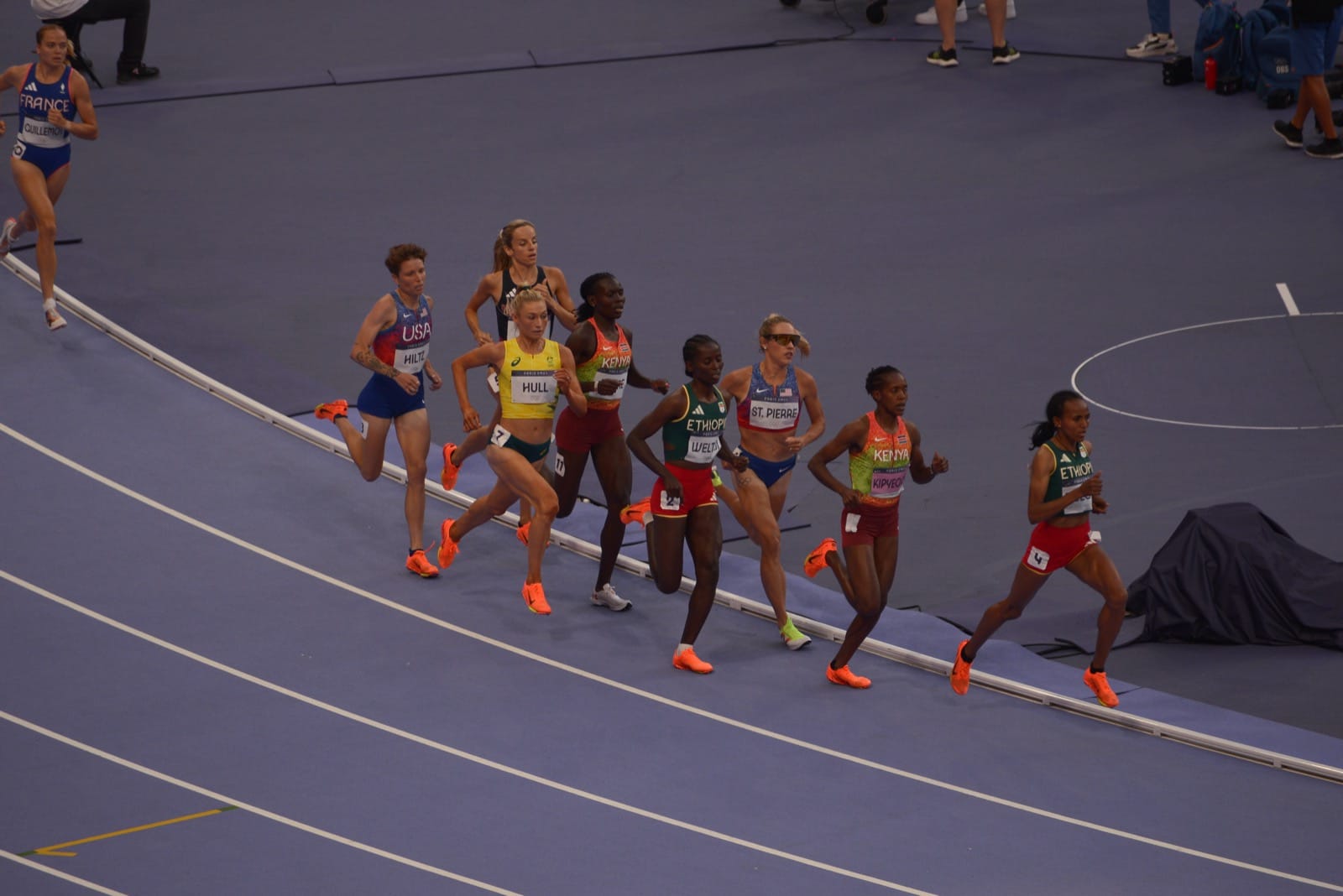
“Pro Elite” is the collector community’s name for Nike’s athlete-issue competition tier: kit produced in limited quantities for contracted elite athletes and national-team programs, and — as specialist resellers consistently describe it — issued to sponsored athletes rather than sold through Nike retail. Nike never markets the line publicly. That combination of visibility (worn in every televised championship) and scarcity (no official way to buy it) is precisely what makes it valuable, and value attracts counterfeiters. Meanwhile Nike’s actual retail pinnacle — AeroSwift with Dri-FIT ADV — is sold openly and shares fabric technology with athlete kit, which gives fakers a convenient template and buyers a convenient confusion.

Learn the Vocabulary First
Half of all authentication disputes are really terminology disputes. The tiers collectors use for athletics kit are adapted from football-shirt collecting, where they are long established — and knowing them tells you exactly what a listing is claiming:
- Replica / fan version: licensed retail product. Standard fabric, looser cut, embroidered or standard crest. Real, official — but built for fans, not finals.
- Athlete issue (player issue): built to athletes’ exact specification — lighter fabric, tighter cut, heat-applied badges — but not tied to any specific competition. Most authentic Pro Elite pieces on the market are this tier.
- Race issue (match issue): athlete-issue kit prepared for a specific competition, with personalisation or event patches, but possibly never worn.
- Race worn (match worn): issued and worn in competition — the top of the pyramid, and the tier that demands the most proof: photo-matched wear marks plus a documented provenance chain.
One honest caveat: “race-issued” as used in athletics is community convention, not a formally codified standard. A trustworthy seller will tell you which tier a piece is and how they know; a seller who uses “race worn” loosely, without photo-matching or a provenance story, is either careless or counting on you not to ask.
The Physical Checks
1. Find the style code
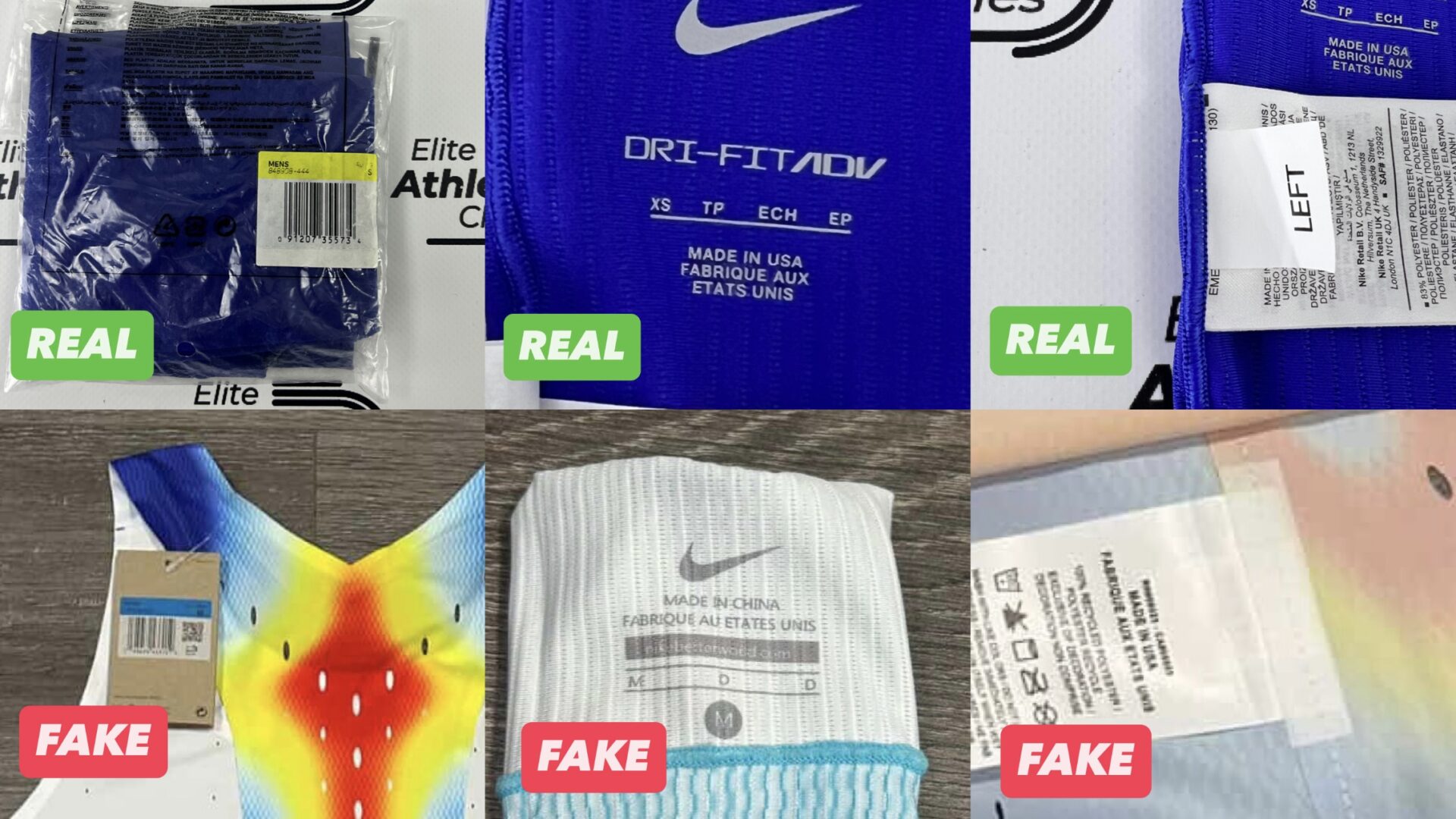
Authentic Nike pieces carry a style code — letters and digits — on the sewn-in label, and that code can be cross-referenced. Documented example: the 2024 Pro Elite Team women’s distance singlet carries style code FN1826-618. A missing style code on a piece claimed as athlete issue is a serious problem; a present one is a data point you can verify against specialist archives and other documented examples of the same kit.
2. Read the label like a document
General Nike authentication principles apply in full: clean typography with correct letter spacing, crisp printing, securely stitched labels, and tight, even stitching — around 8–10 stitches per inch on genuine Nike product. The Swoosh should be symmetrical with a smooth taper. Fakes have improved here, but sloppy kerning, blurry print or a label attached with coarse thread still ends the conversation immediately.
3. Check the country of manufacture — with nuance
Pro Elite apparel is consistently seen with “Made in USA” labels across documented listings — notable because Nike retail apparel is typically produced in Vietnam, China or Indonesia. Treat this as supporting evidence, not an absolute rule: it is a pattern observed by the collector community, not a published Nike specification. A “Made in USA” label on an athlete-issue piece is consistent with the genuine article; it is not, by itself, proof of one.
4. Inspect the construction — then read the caveat
Genuine elite kit construction is distinctive: heat-bonded seams rather than conventional stitching, ventilation engineered directly into the knit of the fabric, and printed neck details in place of hanging tags. Turn the garment inside out and run a finger along the seams — bonded construction is nearly flat and clean.
Now the caveat, and it is the most important sentence in this guide: collectors reported in 2025 that Chinese counterfeits now replicate all of these construction markers convincingly — bonded seams, ventilation, printed necks, the lot. Construction alone is no longer conclusive. A piece that fails these checks is fake; a piece that passes them is merely possibly real. That is why provenance and seller reputation have become the decisive layer of authentication.
5. Weigh the fabric against reality
Elite race apparel is radically minimal — leading racing vests on the market weigh roughly 40 to 70 grams, and typical elite singlets are built from around 85–90% polyester blended with 10–14% elastane for four-way stretch. A supposedly elite singlet that feels like an ordinary training tee in the hand deserves suspicion. Like construction, this is a filter for bad fakes rather than proof against good ones.
What each check can actually prove
Every check can kill a fake. Only one can crown an original — that asymmetry is the whole discipline.
Data table — check by check
| Check | Filters fakes | Confirms authenticity |
|---|---|---|
| Style code | High | Medium |
| Label & stitching | High | Low |
| “Made in USA” | Medium | Low |
| Construction | High | Low |
| Fabric weight | Medium | Low |
| Provenance + seller | High | High |
Editorial synthesis of the checks documented in this guide and its sources.
Provenance: The Check That Outranks the Rest
Since authentic Pro Elite kit was never sold at retail, every legitimate piece has a story about how it reached the market. The collector community’s understanding is that pieces typically reach collectors via athletes’ seasonal kit allocations — athletes receive more kit than they use, and the surplus filters out through specialists and athlete networks. That story is verifiable in degrees: a specialist who can say which season a piece is from, cross-reference its style code, and stand behind it with a return policy is offering provenance. An anonymous marketplace account with a stock photo is offering hope.
This is the practical shift every buyer should internalize: in an era where fakes replicate physical details, the garment is only half of what you are authenticating — the other half is the seller. Reputation, transparency about sourcing, willingness to provide detailed photos and measurements, and buyer protection are now authentication criteria in their own right.
The Red-Flag Checklist
Walk away, or demand answers, when you see any of the following:
- A price far below market. The single most reliable counterfeit signal. Scarce athlete-issue kit does not go cheap; “bargains” are bait.
- The wrong venue. Buying through social media ads or generic e-commerce platforms instead of known specialists dramatically raises your risk.
- Vague sellers. No provenance story, no extra photos on request, no answer to “which season is this?”
- Pressure lines. “Sold out everywhere else” and similar urgency tactics are documented counterfeit-market patterns.
- No buyer protection. Payment methods with no recourse are chosen by sellers for a reason.
- Physical tells. Loose threads, uneven collar or hem stitching, rough interior seams, a chemical smell, generic packaging — the classic marks of counterfeit sportswear.
- Missing or unverifiable style code on the sewn-in label of a piece claimed as athlete issue.
Put It Into Practice
Authentication is one leg of a smart purchase; the other two are buying the right piece and buying the right size. If you are starting out, our beginner’s guide to your first Pro Elite kit covers what to buy first and how to choose a nation and year. And because race-cut kit sizes nothing like retail, read the Pro Elite sizing guide before you commit to a size. For federation pieces specifically, our international teams collection shows what documented, authenticated national kit looks like across seasons.
What is the fastest way to check if a Pro Elite singlet is real?
Start with the sewn-in label: authentic Nike pieces carry a cross-referenceable style code, clean typography and tight, even stitching. Then ask the seller for provenance. A missing style code or a seller with no sourcing story are the two fastest disqualifiers.
Are bonded seams proof that a piece is authentic?
No longer. Heat-bonded seams, knit-engineered ventilation and printed neck details are genuine elite-kit markers, but collectors have documented modern counterfeits that replicate all of them convincingly. Construction can prove a fake; it can no longer prove an original. Provenance and seller reputation are decisive.
What does “Made in USA” mean on a Pro Elite label?
It is a pattern consistently seen on documented Pro Elite pieces — and unusual for Nike, whose retail apparel is typically made in Vietnam, China or Indonesia. Treat it as supporting evidence within the collector community’s observations, not as an official rule or standalone proof.
What is the difference between athlete-issue and race-worn?
Athlete-issue kit is built to elite athletes’ specification but not tied to a specific competition. Race-worn means the piece was issued and actually worn in competition — a claim that requires photo-matching and a documented provenance chain. The terminology is adapted from football-shirt collecting, and “race-issued” in athletics remains community convention rather than a formal standard.
Where do authentic Pro Elite pieces come from if Nike never sold them?
The collector community’s understanding is that pieces typically reach the market through athletes’ seasonal kit allocations, filtering out secondhand via specialists and athlete networks. There is no official channel — which is exactly why the seller’s reputation is part of the authentication.
Every piece in the Elite Athletics Clothes catalog goes through the checks in this guide before it is listed — style code, label, construction and sourcing — so you can collect the kit and skip the doubt. Browse the current authenticated selection and buy with the confidence this market rarely offers.