
CALF
WARMERS
Two garments share one name: the loose thermal warmer of the warm-up track and the graduated compression sleeve borrowed from medicine. What each does, what the pressure numbers mean, and how to choose.
Calf warmers and calf sleeves are footless tubes worn from ankle to knee. Warmers are loose thermal knits for keeping calves warm before racing; compression sleeves apply graduated pressure — typically 20–30 mmHg, tightest at the ankle — and are worn through races and recovery.
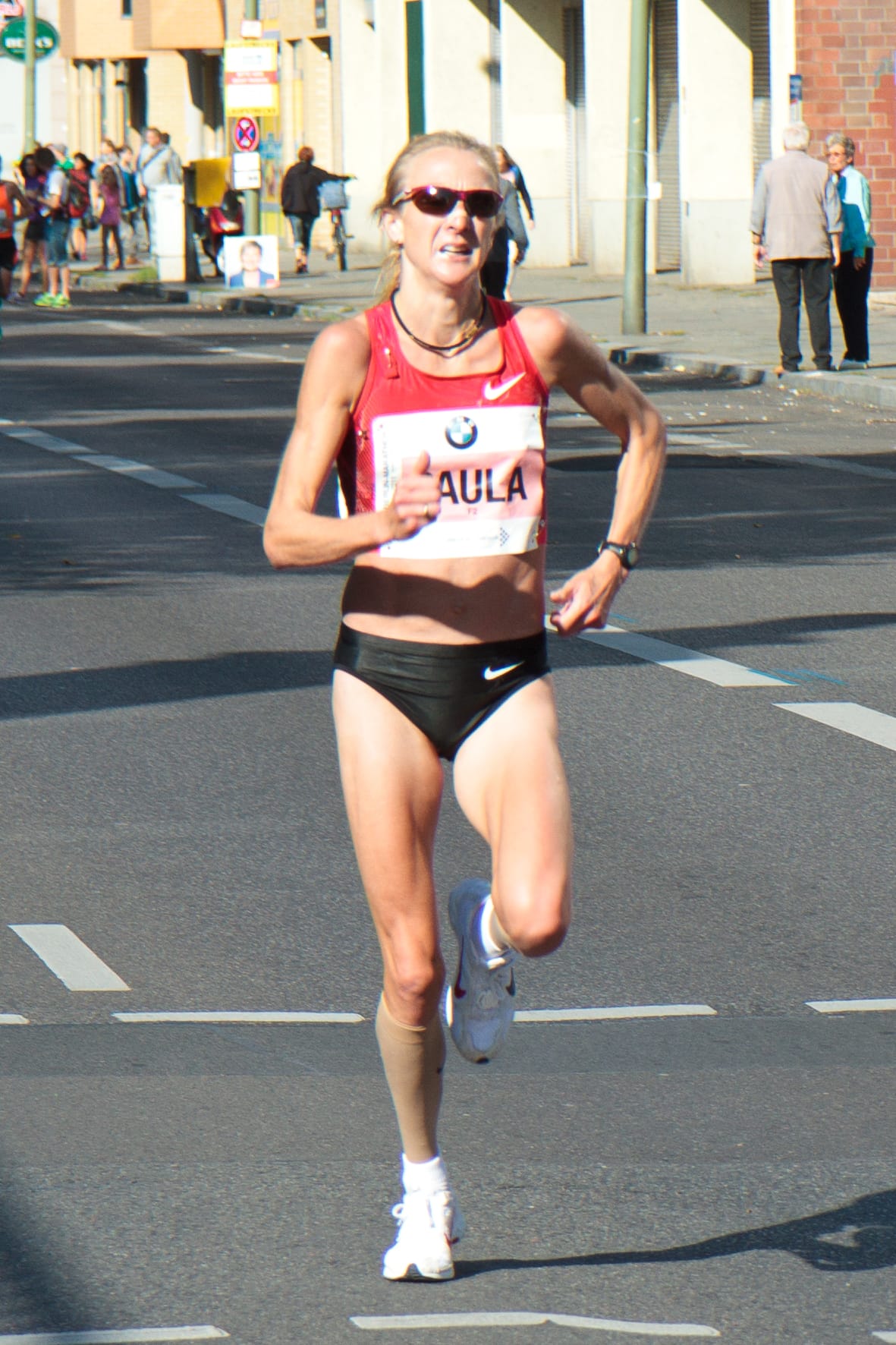
The science splits cleanly: no measurable performance gain across 51 studies, but moderate, real recovery benefits. Paula Radcliffe — who raced Berlin 2011 in calf sleeves — made the look part of distance running; team-issued warmers made it part of the kit.
This is Kit Anatomy, our series on each garment in the Pro Elite archive — and with the calf, the kit is complete. Jump to the calf warmers in stock, or read on for the pressure numbers.
- Two garments
- Warmers = loose thermal warm-up layer; sleeves = graduated compression
- The pressure
- Verified: CEP 20–30 mmHg; 2XU 20–23 / 23–25 mmHg
- The gradient
- Tightest at the ankle, easing to the knee — a medical principle
- Performance effect
- None proven — 51-study review: no change in race time
- Recovery effect
- Moderate — less soreness, faster strength/power return (Hill 2014)
- The pioneer
- Paula Radcliffe raced Berlin 2011 in calf sleeves
- Sizing
- By calf circumference, never shoe size; warmers fit loose
- In the archive
- 4 calf warmers catalogued
View the data
| Garment | Pressure | Evidence |
|---|---|---|
| Thermal calf warmer | None graduated — loose warmth layer | Warm-up and cold-day accessory |
| CEP compression sleeve | 20–30 mmHg, graduated from ankle | Manufacturer-calibrated pressure |
| 2XU calf guard | 20–23 (moderate) / 23–25 (firm) mmHg | Manufacturer specification |
| Performance effect | None — 2025 review, 51 studies | No change in race time or exhaustion |
| Recovery effect | Moderate — Hill 2014 meta-analysis | DOMS g=0.40; strength 0.46; power 0.49 |
Warmers vs sleeves
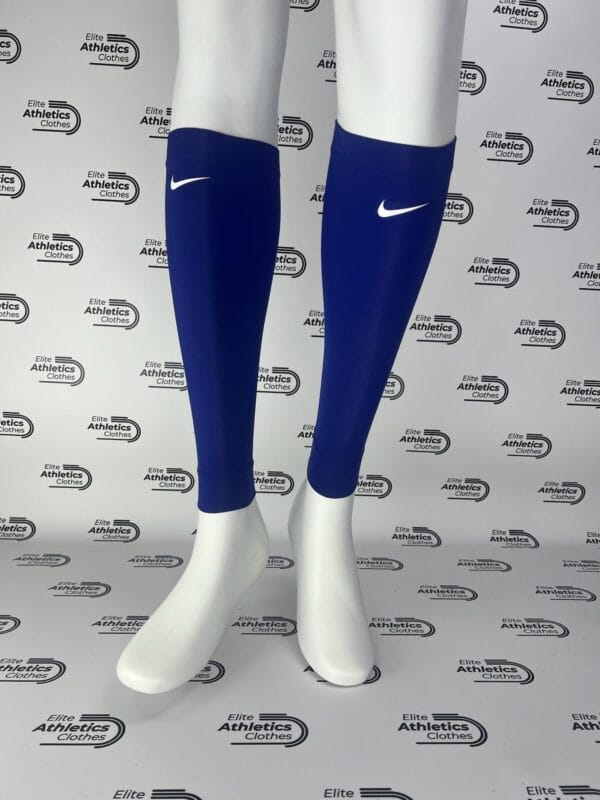
Calf warmers and calf sleeves are footless tubes worn from above the ankle to just below the knee — and the two names describe two genuinely different garments. The warmer is a loose thermal knit: a warm-up accessory that keeps the calf and Achilles warm on cold tracks and slips off before the gun. The compression sleeve is a tight, graduated-pressure garment worn through the race itself.
Being footless is the point: unlike compression socks, sleeves and warmers leave the foot free, so athletes keep their preferred racing socks and spikes untouched. What team-issued warmers add is identity — federation colours on the calf, matched to the rest of the kit.
The compression story has crossed from hospital wards to marathon start lines, and it deserves its honest numbers — charted above.
The pressure, honestly
Graduated compression is borrowed medicine: stockings engineered tightest at the ankle and looser up the leg, designed to help move blood back toward the heart. Sports versions publish real numbers — CEP calibrates its calf sleeves at 20–30 mmHg, 2XU offers moderate (20–23) and firm (23–25) options.
What does the pressure buy a runner? On performance, the answer from the research is a firm “nothing measurable”: the most recent systematic review — 51 studies, 899 participants — found no improvement in race time or time to exhaustion. On recovery the news is better: a meta-analysis of 12 studies found moderate effects on post-exercise soreness and on the return of strength and power, and an earlier review reported large effects on soreness and muscle-damage markers.
The most famous legs in the argument belong to Paula Radcliffe, who is widely credited with popularizing running compression and raced the 2011 Berlin Marathon in calf sleeves over ankle socks. Elite fields have carried them — on calves, not always with any science settled — ever since.
How each is built
Two garments, two builds — worth telling apart before buying either.
- The warmerA loose thermal knit tube — warmth for the warm-up, zero pressure engineering, sized generously, removed before racing.
- The sleeveA graduated compression knit — a verified example runs 72% recycled nylon, 28% elastane with flatlock seams.
- The gradientPressure greatest at the ankle, easing toward the knee — the medical principle that makes “graduated” mean something.
- Muscle mappingTop-end sleeves add support traced over muscle and fascia lines — 2XU calls its version Muscle Containment Stamping.
- Footless logicNo foot means your racing socks and spike fit stay exactly as you like them.
- The canvasTeam warmers carry federation colours — the archive pieces match specific kits.
One buys warmth and colours; the other buys pressure. Know which job you are hiring for.
How to choose yours
Sizing is where most calf-sleeve buyers go wrong — and the fix is a tape measure.
- Measure the calfCompression sleeves size by the widest calf circumference, never by shoe size — CEP's range runs sizes II to V on that single measurement.
- Get the pressure rightA correctly sized sleeve grips firmly at the ankle end and eases up the leg; if it pinches behind the knee, size up.
- Warmers fit looseThermal warmers should slide on and off easily over the calf — they are meant to come off at the last minute.
- Match the jobCold-day warm-up and kit identity: warmers. Long racing, recovery, travel days: graduated sleeves.
- Archive realityRace-issued warmers are team accessories from a single cycle — small runs matched to specific kits, gone when they are gone.
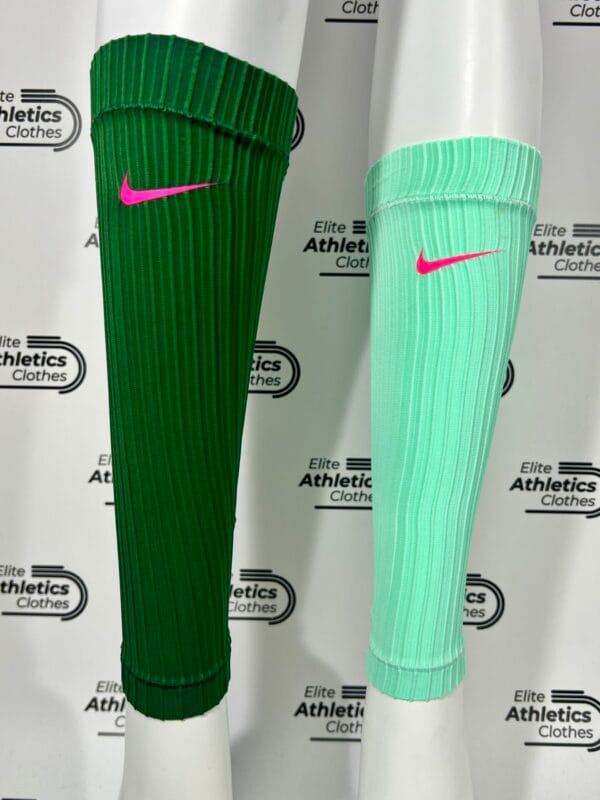 From this series · in the archiveNike Pro Elite 2023 Women Calf WarmersA women's pair from a recent cycle — the last piece of the kit, ankle to knee.100,00 €View piece →
And with the calf covered, the Kit Anatomy series has dressed the athlete head to toe — every garment in the archive, explained.
Calf Warmers in the Archive
Race-issued team calf warmers from national squads — the kit's final piece, ankle to knee, made for a single championship cycle and matched to specific kits in the archive. Small runs; when they are gone, they are gone.
What is the difference between calf warmers and calf sleeves?
Calf warmers are loose thermal knit tubes for keeping the calf and Achilles warm during warm-up, removed before racing. Calf compression sleeves are tight graduated-pressure garments — typically 20 to 30 mmHg, strongest at the ankle — worn through the race or for recovery afterwards.
Do calf compression sleeves improve running performance?
No measurable effect: the most recent systematic review of 51 studies found no improvement in race time or time to exhaustion. Research does support moderate recovery benefits — less soreness and faster return of strength and power after hard efforts.
How much pressure do sports calf sleeves apply?
Verified manufacturer figures: CEP calibrates its calf sleeves at 20–30 mmHg, and 2XU offers moderate (20–23 mmHg) and firm (23–25 mmHg) calf guards. Pressure is graduated — tightest at the ankle, easing toward the knee.
How do you size calf sleeves?
By calf circumference, never by shoe size: measure the widest point of your calf with a soft tape and match it to the brand's chart. A correct fit grips firmly at the ankle without pinching behind the knee. Thermal warmers, by contrast, should fit loose.
Why are calf sleeves footless?
So they leave your feet alone: runners keep their preferred racing socks and exact spike fit, and can put sleeves on or take them off without touching their shoes. Compression socks cover the foot; sleeves and warmers stop above the ankle.
Sources and References
- CEP — compression calf sleeves (20–30 mmHg, sizing) — pressure calibration, circumference sizing
- 2XU — compression calf guards specifications — mmHg options, fabric, MCS
- Wang et al. — J Sport Health Sci 2025 (51-study review) — no performance effect
- Hill et al. — Br J Sports Med 2014 (meta-analysis) — moderate recovery effects
- MedlinePlus — graduated compression stockings — the medical principle