
ARM
SLEEVES
Born on a basketball court, raced in marathons, worn one-at-a-time by Olympic sprinters. What arm sleeves do, where they came from, and how to choose a race-issued pair.
Arm sleeves are removable knit tubes from bicep to wrist that give runners adjustable warmth at cool starts, UPF sun protection, light compression and — worn singly — a sprint signature. They are the most modular piece in the race kit.
Their origin is basketball: Allen Iverson's trainer cut a compression stockinette for his elbow in January 2001, Iverson scored 51 that night, and the sleeve became a league staple before crossing to marathon start lines and single-armed sprinters.
This is Kit Anatomy, our series on each garment in the Pro Elite archive. Jump to the arm sleeves in stock, or read on for the crossover story.
- What they are
- Removable knit tubes, bicep to wrist — the kit's modular layer
- The jobs
- Cold-start warmth, UPF 50 sun cover (~98% UV), light compression, style
- The origin
- Allen Iverson, Jan 2001 — trainer-cut stockinette, 51 points
- The crossover
- NBA staple by 2008; marathon cold starts; sprint single sleeve
- The evidence
- No proven performance effect; modest recovery trend in reviews
- Sizing
- By bicep circumference, never height; silicone cuff holds it up
- Race-issued vs retail
- Team-cycle accessories matching specific kits; no restock
- In the archive
- 9 arm sleeves catalogued
View the data
| Year | Moment | Detail |
|---|---|---|
| Jan 2001 | Allen Iverson debuts the sleeve | Trainer-cut compression stockinette for elbow bursitis; 51 points vs Toronto that night |
| 2008 | League staple | Sleeves the NBA's most popular non-apparel item (NBA Store, via press) |
| 2018 | Boston Marathon | Lead women race near-freezing rain with arm coverage under singlets |
| 2021 | The sprint single sleeve | Gabby Thomas: “a reminder out of the blocks to drive my arm up” |
What arm sleeves are
Arm sleeves are removable knit tubes running from bicep to wrist — the most modular garment in the race kit. Marathoners start cool mornings in them and shed or roll them as the road warms; track athletes warm up in pairs and race in none, one, or two; and the single sleeve has become a sprint signature all of its own.
The jobs are plural: warmth without a jacket, sun protection in UPF-rated versions that block around 98% of UV, light compression, and — not to be underrated — identity. A sleeve is the cheapest way a kit says something personal inside a federation uniform.
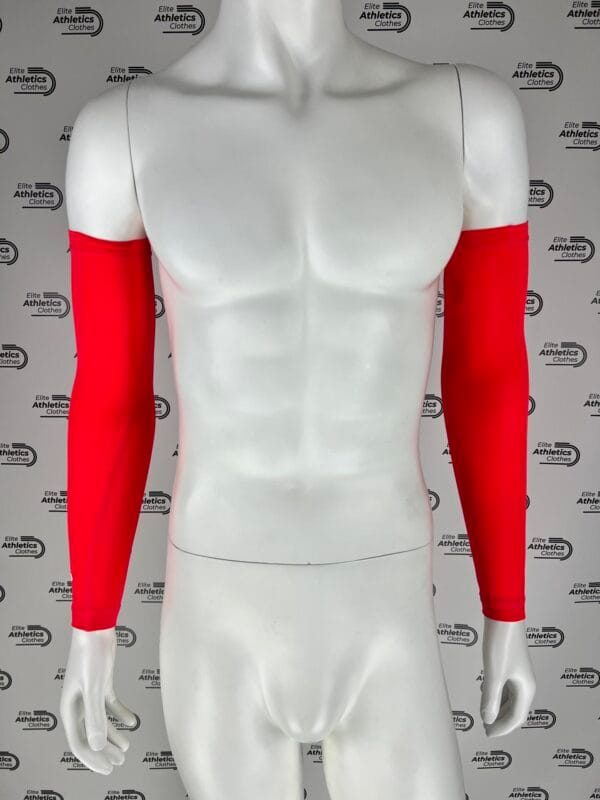 From this series · in the archiveAdidas Pro Elite Team 2025 Arm SleevesA race-issued team pair — the modular warmth layer in federation colours.120,00 €View piece →
How a piece of basketball medical kit ended up on Olympic sprint start lines is a genuine crossover story — charted above, told below.
The crossover story
The modern sleeve was born on 21 January 2001, when Allen Iverson took the court with a length of compression stockinette on his right arm — cut by 76ers trainer Lenny Currier for the bursitis in Iverson's shooting elbow — and scored 51 points. Under Armour later made him a nylon version, the league's stars copied it, and by 2008 sleeves were the NBA's most popular non-apparel item.
Running adopted the sleeve for its own reasons. Distance racing's version is thermal: at the 2018 Boston Marathon, run in near-freezing rain, the lead women's pack raced with arm coverage under their singlets — the sleeve doing a jacket's job at a fraction of the weight, ready to be discarded if the day warmed.
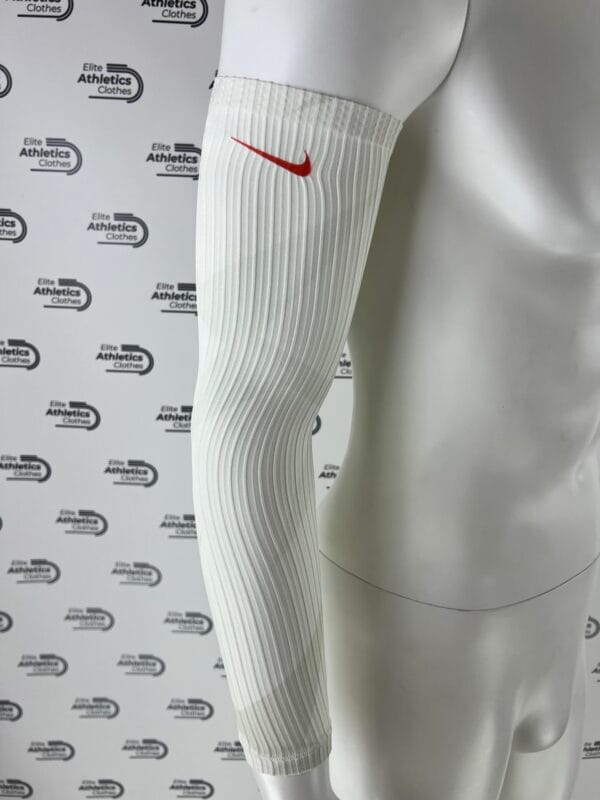 From this series · in the archiveNike NN Running Team Pro Elite 2022 Arm SleevesA pro running-team pair — the marathoner's discardable warmth layer, team-issued.150,00 €View piece →
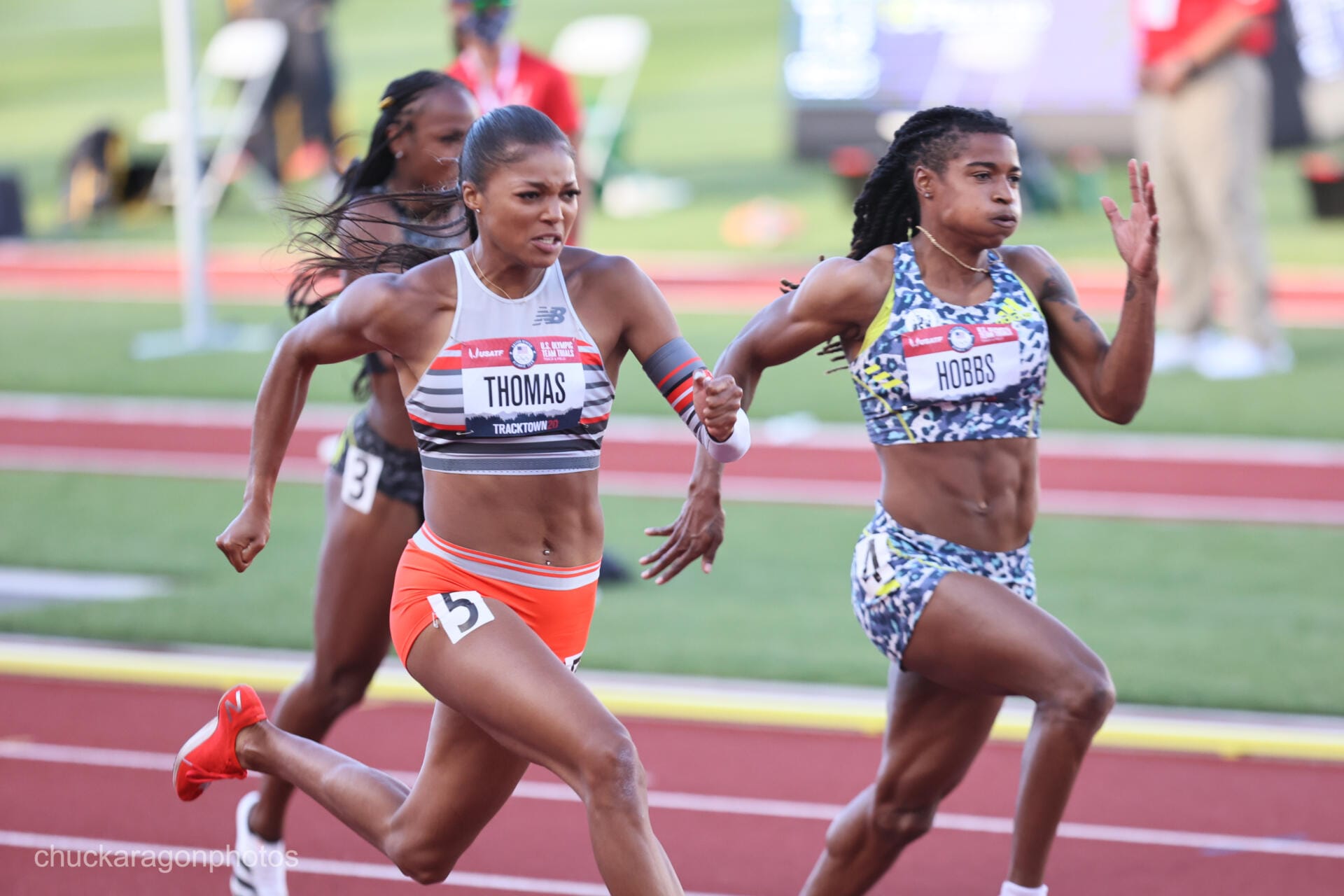
Sprinting stripped it down further, to one arm. Gabby Thomas, who races with a single sleeve, put the honest version on record: for many it is aesthetic, for her a cue — “a reminder out of the blocks to drive my arm up.” The compression science, for what it is worth, is modest: reviews find no clear performance effect and a positive trend in recovery, some of it possibly placebo. The sleeve's real cases are warmth, sun and self.
How a sleeve is built
Simple garment, deliberate details.
- The knitPolyester or nylon with elastane — a verified UPF model runs 67% recycled polyester, 25% polyester, 8% spandex.
- The gripperA silicone band inside the bicep cuff keeps the sleeve up through two hours of arm swing.
- The taperCut narrower toward the wrist so tension is even along the forearm — sized by bicep circumference, never by height.
- UPF versionsRated UPF 50, blocking about 98% of UVA and UVB — sun cover without sunscreen on ultra and trail days.
- Thermal logicWarm-up warmth that removes in seconds without touching shoes or bib — the whole reason marathon fields wear them at cool starts.
A pair weighs less than an energy gel, which is exactly why the cold-start calculus favours them.
How to choose yours
Choosing sleeves is a two-measurement decision.
- Measure the bicepSize by upper-arm circumference against the maker's chart; a compression sleeve fits slightly smaller than the arm, snug without pinching.
- Match the jobCool-start racing and warm-up: standard knit pairs. Sun: UPF-rated. Style or a technique cue: whatever colour tells your story — precedent says one arm is fine.
- Check the cuffThe silicone gripper should hold without leaving a ring; if it digs, go up a size.
- Pairs and singlesSleeves are sold as pairs; the single-sleeve look simply wears one and keeps a spare.
- Archive realityRace-issued sleeves are team accessories from a single cycle — small runs that match specific kits in the archive and do not restock.
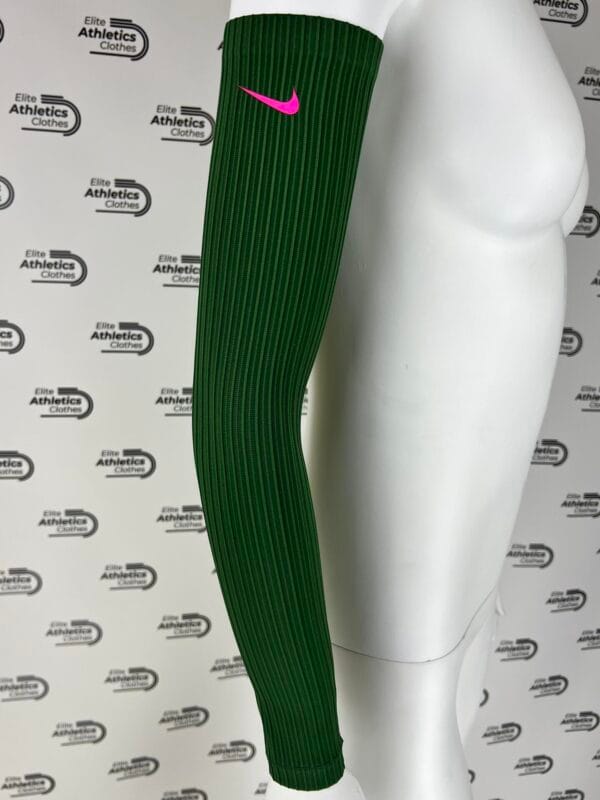 From this series · in the archiveNike Pro Elite 2023 Women Arm SleevesA women's pair from a recent cycle — matches its kit; wears alone just as well.180,00 €View piece →
However you wear them, they remain the only garment in this series you can put on, race in, and throw to the crowd — all in the same afternoon.
Arm Sleeves in the Archive
Race-issued team sleeves from national squads and pro running teams — the modular layer of the elite kit, made for a single cycle and matching specific kits in the archive. In-stock first; sold-out pieces stay listed because the runs are small and rarely return.
Adidas Pro Elite Team 2025 Arm Sleeves120,00 €View Piece →Nike Pro Elite 2023 Women Arm Sleeves180,00 €View Piece →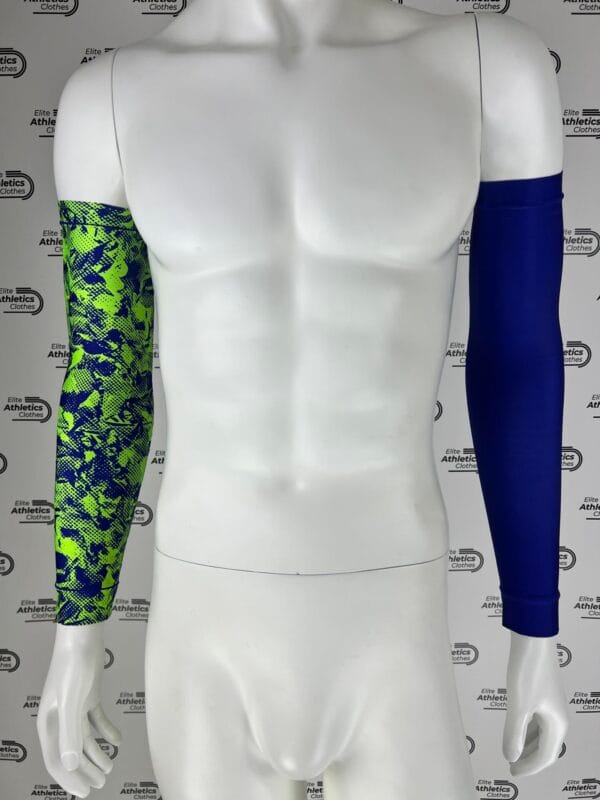 Nike Pro Elite Team 2019 Arm Sleeves200,00 €View Piece →
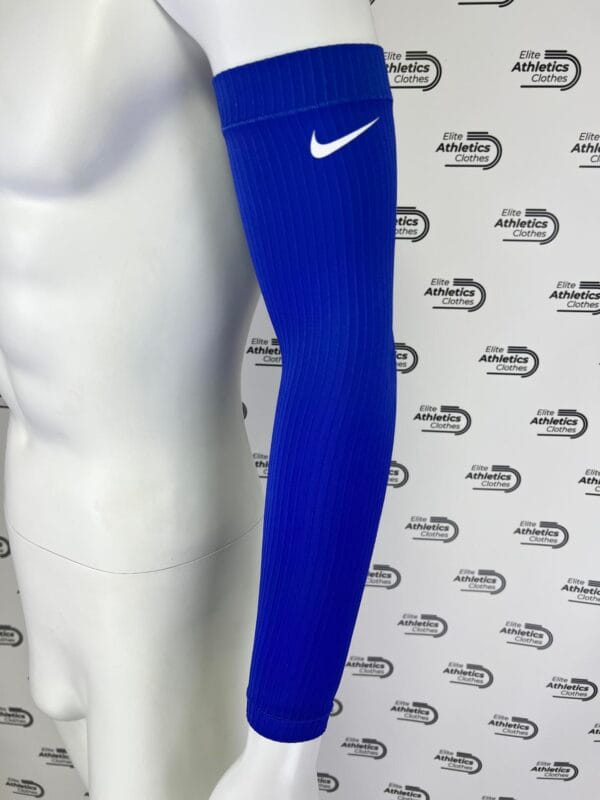 Nike Rosa & Co. Pro Elite 2024 Arm Sleeves180,00 €View Piece →Nike NN Running Team Pro Elite 2022 Arm Sleeves150,00 €View Piece →
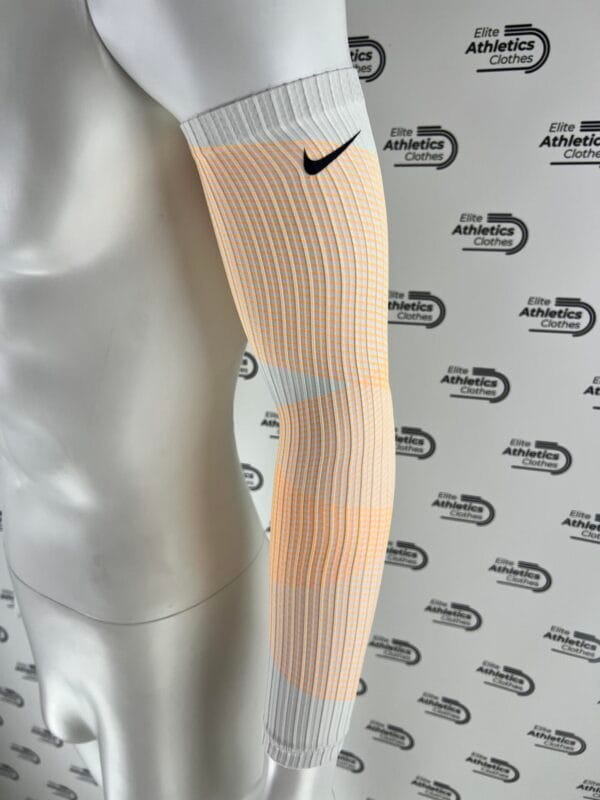 Nike NN Running Team Pro Elite 2023 Arm Sleeves180,00 €View Piece →
Why do runners wear arm sleeves?
Mainly for adjustable warmth: marathoners start cool races in sleeves and roll them down or discard them as conditions warm, avoiding a full extra layer. UPF-rated versions add sun protection of around 98% UV blockage, and compression models are marketed for circulation, though the performance evidence is modest.
Why do sprinters wear one arm sleeve?
Reasons range from muscle warmth to a unilateral niggle to pure style. US sprinter Gabby Thomas, famous for her single sleeve, has said that for many athletes it is aesthetic, while for her it works as a technique cue — a reminder out of the blocks to drive her arm up.
Where did the arm sleeve come from?
Basketball. Allen Iverson debuted a trainer-cut compression stockinette sleeve for elbow bursitis on 21 January 2001 and scored 51 points that night; Under Armour made him a nylon version, and by 2008 sleeves were the NBA's most popular non-apparel item. Running adopted them for cold starts and sun.
Do compression arm sleeves improve performance?
Reviews of compression sportswear find no clear performance or immediate-recovery benefit, with a positive trend during recovery that may be partly placebo. The defensible benefits are warmth, sun protection and comfort — which is how elite athletes actually use them.
How do you size arm sleeves?
By upper-arm (bicep) circumference against the maker's size chart, never by height or shoe size. A compression sleeve should measure slightly smaller than the arm so it sits snug, with the silicone cuff holding firm without digging in.
Sources and References
- FanSided — the Allen Iverson shooting sleeve story — stockinette origin, 2001 debut
- Women's Running — Gabby Thomas interview (2021) — the single-sleeve quote
- Pérez-Soriano et al. — compression sportswear review (2019) — modest evidence, recovery trend
- rabbit — UPF sleeve specifications — fabric composition, UPF 50, grippers