
SPRINT
SPIKES
The stiffest shoe in athletics: a carbon ramp with pins where the force goes and nothing where it does not. What the rules allow, how the current generation is built, and how to choose one.
A sprint spike is the rigid, pin-studded racing shoe for events from 60 to 400 m, hurdles included. It carries the most pins of any track shoe — 7 to 10, all under the forefoot — over the stiffest plate, and current models measure a negative heel-to-toe drop in lab tests: the heel sits below the forefoot, because at full speed it never meets the track.
Since 2021 the family has been rebuilt around carbon plates and high-return foams — the “super spike” era. The rules answered: 20 mm of sole, 11 pin positions, 9 mm pins outdoors. Inside those numbers, this is the shoe at its most extreme.
This is Spike Series No. 01 inside Kit Anatomy. The other families: middle distance · distance · jumps · throws. Or jump to the spikes in the archive.
- Events
- 60 m indoor; 100, 200, 400 m; 100/110 m and 400 m hurdles
- Pins
- 7–10 under the forefoot — the most of any spike family; the heel runs bare
- Plate
- Full-length carbon fibre in reference models; stiffest in athletics
- Geometry
- Negative lab drop: Maxfly 2 at −2.0 mm, Adizero Prime SP3 at −8.5 mm
- Weight
- Maxfly 2 181 g; Prime SP3 193 g (independent lab weights)
- Sole limit
- 20 mm max — unified for all track and field events since 1 Nov 2024
- Pin limit
- 9 mm outdoors; 6 mm indoors unless the venue allows more
- Era marker
- Super-spike generation debuted in the Tokyo 2021 season; Bolt's 9.58 (2009) still stands
Chart data as a table
| Shoe | Family | Lab heel-to-toe drop |
|---|---|---|
| Nike Maxfly 2 | Sprint spike | −2.0 mm |
| adidas Adizero Prime SP3 (Strung) | Sprint spike | −8.5 mm |
| adidas Adizero Ambition | Middle distance spike | +8 mm |
| adidas Adizero Avanti TYO | Distance spike | +8 mm |
What a sprint spike is
A sprint spike has one job: turn the eight to ten seconds of maximum force a sprinter can produce into forward motion, and waste none of it on comfort. It is the stiffest shoe in athletics — a rigid plate, a cluster of pins under the forefoot, and a heel that in traditional models is barely there, because a sprinter at speed never touches it to the ground.
Its territory is the short end of the track: 60 m indoors, 100, 200 and 400 m outdoors, and both hurdle distances. Past that point the shoe starts working against you — run a 1500 in a sprint spike and your calves will file a complaint by the second lap. The families further up the distance ladder are covered in their own chapters: the middle distance spike, the distance spike, and the specialist jumps and throws shoes.
The chart above is the quickest way to see what makes the family different. Every training shoe you have ever worn holds your heel above your forefoot. Sprint spikes invert that: independent lab tests measure today's two reference models at minus 2 and minus 8.5 millimetres. The geometry is a promise about how you will run — on the ball of the foot, from the gun to the line.
The rulebook: 20 mm, 11 positions, 9 mm pins
World Athletics rewrote its shoe rulebook for 2026, and the numbers that matter to a sprinter are these. The sole may be at most 20 mm thick — a limit that since 1 November 2024 applies to every track and field event, ending the old two-tier system that gave longer races 25 mm. The measurement includes the spike receptacles, so there is no hiding foam inside the plate.
Pins: a shoe may offer up to 11 spike positions, and on an outdoor track each pin may project at most 9 mm. Indoors the limit drops to 6 mm unless the venue allows more — which is why every sprinter's bag should hold a set of shorter pins for winter. A pin also has to pass a 4 mm square gauge near its tip, so needle-thin hardware is capped too.
Two more rules shape the modern shoe. A spiked shoe may carry one rigid plate plus the spike plate itself, which is the loophole-closing way of saying: one carbon plate, no stacks of them. And to race a World Rankings meeting at all, the model must appear on the World Athletics approved-shoe list — prototypes (“development shoes”) are banned outright from the Olympic Games and World Championships.
How the current generation is built
Pick up a current sprint spike and the parts list is short. What there is, is engineered to the last gram.
- The plateFull-length carbon fibre in the reference models, curved upward at the toe. The stiffest plate in any running shoe — it is the lever the pins push against.
- The pins7–10 under the forefoot, the most of any spike family, arranged where a sprinter loads the track. The heel runs bare.
- The propulsion layerWhat made the family “super”: Nike pairs two Air Zoom chambers with ZoomX foam in the Maxfly; Puma injects nitrogen into its NITROFOAM; adidas laces energy into a woven Strung upper over Lightstrike Pro.
- The weightAround 180–195 g for the current reference pair — Maxfly 2 at 181 g, Adizero Prime SP3 at 193 g in lab tests. Light, but not the lightest on the track: pure speed needs structure.
- The geometryNegative lab drop and an aggressive toe-spring: the shoe is a ramp, pre-loaded for a forefoot strike at full speed.
- The fitGlove-tight. A sprint spike is sized to hold the foot still through forces several times body weight — racing tight, not walking-around comfortable.
The era this hardware defines is short and loud. The first super-spike generation reached the track for the Tokyo Olympic season, and in that 100 m final Elaine Thompson-Herah ran 10.61 — an Olympic record that had belonged to Florence Griffith-Joyner since 1988, and one that still stands today. Three years later in Paris, Noah Lyles took the men's gold in 9.79 wearing a Y-3 version of the Adizero Prime SP3 — proof the podium is no longer a one-brand story. And yet the tallest wall is untouched: Usain Bolt's 9.58 from Berlin 2009 has now outlived two generations of shoe technology.
How to choose yours
Choosing a sprint spike is mostly about being honest about your races.
- Match the eventIf your season lives between 60 and 400 m — hurdles included — this is your family. If you also race 800 and up, a middle distance spike is the smarter single pair.
- Respect the stiffnessA rigid negative-drop shoe loads calves and Achilles hard. Break it in over weeks of short reps, not on race day.
- Carry both pin sets9 mm for outdoor tracks, 6 mm for indoor boards — the winter limit is a rule, not a suggestion.
- Check the listRacing under World Athletics rules? The model must be on the approved-shoe list at certcheck.worldathletics.org — older and entry models generally are, prototypes never.
- Size for the raceSnug to the point of stillness, with socks you race in. A sprint spike that fits like a trainer is a size too big.
For the wider map — every event and every family in one place — our complete track spikes guide is the place to start. This series goes deeper, one family at a time.
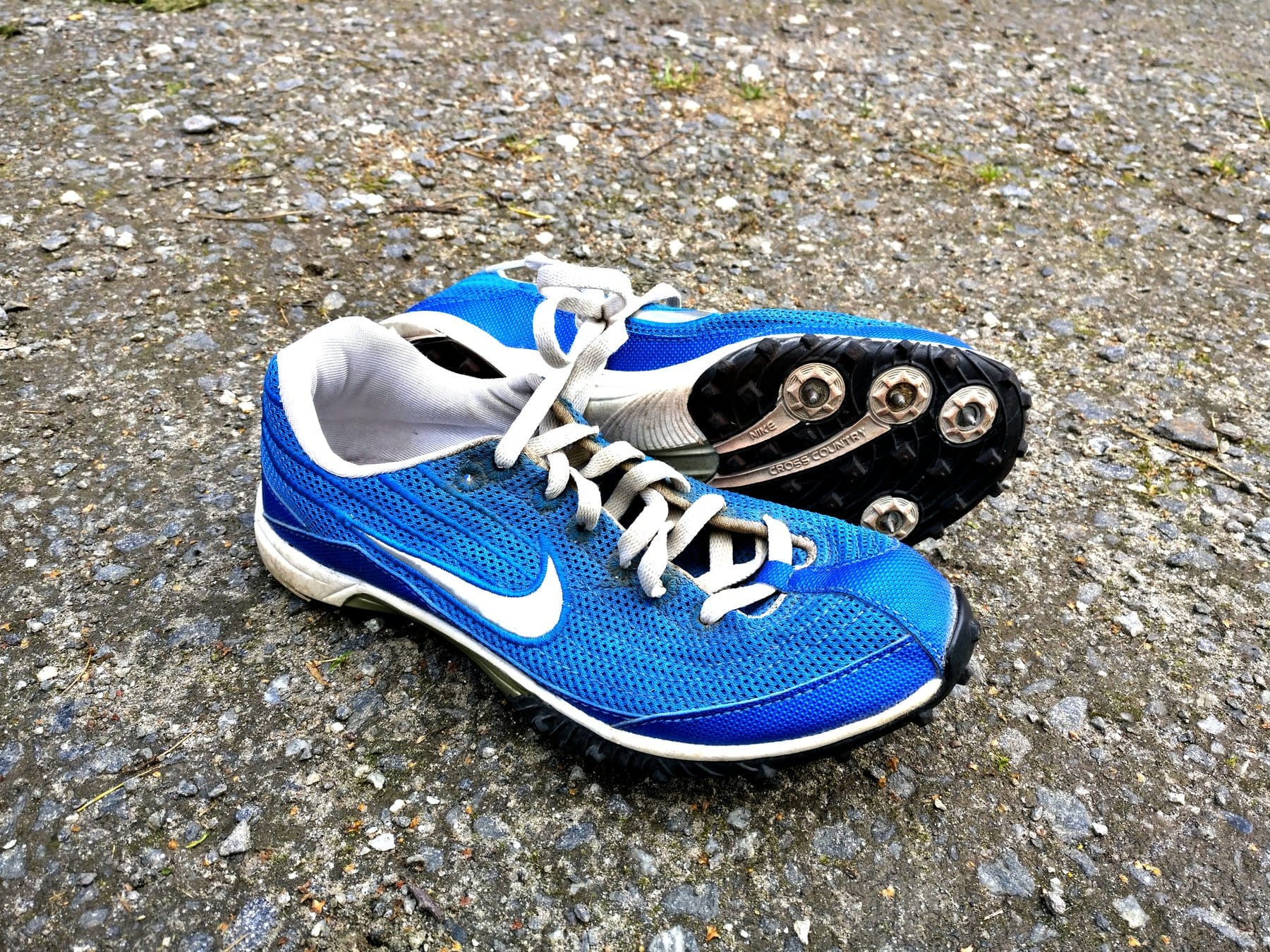
Spikes in the Archive
Footwear is the newest wing of this archive, and it is honest about its size: one race spike so far, listed exactly as it surfaced. The grid updates itself as new pairs come in — the clothing side of the Pro Elite archive is where the depth lives today.
What are sprint spikes?
Sprint spikes are rigid track racing shoes for events from 60 to 400 m, including the hurdles. They combine the stiffest plate in athletics — full-length carbon in current models — with 7 to 10 pins under the forefoot and little or no heel cushioning, because sprinters run entirely on the ball of the foot.
How many spikes do sprint shoes have?
Typically 7 to 10 pins, all in the forefoot — the most of any spike family. World Athletics allows a maximum of 11 spike positions per shoe, with pins projecting up to 9 mm outdoors and 6 mm indoors.
Why do sprint spikes have no heel cushioning?
Because a sprinter at speed lands and pushes off entirely on the forefoot. Current models go further and build the heel lower than the forefoot — independent labs measure the Nike Maxfly 2 at minus 2 mm of drop and the adidas Adizero Prime SP3 at minus 8.5 mm.
What is the sole thickness limit for sprint spikes?
20 mm, measured with the spike receptacles included. Since 1 November 2024 that single limit covers every track and field event under World Athletics rules, replacing the older 20/25 mm split.
Can you run longer races in sprint spikes?
You can, but you should not. The rigid plate and negative geometry load the calves and Achilles hard, and past 400 m that cost outweighs the return. From the 800 up, a middle distance spike is the right tool.
Sources and References
- World Athletics — C2.1A Athletic Shoe Regulations (in force 1 Jan 2026) — sole thickness, pin counts and lengths, plate rules, approved-shoe list
- RunRepeat — Nike Maxfly 2 lab test — weight and negative drop, independently measured
- RunRepeat — adidas Adizero Prime SP3 (Strung) lab test — weight and negative drop, independently measured
- Runners Need — running spikes buying guide — pin counts and family anatomy
- World Athletics — Thompson-Herah's Olympic record in Tokyo — 10.61, the record that had stood since 1988
- Sneaker News — Lyles' Y-3 spikes in Paris — the 9.79 gold in the Adizero Prime SP3 Y-3