
DISTANCE
SPIKES
The lightest, most flexible shoe on the track — and the one that started the super-spike record debate on a single night in Valencia. What it is, how it is built, and how to choose one.
A distance spike is the track racing shoe for the 3000 m steeplechase, the 5000 and the 10,000: the fewest pins on the track — 4 to 6 — under a partial or flexible plate, with cushioning that runs heel to toe. It is the lightest spike family, at around 130 grams for its reference model.
It is also the family that made the modern era: on one night in Valencia in October 2020, two world records fell to the same new shoe. Six years later the men's marks from that season still stand, the women's have been rewritten twice, and the argument about foam has never quite ended.
This is Spike Series No. 03 inside Kit Anatomy. The other families: sprint · middle distance · jumps · throws. Or jump to the spikes in the archive.
- Events
- 3000 m steeplechase, 5000 m, 10,000 m
- Pins
- 4–6 — the fewest of any spike family
- Plate
- Partial or flexible; Pebax rather than carbon in the ZoomX Dragonfly
- Cushioning
- Full-length including the heel — the family's defining feature
- Weight
- Dragonfly about 130 g; adidas Avanti TYO about 159 g (size 9)
- Era marker
- Valencia, 7 Oct 2020: two world records in one night in the first super-spike generation
- Standing in 2026
- Cheptegei's 12:35.36 and 26:11.00 stand; the women's records now belong to Chebet (13:58.06 / 28:54.14)
- Sole / pin limits
- 20 mm sole max; pins 9 mm outdoors, 6 mm indoors
Chart data as a table
| Record | Athlete | Set | Status in 2026 |
|---|---|---|---|
| 5000 m men · 12:35.36 | Joshua Cheptegei | Monaco, 14 Aug 2020 | Stands |
| 10,000 m men · 26:11.00 | Joshua Cheptegei | Valencia, 7 Oct 2020 | Stands |
| 5000 m women · 14:06.62 | Letesenbet Gidey | Valencia, 7 Oct 2020 | Broken (Tsegay, then Chebet) |
| 10,000 m women · 28:54.14 | Beatrice Chebet | Eugene, 2024 | Stands — first woman under 29 |
| 5000 m women · 13:58.06 | Beatrice Chebet | Eugene, 5 Jul 2025 | Stands — first woman under 14 |
What a distance spike is
A distance spike is what remains of a racing shoe when every unnecessary gram has been argued away. It covers the long end of the track — the 3000 m steeplechase, the 5000 and the 10,000 — and its priorities are the reverse of a sprinter's: over twelve and a half or twenty-five laps, comfort is not a luxury, it is pace preservation.
So the family runs the fewest pins on the track — four to six — under the most flexible plate, with cushioning that runs the full length of the shoe, heel included. Where a sprint plate is a lever, a distance plate is a spring you can live with for half an hour of racing.
The neighbours are covered in their own chapters: the middle distance spike below it — the bridge family whose reference model stretches up to the 5000 — and, further down, the sprint spike. The specialists are the jumps and throws shoes.
The night in Valencia, and after
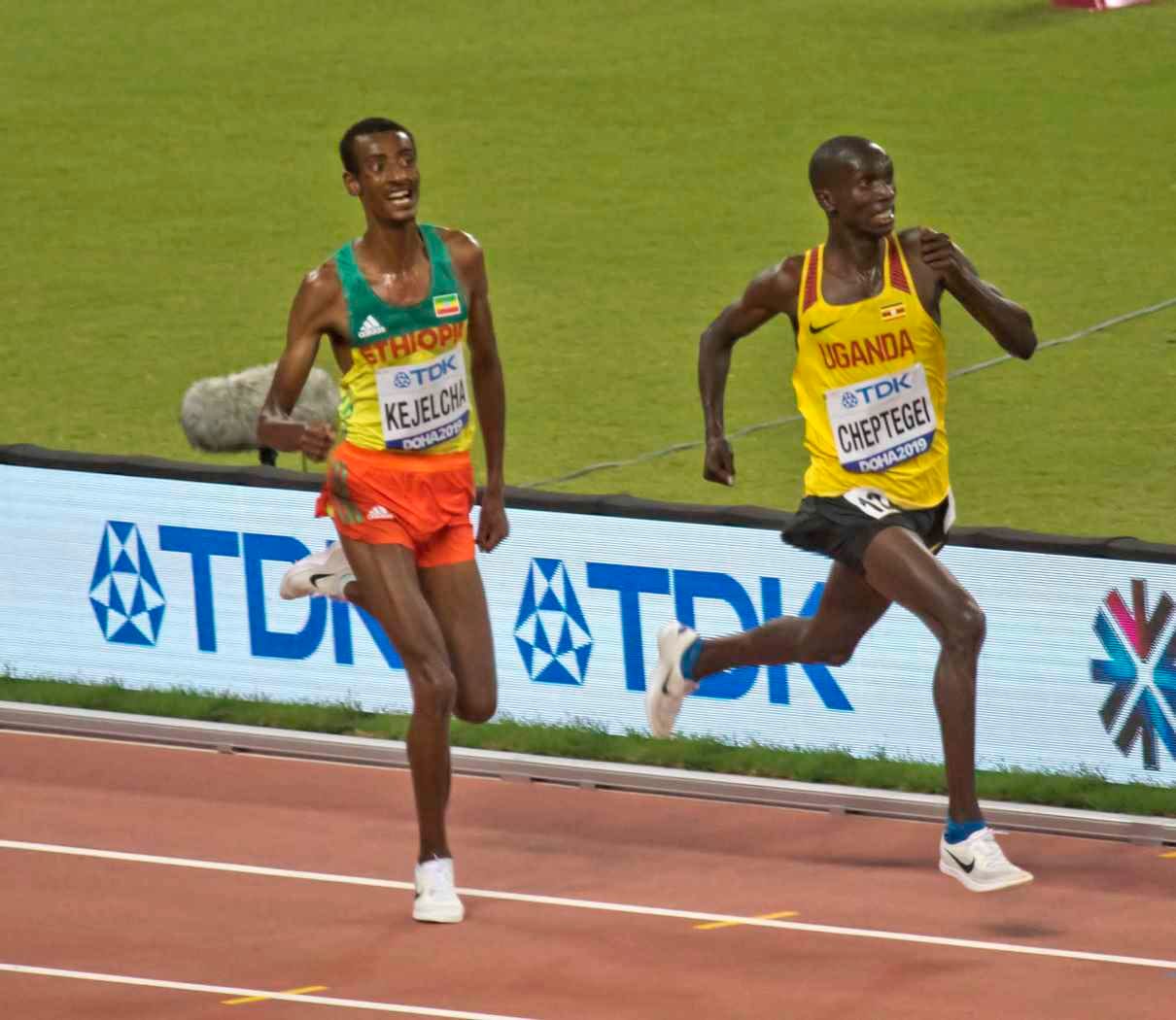
If you want the super-spike story in one date, it is 7 October 2020. On a track in Valencia, Joshua Cheptegei took the 10,000 m world record to 26:11.00, and the same evening Letesenbet Gidey took the women's 5000 to 14:06.62 — both in Nike's new ZoomX Dragonfly. Two months earlier Cheptegei had already run 12:35.36 for the 5000 in Monaco. Three world records in a season, one shoe family, and a debate about foam and fairness that has not stopped since.
The chart above shows what six years did to that night. Cheptegei's two records are still the records — he has since moved to the roads, and lines up for the 2026 London Marathon with the track marks intact. Gidey's, though, fell twice: first to Gudaf Tsegay, then to Beatrice Chebet, who now owns both women's records after running the first sub-29 10,000 in 2024 and the first sub-14 5000 at the 2025 Prefontaine Classic. Every one of those marks belongs to the same shoe era.
How much of it is the shoe? Peer-reviewed work finds measurable performance shifts across 800 m to 10,000 m events from late 2019, when high-return foams reached spikes. What no study hands out is the split between shoe, track, pacing lights and a generation of athletes arriving at once — which is exactly why the era is worth documenting piece by piece.
How the race shoe is built
Set a distance spike beside its sprint cousin and you can read the priorities straight off the sole.
- The pins4–6 — the fewest on the track. Grip still matters on the bends; carrying steel for 25 laps does not.
- The platePartial or flexible — the Dragonfly uses a Pebax plate rather than carbon, softer and lighter, chosen so the foot is not fighting a lever late in a race.
- The cushioningFull-length, heel included — the family's signature. Distance runners land everywhere on the foot as they fatigue.
- The weightLightest family on the track: the Dragonfly runs about 130 g, the adidas Avanti TYO about 159 g in a size 9.
- The foamThe marathon super-shoe recipe at spike weight: ZoomX in the Dragonfly, Lightstrike Pro with glass-fibre rods in the Avanti, nitrogen-infused NITROFOAM in Puma's long-distance evoSPEED.
- The rules it lives under20 mm of sole maximum — unified for all track events since 1 November 2024 — up to 11 pin positions, 9 mm pins outdoors, 6 mm indoors.
One practical note for the steeplechase: it is raced in this family too, usually a half-size consideration rather than a different shoe — water-jump landings favour secure lockdown and quick-draining uppers, which race-thin knits already are.
How to choose yours
Choosing inside the family is mostly a question of what your season asks of your legs.
- Match the calendarRacing 5000s and 10,000s, or the steeple: this is your family. Dropping to the 1500 regularly? Look at the middle distance bridge instead.
- Flexibility is a featureIf a shoe feels too soft in the shop compared with a sprint spike, that is the design working — judge it at lap twenty, not at step one.
- PinsSame rulebook as everyone: 9 mm outdoors, 6 mm indoors unless the venue allows longer. Distance runners are the most likely to race indoors in winter — keep both sets.
- Approved-list checkFor World Rankings competition the model must be on the World Athletics list at certcheck.worldathletics.org.
- Fit for the fadeSnug midfoot, a whisper of toe room — feet swell over half an hour of racing in a way a 200 m final never reveals.
The full map across every event is in our complete track spikes guide; the other families in this series are linked above.
Spikes in the Archive
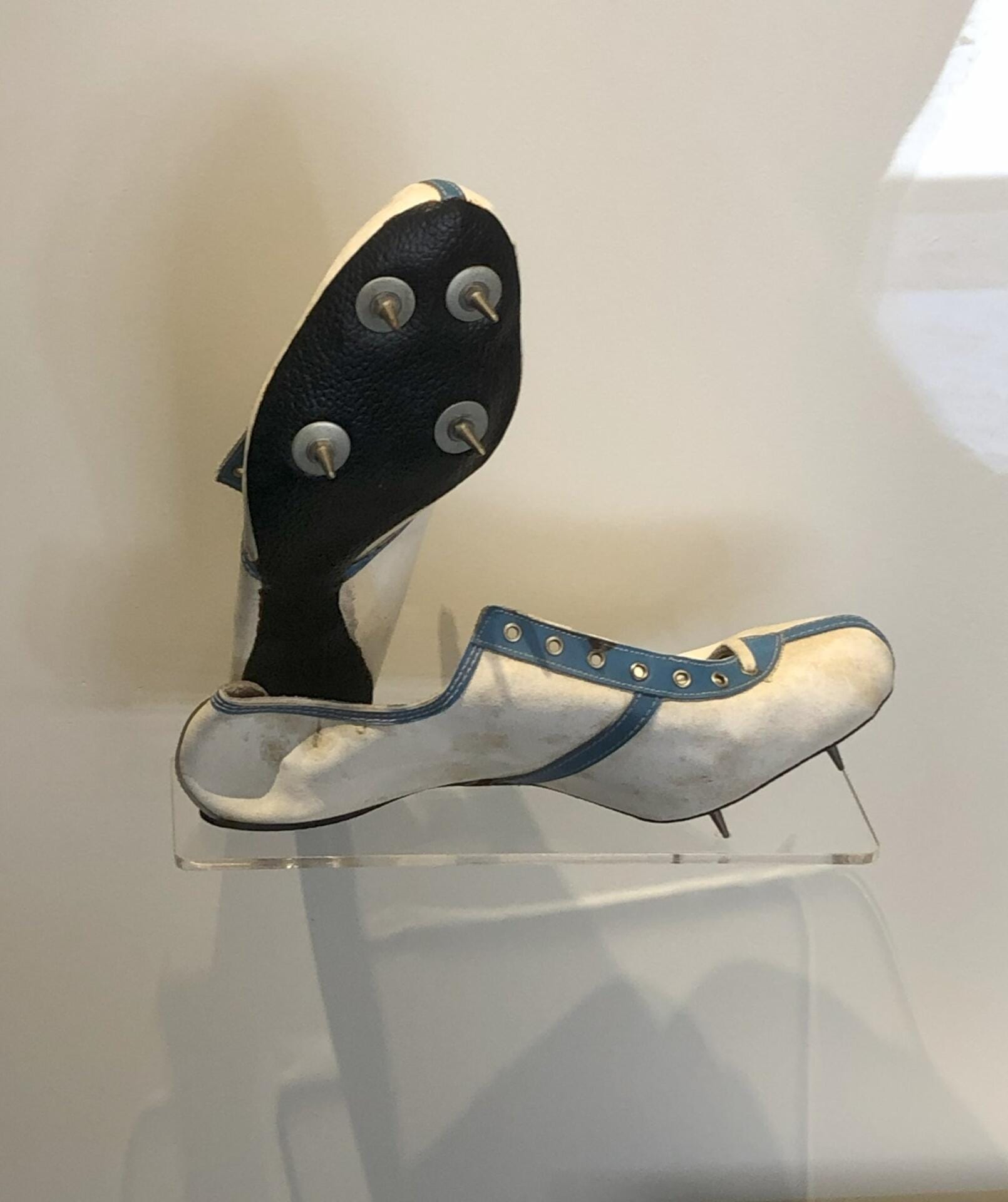
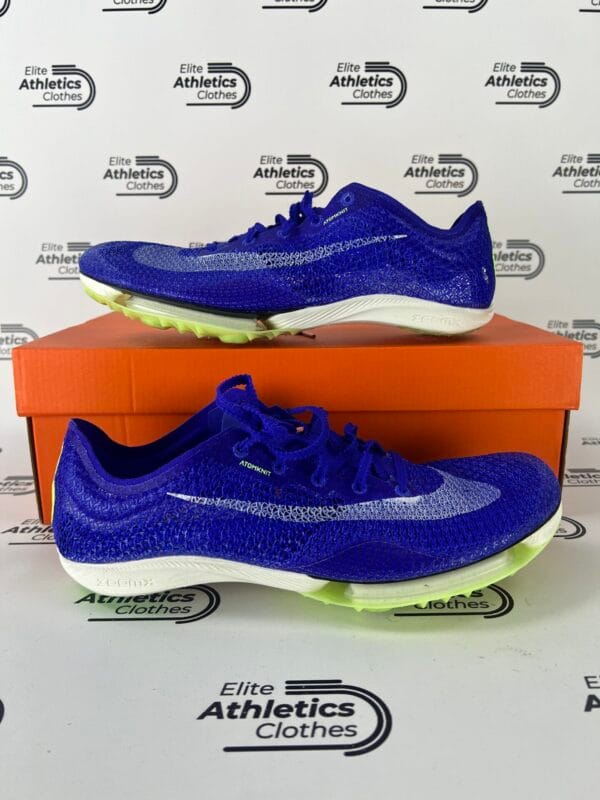
Footwear is the newest wing of this archive, and it is honest about its size: one race spike so far, listed exactly as it surfaced. The grid updates itself as new pairs come in — the clothing side of the Pro Elite archive is where the depth lives today.
What are distance spikes?
Distance spikes are track racing shoes for the 3000 m steeplechase, the 5000 and the 10,000. They carry the fewest pins on the track — 4 to 6 — under a partial or flexible plate, with full-length cushioning including the heel, and they are the lightest spike family at roughly 130 grams for the reference models.
What shoe were the Valencia 2020 world records set in?
Joshua Cheptegei's 26:11.00 for 10,000 m and Letesenbet Gidey's 14:06.62 for 5000 m, both on 7 October 2020 in Valencia, were run in the Nike ZoomX Dragonfly — the first-generation super spike for distance events.
Do those super-spike records still stand?
The men's do: Cheptegei's 5000 and 10,000 records from 2020 are still the world records in 2026. The women's have fallen twice — Beatrice Chebet now holds both, with the first sub-29 10,000 (28:54.14, 2024) and the first sub-14 5000 (13:58.06, July 2025).
How are distance spikes different from sprint spikes?
Almost point for point the opposite: 4–6 pins instead of 7–10, a flexible plate instead of the stiffest one in athletics, cushioning under the heel instead of none, and geometry built for economy over 25 laps rather than force over 10 seconds.
Can you run the steeplechase in distance spikes?
Yes — the steeple is raced in this family. The practical differences are fit and drainage: water-jump landings reward a locked-down midfoot, and the thin knit uppers of modern distance spikes shed water quickly.
Sources and References
- World Athletics — records ratified: Gidey 5000 m, Cheptegei 10,000 m — the Valencia double, 7 Oct 2020
- CNN — the Valencia night and the spikes debate — both records tied to the new shoe generation
- World Athletics — Cheptegei 12:35.36 in Monaco — the 5000 m record, Aug 2020
- World Athletics — Chebet 13:58.06, Prefontaine Classic 2025 — first woman under 14 minutes
- RunRepeat — Nike Dragonfly 2 lab test — weights of both Dragonfly generations
- Doctors of Running — adidas Adizero Avanti TYO review — construction and weight of the adidas reference
- World Athletics — C2.1A Athletic Shoe Regulations (in force 1 Jan 2026) — sole and pin limits