
COMPETITION
BRIEFS
The most argued-over garment on the start line — and the one no rule ever required. What competition briefs are, how a century of kit ended in choice, and how to pick a race-issued pair.
Competition briefs — race briefs, or “bun huggers” — are the snug, minimalist bottom half of the classic two-piece athletics kit, worn with a crop top or singlet by sprinters, hurdlers and jumpers for full hip movement with zero loose fabric.
No rule mandates them: World Athletics TR5 names no garment at all. The brief earned the start line on fit through the 1980s, survived a real argument about who decides what women race in, and remains the choice of most championship sprinters today.
This is Kit Anatomy, our series on each garment in the Pro Elite archive. Jump to the competition briefs in stock, or read on for the century behind the pair.
- What they are
- Snug race bottoms of the two-piece kit, worn with crop top or singlet
- Who races in them
- Sprinters, hurdlers, jumpers — mostly women at championship level
- Mandated by rule?
- No — World Athletics TR5 names no garment; the choice is the athlete's
- Fabric
- Four-way-stretch blends; verified: 57/43 nylon-elastane, 195 g/m²
- Construction
- Flat seams, lined gusset, wide brushed waistband, high-cut legs
- The era
- Brief styles popularized in the 1980s; Flo-Jo made them famous in 1988
- Race-issued vs retail
- Federation team pairs, one cycle, no restock
- In the archive
- 32 competition briefs catalogued
View the data
| Era | Kit | Marker |
|---|---|---|
| 1928–1950s | Loose bloomers, middy blouses, belts | First women's Olympic track events, 1928 |
| 1950s–1970s | Synthetics arrive; tighter, shorter cuts | Polyester and nylon displace cotton |
| 1980s–2000s | Brief and bikini styles popularized | Flo-Jo's one-leggers and briefs, 1988 |
| 2010s–today | Athlete's choice: briefs, shorts, unitards | Paris 2024: ~50 styles offered |
What competition briefs are
Competition briefs — race briefs, or “bun huggers” in track slang — are the minimalist bottom of the classic two-piece kit, worn snug at the hip with a crop top or singlet above. You will see them on sprinters, hurdlers, jumpers and heptathletes, overwhelmingly on the women's side of championship start lists.
The logic is the same subtraction that drives every race garment in this series: no loose fabric to flap or chafe, full hip rotation, nothing between the athlete and the movement. What is worth knowing is that no rulebook demands them. World Athletics Technical Rule 5 requires clothing to be clean, non-transparent even when wet and not objectionable — it names no garment. Briefs, shorts, half tights or a full suit: the choice belongs to the athlete and her federation kit.
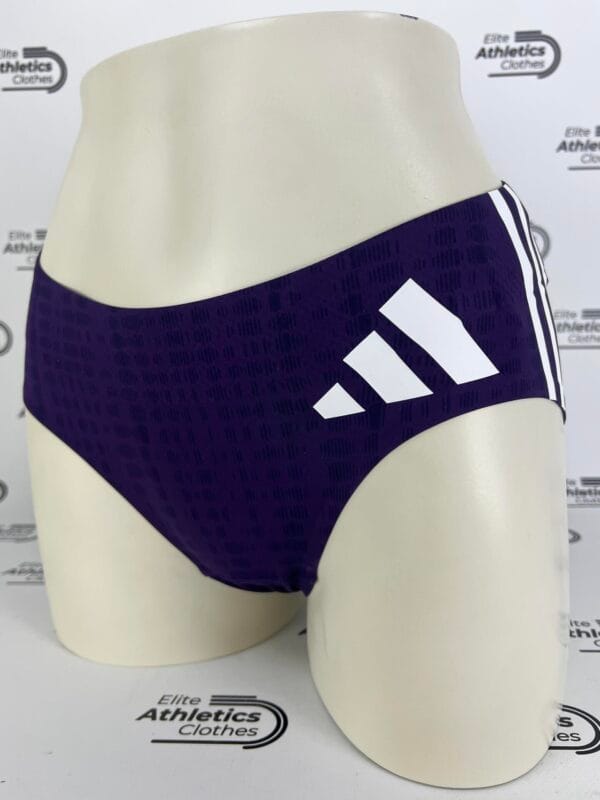 From this series · in the archiveAdidas Pro Elite Team 2025 Women Distance Competition Briefs – Special EditionA race-issued distance pair — the two-piece kit's bottom half, in its federation form.140,00 €View piece →
That choice has a history with real friction in it — which is what the next section is about.
From bloomers to bun huggers
Women's Olympic track began in 1928 in loose bloomers and middy blouses, sometimes belted. Synthetics arrived mid-century and cuts tightened through the 1960s and 70s; fashion historians date the brief and bikini styles' breakthrough to the 1980s. The look's most famous early author was Florence Griffith-Joyner, who ran the 1988 season in self-designed one-legged suits and briefs on her way to a 100 m world record that still stands.
The brief has also been a battleground. In 2021, British Paralympic champion Olivia Breen was told by a competition official that her sprint briefs were “too short and inappropriate” — she filed a complaint, with England Athletics' support, and the episode became part of a wider conversation about who decides what women race in. When Nike's Paris 2024 kit reveal drew criticism for a high-cut unitard, the answer from athletes and brand alike landed on the same word: options. Women could pick from roughly fifty styles — briefs among them, never instead of them.
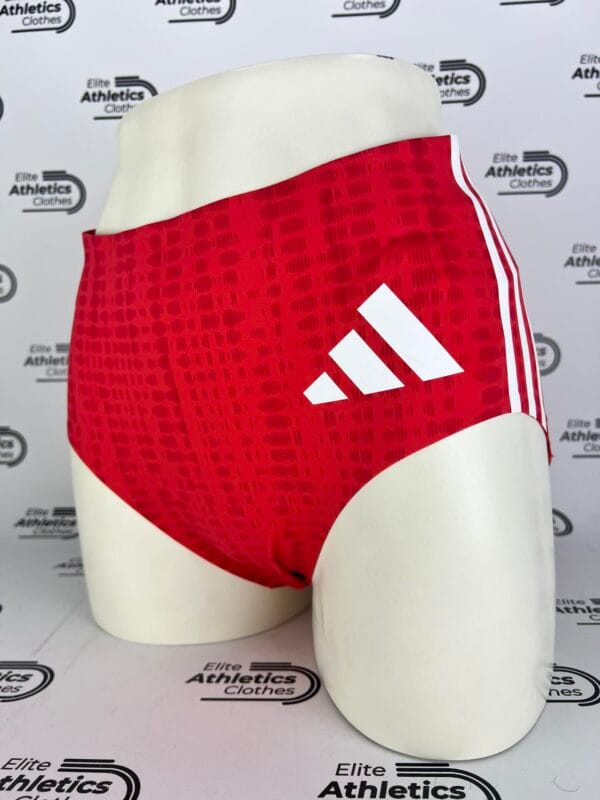 From this series · in the archiveAdidas Pro Elite Team 2025 Women Sprint BriefsA sprint pair from a current championship cycle — the direct descendant of the 80s bun hugger.140,00 €View piece →
So the pair in the archive carries more than its few grams of fabric: it is the surviving choice of a hundred-year argument about speed, cloth and autonomy.
How the race pair is built
Up close, a race-issued pair is a small masterclass in doing a lot with very little cloth.
- The fabricFour-way-stretch blends — verified examples run from poly/spandex to 57% nylon / 43% elastane at 195 g/m² — wicking, compressive, opaque wet or dry.
- Flat seamsFlat-stitched edges lie flush against the skin; at sprint hip speeds any raised seam becomes a chafe line.
- The waistbandWide elastic, often with an internal drawcord and brushed interior — locked through the drive phase without digging.
- High-cut legsThe leg opening rides the hip crease so the thigh never meets a hem.
- The linerA lined gusset or mesh liner does the underwear's job; the pair is built to be worn alone.
- The canvasFederation colours and space for the hip number — adhesive bib identification goes on the bottoms in photo-finish events.
The result weighs next to nothing and does exactly two things: stay put, and stay out of the way.
How to choose yours
Buying race briefs is mostly about honest measurement and knowing how race fabric behaves.
- Measure, don't guessSize by natural waist and fullest hip against the chart — race fabrics are compressive and meant to sit close to the skin.
- Snug, not stranglingRight fit grips through a full stride and jump without rolling at the waistband or riding the leg opening.
- Check the liningA lined gusset means the pair is worn alone; unlined vintage pieces may want a base layer.
- Pair the kitBriefs are half a kit — the matching crop top or singlet from the same cycle completes the set as the team wore it.
- Archive realityRace-issued runs are one cycle and gone. In-stock first; sold-out pairs stay listed because they rarely return.
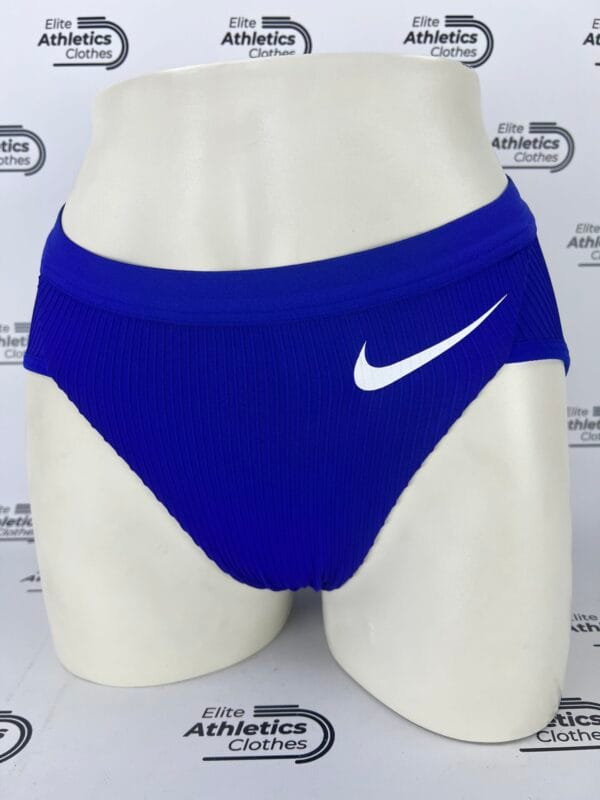 From this series · in the archiveNike Rosa & Co. Pro Elite 2024 Competition BriefsA recent team pair — the modern cut of the choice that won the century.140,00 €View piece →
Fit them right and, like every piece in this series, they disappear at the gun.
Competition Briefs in the Archive
Race-issued team pairs from national squads and their brands — the two-piece kit's bottom half, made for a single championship cycle. In-stock first; sold-out pieces stay listed because the runs are small and rarely return.
Adidas Pro Elite Team 2025 Women Distance Competition Briefs – Special Edition140,00 €View Piece →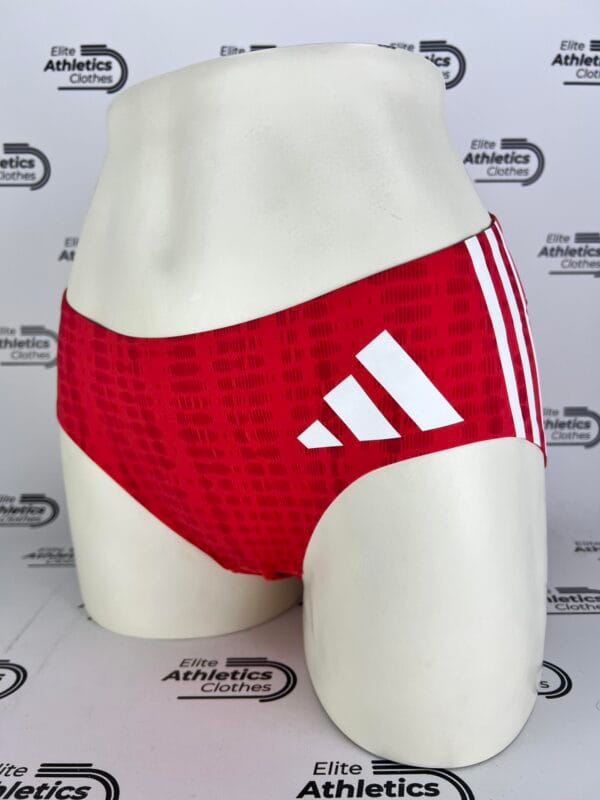 Adidas Pro Elite Team 2025 Women Distance Competition Briefs140,00 €View Piece →Adidas Pro Elite Team 2025 Women Sprint Briefs140,00 €View Piece →Nike Rosa & Co. Pro Elite 2024 Competition Briefs140,00 €View Piece →
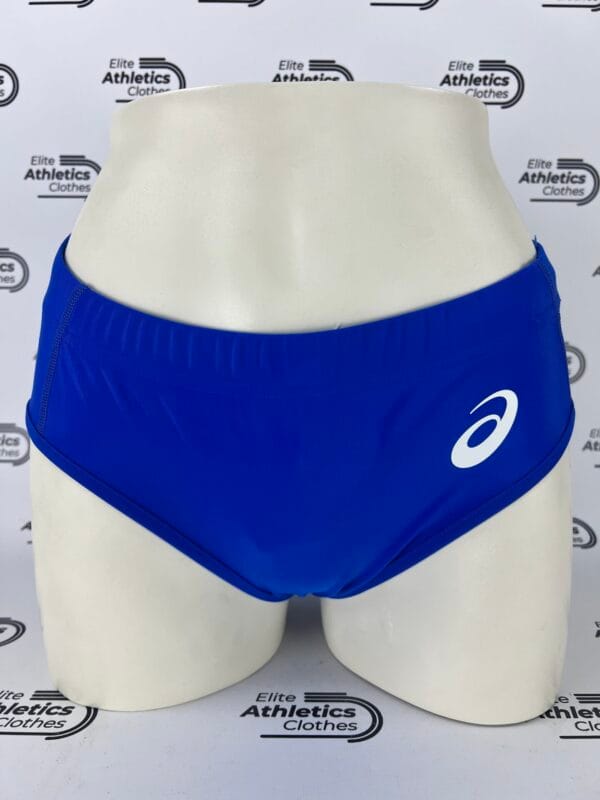 Asics Netherlands Pro Elite 2018 Women Competition Briefs90,00 €View Piece →
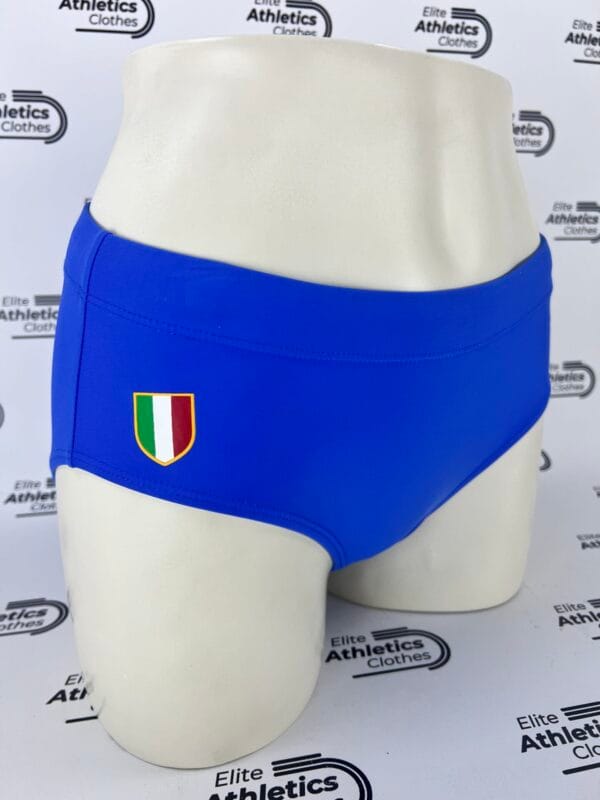 Joma Italy Pro Elite 2023 Competition Briefs90,00 €View Piece →
What are competition briefs in track and field?
Competition briefs — also called race briefs or bun huggers — are snug, minimalist bottoms worn with a crop top or singlet as the classic two-piece athletics kit. They eliminate loose fabric for full hip movement and are most common among sprinters, hurdlers and jumpers.
Do female athletes have to wear briefs?
No. World Athletics Technical Rule 5 requires clothing to be clean, non-transparent even when wet and not objectionable, but it names no garment. Briefs, shorts, half tights and unitards are all permitted; at Paris 2024 Nike offered women roughly fifty kit styles to choose from.
What fabric are racing briefs made of?
Four-way-stretch synthetic blends. Verified examples include 57% nylon with 43% elastane at 195 grams per square metre, with flat seams, a lined gusset and a wide elastic waistband, often with an internal drawcord.
When did briefs become standard in women's athletics?
Fashion historians date the popularization of brief and bikini styles to the 1980s, after synthetics tightened cuts through the 60s and 70s. Florence Griffith-Joyner's 1988 season made the look famous, and the brief remained the default sprint kit into the 2000s before today's era of choice.
How should competition briefs fit?
Close to the skin, sized by natural waist and fullest hip against the maker's chart. A correct pair grips through a full stride without rolling at the waistband or riding up at the leg opening.
Sources and References
- World Athletics — Technical Rules (extract), Rule 5 — clothing rule: no garment type mandated
- Sky Sports — Olivia Breen briefs incident (2021) — the 2021 officiating controversy
- NPR — Nike Team USA Paris 2024 kit debate — kit options and athlete responses
- Tracksmith — Race Brief specifications — fabric composition and sizing