
Great Britain
From Victorian pedestrianism to Super Saturday, Great Britain is one of the oldest and most successful athletics nations on earth, defined by middle-distance rivalries, iconic barrier-breakers, and over a century of Olympic and world-championship excellence.
Great Britain is one of athletics’ founding powers, from Roger Bannister’s first sub-four-minute mile in 1954 to Sebastian Coe’s eight world records, Daley Thompson’s two decathlon golds, Mo Farah’s four Olympic golds and Super Saturday at London 2012. Governed by UK Athletics, Britain remains a global force, crowned by Keely Hodgkinson’s 800m gold at Paris 2024.
The deep roots of British athletic tradition lie in the Victorian era, when sport was elevated from rural pastime to national institution. British bodies were formalising competitive running, jumping, and throwing long before the modern Olympic Games were revived in 1896. From Harold Abrahams and Eric Liddell to Roger Bannister’s sub-four-minute mile, and on through the golden middle-distance era of Coe, Ovett, and Thompson to the wave of pride unleashed by London 2012, few nations can match this heritage.
The Great Britain singlet has been on Olympic podiums since the very first Games in 1896. Elite Athletics Clothes stocks authentic GB Pro Elite kit worn by British athletes at the Olympic Games and World Athletics Championships.
- Federation
- British Athletics (UK Athletics), member of World Athletics
- Ever-present
- The only nation with at least one athletics medal at every Summer Games since 1896
- Olympic athletics medals
- 220: 56 gold · 87 silver · 77 bronze
- The barrier
- Roger Bannister runs the first sub-4 mile: 3:59.4, Iffley Road, 6 May 1954
- Defining era
- Moscow 1980: Coe and Ovett take the 1500m and 800m; Daley Thompson wins the decathlon
- Most decorated
- Mo Farah · 4 Olympic golds and 6 World titles over 5,000m and 10,000m
- Kit supplier
- Nike, since 2014 (previously Adidas) · deal through 2030
- Grassroots
- The London Marathon: 40,000+ runners every spring since 1981
The Origins of Track and Field in Great Britain
Organised athletics is older in Great Britain than anywhere else. Long before Pierre de Coubertin revived the modern Olympic Games in 1896, British institutions were writing the rules of competitive running, jumping and throwing. The foundations were laid in the Victorian era, when sport moved from rural pastime to national institution.
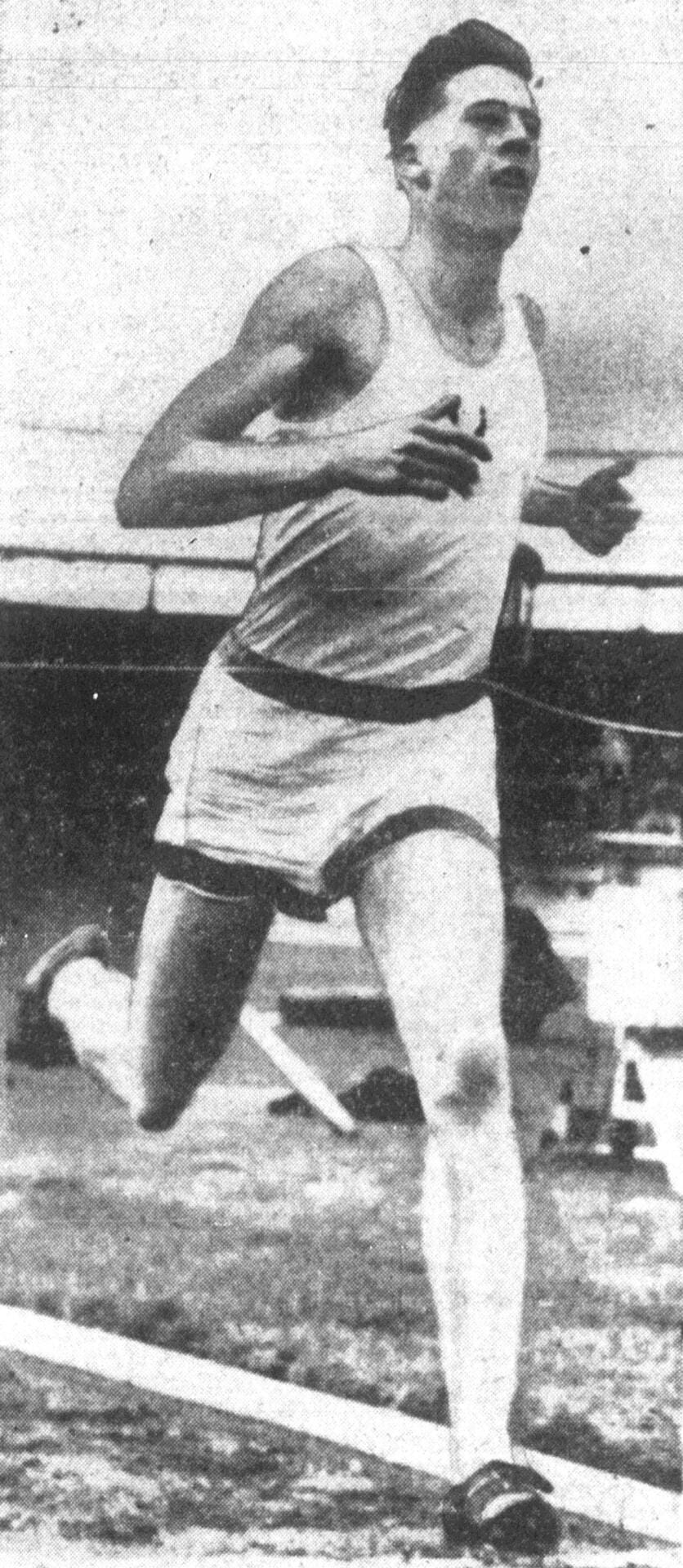

Pedestrianism — competitive walking and running for prize money — was immensely popular in 18th and early 19th century Britain. Professional foot-racers drew enormous crowds to wagered contests, and these early spectacles planted the seeds of what would become organised amateur athletics.
By the mid-1800s the sport’s administration mirrored the rigid class divisions of British society, as amateur clubs worked to separate themselves from the professional pedestrian tradition. That tension between amateur ideals and competitive ambition shaped British athletics for generations.
The Founding of Modern Athletics and the Amateur Era
The Amateur Athletic Club (AAC) was founded in 1866, making it one of the earliest organised athletics bodies in the world. Just two years later, the first English Amateur Athletics Championships were held at Beaufort House, London — events that would evolve into today’s British Athletics Championships. The Amateur Athletic Association (AAA) was formed in 1880, establishing the rules and governance that underpinned the sport for over a century.
Scotland’s tradition ran in parallel: the Scottish Amateur Athletic Association was established in 1883 and the Welsh AAA followed in 1886, eventually federating under UK Athletics, founded in 1999. Great Britain sent athletes to the very first modern Olympic Games in Athens in 1896, making an immediate impact on the international stage.
The early decades produced champions who became cultural figures. Harold Abrahams won the 100m at the 1924 Paris Olympics, later immortalised in the 1981 film Chariots of Fire, becoming the first European to win the Olympic 100m title. His compatriot Eric Liddell, who famously refused to run on a Sunday, won the 400m at the same Games in a world-record 47.6 seconds.
Great Britain’s Greatest Athletes
The British roll call of champions covers every discipline and every era. Below are some of the defining figures of British track and field, from barrier-breakers to serial Olympic and world champions.
Roger Bannister
The man who broke the four-minute mile barrier with 3:59.4 at Oxford on 6 May 1954. He won the Empire Games mile later that year in the famous “Miracle Mile” against John Landy, setting a world record of 3:58.8.
Sebastian Coe
Arguably the greatest middle-distance runner in British history. Coe set eight world records between 1979 and 1981 and won Olympic 1500m gold at both Moscow 1980 and Los Angeles 1984. Now Lord Coe, he is President of World Athletics.
Daley Thompson
Two Olympic decathlon gold medals (1980 and 1984), two Commonwealth titles, a European Championship, and a world record. His dominance of the decathlon throughout the 1980s was total, ranking him among the greatest multi-event athletes in history.
Linford Christie
Olympic 100m champion at Barcelona 1992, World Champion in 1993, European and Commonwealth Champion. His explosive starts and fierce competitive presence made him the figurehead of British sprint athletics for a decade.
Sally Gunnell
The only British woman ever to hold the Olympic, World, European, and Commonwealth titles simultaneously. Her world-record 52.74 seconds in the 400m hurdles at the 1993 World Championships remains a landmark in British athletics history.
Mo Farah
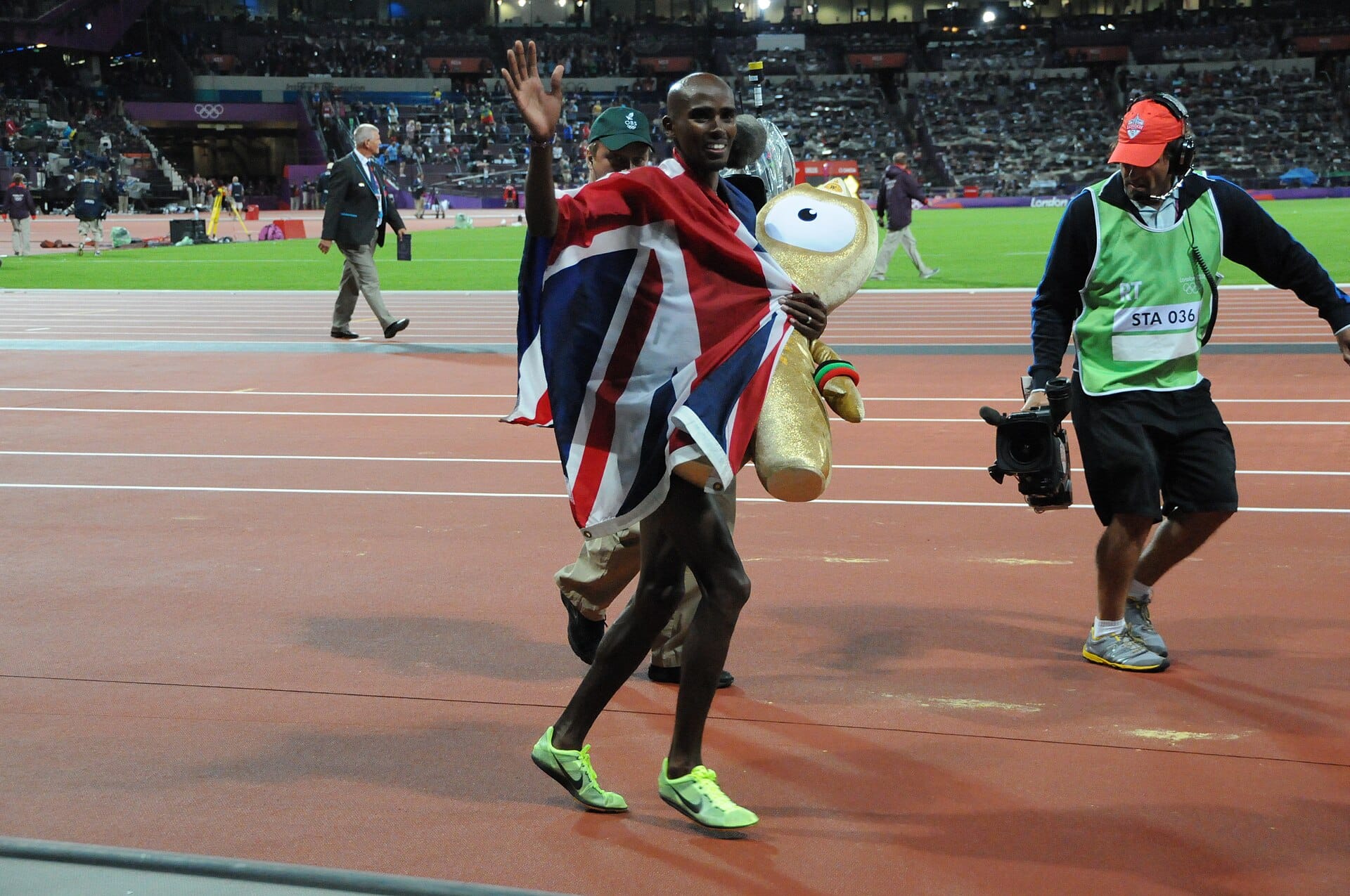
Four Olympic gold medals in the 5,000m and 10,000m at London 2012 and Rio 2016, plus six World Championship golds. His dominance of long-distance running in the 2010s was absolute, and his Mobot celebration became an icon of British sport.
Olympic Achievements
Great Britain has competed at every Summer Olympic Games since 1896 and has accumulated one of the most impressive Olympic athletics records in the world. Across sprints, middle distance, long distance, hurdles, and field events, GB athletes have claimed gold at nearly every Games.
Olympic athletics medals, 1896–2024. Great Britain is the only nation to win at least one athletics medal at every Summer Games. Source: Wikipedia, Great Britain at the Olympics.
View the data
| Medal | Count |
|---|---|
| Gold | 56 |
| Silver | 87 |
| Bronze | 77 |
| Total | 220 |
Harold Abrahams won the 100m to become the first European Olympic 100m champion; Eric Liddell took the 400m in a world-record 47.6 seconds.
The first Olympics after World War II began British Athletics’ postwar rebuilding process, which would bear spectacular fruit in the decades to follow.
Sebastian Coe won the 1500m and Steve Ovett the 800m in a stunning middle-distance double, while Daley Thompson claimed the first of his decathlon golds.
Sebastian Coe retained his 1500m title and Daley Thompson won a second decathlon gold, cementing British dominance across middle distance and multi-events.
Linford Christie, at 32, became the oldest man to win Olympic 100m gold at the time in 9.96; Sally Gunnell took 400m hurdles gold in a world-record 52.74.
Kelly Holmes won both the 800m and 1500m gold medals, an achievement made after years of injury and hardship, earning her a damehood in 2005.
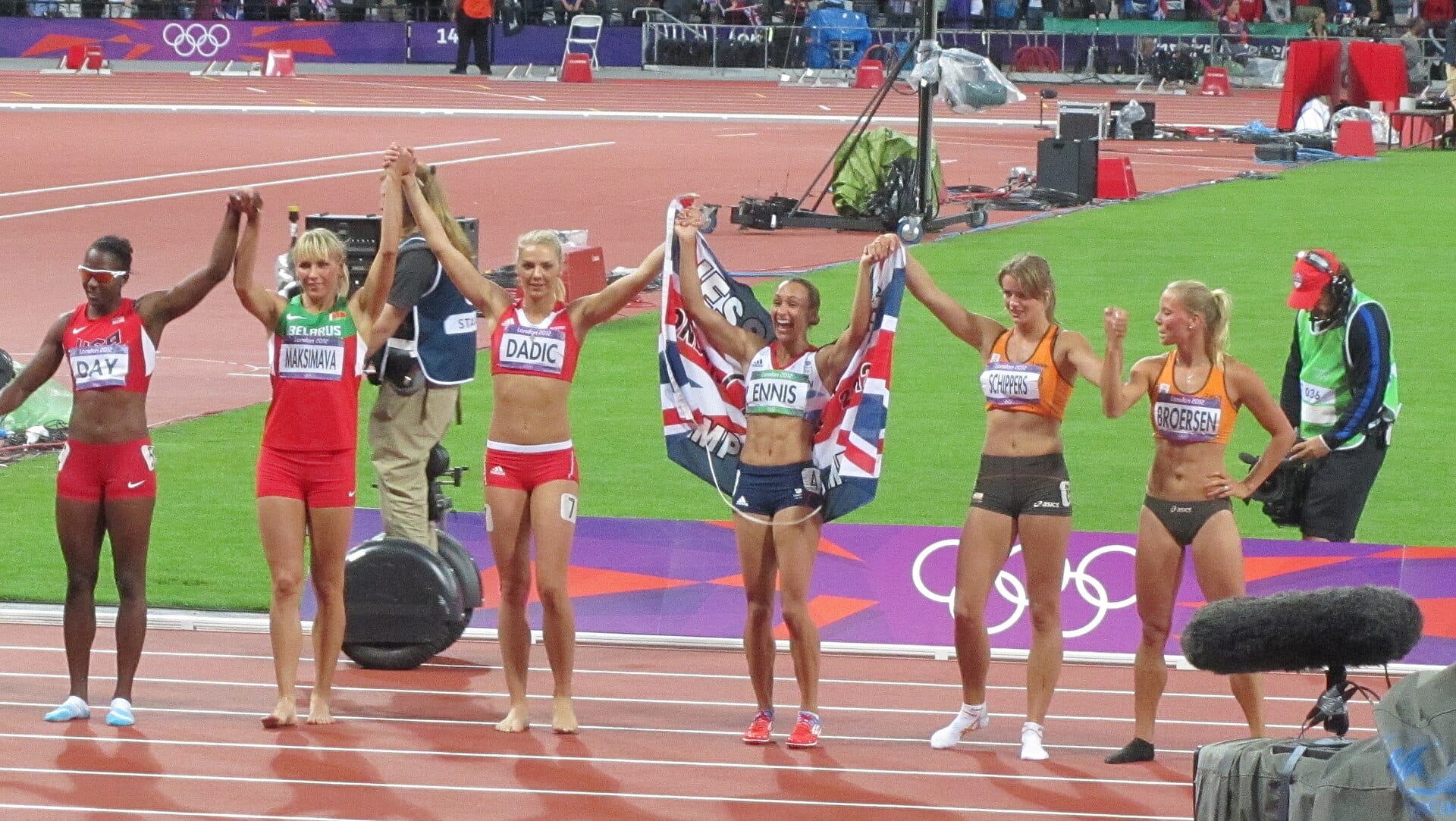
On Super Saturday, 4 August, Jessica Ennis-Hill, Greg Rutherford, and Mo Farah won three Olympic golds within 44 minutes at the Olympic Stadium.
Keely Hodgkinson won Olympic 800m gold after breaking Kelly Holmes’ long-standing British record, writing herself into the pantheon of British greats.
World Championship Achievements
Since the inaugural World Athletics Championships in Helsinki in 1983, Great Britain has been one of the most consistently successful nations in the competition’s history, winning medals across virtually every discipline — from the 100m sprint to the marathon, from the long jump to the hammer throw.
The 1993 Stuttgart World Championships were a landmark edition: Sally Gunnell broke the world record in the 400m hurdles, Colin Jackson broke the world record in the 110m hurdles, and Linford Christie retained his 100m title — three world records and three titles in a single edition. Mo Farah’s six World Championship gold medals between 2011 and 2017 remain unmatched in British history, while Jake Wightman’s 1500m gold in Eugene 2022 and Josh Kerr’s in Budapest 2023 proved the tradition of British middle-distance excellence is alive and thriving.
The Chariots of Fire Legacy and the Iconic GB Singlet
British athletics has always produced athletes whose characters were as compelling as their performances. The Chariots of Fire era caught that exactly: principled amateurism pulling against competitive excellence. Roger Bannister’s 3:59.4 mile on 6 May 1954 at Oxford’s Iffley Road Track, the first sub-four-minute mile, paced by Christopher Chataway and Chris Brasher, remains one of the most famous single performances in the history of sport.
That heritage lives on in the kit itself. The authentic GB team apparel worn during the London 2012 era has become genuinely collectible, and wearing the Great Britain singlet still carries the weight of over a century of competitive excellence.
The Great Britain athletics team traditionally competes in red, white, and blue — the colours of the Union Jack — with authentic Nike and Adidas pro elite kit worn at the Olympics and World Championships.
Running Culture and the Domestic Scene
Beyond the elite level, Great Britain has one of the strongest running cultures anywhere. The London Marathon, first held in 1981, is now one of the six World Marathon Majors, drawing over 40,000 runners each spring and raising more than £1 billion for charity.
The parkrun movement, founded in Bushy Park, London in 2004 by Paul Sinton-Hewitt, transformed recreational running worldwide, expanding from a single weekly timed 5km run to over 2,000 events across the UK and thousands more internationally.
British athletics clubs form the backbone of the national programme, with hundreds of affiliated clubs across England, Scotland, Wales, and Northern Ireland. The tradition of cross-country running is particularly strong — the National Cross Country Championships date back to 1876 — providing generations of distance runners with exceptional aerobic foundations.
The Current State of Great Britain Athletics
British Athletics today is in excellent health. UK Athletics operates high-performance centres at Loughborough University and the Lee Valley Athletics Centre in London, providing elite athletes with world-class coaching, sport science, and training environments. Keely Hodgkinson’s 800m gold at Paris 2024 made her the face of the team, Dina Asher-Smith remains the fastest British woman in recorded history, and Josh Kerr’s 1500m World Championship gold in Budapest 2023 marked a new chapter in British middle-distance excellence — though injury in the Tokyo 2025 final cost him the chance to defend it.
In the combined events, Katarina Johnson-Thompson is a two-time world heptathlon champion (2019 and 2023) and Paris 2024 Olympic silver medallist, and Jake Wightman’s 1500m gold in Eugene 2022, with his father Geoff commentating on the race, produced one of British athletics’ most emotionally memorable moments. Laura Muir won Olympic 1500m silver at Tokyo 2020, and after Holly Bradshaw retired in 2024, Molly Caudery took over British pole vaulting with world indoor titles in 2024 and 2026. The Tokyo 2025 World Championships were a reality check — three silvers and two bronzes, Britain’s first gold-less worlds since 2003, with Georgia Hunter Bell and Hodgkinson going 2-3 in the 800m and Johnson-Thompson adding heptathlon bronze — but the depth behind them is real.
Future Stars and Emerging Talents
The next generation of British athletics talent is already making its mark. British Athletics’ investment in youth development — through the Under-20 and Under-23 European Championships, the World Athletics U20 Championships, and the domestic junior structure — keeps the pipeline of future champions consistently strong.
Keely Hodgkinson
The Tokyo 800m silver medallist who broke Kelly Holmes’ British record and claimed gold at Paris 2024. Her ability to front-run and control major finals marks her as a generational talent.
Josh Kerr
World 1500m champion in Budapest 2023, marking a new chapter in British middle-distance excellence and reasserting the nation’s traditional strength over the distance.
Jake Wightman
World 1500m champion at Eugene 2022 — a victory called by his father Geoff on commentary — producing one of British athletics’ most emotionally memorable moments.
Holly Bradshaw
Tokyo 2020 Olympic bronze medallist — Britain’s first Olympic pole vault medal — over a career spanning four Games. She retired in 2024, with Molly Caudery, world indoor champion in 2024 and 2026, taking up the standard.
Great Britain Records & Historic Milestones
Shop Great Britain Athletics Apparel
Wearing authentic Great Britain athletics apparel connects you to one of the greatest traditions in world sport. We stock a carefully curated range of genuine GB pro elite team kits — the same technical gear worn by British athletes at the Olympic Games and World Athletics Championships.
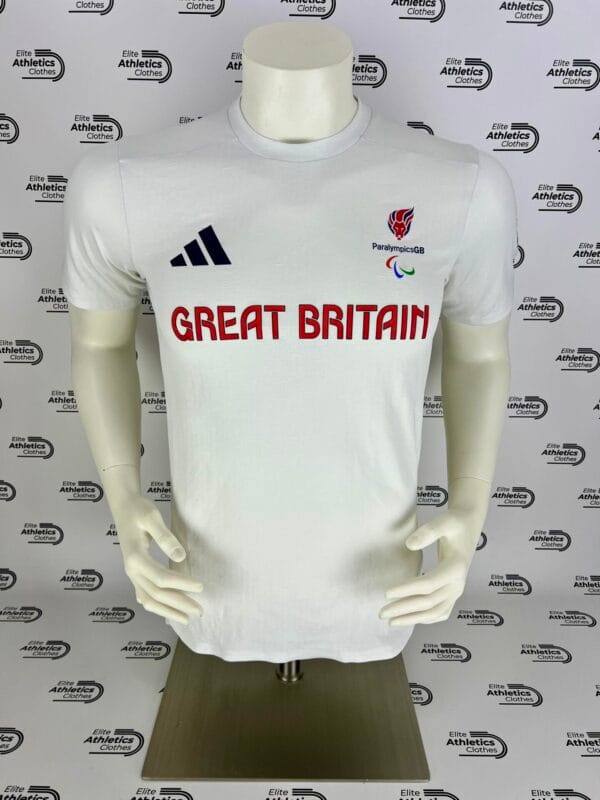 Adidas Great Britain Paralympics Team Pro Elite 2024 T-Shirt70,00 €View Piece →
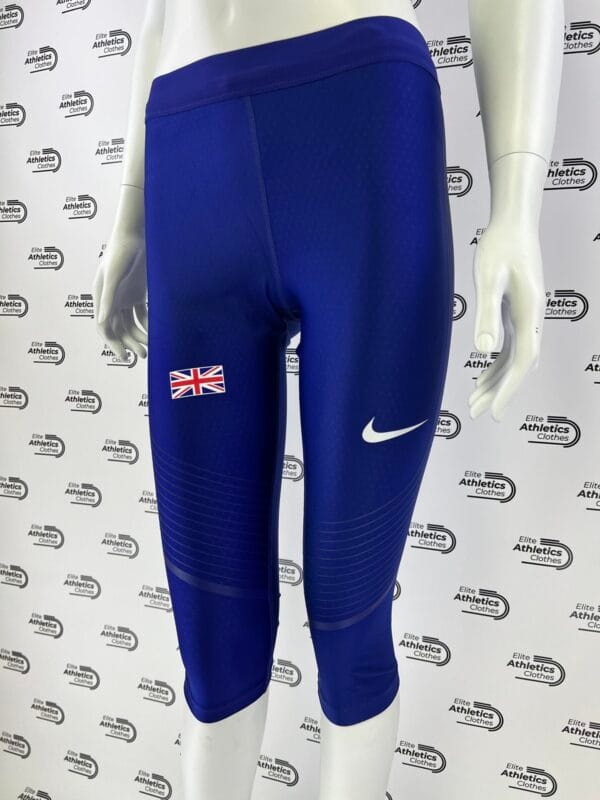 Nike Great Britain Pro Elite 2019 Women Capri Long Tights100,00 €View Piece →
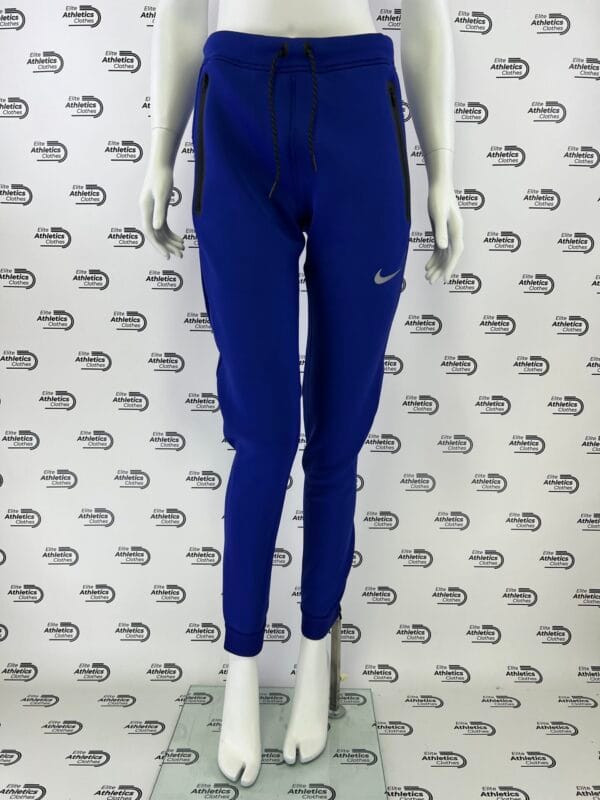 Nike Great Britain Pro Elite 2019 Women Therma Pants90,00 €View Piece →
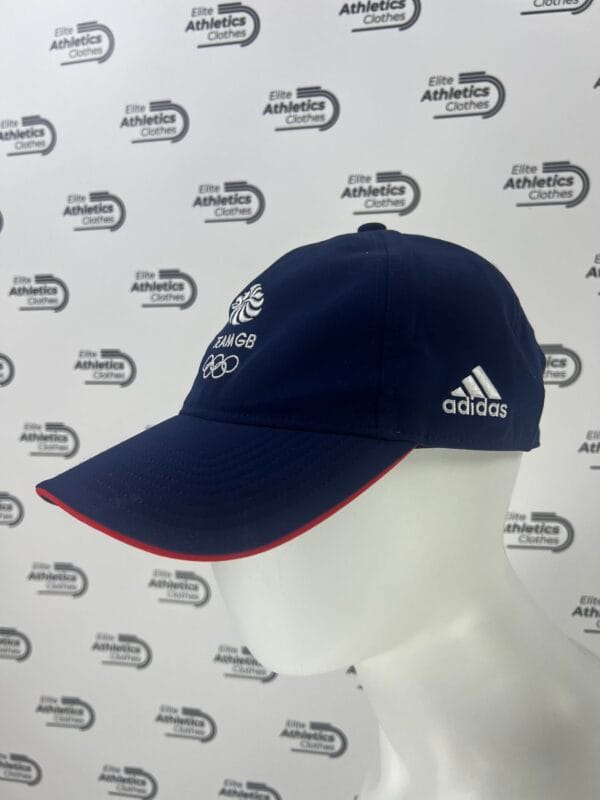 Adidas Great Britain Pro Elite 2024 Running Cap
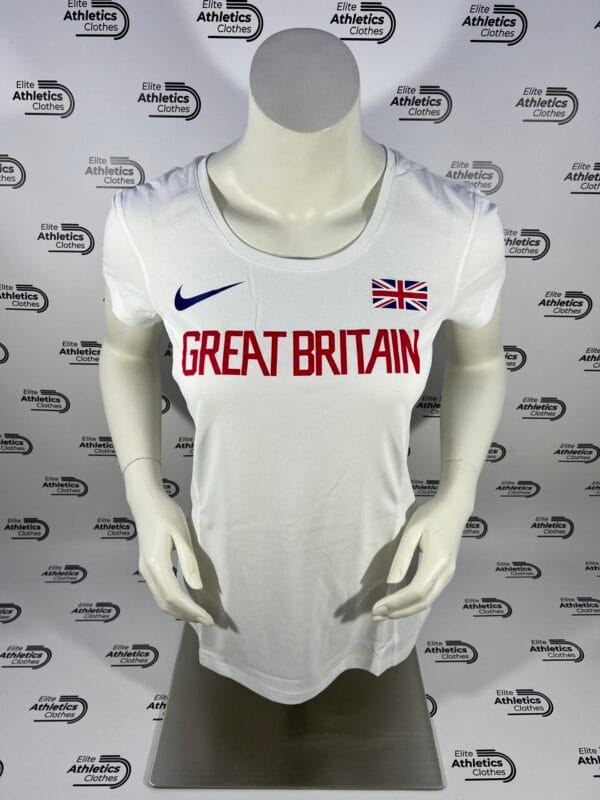 Nike Great Britain Pro Elite 2019 Women T-Shirt80,00 €View Piece →
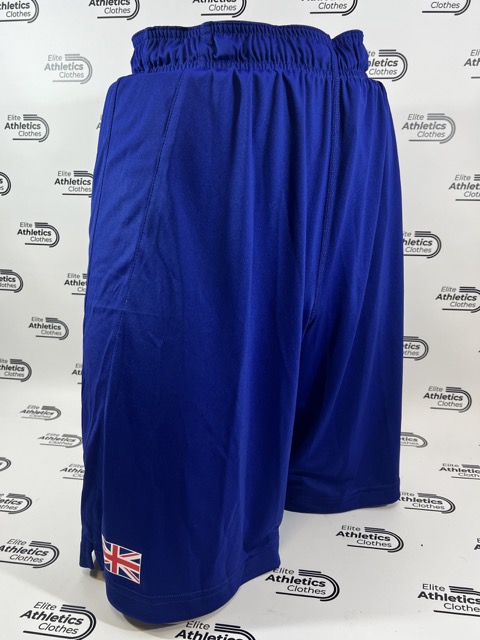 Nike Great Britain Pro Elite 2019 Short Pants
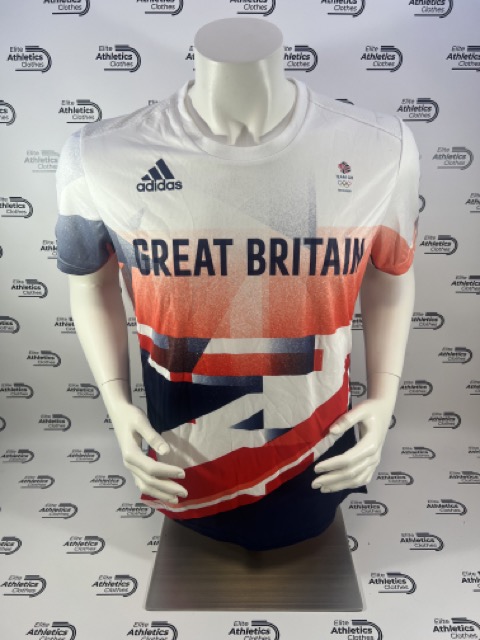 Adidas Great Britain Pro Elite Tokyo 2020 T-Shirt
 New Balance England Pro Elite 2019 T-Shirt80,00 €View Piece →
Who is the greatest British athlete of all time?
While subjective, many historians point to Sebastian Coe, Mo Farah, or Daley Thompson. Coe set eight world records and won two Olympic 1500m golds; Farah won four Olympic golds and six World titles; Thompson won two Olympic decathlon golds and set a world record. The depth of British athletics makes the debate genuinely competitive across eras.
When was the sub-four-minute mile first run?
Roger Bannister ran the first sub-four-minute mile on 6 May 1954 at Oxford University’s Iffley Road Track, finishing in 3:59.4 seconds. Paced by Christopher Chataway and Chris Brasher, it remains one of the most significant moments in 20th-century sport.
What is Super Saturday in British athletics?
Super Saturday refers to 4 August 2012 at the London Olympics, when three British athletes — Jessica Ennis-Hill, Greg Rutherford, and Mo Farah — won three Olympic gold medals within 44 minutes at the Olympic Stadium. It is widely regarded as the greatest single evening in the history of British sport.
Who governs athletics in Great Britain?
UK Athletics (UKA) is the national governing body for track and field, road running, and cross-country running in the United Kingdom. It was formed in 1999 through the merger of the Amateur Athletic Association of England and related national bodies.
What colours does the Great Britain athletics team wear?
The Great Britain athletics team traditionally competes in red, white, and blue — the colours of the Union Jack. Authentic GB pro elite kits from Nike and Adidas, including current and recent season apparel, are available at Elite Athletics Clothes.
Where can I buy authentic Great Britain athletics team kit?
Elite Athletics Clothes stocks a full range of authentic Great Britain athletics apparel, including pro elite singlets, storm jackets, half-zip jerseys, shorts, T-shirts, polo shirts, and running caps. All products are 100% authentic and sourced directly from the professional athletics supply chain.
Who makes Great Britain’s athletics kit?
Nike has supplied British Athletics since 2014, when it took over from adidas, and the partnership was extended in 2017 through 2030. Authenticated athlete-issued GB pieces surface at Elite Athletics Clothes when available.
Sources and References
- World Athletics — 70 years since Bannister’s 3:59.4 — Roger Bannister’s first sub-four-minute mile (3:59.4) on 6 May 1954 at Iffley Road, paced by Chataway and Brasher.
- Athletics at the 1924 Summer Olympics – Men’s 400 metres (Wikipedia) — Eric Liddell’s 47.6-second world-record 400m win in Paris; Harold Abrahams’ 100m context.
- Sebastian Coe (Wikipedia) — Coe’s 1500m gold at Moscow 1980 and LA 1984, his world records including the 1000m (2:12.18, Oslo 1981, broken 1999), and his World Athletics presidency.
- Linford Christie (Wikipedia) — Christie’s 9.96 Olympic 100m gold at Barcelona 1992, oldest man to win the title at the time.
- World Athletics — World Championship Wonders: Sally Gunnell — Gunnell’s 52.74 world-record 400m hurdles win at the 1993 Stuttgart World Championships.
- Jonathan Edwards (Wikipedia) — Edwards’ still-standing 18.29m triple jump world record at the 1995 Gothenburg World Championships.
- World Athletics — Radcliffe runs 2:15:25 in London — Paula Radcliffe’s women’s marathon world record at the 2003 London Marathon, which stood 16 years.
- World Athletics — Hodgkinson takes Olympic 800m title in Paris — Keely Hodgkinson’s 800m gold at Paris 2024; also supports Kerr’s Budapest 2023 and Wightman’s Eugene 2022 1500m context.