
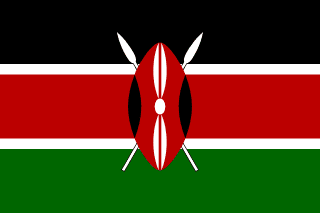
Kenya
The greatest middle- and long-distance running nation in history. From the highland trails of the Rift Valley to the Olympic podium, Kenya has redefined what is possible on the track and the road.
Kenya is the greatest middle- and long-distance running nation in history. Since Wilson Kiprugut’s 800m bronze at Tokyo 1964 and Kipchoge Keino’s 1,500m gold at Mexico City 1968, Rift Valley-bred champions — from marathon great Eliud Kipchoge to triple Olympic 1,500m champion Faith Kipyegon — have redefined endurance running on the track and the road.
The story starts with Wilson Kiprugut’s bronze at Tokyo 1964 and runs, so far, to Faith Kipyegon’s third consecutive Olympic 1,500m title in Paris 2024. Sixty years separate those two medals, and the Rift Valley highlands have supplied champions for every decade between them.
You can wear the same colours. Elite Athletics Clothes stocks authentic Kenya competition gear, the red, white and green worn at the world’s biggest championships.
- Federation
- Athletics Kenya, member of World Athletics
- Olympic debut
- Tokyo 1964 · Wilson Kiprugut wins 800m bronze
- First Olympic gold
- Mexico City 1968 · Kipchoge Keino, 1,500m
- Olympic athletics golds
- 38 from 1964 to 2024
- Men’s marathon world record
- 1:59:30 · Sabastian Sawe, London 2026
- Signature event
- 3,000m steeplechase: gold at every Games attended, 1968–2016
- Kit supplier
- Nike, since the 1990s (reported through 2028)
- Home of champions
- Iten, Rift Valley · 2,400m altitude
The Origins of Track and Field in Kenya
Kenya’s relationship with competitive running began long before independence. During the colonial era, British administrators introduced organised athletics to East Africa through missionary schools and military structures. The first Kenyan athletes to compete internationally did so under British colonial governance, representing British East Africa at regional inter-colonial events in the 1940s and early 1950s.
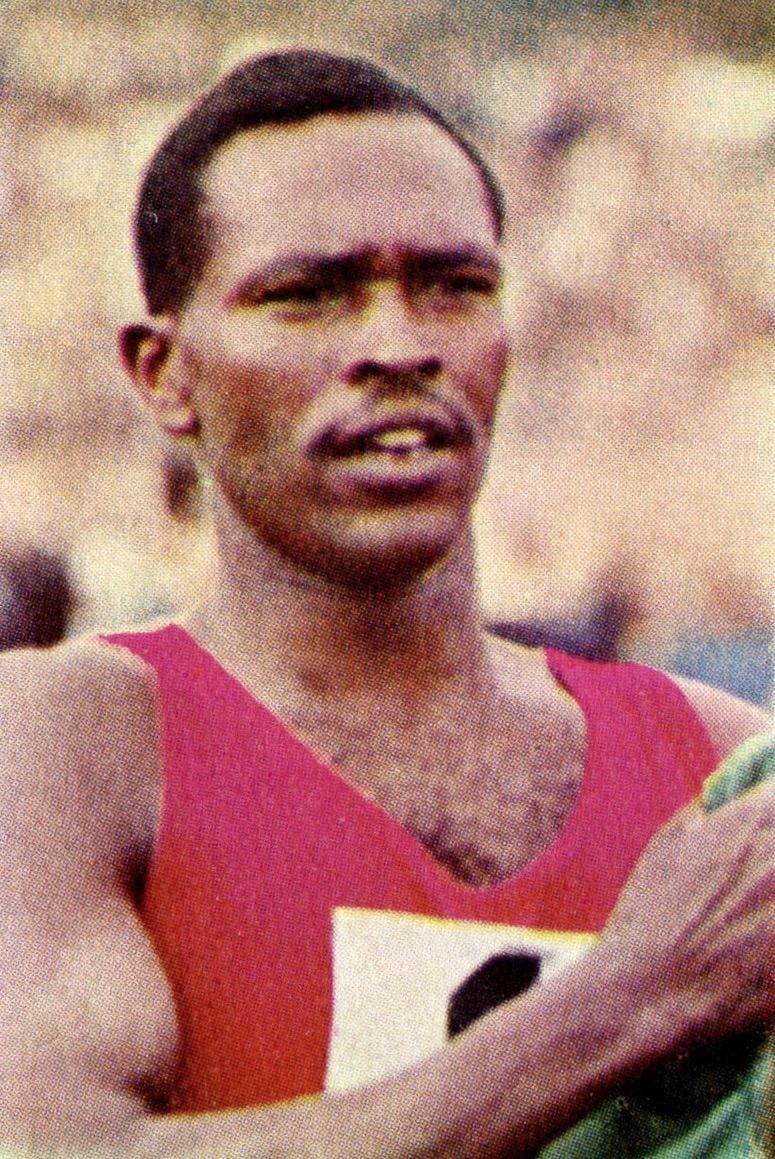

Kenya declared independence in December 1963, and with it came the birth of a national athletics identity. Athletics Kenya, the national governing body, was founded to coordinate the sport domestically and represent Kenya internationally through World Athletics, then the IAAF. The nation made its debut at the 1964 Tokyo Olympic Games — and it was there that everything changed.
At those Tokyo Games, Wilson Kiprugut became the first Kenyan to win an Olympic athletics medal, claiming bronze in the 800m. The following year, Kipchoge Keino emerged as the most recognisable face of Kenyan athletics, and one of the most important figures in the entire history of the sport. From that moment forward, Kenya would never look back.
Mexico City and the Birth of a Superpower
The 1968 Mexico City Games marked the moment Kenya announced itself as a genuine athletics superpower. Kipchoge Keino — running despite a gallbladder infection so severe that he collapsed during the 5,000m — made the legendary decision to jog the two miles to the Olympic stadium on the day of the 1,500m final rather than sit in a traffic jam. He then defeated the pre-race favourite Jim Ryun of the United States by the widest winning margin in the history of the Olympic 1,500m, taking gold in 3:34.91. Keino also won silver in the 5,000m.
Four years later at Munich 1972, Kenya continued its dominance. Keino won gold in the 3,000m steeplechase, an event he had never previously specialised in, while Ben Jipcho claimed silver in the same event and Mike Boit took bronze in the 800m. Boit added another 800m bronze at Montreal 1976, before Kenya boycotted the 1980 Moscow Games in protest at the Soviet invasion of Afghanistan.
Keino’s courage in Mexico City remains one of the most celebrated chapters in Olympic athletics history. He was the first Kenyan to become a true global athletics superstar, and the standard he set would define the ambition of every generation of Kenyan runners that followed.
Kenya’s Greatest Athletes
Kenya’s roll of honour reads like a history of endurance running itself. From the godfather of the movement to the record-breakers of the present day, these are the champions who carried the red, white, and green to the summit of the sport.
Kipchoge Keino
The godfather of Kenyan athletics. Won Olympic gold in the 1,500m (1968) and 3,000m steeplechase (1972), plus silver in the 5,000m (1968) and 1,500m (1972). The first Kenyan global superstar, later awarded the Olympic Order.
David Rudisha
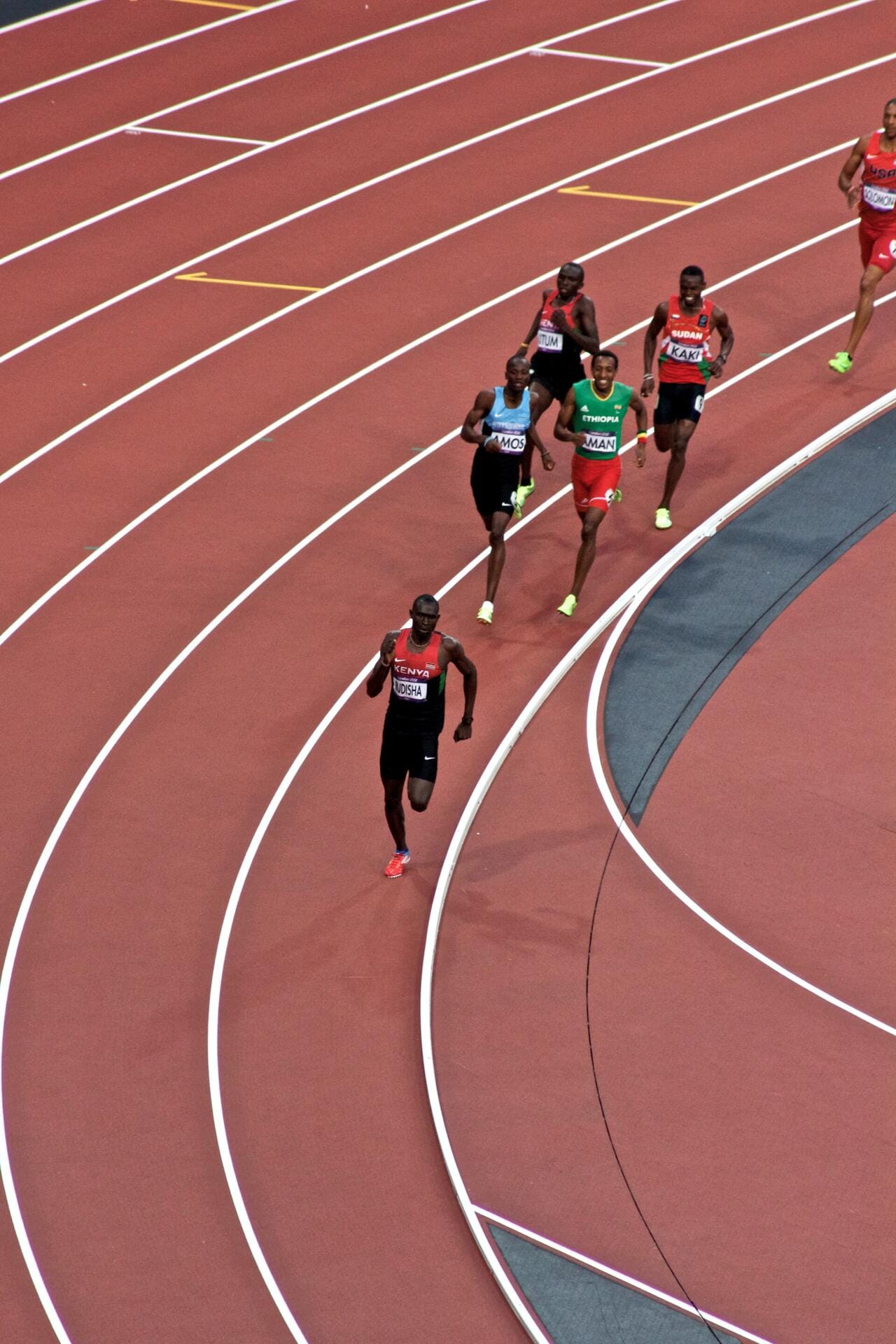
The fastest 800m runner in history. Set the world record of 1:40.91 at London 2012, having first broken the record with 1:41.01 in Rieti in 2010, and won back-to-back Olympic golds in 2012 and 2016, always from the front.
Eliud Kipchoge
Arguably the greatest distance runner in history. A two-time Olympic marathon champion (2016 and 2021), he set the world record twice — 2:01:39 in Berlin in 2018, then 2:01:09 in 2022 — and became the first human under two hours with 1:59:40 at the INEOS 1:59 Challenge in Vienna in 2019, an exhibition run outside record conditions.
Faith Kipyegon
The greatest women’s middle-distance runner of all time. Won Olympic 1,500m gold at Rio 2016, Tokyo 2021, and Paris 2024 — unprecedented in the event — and has set world records in the 1,500m, the mile, and the 5,000m, breaking three in the 2023 season alone.
Vivian Cheruiyot
A four-time World Championships gold medallist and London Marathon champion who dominated women’s long-distance running through the late 2000s and 2010s, claiming Olympic 5,000m gold at Rio 2016 after more than a decade at the elite level.
Ezekiel Kemboi
The most decorated men’s steeplechaser in history. Won four consecutive World Championship golds (2009, 2011, 2013, 2015) plus Olympic gold at Athens 2004 and London 2012, his flamboyant finish-line celebrations making him one of the sport’s most beloved figures.
Olympic Achievements
Kenya’s Olympic athletics record speaks plainly: since Wilson Kiprugut’s bronze at Tokyo 1964, the medals have kept arriving for six straight decades.
The gold ledger, decade by decade
Olympic athletics gold medals per decade, 1964–2024 · total 38. Kenya missed the 1976 and 1980 Games to boycotts; the 2020s count covers two Games so far. Source: Wikipedia Olympic medal tables (boxing excluded).
View the data · golds by decade
| Decade | Olympic athletics golds |
|---|---|
| 1960s | 3 |
| 1970s | 2 |
| 1980s | 5 |
| 1990s | 3 |
| 2000s | 9 |
| 2010s | 8 |
| 2020s (two Games) | 8 |
| Total | 38 |
The steeplechase streak
Gold chip = Olympic gold in the men’s 3,000m steeplechase · dashed = Games boycotted (1976, 1980) · dark = title lost. Kenya won the event at every Games it attended from 1968 to Rio 2016, nine in a row, before Morocco’s Soufiane El Bakkali ended the run. Source: World Athletics, Olympic records.
On its Olympic debut, Wilson Kiprugut won bronze in the 800m — the first Olympic athletics medal in Kenyan history.
Kipchoge Keino won 1,500m gold in 3:34.91, defeating favourite Jim Ryun by the widest margin in Olympic 1,500m history, and added 5,000m silver.
Keino took 3,000m steeplechase gold, Ben Jipcho steeplechase silver, and Mike Boit bronze in the 800m as Kenya’s dominance grew.
Julius Korir won the 3,000m steeplechase, Mike Musyoki earned 10,000m bronze, and the men’s 4x400m relay took silver.
Peter Rono produced one of the great Olympic upsets, winning 1,500m gold ahead of heavily favoured competitors.
David Rudisha won his second consecutive 800m gold; Vivian Cheruiyot took 5,000m gold and Eliud Kipchoge the marathon title.
Kipchoge defended his marathon title in intense heat, Faith Kipyegon won a second 1,500m gold, and Emmanuel Korir claimed the 800m.
Kipyegon won a third consecutive 1,500m gold — an unprecedented feat — while Beatrice Chebet completed the 5,000m and 10,000m double.
World Championship Achievements
Since the inaugural World Athletics Championships in Helsinki in 1983, Kenya has been among the most decorated nations in the history of the competition. Kenyan athletes have won gold in the 800m, 1,500m, 3,000m steeplechase, 5,000m, 10,000m, and the marathon, demonstrating a consistent excellence in middle-distance, long-distance, and steeplechase events that no other nation has matched over the long term. Asbel Kiprop won three World 1,500m titles, Ezekiel Kemboi four World steeplechase titles, Vivian Cheruiyot multiple World 5,000m and 10,000m titles, and David Rudisha the World 800m crown.
At the 2023 World Athletics Championships in Budapest, Faith Kipyegon broke the 1,500m world record in the final itself. She set world records in the mile and the 5,000m that same season. Three world records in one year, ten years into her career; no woman has run middle distance like that.
Marathon and Road Running Dominance
No nation in history has dominated marathon running the way Kenya has since the late 1980s. On the roads of Boston, London, Berlin, Chicago, New York, and Tokyo — the six Abbott World Marathon Majors — Kenyan athletes have set world records and won titles year after year. The tradition traces to Ibrahim Hussein, who won the Boston Marathon three times (1988, 1991, 1992) and the New York City Marathon in 1987, the first Kenyan to win a major city marathon. Paul Tergat then ran 2:04:55 in Berlin in 2003 to become the first man under 2:05, and Samuel Wanjiru won Olympic marathon gold in the Beijing 2008 heat.
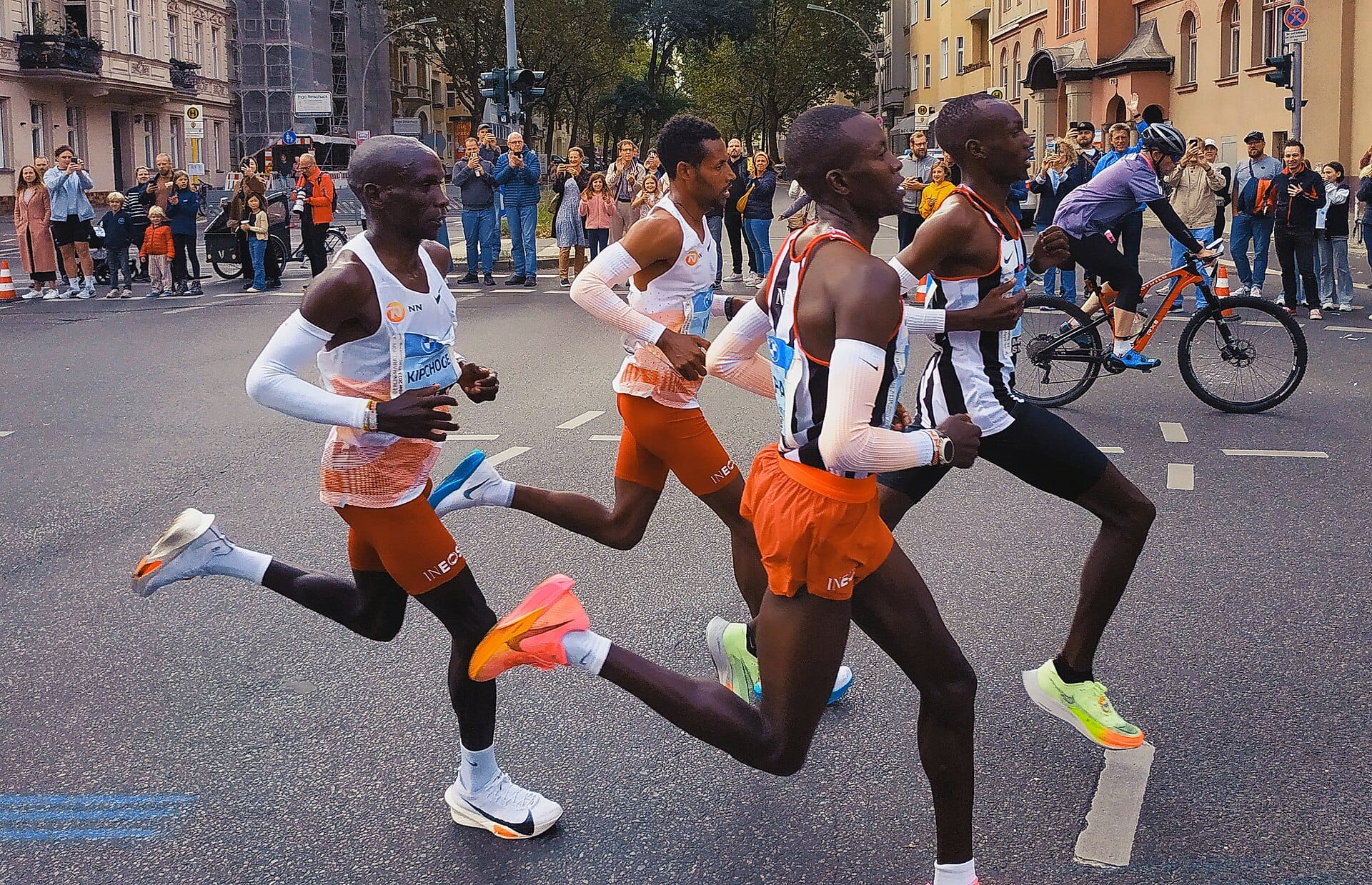
The last decade turned Kenya’s marathon story into a chase for two hours. Eliud Kipchoge lowered the world record to 2:01:39 in Berlin in 2018 and 2:01:09 in 2022, then ran 1:59:40 at the INEOS 1:59 exhibition in Vienna in 2019 — fast, but outside record rules. Kelvin Kiptum made it official, running 2:00:35 at the 2023 Chicago Marathon for a ratified record; he was 24 when he died in a car crash in February 2024, only months after the mark was approved. In April 2026 Sabastian Sawe finished the job, running 1:59:30 at the London Marathon to become the first athlete to break two hours in a record-eligible race.
The women’s marathon list runs just as deep. Catherine Ndereba, Tegla Loroupe, Mary Keitany, Brigid Kosgei and Ruth Chepngetich have all brought world records to Kenya. Kosgei took down Paula Radcliffe’s long-standing mark with 2:14:04 in Chicago 2019, and Chepngetich went further at Chicago 2024, running 2:09:56 to become the first woman under 2:10.
Kenya’s marathon champions compete in the bold red, white, and green of the national colours — the same authentic team kit available at Elite Athletics Clothes.
The Running Culture of Kenya
Athletics in Kenya is not simply a sport — it is a cultural institution, an economic pathway, and a source of deep national pride. To understand it you must first understand the Rift Valley, a stretch of highland terrain at altitudes between 1,500 and 2,400 metres. The towns of Eldoret, Iten, Kapsabet, and Nandi Hills have produced a disproportionate share of the world’s greatest distance runners. The physiological advantages of high-altitude training are well documented, but altitude alone does not explain Kenya’s dominance.
The Kalenjin people — including the Nandi, Kipsigis, Tugen, and other sub-groups native to the Rift Valley — carry a cultural identity inseparable from running. Children run to school, teenagers race for status, and young men who show promise are mentored by former champions. Iten, perched at over 2,400 metres, has become the spiritual capital of world distance running, its famous red-dirt trails drawing athletes from across the globe.
The training culture is structured and serious. Elite groups meet before dawn for long runs on the highland trails, then return for afternoon track sessions. Brother Colm O’Connell, the Irish missionary teacher at St Patrick’s High School in Iten, coached multiple Olympic champions; Patrick Sang’s Global Sports Communication camp has been home to Eliud Kipchoge. A handful of camps like these have produced many of the world’s best distance runners.
The Current State of Kenya Athletics
Kenyan athletics today is dominant on the road and track, and under real institutional strain off them. Faith Kipyegon keeps breaking world records, Eliud Kipchoge is still the most recognisable name in marathon running, and Beatrice Chebet became the world’s leading women’s distance track runner with her 5,000m and 10,000m double at the 2024 Paris Olympics. In April 2026 Sabastian Sawe ran the first ratified sub-two-hour marathon, 1:59:30 in London. The talent pipeline shows no sign of thinning.
Athletics Kenya has, however, faced serious governance challenges in recent years. The World Anti-Doping Agency and World Athletics have both raised concerns about doping violations involving Kenyan athletes, and the country was placed on the WADA Compliance Monitoring Programme after a significant number of athletes received bans for prohibited substances in the 2015–2023 period. Athletics Kenya, supported by the government, has since substantially upgraded its anti-doping infrastructure and testing protocols, though the issue remains sensitive and ongoing.
Future Stars and Emerging Talents
The next generation of Kenyan talent shows every sign of maintaining the nation’s dominant position in world distance running, with several names already marked as likely stars of the 2028 Los Angeles Olympics and beyond.
Beatrice Chebet
Born in 2000 and already established at the elite level after her Paris 2024 double gold and multiple world records, including in cross country.
Emmanuel Wanyonyi
Won 800m gold at Paris 2024 aged just 20, compared to David Rudisha in physique and style, and tipped to challenge Rudisha’s world record before the decade is out.
Kelvin Mutai
One of the young Rift Valley talents continuing to emerge through Kenya’s robust domestic athletics system toward the 2028 Los Angeles Olympics.
Nicholas Kipkorir
A rising Rift Valley runner developing through the training camps of Iten and Eldoret, part of the deep next generation of Kenyan distance talent.
Kenya Records & Historic Milestones
Shop Kenya Athletics Apparel
Elite Athletics Clothes carries authentic, athlete-issued Kenya team kit — the Nike Pro Elite pieces built for the national team and worn at the Olympic Games, the World Athletics Championships, and the Diamond League, not fan replicas. Supply is limited to what actually leaves the team channel, so the Kenya rail stays small and turns over fast. When a race-issued Kenyan piece surfaces, this is where it surfaces.
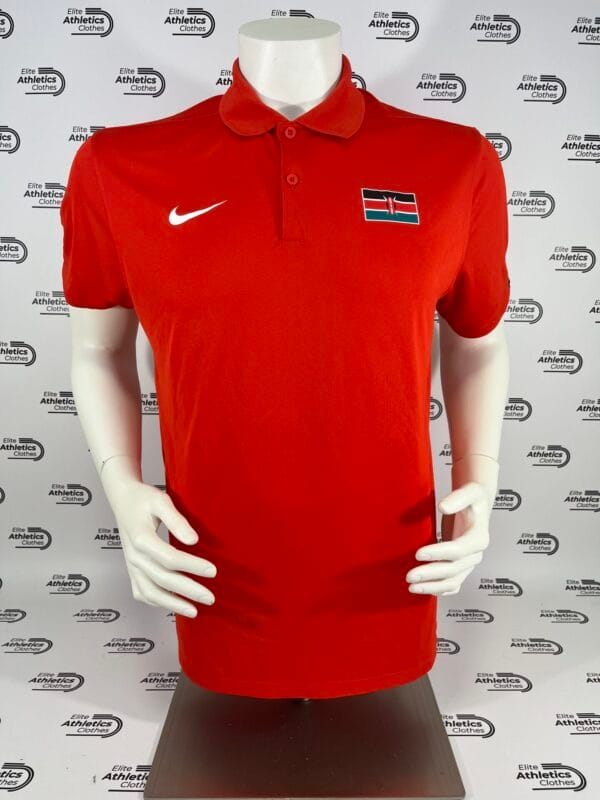 Nike Kenya Olympic Team Pro Elite 2024 Polo Shirt120,00 €View Piece →
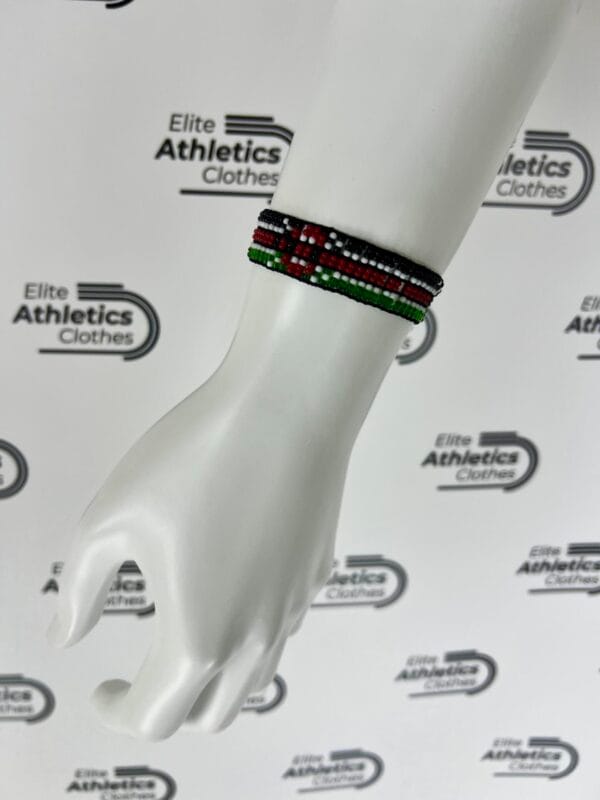 Elastic Kenya Running Bracelet – Handmade Kenyan Flag Beaded Bracelet50,00 €View Piece →
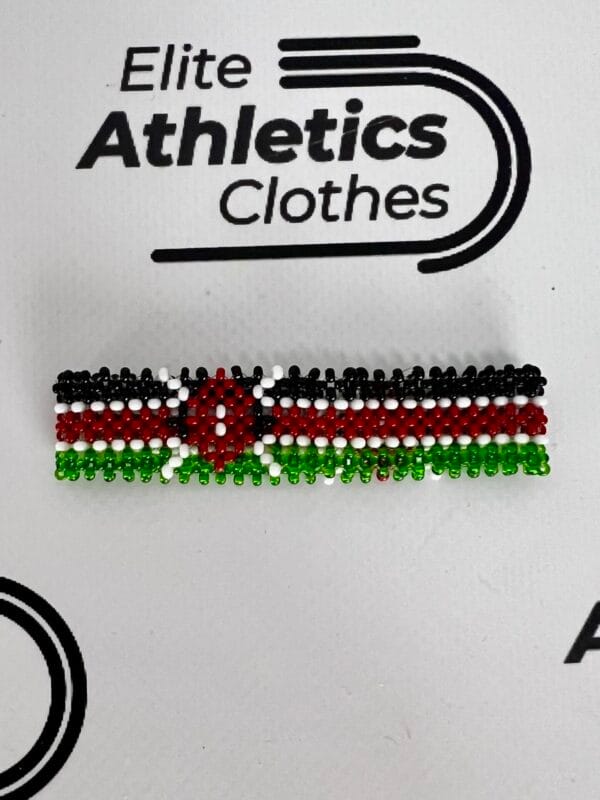 Handmade Kenya Running Bracelet – Kenyan Flag Beaded Bracelet30,00 €View Piece →
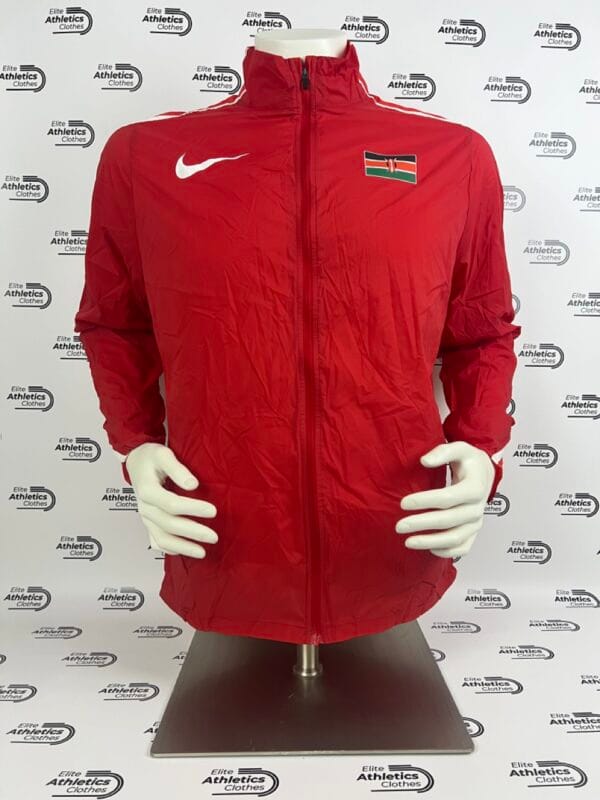 Nike Kenya Pro Elite 2019 Lightwear JacketSold out · check back soonView Piece →
Why is Kenya so dominant in long-distance running?
Kenya’s dominance results from several interacting factors: high-altitude training in the Rift Valley, which increases red blood cell production and oxygen efficiency; a cultural running tradition among the Kalenjin people; a deep infrastructure of training camps and experienced coaches; and strong economic motivation for talented young runners.
Who is the greatest Kenyan athlete of all time?
Eliud Kipchoge is most frequently cited, based on his two Olympic marathon golds, his years as marathon world-record holder, and his historic sub-two-hour run in Vienna in 2019. Faith Kipyegon, with three consecutive Olympic 1,500m titles and multiple world records, is also widely considered among the greatest.
When did Kenya first compete in Olympic athletics?
Kenya made its Olympic athletics debut at the 1964 Tokyo Games, where Wilson Kiprugut won 800m bronze — the country’s first Olympic athletics medal. Kenya’s first Olympic gold came at Mexico City 1968, won by Kipchoge Keino in the 1,500m.
What are Kenya’s national colours in athletics?
Kenya’s national athletics team competes in red, white, and green — the colours of the Kenyan flag. The Nike Kenya competition kits worn at the Olympic Games and World Championships feature these colours in bold, immediately recognisable designs.
What is Iten, and why is it famous for running?
Iten is a small highland town in western Kenya at approximately 2,400 metres in the Rift Valley. Known as the Home of Champions, it is regarded as the global capital of distance running, hosting a remarkable concentration of Olympic champions, world record holders, and World Championship medallists.
Where can I buy authentic Kenya athletics team apparel?
Elite Athletics Clothes stocks a dedicated selection of Kenya athletics apparel, including the Nike Kenya Olympic Team Pro Elite 2024 Polo Shirt and the handmade Kenyan-flag beaded bracelets — all 100% authentic competition-grade apparel. The athlete-issued Kenya rail is small and rotates as pieces come in.
Who makes Kenya’s athletics kit?
Nike has supplied Athletics Kenya since the 1990s, with the current deal reported to run through 2028. The relationship remains highly visible — Nike opened its first Kenyan store in 2026 with Eliud Kipchoge. Authenticated athlete-issued Kenya pieces surface at Elite Athletics Clothes when available.
Sources and References
- Wilson Kiprugut – Olympics.com athlete profile — Kenya’s first Olympic athletics medal, 800m bronze at Tokyo 1964.
- Kipchoge Keino – Wikipedia — 1968 Mexico City 1500m gold (3:34.91) over Jim Ryun, 5000m silver, and 1972 Munich steeplechase gold.
- Rudisha runs 1:40.91 world 800m record in London – World Athletics — David Rudisha’s 800m world record at the London 2012 Olympics.
- INEOS 1:59 Challenge – Wikipedia — Eliud Kipchoge’s sub-two-hour marathon (1:59:40) in Vienna, 12 October 2019, and its non-ratified status.
- Kipyegon claims historic third 1500m title in Paris – World Athletics — Faith Kipyegon’s third consecutive Olympic 1500m gold, Paris 2024.
- Kipyegon breaks world 1500m record with 3:49.11 in Florence – World Athletics — Kipyegon’s 1500m world record, Florence (not Monaco), 2 June 2023.
- Ezekiel Kemboi – Wikipedia — Four consecutive World steeplechase titles (2009-2015) and Olympic golds at Athens 2004 and London 2012.
- Two decades since Tergat became the first to go sub 2:05 – World Athletics — Paul Tergat’s 2:04:55 marathon world record, Berlin 2003.