

Latvia
A small Baltic nation of under two million that has long punched above its weight in athletics, with a deep tradition in the javelin and the throws.
Latvia’s athletics identity is built on the javelin: Inese Jaunzeme won Olympic gold at Melbourne 1956 and Jānis Lūsis — four-time European champion and twice a world-record setter — took gold at Mexico City 1968. First an Olympic nation in 1924, Latvia returned as an independent republic at Barcelona 1992 and has competed at every Games since.
Whether you are tracing the roots of a favourite discipline, following the Latvian national team, or searching for authentic crimson-and-white team kit, this guide covers the history, heroes, and heritage of athletics in Latvia. It is a story anchored by the javelin — the event that produced Olympic champions Jānis Lūsis and Inese Jaunzeme — and sustained by a throwing culture that has outlasted decades of political upheaval to thrive again in the modern era.
Every garment we stock is 100% authentic, athlete-issued Latvia team kit — the same crimson and white worn at the Olympic Games and World Championships. Explore the full collection at Elite Athletics Clothes.
- Federation
- Latvian Athletics Association (Latvijas Vieglatlētikas savienība), member of World Athletics
- Olympic athletics medals (own flag)
- 5: 0 gold · 4 silver · 1 bronze
- The signature
- All 5 own-flag medals are in two events — the 50km race walk (3) and the javelin (2); Latvia has never won an Olympic athletics gold under its own flag
- The golden age under another flag
- Four Latvian-born throwers won Olympic javelin gold for the USSR: Jaunzeme (1956), Ozoliņa (1960), Lūsis (1968), Kūla (1980)
- The greatest name
- Jānis Lūsis: Olympic gold (1968), silver (1972), bronze (1964) and a 93.80m world record — all for the Soviet Union; the IAAF named him the greatest javelin thrower in history (1987)
- The first medal
- Jānis Daliņš won Latvia’s first Olympic medal — 50km walk silver, Los Angeles 1932
- The javelin line
- Vadims Vasiļevskis (2004) and Ainārs Kovals (2008) took Olympic javelin silver; Vasiļevskis holds the national record 90.73m
- World Championships
- 3 medals in all of independent Latvia’s history — long jump 2011, Laura Ikauniece’s heptathlon bronze (2015) and Anete Sietiņa’s javelin silver (2025), the first in a decade
The Origins of Track and Field in Latvia
Organised athletics in Latvia goes back to the late nineteenth century, when the first sports clubs formed in Riga. Drawn in by the wider European sporting movement — shaped by the revival of the Olympic Games in Athens in 1896 — Latvian athletes took up track and field as a central part of physical culture.
The Latvian Athletics Federation (Latvijas Vieglatlētikas savienība) was founded in 1921, two years after Latvia declared independence from the Russian Empire. Latvia joined the international federation and sent athletes to the Olympics for the first time at the 1924 Paris Games — a landmark for the young nation.
During the interwar period from 1921 to 1940, Latvian athletics flourished. Riga hosted several Baltic athletics championships, cementing its reputation as a serious track and field nation. Athletes competed in sprints, middle-distance events, throws, and jumps, laying the technical and cultural foundations that would sustain the sport through decades of upheaval.
The Soviet Era: Latvian Athletes on the World Stage
The Soviet occupation of Latvia from 1940 through to 1991 dramatically altered — but did not extinguish — the country’s athletics tradition. Latvian athletes were absorbed into the Soviet athletics machine, one of the most formidable sporting programmes in history. Competing under the Soviet flag, many Latvian-born athletes reached the podium at the Olympic Games and World Championships, their achievements representing Latvia’s excellence even when the national identity was obscured.
Soviet-era Latvia contributed heavily in the disciplines it has always been strong in: javelin, shot put, discus, decathlon and middle-distance running. The centralised Soviet system gave athletes facilities, coaching and competition, and produced a generation of technically accomplished throwers and runners — though their Olympic golds were won for the Soviet Union, not Latvia.
When Latvia restored independence in 1991, it re-entered international athletics as a sovereign nation — immediately assembling a national team and re-establishing the Latvian Athletics Federation. The first post-Soviet Latvian athletes to compete internationally carried with them the weight of a nation’s identity and pride.
Latvia’s Greatest Athletes
Latvia may be a small country, but it has produced athletes of genuine global stature. The following names represent the very pinnacle of Latvian athletics achievement, from Olympic javelin champions to modern combined-events stars.
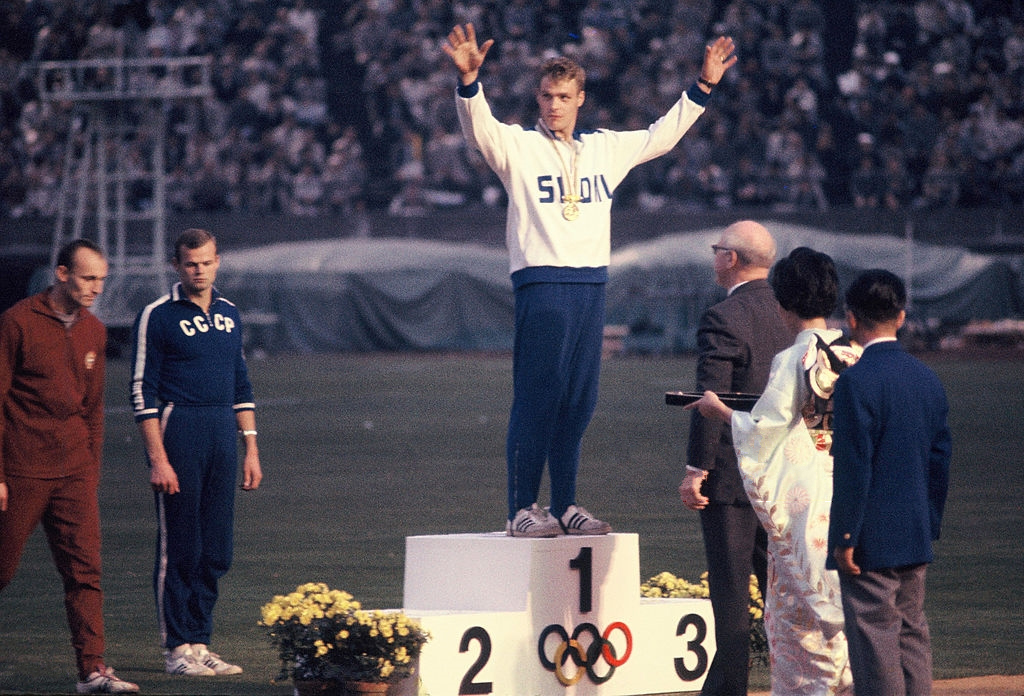
Jānis Lūsis
Born in Jelgava in 1939, the greatest javelin thrower in Latvian history: Olympic gold in Mexico City 1968, bronze in Tokyo 1964 and silver in Munich 1972, four European titles and two world records, with a best of 93.80 metres.
Inese Jaunzeme
Latvia’s first Olympic athletics champion, winning gold in the women’s javelin at the 1956 Melbourne Olympics. Her throw of 53.86 metres set an Olympic record and announced Latvia as a genuine power in women’s throwing events.
Aiga Grabuste
One of Latvia’s most celebrated modern combined-events athletes: 2007 European Junior heptathlon champion and 2012 European Championships heptathlon bronze medallist, she elevated the country’s profile in the multi-events across multiple major championships.
Pēteris Bolšakovs
One of the finest exponents of Latvia’s strong decathlon tradition. Competing across the late Soviet and early independence era, he embodied the all-round athleticism Latvian coaches prize, bringing recognition to the sport through the critical transition of the early 1990s.
Dmitrijs Milkevičs
The sprinter who brought Latvia into serious contention on the track. His performances in the 100m and 200m at European level showed Latvia could compete with the continent’s fastest, making him one of the most recognisable faces of Latvian sprint history.
Mārtiņš Štrobinders
A standard-bearer for Latvia’s throwing beyond the javelin. Competing at European and World level, he carried on the line of Latvian power athletes and the country’s reputation for technically gifted, physically strong field competitors.
Olympic Achievements
Latvia’s Olympic athletics story spans three distinct phases: the interwar period of independence from 1924 to 1936, the Soviet era from 1952 to 1988, and the modern era of restored sovereignty from 1992 to the present.
Four golds, all under the red flag
Latvia’s Olympic athletics medals, split by the flag they were won under. The gold was there — but it flew for the Soviet Union.
Independent Latvia’s five Olympic athletics medals are all silver or bronze, in the 50km race walk and the javelin. In 2025 Anete Sietiņa took World Championship javelin silver — still silver. The four Olympic golds were all won for the Soviet Union by Latvian-born throwers. Sources: Wikipedia (Latvia at the Olympics), Olympedia.
View the data
| Year | Athlete | Event | Medal | Flag |
|---|---|---|---|---|
| 1956 | Jaunzeme | Javelin | Gold | USSR |
| 1960 | Ozoliņa | Javelin | Gold | USSR |
| 1968 | Lūsis | Javelin | Gold | USSR |
| 1980 | Kūla | Javelin | Gold | USSR |
| 1932 | Daliņš | 50km walk | Silver | Latvia |
| 1936 | Bubenko | 50km walk | Bronze | Latvia |
| 2000 | Fadejevs | 50km walk | Silver | Latvia |
| 2004 | Vasiļevskis | Javelin | Silver | Latvia |
| 2008 | Kovals | Javelin | Silver | Latvia |
Latvia’s Olympic debut as an independent nation, with athletes competing in athletics and establishing the country’s presence in the global community.
Continuing the interwar tradition begun in 1924 and 1928, Latvian athletes competed in sprints, jumps, and throws, building the foundations for future success.
Inese Jaunzeme won gold in the women’s javelin with an Olympic-record 53.86 metres — Latvia’s first Olympic athletics champion, competing under the Soviet flag.
Jānis Lūsis opened his three-Games medal run with bronze in the men’s javelin — the first of the three colours he would collect.
Lūsis reached the summit, winning Olympic gold in the men’s javelin — the defining achievement of Latvian athletics history.
Lūsis completed his medal set with silver in the men’s javelin, a third consecutive Games on the podium at the peak of world competition.
Latvia returned to the Olympics as an independent nation, fielding a competitive athletics team particularly represented in throws, jumps, and distance running.
Latvia competed at every Summer Olympics through to Paris 2024, its crimson and white vest a familiar sight, with athletes regularly reaching finals in field events.
World Championship Achievements
Since the inaugural World Athletics Championships in Helsinki in 1983, Latvia has steadily built its presence on the world stage. The country’s field athletes have been particularly competitive, with javelin and discus throwers regularly advancing to finals in what is the most demanding athletics event on earth. Latvia’s athletes have also represented the country with distinction at the European Athletics Championships, where Baltic nations have historically performed above expectation, and at the European Indoor Championships, which have offered further podium opportunities in jumps and throws.
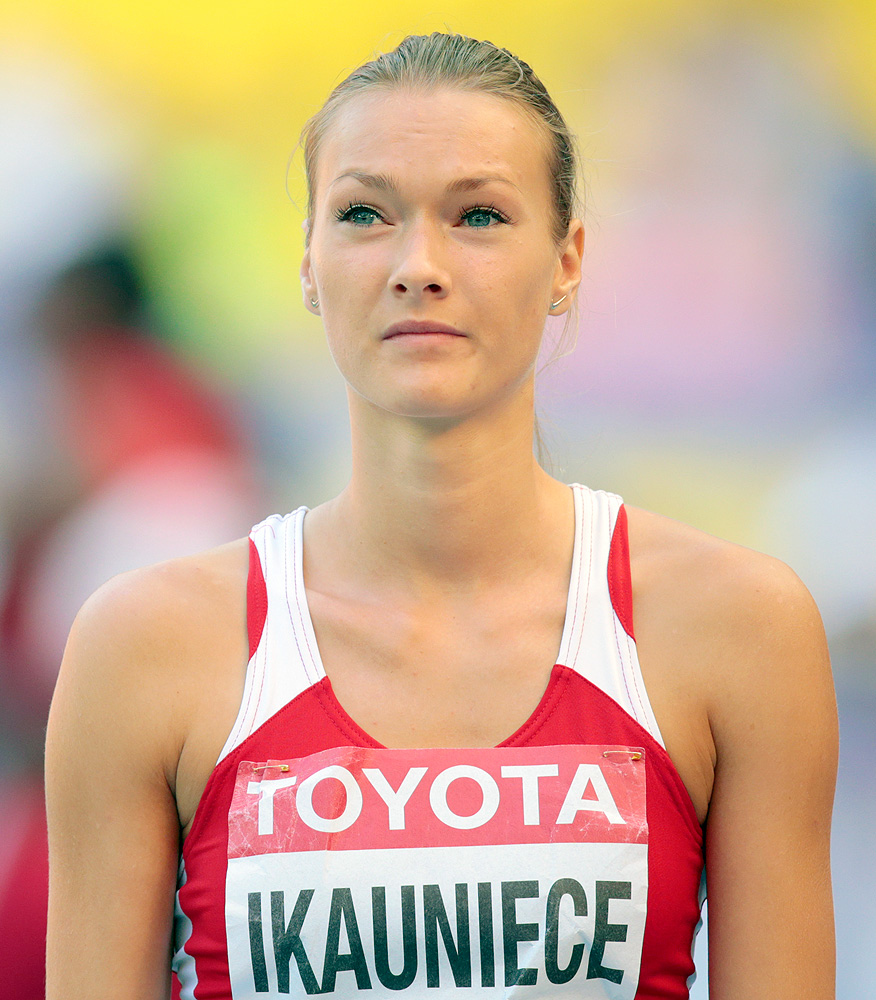
At the 2019 Doha and 2022 Eugene World Championships, Latvian athletes reached finals in several events, continuing a line that traces back to the golden age of Jānis Lūsis and Inese Jaunzeme. The maroon-and-white vest links today’s Latvian athletes to that heritage.
The Crimson and White: Latvia’s Throwing Tradition
If one discipline defines Latvian athletics, it is the javelin. The world-record performances of Jānis Lūsis in the 1960s established a standard that successive generations of Latvian throwers have aspired to match, while Inese Jaunzeme’s Melbourne Olympic record set the tone for female excellence in the event. This throwing culture extends beyond the javelin into the hammer, shot put, and discus, disciplines in which Latvian coaches have long prized technical mastery and raw power.
That remains the country’s strongest area. Field events still produce Latvia’s best results at continental level, and the throwing tradition is the through-line from the Soviet-era champions to today’s national team in the colours of the Latvian flag.
The crimson and white Latvia vest — the same design heritage carried by the Nike Latvia International Team 2024 Pro Elite kit — has become a familiar and respected sight on the world’s greatest athletics stage.
Running Culture and the Latvian Development System
Beyond elite competition, running has become one of Latvia’s most popular recreational activities. The Rimi Riga Marathon — held annually in May along a scenic course through the capital — is one of the Baltic region’s premier mass participation events, attracting tens of thousands of runners from Latvia and across Europe. Riga’s parks, riverside paths, and forest trails provide an inspiring backdrop for both elite training and recreational running.
Latvia’s running community is keen and growing, with clubs from Riga and Jūrmala to Daugavpils and Liepāja. The flat terrain and forests suit long-distance training, and Latvian runners take part in European road, trail and ultramarathon events.
Track and field clubs throughout Latvia feed talent into the national system, with youth athletics particularly well organised through the Latvian Schools Athletics programme. This pipeline has produced competitive athletes across multiple generations and ensures the country’s athletics traditions are passed on to the next generation of champions.
The Current State of Latvia Athletics
Contemporary Latvian athletics is in a period of genuine optimism. The Latvian Athletics Federation has implemented a structured development programme focused on youth talent identification, coaching education, and international competition exposure. Latvia competes at all major World Athletics and European Athletics events, and its athletes are consistently present in finals at European Indoor and Outdoor Championships. Field events remain the strongest traditional area, while the growth of Latvian distance running — fuelled by the marathon boom and improved coaching — is making the country increasingly competitive across the full spectrum of disciplines.
Latvia’s national team trains in purpose-built facilities at the Daugava Stadium in Riga and at regional centres across the country. Nike has been a long-standing kit supplier, providing the Pro Elite apparel athletes wear in competition. The country is also investing in the next generation through national athletics academies and by hosting international youth competitions such as the Riga International Athletics Meeting, which attracts young talent from across the Baltic region and beyond.
Future Stars and Emerging Talents
The future of Latvian athletics is bright. A new generation is emerging from the country’s youth programme with the ambition to follow in the footsteps of Jānis Lūsis and Inese Jaunzeme, several athletes under the age of 25 already ranking among the best in European age-group competition.
Emerging javelin & shot put throwers
In throws — historically Latvia’s strongest area — young javelin and shot put athletes are closing the gap on the European elite, carrying forward the tradition of Lūsis and Jaunzeme.
Next-generation jumpers
Latvian athletes in the jumps are developing the technical proficiency that will make them genuine contenders at major championships over the next Olympic cycle.
New-wave marathoners
Fuelled by the country’s marathon culture and running boom, a new generation of Latvian marathoners is pushing the national records to new heights.
Rising track distance runners
Improved coaching and a strengthening distance tradition are producing track runners who are making Latvia increasingly competitive across the full spectrum of events.
Latvia Records & Historic Milestones
Shop Latvia Athletics Apparel
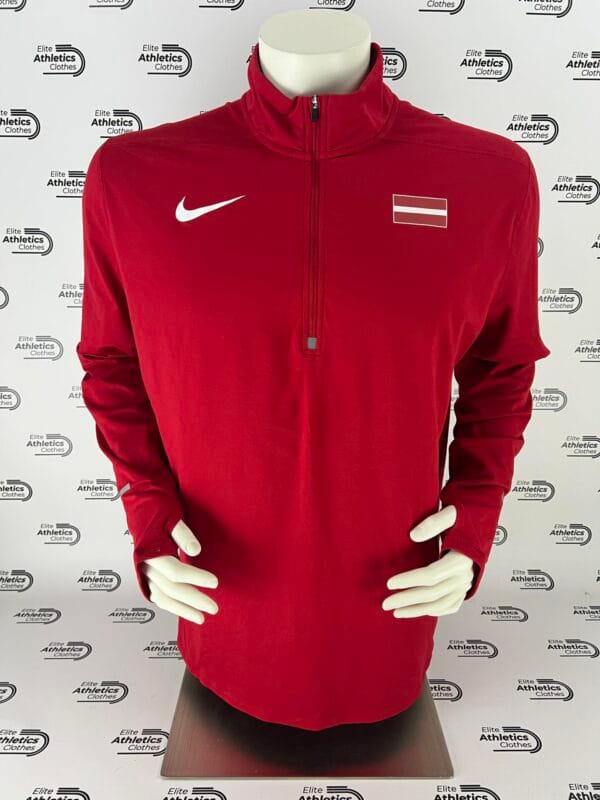
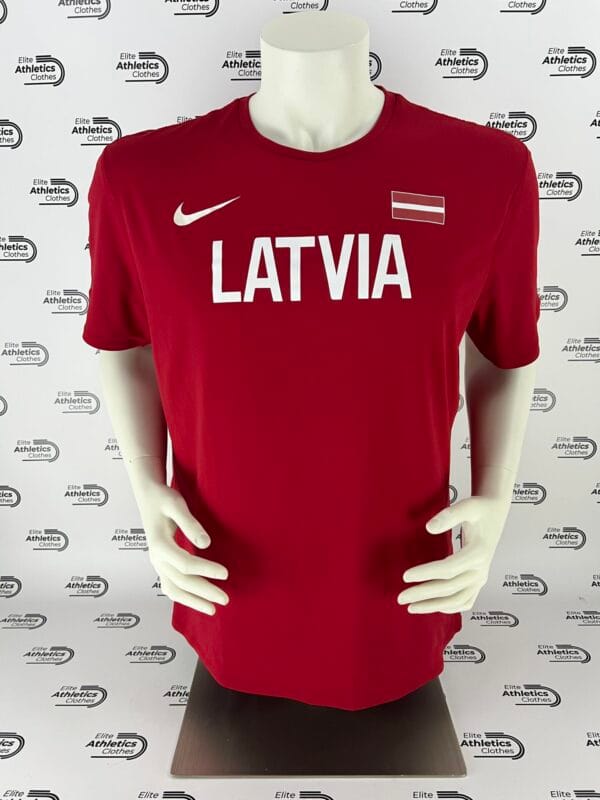
Represent the crimson and white of the Latvian national team with 100% authentic, athlete-issued Nike Pro Elite kit — the same garments worn at the Olympic Games, World Championships, and European Championships. Every item is genuine and directly sourced.
Who is the greatest athletics athlete in Latvia’s history?
Jānis Lūsis is widely regarded as the greatest Latvian athletics athlete of all time. The javelin thrower won Olympic gold at Mexico City 1968, bronze at Tokyo 1964, and silver at Munich 1972. He was European Champion four times and set two world records. Inese Jaunzeme, the 1956 Melbourne javelin champion, ranks alongside him.
Has Latvia ever won an Olympic athletics gold medal?
Yes. Under the Soviet flag, Latvian-born athletes won Olympic athletics gold. Most notably, Inese Jaunzeme won the women’s javelin at Melbourne 1956 and Jānis Lūsis won the men’s javelin at Mexico City 1968. Since restoring independence in 1991, Latvia has competed as a sovereign nation and produced top-eight finishes in field events.
What is Latvia’s strongest athletics discipline?
Latvia has traditionally excelled in throwing events, particularly the javelin and hammer. The country has also produced competitive decathletes, jumpers, and distance runners. The javelin is most historically associated with Latvian excellence, due to the achievements of Jānis Lūsis and Inese Jaunzeme.
What is the biggest running event in Latvia?
The Rimi Riga Marathon is the largest running event in Latvia and one of the premier mass participation road races in the Baltic region. Held annually in May, it attracts tens of thousands of runners from Latvia and across Europe along a scenic course through the historic streets of Riga.
What colour is the Latvia athletics team kit?
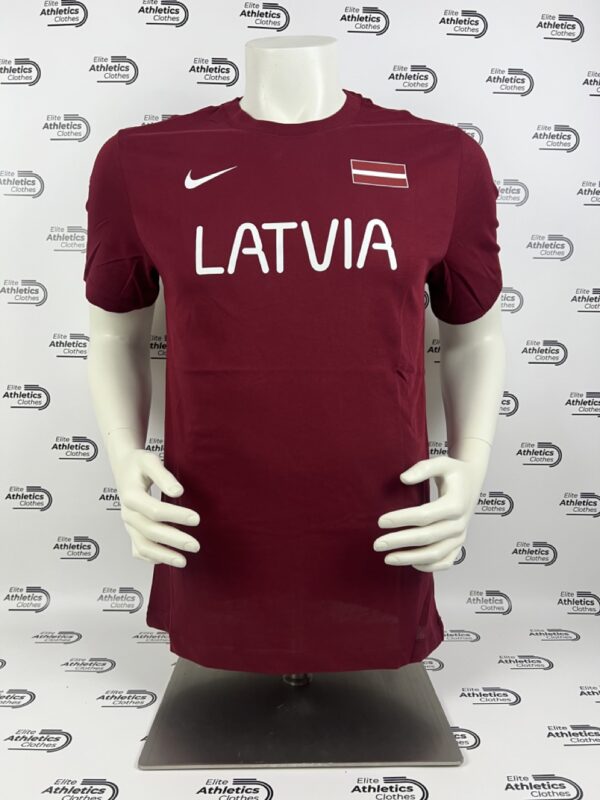
Latvia’s national team wears crimson and white — the colours of the national flag. The Nike Pro Elite kits at Elite Athletics Clothes carry those colours, with “LATVIA” across the chest.
How many times has Latvia competed at the Olympic Games in athletics?
Latvia first competed at the Olympics in 1924 (Paris) as an independent nation. After the Soviet occupation ended and independence was restored, Latvia returned at Barcelona 1992 and has competed at every Summer Olympics since, including Paris 2024 — a connection to the Olympic Games in athletics spanning a full century.
Who makes Latvia’s athletics kit?
Nike has supplied the Latvian Athletics Association’s competition kit since a 2016 deal that dressed the national team in Nike AeroSwift, and Nike remains listed as an official supporter of the federation. Authenticated athlete-issued Latvia pieces surface at Elite Athletics Clothes when available.
Sources and References
- Jānis Lūsis — Wikipedia — biography, birth (Jelgava, 1939), Olympic medals (bronze 1964, gold 1968, silver 1972), four European titles and world records.
- 1968 Olympic javelin champion Lusis dies — World Athletics — confirms medal colours, two world records (91.98 m, 93.80 m) and best throw of 93.80 m.
- Four-time European javelin champion Lusis dies — European Athletics — confirms his four European Championship titles (1962, 1966, 1969, 1971).
- Inese Jaunzeme — Wikipedia — correct name of the 1956 Melbourne javelin champion (Inese, not Ingrīda), winning throw of 53.86 m and Olympic record.
- Latvian Athletics Association — Wikipedia — federation founded 24 April 1921; admitted to the IAAF in 1923.
- Latvia at the 1924 Summer Olympics — Wikipedia — Latvia’s Olympic debut as an independent nation at Paris 1924, including athletics.
- Aiga Grabuste — World Athletics profile — shows she is a heptathlete/combined-events athlete, not a distance runner.
- Riga Marathon — Wikipedia — the Rimi Riga Marathon as the largest, most international running event in the Baltics, held annually in May.