
Russia
Eighteen Olympic golds in five Games, the most famous record in the pole vault — and, since 2015, an absence: first a doping suspension, now an exclusion over Ukraine, reaffirmed in July 2026. Both halves of the story, told straight.
Russia’s athletics history splits in two. Between 1996 and 2012 the country won 18 Olympic golds and built the third-best World Championships record of any nation — and since November 2015 it has not competed at a single global championship under its own flag: first because of a doping suspension lifted in 2023, now because of an exclusion over the invasion of Ukraine that World Athletics reaffirmed in July 2026.
Both halves are told here with the numbers checked: the golds that survived the retest era, the world records that still stand, the walkers whose titles were annulled, the champions who competed without a flag — and exactly where the sport sits in July 2026, with a CAS appeal pending and a generation racing only inside Russia. This is the complete history of athletics in Russia.
Race-issued kit from the world’s pro elite programmes lives on at Elite Athletics Clothes — authentic, athlete-issued pieces, never replicas. Russian team kit is close to unobtainable outside team channels; the Pro Elite archive is where verified pieces surface.
- Federation
- RusAF — reinstated by World Athletics in March 2023 after a 7-year doping suspension; excluded from international competition since March 2022 over the invasion of Ukraine
- Olympic athletics golds
- 18 (1996–2012) · total medals 56–58 depending on source · best Games: Athens 2004, six golds
- USSR context (separate team)
- The Soviet Union won 64 golds / 193 medals in athletics, 1952–1988 — counted apart throughout this article
- World Championships
- 3rd all-time (~140–150 medals) · last appearance under its flag: Beijing 2015
- The record
- Pole vault: 5.06 m, Yelena Isinbayeva, Zürich, 28 August 2009 — still the world record; one of her 28
- Soviet-era records standing
- 4×400 m 3:15.17 ('88) · shot 22.63 ('87) · long jump 7.52 ('88) · hammer 86.74, Sedykh ('86), the oldest men’s outdoor record
- The ban
- Suspended 13 November 2015 over institutional doping; 48 Olympic medals stripped across all sports — the most of any nation
- Kit supplier
- ZASPORT since 2017 (Bosco Sport before) · Tokyo ROC kit: flag colours, no flag · neutral-era kit deliberately unmarked
The Origins: USSR, Unified Team, Russia
Any honest count of Russian athletics starts by separating three teams that are often blurred into one. From Helsinki 1952 to Seoul 1988 the Soviet Union competed as a single squad drawn from fifteen republics, and its athletics haul — 64 Olympic golds and 193 medals — belongs to that team, not to Russia. In 1992, months after the USSR dissolved, the former republics entered Barcelona together one last time as the Unified Team, under the Olympic flag.
Russia as an independent athletics nation dates from Atlanta 1996. Every figure counted as “Russia” in this article — the 18 Olympic golds, the World Championships medals — starts there. The Soviet inheritance still matters: the coaching schools, the event traditions in the jumps, throws and walks, and a set of Soviet-era world records that remain unbroken four decades on, from Natalya Lisovskaya’s shot put to the Seoul 4×400 m.
The Soviet run had its own gaps — the USSR skipped Los Angeles 1984 after the Western boycott of Moscow 1980 — so clean cross-era comparison is impossible. This article keeps the eras apart and says so whenever a mark dates to the Soviet years.
Atlanta to Athens: The First Golden Decade
Independent Russia announced itself in Atlanta with three golds, all won by women. Svetlana Masterkova took the 800 m and the 1500 m, front-running both finals, and Yelena Nikolayeva won the 10 km walk. Weeks later Masterkova set world records for the mile (4:12.56) and the 1000 m (2:28.98). The mile mark lasted until Sifan Hassan in 2019 — Faith Kipyegon has since taken it to 4:06.42 — but the 1000 m record still belongs to Masterkova in 2026.
Sydney 2000 added three more: Sergey Klyugin and Yelena Yelesina swept both high jumps, and Irina Privalova — until then a pure sprinter — won the 400 m hurdles at 31, in roughly her seventh serious race over the barriers.
Athens 2004 was the peak: six athletics golds, independent Russia’s best Games on the track. Yuriy Borzakovskiy won the men’s 800 m with his surge off the final bend; Yelena Isinbayeva won her first Olympic pole vault title; Tatyana Lebedeva took the long jump; Yelena Slesarenko the high jump; Natalya Sadova the discus; Olga Kuzenkova the hammer. A seventh, Irina Korzhanenko’s shot put, was stripped within days for stanozolol — an early flag for what the next decade would bring — and is not counted anywhere in this article.
Russia’s Greatest Athletes
Six careers carry the story of Russian athletics at its best: the greatest pole vaulter of any era, the most decorated high jumper in world-championship history, a double Olympic middle-distance champion, a sprinter who reinvented herself over barriers, the 800 m runner who became the federation’s sporting head — and the hurdler whose 2015 gold turned out to be the last one under the flag.
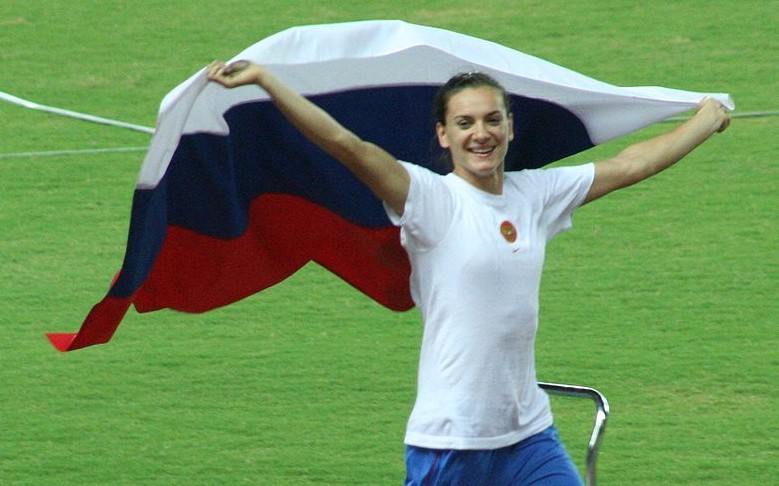
Yelena Isinbayeva
Two Olympic titles (2004, 2008), three world titles and 28 world records — 17 outdoor, 11 indoor. First woman over five metres in 2005; her 5.06 m from Zürich in '09 is still the world record in 2026. She never failed a doping test, retired in 2016 and has sat on the IOC Athletes’ Commission since.
Golds intact · IOC memberMariya Lasitskene
The only high jumper, male or female, with three world titles: Beijing 2015 for Russia, then London 2017 and Doha 2019 without a flag. In Tokyo in 2021 she won Olympic gold as ROC — the neutral era’s single Russian athletics gold. Never implicated in any case; last competed in August 2024.
Clean · in limbo since 2024Svetlana Masterkova
Won the 800 m and 1500 m double in Atlanta in '96, front-running both, at independent Russia’s first Games. Weeks later she set world records for the mile and the 1000 m — and the 1000 m mark, 2:28.98, is still the world record thirty years on.
1000 m world record still standsIrina Privalova
A world-class 60, 100 and 200 m sprinter through the 1990s who moved up to the 400 m hurdles at 31 — and won Olympic gold in Sydney in roughly her seventh serious race over the barriers. One of the sport’s strangest and most successful reinventions.
Retired · sports official in RussiaYuriy Borzakovskiy
His trademark last-lap surge in Athens in 2004 won Russia its first men’s Olympic 800 m title. After retiring in 2016 he coached the national team through the ban years (2015–2021) and is now sports director of RusAF, the federation he once ran for.
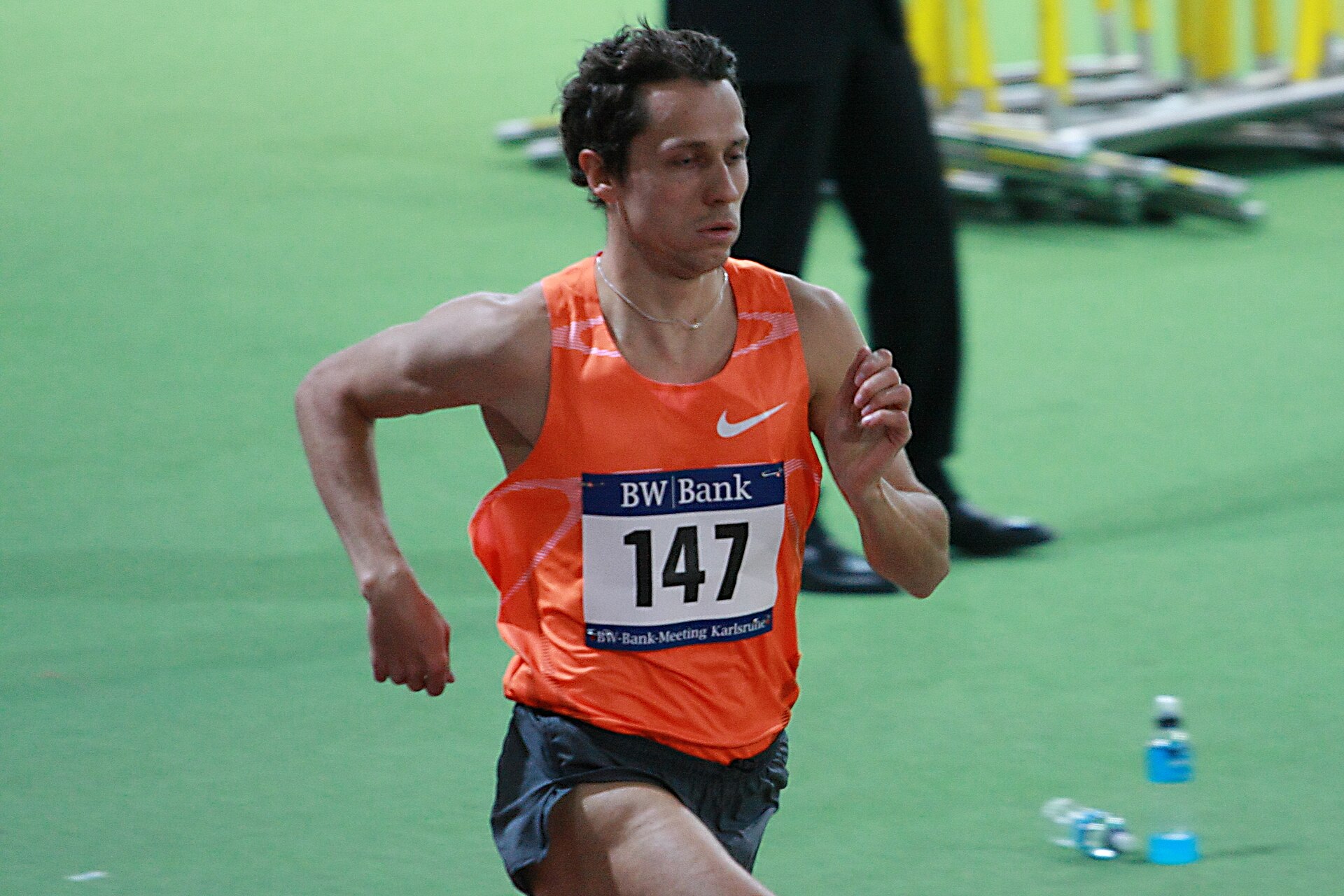
RusAF sports directorSergey Shubenkov
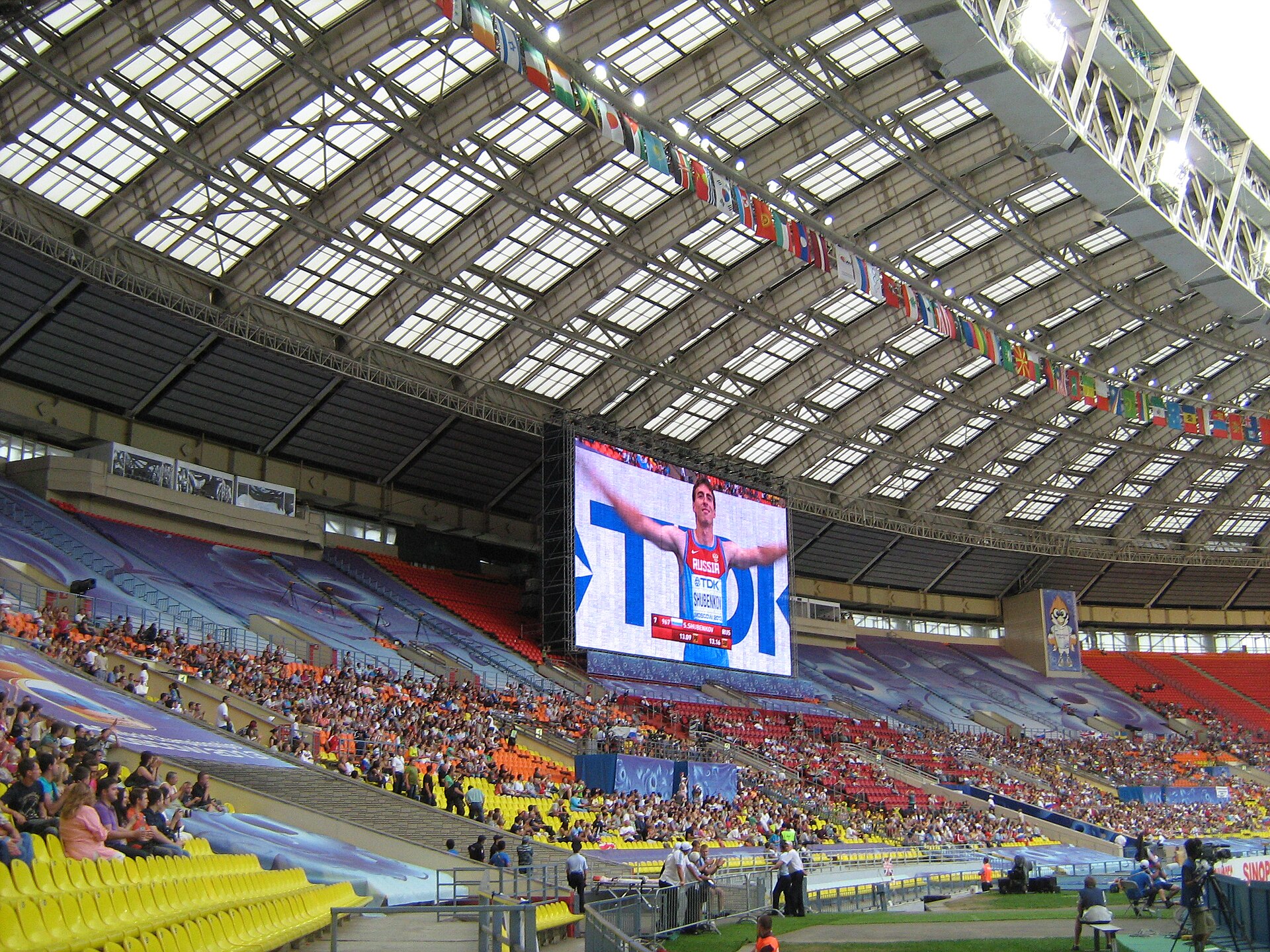
World champion in Beijing in 2015 — the last world title Russia has won under its own flag — and twice world silver medallist as a neutral (2017, 2019). Still racing domestically in 2025, with no international route open to him.
Active · domestic onlyThe status lines matter more in this country’s story than in most. Every athlete above kept their titles through the retest era — but even this list carries its scars. Tatyana Lebedeva, the 2004 Olympic long jump champion and a three-time world champion, lost both of her Beijing 2008 silvers to turinabol retests in 2017, though her Athens gold and world titles stand. Anna Chicherova kept her London 2012 high jump gold and lost her Beijing 2008 bronze the same way. The stripped champions of London and Saransk are told below, in the sections where they belong.
Olympic Achievements
Competing as an independent nation, Russia won 18 Olympic athletics gold medals, all between Atlanta 1996 and London 2012. The full medal count sits between 56 and 58 depending on the source — Olympedia counts 56, Wikipedia’s by-sport table 58 — a spread that exists because the IOC is still reallocating medals from the retest programmes. The golds figure is solid in both; the totals move.
London 2012 shows why. Russia originally won eight athletics golds there; seven were annulled — Savinova’s 800 m, Zaripova’s steeplechase, Antyukh’s 400 m hurdles, Ukhov’s high jump, Lysenko’s hammer, Lashmanova’s 20 km walk and Kirdyapkin’s 50 km walk — leaving Anna Chicherova’s high jump as the single retained title. Across all sports and all Games, Russia has been stripped of 48 Olympic medals, more than any other nation.
Split the 18 surviving golds by sex and the shape of Russian athletics appears at once: fourteen were won by women, four by men. Women won everything at Atlanta, five of six at Athens, and the last gold of all — Chicherova in London. The chart reads outward from the centre, men to the left, women to the right — and from 2016 it goes quiet.
Eighteen golds, then the band goes quiet
Russia’s 18 retained Olympic athletics golds (1996–2012), mirrored around the Games year — men left, women right. Fourteen of the eighteen were won by women. The hatched band is everything since: a doping suspension, a ten-athlete neutral quota, an exclusion. Hover or tab onto a bar for the champions. Source: Wikipedia per-Games pages, Olympedia.
View the data
| Games | Men | Women | Champions |
|---|---|---|---|
| Atlanta 1996 | 0 | 3 | Masterkova (800 m, 1500 m), Nikolayeva (10 km walk) |
| Sydney 2000 | 1 | 2 | Klyugin (HJ); Privalova (400 mH), Yelesina (HJ) |
| Athens 2004 | 1 | 5 | Borzakovskiy (800 m); Isinbayeva (PV), Lebedeva (LJ), Slesarenko (HJ), Sadova (DT), Kuzenkova (HT) |
| Beijing 2008 | 2 | 3 | Silnov (HJ), Borchin (20 km walk); Isinbayeva (PV), Galkina (SC), Kaniskina (20 km walk) |
| London 2012 | 0 | 1 | Chicherova (HJ) — seven other London golds were later stripped |
| Rio 2016 – Paris 2024 | 0 | 0 | Suspension, ROC quota (Lasitskene gold to ROC), exclusion |
World Championship Achievements
Russia ranks third all-time in World Championships athletics medals, behind only the USA and Kenya — a position it holds despite not competing since 2015. How many medals exactly depends on where you look: Wikipedia’s country page counts 153 (47 gold), the championships’ own all-time table 142 (42 gold), the difference being stripped and reallocated medals absorbed at different speeds. Somewhere between 140 and 150 is honest; third place is not in dispute.
The peaks came early in the 2000s: Russia topped the placings at Edmonton 2001 with 18 medals and took 19 in Paris in 2003. Isinbayeva won world titles in 2005, 2007 and 2013; Lebedeva took three across long and triple jump; Yuliya Pechonkina won the 2005 400 m hurdles two years after a world record (52.34, since broken by Sydney McLaughlin-Levrone); Tatyana Tomashova took the 1500 m in 2003 and 2005; Olimpiada Ivanova the 20 km walk in 2001 and 2005.
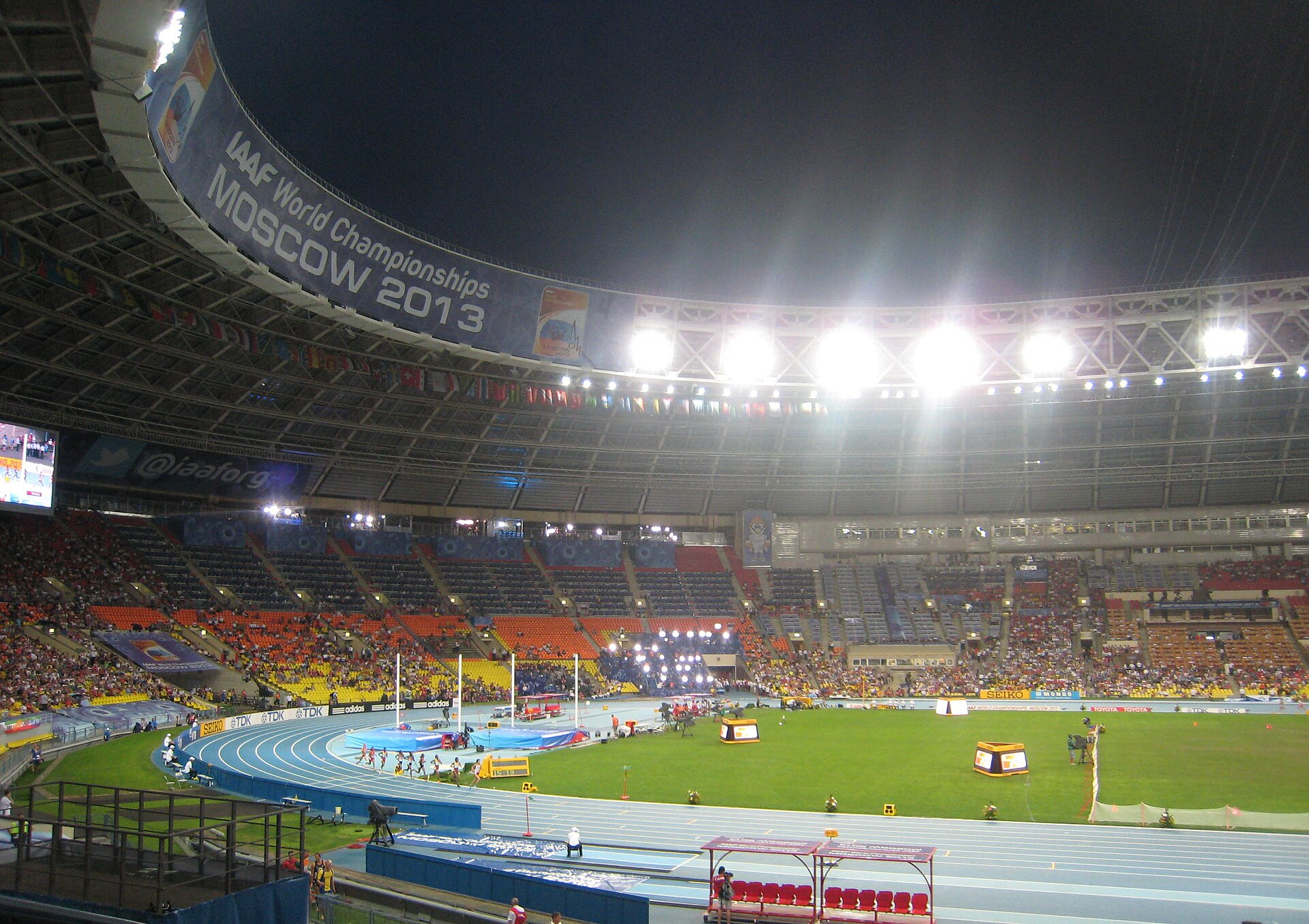
Moscow 2013, the home Worlds at Luzhniki, gave Isinbayeva her third title in front of her own crowd — and was later gutted in the record books as disqualifications removed one home result after another. Two years on, at Beijing 2015, Sergey Shubenkov won the 110 m hurdles and Mariya Kuchina — later Lasitskene — the high jump. Nobody knew it then, but those were the last medals Russia would win at a global championship under its own flag.
Race Walking and the Saransk School
No discipline says more about Russian athletics culture — its depth and its collapse — than race walking. The Olympic Training Centre of Mordovia in Saransk, run by coach Viktor Chegin, made one provincial city the centre of world walking. At the 2009 World Championships its athletes swept the walks: Olga Kaniskina, Valeriy Borchin and Sergey Kirdyapkin all won gold, and the school kept winning for a decade.
It ended in the anti-doping files. More than twenty Chegin-trained walkers were sanctioned for doping between 2005 and 2015, and on 17 February 2016 Chegin was banned from all sport for life, a decision upheld by the Court of Arbitration for Sport. Kaniskina, Borchin and Kirdyapkin all served bans with results annulled — Kaniskina lost her 2011 world title and London silver but kept her Beijing 2008 gold and 2007 title; Kirdyapkin lost his London 2012 50 km gold outright.
Elena Lashmanova’s case ran longest: the London 2012 20 km champion served an EPO ban in 2014, was stripped of that London gold and her 2013 world title in 2022, and the Olympic medal was re-awarded to China’s Qieyang Shenjie at a ceremony in Hangzhou in October 2023 — eleven years after the race. None of the annulled results above are credited anywhere in this article.
The Ban Era: 2015 to Today
On 13 November 2015, after WADA’s Independent Commission exposed state-linked systematic doping, the IAAF suspended the Russian athletics federation. The 2016 McLaren Report then documented institutional sample-swapping across Russian sport. Rio 2016 went ahead without the Russian team; a single athlete, long jumper Darya Klishina, was cleared to compete, and won no medal.
From 2017, individually vetted Russians competed as Authorised Neutral Athletes, in plain kit without national colours or emblems. The neutral years produced real champions: Lasitskene won the 2017 and 2019 world high jump titles, Anzhelika Sidorova the 2019 pole vault, and Shubenkov took 110 m hurdles silver at both championships. At Tokyo in 2021, under a ten-athlete World Athletics quota, Russians competed as ROC — and on 7 August Lasitskene won the high jump, the neutral era’s only Russian athletics gold, credited to ROC in the official tables.
On 23 March 2023 the World Athletics Council lifted the doping suspension after seven years, subject to 35 conditions — and, in the same decision, kept every Russian excluded because of the invasion of Ukraine. Athletics is the hard-line outlier here: the neutral-athlete route that other Olympic sports kept open (as “AIN”) does not exist in athletics, where the ANA programme ended with the war. The exclusion has been revisited and kept in force repeatedly — most recently at the Council meeting of 1–2 July 2026, which discussed a possible conditional pathway back and changed nothing. Days later RusAF filed an appeal at the Court of Arbitration for Sport to overturn the ban. It is pending, with no ruling yet.
The Current State of Russian Athletics
The current state is quickly told: no Russian athlete competed in athletics at Paris 2024, and none at the Tokyo 2025 World Championships — Sebastian Coe reconfirmed the exclusion as those championships opened. Some Russians appeared at Paris as neutrals in other sports; athletics allowed none. Since Tokyo 2021, Russian athletics has existed only inside Russia: national championships, domestic meetings, and a federation run in part by former athletes — Borzakovskiy, the Athens 800 m champion, is RusAF’s sports director.
The kit tells the same story in fabric. Bosco Sport dressed Russian Olympic delegations through the 2000s and up to Rio 2016; since 2017 the outfitter has been ZASPORT, whose Tokyo ROC kit used the flag’s red, white and blue without a flag or emblem anywhere on it. In between sit the neutral years, when Russian athletes competed in deliberately plain, unmarked uniforms — kit designed to say nothing at all.
For collectors that makes race-issued Russian pieces close to unobtainable: team kit has barely left team channels since 2015, and the neutral-era uniforms were unbranded by design. Authentic athlete-issued pieces from other national programmes surface continuously in the Pro Elite archive — and that is where a verified Russian piece would appear if one arrived.
Athletes in Limbo
The human cost of the exclusion is easiest to see in individual careers. No Russian athlete has competed at an Olympics or World Championships in any form since Tokyo 2021, and for the athletes who were at their peak that year, the wait has now outlasted a full Olympic cycle.
Mariya Lasitskene
Said in May 2025 that she cannot find the motivation and does not know when — or if — she will return. She skipped the 2025 Russian championships and has not competed since August 2024, but has never announced retirement. At 33, the reigning Olympic champion of 2021 is neither active nor retired.
Sergey Shubenkov
The 2015 world champion keeps racing inside Russia — he won the 110 m hurdles at a Moscow meeting in 2025 and appears in World Athletics’ 2025 lists — without having run an international race since 2021.
Anzhelika Sidorova
The 2019 world champion (won as a neutral) and Tokyo silver medallist cleared 5.01 m indoors in 2021 — then retired in 2023, at 32, with the exclusion still in force. Hers is the career the ban years closed early.
The older generation has scattered into administration and exile of different kinds: Privalova and Lebedeva into Russian sports politics, Borzakovskiy into the federation, and Isinbayeva — cleared by an IOC ethics review in 2023 over her honorary army rank — onto the IOC Athletes’ Commission, reportedly living in Tenerife and criticised inside Russia for keeping her distance. For anyone who came of age in Russian athletics after 2021, international competition is something they have never experienced.
Russia Records & Historic Milestones
The record book is where Russian and Soviet athletics still competes every week, unbeaten. One current world record from independent Russia’s greatest athlete, another from its first champion — and four Soviet-era marks, labelled as such, that predate the country itself.
Three more milestones frame the era. Gulnara Galkina won the first Olympic women’s steeplechase ever held, Beijing 2008, in a world record 8:58.81 — the first woman under nine minutes, in the final itself. Isinbayeva’s 28 world records made the women’s pole vault the most-watched field event of its decade. And Beijing 2015 — Shubenkov’s hurdles gold, Kuchina’s high jump title — now marks the last time the Russian flag was raised at a global athletics championship: a milestone nobody recognised as one at the time.
Shop Athletics Apparel
Honest answer first: there is no Russia rail in the archive today — race-issued Russian kit has barely left team channels since 2015, and the neutral-era uniforms were unbranded by design. What the Elite Athletics Clothes archive does hold is authentic, athlete-issued Pro Elite kit from national teams and pro programmes around the world — real race-issued gear, never replicas. These are the latest arrivals.
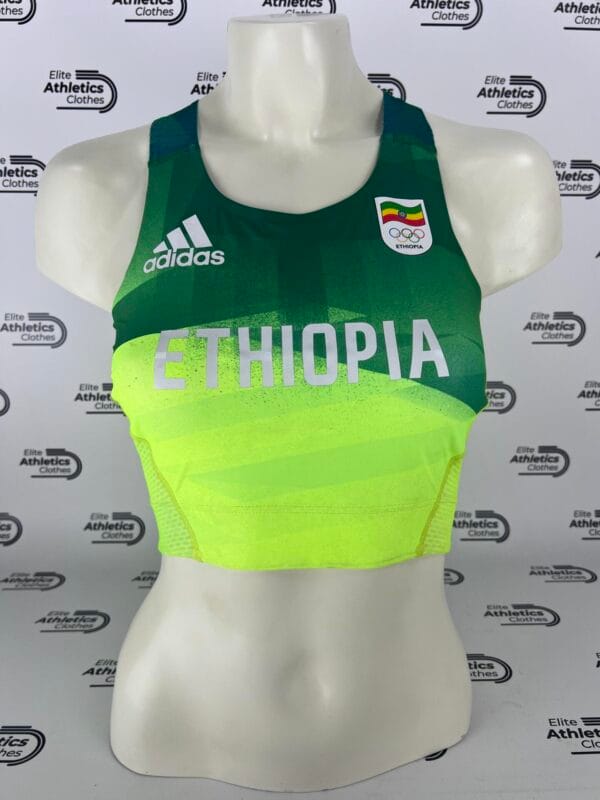 Adidas Ethiopia Olympic Team Pro Elite 2020 Women Crop Top90,00 €View Piece →
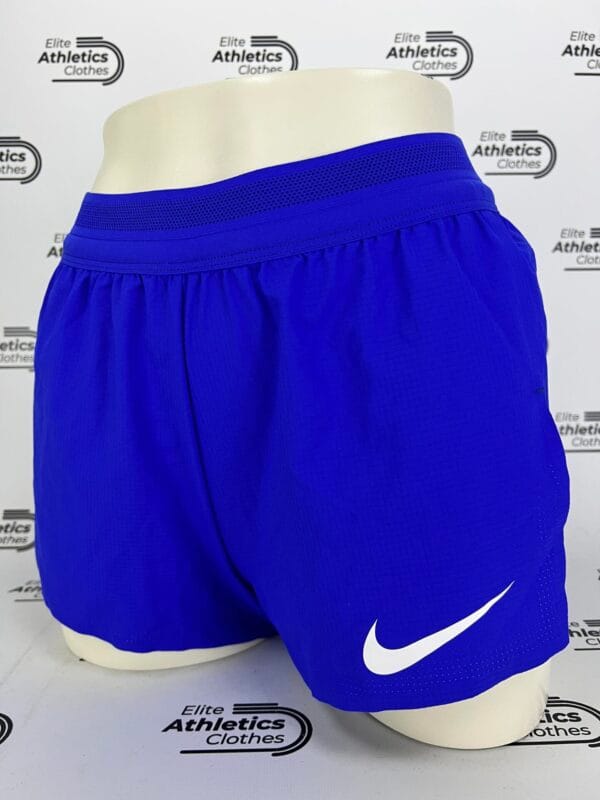 Nike Rosa & Co. Pro Elite Team 2020/2021 Women Running Shorts140,00 €View Piece →
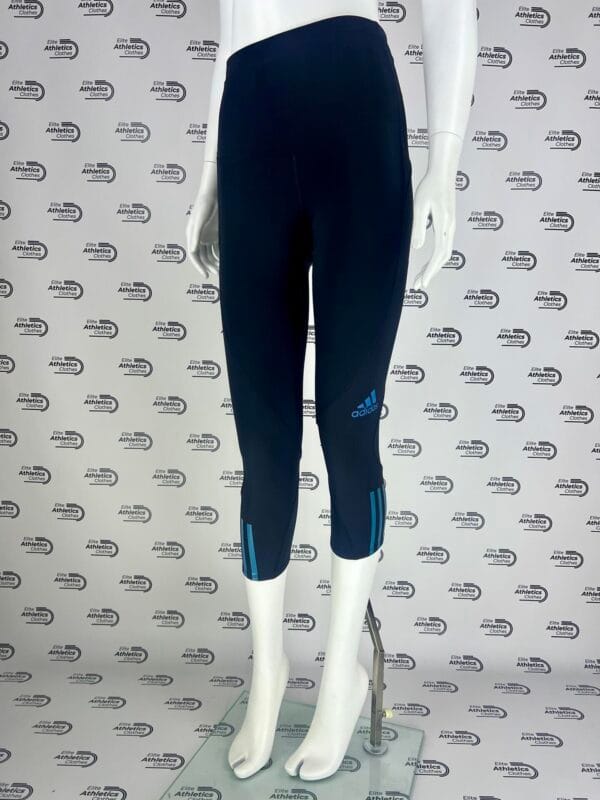 Adidas Pro Elite Team 2022 Women Capri Long Tights140,00 €View Piece →
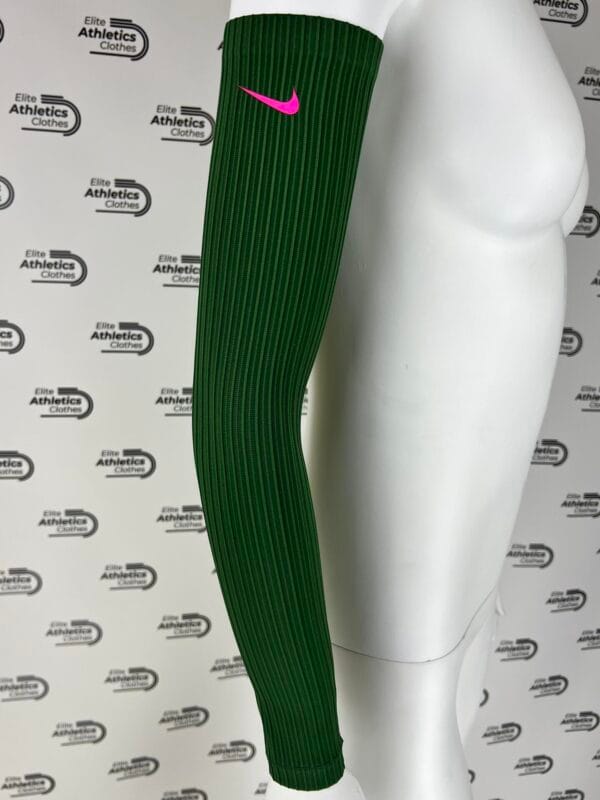 Nike Pro Elite 2023 Women Arm Sleeves180,00 €View Piece →
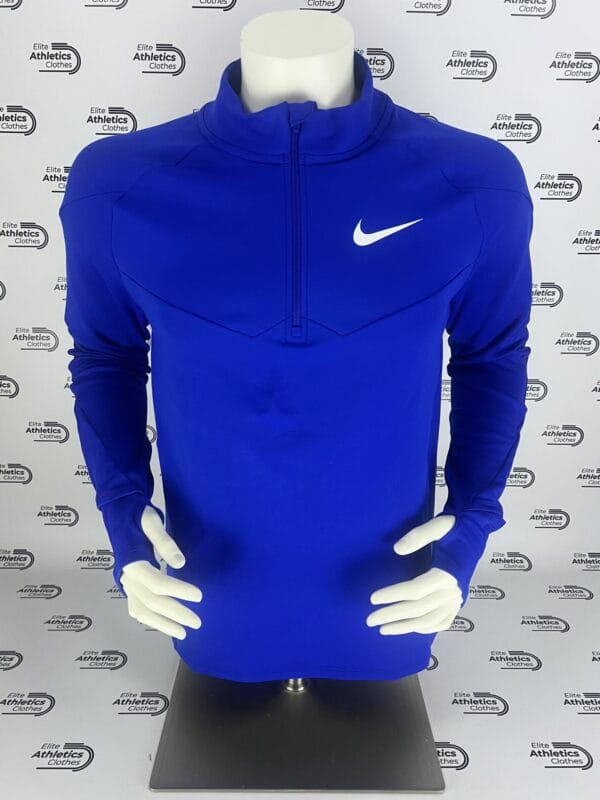 Nike Rosa & Co. Pro Elite Team 2024 Half Zip Jersey240,00 €View Piece →
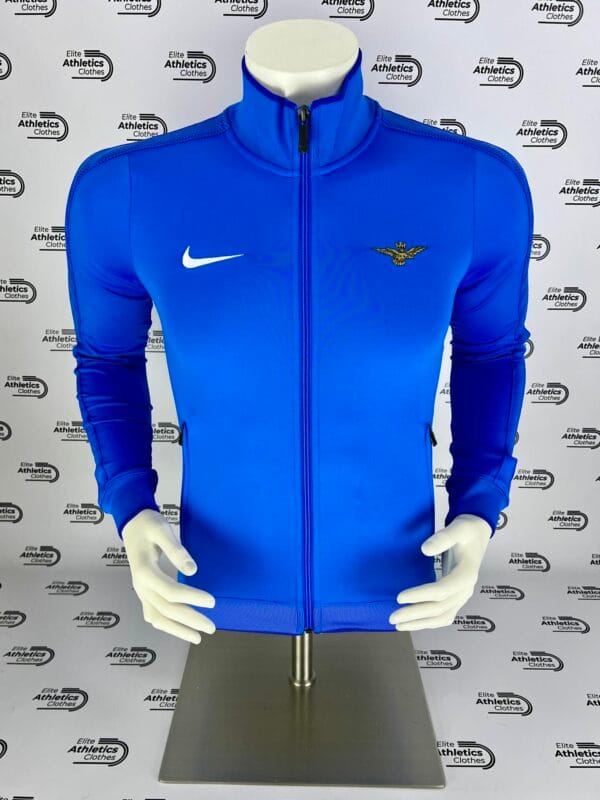 Nike Aeronautica Militare Pro Elite Jacket150,00 €View Piece →
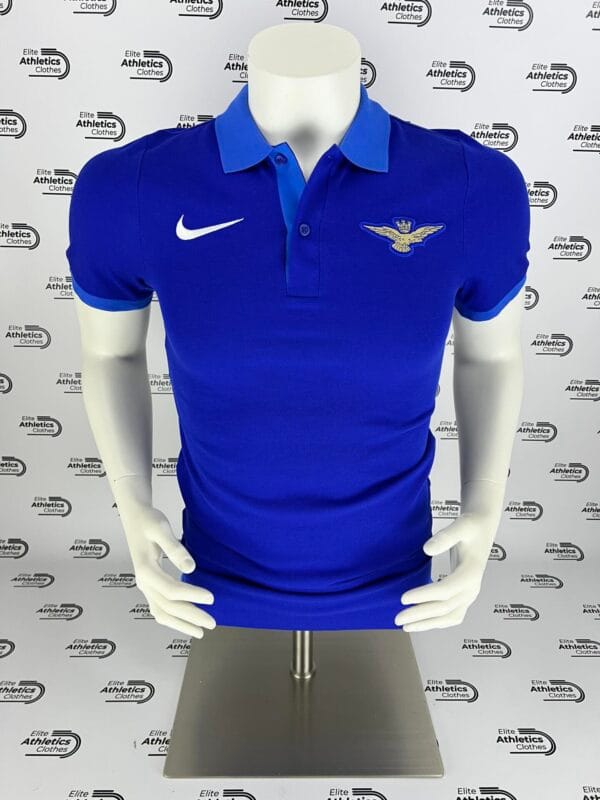 Nike Aeronautica Militare Pro Elite Polo100,00 €View Piece →
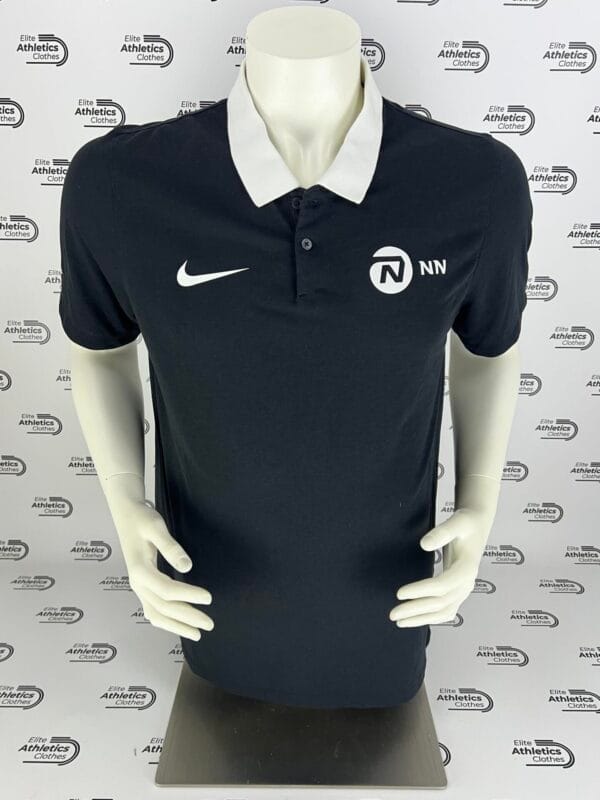 Nike NN Running Team Pro Elite Training Black Polo100,00 €View Piece →
Can Russian athletes compete internationally now?
No. World Athletics lifted the doping suspension in March 2023, but all Russian and Belarusian athletes remain excluded from international athletics because of the invasion of Ukraine — a decision reaffirmed by the World Athletics Council on 1–2 July 2026. Unlike most Olympic sports, athletics offers no neutral-athlete route. RusAF filed an appeal at the Court of Arbitration for Sport in July 2026; it is pending, with no ruling yet.
Is Yelena Isinbayeva’s pole vault world record still standing?
Yes. Her 5.06 m, set in Zürich on 28 August 2009, is still the women’s pole vault world record in 2026 — one of her 28 world records. She never failed a doping test and retired in 2016 with two Olympic and three world titles.
How many Olympic gold medals has Russia won in athletics?
Eighteen as an independent nation, all between 1996 and 2012 and all retained after the retest programmes — from Svetlana Masterkova’s 800/1500 double in Atlanta to Anna Chicherova’s high jump in London. Total medals sit between 56 and 58 depending on the source, as stripped medals are still being reallocated. The Soviet Union won a separate 64 golds between 1952 and 1988.
Why did Russia miss the Rio 2016 and Paris 2024 Olympics in athletics?
Two different reasons. Rio 2016 was the doping suspension: the team was banned and only long jumper Darya Klishina was cleared to compete. Paris 2024 was the Ukraine-war exclusion, which kept Russian athletics out entirely — even as neutrals — while some Russians competed as neutrals in other sports.
When did Russia last compete at the World Championships?
Beijing 2015. Sergey Shubenkov won the 110 m hurdles and Mariya Kuchina (later Lasitskene) the high jump — the last golds Russia has won under its own flag. From 2017 to 2019 vetted Russians competed as Authorised Neutral Athletes, whose medals are not counted in Russia’s totals, and since 2022 no Russian has competed at all.
Who is Russia’s greatest ever athlete?
By titles, Yelena Isinbayeva: 28 pole vault world records, two Olympic and three world titles, and a mark — 5.06 m — that still leads the event. The strongest modern case is Mariya Lasitskene, the only high jumper of either sex with three world titles, two of them won without a flag, plus Olympic gold in Tokyo.
Where can I buy authentic Russia athletics apparel?
Almost nowhere, honestly. Race-issued Russian kit has barely left team channels since the 2015 suspension, and the neutral-era uniforms carried no national branding at all — so Elite Athletics Clothes has no dedicated Russia category. Authentic athlete-issued kit from other national teams and pro programmes surfaces continuously in the Pro Elite archive, which is where a verified Russian piece would appear.
Sources and References
- Russia at the Olympics (Wikipedia) — athletics 18-21-19 (58) by-sport table; 48 stripped Olympic medals, the most of any nation.
- Russia — Olympedia — independent cross-check of the athletics table (18-19-19 = 56); golds agree at 18.
- Russia at the 1996–2012 Summer Olympics (Wikipedia per-Games pages) — per-Games gold lists and disqualifications behind the 3+3+6+5+1 = 18 count.
- Soviet Union at the Olympics (Wikipedia) — USSR athletics 64-55-74 = 193, 1952–1988, counted separately throughout.
- Russia at the World Athletics Championships (Wikipedia) — country-page count: 47-54-52 = 153, 3rd all-time.
- World Athletics Championships all-time medal table (Wikipedia) — divergent count: 42-52-48 = 142, also 3rd — both figures reported honestly above.
- Women’s pole vault world record progression (Wikipedia) — Isinbayeva 5.06 (Zürich 2009) still the record; page updated May 2026.
- World Athletics Council decisions, March 2023 — doping suspension lifted 23 March 2023 with 35 conditions; exclusion over Ukraine maintained.
- World Athletics 241st Council meeting decisions (1–2 July 2026) — exclusion reaffirmed July 2026; conditional-pathway discussion, no change.
- Russia takes track and field ban to CAS (CBC) — RusAF CAS appeal filed July 2026, pending.
- Russians still banned as Tokyo Worlds open (Washington Post) — no Russians at the Tokyo 2025 World Championships; Coe reconfirmation.
- Russia originally won eight 2012 athletics golds (NBC Olympics) — the seven stripped London 2012 golds; Lashmanova strip and reallocation.
- Court upholds Chegin lifetime ban (RFE/RL) — Viktor Chegin banned for life, 17 February 2016, CAS-upheld; Saransk collapse.
- Lasitskene considers retirement (The Moscow Times) — May 2025: motivation, skipped 2025 nationals, last competed August 2024.
- Russian Olympic team drops Bosco for ZASPORT (The Moscow Times) — Bosco through 2016, ZASPORT official outfitter from 2017; Tokyo ROC kit.