
Olympic
Trials
America's qualifying meet is crueller than the Olympics it feeds: finish top three or stay home, no matter whose name you carry. World champions have missed it by hundredths — and world records have fallen just trying to get through it.
The US Olympic Trials in track and field pick the American Olympic team by one rule: the first three finishers in each event who hold the Olympic standard make the team, and nobody else does — no discretionary picks, no protected champions. The 2024 edition ran 21–30 June at Hayward Field in Eugene with more than 900 athletes; the 2028 edition is already set for the same track, 17–22 June, in a new six-day format.
The system's depth is the story: Christian Coleman missed the 2024 team by 0.05 seconds, Athing Mu fell and lost her title defence, and Sydney McLaughlin-Levrone set a world record just to qualify. Whoever survives earns the national federation kit — the universe our archive collects.
Part of our Competition Files — one competition at a time, explained. The kits behind the championships live in the Pro Elite archive. Jump to the Team USA rail or start with the American story.
- What it is
- The meet that picks the US Olympic track and field team: finish top three or stay home
- The rule
- First three past the line with the Olympic standard or ranking; no discretionary picks, for anyone
- Last edition
- Eugene, 21–30 June 2024 — Hayward Field, 900+ athletes chasing three seats per event
- The thinnest cut
- In 2024, fourth place missed the team by 0.02 s (women's 100 m) and 0.05 s (men's 100 m)
- Records born there
- Two world records since 2021: Crouser's 23.37 m shot (2021) and McLaughlin-Levrone's 50.65 hurdles (2024)
- The famous victims
- O'Brien 1992 · Harrison 2016 · Mu 2024 — world beaters cut by the rule
- Next edition
- 17–22 June 2028 at Hayward Field — Eugene's sixth in a row, in a new six-day format
- Marathon Trials
- Run separately: St. Louis hosts the 2028 marathon Trials, announced June 2026
Top Three or Stay Home
The rule fits in a sentence. At the United States Olympic Trials in track and field, the first three across the line in each event make the Olympic team, provided they hold the Olympic qualifying standard or a high enough world ranking; everyone else stays home. There are no discretionary picks, no selectors weighing a resume, no protected places for champions. If a top-three finisher lacks the standard or gives up the spot, the next finisher who has it moves up — and that is the entire extent of the flexibility.
Most other countries do it differently. Federations elsewhere combine a national championship with selector judgement, medical exemptions and appeals; a reigning champion who has a bad day can usually still be picked. The American system accepts no argument. That is what makes it, event for event, the hardest national team to make in the sport — and it is also why the meet itself is often better theatre than the Games it feeds.
The Cut, Measured in Hundredths
The 2024 Trials at Hayward Field, held from 21 to 30 June, put numbers on how thin the line is. In the men's 100 m final, Noah Lyles won in a personal-best 9.83, Kenny Bednarek and Fred Kerley took the other two seats in 9.87 and 9.88 — and Christian Coleman, the 2019 world champion in this event, ran 9.93 and stayed home. In the women's 100 m, fourth place was two hundredths of a second from Paris. Sha'Carri Richardson won that final in 10.71, then finished fourth herself in the 200 m days later: the same ten days can crown you in one event and cut you in the next.
Hover or tab on a square for name and time. Scale: ±0.30 s around third place; McLaughlin-Levrone's 50.65 world record is pinned at the edge, 2.12 s clear. Sources: official Trials results via NBC, Olympics.com and Watch Athletics. Verified September 2026.
The five finals, places one to four
| Final (Eugene 2024) | 1st | 2nd | 3rd — last ticket | 4th — first one out |
|---|---|---|---|---|
| Men's 100 m | Lyles 9.83 | Bednarek 9.87 | Kerley 9.88 | Coleman 9.93 |
| Women's 100 m | Richardson 10.71 | Jefferson 10.80 | Terry 10.89 | Davis 10.91 |
| Men's 110 m hurdles | Holloway 12.86 | Crittenden 12.93 | Roberts 12.96 | Tinch 13.03 |
| Women's 200 m | Thomas 21.81 | Brown 21.90 | Long 21.91 | Richardson 22.16 |
| Women's 400 m hurdles | McLaughlin-Levrone 50.65 WR | Cockrell 52.64 | Jones 52.77 | Little 52.98 |
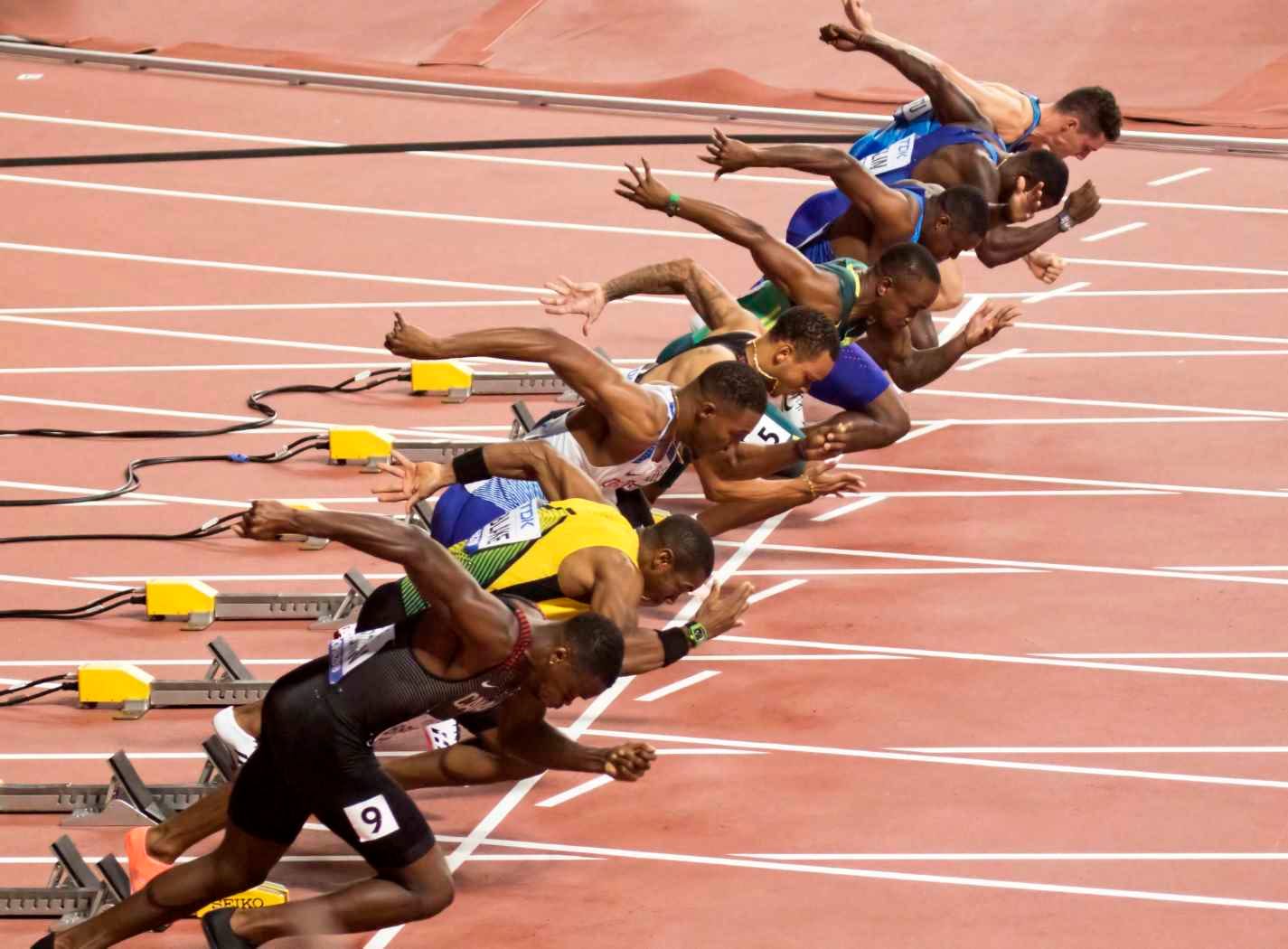
The men's 110 m hurdles final that year was the first race in history with three men under 13 seconds — Grant Holloway 12.86, Freddie Crittenden 12.93, Daniel Roberts 12.96 — and Cordell Tinch's 13.03 still bought him nothing. Depth is the whole point: the US regularly has more athletes of Olympic-final quality than it has seats, so the Trials final IS an Olympic final, run a month early, with harsher consequences for the losers.
The Fourth-Place Club
Every edition adds a name to the club nobody wants to join. In 1992 it was Dan O'Brien, the reigning world decathlon champion and the face of Reebok's Dan & Dave advertising campaign. At the Trials in New Orleans he passed the low heights in the pole vault, came in at 4.80 m, missed three times, scored zero in the event and fell from first to eleventh. He watched Barcelona on television, set the world record of 8,891 points at Talence that September — and had to wait until Atlanta 1996 for his Olympic gold.
In 2016 it was Keni Harrison, sixth in the 100 m hurdles final in 12.62. Twenty days later in London she ran 12.20 and took down a world record that had survived for almost 28 years. She then watched Brianna Rollins, Nia Ali and Kristi Castlin sweep the Rio podium — the first American 1-2-3 in the event's Olympic history — from home, as the fastest hurdler who ever lived to that point.
And in 2024 it was Athing Mu, the reigning Olympic 800 m champion. Just past the opening 200 metres of the final her feet tangled with Raevyn Rogers's and she went down; she got up and finished, in 2:19.69, and her appeal for a re-run was denied. Nia Akins, Allie Wilson and Juliette Whittaker went to Paris. The rulebook does not have a clause for the champion on the ground — which is exactly the promise the system makes to the three who beat her.
The Trials are unforgiving because the depth is real: a country that can fill an Olympic final twice over has to disappoint Olympic finalists every four years. The cruelty and the quality are the same fact.
Faster Than the Games Themselves
A meet this deep does more than eliminate people; it produces marks the Olympics struggle to match. On the first day of the 2021 Trials, Ryan Crouser threw the shot 23.37 m — 76 feet 8¼ inches — and erased Randy Barnes's world record after 31 years. In 2024, Bryce Hoppel won the 800 m in 1:42.77, a Trials record that had belonged to Johnny Gray since the 1992 edition; three men broke 1:44 in the same race.
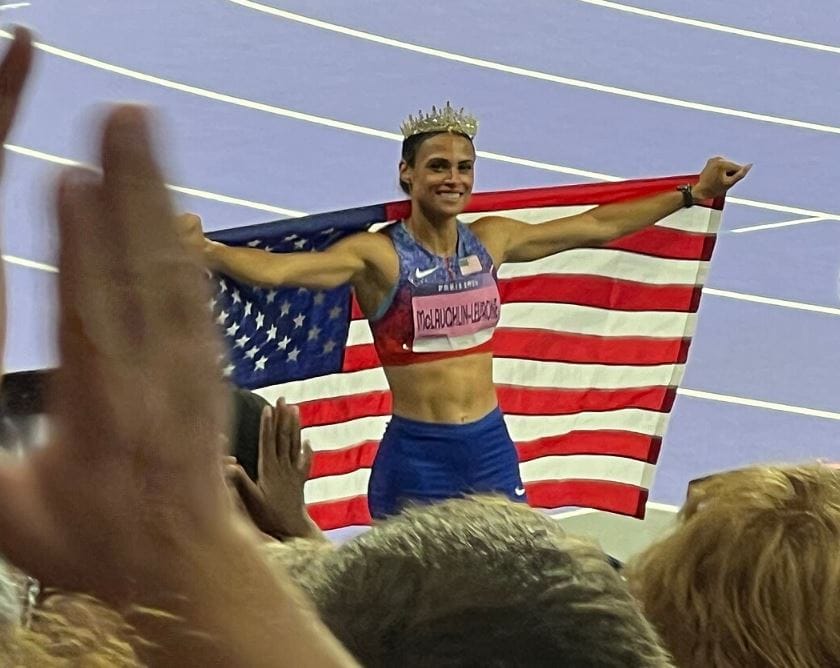
The clearest case is Sydney McLaughlin-Levrone. On 30 June 2024, in a national qualifying meet, she ran the 400 m hurdles in 50.65 — a world record, set two years to the week after her 50.68 on the same Hayward Field track. Five weeks later in Paris she lowered it again to 50.37, the mark that still heads the event today. The Trials final she had to survive to get there was, at the time it was run, the fastest 400 m hurdles race ever.
Even the 16-year-olds run fast here: in the 2024 400 m rounds, high schooler Quincy Wilson set world under-18 bests in the heats (44.66) and the semifinals (44.59), finished sixth in the final — and was named to the relay pool, becoming the youngest American male track and field Olympian in history.
From Committee Rooms to a Track in the Pines
The format is a century old. Before 1920, American Olympic teams were assembled partly by committee judgement; when the rules capped each country at four athletes per event, the US switched to a knockout meet with one final per event, first held in July 1920 for the Antwerp Games. The principle — run the race, read the results, print the team — has survived every generation of argument since.
Its strangest chapter is 1968. To prepare for Mexico City's altitude, the men's Trials were staged at Echo Summit, California: a track laid through the pines of the Eldorado National Forest above Lake Tahoe, at 7,377 feet — almost exactly Mexico City's elevation — with hundreds of trees left standing inside the ring, so sprinters vanished behind pines on the back straight. Four world records fell at that meet, John Carlos's 19.7 in the 200 m among them (never ratified, on account of his brush-spike shoes), and Bob Seagren's 5.41 m vault another. The team picked there won 12 gold medals in Mexico City.
The modern era belongs to one town. Eugene, Oregon staged the Trials in 2024 for the fifth consecutive time, at the rebuilt Hayward Field — the same stadium that hosts the NCAA championships and, in 2022, hosted the first World Championships on American soil. In this sport the road to a US vest runs through Tracktown, and has for two decades.
What Is Already Booked for 2028
The next edition is fixed, and this page will not guess an inch past what has been announced. The 2028 Trials will be back at Hayward Field from 17 to 22 June 2028 — Eugene's sixth in a row — compressed into a new six-day format, because the meet sits less than a month before the Los Angeles Games open. The combined events and the 10,000 m will be decided earlier in the spring, at sites still to be named.
The marathon picks its team separately, in a single winner-take-top-three race: the 2028 Olympic Trials Marathon goes to St. Louis, announced in June 2026. Who lines up in either city is a 2028 question, and we leave it there.
The Gate to the Federation Kit
For what we do at Elite Athletics Clothes, the Trials matter for one specific reason: they are the gate through which an athlete earns the national federation kit. Survive the cut in Eugene and Nike's USA team issue — the vests, the podium layers, the warm-ups — stops being catalogue clothing and becomes yours, with your event on the start list to prove it.
The house rule for reading any competition: championships mean federation kit, leagues and meetings mean sponsor kit. The Trials are the door to the first universe — the USA pieces below are athlete-issued federation kit, the same family of garments a top-three finish unlocks.
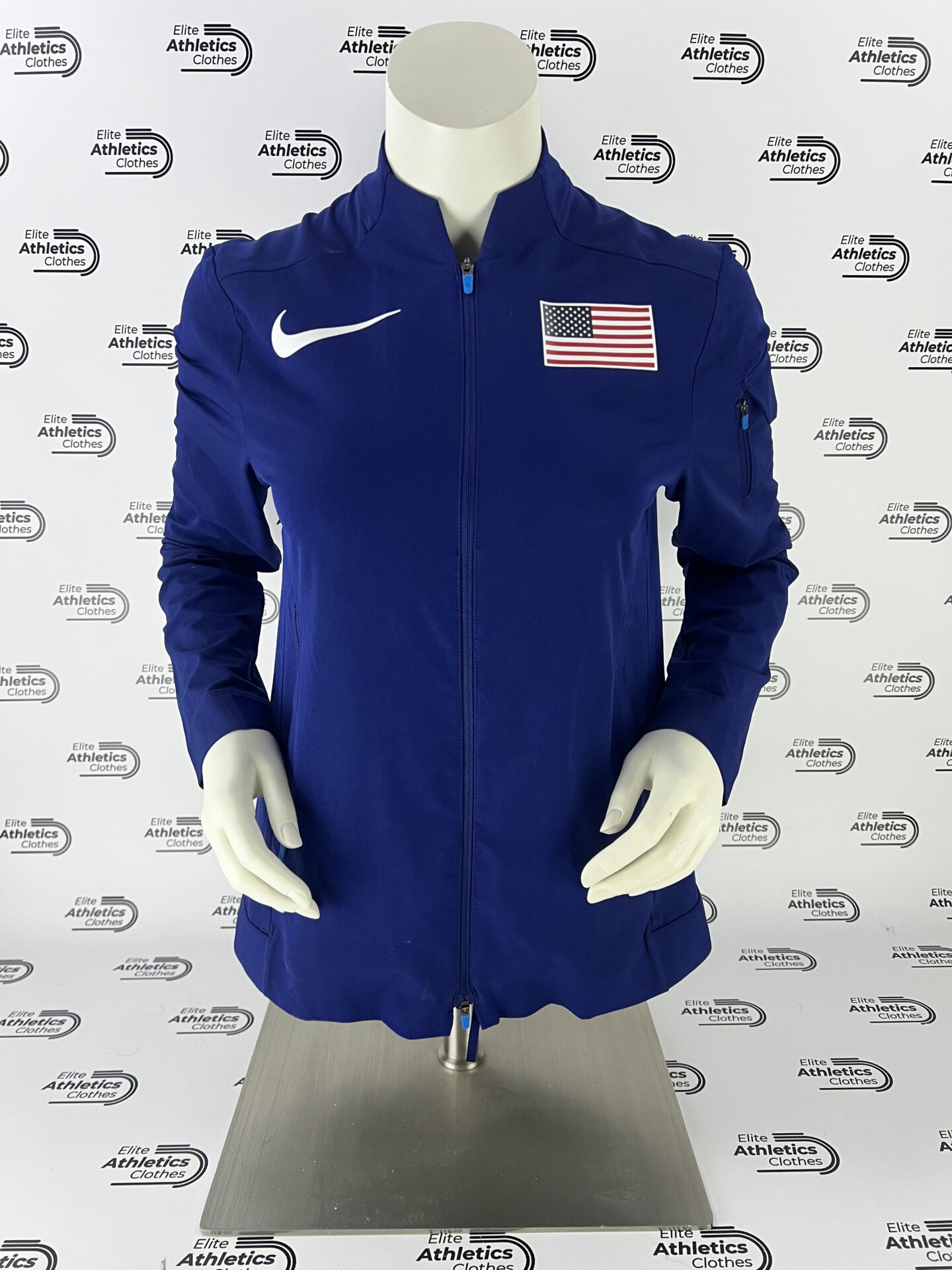 Federation kit · in the archiveNike USA Pro Elite 2023 Women Podium JacketNike USA Pro Elite 2023 women's podium jacket — the layer handed to the athletes who survive the cut and stand on a podium for the federation.300,00 €View piece →
That is why this page points at the American chapter of the nations archive rather than at any single brand. The three names per event who cross the line in Eugene inherit the most contested vest in the sport — and the athlete-issued versions of it are what the rail below holds.
The Vest They Run For
Three per event earn the right to wear this. These are athlete-issued Nike USA federation pieces from the archive — the kit universe that a top-three finish in Eugene unlocks.
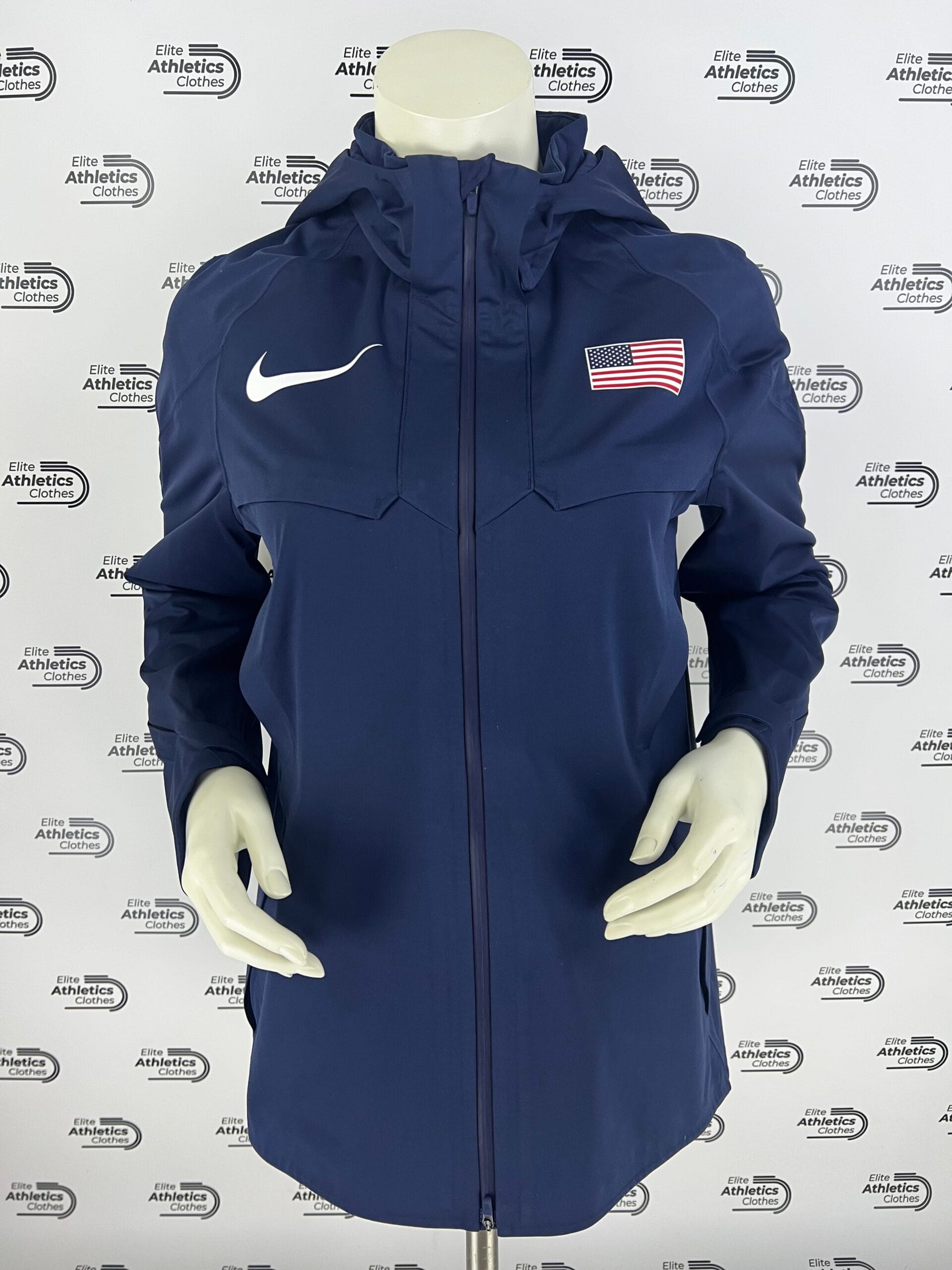 Nike USA Team Pro Elite 2026 Women Storm Fit Jacket240,00 €View Piece →USA · 2025
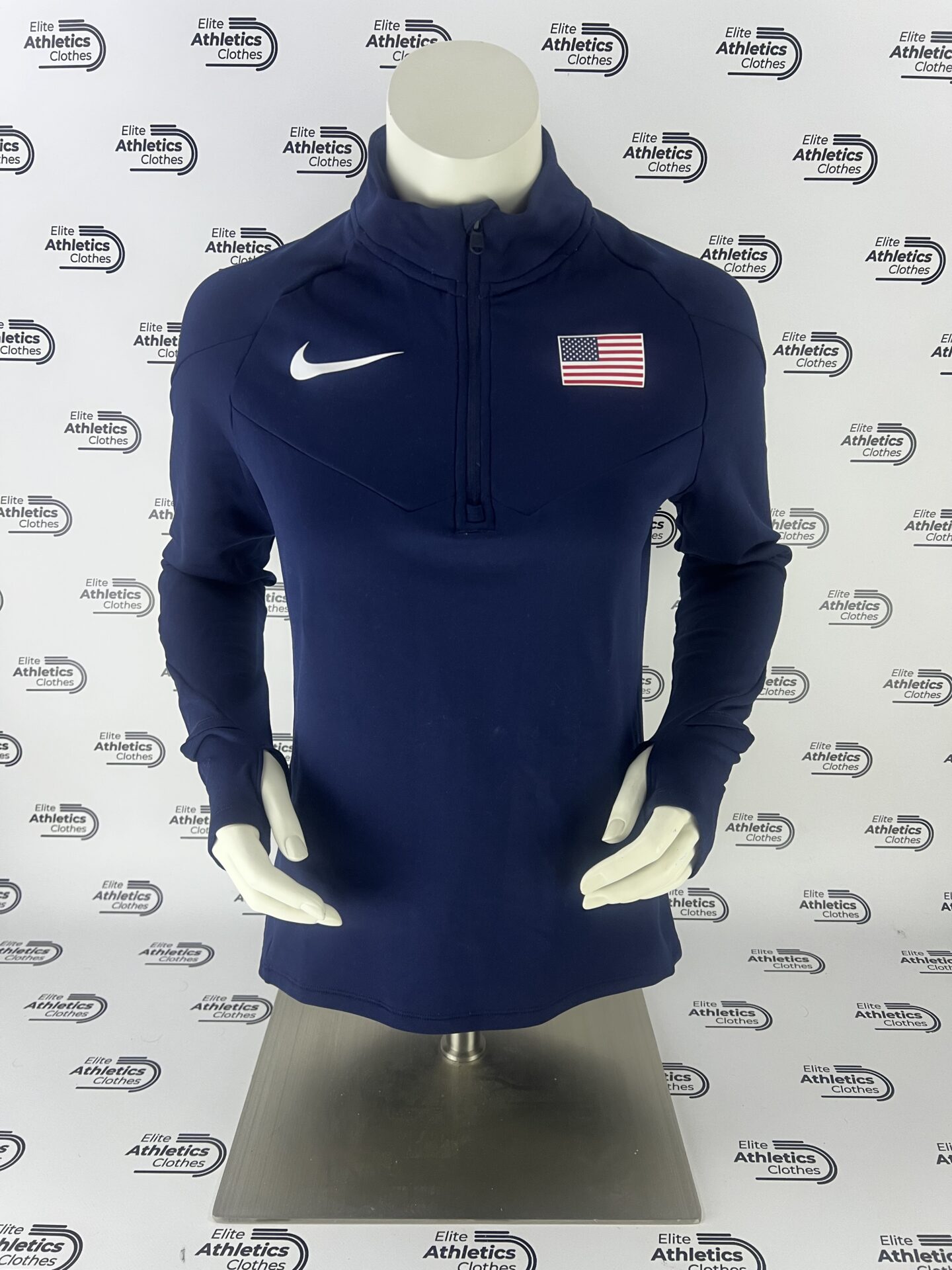 Nike USA Pro Elite 2025 Women Half Zip Jersey200,00 €View Piece →USA · 2025
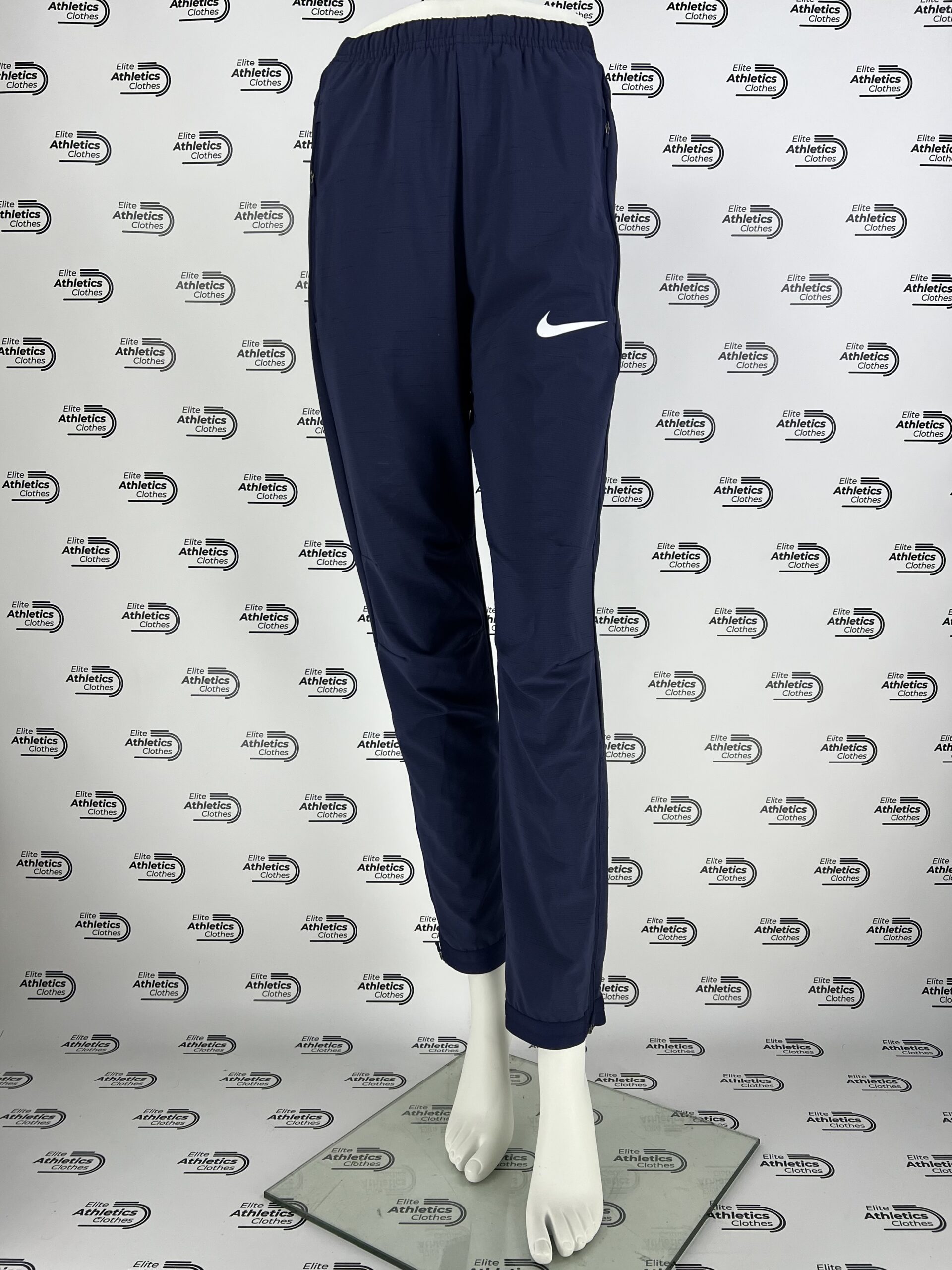 Nike USA International Team Pro Elite 2025 Women Lightweight Pants140,00 €View Piece →USA · 2019
 Nike USA Pro Elite 2019 Calf Warmers70,00 €View Piece →
How do athletes qualify for the US Olympic team in track and field?
By finishing in the top three of their event at the US Olympic Trials while holding the Olympic qualifying standard or a sufficient world ranking. There are no discretionary selections: if a top-three finisher lacks the standard, the next finisher who has it takes the place. The Trials are held once, about a month before each Games.
Can a world champion miss the US Olympic team?
Yes, and it happens regularly. Christian Coleman, the 2019 world 100 m champion, finished fourth at the 2024 Trials by 0.05 seconds and missed Paris. Dan O'Brien, reigning world decathlon champion, no-heighted in the pole vault at the 1992 Trials and missed Barcelona. Reigning Olympic 800 m champion Athing Mu fell in the 2024 final and was not selected.
Have world records been set at the US Olympic Trials?
Yes. Ryan Crouser threw a 23.37 m shot put world record at the 2021 Trials, and Sydney McLaughlin-Levrone ran a 50.65 world record in the 400 m hurdles at the 2024 Trials. At the 1968 Trials at Echo Summit, held at altitude on a track cut through a pine forest, four world records fell at one meet.
Where are the 2028 US Olympic Trials?
At Hayward Field in Eugene, Oregon, from 17 to 22 June 2028 — the sixth consecutive Trials there, in a new six-day format, with the combined events and the 10,000 m held earlier in the spring. The 2028 Olympic Trials Marathon will be held separately in St. Louis.
Sources and References
- Wikipedia — United States Olympic trials (track and field) — the top-three system and the standard/ranking requirement
- CITIUS Mag — the Trials team selection process — how the finish-order rule is applied in practice
- Olympics.com — Lyles, Bednarek, Kerley go 1-2-3 at the 2024 Trials — the men's 100 m final times, Coleman fourth in 9.93
- Watch Athletics — official 2024 Trials results — finals results used in the chart: 110 m hurdles, 200 m, 400 m hurdles
- World Athletics — McLaughlin-Levrone breaks the world record at the Trials — the 50.65 of 30 June 2024
- CBS News — Athing Mu's fall and denied appeal — the 2024 women's 800 m final
- Team USA — Harrison breaks the world record after missing the team — the 12.62 sixth place and the 12.20 in London
- World Athletics — Rio 2016 women's 100 m hurdles final report — the Rollins–Ali–Castlin sweep, an Olympic first in the event
- UPI archive — O'Brien fails to make decathlon team (27 June 1992) — the pole vault no-height in New Orleans
- ESPN — Crouser breaks the 31-year-old shot put world record — the 23.37 m of 18 June 2021
- World Athletics Heritage — Echo Summit — the 1968 forest track at 7,377 feet and its four world records
- USATF — Eugene to host the 2028 Trials — the 17–22 June 2028 dates and the six-day format
- USATF — St. Louis to host the 2028 marathon Trials — the separate marathon selection race