

Switzerland
Eight Olympic medals and not one gold. Five world titles and not one silver. Then a home championship in 2014 that changed the count — from Paris 1924 to a world record in 2026, verified.
Switzerland has won 8 Olympic medals in athletics — 6 silver and 2 bronze, never a gold — and 10 at the World Championships: 5 gold and 5 bronze, never a silver. Three of those world titles belong to one shot putter, Werner Günthör. The bigger story is recent: 47 of the country’s 91 medals at the Olympics, the Worlds, the World Indoors and the European Championships have come since 2014.
This is the full account, counted from the federation’s own medal statistics: the footballers and gymnasts who ran Swiss athletics in two rival camps until 1971, the silver medals of Paris 1924, the walkers, Günthör, Bucher’s 2001 world title, the meetings that made Zürich and Lausanne hosts of the sport — and the generation of the Kambundji sisters, Ehammer and Werro.
Puma has dressed the Swiss national team since the 2013 season, under a contract that runs to Los Angeles 2028. The Switzerland collection at Elite Athletics Clothes holds team-issued pieces from that era: the Puma Switzerland International Team 2016 Pro Elite range.
- Federation
- Swiss Athletics · founded 4 December 1971, renamed 2006 · kit by Puma since 2013
- Olympic athletics medals
- 8: 0 gold · 6 silver · 2 bronze — the last at Seoul 1988
- World Championships
- 10: 5 gold · 0 silver · 5 bronze (1987–2025)
- European Championships
- 55 medals — 32 of them since Zürich 2014
- The first
- Paul Martin (800 m) and Willy Schärer (1500 m), silver at Paris 1924
- The world record
- Simon Ehammer, indoor heptathlon, 6,670 — Toruń, 21 March 2026
- The shot put record
- Günthör’s 22.75 m, Bern 1988 — 38 years on, still the Swiss record
- The meetings
- Weltklasse Zürich (1928) and Athletissima (1977), both World Athletics Heritage Plaques
The Origins: Footballers, Gymnasts and One Federation
Swiss athletics grew up inside football. When the first national federations of modern sport appeared in 1895, the clubs that staged races — Servette, FC Lugano, FC Zürich, Old Boys Basel — were football clubs with athletics sections. In 1905 the Swiss Football Association set up an athletics committee, and from 1913, according to the federation’s own fifty-year history, that committee was Switzerland’s only contact with the IAAF. The first men’s national championships were held in 1906.
Then the sport split in two. In 1924 the gymnastics federation founded its own athletics body, the ELAV — the camp of the Turnerleichtathleten — and in 1949 the football side answered with the SALV. Switzerland ran two separate squad lists, and only the football camp’s clubs could stage internationals and national championships. The cost had a name: in 1952 Armin Scheurer, fifteen times Swiss champion and the country’s first Sportsman of the Year in 1950, was declared a professional and banned for life because, as a league footballer with FC Biel, he had taken match bonuses of around 30 francs a game. He was later rehabilitated and became the federation’s first national combined-events coach.
The split ended on 4 December 1971. That morning the SALV and the ELAV dissolved themselves; that afternoon, at the Hôtel de Ville in Bern, the Fédération Suisse d’Athlétisme was founded, with Otto Grütter as its first president. On 1 November 2006 it took the name it uses today: Swiss Athletics.
Paris 1924, the Walkers and a Century of Silver
Switzerland’s first two Olympic athletics medals came at the same Games, Paris 1924, and both were silver. Paul Martin of Geneva ran 1:52.6 in the 800 m, two tenths behind Britain’s Douglas Lowe. Willy Schärer finished second to Paavo Nurmi in the 1500 m in 3:55.0 — and had nearly not travelled at all: he was refused permission to go while studying in Burgdorf, until a Bern government councillor intervened.
Martin went on to compete at five Games, from 1920 to 1936, carried the Swiss flag in 1932 and 1936, set 18 Swiss records and became a surgeon; his book Au dixième de seconde won the French prize for sports literature.
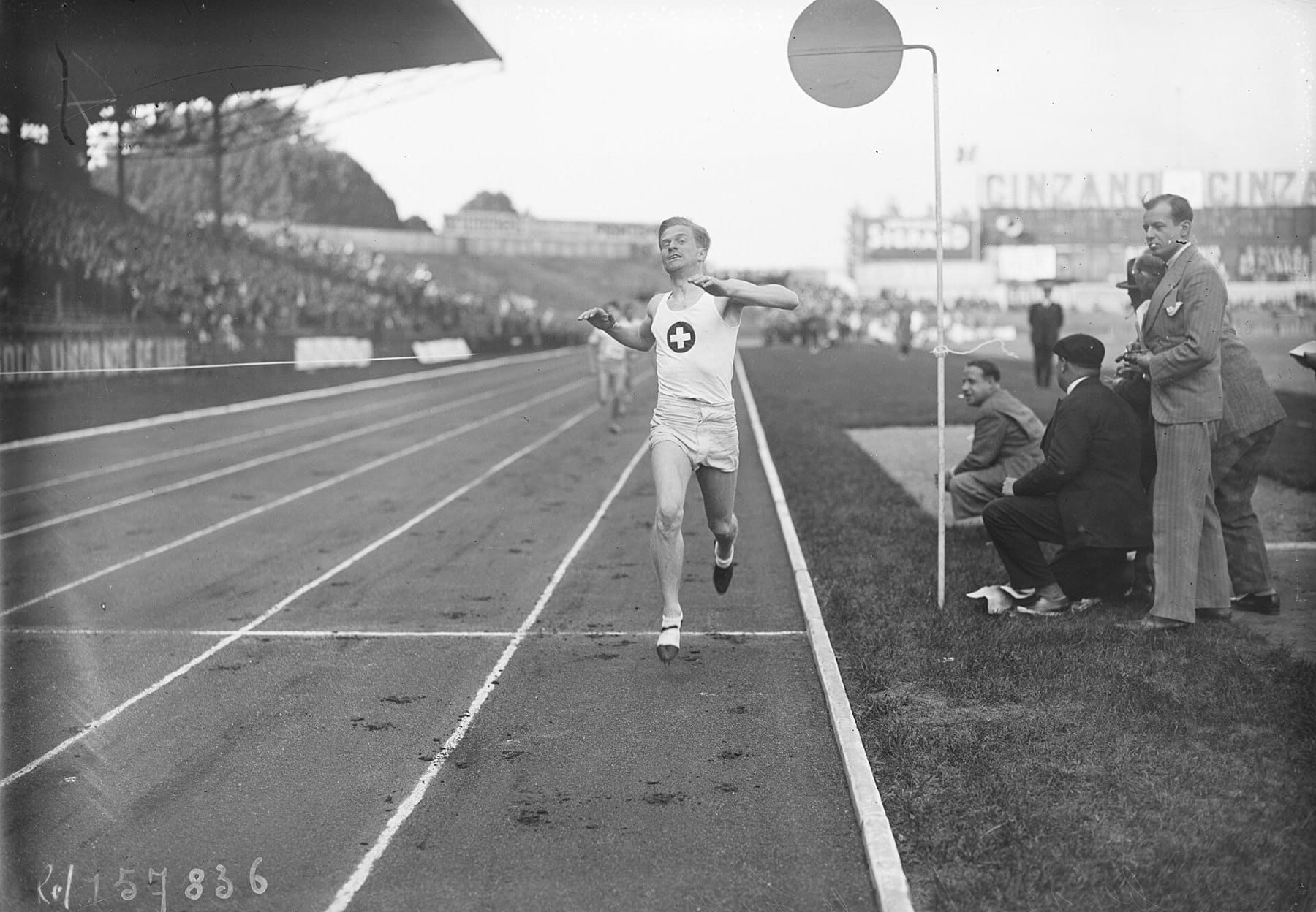
Four of the eight medals Switzerland has ever won in Olympic athletics came on the road, in race walking. Arthur Tell Schwab, German-born with Swiss citizenship, took 50 km silver at Berlin 1936 after turning down Nazi approaches to compete for Germany; he was killed in 1945 in an air raid on a Red Cross train while trying to reach Switzerland. His son Fritz won 10 km bronze at London 1948 and silver at Helsinki 1952 — in the same time as the bronze medallist — and in 1950 became the first Swiss European champion. Gaston Godel completed the set with 50 km silver in London, climbing from eleventh at 10 km to second at the finish.
After Helsinki the medals stopped for seven Games. Markus Ryffel ended the wait at Los Angeles 1984 with 5000 m silver in 13:07.54, and Werner Günthör’s shot put bronze at Seoul 1988 followed. That is the complete list, as Olympedia records it: eight Olympic medals, six silver and two bronze.
Switzerland’s Greatest Athletes
Six careers carry most of the story: the shot putter who won three world titles, the distance runner who won Switzerland’s last Olympic medal in a running event, the 800 m world champion of 2001, two sisters who turned Swiss sprinting and hurdling into a medal habit, and the jumper who now holds a world record.
Werner Günthör
Three world titles — Rome 1987 with 22.23 m, Tokyo 1991, Stuttgart 1993 — plus European gold in 1986, world indoor gold in 1991 and Olympic bronze at Seoul 1988. His 22.75 m from Bern in August 1988 is still the Swiss record. He was never sanctioned and his results stand; a Swiss doping inquiry reported in 1993 that he had been prescribed anabolic steroids for medical reasons between 1984 and 1988, against the rules of the time, and he has said the treatment was not banned then.
Markus Ryffel
Olympic silver at Los Angeles 1984 in 13:07.54, dropped by Saïd Aouita only on the last bend — still the last Olympic medal a Swiss athlete has won in a running event. Before it: European 5000 m silver in Prague in 1978 and two European indoor 3000 m titles, in 1978 and 1979.
André Bucher
World champion in Edmonton in 2001 in 1:43.70, and in the same month the 1:42.55 at Weltklasse Zürich that is still the Swiss record. Add European silver in 1998 and 2002 and world indoor bronze in 2001. Until 2025 his was the only outdoor world title a Swiss athlete had won on the track; a heel injury ended his career in 2007.
Mujinga Kambundji
World 60 m champion indoors in 2022 and 2025, European 200 m champion in 2022 and 2024, and bronze over 200 m at the Doha 2019 Worlds — the first Swiss sprint medal at a World Championships. Her 10.89 and 22.05, both from 2022, are the Swiss women’s 100 m and 200 m records; she was sixth in the Olympic 100 m final in Tokyo and again in Paris.
Ditaji Kambundji
World champion in Tokyo in 2025 in 12.24, a Swiss record: the first world outdoor title ever won by a Swiss woman, and the first Swiss world outdoor gold since Bucher in 2001. The same year she won the European indoor 60 m hurdles title in 7.67 — a European record — and world indoor silver. She is Mujinga’s younger sister.
Simon Ehammer
Holder of a current world record: 6,670 points in the short-track heptathlon at the Toruń World Indoors on 21 March 2026, 25 more than Ashton Eaton’s mark from 2012. World indoor heptathlon champion in 2024 and 2026, world long jump bronze in 2022, Diamond League long jump champion in 2023 and 2025, fourth at Paris 2024 — and in May 2026 at Götzis, Swiss records of 8.51 m in the long jump and 8,778 points in the decathlon.
Between them the six have won ten world titles, indoors and out, across four decades — and one of them holds a current world record.
The Olympic Riddle: Eight Medals, No Gold
Switzerland has never won Olympic gold in athletics, and it has not won an Olympic athletics medal of any colour since Seoul 1988 — nine Games and counting. Six of the eight medals are silver, and the closest anyone came to the top step was Paul Martin’s two tenths in 1924.
Paris 2024 came closest to ending the drought without doing it. Angelica Moser was fourth in the pole vault with 4.80 m, Annik Kälin fourth in the heptathlon with 6,639 points and Simon Ehammer fourth in the long jump with 8.20 m — three fourth places in four days — while Mujinga Kambundji was sixth in the 100 m final. Dominic Lobalu, who had won the European 10,000 m title for Switzerland two months earlier, also finished fourth, in the 5000 m, but for the Refugee Olympic Team: the IOC ruled that he was not yet a Swiss national, as the Olympic Charter requires.
The World Championships tell the opposite story. Since the first edition in 1983, Swiss athletes have won ten medals there — five gold and five bronze, and never a silver. Günthör won three of the golds, in 1987, 1991 and 1993; André Bucher took the 800 m in Edmonton in 2001; and in Tokyo in 2025 Ditaji Kambundji won the 100 m hurdles in 12.24. The bronzes belong to Anita Weyermann (1500 m, 1997), Marcel Schelbert (400 m hurdles, 1999), Viktor Röthlin (marathon, 2007), Mujinga Kambundji (200 m, 2019) and Ehammer (long jump, 2022). In Rome in 1987 Sandra Gasser crossed the line third in the 1500 m but was disqualified for doping weeks later; that medal is not counted.
Zürich, Lausanne and Bern: A Host Nation
Switzerland’s two great meetings both hold World Athletics Heritage Plaques. Weltklasse Zürich, founded in 1928 and nicknamed the “Nurmi meeting” in its early years, is where Germany’s Armin Hary became the first man to run 100 m in 10.0, on the Letzigrund track on 21 June 1960. Three Swiss records still standing were set there: Pierre Délèze’s 3:31.75 for 1500 m in 1985, André Bucher’s 1:42.55 for 800 m in 2001 and Audrey Werro’s 1:53.70 in August 2026. The meeting has its own story in Weltklasse Zürich.
Athletissima in Lausanne began in 1977 as the Lausanne International Meeting at the Coubertin Stadium — washed out by torrential rain at the first attempt, rerun on 3 August — and moved to the Pontaise Olympic Stadium eight years later. Leroy Burrell’s 9.85 there on 7 July 1994 was its first world record in a standard Olympic event; Yelena Isinbayeva (4.93 m in 2005) and Liu Xiang (12.88 in 2006) followed. The city has been home to the IOC since Pierre de Coubertin moved its headquarters from Paris on 10 April 1915, and some thirty international sports federations are based in Switzerland.
Twice the country has hosted the European Championships, and twice the home team barely registered. At Bern in 1954 — the championships of Bannister, Kuts and Zátopek — no Swiss athlete won a medal. At Zürich in 2014 there was one: Kariem Hussein’s 400 m hurdles gold in 48.96. Hussein later served a nine-month ban, from July 2021, after a positive test for the stimulant nikethamide, which came from a throat lozenge; it cost him the Tokyo Olympics.
Zürich 2014 and the Turn
On paper Zürich 2014 looks like another quiet home championship. The federation reads it differently: in October 2026 Swiss Athletics president Christoph Seiler called it the origin of the current high in Swiss athletics. The medal count agrees with him.
Across the Olympics, the World Championships, the World Indoors and the European Championships, Swiss athletes won 44 medals from Paris 1924 to the end of 2013 — ninety seasons. They have won 47 in the thirteen seasons since. At the European Championships alone, the 21 editions from 1934 to 2012 produced 23 medals and four titles; the six since Zürich have produced 32 medals and twelve titles.
44 medals in ninety seasons. 47 in the last thirteen.
Every Swiss medal at the four major championships, one square split in two: each column is an era, each band a championship sized by its medals, each colour a medal. The left column took ninety seasons to fill; the right one took thirteen. Two gaps run through it — no Olympic gold ever, and no world silver ever. European Indoor and European Cross Country medals are not included. Hover or tab onto a band for the names. Sources: Swiss Athletics medal statistics (as of 30 August 2026), Olympedia, World Athletics; cross-checked October 2026.
View the medal data
| Championship | 1924–2013 | 2014–2026 | Total (G–S–B) |
|---|---|---|---|
| Olympic Games | 8 (0–6–2) | 0 | 8 (0–6–2) |
| World Championships | 7 (4–0–3) | 3 (1–0–2) | 10 (5–0–5) |
| World Indoor Championships | 6 (2–1–3) | 12 (4–5–3) | 18 (6–6–6) |
| European Championships | 23 (4–10–9) | 32 (12–9–11) | 55 (16–19–20) |
| Total | 44 (10–17–17) | 47 (17–14–16) | 91 (27–31–33) |
Two editions show the scale of the change: nine European medals at Rome 2024, four of them gold, and seven at Birmingham 2026. Indoors the shift is sharper still — eleven of Switzerland’s eighteen world indoor medals have come since 2022.
The Kit: From adidas to Puma Red
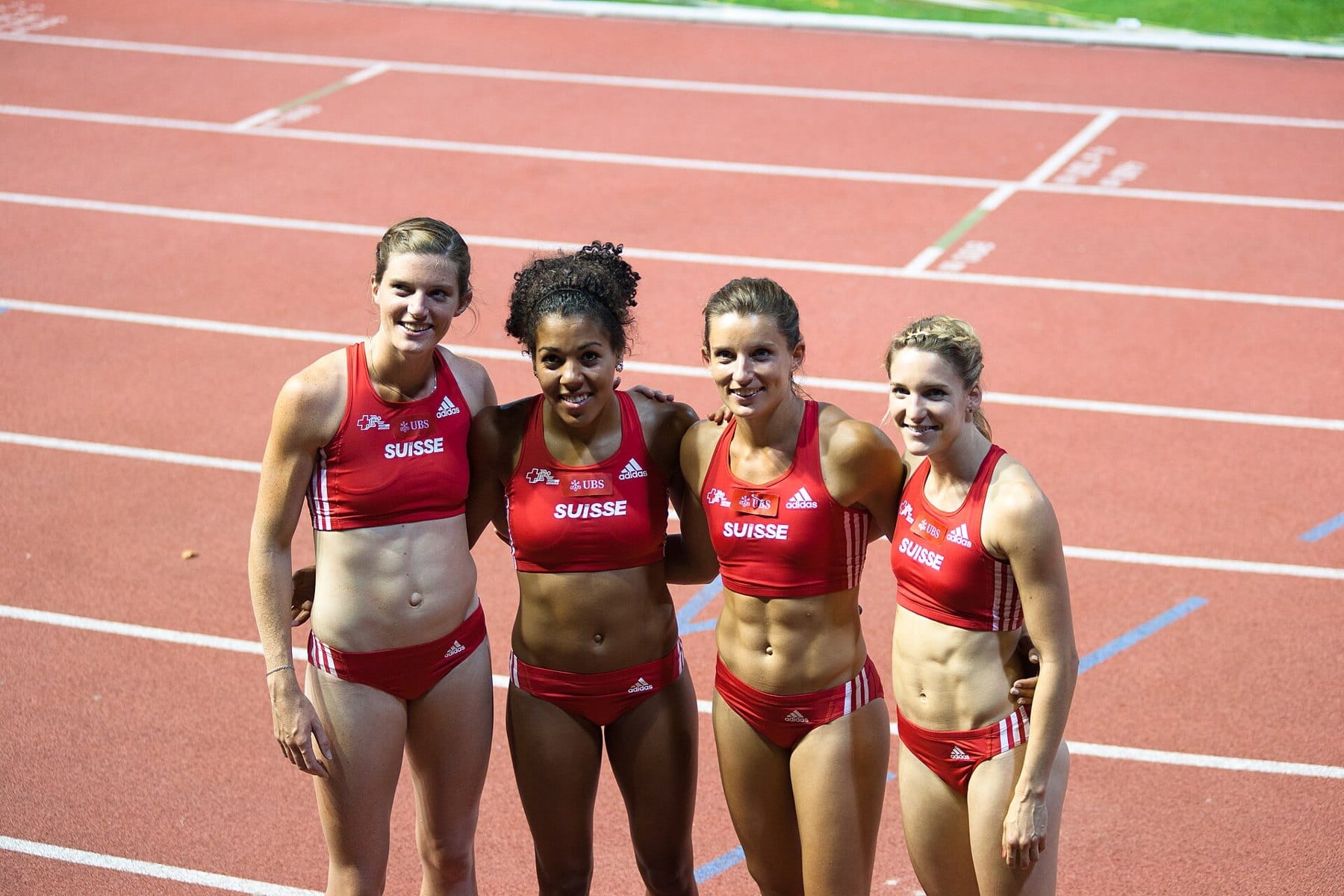
Until the end of 2012 the Swiss national team wore adidas. The federation’s partner pages from 2010 to 2012 list adidas first among its leading partners and, in 2012, as official outfitter; when the change came Swiss Athletics thanked adidas for its years of cooperation. The last summer of that era is in the photograph below: red crop tops and briefs, a white SUISSE across the chest, adidas’s three white stripes down the sides, and the logos of UBS, the national-team sponsor, and of the federation.
Puma took over from the 2013 season. The announcement, on 18 January 2013, set the first championship in the new kit at the European Indoors in Gothenburg that March and described three layers: competition and leisure kit for the athletes, a staff collection, and a selection of pieces sold in the federation’s shop. Puma already had Swiss ties — it partnered Weltklasse Zürich and the UBS Kids Cup, and was official outfitter of the 2014 European Championships in Zürich. The deal has since been extended twice by an Olympic cycle; the July 2021 extension runs to 2028, to the Olympic Games in Los Angeles, and in October 2026 Puma is still listed among the federation’s leading partners.
That makes Puma the kit of the whole Swiss rise. In 2021 the federation noted that all of its athletes’ successes since 2013 had been achieved in that outfit; since then the list has grown to include Ditaji Kambundji’s world title and Ehammer’s world record. Through the change three things stayed: the red base, the white SUISSE and the UBS logo on the chest. What changed is the trim. Puma’s version sets a small cross inside the wordmark as the dot of the I, and runs black side panels with a red dot pattern where adidas had its stripes.
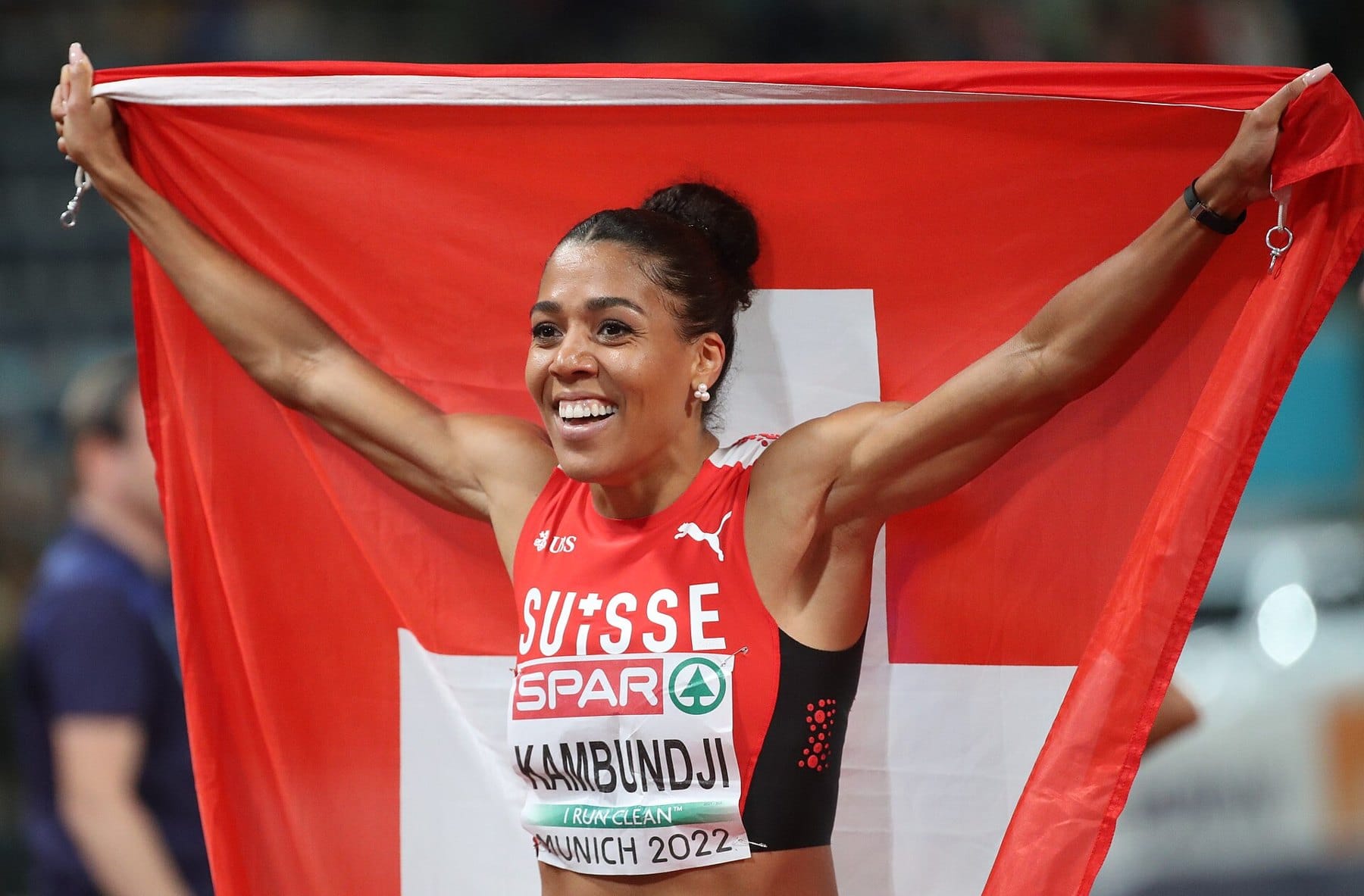
One line to keep separate: at the Olympic Games, the Swiss delegation’s ceremony, village, training and podium clothing comes from Swiss Olympic’s own partners — the retailer Ochsner Sport and, since 2020, the Swiss brand On. The Puma contract is Swiss Athletics’ own, for its national team.
The Swiss pieces in our archive come from the middle of the Puma era: the Puma Switzerland International Team 2016 Pro Elite range — tracksuit, T-shirt, red and white polos and a team bag — from the season told in Switzerland 2016, the year of five European medals in Amsterdam. They came through the team channel, not from the selection sold to the public. All of them are in the Switzerland collection.
The Current State: 2024–2026
Measured in European and world medals, 2024 to 2026 are the best three seasons Switzerland has had. At the European Championships in Rome in June 2024 the team won nine medals, four of them gold: Mujinga Kambundji retained her 200 m title, Timothé Mumenthaler won the men’s 200 m with William Reais third behind him, Dominic Lobalu took the 10,000 m and Angelica Moser the pole vault. Ditaji Kambundji added silver in the 100 m hurdles, and Lobalu (5000 m), Jason Joseph (110 m hurdles) and Ehammer (long jump) bronze.
In 2025 Ditaji Kambundji won the world 100 m hurdles title in Tokyo, and Switzerland took four medals at the World Indoors in Nanjing: gold for Mujinga Kambundji in the 60 m, silver for Ditaji in the 60 m hurdles and for Kälin in the long jump, bronze for Moser. In March 2026, at the World Indoors in Toruń, Ehammer set the heptathlon world record of 6,670 points, Werro won 800 m silver in a Swiss indoor record and Moser shared pole vault bronze in a three-way tie.
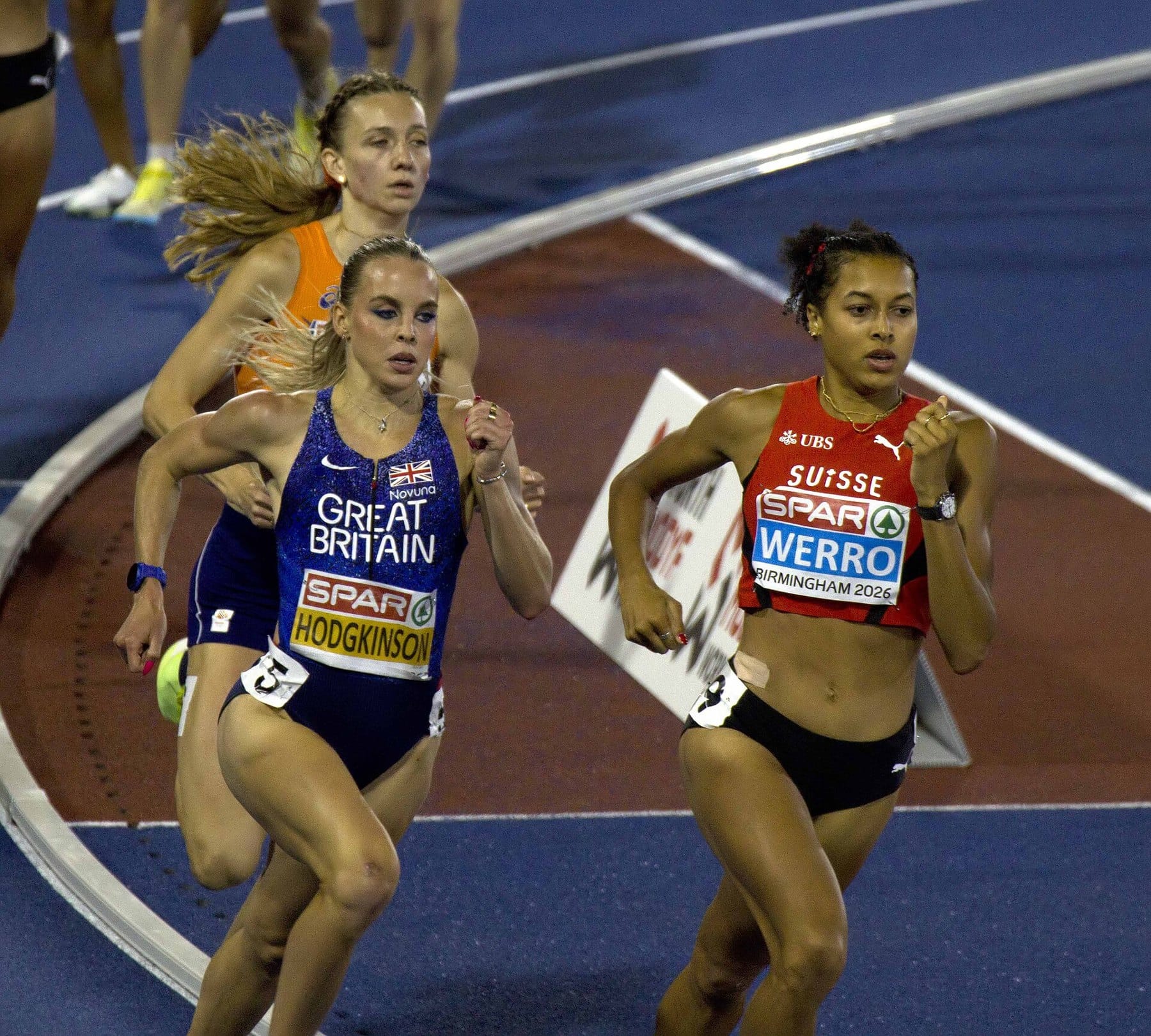
Birmingham in August 2026 brought seven European medals — three gold, three silver, one bronze. Werro won the 800 m in 1:54.81, breaking a championship record that had stood since 1982, after being reinstated on appeal following a fall in the semi-finals; Joseph won the 110 m hurdles in 13.12; Moser retained her pole vault title with 4.80 m. Lobalu (10,000 m), Ehammer (long jump) and the women’s 4×100 m relay won silver, and Mumenthaler shared 200 m bronze.
There was no outdoor World Championships in 2026. Werro’s season also brought the Swiss 800 m record of 1:53.70 at Weltklasse Zürich in August, a second Diamond League title, and victory in the 800 m at the new World Athletics Ultimate Championship in Budapest in September, in 1:55.88. The next outdoor Worlds are in Beijing in 2027; and in October 2026 Swiss Athletics and Weltklasse Zürich announced that they intend to bid for the 2034 European Championships in Zürich, after a 2030 bid was withdrawn when the Federal Council declined to fund it.
Future Stars and Emerging Talents
The generation behind the Kambundjis and Ehammer is already winning. Two of the six names below took European titles in Birmingham; two set Swiss records before they turned 22.
Audrey Werro
European champion in Birmingham in 2026 in 1:54.81, a championship record, less than a day after falling in her semi-final and being reinstated on appeal. World indoor silver in Toruń, two Diamond League titles, a win at the new Ultimate Championship and a Swiss record of 1:53.70 at Weltklasse Zürich — all before her 23rd birthday.
Timothé Mumenthaler
European 200 m champion in Rome in 2024 in 20.28, with William Reais taking bronze for a Swiss one-three; a shared bronze in Birmingham in 2026 in 20.26, after a personal best of 20.09 at the same championships.
Jason Joseph
European champion in Birmingham in 2026 in 13.12, two years after bronze in Rome; European indoor 60 m hurdles champion in 2023 in a Swiss record 7.41. He has run the Swiss outdoor record of 13.07 three times.
Annik Kälin
Fourth in the Olympic heptathlon in Paris with 6,639 points, world indoor long jump silver in Nanjing in 2025, and a Swiss heptathlon record of 6,819 in Ratingen in June 2026.
Valentin Imsand
Holds the Swiss pole vault record: 5.82 m in Sion on 1 June 2025.
Leonie Hügli
Threw a Swiss record of 62.33 m at the Birmingham European Championships on 14 August 2026.
Switzerland Records & Historic Milestones
The Swiss record list, as Swiss Athletics published it on 23 October 2026, runs from marks older than most of today’s team to a world record set this year. The men’s 100 m and 200 m records belong to a sprinter who has since been banned for doping, and are left out here.
Two dates frame the list. On 21 August 1985 Pierre Délèze ran 3:31.75 for 1500 m at Weltklasse Zürich, and no Swiss runner has gone faster in the 41 years since. And 2026 alone brought new Swiss records from Ehammer, Werro, Kälin and Hügli, on top of Ehammer’s world record in Toruń.
Shop the Switzerland Collection
Switzerland has its own rail in the archive, and it is all Puma: the Switzerland International Team 2016 Pro Elite range, from the season between the Amsterdam European Championships and Rio. The rail is small and it rotates — what is here is what came out of the team channel, never replicas.
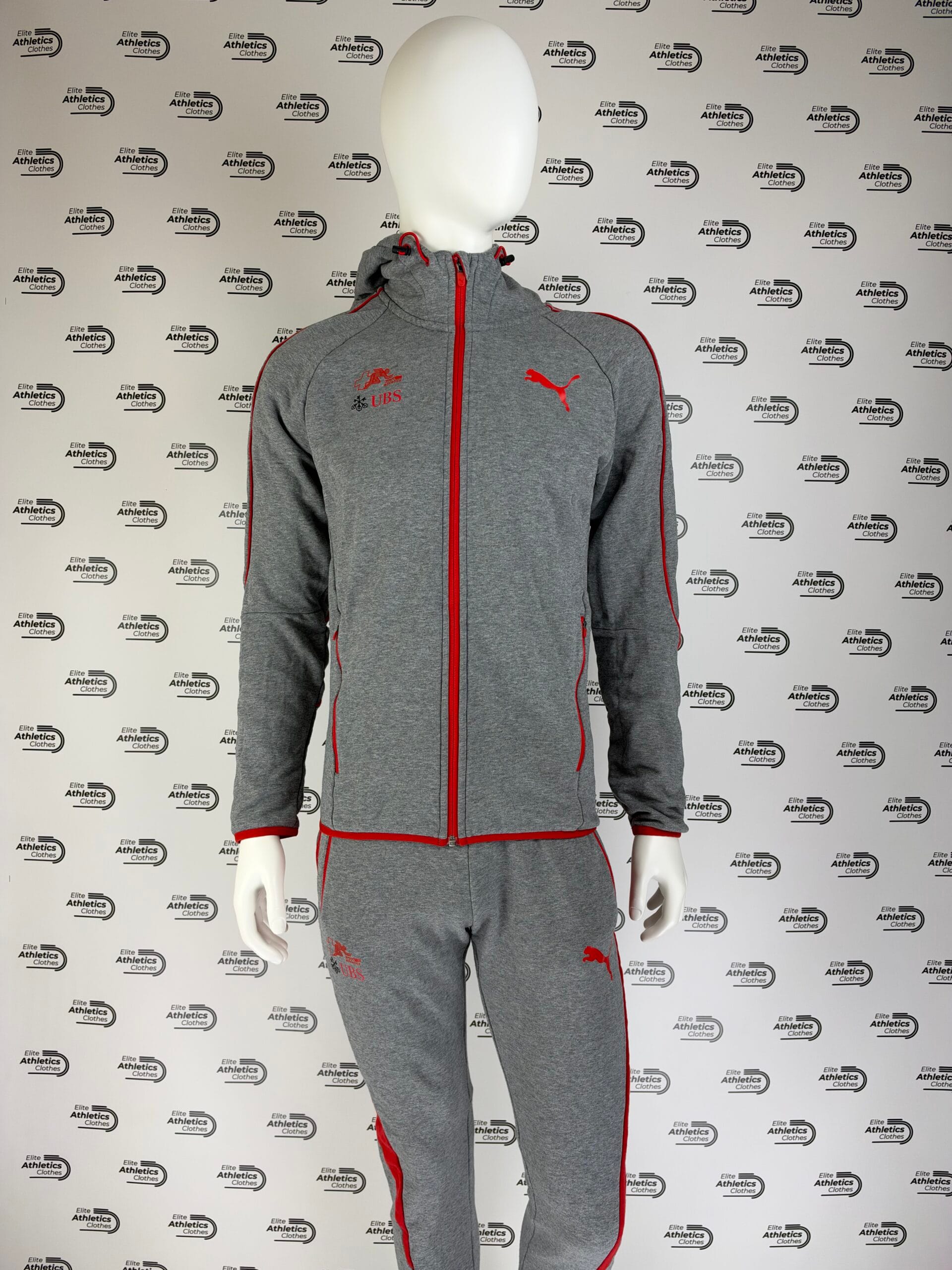 Puma Switzerland International Team 2016 Pro Elite Tracksuit180,00 €View Piece →
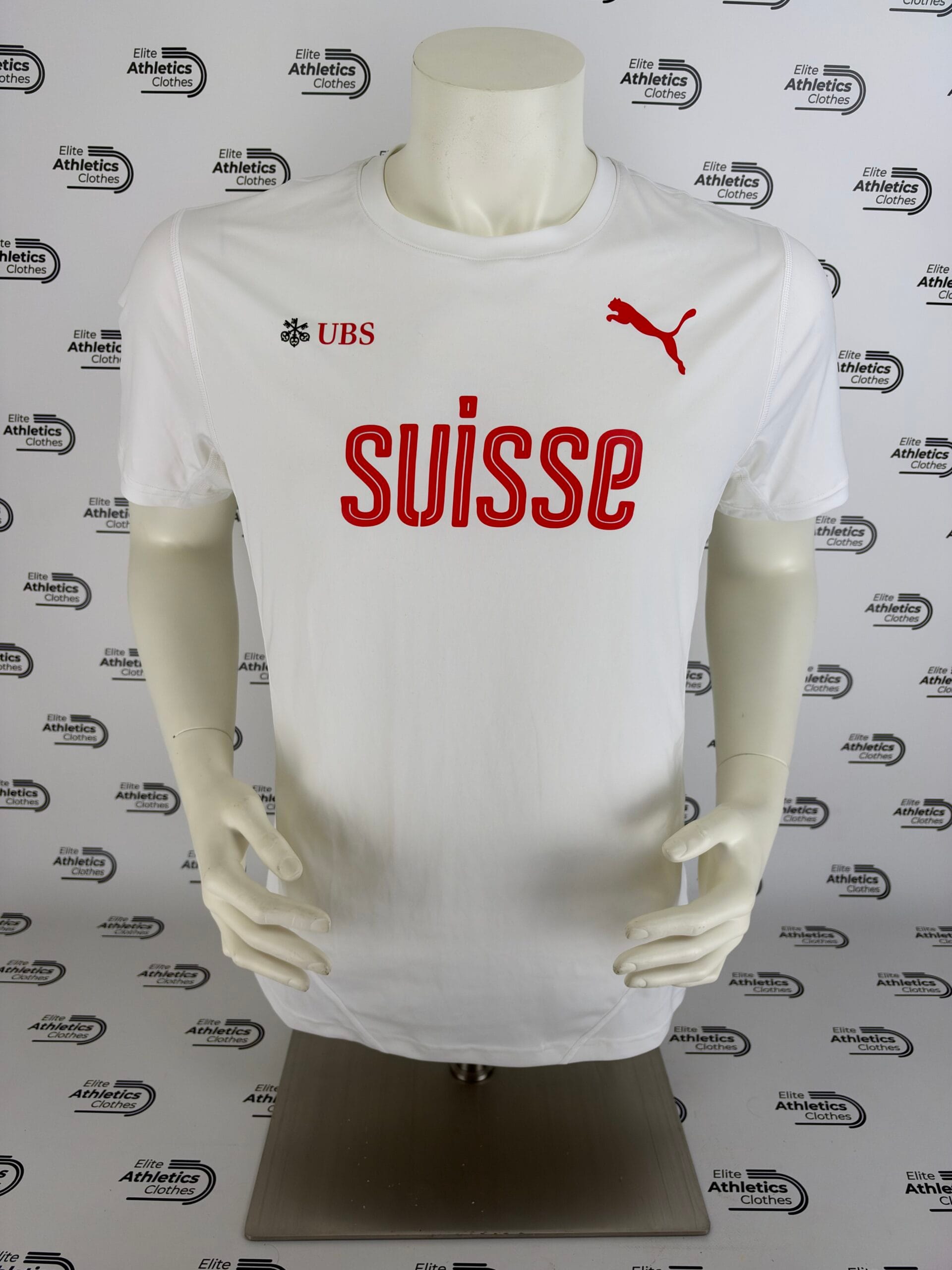 Puma Switzerland International Team 2016 Pro Elite T-Shirt140,00 €View Piece →
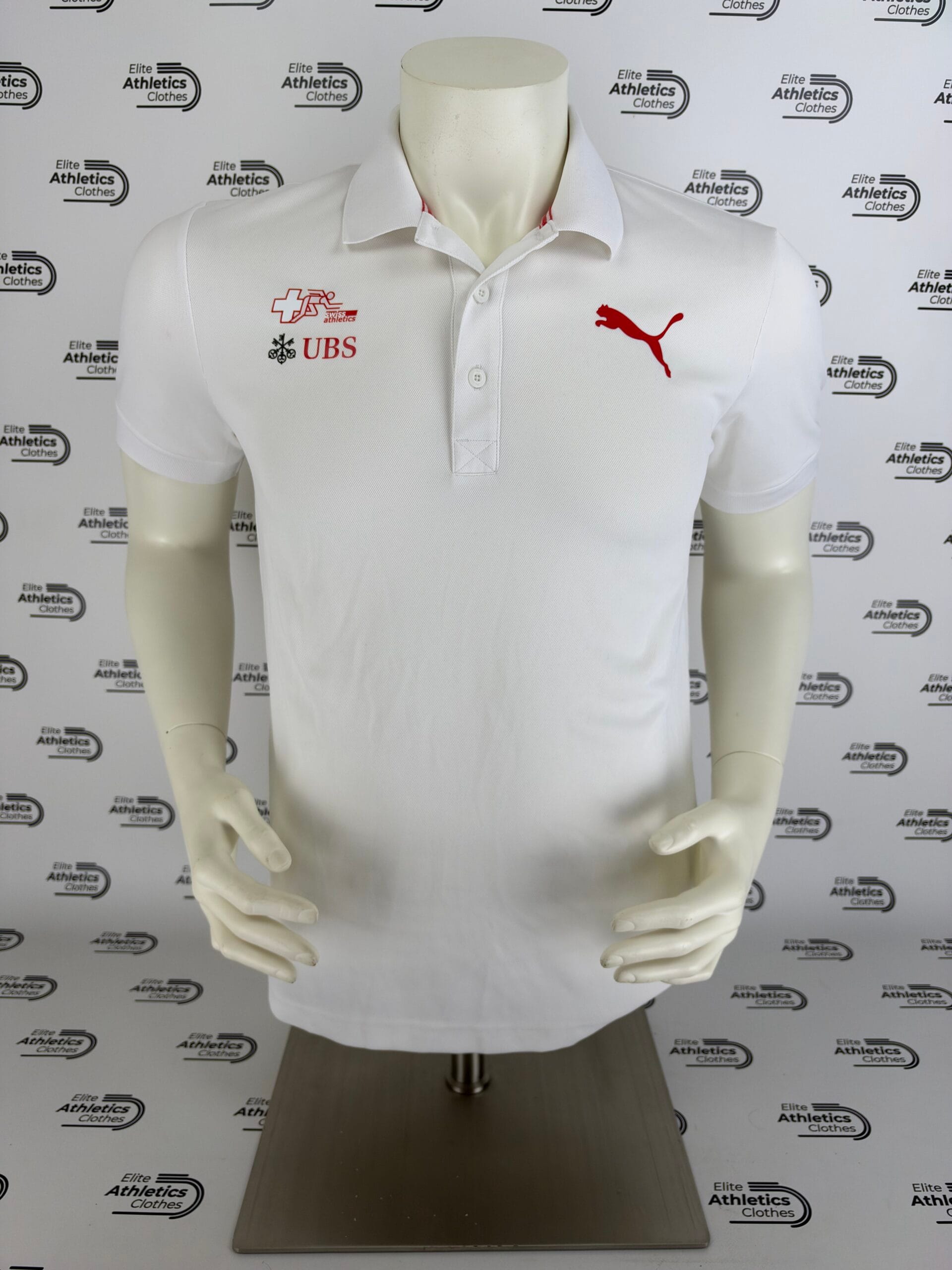 Puma Switzerland International Team 2016 Pro Elite White Polo90,00 €View Piece →
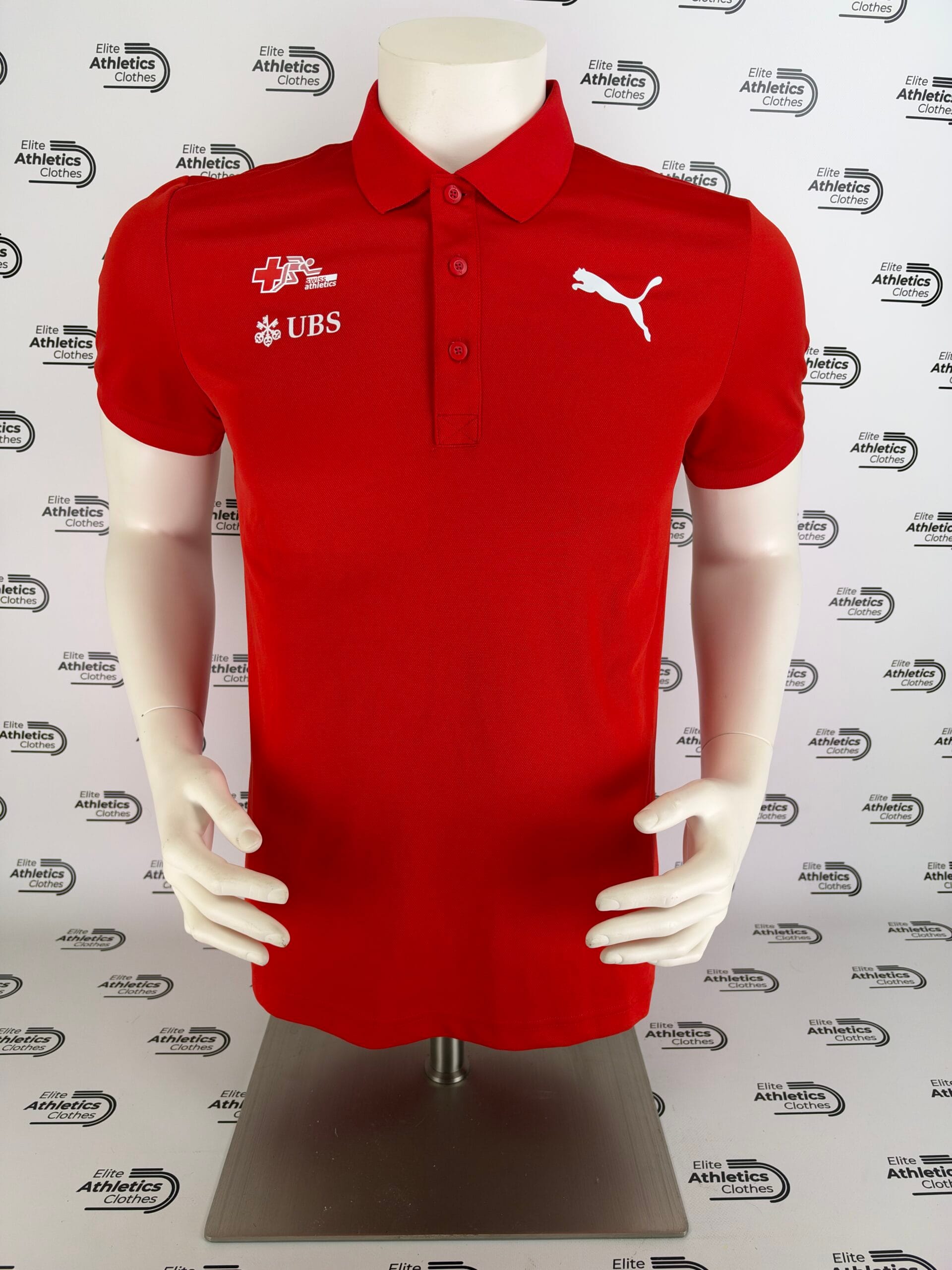 Puma Switzerland International Team 2016 Pro Elite Red Polo90,00 €View Piece →
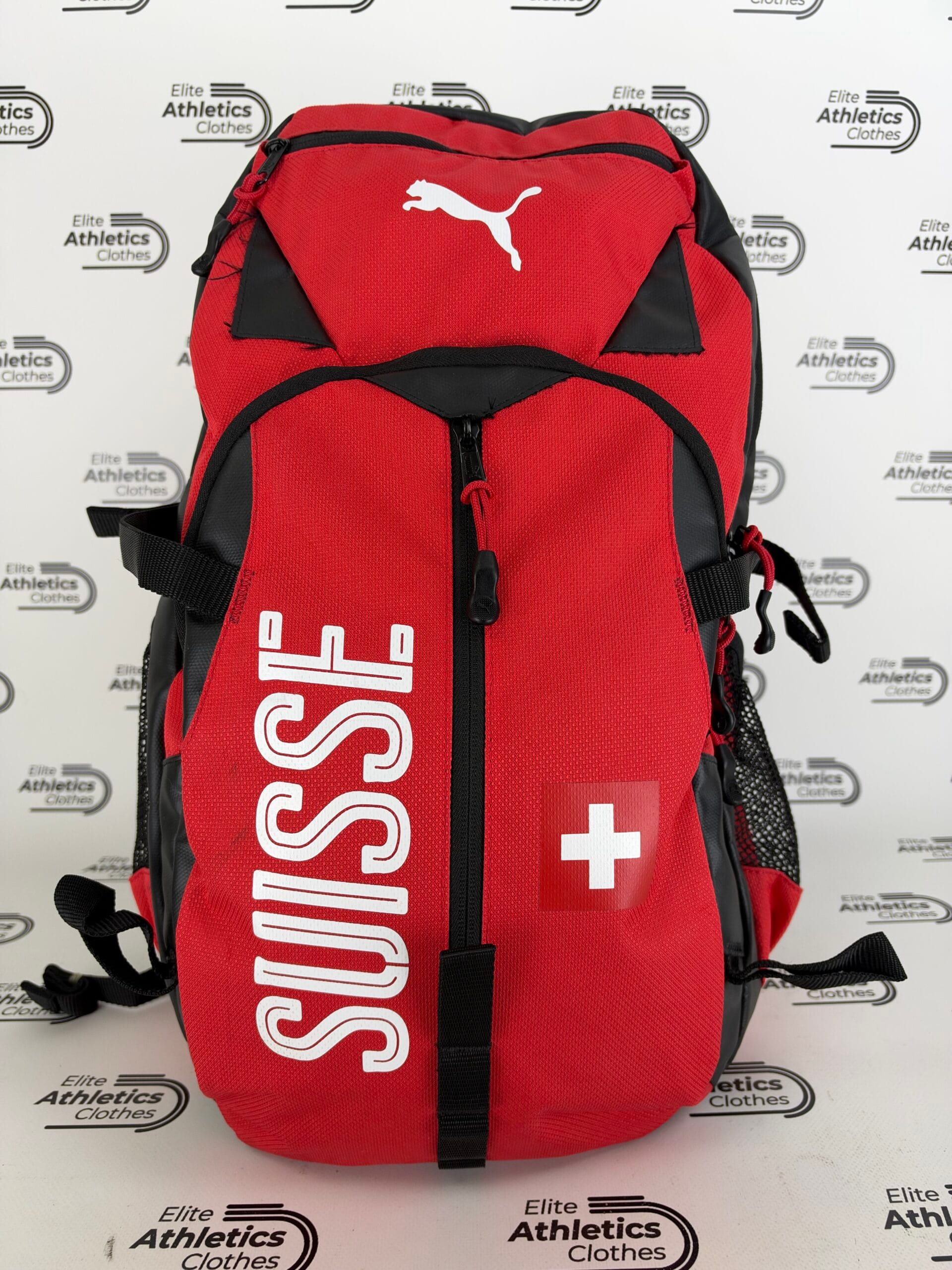 Puma Switzerland International Team 2016 Pro Elite Backbag120,00 €View Piece →
How many Olympic medals has Switzerland won in athletics?
Eight: six silver and two bronze, and never a gold. The first two came at Paris 1924, with Paul Martin in the 800 m and Willy Schärer in the 1500 m; the last was Werner Günthör’s shot put bronze at Seoul 1988. Four of the eight were won in race walking between 1936 and 1952.
Has Switzerland ever won a gold medal at the World Athletics Championships?
Yes, five: Werner Günthör in the shot put in 1987, 1991 and 1993, André Bucher in the 800 m in 2001 and Ditaji Kambundji in the 100 m hurdles in 2025. Switzerland has also won five world bronzes, but never a silver.
Who is the best Swiss athlete of all time?
On titles, Werner Günthör: three world championships, European gold, world indoor gold and an Olympic bronze, with a Swiss shot put record of 22.75 m that has stood since 1988. Among current athletes, Simon Ehammer holds the indoor heptathlon world record (6,670 points, 2026), Mujinga Kambundji has two world indoor and two European titles, and Ditaji Kambundji is the 2025 world champion in the 100 m hurdles.
Why has Swiss athletics improved so much since 2014?
The federation dates the rise to the 2014 European Championships in Zürich. The numbers show it: 44 medals at the Olympics, Worlds, World Indoors and Europeans from 1924 to 2013, and 47 in the thirteen seasons since. At the European Championships, Switzerland won 23 medals in 21 editions before 2014 and 32 in the six editions since.
What kit does the Swiss athletics team wear?
Puma, since the 2013 season, under a contract that runs to the Los Angeles 2028 Olympics; before that the team wore adidas. The red kit carries a white SUISSE wordmark and the logo of UBS, the national-team sponsor. At the Olympic Games the Swiss delegation’s ceremony and village clothing comes separately, from Swiss Olympic’s partners Ochsner Sport and On.
What are the main athletics meetings in Switzerland?
Weltklasse Zürich, founded in 1928, and Athletissima in Lausanne, founded in 1977. Both hold World Athletics Heritage Plaques; Weltklasse is where Armin Hary ran the first 10.0 for 100 m in 1960, and Athletissima hosted Leroy Burrell’s 9.85 world record in 1994.
Where can I buy authentic Swiss national team athletics apparel?
Elite Athletics Clothes has a dedicated Switzerland collection with team-issued pieces from the Puma Switzerland International Team 2016 Pro Elite range — tracksuit, T-shirt, polos and team bag. Every piece came through the team channel; none is a replica.
Sources and References
- Swiss Athletics — Swiss outdoor medal statistics (PDF) — Olympic 8 (0-6-2), World 10 (5-0-5), European 55 (16-19-20), as of 30 August 2026.
- Swiss Athletics — all international Swiss medallists (PDF) — every world indoor medal and the European editions, as of 30 August 2026.
- Swiss Athletics — Swiss outdoor records (PDF) — every outdoor record cited, list dated 23 October 2026.
- Olympedia — Switzerland in athletics — all eight Olympic medals, the result pages and the medallists’ biographies.
- Switzerland at the Olympics (Wikipedia) — cross-check of the 0-6-2 athletics count.
- athle.ch — Swiss athletes at the World Championships (PDF) — world medals 1983–2017, Gasser’s 1987 disqualification, Ryffel and Bucher details.
- World Athletics — Tokyo 2025 women’s 100 m hurdles final — Ditaji Kambundji’s 12.24.
- World Athletics — Simon Ehammer profile — the 6,670 heptathlon world record of 21 March 2026 and his titles.
- Athletissima — Ehammer breaks the record — the Toruń record and Eaton’s previous mark.
- World Athletics — Audrey Werro profile — her 2026 titles and Swiss records.
- World Athletics — Birmingham 2026 European Championships report — Werro’s 1:54.81 championship record after her semi-final fall.
- athle.ch — Swiss athletics reunited in 1971 (PDF) — the founding of the federation on 4 December 1971 and the 2006 renaming.
- German Road Races — 50 years of Swiss Athletics — the football and gymnastics camps, the IAAF contact from 1913 and the Scheurer case.
- Swiss Athletics — Puma becomes official outfitter (2013, archived) — Puma from the 2013 season and the first championship in the kit.
- Swiss Athletics — partnership with Puma extended to 2028 (2021, archived) — the two extensions and the LA 2028 term.
- Swiss Athletics — partner overview — Puma still a leading partner, checked October 2026.
- On — Swissness for the Swiss Olympic Team (2020) — the separate Olympic delegation clothing.
- World Athletics — Weltklasse Zürich Heritage Plaque — the meeting’s 1928 founding and Hary’s 10.0.
- World Athletics — Athletissima Heritage Plaque — the 1977 founding and the world records set in Lausanne.
- Olympics.com — how Lausanne became the Olympic capital — the IOC’s move on 10 April 1915.
- 2014 European Athletics Championships (Wikipedia) — Zürich 2014 and Hussein’s gold as the only Swiss medal.
- SRF — Kariem Hussein’s positive test — the 2021 nikethamide ban.
- Antidoping Schweiz — 1993 doping inquiry report (archived) — the inquiry’s findings on Günthör.
- Swiss Athletics — towards a home European Championships in 2034 — Seiler on Zürich 2014 and the 2034 bid intention.