

Switzerland
2016
Five medals at the European Championships in Amsterdam, none at the Olympics five weeks later. In Puma red, Switzerland's 2016 team was a European medal team that had not yet learned to win at world level — and two of the athletes who later would were already in it.
Switzerland's 2016 athletics season was a European success and a global near miss. At the European Championships in Amsterdam the Swiss won five medals — Tadesse Abraham's half-marathon gold, the half-marathon team title and bronzes for Mujinga Kambundji, Kariem Hussein and Léa Sprunger — with thirteen top-eight places from 47 athletes. At the Rio Olympics they won none, and their best results were Nicole Büchler's sixth place in the pole vault and Abraham's seventh in the marathon.
This page follows the same athletes from Amsterdam to Rio, adds Marcel Hug's first Paralympic golds, checks what became of every 2016 Swiss record and every name, and documents the Puma Switzerland kit of 2016 — five pieces of which are in this archive.
Part of our Season Series — one year at a time. Switzerland's biggest meeting has its own page: Weltklasse Zürich. Jump to the 2016 kit or browse the Switzerland collection.
- Amsterdam
- 5 medals (2 gold, 3 bronze) and 13 top-eight places from 47 athletes
- The golds
- Tadesse Abraham, half marathon, 1:02:03 — plus the half-marathon team title
- The bronzes
- Kambundji 100 m 11.25 · Hussein 400 m hurdles 49.10 · L. Sprunger 400 m hurdles 55.41
- Rio Olympics
- No athletics medal from 17 athletes; Büchler 6th (4.70), Abraham 7th (2:11:42)
- Portland
- Büchler 4th in the pole vault, 4.80 — a Swiss indoor record until August 2026
- Rio Paralympics
- Marcel Hug: gold in the T54 800 m (1:33.76) and marathon (1:26:16), two silvers
- The kit
- Puma, official outfitter of Swiss Athletics since the 2013 season, with UBS on the chest
- In the archive
- Five pieces from 2016: tracksuit, T-shirt, two polos and the team backpack
Amsterdam: Five Medals and Thirteen Finals
Switzerland sent 47 athletes to the European Championships in Amsterdam, 6–10 July 2016, forty of them as individual starters. By the federation's own count they came home with five medals and thirteen places in the top eight.
- GoldTadesse Abraham — half marathon, 24 seconds clear of Kaan Kigen Özbilen1:02:03
- GoldSwitzerland — half marathon team: Abraham, Lyon, Lehmann, Kreienbühl, Berni, Kempf3:12:04
- BronzeMujinga Kambundji — 100 m, behind Schippers and Lalova-Collio11.25
- BronzeKariem Hussein — 400 m hurdles, after a 48.87 semi-final49.10
- BronzeLéa Sprunger — 400 m hurdles, behind Petersen and Linkiewicz55.41
The two golds came in the same race and belonged to the same man. Tadesse Abraham, born in Eritrea, won the half marathon in 1:02:03, and his time led the Swiss six to the team title by two seconds over Spain. The bronzes were all on the track: Mujinga Kambundji in the 100 m, Kariem Hussein in the 400 m hurdles two years after winning the event in Zürich, and Léa Sprunger in the women's 400 m hurdles, in 55.41.
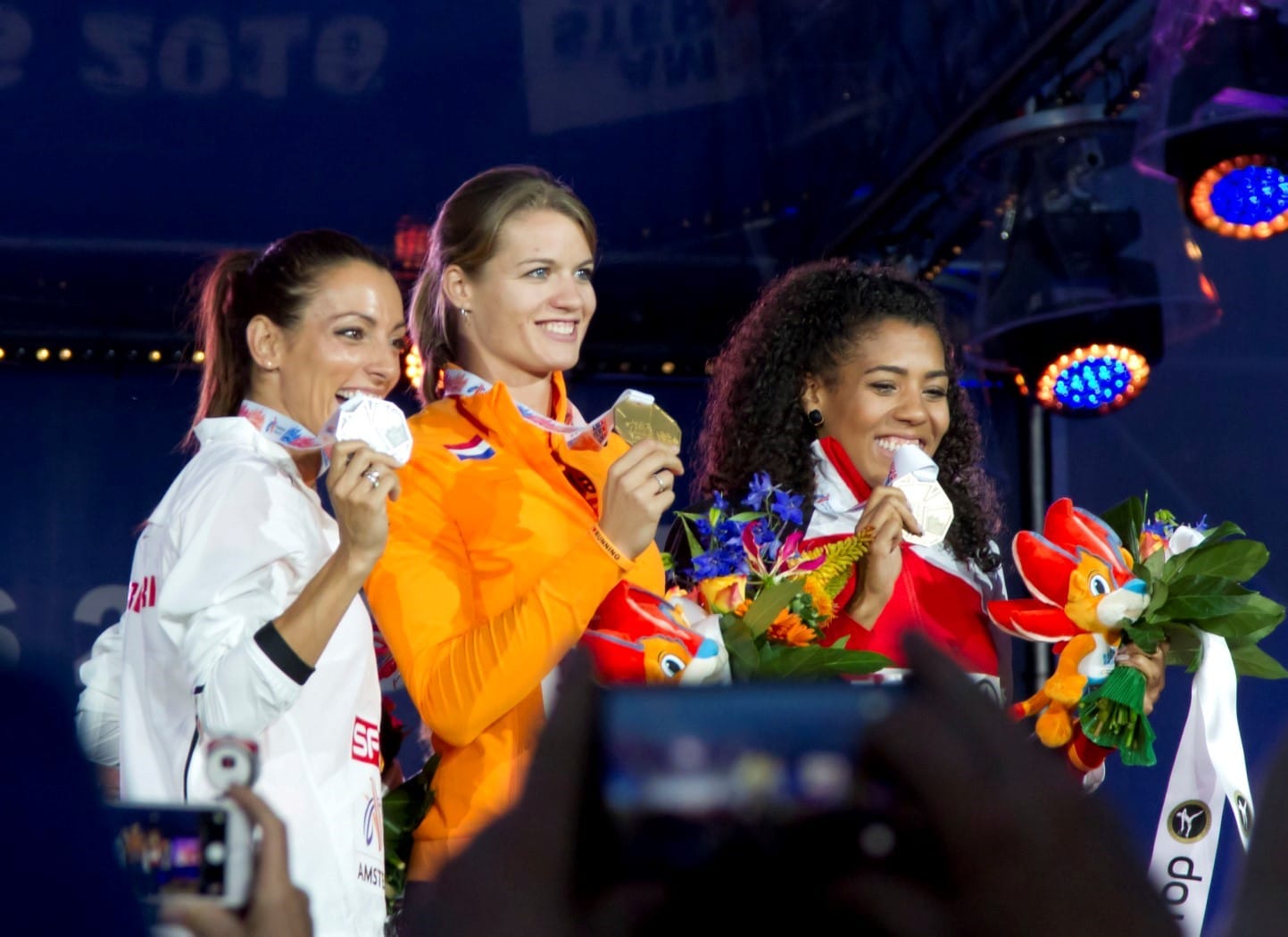
Behind the medals sat a deep row of near misses. Selina Büchel and Clélia Rard-Reuse were both fourth, in the 800 m and the 100 m hurdles; Fabienne Schlumpf was fifth in the steeplechase; Angelica Moser, aged eighteen, was seventh in the pole vault. The women's 4×100 m team — Ajla Del Ponte, Sarah Atcho, Ellen Sprunger and Salomé Kora — set a Swiss record of 42.87 in the heats and finished fifth. The full European picture of that week is in our Netherlands 2016 page, the host nation and Schippers' 100 m, and Spain 2016.
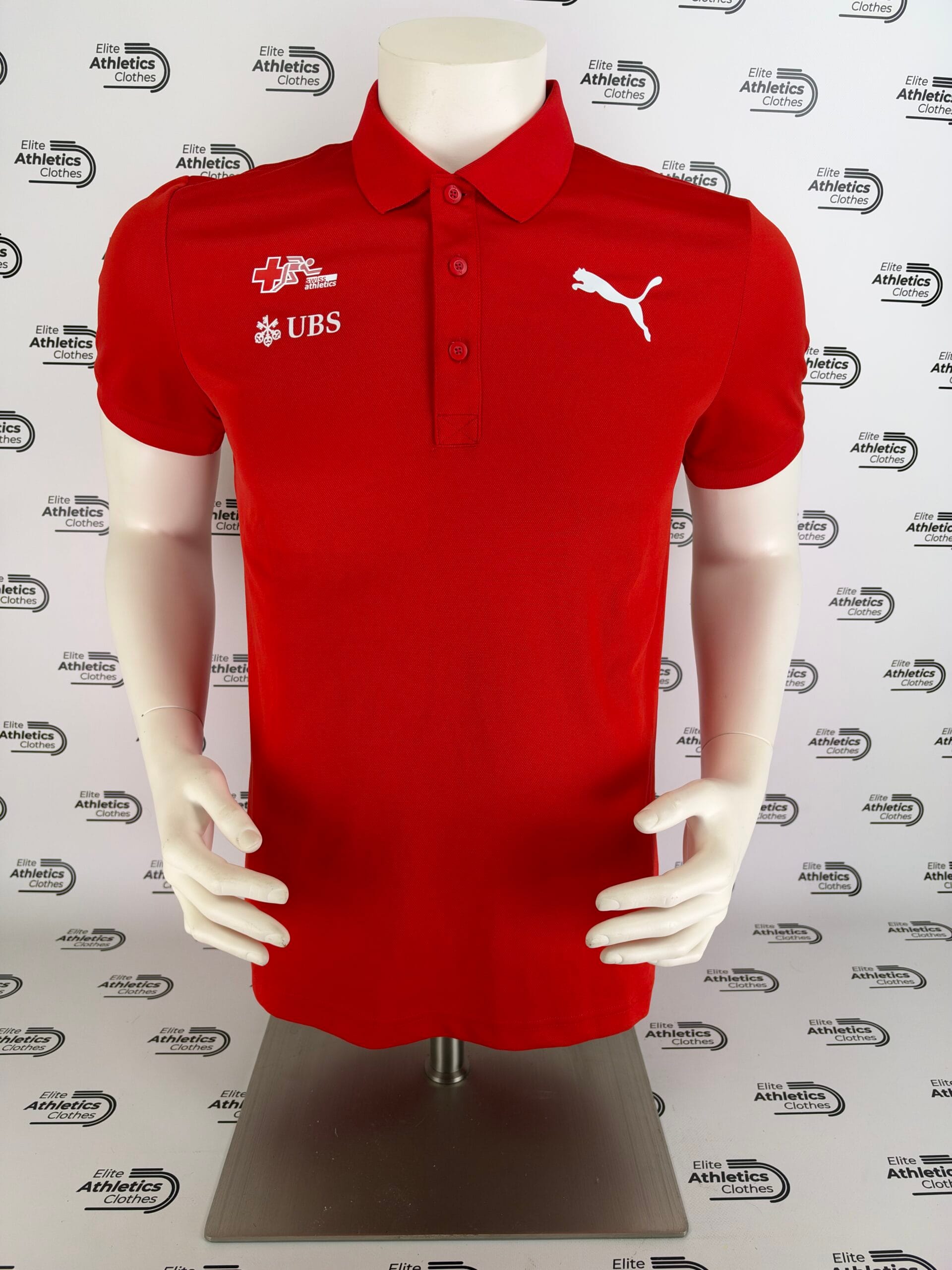 From this season · in the archivePuma Switzerland International Team 2016 Pro Elite Red PoloThe red polo of the Swiss team's 2016 Puma allocation: the federation badge and UBS on the left chest and the white Puma cat on the right, from the team clothing of the 2016 season.90,00 €View piece →
Portland and Rio: The World Level
The season had opened with a near miss on the world stage. At the World Indoor Championships in Portland on 17 March, Nicole Büchler cleared 4.80 m at her third attempt, facing elimination, for a Swiss indoor record — and finished fourth on countback, in the first women's pole vault in which four athletes went over 4.80. Switzerland had two athletes in Portland. (How that championship works is explained in our guide to the World Indoors.)
Five weeks after Amsterdam, the same squad went to Rio. Swiss Athletics entered 17 athletes, twelve of them as individual starters, and the result was two places in the top eight and no medal: Büchler sixth in the pole vault with 4.70, Abraham seventh in the marathon in 2:11:42, eighth at 40 km and still moving up. Every Swiss medal of those Games came from another sport.
Hover or tab on a name for the round and the mark. Abraham ran the half marathon in Amsterdam and the marathon in Rio; Kambundji's line is the 100 m, the event of her bronze; the relay is the women's 4×100 m. The chart follows the ten results that can be traced from one championship to the other; the federation's Amsterdam total of 13 top-eight places also counts the two half-marathon teams and two men's results. Sources: Swiss Athletics championship statistics and Olympedia event pages (see Sources). Verified October 2026.
The same athletes in Amsterdam and Rio, in a table
| Athlete | Amsterdam (round, mark) | Rio (round, mark) |
|---|---|---|
| Tadesse Abraham | Podium – 1-3, 1:02:03 | Top eight – 4-8, 2:11:42 |
| Mujinga Kambundji | Podium – 1-3, 11.25 | Semi-final, 11.16 |
| Kariem Hussein | Podium – 1-3, 49.10 | First round, 49.80 |
| Léa Sprunger | Podium – 1-3, 55.41 | First round, 56.58 |
| Selina Büchel | Top eight – 4-8, 2:00.47 | Semi-final, 1:59.35 |
| Clélia Rard-Reuse | Top eight – 4-8, 12.96 | Semi-final, 12.96 |
| Fabienne Schlumpf | Top eight – 4-8, 9:40.01 | Final – 9th or lower, 9:59.30 |
| Women's 4×100 m | Top eight – 4-8, 43.00 | First round, 43.12 |
| Angelica Moser | Top eight – 4-8, 4.45 | First round, 4.45 |
| Nicole Büchler | Did not start, DNS | Top eight – 4-8, 4.70 |
The drop was steepest for the European medallists. Kambundji reached the semi-finals of both the 100 m (11.16) and the 200 m (22.83). Hussein went out in the heats in 49.80, running on a left foot that had been inflamed since the end of May. Sprunger also went out in the first round, in 56.58. Schlumpf took the Swiss steeplechase record down to 9:30.54 in her heat, then finished last in the final. The relay ran 43.12 in the heats, a quarter of a second slower than in Amsterdam, and Kambundji was not in it.
None of this was a collapse. Switzerland had not won a senior medal at an Olympics, a World Championships or a World Indoors since Viktor Röthlin's marathon bronze in Osaka in 2007, and would not win another until March 2018, when Kambundji took bronze in the 60 m at the World Indoors in Birmingham. 2016 sat in the middle of that ten-year gap. At home the pattern held: at Athletissima in Lausanne on 25 August and at the Diamond League final at Weltklasse Zürich on 1 September, no Swiss athlete reached an individual podium. The best individual result was Hussein's fifth place in the Zürich final, in 49.21; the women's relay was second in Lausanne and fourth in Zürich.
Marcel Hug's First Paralympic Gold
The Swiss medals that did come in Rio came in September, from a wheelchair racer. Marcel Hug lined up for the T54 800 m final on 15 September with four silver and two bronze medals from four Paralympic Games — two of the silvers won earlier that week — seven world titles and a nickname, the Silver Bullet. In 2016 he had already won the London and Boston marathons.
He led the 800 m from the gun and won it in 1:33.76, his first Paralympic gold. Three days later, on the last day of the Games, he won the T54 marathon in 1:26:16, one second ahead of Kurt Fearnley of Australia in a sprint finish. With his silvers in the 5000 m on 11 September and the 1500 m on 13 September, that made four medals in Rio — all four of Switzerland's Paralympic athletics medals.
His teammate Manuela Schär left Rio without a medal; her best result was fourth in the 1500 m. Both are still racing ten years later. Hug won the Boston Marathon wheelchair race on 20 April 2026, his ninth Boston title. Schär won the Sydney Marathon on 31 August 2026 and with it became the first woman to win all seven World Marathon Majors.
What the 2016 Team Became
Of the Swiss records set in 2016 in championship events, none survives in October 2026. Abraham's 2:06:40 from Seoul in March was lowered by Abraham himself, finally to 2:04:40 in Valencia on 1 December 2024, at 42, in the last marathon of his career. Büchler's outdoor pole vault record of 4.78 (Doha, May 2016) fell to Angelica Moser in 2024, and her 4.80 from Portland lasted until 26 August 2026, when Moser cleared 4.85 in Zürich. Léa Sprunger's 22.38 for 200 m went to Kambundji in 2019; the relay's 42.87 was improved in London a year later; Schlumpf's 9:30.54 lasted until she broke it herself in 2017. The one 2016 mark still on the federation's list is Sprunger's 38.93 in the 300 m hurdles, an event that is rarely run.
The athletes went different ways. Sprunger became European 400 m hurdles champion in Berlin in 2018 and retired at the end of 2021; her 54.06 from 2019 is still the Swiss record. Büchler retired in 2020. Selina Büchel, twice European indoor 800 m champion, retired on 9 November 2022 after more than a year of long COVID had kept her from training. Hussein served a nine-month ban in 2021 after nikethamide, a stimulant prohibited in competition, was found in a sample from the Swiss Championships; it cost him the Tokyo Games, and by 2023 he was combining hurdling with work as a doctor.
Five of the 47 who went to Amsterdam were at the European Championships in Birmingham in August 2026. Moser won the pole vault with 4.80, retaining the title she had won in Rome in 2024. Kora and Del Ponte took silver in the 4×100 m. Kambundji, back racing in July after a pregnancy, ran the 200 m semi-finals, and Schlumpf, a marathoner now, finished nineteenth in 2:32:11. Kambundji and Moser are also the two in this squad who went on to close the global gap: Kambundji with global medals from 2018 onwards, Moser with World Indoor bronze in 2025 and 2026.
The Puma Switzerland Kit
Puma became the official outfitter of Swiss Athletics from the 2013 season, announced by the federation on 18 January 2013. It replaced adidas, and its first championship in the new national kit was the European Indoors in Göteborg that March. In 2016 Puma was one of the federation's four leading partners, with UBS, Omega and Le Gruyère, and it was still among them in 2026.
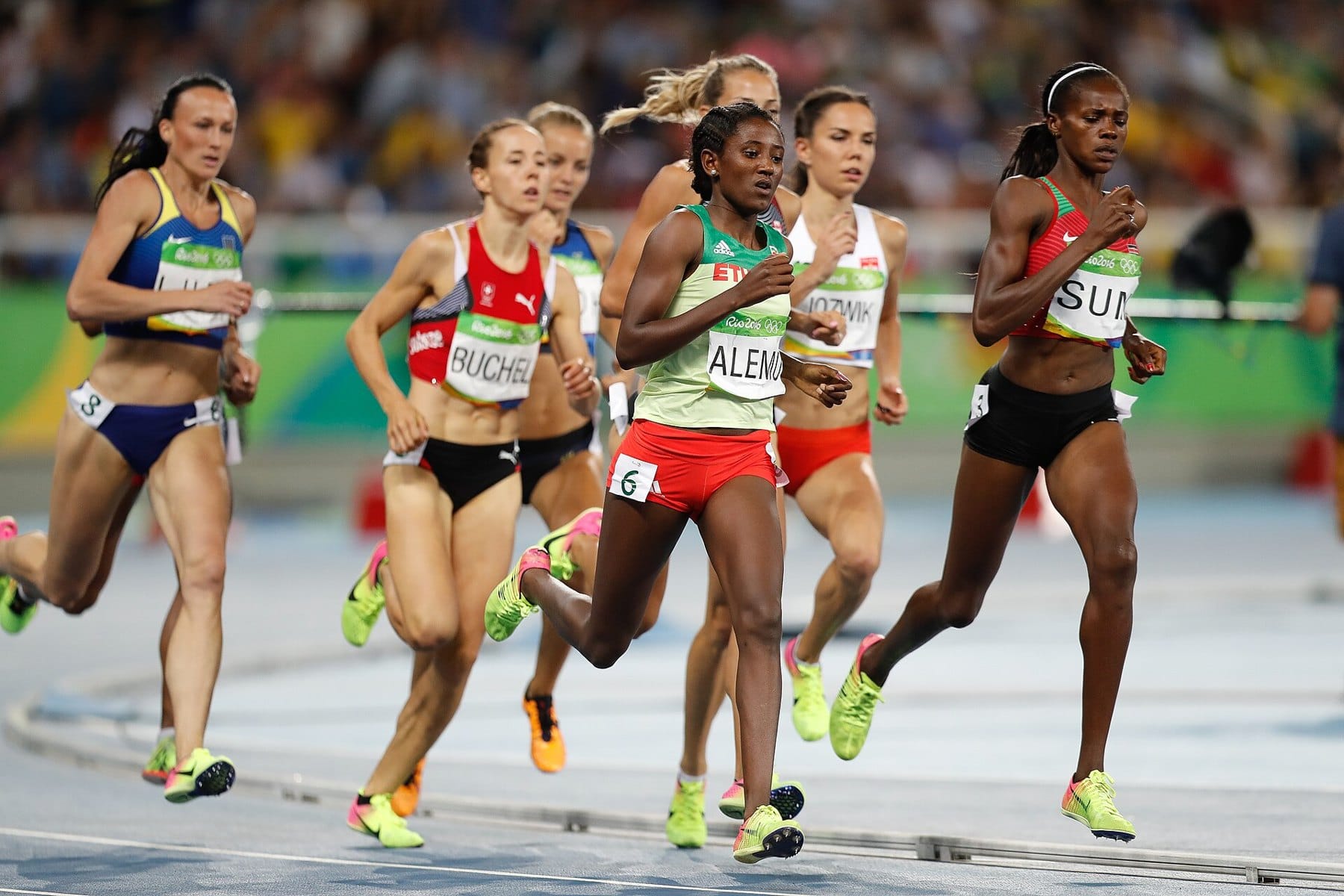
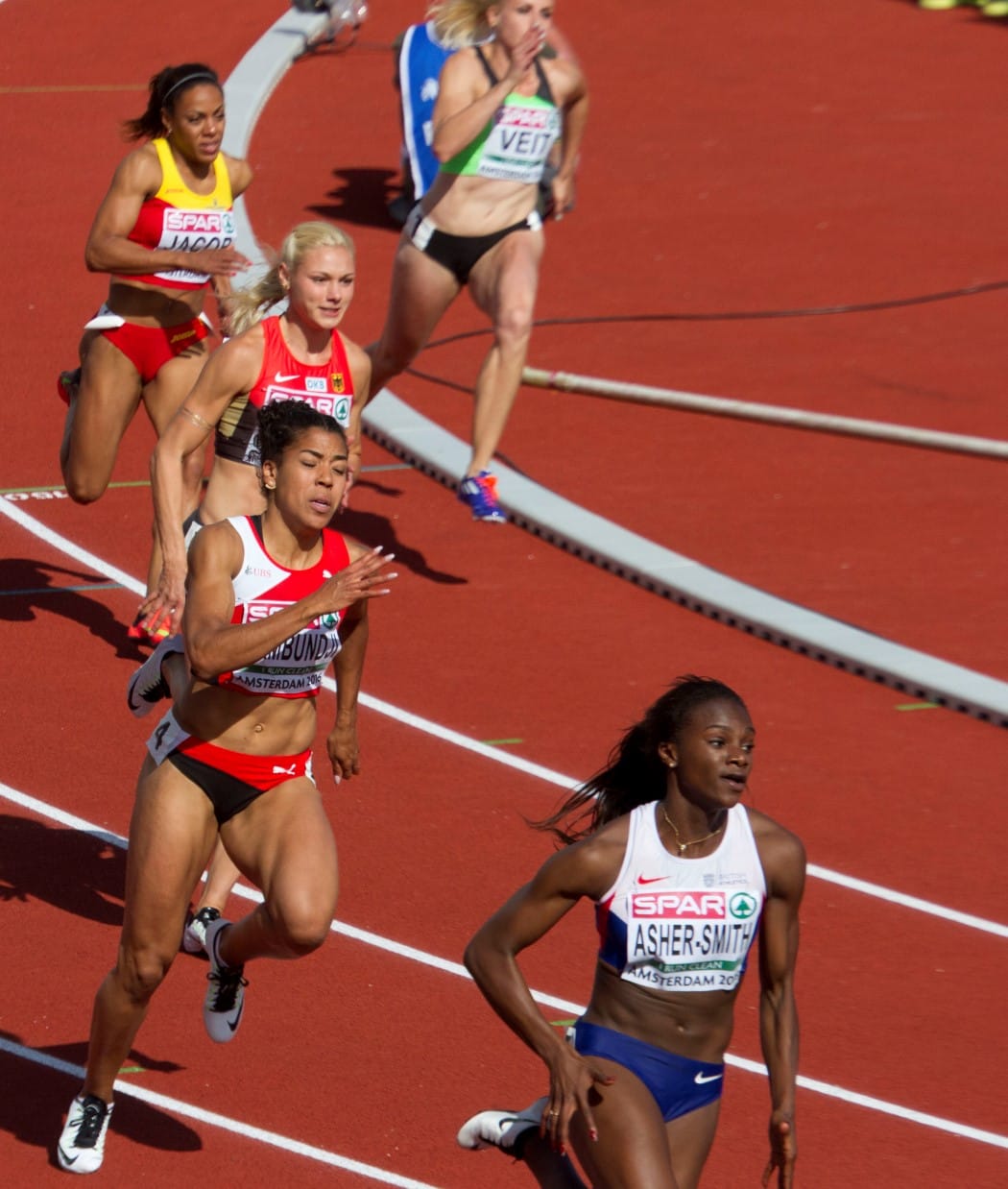
The 2016 competition kit is easiest to read in photographs. In Amsterdam, Kambundji raced in a white-and-red crop top with UBS and the Puma cat on the chest and red-and-black briefs with a white cat; in Rio, Büchel wore a red crop top with the Swiss cross badge and “Suisse” across it. Red and white, a Swiss cross, the Puma cat and the bank of the federation's leading partner: that is the whole visual language, and it carries over to the team clothing.
Our five pieces from the 2016 allocation are that team clothing. The tracksuit is grey marl with red zips and piping and a red Puma cat. The T-shirt is white with “suisse” in red lowercase across the chest. The two polos, one white and one red, carry the federation badge and UBS on the left chest and the cat on the right. The backpack is red and black, with SUISSE running down the front beside a Swiss cross. In Rio, as the photograph of Büchel shows, the track kit was the same Puma kit; what the Swiss Olympic delegation wore away from the track is a separate question, and not one this page answers.
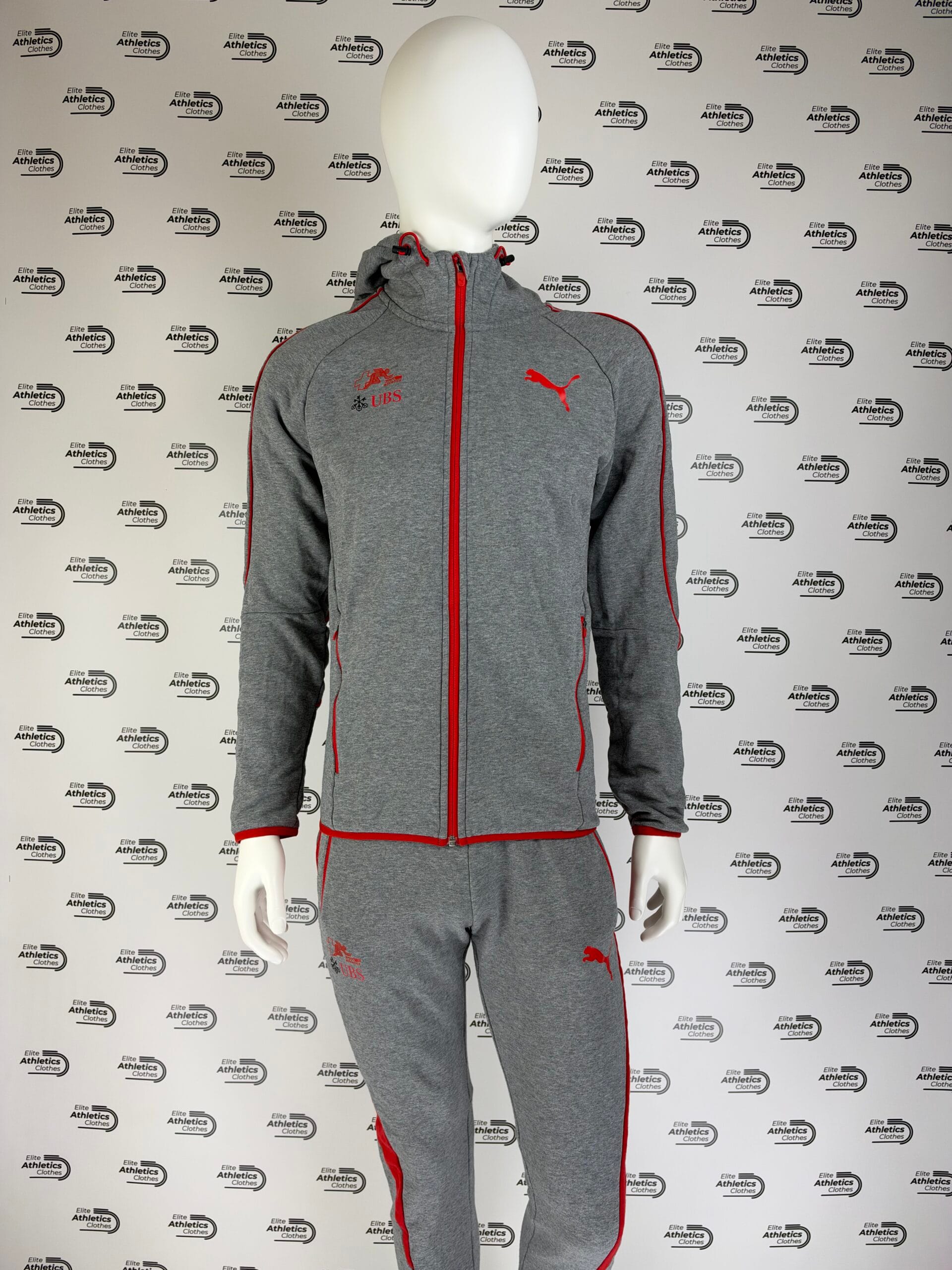 The 2016 warm-up · in the archivePuma Switzerland International Team 2016 Pro Elite TracksuitGrey marl Puma tracksuit from the 2016 Swiss team issue: hooded full-zip jacket and trousers with red zips and piping, the red Puma cat on the chest. Team allocation, never sold in shops.180,00 €View piece →
Other national kits from the same summer are in our Great Britain 2016 page and Netherlands 2016.
Switzerland 2016
Five pieces from the Swiss team's 2016 Puma allocation: the tracksuit, the T-shirt, two polos and the team backpack. Team issue, never sold in shops; when one goes, it does not come back.
Puma Switzerland International Team 2016 Pro Elite Tracksuit180,00 €View Piece →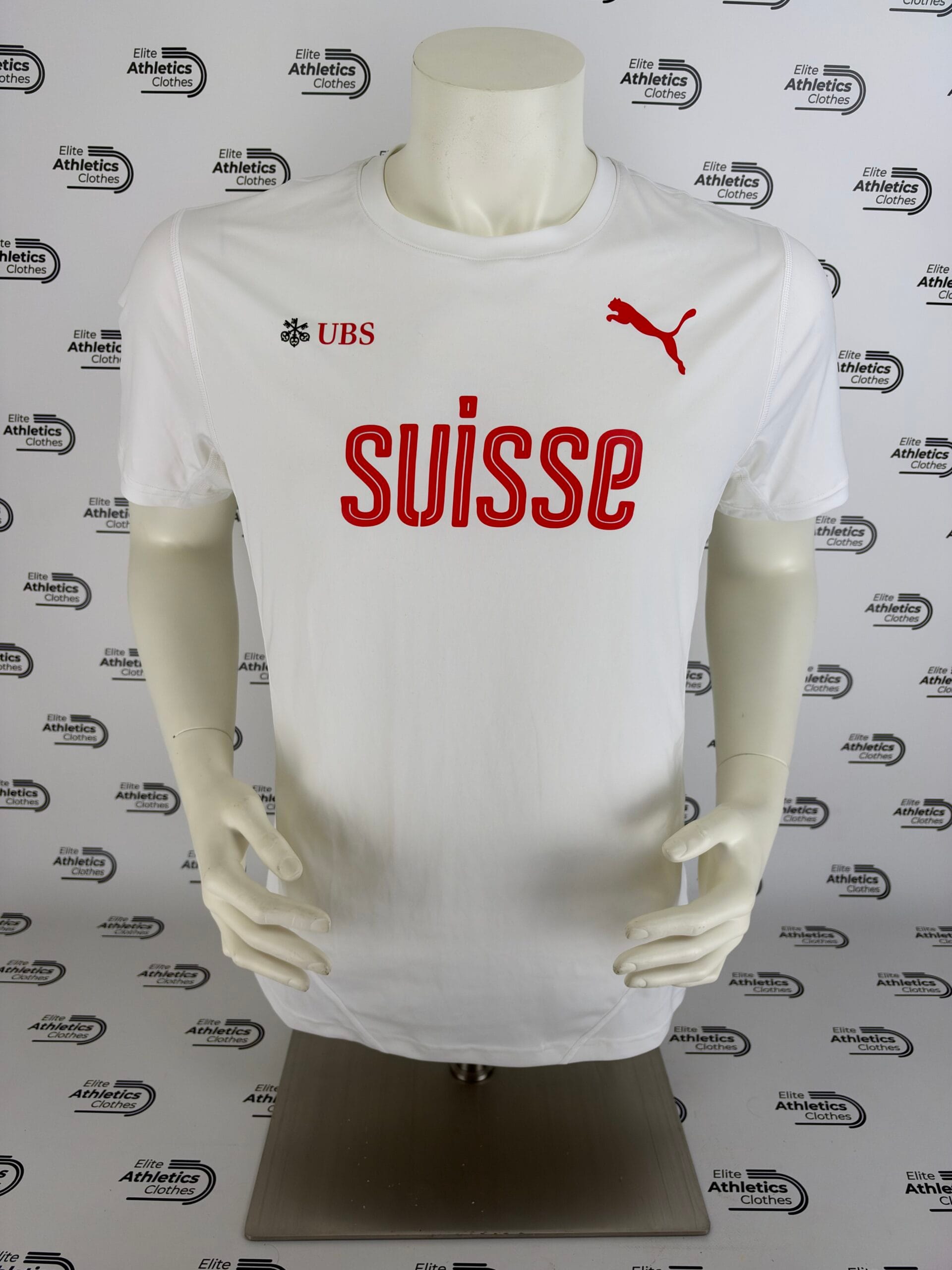 Puma Switzerland International Team 2016 Pro Elite T-Shirt140,00 €View Piece →
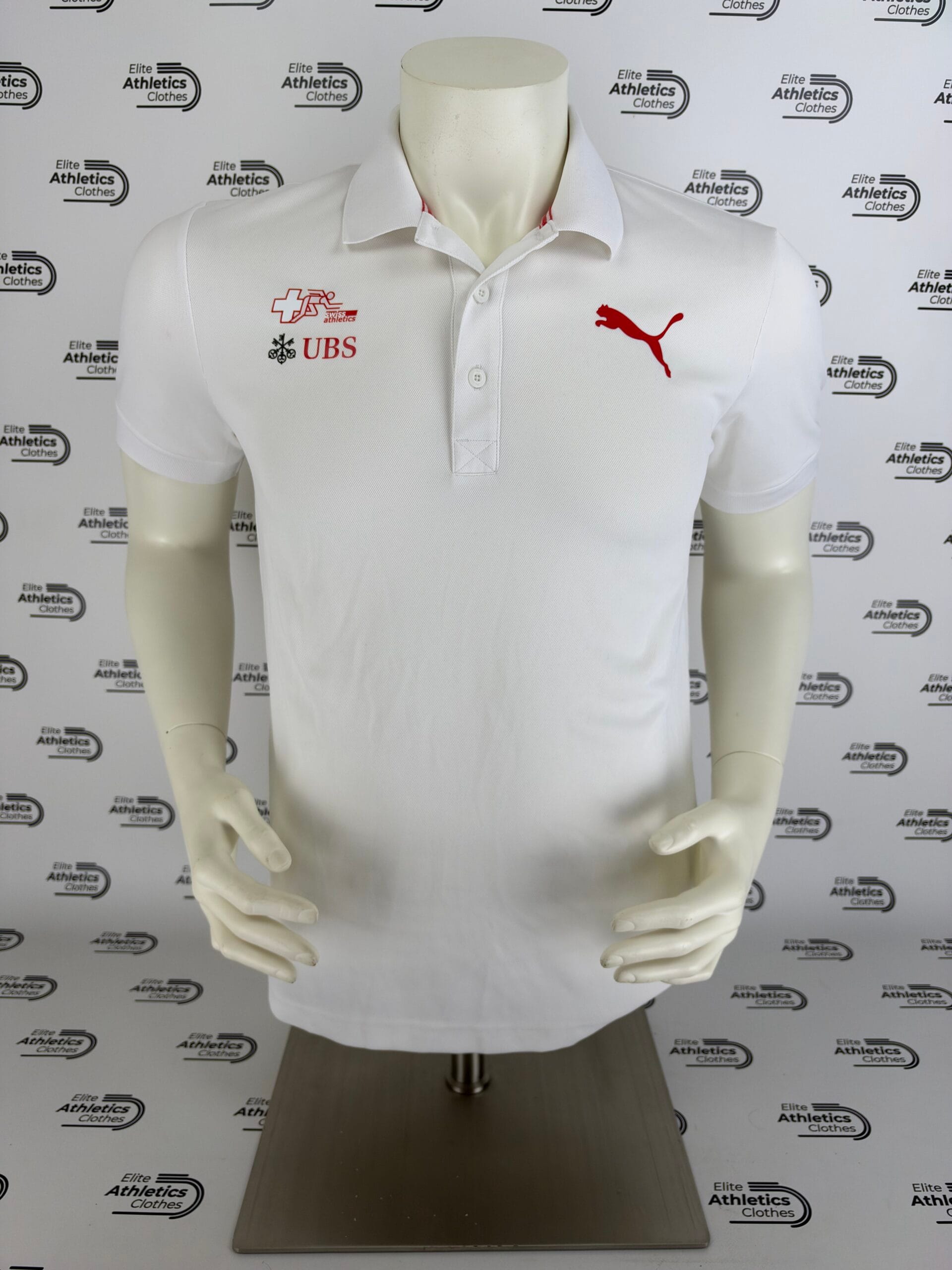 Puma Switzerland International Team 2016 Pro Elite White Polo90,00 €View Piece →Puma Switzerland International Team 2016 Pro Elite Red Polo90,00 €View Piece →
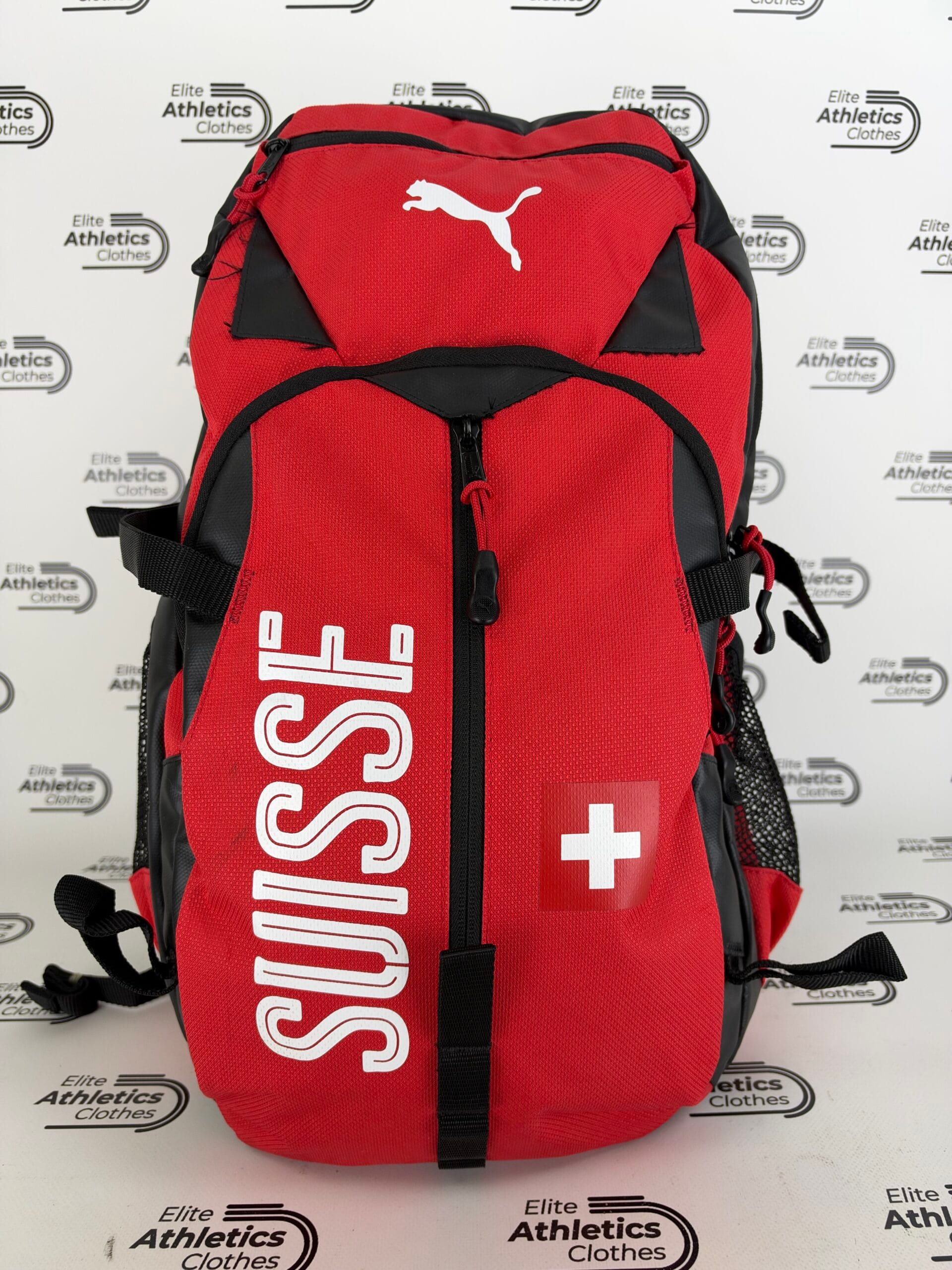 Puma Switzerland International Team 2016 Pro Elite Backbag120,00 €View Piece →
How many medals did Switzerland win at the 2016 European Athletics Championships?
Five, in Amsterdam: two golds (Tadesse Abraham in the half marathon in 1:02:03, and the half-marathon team title) and three bronzes (Mujinga Kambundji in the 100 m, Kariem Hussein in the 400 m hurdles and Léa Sprunger in the 400 m hurdles). Swiss Athletics counted 47 athletes and 13 top-eight places.
Did Switzerland win an athletics medal at the Rio 2016 Olympics?
No. Seventeen Swiss athletes competed; the best results were Nicole Büchler, sixth in the pole vault with 4.70, and Tadesse Abraham, seventh in the marathon in 2:11:42. At the Paralympics, Marcel Hug won gold in the T54 800 m and marathon and silver in the 1500 m and 5000 m.
Which brand made the Switzerland athletics kit in 2016?
Puma, the official outfitter of Swiss Athletics since the 2013 season, when it replaced adidas. UBS, one of the federation's leading partners, appeared on the chest. The Switzerland collection holds five pieces of the 2016 team issue.
Which Swiss records from 2016 still stand?
In championship events, none. Abraham lowered his own 2:06:40 marathon record to 2:04:40 in 2024, and Angelica Moser broke both of Nicole Büchler's pole vault records (4.88 outdoors in 2024, 4.85 indoors in August 2026). The only 2016 mark left on the federation's list is Léa Sprunger's 38.93 in the rarely run 300 m hurdles.
Sources and References
- Swiss Athletics — Swiss results at European Championships (PDF) — Amsterdam 2016: 47 athletes, 13 top-eight places, 5 medals, every Swiss place and mark; Birmingham 2026
- Swiss Athletics — Swiss results at Olympic Games (PDF) — Rio 2016: 17 athletes, 2 top-eight places
- Olympedia — Switzerland at the 2016 Summer Olympics — every Swiss medal of Rio, none in athletics
- Olympedia — women’s pole vault, Rio 2016 — Büchler 6th with 4.70, Moser in qualification
- Olympedia — men’s marathon, Rio 2016 — Abraham 7th in 2:11:42, with his splits
- Olympedia — women’s 400 m hurdles, Rio 2016 — Sprunger 56.58 in the heats (the federation list swaps her time with Fontanive’s)
- World Athletics — Portland 2016 women’s pole vault report — Büchler’s 4.80 at the third attempt and the four-way 4.80
- Swiss Athletics — Swiss medal winners at major championships (PDF) — no senior global medal between Röthlin (2007) and Kambundji (2018)
- International Paralympic Committee — Hug wins the 800 m T54 — the 1:33.76 and his first Paralympic gold
- International Paralympic Committee — Hug wins the marathon T54 — the 1:26:16 and the one-second margin over Fearnley
- International Paralympic Committee — Schär completes the seven Majors — Sydney, 31 August 2026
- Swiss Athletics (archived) — Puma official outfitter from 2013 — the 18 January 2013 announcement, replacing adidas
- Swiss Athletics (archived, June 2016) — sponsors and partners — UBS, Omega, Puma and Le Gruyère as leading partners in 2016
- Swiss Athletics — current Swiss outdoor records (PDF) — which 2016 marks have fallen and which one still stands
- Swiss Athletics — current Swiss indoor records (PDF) — Moser’s 4.85 of 26 August 2026
- Keystone-SDA via bluewin — Abraham’s 2:04:40 in Valencia — the Swiss record and his last marathon
- Athletics Illustrated — Hussein out of Tokyo with a ban — the nine-month ban of 2021
- European Athletics — Sprunger to retire at the end of 2021 — her retirement
- Canadian Running — Büchel retires after long COVID — the 9 November 2022 announcement
- World Athletics — Weltklasse Zürich 2016 results — Hussein 5th in the 400 m hurdles final, 49.21