
Chicago
Marathon
The flat road where marathon records are made and then lost: seven world records since 1984, three of them on a 13 October, Kelvin Kiptum's 2:00:35 still the course record, and the women's world mark still on its books.
The Chicago Marathon is, with Berlin, one of the two record courses among the Majors: a single flat loop that starts and finishes in Grant Park, run every October since 1977. Seven marathon world records have been set on it — three by men, four by women — and one of them, Ruth Chepngetich's 2:09:56 from 2024, is still the official women's world record.
The men's course record is Kelvin Kiptum's 2:00:35 of 2023, a world record until April 2026; Kiptum died in February 2024, days after it was ratified. The 2026 race, on 11 October, went to Amos Kipruto in 2:01:09, with Hawi Feysa winning the women's race for a second year. Like every Major, it is raced in sponsor kit — the universe our brand shelves collect.
Part of our Competition Files — one competition at a time, explained. Start from the hub: the Abbott World Marathon Majors explained, or jump to the sponsor lines.
- What it is
- One of the six original Abbott World Marathon Majors: a single flat loop from Grant Park through 29 neighbourhoods, every October
- First race
- 25 September 1977, as the Mayor Daley Marathon — won by Dan Cloeter (2:17:52) and Dorothy Doolittle (2:50:47)
- World records set here
- Seven — men 1984, 1999, 2023; women 2001, 2002, 2019, 2024
- Course record, men
- 2:00:35 — Kelvin Kiptum, 8 Oct 2023; world record until Sawe's 1:59:30 (London, April 2026)
- Course record, women
- 2:09:56 — Ruth Chepngetich, 13 Oct 2024; still the official world record (athlete banned until 2028)
- 2026 winners
- Amos Kipruto 2:01:09 and Hawi Feysa 2:13:33 — 11 October 2026
- 2025 winners
- Jacob Kiplimo 2:02:23 and Hawi Feysa 2:14:56 — Conner Mantz 4th in a US record 2:04:43
- Why it is fast
- Start and finish in the same park, almost no net elevation change, cool autumn weather — record-eligible, unlike Boston
From the Mayor Daley Marathon to a Major
Chicago had a marathon long before it had this one: the Illinois Athletic Club ran a race from Evanston to Washington Park in 1905 and kept it going into the early 1920s. The modern race is younger. A group of local runners began planning it in late 1976 with the backing of Mayor Richard J. Daley, who died that December; his successor, Michael Bilandic, was a runner himself and saw it through. On 25 September 1977 several thousand people lined up for the first Mayor Daley Marathon. Dan Cloeter won in 2:17:52 and Dorothy Doolittle in 2:50:47.
Nearly half a century on, it is one of the founding races of the Abbott World Marathon Majors, held on a Sunday in October, and the one with the plainest selling point in the sport. Boston has the history, New York the bridges, London the crowds. Chicago has a flat road and cool autumn air, and it has spent four decades turning those two things into world records.
One Loop, No Hills Worth the Name
The course is a single loop. It starts and finishes in Grant Park, on the lakefront, and in between it runs 26.2 miles through 29 of the city's neighbourhoods — north through Lincoln Park, west, then south, and back downtown. The guides argue about the exact elevation numbers; nobody argues about the result, which is a course with almost no net change at all. Its one real climb is a joke the runners tell on themselves: the short ramp over Roosevelt Road near mile 26, known locally as Mount Roosevelt.
The loop matters for more than comfort. Because the start and the finish sit in the same park, Chicago carries neither of the two flaws that keep Boston out of the record books — too much drop from start to finish, and too much distance between them. A world record run here counts, which is the whole reason the fastest people in the sport keep coming in October.
Flat is not the same as easy. The pace on a course like this never lets up: there is no hill to recover on and no descent to hide a bad patch. Chicago rewards the runner who can hold one rhythm for two hours — and exposes the one who cannot.
Seven World Records, None of Them Kept
Steve Jones started it. On 21 October 1984, running his first completed marathon, the Welsh runner won Chicago in 2:08:05, a world record. It lasted 181 days, until Carlos Lopes ran 2:07:12 in Rotterdam. Fifteen years later Khalid Khannouchi took the record back to Chicago with 2:05:42, and then broke it himself in London in 2002.
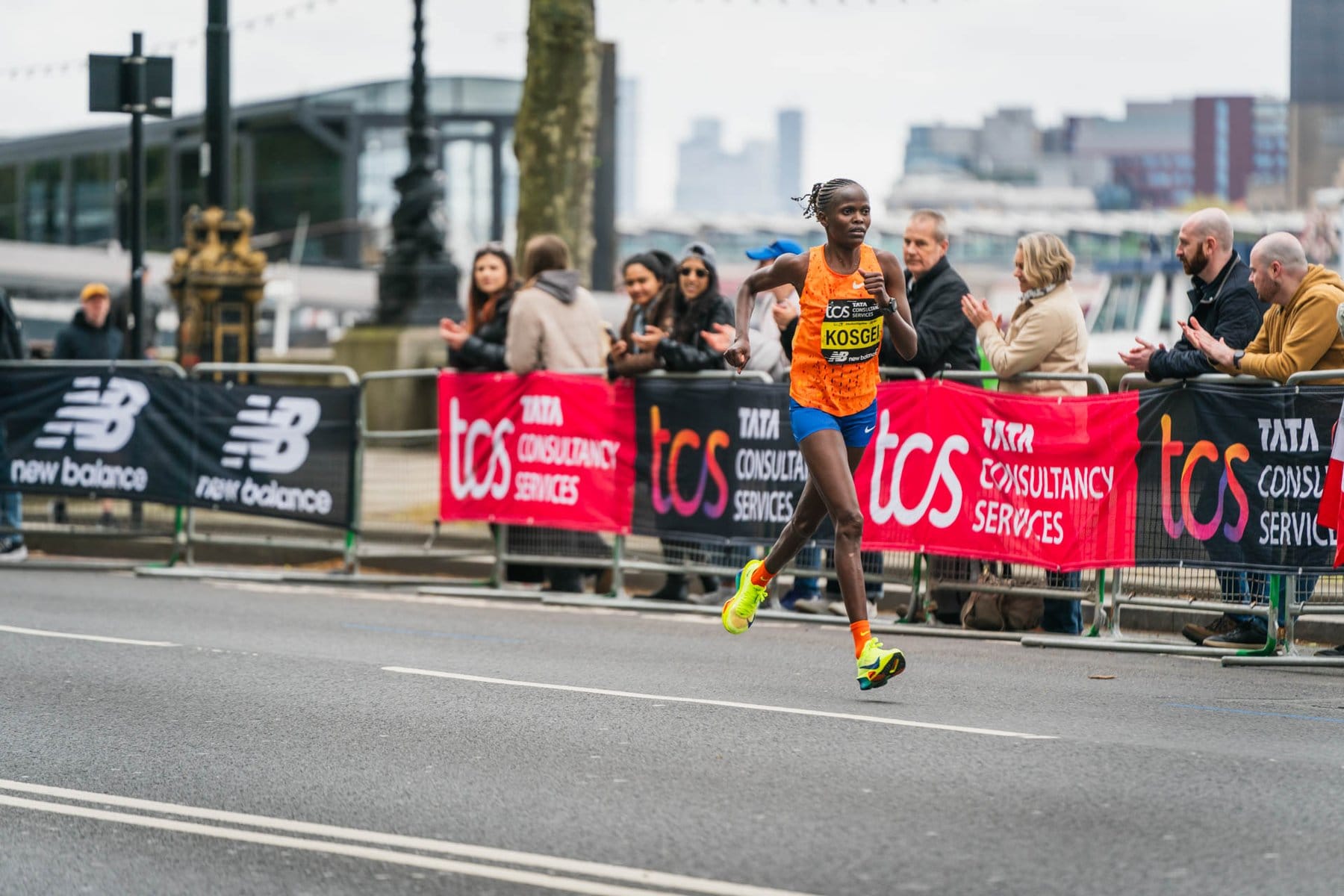
The women's side has been even busier. Catherine Ndereba ran 2:18:47 here in October 2001, 59 seconds inside the mark Naoko Takahashi had set in Berlin a week earlier. Paula Radcliffe beat it on the same course twelve months later, 2:17:18 on 13 October 2002, her first world record. Then the date came around again: on 13 October 2019 Brigid Kosgei ran 2:14:04, 81 seconds faster than Radcliffe's London mark that had stood since 2003, and on 13 October 2024 Ruth Chepngetich ran 2:09:56 — the first woman under two hours ten.
Hover or tab on a bar for the detail. Days counted from the date of each record to the date it was broken, or to 27 October 2026. Sources: World Marathon Majors, Chicago race history; Reuters men's world record progression; World Athletics ratification of the 2:00:35; AIU decision of 23 October 2025. Verified October 2026.
The seven world records set in Chicago — and where each one went
| Set | Athlete | Mark | Broken by | Time as the record |
|---|---|---|---|---|
| 21 Oct 1984 | Steve Jones | 2:08:05 | Carlos Lopes, Rotterdam, 2:07:12 | 181 days |
| 24 Oct 1999 | Khalid Khannouchi | 2:05:42 | Khannouchi himself, London, 2:05:38 | 903 days |
| 8 Oct 2023 | Kelvin Kiptum | 2:00:35 | Sabastian Sawe, London, 1:59:30 | 931 days |
| October 2001 | Catherine Ndereba | 2:18:47 | Paula Radcliffe, Chicago, 2:17:18 | about 1 year |
| 13 Oct 2002 | Paula Radcliffe | 2:17:18 | Radcliffe herself, London, 2:15:25 | 182 days |
| 13 Oct 2019 | Brigid Kosgei | 2:14:04 | Tigst Assefa, Berlin, 2:11:53 | 1,442 days |
| 13 Oct 2024 | Ruth Chepngetich | 2:09:56 | Still the world record (October 2026) | 744 days and counting |
Read the bars together and the pattern is clear. Chicago sets records; it rarely keeps them. Five of the six that have gone were taken by another course — Rotterdam once, Berlin once, London three times — and the sixth by Chicago itself, when Radcliffe beat Ndereba. The last of the men's marks to leave went to London in April 2026, where the two-hour wall finally fell.
Kelvin Kiptum and the Record That Stands
On 8 October 2023 Kelvin Kiptum of Kenya ran 2:00:35 in Chicago — the first man under 2:01 in a record-eligible race, 34 seconds inside Eliud Kipchoge's mark from Berlin. World Athletics ratified it on 6 February 2024. Five days later, on 11 February, Kiptum died in a road accident in Kenya, together with his coach, Gervais Hakizimana. He was 24.
His world record lasted 931 days, until Sabastian Sawe ran 1:59:30 in London on 26 April 2026. In Chicago it is still the number every men's field runs towards: the 2:00:35 remains the course record, and the closest anyone has come since is the 2:01:09 of October 2026.
Chicago's other standing mark is the women's world record, and it comes with a qualification that has to be stated exactly. Ruth Chepngetich's 2:09:56 of 13 October 2024 is ratified and remains the official world record. In October 2025 the Athletics Integrity Unit banned her for three years after a positive test for hydrochlorothiazide from a sample taken on 14 March 2025; it ruled that her results and records from before that sample stand. The record is in the book. The athlete is out of the sport until 2028.
The Last Two Octobers
The 2025 race was the Jacob Kiplimo show for most of its distance. The Ugandan, holder of the half marathon world record and running only his second marathon, went through halfway on world record pace, faded over the last 10 kilometres and still won in 2:02:23 — his first Major. Hawi Feysa of Ethiopia won the women's race in 2:14:56, at the front of a field in which five women broke 2:20 for the first time in Chicago, and Conner Mantz ran 2:04:43 for fourth, an American record.
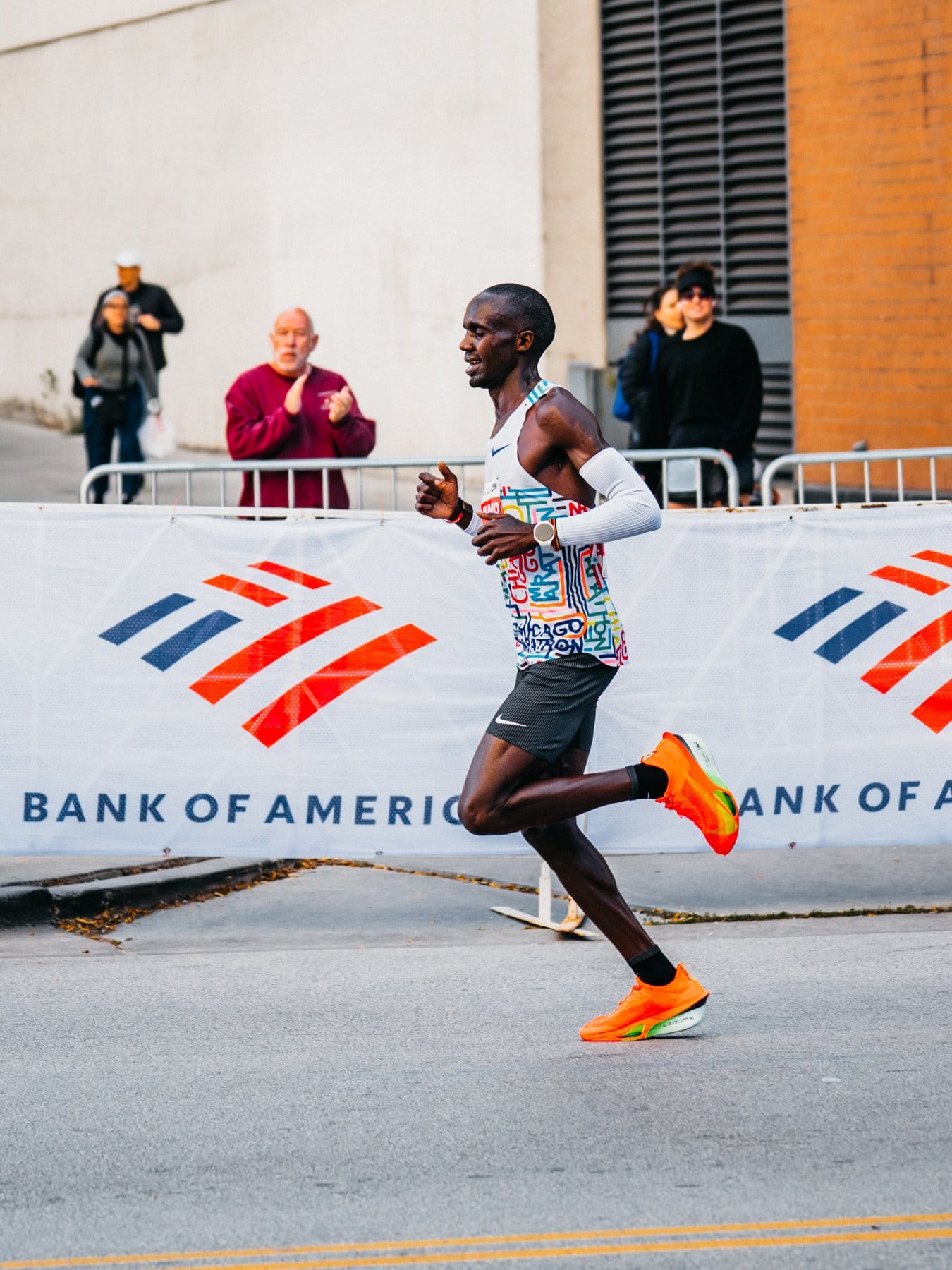
Twelve months later, on 11 October 2026, the men's race went to the man who had been waiting for it. Amos Kipruto of Kenya, third in 2024 and second in 2025, broke clear of Kiplimo after 30 kilometres and won in 2:01:09, a personal best by 30 seconds and the second-fastest time ever run in Chicago; the defending champion finished fourth in 2:04:18. Feysa defended her title in 2:13:33, a personal best, ahead of Sharon Lokedi, with Brigid Kosgei third in 2:14:55 — seven years after her own world record on these streets.
Sponsor Kit on the Lakefront
The house rule for reading any race: championships mean federation kit, and the Majors mean sponsor kit. Nobody runs the Chicago loop in national colours. The leaders wear the uniforms of their shoe contracts and management groups — and two of the names in this story, Kiplimo and Kosgei, belong to the same one: the Rosa & Co. group, the Italian-run stable whose athlete-issued Nike kit is one of the rarest lines in the archive.
 Sponsor kit · in the archiveNike Rosa & Co. Pro Elite Team 2020/2021 Women Running ShortsAthlete-issued team kit from the Rosa & Co. line — the group behind Jacob Kiplimo, Chicago champion in 2025, and Brigid Kosgei, who set the world record here in 2019.140,00 €View piece →
The other lines behind the Majors each have their own page here — Nike Pro Elite, adidas Pro Elite and NN Running — and the rail below holds one athlete-issued piece from each of the four. For the course that does the opposite of Chicago, see New York, where nobody chases the clock at all.
The Uniforms of the Lakefront
Chicago is raced in trade kit, not national kit. These are athlete-issued pieces from four of the lines behind the Majors — starting with the Rosa & Co. group of Kiplimo and Kosgei.
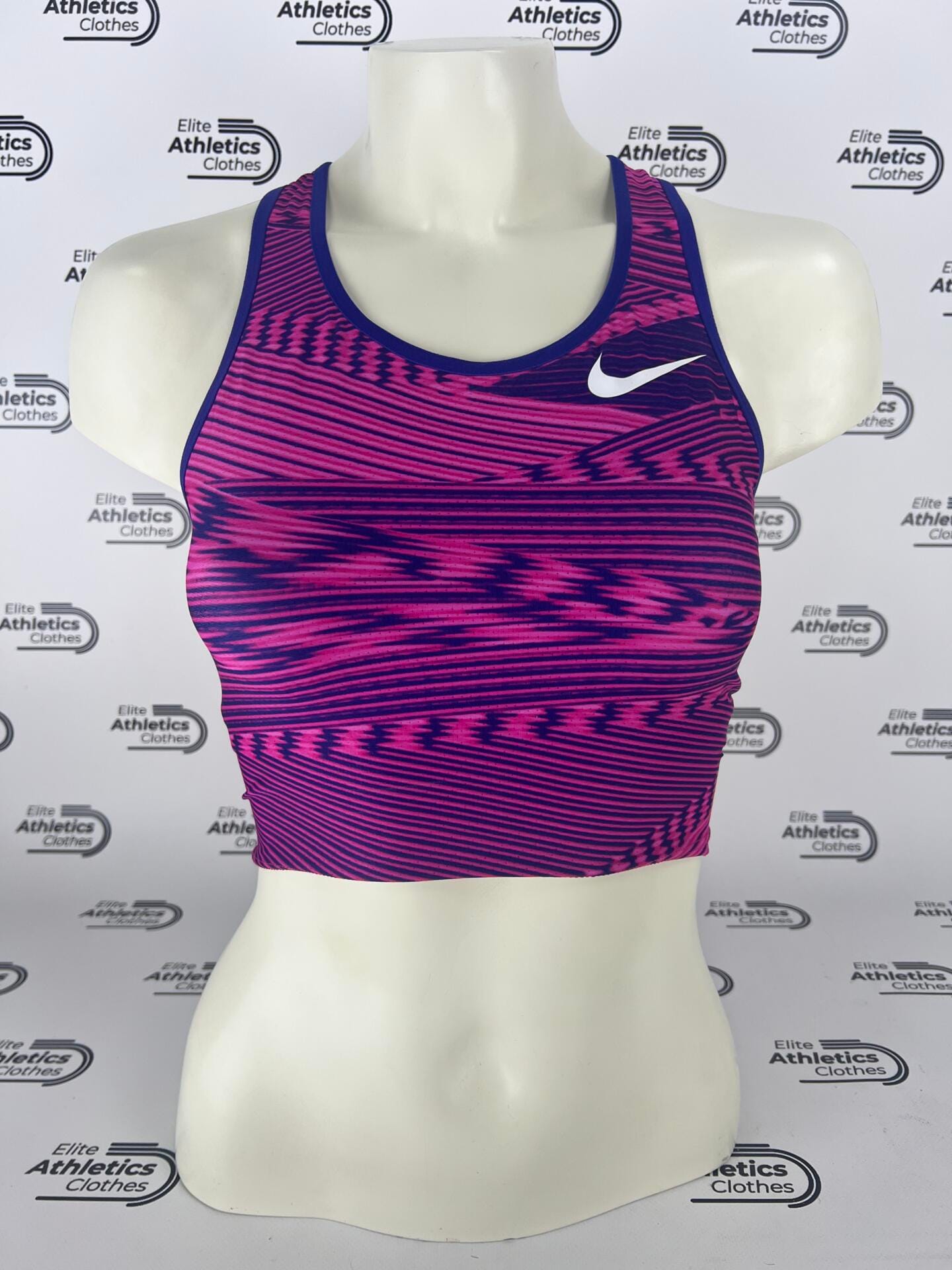 Nike Rosa & Co. Pro Elite 2019 Women Crop Top250,00 €View Piece →Nike Pro Elite
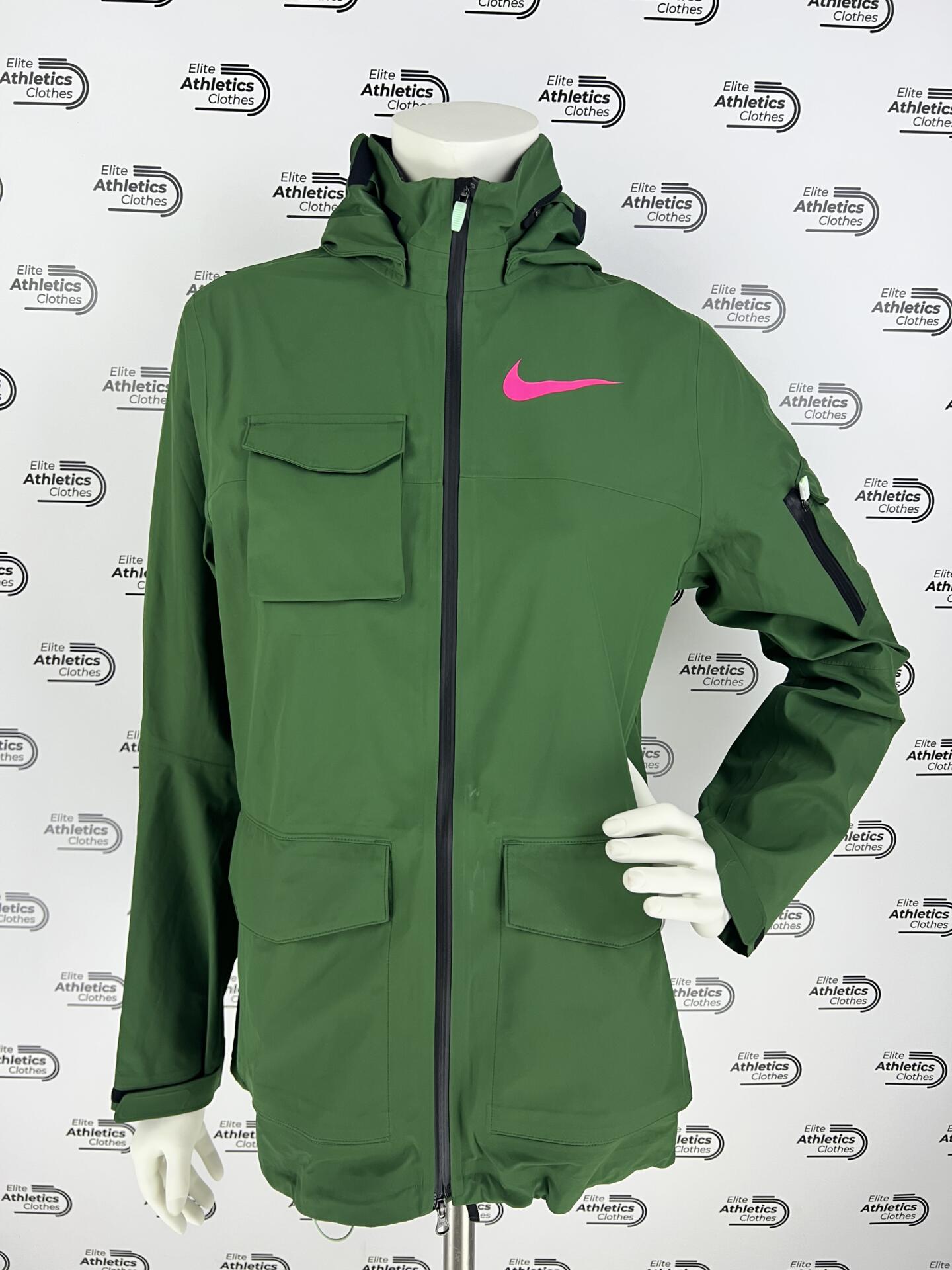 Nike Pro Elite 2023 Women Storm Fit Jacket150,00 €View Piece →adidas
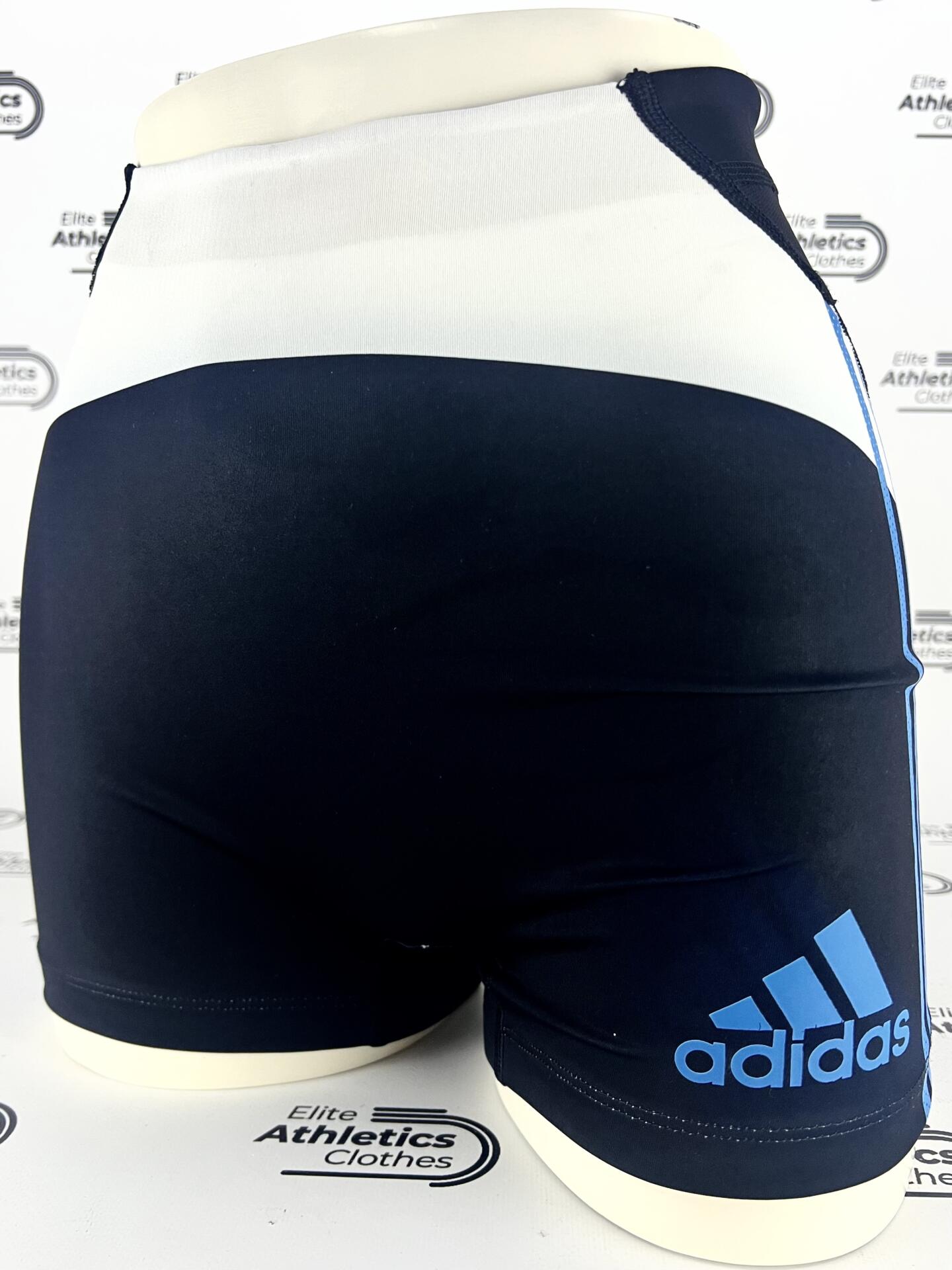 Adidas Pro Elite 2022 Women Booty Short Tights100,00 €View Piece →NN Running
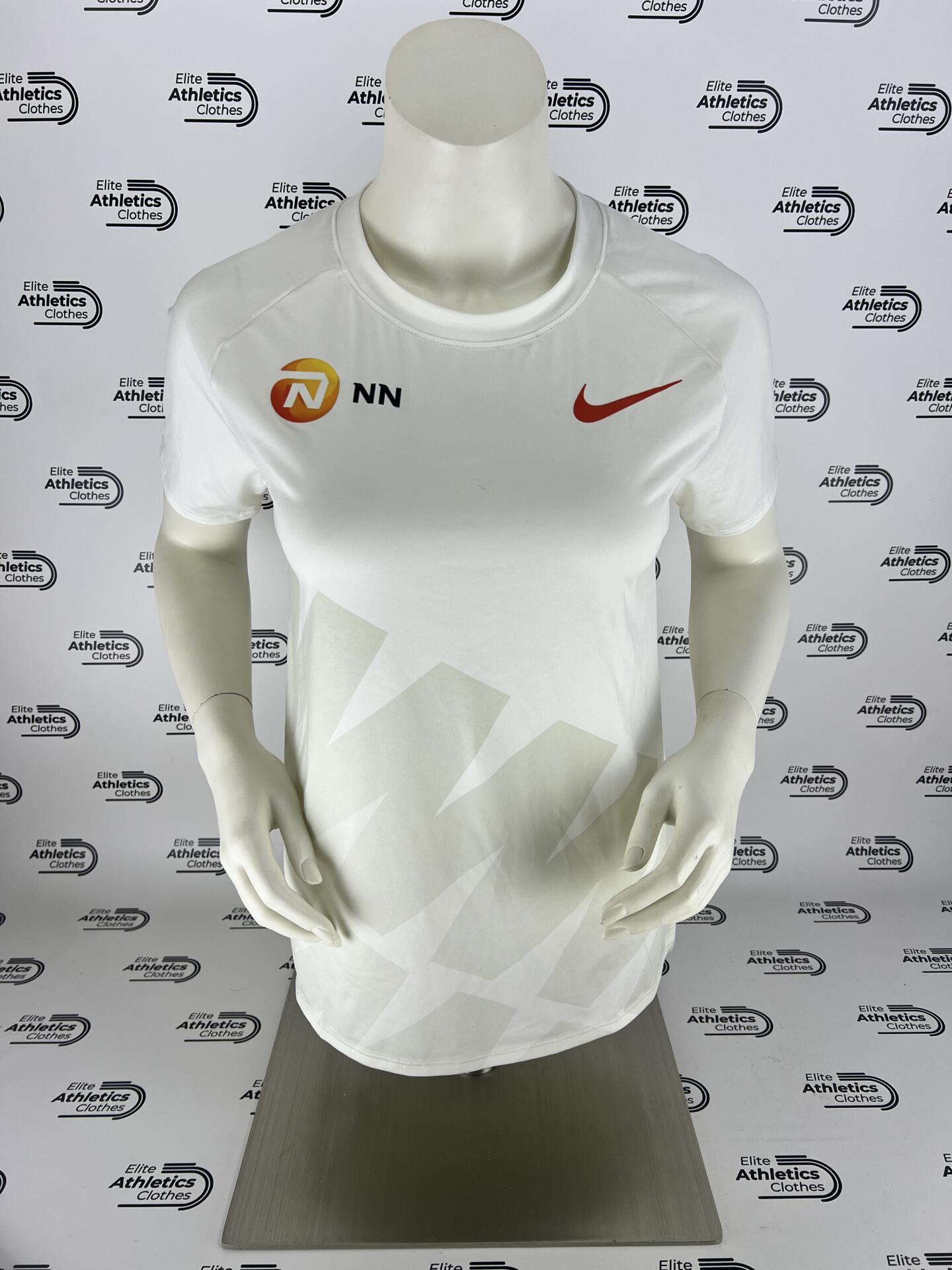 INEOS X Nike NN Running Team Pro Elite 2020/2021 Women T-Shirt150,00 €View Piece →
Who won the 2026 Chicago Marathon?
Amos Kipruto of Kenya won the men's race on 11 October 2026 in 2:01:09, a personal best and the second-fastest time in Chicago history; the defending champion Jacob Kiplimo was fourth. Hawi Feysa of Ethiopia won the women's race for the second year running, in a personal best of 2:13:33, ahead of Sharon Lokedi and Brigid Kosgei.
What is the Chicago Marathon course record?
The men's course record is 2:00:35, set by Kelvin Kiptum on 8 October 2023; it was the world record until Sabastian Sawe ran 1:59:30 in London in April 2026. The women's course record is 2:09:56, set by Ruth Chepngetich on 13 October 2024, which is still the official women's marathon world record.
Is the women's marathon world record still Ruth Chepngetich's 2:09:56?
Yes. The 2:09:56 she ran in Chicago in October 2024 is ratified and remains the official world record. In October 2025 the Athletics Integrity Unit banned her for three years after a positive test from a sample taken in March 2025, and ruled that her results and records from before that sample stand.
How many world records have been set at the Chicago Marathon?
Seven. Men: Steve Jones (2:08:05, 1984), Khalid Khannouchi (2:05:42, 1999) and Kelvin Kiptum (2:00:35, 2023). Women: Catherine Ndereba (2:18:47, 2001), Paula Radcliffe (2:17:18, 2002), Brigid Kosgei (2:14:04, 2019) and Ruth Chepngetich (2:09:56, 2024). Only the last is still the world record.
Why is the Chicago Marathon so fast?
It is a single loop that starts and finishes in Grant Park, with almost no net elevation change and usually cool October weather. Because the start and finish are in the same place, the course is eligible for world records — unlike Boston, which drops too much and finishes too far from its start.
Sources and References
- LetsRun — 2026 Chicago Marathon results — the 2026 winners and times
- Chicago Sun-Times — Amos Kipruto finally wins Chicago (11 Oct 2026) — Kipruto's win after two podiums
- NBC Sports — Chicago Marathon results 2025 — Kiplimo 2:02:23, Feysa 2:14:56, Mantz's 2:04:43
- World Marathon Majors — Bank of America Chicago Marathon — the course and the race's world records
- WTTW — the first Chicago Marathon, 1977 — the Mayor Daley Marathon and its first winners
- Eurosport / Reuters — men's marathon world record progression — Jones 1984, Lopes 1985, Khannouchi 1999 and 2002
- Athletics Weekly — Kosgei smashes the marathon world record in Chicago — the 2:14:04 of 2019
- Athletics Weekly — Assefa's 2:11:53 in Berlin — the end of Kosgei's record
- Kenyans.co.ke — World Athletics ratifies Kiptum's 2:00:35 — the ratification of 6 February 2024
- Athletics Weekly — Chepngetich's 2:09:56 is ratified — the women's world record
- Marathon Handbook — Chepngetich banned for three years — the AIU decision and the records that stand