
London
Marathon
The biggest marathon on Earth, and since 26 April 2026 the fastest: 59,830 finishers, a record 1.34 million ballot entries — and the morning Sabastian Sawe ran 1:59:30, the first sub-two-hour marathon in an open race.
The London Marathon is the largest marathon in the world and one of the founding World Marathon Majors, run through the city every spring since 29 March 1981. On 26 April 2026 it became the place where the sport's last great barrier fell: Sabastian Sawe won in 1:59:30, the first sub-two-hour marathon ever run in an open race, ratified by World Athletics as the world record — with Yomif Kejelcha also under two hours in 1:59:41, and Tigst Assefa taking the women-only world record to 2:15:41 the same morning.
The same edition set the other kind of record too: 59,830 finishers — certified the biggest marathon ever staged — a world-record 1,338,544 ballot applications for 2027, and more money raised for charity than any one-day event anywhere. Like every Major, it is raced in sponsor kit, not national kit — the universe our brand shelves collect.
Part of our Competition Files — one competition at a time, explained. The kits behind the racing live in the Pro Elite archive. Jump to the sponsor lines or start with the World Marathon Majors explainer.
- What it is
- The world's biggest marathon and a founding World Marathon Major, run through London every spring since 1981
- First edition
- 29 March 1981 — 6,255 finishers; Dick Beardsley and Inge Simonsen won together, hand in hand
- Men's course record
- 1:59:30 — Sabastian Sawe, 26 April 2026: the world record, and the first ratified sub-two-hour marathon
- That same morning
- Yomif Kejelcha 1:59:41, the fastest debut in history — both men inside the old world record, with Jacob Kiplimo third in 2:00:28
- Women's marks
- Course record 2:15:25, Paula Radcliffe (2003) · women-only world record 2:15:41, Tigst Assefa (2026)
- The size of it
- 59,830 finishers in 2026 — a Guinness World Record, the largest marathon ever staged
- The ballot
- A record 1,338,544 applications for the 2027 race — the biggest entry lottery in sport
- The money
- The world's biggest one-day fundraiser: £87.5M+ for charity in 2026, a record for the fourth year running
The Race Gillette Paid For
The London Marathon was invented by two runners. Chris Brasher — Olympic steeplechase champion in 1956 and one of the pacemakers for Roger Bannister's four-minute mile — and John Disley, an Olympic steeplechase bronze medallist, came back from the New York City Marathon convinced that London deserved the same. The shaving company Gillette put up the money, and on 29 March 1981 around 7,000 runners set off through a city that had never seen anything like it. 6,255 of them finished.
The first race told you everything about what the event wanted to be. The two leading men, American Dick Beardsley and Norway's Inge Simonsen, decided mid-race not to decide it: they crossed the line holding hands, joint winners in 2:11:48. Joyce Smith won the women's race in 2:29:57 for the home crowd. Forty-five years later the race those two founders built is a founding member of the World Marathon Majors, and the single biggest marathon on Earth.
The Morning the Wall Came Down
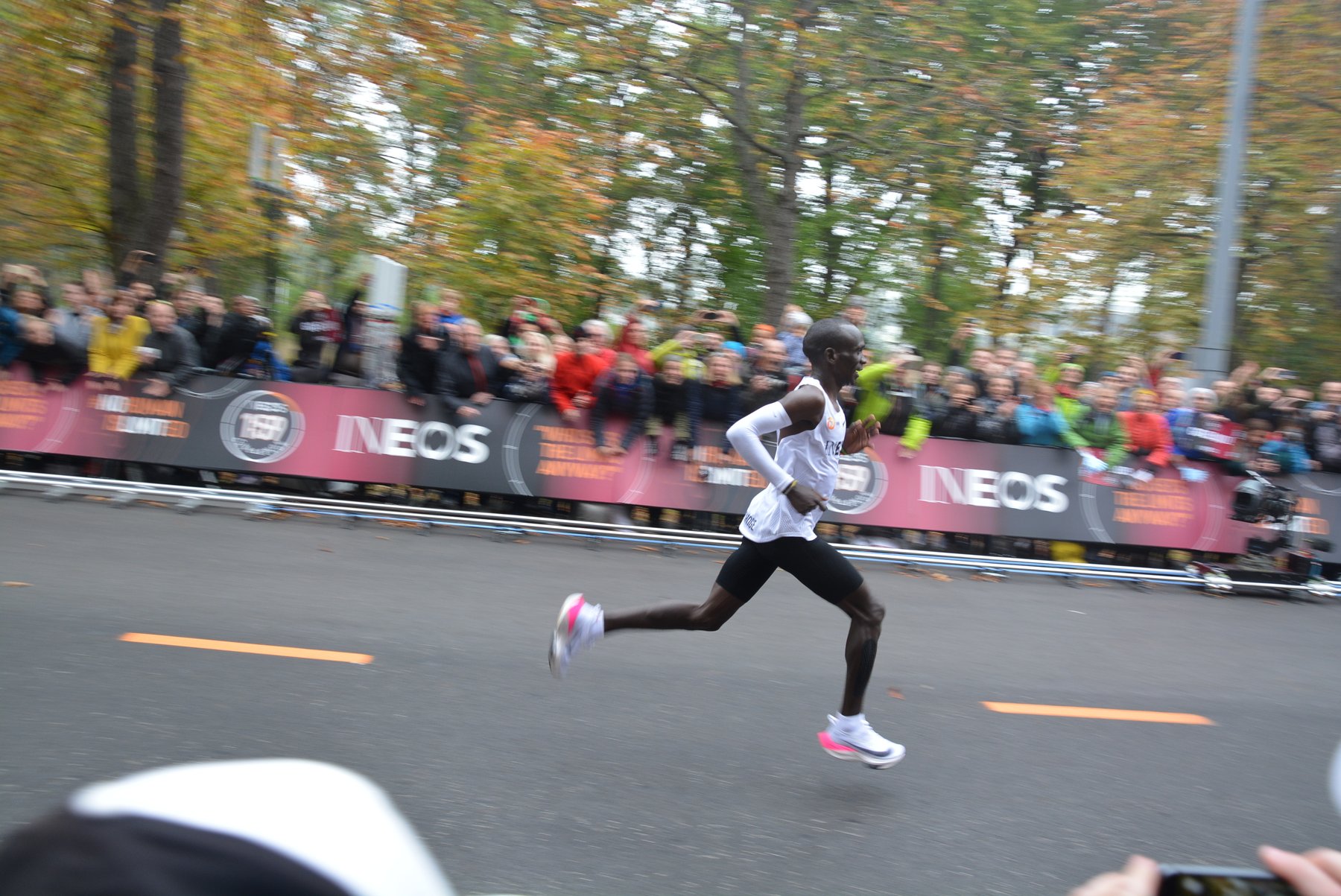
Every sport has a number it treats as a wall, and the marathon's was two hours. It had been breached twice before 2026 — but only in laboratory conditions. Eliud Kipchoge ran 2:00:25 at Nike's Breaking2 event on the Monza motor circuit in 2017, then 1:59:40 at the INEOS 1:59 Challenge in Vienna in October 2019, both behind rotating teams of pacemakers, in formats the record books do not recognise. The fastest time ever run in an actual race was Kelvin Kiptum's world record of 2:00:35 from Chicago 2023.
Then came 26 April 2026. Sabastian Sawe, defending his London title, made his move with a mile to run and crossed The Mall in 1:59:30 — the first sub-two-hour marathon in an open race, 65 seconds inside Kiptum's mark, and since ratified by World Athletics as the world record. Yomif Kejelcha came through eleven seconds later in 1:59:41: the second man ever under two hours, in what was also the fastest marathon debut in history. Jacob Kiplimo took third in 2:00:28. All three finished inside the old world record — in one race.
Hover or tab on a run for the detail. Time axis runs right towards the wall; faster is further. Sources: World Athletics reports and ratification releases, race organisers. Verified September 2026.
Every run on the chart, in the record books' own terms
| Race | Athlete | Time | Status |
|---|---|---|---|
| Breaking2, Monza 2017 | Eliud Kipchoge | 2:00:25 | Exhibition — not ratifiable |
| Berlin Marathon 2018 | Eliud Kipchoge | 2:01:39 | World record, ratified |
| INEOS 1:59, Vienna 2019 | Eliud Kipchoge | 1:59:40 | Exhibition — not ratifiable |
| Berlin Marathon 2022 | Eliud Kipchoge | 2:01:09 | World record, ratified |
| London Marathon 2023 | Kelvin Kiptum | 2:01:25 | Course record |
| Chicago Marathon 2023 | Kelvin Kiptum | 2:00:35 | World record, ratified |
| London Marathon 2026 | Jacob Kiplimo | 2:00:28 | Third place, inside the old record |
| London Marathon 2026 | Yomif Kejelcha | 1:59:41 | Second — fastest debut in history |
| London Marathon 2026 | Sabastian Sawe | 1:59:30 | World record, ratified — first sub-2 in a race |
The Women's Ledger
The same morning rewrote the women's book too. Tigst Assefa, defending her title, attacked along Birdcage Walk and won in 2:15:41 — nine seconds inside her own women-only world record of 2:15:50, set on the same course a year earlier, and since ratified. Behind her, Hellen Obiri ran 2:15:53 and Joyciline Jepkosgei 2:15:55: the first time in history that three women broke 2:16 in one race.
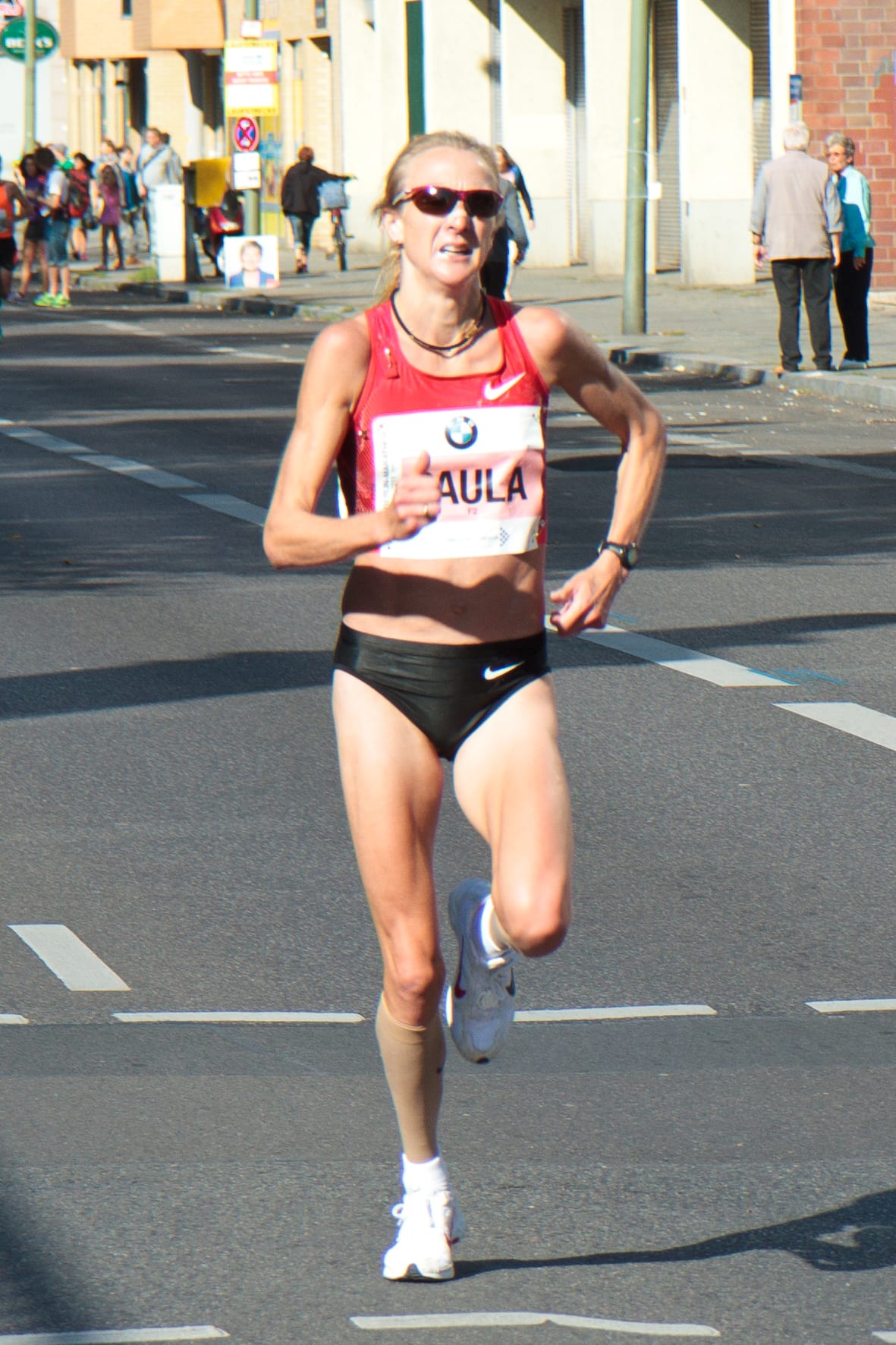
And yet the fastest women's time ever run in London is older than all of it. Paula Radcliffe's 2:15:25 from 13 April 2003 — run with male pacemakers, which is why Assefa's mark carries the women-only label — stood as the outright world record for sixteen years, until Brigid Kosgei's 2:14:04 in Chicago in 2019. In 2026 it is still the London course record. Radcliffe won this race three times, in 2002, 2003 and 2005, and her mark remains the measuring stick of British distance running.
Blackheath to The Mall
The course has barely changed since 1981: south of the river from Blackheath and Greenwich, across Tower Bridge just before halfway, a long loop east through Docklands and Canary Wharf, then back along the Embankment to finish on The Mall in front of Buckingham Palace. Unlike Boston — a point-to-point course with too much drop to count — London's roads are fully record-eligible, which is why both of the marks set in April 2026 went straight into the record books.
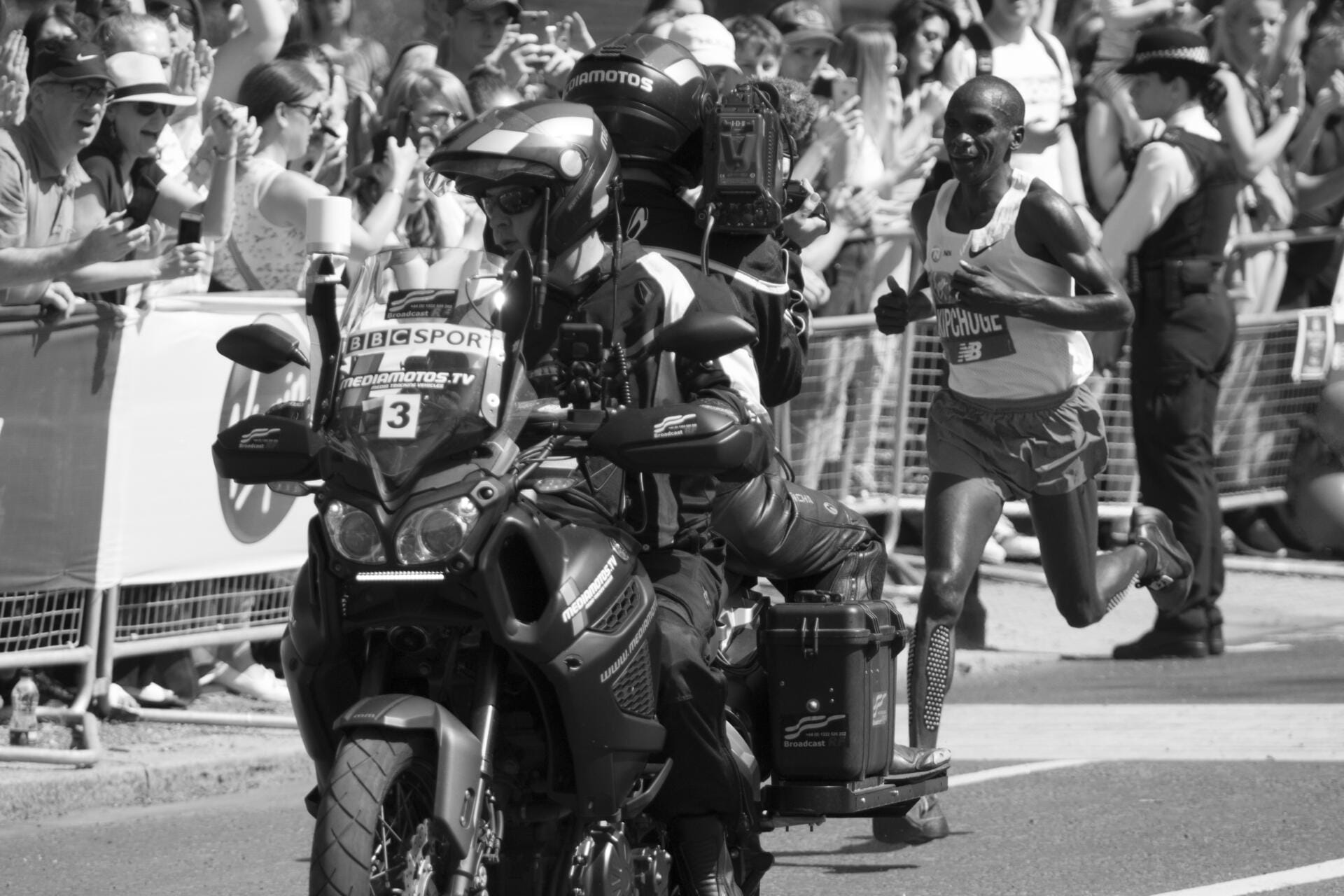
For most of the modern era, record chasing was Berlin's business and London's was racing: the deepest elite fields in the sport, champions against champions. Eliud Kipchoge won here four times — 2015, 2016, 2018 and 2019, still the men's record for this race — and his 2:02:37 from 2019 held the course record until Kelvin Kiptum, in his debut season, ran 2:01:25 in 2023. Kiptum died in a road accident in February 2024, at 24; the course record he left was the one Sawe's 1:59:30 replaced. London now holds the two numbers the sport measures everything else against.
The Other Fifty-Nine Thousand
Behind the elite race is the largest participation event in the sport. The 26 April 2026 race put 60,512 runners on the start line and 59,830 across the finish — certified by Guinness World Records as the most finishers of any marathon ever, edging past the 59,226 of New York in November 2025. Demand keeps outrunning the roads: the public ballot for the 2027 race drew a record 1,338,544 applications, up from the previous record of 1,133,813, and for the first time more than a million of them came from the UK alone.
The other number London leads the world in is money given away. The race is the planet's biggest annual one-day fundraising event: by May 2026 that year's edition had already raised £87.5 million for charity, past the record £87.3 million of 2025, with organisers expecting the final total to clear £90 million. Most of those 59,830 finishers were running for a cause — it is baked into how the race works, with charities holding guaranteed places that runners take on in exchange for fundraising pledges.
Sponsor Kit, Not National Kit
One reading rule matters to what we do at Elite Athletics Clothes: a marathon Major is not a championship. Nobody in London wears national colours — every athlete races in the kit of the brand or team that pays them. In 2026 that universe had one clear winner: Sawe and Kejelcha are both adidas athletes, Assefa races in adidas too, and all of them went through their records in the Adizero Adios Pro Evo 3 — the same brand story told in our adidas Pro Elite pillar.
The house rule for reading any competition: championships mean federation kit, leagues and meetings mean sponsor kit. A Worlds or an Olympics is raced in national colours; a Major like London is raced in trade teams — Kipchoge's four wins came inside the Nike-equipped NN Running Team setup, and Kiplimo's 2:00:28 comes out of the Rosa & Co camp. The full map of the series lives in our World Marathon Majors explainer.
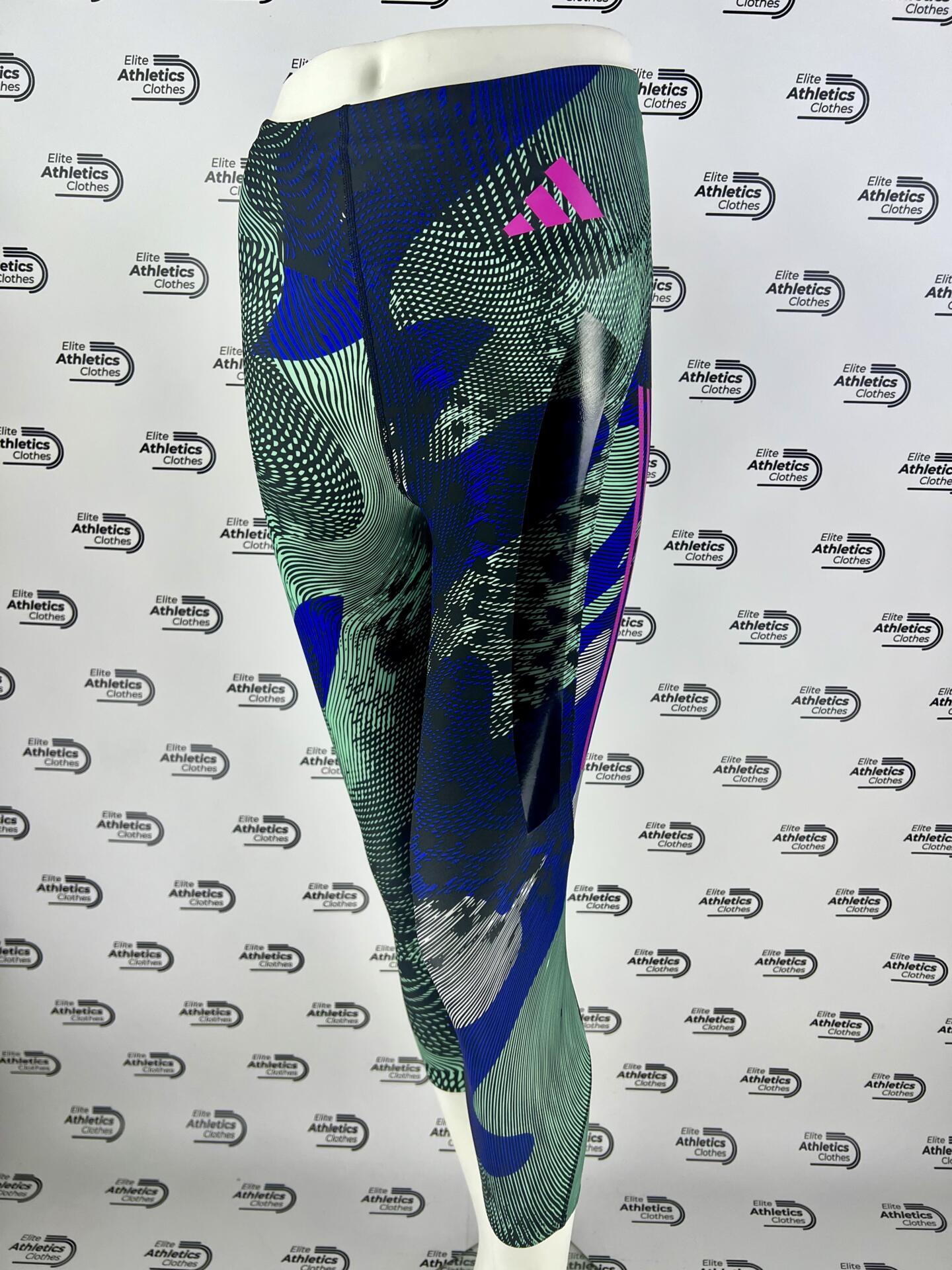 Sponsor kit · in the archiveAdidas Pro Elite Team 2023 Women Capri Long TightsAthlete-issued kit from the adidas line — the brand whose shoe carried every podium finisher through the wall at London 2026.140,00 €View piece →
That is why this page points at the brand shelves rather than at any national rail. The lines those marathon crews wear each have their own story in the journal — Nike Pro Elite, adidas Pro Elite, NN Running and Rosa & Co — and the rail below holds one athlete-issued piece from each of the four lines behind London's podiums.
The Brands of the Breakthrough
London is raced in trade kit, not national kit. These are athlete-issued pieces from the four lines behind the race's modern podiums — the brand that broke the wall, and the teams that carried its champions.
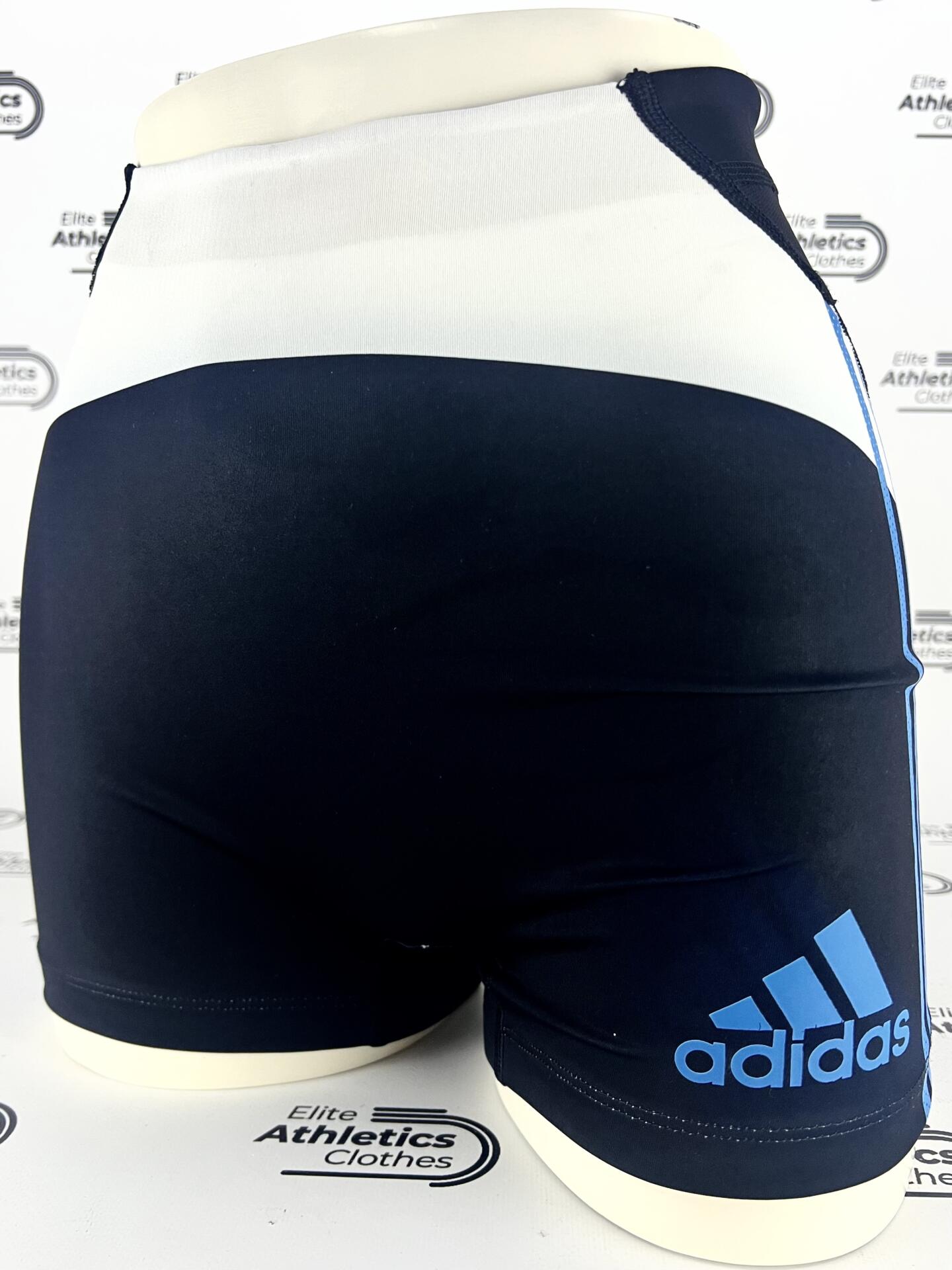 Adidas Pro Elite 2022 Women Booty Short Tights100,00 €View Piece →NN Running
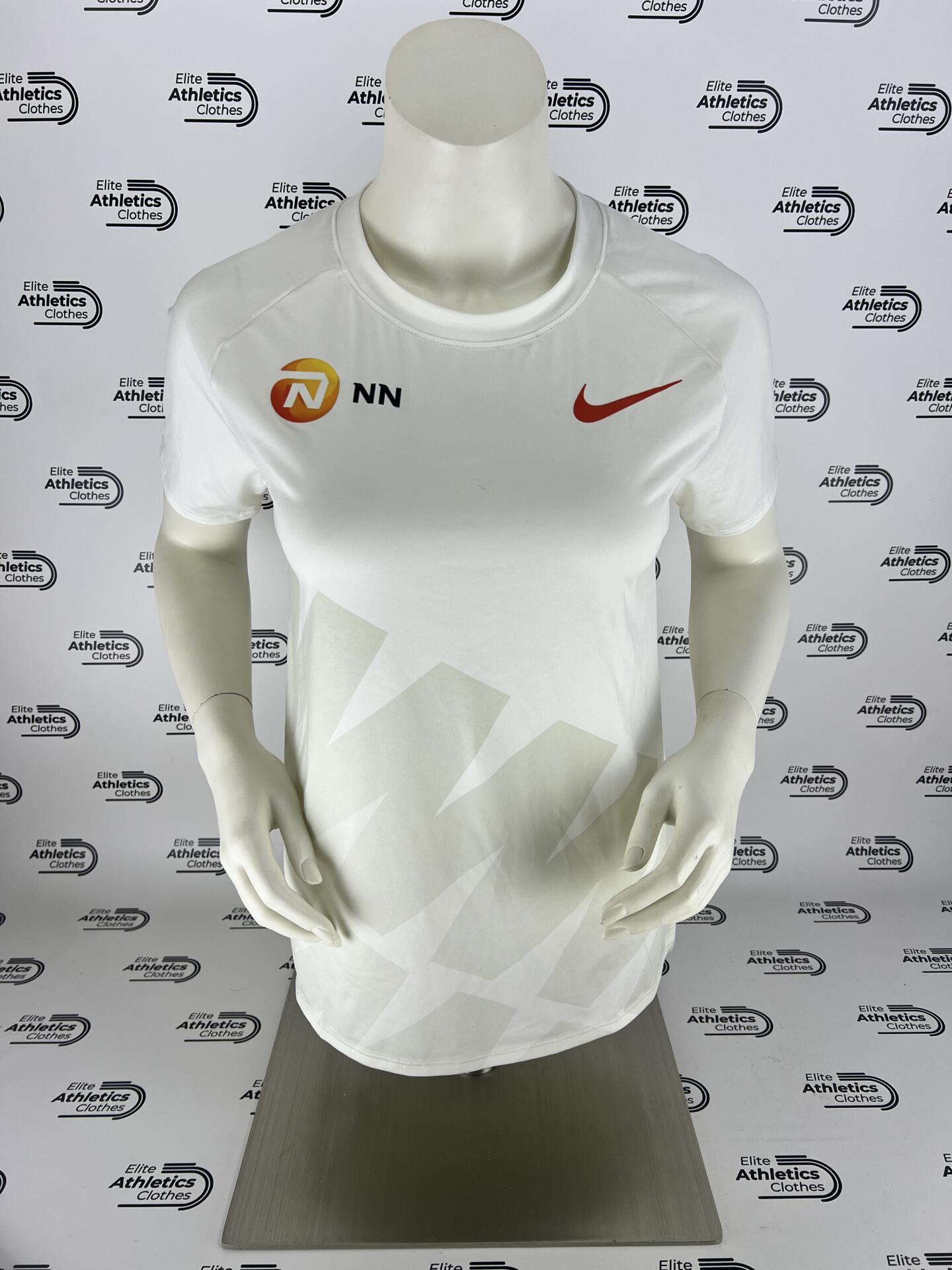 INEOS X Nike NN Running Team Pro Elite 2020/2021 Women T-Shirt150,00 €View Piece →Rosa & Co
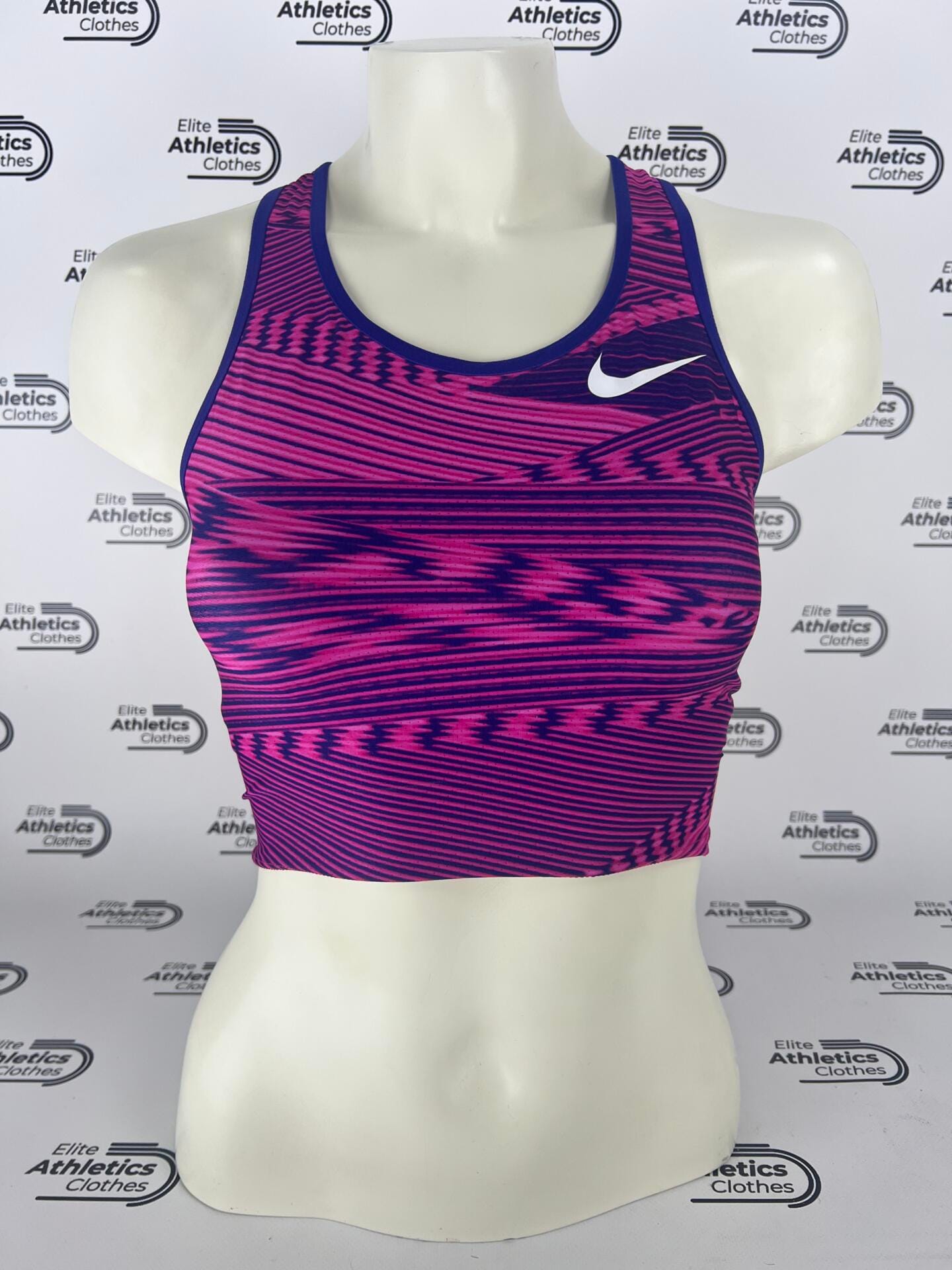 Nike Rosa & Co. Pro Elite 2019 Women Crop Top250,00 €View Piece →Nike Pro Elite
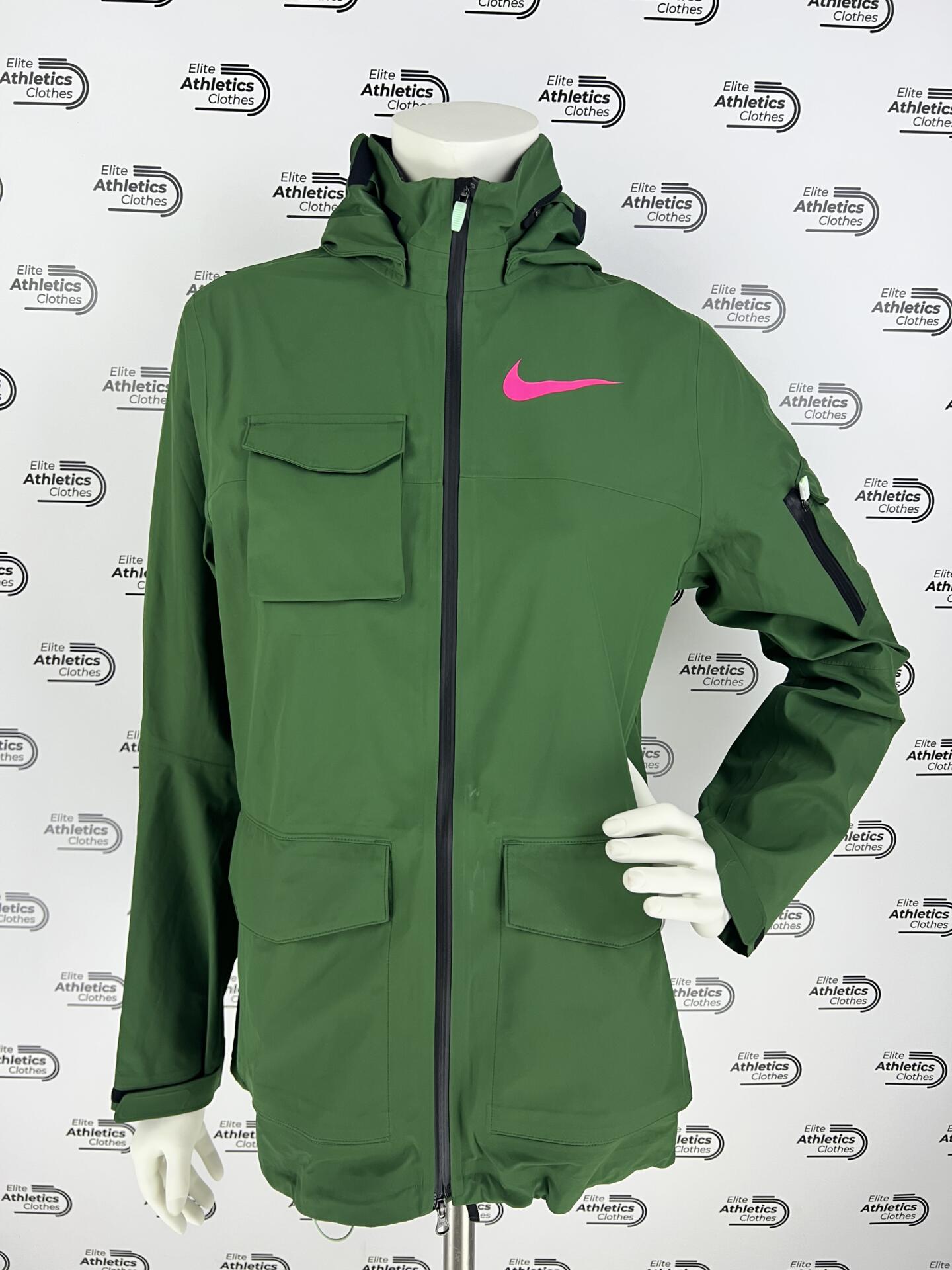 Nike Pro Elite 2023 Women Storm Fit Jacket150,00 €View Piece →
Who ran the first sub-two-hour marathon?
Sabastian Sawe of Kenya, at the London Marathon on 26 April 2026, in 1:59:30. It was the first time two hours was beaten in an open race — Eliud Kipchoge's 1:59:40 in Vienna in 2019 was a paced exhibition and could not be ratified. Sawe's time is the official world record, and Yomif Kejelcha (1:59:41) also finished under two hours in the same race.
What is the London Marathon course record?
For men, Sabastian Sawe's 1:59:30 from 2026, which is also the world record. For women, Paula Radcliffe's 2:15:25 from 2003 is still the fastest time ever run in London; Tigst Assefa's 2:15:41 from 2026 is the ratified women-only world record, set in a race without male pacemakers.
How big is the London Marathon?
The 2026 race had 59,830 finishers from 60,512 starters — certified by Guinness World Records as the largest marathon ever staged. The public ballot for the 2027 race received a record 1,338,544 applications, and the event is the world's biggest annual one-day charity fundraiser, raising over £87.5 million in 2026.
Do London Marathon runners wear national team kit?
No. Like every World Marathon Major, London is raced in sponsor kit: each elite athlete wears the gear of the brand or trade team that backs them. In 2026 the whole podium ran in adidas footwear, Kipchoge's four London wins came inside the NN Running Team setup, and Jacob Kiplimo races out of the Rosa & Co camp. National kit belongs to championships like the Olympics or the Worlds.
Sources and References
- World Athletics — Sawe breaks two-hour barrier in London — the 1:59:30, Kejelcha's 1:59:41, Kiplimo's 2:00:28 and Assefa's 2:15:41
- World Athletics — world records ratified — the official ratification of both London 2026 records
- Guinness World Records — largest number of finishers in a marathon — the 59,830 finishers of 60,512 starters on 26 April 2026
- London Marathon Events — record 1.33 million apply for 2027 — the 1,338,544 ballot applications and the previous record
- London Marathon Events — 2026 breaks own fundraising world record — the £87.5M raised by May 2026 and the £90M expectation
- Wikipedia — 1981 London Marathon — the founding story, the joint win and the first-year numbers
- World Athletics — Kipchoge cracks course record in London (2019) — the 2:02:37 and the four London wins