
The most common question we get at Elite Athletics Clothes is not about authenticity or rarity. It is “what size should I order?” And it deserves a serious answer, because athlete-issue kit does not size like the sportswear you buy in a shop. A singlet built for a championship final is patterned around one idea — as Nike put it when introducing its AeroSwift speed-apparel technology, eliminating excess material to keep weight to a minimum. When the goal is minimum fabric, the fit that results is nothing like a relaxed retail tee.
This guide explains how elite race fit actually behaves, how singlets, speedsuits and tracksuits each size differently, what to measure before you buy, and when it makes sense to size up. Read it once and you will order with confidence — whether you plan to race in your kit or frame it.
Key facts · Verified · updated July 2026
- Race vest weight
- ≈40–70 g — a fraction of a retail tee
- Typical race-singlet fabric
- 85–90% polyester + 10–14% elastane
- adizero singlet blend
- 86% recycled polyester / 14% elastane
- Speedsuit make-or-break
- Torso length (shoulder to crotch)
- Closest to retail sizing
- Tracksuit jacket & pants
- Most liquid collector sizes
- M–L (men’s) · S–M (women’s)
- Measure before buying
- Chest · waist · hips · torso · inseam
- Collector’s rule No. 1
- Size to the garment, not the other way around
Race Fit Is Not Retail Fit
Retail running apparel is cut for comfort across millions of bodies. Competition kit is cut for speed on one type of body: a lean, trained athlete moving at race pace. The practical differences show up the moment you put a piece on.
- A race singlet fits like a second skin. Elite racing vests from the major brands are astonishingly minimal — well-known race vests on the market weigh roughly 40 to 70 grams, a fraction of a normal training tee. There is simply no spare fabric to drape or billow. The cut sits close through the chest and torso by design, so nothing flaps at speed.
- A speedsuit fits tighter still. One-piece sprint suits are compression-like: they are meant to sit flush against the body from shoulder to thigh, with zero wrinkling. If a speedsuit feels merely “comfortable” on the hanger-size you normally wear, it is probably too big for its intended purpose.
- A tracksuit is the exception. Warm-up jackets and pants are podium and travel wear, not race wear. They fit much closer to what you expect from retail — athletic but wearable, with room to layer over a singlet underneath.
So the honest headline is this: if you order your usual shop size in a race-cut piece, expect it to feel tight. That is not a sizing error. That is the garment doing its job.
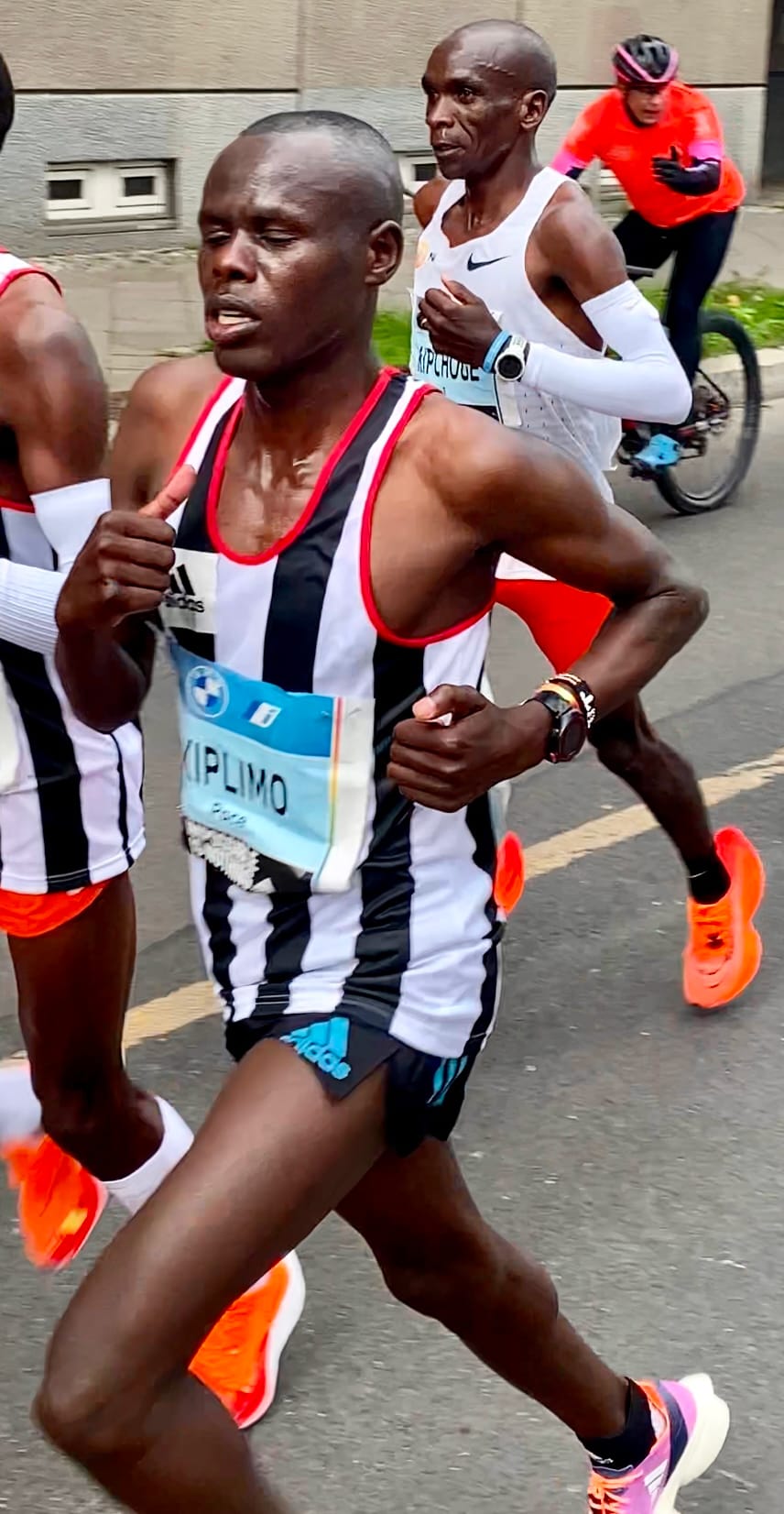

The Fabric Factor: Why Stretch Changes Everything
Modern racing singlets are typically built from a blend of roughly 85–90% polyester (often recycled) with around 10–14% elastane — adidas’s adizero racing singlet, for example, is 86% recycled polyester and 14% elastane. That elastane content matters for sizing in two ways.
First, it gives the fabric genuine four-way stretch, so a close cut still moves with you rather than restricting you. A race singlet that looks impossibly narrow laid flat will often accommodate more chest than you expect. Second, it means the garment is supposed to be under light tension on the body. Elite kit is engineered around that tension — ventilation is built directly into the textile, whether through Nike’s engineered knit zones, adidas’s perforations or ASICS’s body-mapped ventilation — and those zones sit where they should only when the piece fits snugly.
Polyester itself is hydrophobic: it does not absorb sweat into the fiber the way cotton does, instead moving moisture to the surface to evaporate. A close fit accelerates that process, because the fabric stays in contact with the skin. Wear a race singlet loose and you lose part of what it was engineered to do.
Athletes vs Collectors: Size for Your Purpose
Before you touch a tape measure, decide what the piece is for.
If you are going to race in it
Take your true competition fit. That usually means your normal athletic size or, if you sit between sizes, the smaller one for a singlet or speedsuit. Expect second-skin contact through the torso. The stretch in the fabric will do the rest.
If you are going to train or wear it casually
Consider going one size up from your usual. Race cut runs noticeably slimmer than retail cut, and a size up in a race-cut singlet lands close to how a retail piece fits — snug but easy to live in.
If you are collecting
Fit matters less than the piece itself, but think about display and resale. Many collectors prefer a size they could at least wear for photos, and mid-range sizes (M–L in men’s, S–M in women’s) tend to be the most liquid on the secondary market. If a rare singlet only exists in one size, buy the singlet — collectors’ rule number one is that you size to the garment, not the other way around.
Sizing Behavior by Garment Type
| Garment | Intended fit | Sizing guidance |
|---|---|---|
| Race singlet | Second-skin through chest and torso; minimal fabric | True size to race; one size up for training or casual wear |
| Speedsuit | Compression-like, flush from shoulder to thigh | True size, and prioritize your torso and hip measurements — one-piece fit is unforgiving |
| Half-tights / shorts | Snug, close to compression wear | True size; the elastane blend handles the rest |
| Tracksuit jacket & pants | Athletic but relaxed; layers over kit | Closest to retail sizing of any elite piece; your usual size normally works |
Speedsuits deserve one extra warning. Because they are a single garment covering torso, hips and thighs, a mismatch anywhere throws off the whole fit — a suit that is right in the chest but short in the torso will pull at the shoulders. If you are between sizes on any of the three zones, ask for flat measurements before committing.
Where each garment sits on the tightness spectrum
Gold band = intended competition fit window. Blue dot = where one size up lands.
Data table — fit by garment type
| Garment | Intended fit | Sizing guidance |
|---|---|---|
| Speedsuit | Compression-like, flush shoulder to thigh | True size; prioritise torso & hip measurements |
| Half-tights / shorts | Snug, close to compression | True size |
| Race singlet | Second-skin through chest and torso | True size to race; one size up to train |
| Tracksuit | Athletic but relaxed | Usual retail size normally works |
Fit windows per the garment behaviour documented in this guide; measured against Elite Athletics Clothes flat measurements.
What to Measure Before You Buy
Size letters vary by brand, era and cut, so measurements are the only universal language. Take these five with a soft tape, relaxed against the body:
- Chest — around the fullest part, tape level under the armpits.
- Waist — around the narrowest point of your torso.
- Hips — around the widest point of hips and glutes (critical for speedsuits and half-tights).
- Torso length — shoulder to crotch; the make-or-break measurement for one-piece suits.
- Inseam — crotch to floor, for tracksuit pants and tights.
Then compare against the garment’s flat measurements rather than a generic chart. For athlete-issue pieces this is doubly important: they are produced in limited quantities for specific seasons, and cuts can shift from one year’s kit to the next. Every listing in our catalog can be checked this way — if you need pit-to-pit or length measurements on a specific piece, ask us before ordering and we will measure the actual garment in hand.
Do Brands Size Differently?
Yes — and treat any absolute rule with suspicion. Nike, adidas, ASICS and Puma each pattern their elite ranges around their own fit philosophy, and even within one brand a sprint-oriented cut fits differently from a distance cut of the same season. Rather than memorizing “brand X runs small,” anchor on two habits: know your own measurements, and check the specific garment. Federation kits add another variable, since national-team pieces follow the sponsor brand’s block of that particular cycle — browse our international teams collection and you will see cuts evolve visibly across seasons.
Quick Answers Before You Order
Still deciding what to buy in the first place? Our beginner’s guide to your first Pro Elite kit walks through garment choice, nation and year. And before you pay for any piece from an unknown seller, run it through our authentication guide — a perfect fit means nothing on a fake.
Should I size up in a Pro Elite singlet?
If you plan to race in it, no — take your true athletic size and let the elastane-blend fabric stretch to you. If you plan to train or wear it casually, one size up usually lands close to a retail fit.
How tight should a speedsuit feel?
Compression-tight. A speedsuit should sit flush against the body with no wrinkles or loose fabric anywhere; if it feels relaxed, it is too big for its purpose. Torso length is the measurement that matters most.
Do tracksuits fit as tight as singlets?
No. Warm-up tracksuits are cut athletic but relaxed — the closest of any elite garment to normal retail sizing. Your usual size almost always works, with room to layer over a singlet.
Why do elite race fabrics stretch so much?
Because they are engineered to. Typical elite racing singlets blend roughly 85–90% polyester with 10–14% elastane, giving four-way stretch so a minimal, close cut still moves freely at race pace.
What if a rare piece only exists in one size?
Buy the piece. Athlete-issue kit is produced in limited runs, and the same singlet in your exact size may never surface again. Collectors size to the garment — and a near-miss fit still displays beautifully.
Ready to put the theory to work? Every singlet, speedsuit and tracksuit in the Elite Athletics Clothes catalog is authenticated and photographed in hand — and if you want flat measurements on any piece before you order, just ask. Find your fit, then find your kit.