

Poland
Poland’s first Olympic gold in any sport came from a discus circle in 1928 — and its grip on the throws has never loosened: 67 Olympic athletics medals, a women’s hammer world record untouched since 2016, and a home world title in Toruń in March 2026.
Poland’s athletics history runs from Halina Konopacka’s discus gold at Amsterdam 1928 — the country’s first Olympic title in any sport — to Anita Włodarczyk’s 82.98 m hammer world record, still unbeaten a decade on: 67 Olympic medals (29 gold), 20 world titles, the Kozakiewicz gesture, and a home gold at the Toruń 2026 World Indoors.
Few national stories in this sport have its shape. A woman opened the gold account at the first Games that let women compete in athletics; a 10,000 m champion died on a wartime execution ground; a pole vaulter answered a hostile Moscow crowd with a world record and a gesture; and a hammer school built around one memorial meeting has supplied world and Olympic titles for a quarter of a century. This is the complete history of athletics in Poland.
Race-issued kit is how this history survives off the track. Explore the athlete-issued archive at Elite Athletics Clothes — real pro elite gear, straight from team channels, never replicas.
- Federation
- Polski Związek Lekkiej Atletyki (PZLA), member of World Athletics
- Olympic athletics medals
- 67: 29 gold · 20 silver · 18 bronze — Poland’s top Olympic sport
- The first
- Konopacka’s 1928 discus gold (WR 39.62 m) was Poland’s first Olympic gold in any sport
- The record
- Hammer world record: 82.98 m, Anita Włodarczyk, Warsaw, 28 Aug 2016 — still standing
- The triple crown
- Irena Szewińska: the only athlete ever to hold the 100 m, 200 m and 400 m world records
- The streak
- Paweł Fajdek: 5 straight world hammer titles (2013–2022) — only Bubka had done that before
- Best modern Games
- Tokyo 2020: 9 medals, 4 golds, incl. the first-ever mixed 4×400 m Olympic title (3:09.87 OR)
- Kit supplier
- 4F (Polish, OTCF S.A.) since 2013 · under contract through 2032
The Origins of Track and Field in Poland
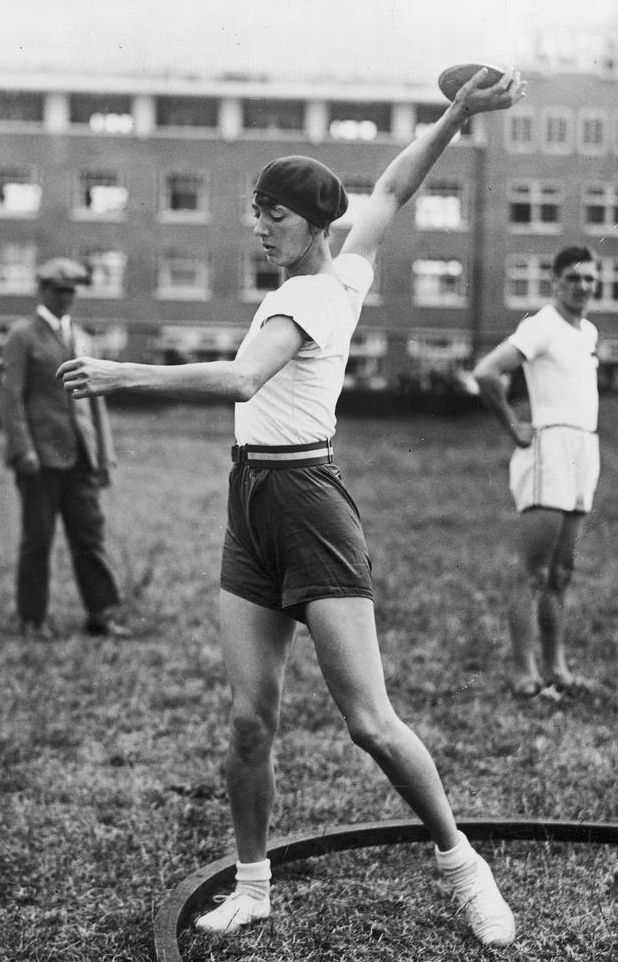
Poland’s Olympic history — in every sport, not only this one — begins on an athletics infield. At Amsterdam 1928, the first Games to include women’s athletics events, discus thrower Halina Konopacka won the country’s first Olympic gold medal of any kind, and did it with a world record. No other discipline can claim Poland’s founding Olympic moment: athletics is where the account opened, and with 67 medals it is still where the account is largest.
The sport grew fast in the reborn Polish state. Within four years of that first gold Poland had two more Olympic champions, a distance runner and a sprinter, and by the late '50s a full national system — the Wunderteam — that could draw some 100,000 people to a Warsaw stadium for a dual meet against the United States.
That arc — early, female-led, repeatedly cut short by history and repeatedly rebuilt — runs through everything below: the interwar golds, the Wunderteam years, the walking and hammer dynasties, and a 2026 season in which Poland answered its leanest stretch in decades with a world title at home in Toruń.
Amsterdam 1928 and the Interwar Golds
Konopacka’s winning throw in Amsterdam measured 39.62 m, a world record. She was also a published poet — the two facts sat together comfortably in interwar Warsaw, where she was one of the most photographed women in the country. She emigrated to the United States in 1941 and died in Daytona Beach, Florida, on 28 January 1989.

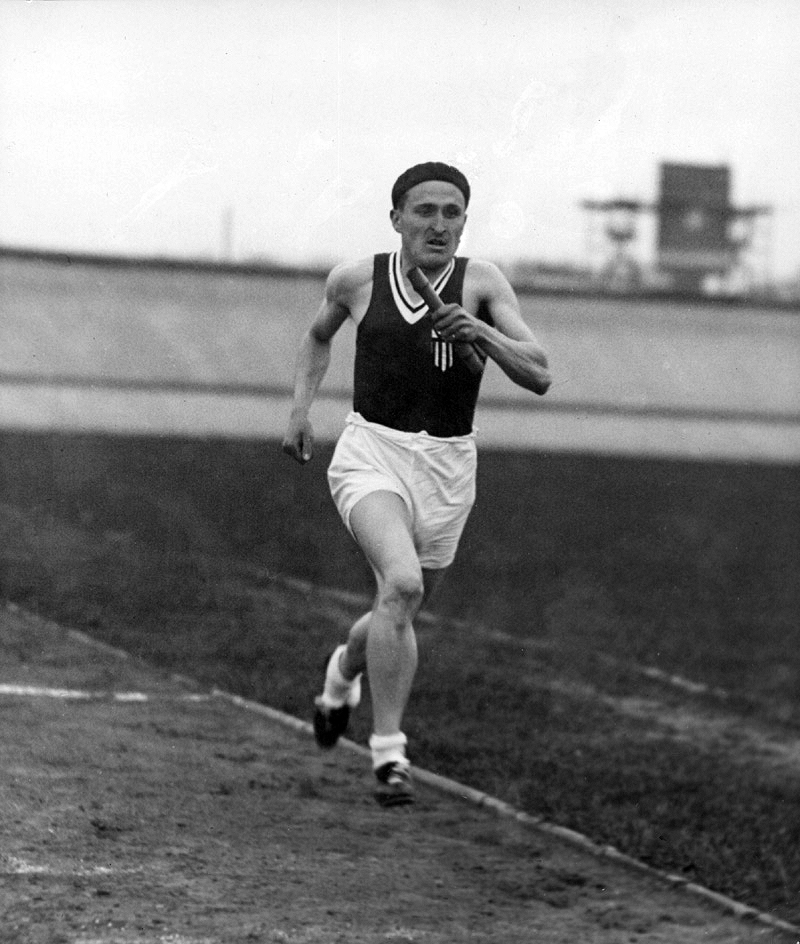
Four years later in Los Angeles, Janusz Kusociński took the 10,000 m in 30:11.4, outrunning the Finns Iso-Hollo and Virtanen in an event their country had treated as property. His story ends in the war: a resistance member in occupied Warsaw, he was arrested by the Gestapo in March 1940 and executed in the Palmiry forest massacre on 21 June 1940, aged 33. The Kusociński Memorial meeting is still run in his honour.
The same Los Angeles Games produced a third gold: Stanisława Walasiewicz equalled the 11.9 world record to win the 100 m, then took silver behind Helen Stephens in Berlin by two hundredths. She spent most of her life in Cleveland as Stella Walsh; she was shot dead there in an armed robbery in December 1980, and the autopsy’s finding of intersex characteristics opened a debate that the record books never acted on — her medals and records stand.
Poland’s Greatest Athletes
Six careers carry the core of the story: the sprinter who owned three world records across three distances, the walker who won everything four times, the two throwers who turned the hammer into a Polish event, the vaulter with the most famous gesture in track and field, and the quiet shot putter who repeated.
Irena Szewińska
Seven Olympic medals across four Games in five different events — gold at 200 m in 1968 and 400 m in 1976 — and a distinction nobody else in the sport’s history can claim: she is the only athlete, man or woman, ever to hold the 100 m, 200 m and 400 m world records. An IOC member from 1998 until her death in 2018.
Robert Korzeniowski
Four Olympic race-walk golds across Atlanta, Sydney and Athens, including the only 20 km/50 km double ever completed at a single Games (Sydney 2000), plus three world 50 km titles. Disqualified in Barcelona in 1992 before winning nearly everything after it; retired after Athens 2004, IAAF Hall of Fame in 2014.
Anita Włodarczyk
Three Olympic golds, four world titles, the first woman over 80 m (81.08 in 2015) and a world record of 82.98 m from 2016 that still stands — no other woman has ever thrown 82 m. Still competing at 40, she placed sixth at the Tokyo 2025 World Championships.
Władysław Kozakiewicz
Cleared a world-record 5.78 m to win the Moscow 1980 pole vault — the first vault world record set at an Olympics since 1920 — then aimed a bent-arm gesture at the whistling Soviet crowd. Moscow demanded the medal back; Warsaw called it a muscle spasm. He kept the gold, left for West Germany in 1985, and lives there still.
Tomasz Majewski
Back-to-back Olympic shot put golds in Beijing 2008 and London 2012 — the bridge in Poland’s modern throwing line between the Ziółkowski generation and the Fajdek–Włodarczyk era, and the first man to repeat in the event in over five decades of Polish trying.
Paweł Fajdek
Five consecutive world hammer titles from 2013 to 2022 — before him, only Sergey Bubka had won five in a row in a single event. Olympic bronze in Tokyo 2020, and still reaching global finals: seventh at the Tokyo 2025 Worlds at 77.75 m.
The Kozakiewicz moment deserves one more line. The Moscow crowd whistled through his run-ups all evening; he answered from the top of the standings, with the bar at a world-record height, and the bras d’honneur he flashed at the stands crossed the Iron Curtain in a way no result could. The Soviet ambassador demanded he be stripped of the medal; the official Polish explanation — an involuntary muscle spasm — has been quoted with a straight face ever since.
Olympic Achievements
Poland has won 67 Olympic athletics medals — 29 gold, 20 silver, 18 bronze — more than in any other sport. After the war the account reopened in Melbourne in 1956, where Elżbieta Krzesińska won the long jump at 6.35 m, equalling the world record she had set in Budapest that August.
Then came the Wunderteam. Built by coach Jan Mulak, it announced itself on 1 August 1958, when some 100,000 spectators filled Warsaw’s Stadion X-lecia for a dual meet against the United States, and confirmed itself with 8 golds and 12 medals at the Stockholm Europeans that year, 7 Olympic medals in Rome and 8 in Tokyo. Its stars — Krzyszkowiak, Szmidt, Piątkowski, Sidło, Chromik, Rut — included the first man in history past 17 m in the triple jump: Józef Szmidt, whose 17.03 from 1960 stayed the world record for eight years, and who won the event at back-to-back Games in Rome and Tokyo. Szmidt died in July 2024, aged 89.
Montreal 1976 brought three golds in one Games — Szewińska’s 400 m, Tadeusz Ślusarski’s pole vault, Jacek Wszoła’s high jump — and Moscow 1980 two more: Bronisław Malinowski’s steeplechase, four years after his silver, and Kozakiewicz’s vault. Malinowski had barely a year to enjoy it; he was killed in a car crash in Grudziądz in September 1981, aged 30.
The modern peak is Tokyo 2020: nine medals, 4 gold, 2 silver, 3 bronze — Poland’s best athletics Games of the modern era. The mixed 4×400 m squad won the event’s first Olympic title in an Olympic-record 3:09.87, Włodarczyk and Wojciech Nowicki completed a hammer double, and Dawid Tomala won the 50 km walk — the last one ever held at an Olympics — in 3:50:08. The rose below is what all 29 golds look like sorted by event family.
The shape of 29 golds
Every Polish Olympic athletics gold, 1928–2021, grouped by event family — the angle is the family, the sector’s area is proportional to its gold count (rings mark 2, 5 and 10). Throws alone account for 10 of the 29. Hover or tab onto a count for the champions behind it. Sources: Olympedia (Poland athletics gold list), Wikipedia (Poland at the Olympics).
View the data
| Event family | Golds | Champions |
|---|---|---|
| Throws | 10 | Konopacka (discus '28), Komar (shot put '72), Skolimowska & Ziółkowski (hammer '00), Majewski (shot put '08, '12), Włodarczyk (hammer '12, '16, '20), Nowicki (hammer '20) |
| Jumps | 6 | Krzesińska (long jump '56), Szmidt (triple jump '60, '64), Ślusarski (pole vault '76), Wszoła (high jump '76), Kozakiewicz (pole vault '80) |
| Race walks | 5 | Korzeniowski (50 km '96, 20 km + 50 km '00, 50 km '04), Tomala (50 km '20) |
| Sprints | 3 | Walasiewicz (100 m '32), Szewińska (200 m '68, 400 m '76) |
| Middle & long distance | 3 | Kusociński (10,000 m '32), Krzyszkowiak (steeplechase '60), Malinowski (steeplechase '80) |
| Relays | 2 | Women’s 4×100 m ('64), mixed 4×400 m ('20) |
World Championship Achievements
Poland’s all-time World Championships haul stands at 20 gold, 21 silver and 25 bronze — 66 medals, twelfth on the all-time table. The account opened on day one of the event’s existence: at the first championships in Helsinki in 1983, Edward Sarul won the shot put at 21.39 m and Zdzisław Hoffmann the triple jump at 17.42 m, both championship records.
The titles since have come from familiar directions. Robert Korzeniowski won the 50 km walk three times (1997, 2001, 2003). Szymon Ziółkowski added the 2001 hammer title with a championship-record 83.38 m, Anna Rogowska the 2009 pole vault, Paweł Wojciechowski the 2011 pole vault at 5.90 m, and Piotr Małachowski the 2015 discus at 67.40 m.
But the deepest seam is the hammer. Anita Włodarczyk owns four world titles (2009, 2013, 2015, 2017) and Paweł Fajdek five in a row (2013–2022) — with Ziółkowski’s, that is ten of Poland’s twenty world golds from a single event family. Fajdek’s streak has one precedent in the championships’ history: only Sergey Bubka had won five straight golds in one event before him.
Running Culture in Poland
Polish running keeps its history close. The Kusociński Memorial is still run in honour of the 10,000 m champion murdered at Palmiry; the Skolimowska Memorial, founded the year the hammer prodigy died, grew into a Diamond League meeting. Racing in Poland has never been only about the clock — the big meets double as acts of remembrance.

On the track, the middle distances have been the most reliable modern thread. Marcin Lewandowski retired in May 2022 with a world 1500 m bronze from 2019, a world indoor silver, four European titles and national records still on the books when he stopped — 3:30.42 for 1500 m, 3:49.11 for the mile. Patryk Dobek’s 800 m bronze in Tokyo 2020 arrived the same summer the relay squads were winning gold and silver.
The women have picked the thread up since. Weronika Lizakowska ran a 3:57.31 national 1500 m record at the Paris Games, and Kazimierska placed seventh in the Tokyo 2025 world final with a personal best — modest next to the hammer haul, but the deepest Polish middle-distance running has looked in years.
The Club System and the Hammer School
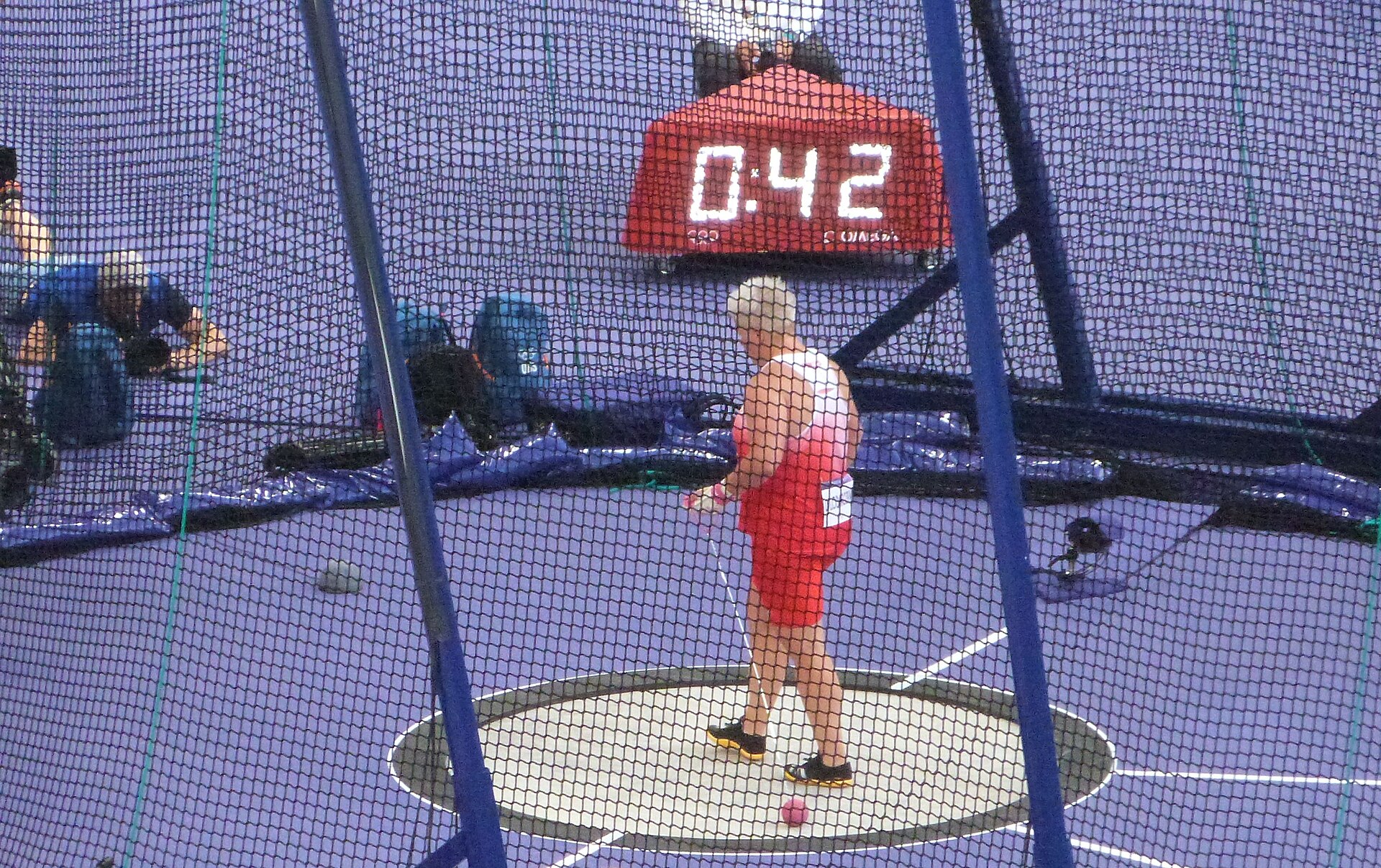
The organising spine of the sport is PZLA — Polski Związek Lekkiej Atletyki — and its most visible modern product is a school of hammer throwing without an equal anywhere. It declared itself in a single evening in Sydney in 2000, when Poland won both hammer golds on offer: Szymon Ziółkowski in the men’s event, and a teenager named Kamila Skolimowska in the first women’s Olympic hammer competition ever held.
Skolimowska was 17 years and 331 days old when she threw 71.16 m for gold — still the youngest Olympic hammer champion ever. She died at a national-team training camp in Portugal in February 2009, aged 26, of a pulmonary embolism. The meeting founded in her memory that year has kept growing: since 2022 the Kamila Skolimowska Memorial has been the Silesia Diamond League meeting at the Silesian Stadium in Chorzów, with the 2026 edition set for 23 August.
The school’s output since Sydney is hard to overstate: Włodarczyk’s 82.98 m world record was thrown at the 2016 Skolimowska Memorial in Warsaw; at Tokyo 2020 the hammer alone brought Poland four medals — golds for Nowicki and Włodarczyk, bronzes for Fajdek and Malwina Kopron; and Nowicki added world silvers in 2022 and 2023 before injury cost him the 2025 season’s championships.
The Current State of Poland Athletics
The middle of this decade has been lean by Polish standards. At Paris 2024 the team won exactly one athletics medal: 400 m bronze in 48.98 for Natalia Bukowiecka (née Kaczmarek — she has competed under her married name since September 2024). Włodarczyk placed fourth at 74.23, Nowicki seventh, Swoboda and Skrzyszowska went out in the semi-finals, and Poland’s whole Olympic team finished 42nd on the medal table. A year later in Tokyo, a squad of 59 again came home with one medal — Maria Żodzik’s high jump silver at 2.00 m, with Bukowiecka fourth in 49.27.
The answer came at home. In March 2026 Poland hosted the World Indoor Championships at the Kujawsko-Pomorska Arena in Toruń and won four medals: Jakub Szymański took 60 m hurdles gold in 7.40, Bukowiecka 400 m silver in a 50.83 national indoor record, Skrzyszowska 60 m hurdles bronze in a 7.73 national record, and the mixed 4×400 m squad bronze. One home gold does not rebuild an outdoor programme by itself, but it flipped the direction of travel.
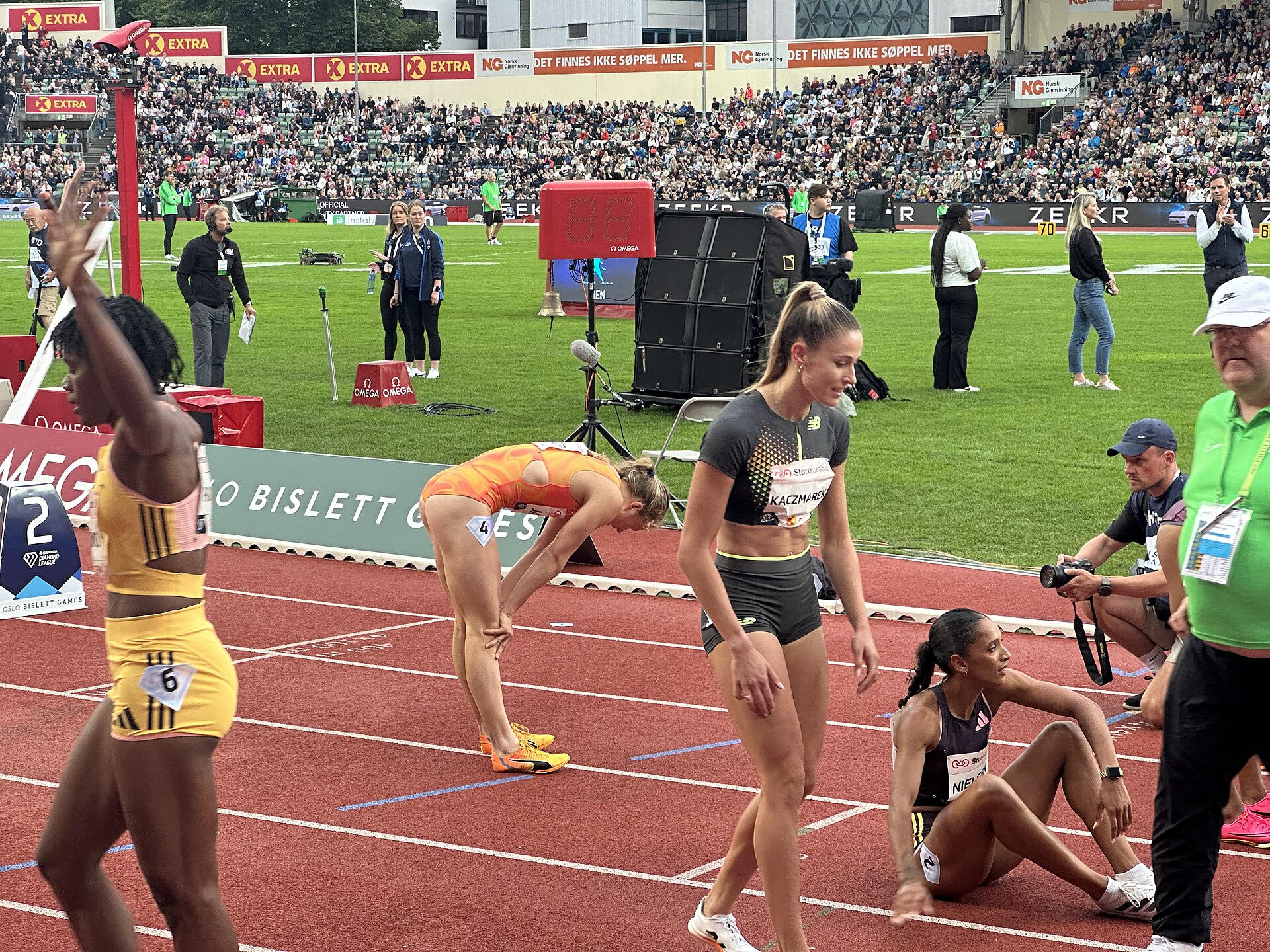
Bukowiecka is the sharpest single sign of where things point. Her 48.90 in London in 2024 broke the Polish 400 m record Irena Szewińska had held since 1976 — the oldest and most storied mark in the national book, passed to the athlete best placed to carry it.
The kit, meanwhile, has been Polish-made throughout the modern era. 4F — the sportswear brand of OTCF S.A. — has been PZLA’s technical sponsor since 2013, with the contract extended through at least 2032: a competition collection co-designed with the athletes, plus white-and-red replica kits sold to fans. The replicas are exactly why the race-issued distinction matters here more than for most nations — what the team actually competes in is a different, far rarer thing. Authentic athlete-issued pieces surface in the Pro Elite archive as they leave team channels.
Future Stars and Emerging Talents
The generation that carried Toruń 2026 is young enough to define the next two Olympic cycles — and for the first time in decades, the depth is on the track rather than in the circle.
Natalia Bukowiecka
Olympic bronze in Paris (48.98), a 48.90 national record in London in 2024 that took down Irena Szewińska’s 1976 mark, fourth at the Tokyo 2025 Worlds and 400 m silver at the home World Indoors in Toruń with a 50.83 indoor record. The most complete Polish 400 m runner since Szewińska herself.
Ewa Swoboda
The Polish 60 m record holder at 6.98 (Glasgow 2024) with a 100 m best of 10.94 from Chorzów in 2023 — a global-final sprinter in a country whose sprint tradition had gone quiet since the Szewińska years. Sixth in the Toruń 2026 world indoor final.
Pia Skrzyszowska
Born in 2001, fifth in the world outdoors in Tokyo 2025, and bronze at the home World Indoors with a 7.73 national 60 m hurdles record — the fastest hurdling by a Polish woman on the books.
Jakub Szymański
Born in 2002 and already the reigning world and European indoor 60 m hurdles champion, with national records of 7.37 indoors (Berlin 2026) and 13.45 over the outdoor barriers (Warsaw 2024). His 7.40 in Toruń was Poland’s first world indoor gold at home.
Maria Żodzik
World silver medallist in Tokyo 2025 with a 2.00 m clearance — Poland’s only medal of those championships, and its first global women’s high jump medal of the modern era.
Poland Records & Historic Milestones
One world record still standing, a national book rewritten between 2024 and 2026, and a set of marks that mattered far beyond Poland.
Three milestones frame the ledger: Konopacka’s 1928 discus gold, the first Olympic title Poland won in any sport; Szewińska holding the 100 m, 200 m and 400 m world records across one career, which no other athlete has done; and Dawid Tomala winning the final 50 km walk ever raced at an Olympic Games — a title that can now never change hands.
Shop Athletics Apparel
A dedicated Poland rail does not exist yet — race-issued 4F national-team pieces are among the hardest kits to source, and we would rather say so than sell replicas. While the hunt continues, these are the latest athlete-issued arrivals in the Elite Athletics Clothes archive — real pro elite gear from team channels, never replicas.
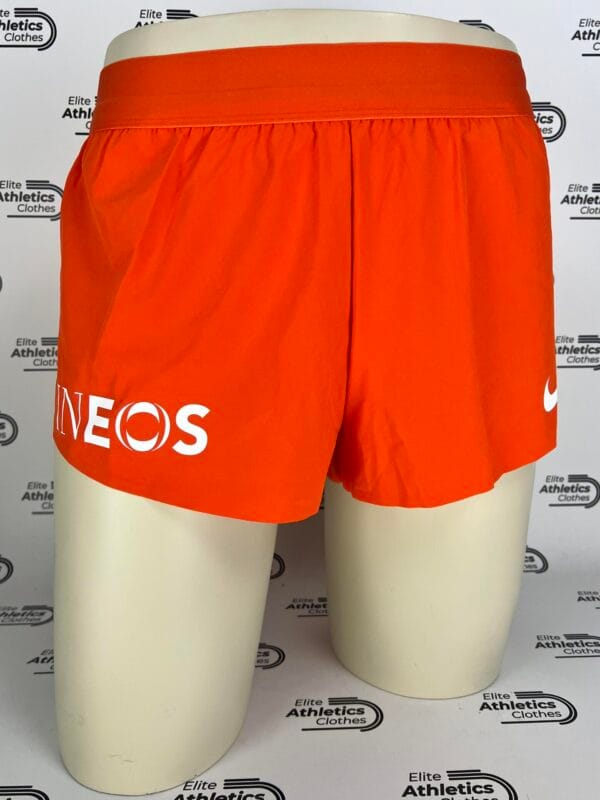 Nike NN Running Team Pro Elite 2024 Racing Shorts180,00 €View Piece →
 Nike DSM-Firmenich Team Pro Elite 2026 Backbag120,00 €View Piece →
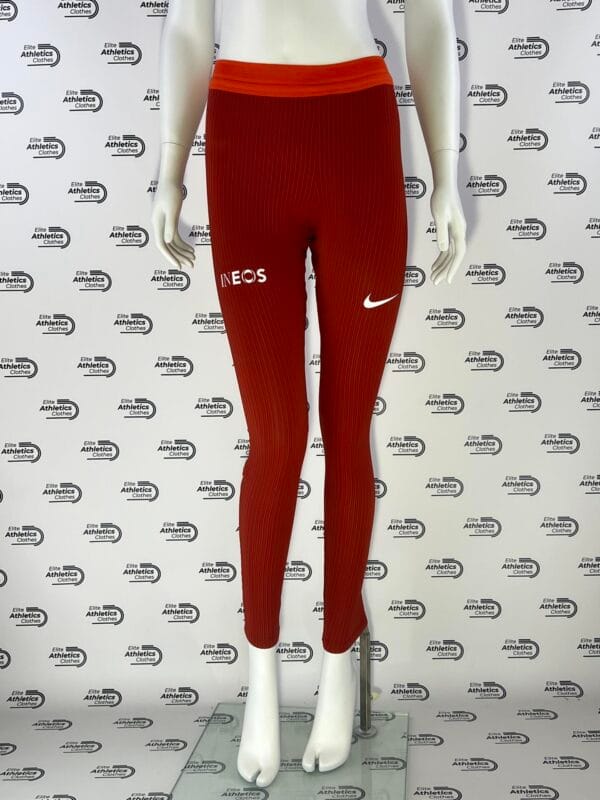 Nike NN Running Team Pro Elite 2023 Women Long Tights
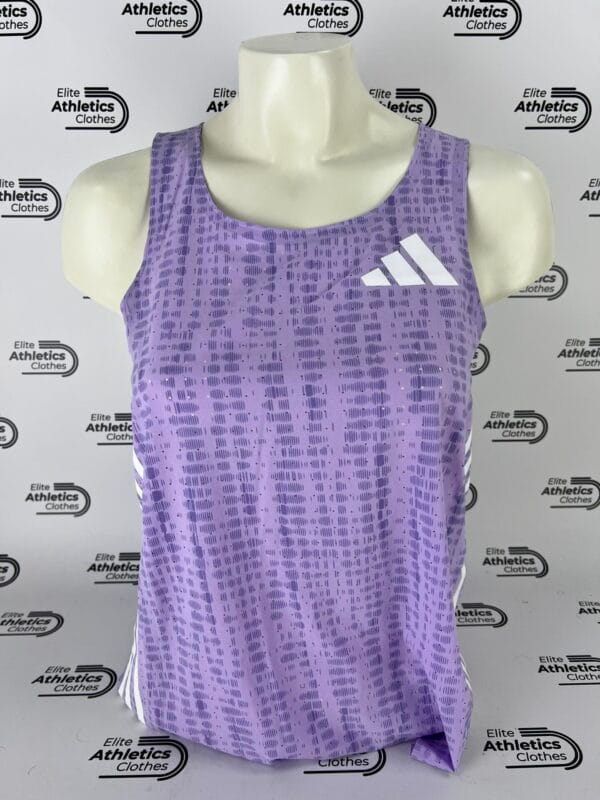 Adidas Pro Elite Team 2025 Women Distance Singlet – Special Edition140,00 €View Piece →
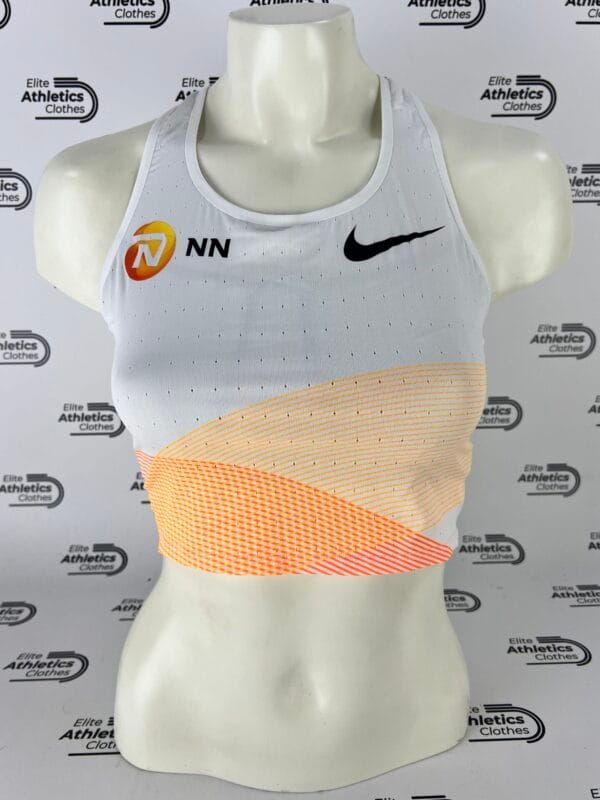 Nike NN Running Team Pro Elite 2023 Women Crop Top180,00 €View Piece →
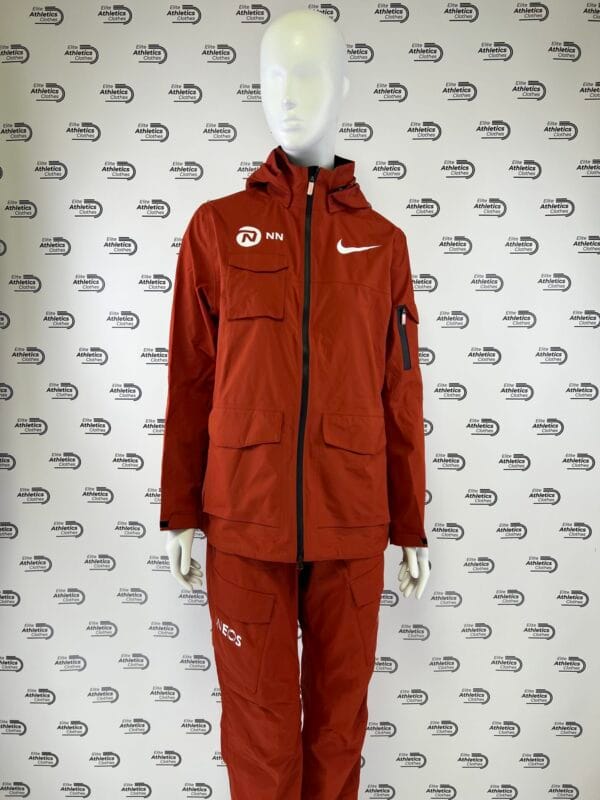 INEOS X Nike NN Running Team Pro Elite 2023 Women Storm Tracksuit300,00 €View Piece →
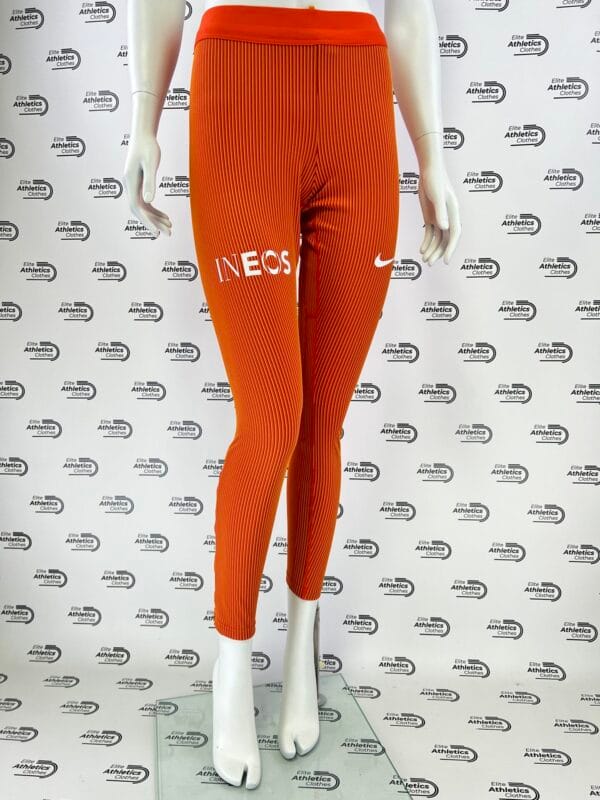 Nike Pro Elite NN Running Team 2024 Women Long Tights180,00 €View Piece →
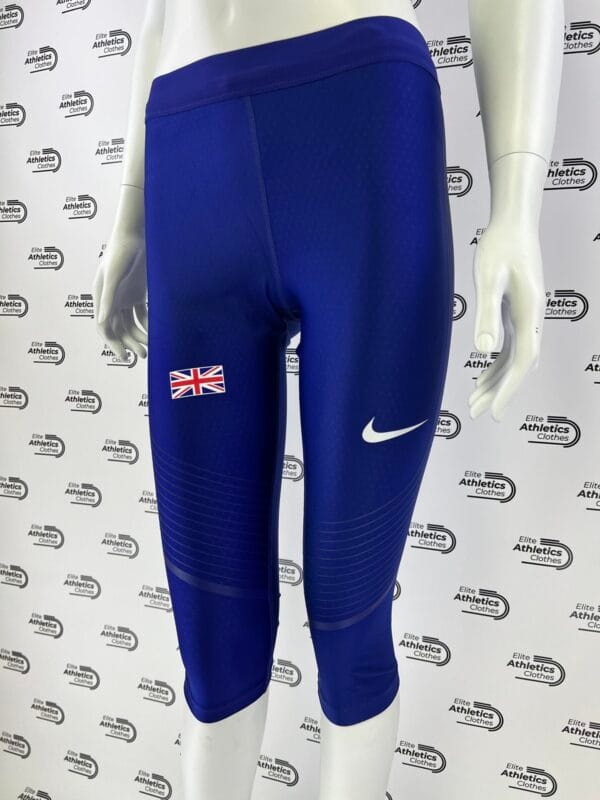 Nike Great Britain Pro Elite 2019 Women Capri Long Tights100,00 €View Piece →
How many Olympic gold medals has Poland won in athletics?
29 — within a total of 67 Olympic athletics medals (29 gold, 20 silver, 18 bronze), from Halina Konopacka’s discus title in 1928 to the four golds of Tokyo 2020 (Włodarczyk, Nowicki, Tomala and the mixed 4×400 m relay). Athletics is Poland’s most successful Olympic sport.
Does Anita Włodarczyk still hold the hammer world record?
Yes. Her 82.98 m from the Skolimowska Memorial in Warsaw on 28 August 2016 is still the world record as of July 2026 — no other woman has ever thrown 82 m. The 2026 world lead, Camryn Rogers’s 81.13 m, is nearly two metres short of it.
What was the “Kozakiewicz gesture”?
The bent-arm bras d’honneur Władysław Kozakiewicz aimed at the whistling Moscow crowd after clearing a world-record 5.78 m to win the 1980 Olympic pole vault. The Soviet ambassador demanded his medal be stripped; the Polish side called it an involuntary muscle spasm, and he kept the gold.
Who was Poland’s first Olympic champion?
Halina Konopacka — and in any sport, not only athletics. Her discus gold at Amsterdam 1928, won with a world record of 39.62 m at the first Games to include women’s athletics events, was Poland’s first Olympic gold medal ever. She was also a published poet.
Who makes the Polish athletics team kit?
4F, the Polish sportswear brand (OTCF S.A.), has been PZLA’s technical sponsor since 2013, under a contract extended through at least 2032. The competition collection is co-designed with the athletes, and white-and-red replica kits are sold to fans — which is exactly why the difference between a replica and a race-issued piece matters to collectors of Polish kit.
How did Poland do at the 2026 World Indoor Championships in Toruń?
The hosts won four medals: gold for Jakub Szymański in the 60 m hurdles (7.40), silver for Natalia Bukowiecka in the 400 m (50.83, national indoor record), and bronzes for Pia Skrzyszowska (60 m hurdles, 7.73 national record) and the mixed 4×400 m relay.
Where can I buy authentic Poland athletics apparel?
Race-issued Polish kit is scarce: 4F team pieces rarely leave team channels, and Elite Athletics Clothes does not currently run a dedicated Poland category — we would rather be honest about that than list replicas. The Pro Elite archive of athlete-issued gear is the place to start: every piece is race-issued, never a replica, and new federations rotate in as pieces surface.
Sources and References
- Poland at the Olympics (Wikipedia) — confirms the 29-20-18 (67) Olympic athletics medal count and athletics as the top Polish Olympic sport.
- Poland — Olympedia — independent cross-check of the athletics medal table (29/20/18 = 67).
- Poland athletics gold medallists — Olympedia — the itemised list of all 29 Olympic golds behind the polar-rose chart.
- World Athletics Championships all-time medal table (Wikipedia) — confirms Poland 20-21-25 = 66, rank 12, through Tokyo 2025.
- Poland at the 2020 Summer Olympics (Wikipedia) — confirms Tokyo 2020: 9 athletics medals, 4 golds, mixed 4×400 in a 3:09.87 Olympic record.
- Poland at the 2024 Summer Olympics (Wikipedia) — confirms the single Paris athletics medal (Kaczmarek 400 m bronze, 48.98) and 42nd overall.
- Poland at the 2025 World Athletics Championships (Wikipedia) — confirms Tokyo 2025: one medal, Żodzik high jump silver at 2.00 m, squad of 59.
- 2026 World Athletics Indoor Championships (Wikipedia) — confirms Toruń 2026 hosting and the four Polish medals incl. Szymański’s 7.40 gold.
- Anita Włodarczyk (Wikipedia) — confirms the 82.98 m world record, three Olympic golds, four world titles, first woman over 80 m.
- Hammer throw world records — World Athletics — confirms 82.98 still stands in 2026; world lead 81.13 (Rogers).
- Irena Szewińska (Wikipedia) — confirms 7 Olympic medals in 5 events across 4 Games and the 100/200/400 world-record distinction.
- Władysław Kozakiewicz (Wikipedia) — confirms the 5.78 world record, the gesture and its aftermath, and his 1985 emigration.
- Kamila Skolimowska Memorial / Silesia Diamond League — confirms the memorial’s founding in 2009 and its status as the Chorzów Diamond League meeting since 2022.
- Natalia Bukowiecka (Wikipedia) — confirms the 48.90 national record (London 2024) breaking Szewińska’s 1976 mark, and the 2024 name change.
- 4F dresses the Polish athletics federation (bieganie.pl / PZLA) — confirms 4F as PZLA technical sponsor since 2013, extended through 2032, with fan replicas on sale.