
Adidas Pro Elite
2013
1 athlete-issue piece from the 2013 cycle lives in our archive — the oldest adidas kit we hold, from the year the brand launched Boost, set a marathon world record in Berlin, and lost its three fastest sprinters to injury and a suspension.
Adidas Pro Elite 2013 is the 2013-season generation of adidas athlete-issue kit — issued to contracted athletes and federation squads, never sold at retail, and now the earliest adidas cycle in our archive.
This page reads the season first — the Boost launch, Kipsang's Berlin record and Kimetto's Chicago, the summer of Gay, Rudisha and Blake — then the cycle's two-blue design and the one piece of it we hold.
Part of our Brand Series — the full story is in The History of Adidas Pro Elite. Jump to the full cycle collection or browse the category.
- What it is
- The earliest adidas cycle in our archive — one sleeveless speedsuit in two blues, Gold Medallist Edition
- The foam
- Energy Boost on sale 27 February 2013 — BASF's expanded TPU replaces EVA
- Berlin, 29 Sept
- Kipsang 2:03:23, world record — the first world record of 2013; the shoe model is disputed
- Chicago, 13 Oct
- Kimetto 2:03:45, course record
- The suspension
- Gay: 9.79 in Lausanne on 4 July; positive test announced 14 July; adidas suspends the contract
- The injuries
- Rudisha out six months after New York (25 May); Blake's hamstring in April
- The arc
- Kimetto 2:02:57 (2014) → the record leaves in 2018 → Sawe 1:59:30, London 2026, in the Evo 3
- The label
- “Gold Medallist Edition” = a tier of issue, never a name: 71% polyamide, made in Portugal, style D79889
The First Year of Boost
Adidas Pro Elite 2013 is the oldest adidas cycle in our archive — one sleeveless speedsuit in two blues, five years older than the navy 2018 issue that used to hold that title — and it comes from the season adidas changed its foam. On 27 February 2013 the Energy Boost went on sale in New York, the first running shoe built on the expanded-TPU material BASF had developed with the brand: thousands of fused foam capsules that gave back more energy than the EVA every racing flat had used until then.
The first year of Boost (table)
| Date | Where | What | Shoe |
|---|---|---|---|
| 27 Feb 2013 | New York | Energy Boost goes on sale | Energy Boost (BASF expanded TPU) |
| 21 Apr 2013 | London Marathon | Kipsang 5th, 2:07:47 | Adios Boost, per the race-photo record |
| 29 Sep 2013 | Berlin Marathon | Kipsang 2:03:23, world record | adidas; the model is disputed between shoe histories |
| 13 Oct 2013 | Chicago Marathon | Kimetto 2:03:45, course record | adidas; model not verified |
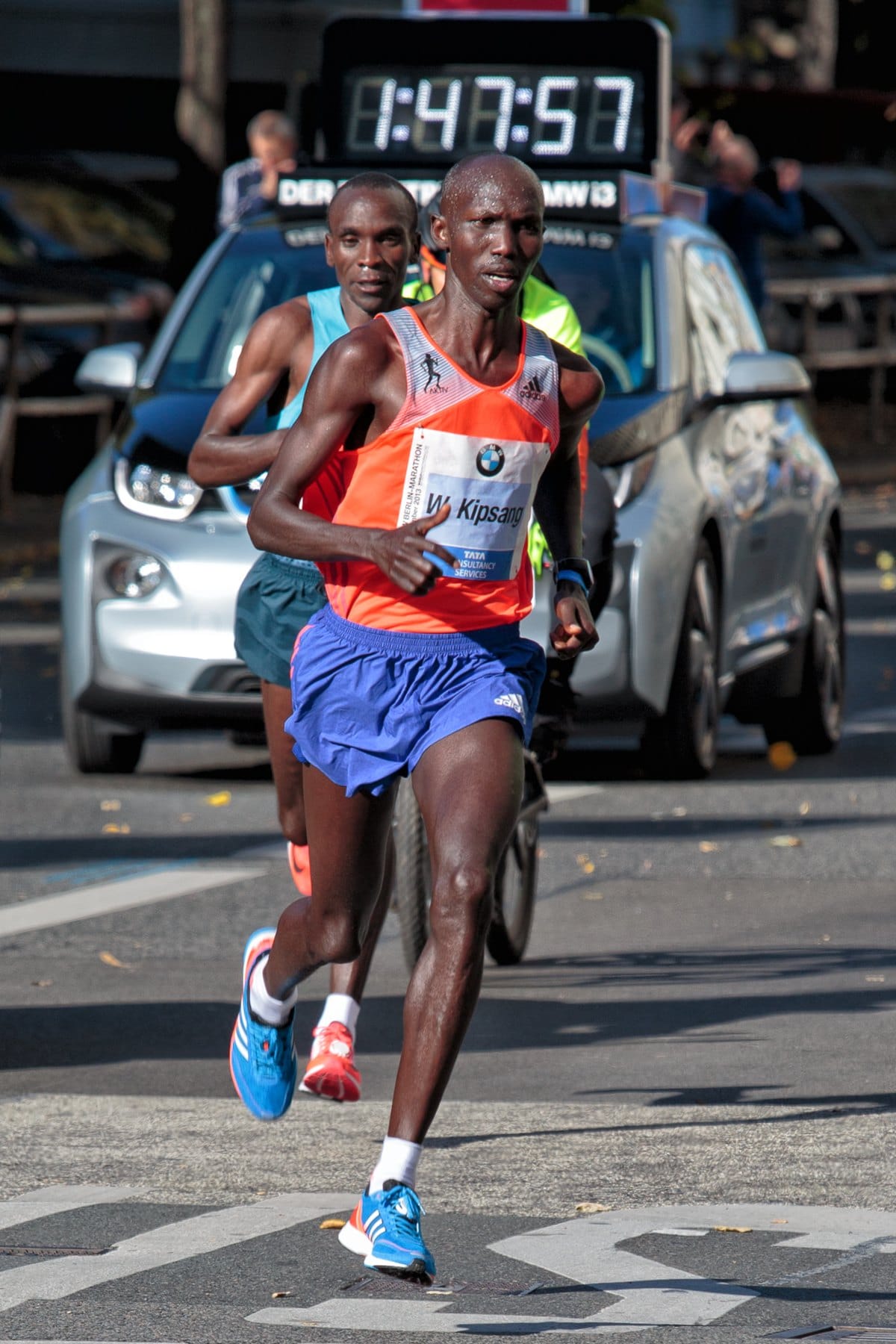
The road results followed the launch through the year. Wilson Kipsang, an adidas athlete, raced London on 21 April in the new Adios Boost and finished fifth in 2:07:47; on 29 September in Berlin he ran 2:03:23, the world record and the first world record in athletics that year. Two weeks later Dennis Kimetto won Chicago in 2:03:45, a course record. Kipsang's mark lasted eleven months, until Kimetto's 2:02:57 on the same Berlin course in 2014 — and the line that starts here runs, through the record leaving adidas in 2018 and coming back, to Sabastian Sawe's 1:59:30 in London in April 2026, the first sub-two-hour marathon in a record-eligible race, run in the adidas Adios Pro Evo 3.
A Season of Absences
On the track the adidas year is remembered for who was missing. Tyson Gay, the fastest man on the brand's roster, won the 100 m in Lausanne on 4 July in 9.79 — and ten days later, on 14 July, it was announced that a sample taken on 16 May had tested positive. Gay withdrew from the season and adidas said so plainly: “We are shocked by these recent allegations, and even if we presume his innocence until proven otherwise, our contract with Tyson is currently suspended.” In May 2014 USADA handed him a one-year ban, reduced for cooperation, and struck his results from 15 July 2012, the London Olympic relay silver included. He has since retired.
The injuries had come earlier. David Rudisha, who has said he was sponsored by adidas for his whole career, won the 800 m at the adidas Grand Prix in New York on 25 May, hurt a knee there and spent six months out, missing the defence of his world title. Yohan Blake, an adidas athlete since 2011, tore a hamstring in April, ran 20.72 at the Jamaican trials on 8 June and withdrew from the sprints of the summer despite holding a bye as reigning world 100 m champion. Two of the three fastest men adidas had signed did not race a championship in 2013, and the third was suspended.
The Moscow World Championships in August were the federations' competition, raced in federation kit — Kenya's in Nike, the United States' in Nike — and those medals live in our country histories of Kenya and the USA; adidas's own place in Moscow was as the championships' official partner, a contract that had run since 2008.
The Kit of the Cycle
The 2013 cycle wears two blues in one piece. The speedsuit's top is azure with a tonal facet print, a front zip with a gold-toned pull and a small white performance logo on the chest; the legs are navy half tights with the logo on the left thigh. The label reads 71 percent polyamide, 29 percent elastane, made in Portugal, style D79889, a men's large. It carries the words “Gold Medallist Edition”: the marking adidas used for kit issued to its athletes who had won gold that season.
Two house rules apply. Construction follows the athlete-issue pattern our authentication guide covers: competition-weight cloth, race cuts, no retail run — “Pro Elite” is the collector market's label, not adidas's. And a medallist marking names a tier of issue, never a person: this page does not tie the speedsuit to any athlete, and neither does the Gold Medallist line page that explains the tier.
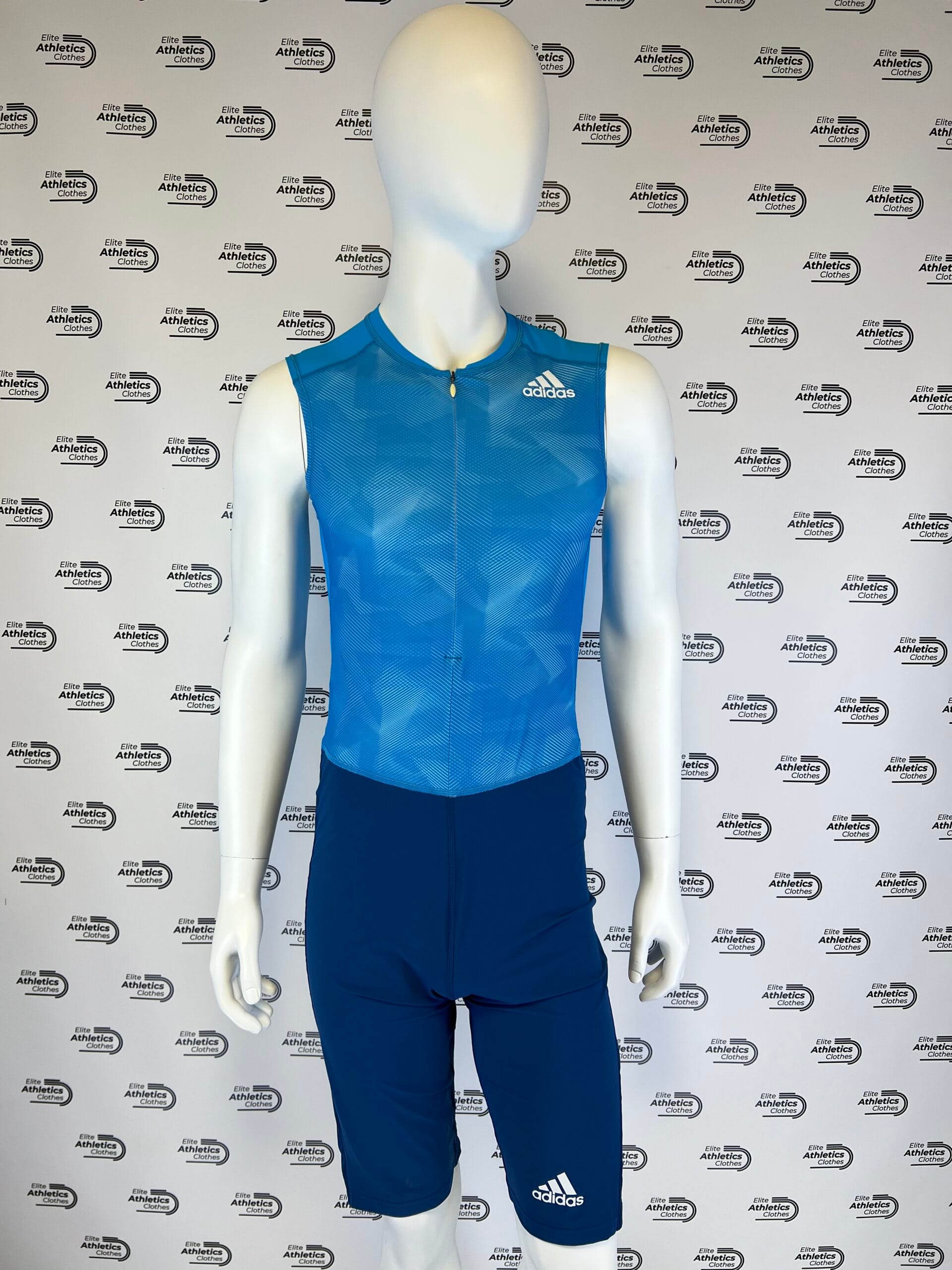 From this cycle · in the archiveAdidas Pro Elite Team 2013 Sleeveless Speedsuit – Gold Medallist EditionThe 2013 sleeveless speedsuit: an azure top with a tonal facet print and a gold-toned zip pull over navy legs — the oldest adidas athlete issue we hold, from the season the foam changed.120,00 €View piece →
The Full 2013 Cycle in the Archive
Every 2013 piece we hold — in-stock first, sold pieces dimmed and documented, refreshed against live stock. For the other adidas years, the brand pillar carries every cycle, and the 2018 deep-dive covers the next-oldest issue in the archive.
What is Adidas Pro Elite 2013 kit?
Athlete-issue adidas competition kit from the 2013 season. The piece in our archive is a sleeveless speedsuit with an azure, facet-printed top over navy half-tight legs, marked “Gold Medallist Edition” — issued to contracted athletes, never retailed, and the oldest adidas cycle we hold.
What did adidas do in 2013?
It launched Boost, the expanded-TPU foam developed with BASF, on 27 February; Wilson Kipsang set the marathon world record of 2:03:23 in Berlin on 29 September and Dennis Kimetto ran a 2:03:45 course record in Chicago two weeks later; and on the track it lost Tyson Gay to a positive test, David Rudisha to a knee injury and Yohan Blake to a hamstring.
Did Kipsang run his world record in Boost?
The brand is certain; the model is not. Kipsang raced London in April 2013 in the new Adios Boost, but the shoe histories disagree on whether he wore it again in Berlin or reverted to the EVA-soled Adios 2. The first marathon world record beyond doubt in Boost was Kimetto's 2:02:57 in Berlin in 2014.
What does “Gold Medallist Edition” mean on a 2013 adidas piece?
A tier of athlete issue: kit adidas distributed to its contracted athletes who had won gold that season. It names the tier, not the athlete — this archive never attributes a medallist piece to a named person.
How do I recognise a 2013 adidas athlete-issue piece?
Two blues in one garment — an azure top with a tonal facet print, a zip with a gold-toned pull and a small white logo, over navy legs — and a Portuguese-made label in polyamide and elastane.
Sources and References
- adidas Group — Boost, one year on (13 February 2014) — the launch date of Energy Boost
- BASF — Infinergy and adidas — the expanded-TPU foam behind Boost
- World Athletics — Kipsang sets world record of 2:03:23 in Berlin — the record and the date
- Marathon Shoe History — 2013, Wilson Kipsang — the Adios Boost in London and the disputed Berlin shoe
- Wikipedia — 2013 Chicago Marathon — Kimetto’s 2:03:45 course record
- NBC Sports — Gay wins Lausanne 100 m in 9.79 (4 July 2013) — the Lausanne win
- NBC News — adidas suspends deal with Gay (July 2013) — the brand’s statement, quoted
- Wikipedia — Tyson Gay — the 16 May sample, the 2014 sanction and the forfeited relay silver
- ESPN — Rudisha out of the Worlds with a knee injury — the New York injury of 25 May and the six months out
- World Athletics — the IAAF’s partnership with adidas (2013) — Rudisha as an adidas athlete throughout his career; adidas as championship partner
- Wikipedia — Yohan Blake — the April hamstring, the 20.72 at the trials and the withdrawal
- Gear Patrol — Sawe, London 2026 and the Evo 3 — the 1:59:30 in the Adios Pro Evo 3