Asics
Pro Elite
The kit Asics issues to its federations and athletes — and never sells. From a ridiculed basketball shoe in post-war Kobe to twenty years of the Oranje and the MetaSpeed era: the athlete channel of the quietest giant in athletics.
Athlete-issue Asics competition kit — what collectors call “Asics Pro Elite” — is made for national federations and the brand's own sponsored athletes, issued for a season or a Games, and never sold at retail. Every genuine piece in circulation left the athlete channel once.
This is the history behind that kit: Onitsuka's Kobe, the Marathon Tabi, two Boston wins before the stripes existed, the 1977 merger that made ASICS an acronym and gave it an apparel factory, Takahashi's 95-gram racers, the federation contracts from Amsterdam to Minsk — and the MetaSpeed present.
Race-issued Asics pieces live across our archive — the brand-team kit here, and the Netherlands, France, Italy, Bulgaria and Team Europe federation kits under their countries. Jump to the collection or browse the Asics Pro Elite Team category.
- What it is
- Asics athlete-issue competition kit — federation and brand-team issue, never retail
- The name
- “Pro Elite” is the collector market's label — Asics itself doesn't use it; the apparel line descends from JELENK, merged in 1977
- Company roots
- Onitsuka Co., Kobe, 1949 — two employees, 300,000 yen, a basketball shoe first
- The acronym
- ASICS = Anima Sana In Corpore Sano — taken at the 1977 Onitsuka + GTO + JELENK merger
- Boston, before the stripes
- Shigematsu '65 (2:16:33) and Kimihara '66 — back-to-back Japanese wins in Onitsuka Tiger
- The masterpiece
- Sydney 2000: Takahashi's marathon for Japan in ~95-gram Sortie Japan built to measure by Hitoshi Mimura
- The longest era
- Netherlands since 2006 — 20 years dressing the Oranje, and still the federation's partner
- Today
- Partner of World Athletics to 2029 · Athlete Refugee Team since 2023 · the MetaSpeed era since 2021
A Basketball Shoe in Kobe (1949–1966)
Asics starts smaller than any brand in this archive: Kobe, 1949, two employees and 300,000 yen. Kihachiro Onitsuka, back from the war, set up Onitsuka Co. on a conviction he borrowed from the Roman poet Juvenal — a sound mind in a sound body — and decided that sports shoes were how post-war Japanese youth would get theirs back. The first product, in 1950, was a basketball shoe. The company's own telling has the grip of its sole inspired by an octopus in a salad bowl; that one is corporate legend, told by the house itself, and we pass it on with that label.
What is documented is how fast the company found the marathon. The Marathon Tabi of 1953 put laces and a rubber sole on the split-toe Japanese tabi. The Magic Runner, at the end of that decade, drilled ventilation holes into a marathon shoe to fight heat and blisters — an idea the house says it borrowed from air-cooled motorcycle engines — and, per the company's own account, carried Kenji Kimihara through the Mexico City marathon of 1968, run for Japan. By then the shoes had their identity: in 1966 an internal design contest ahead of the Mexico Games produced the crossing stripes — the “Mexico line” — that Onitsuka Tiger and Asics footwear carry to this day.
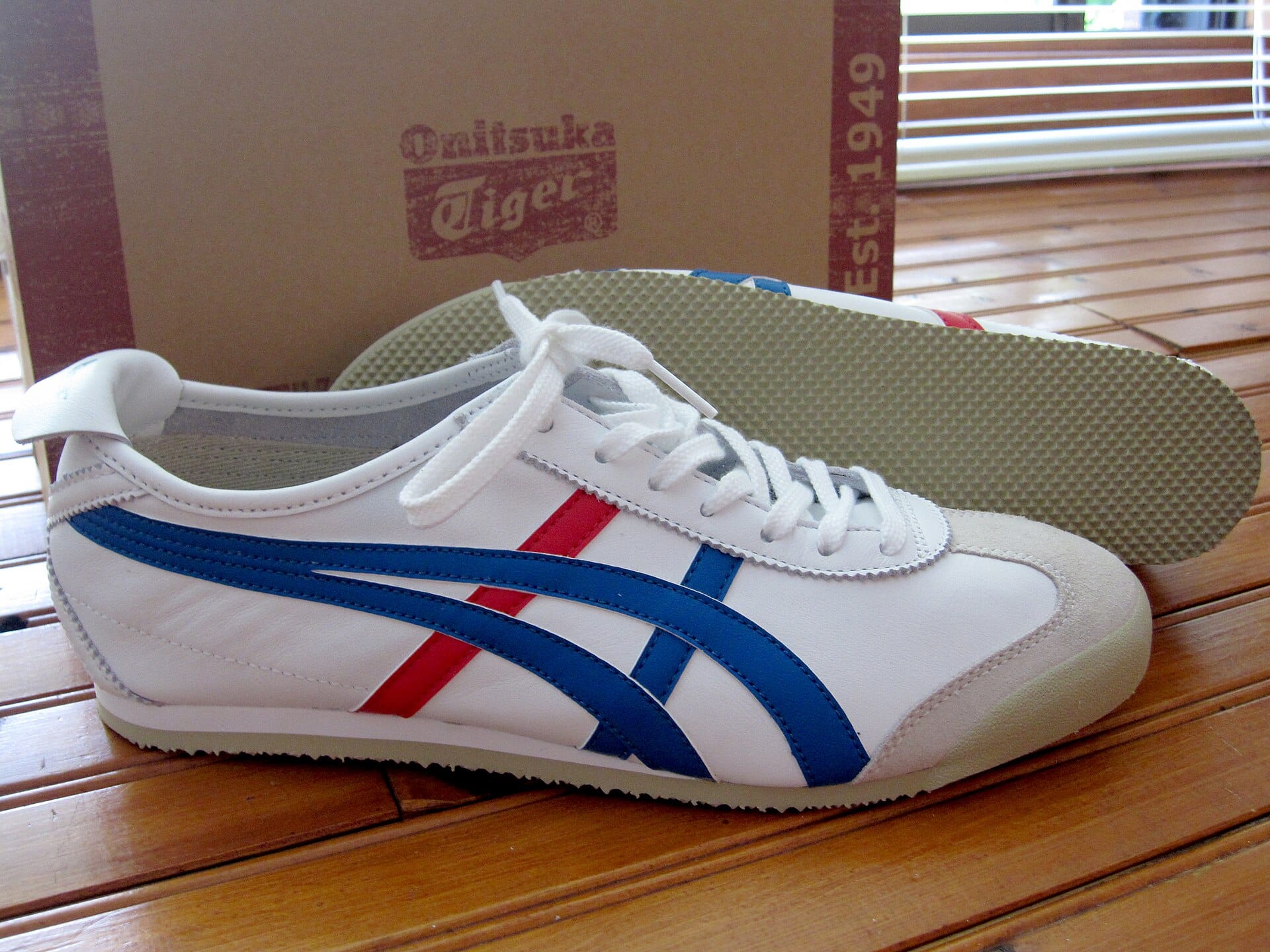
The marathon pedigree was already real before the stripes existed. Morio Shigematsu won Boston in 1965 in 2:16:33, a course record, in the Onitsuka Tiger era — the same year he set a world best of 2:12:00 — and Kimihara won Boston the year after. Two Boston titles in two years for a company that had started with a ridiculed basketball prototype fifteen years earlier.
Three Companies Become ASICS (1977)
In 1977 Onitsuka merged with two other Japanese firms — GTO and JELENK — and the combined company took a new name: ASICS, the acronym of Anima Sana In Corpore Sano, the founding motto rendered in Latin. The detail that matters for everything on this page is which company brought what. JELENK was the sportswear manufacturer — the apparel arm. The competition clothing Asics issues to its teams and athletes, the cloth this archive collects, descends from that side of the 1977 merger.
The apparel and the shoes grew up together around one event. Asics's deepest roots are in the marathon and in Japan — the company remains the official partner of the Japanese federation and dressed the entire Japanese delegation, Olympic and Paralympic, for Paris 2024. The single best story of that lineage is Sydney 2000: Naoko Takahashi ran the marathon for Japan, in federation kit and in a pair of Sortie Japan racers built for her by the master craftsman Hitoshi Mimura — about 95 grams each, ultralight mesh, and a fit that quietly compensated for one leg being millimetres shorter than the other. Kit built for one athlete, never for a shop: that is the athlete channel this whole page is about.
The Federation Contracts (2006–2026)
What makes Asics unusual among athletics kit brands is how much of its story runs through national federations rather than star signings. The chart below is that story: every era we can document, with the pieces in our archive marked inside the era they belong to. The longest bar belongs to the Netherlands — Asics has dressed the Atletiekunie since 1 January 2006, twenty years and counting, the longest federation–brand relationship in European athletics that we know of.
Every diamond is a garment we hold, dated by its own labels and falling inside a documented era. Hover or tab onto one for the piece. Dotted rows mark relationships we can date only from the kit itself. Sources: Atletiekunie, SportsPro/SGB (France 2013), FIDAL (Joma 2023), Irish Times (OCI to New Balance), Joma (Bulgaria 2025), JAAF partner listing. Verified August 2026.
The eras (table)
| Team | Asics era | Archive kit years |
|---|---|---|
| Japan · JAAF | partner today · start undocumented | 2024 |
| Netherlands · Atletiekunie | 2006 → today · the longest era in Europe | 2016, 2018, 2020, 2024 |
| Italy · FIDAL | over 25 years → end of 2022 · Joma since | 2019 |
| France · FFA | 2013–2021 · replaced adidas after 40 years | 2015, 2019, 2021 |
| Ireland · OCI | London 2012 · to New Balance in 2014 | 2012 |
| Bulgaria | kit evidence 2018 & 2023 · Joma from 2025 | 2018 |
| Team Europe · The Match | one weekend · Minsk, 9–10 Sept 2019 | 2019 |
The other bars each carry a date worth knowing. In January 2013 Asics took over France from adidas — ending a forty-year adidas era — and dressed the FFA through 2021. Italy's federation wore Asics for over a quarter of a century until Joma took over in 2023. The Olympic Council of Ireland wore Asics at London 2012 — the era our Team Ireland tights come from — before moving to New Balance in 2014. Bulgaria we date honestly from the kit itself: team pieces labelled 2018 and 2023 exist, and Joma announced the Bulgarian federation deal in September 2025. And for one September weekend in 2019, at The Match in Minsk — Europe against the USA, the first such duel since the sixties, won by Europe 724.5 to 601.5 — Team Europe competed in Asics kit; our polo and storm jacket from that weekend are the physical evidence, since no public record of the supplier deal survives that we can find.
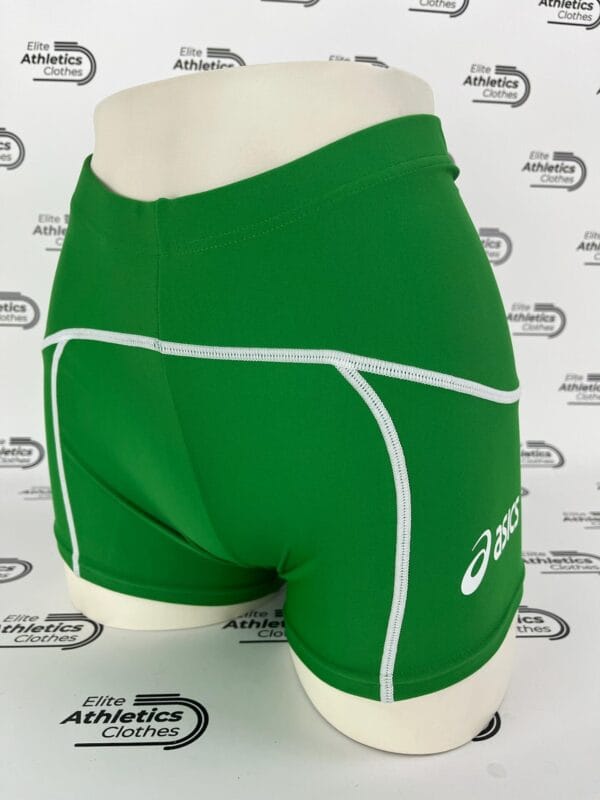 From this era · in the archiveAsics Ireland Pro Elite 2012 Women Booty Short TightsTeam Ireland issue from the London 2012 cycle — the Asics era of the Olympic Council of Ireland, closed since 2014.60,00 €View piece →
The Anatomy of Asics Athlete Kit
The Asics athlete channel in our archive spans three garment types — and, unusually for this series, two kinds of issue: federation kit made for national teams, and brand-team kit made for the athletes Asics sponsors directly. Both share the construction: one-piece patterns, bonded seams at neck and armhole, competition-weight cloth with no retail equivalent.
Competition singlets in team spec — one-piece patterns, bonded edges, sub-100-gram cloth. The Actibreeze and the 2024 team issues both live here.
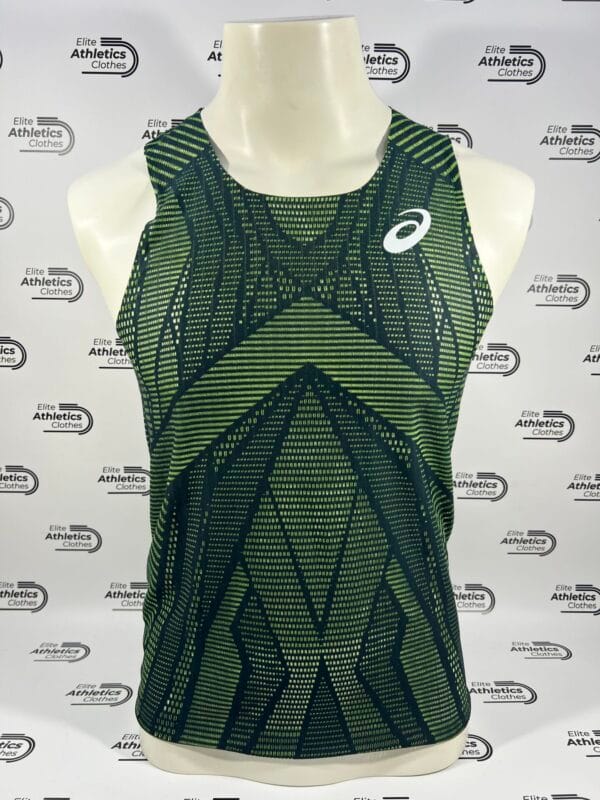 Asics Actibreeze Distance Singlet100,00 €View piece →
The women's racing crop of the brand team — 78% polyester, 22% elastane, half-zip on the red issue.
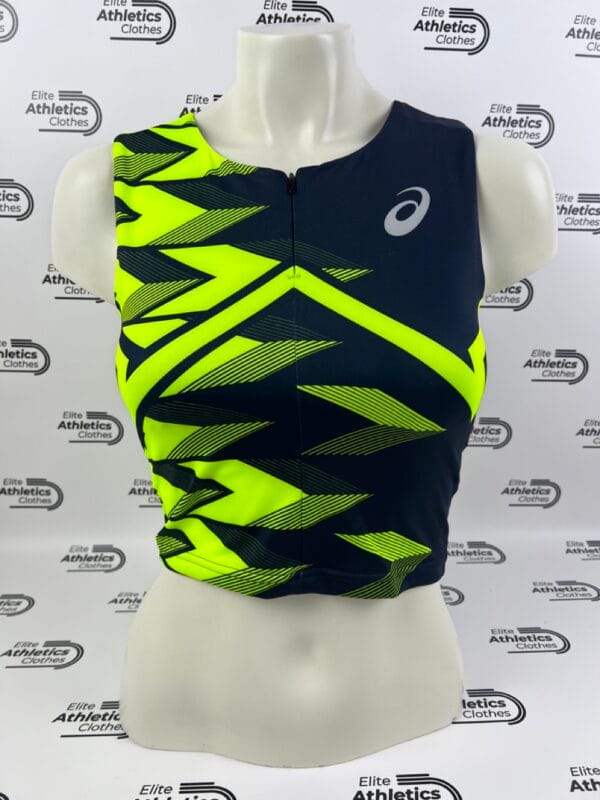 Asics Pro Elite 2024 Team Women Crop Top – Yellow Edition90,00 €View piece →
Race tights cut for championship starts — our Ireland 2012 pair is Team Ireland Olympic issue from the Asics era of the OCI.
Asics Ireland Pro Elite 2012 Women Booty Short Tights60,00 €View piece →Authentication follows the same rules as every brand in this archive — structure over logos, era-correct labels, scarcity that matches the channel. Our authentication guide covers the tells piece by piece.
MetaSpeed and the Modern Era (2017–2026)
The modern Asics athletics story has two tracks. The institutional one: official partner of World Athletics since 2017 — extended to 2029 — kitting the officials and volunteers of every World Athletics Series event, and since 2023 the sponsor of the Athlete Refugee Team. The performance one: the METASPEED series, launched in 2021 as the house's full-carbon answer in the supershoe era, split from the start into Sky and Edge for two kinds of runner, refreshed as the Paris generation in 2024 and the Tokyo generation — plus the ultralight Ray — in 2025. The brand has kept buying road-running ground too: title sponsor of the Los Angeles Marathon from 2026 and partner of the Dubai Marathon through 2028.
The sprint chapter is shorter and this page tells it honestly. In February 2023 Asics signed Fred Kerley, then the reigning world 100 m champion — the biggest track signing in the company's history. In June 2024 the two parted ways, before the Paris Games; the bronze Kerley won there was not run as an Asics athlete, and his path since has led outside federated athletics altogether. The fuller story of that season — the Safety Yellow kit, the marathoners at the Trials, the split told straight — is in Asics Pro Elite 2024. The steadier faces of the roster have been road runners: Emma Bates, an Asics marathoner since 2019 whose contract the brand publicly confirmed protecting through pregnancy in 2025, and Sara Hall, the long-serving veteran of the house.
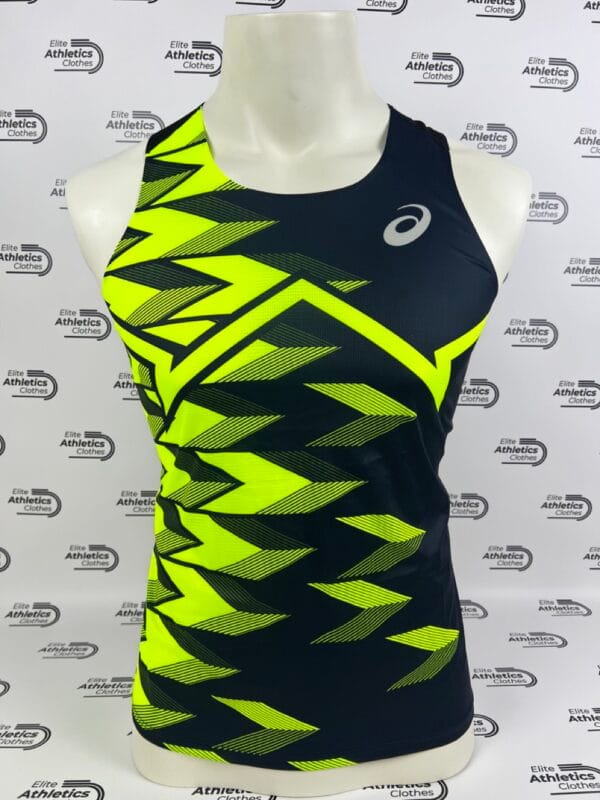 From this era · in the archiveAsics Pro Elite 2024 Team Distance Singlet – Yellow EditionThe Safety Yellow singlet of the brand team's Olympic year — the same yellow as the MetaSpeed Paris family.120,00 €View piece →
The Asics Issues in Our Archive
Each Asics piece in the archive is stamped by its issue. Below, the cycles we hold: what each was made for, how to recognise it, and the pieces still in the collection — sold-out pieces stay listed, because the supply of a closed issue only shrinks.
Team Ireland Olympic issue from the London Games — navy booty short tights from the era when the Olympic Council of Ireland raced in Asics. One piece, one era, closed since 2014. Read the Ireland 2012 story →
The 2024 season of the Asics athlete team: black-and-red and Safety Yellow editions, the yellow matching the MetaSpeed Paris family exactly. Four pieces in the archive. Read the full 2024 story →
Asics Pro Elite 2024 Team Women Crop Top – Yellow Edition90,00 €View Piece →Asics Pro Elite 2024 Team Distance Singlet – Yellow Edition120,00 €View Piece →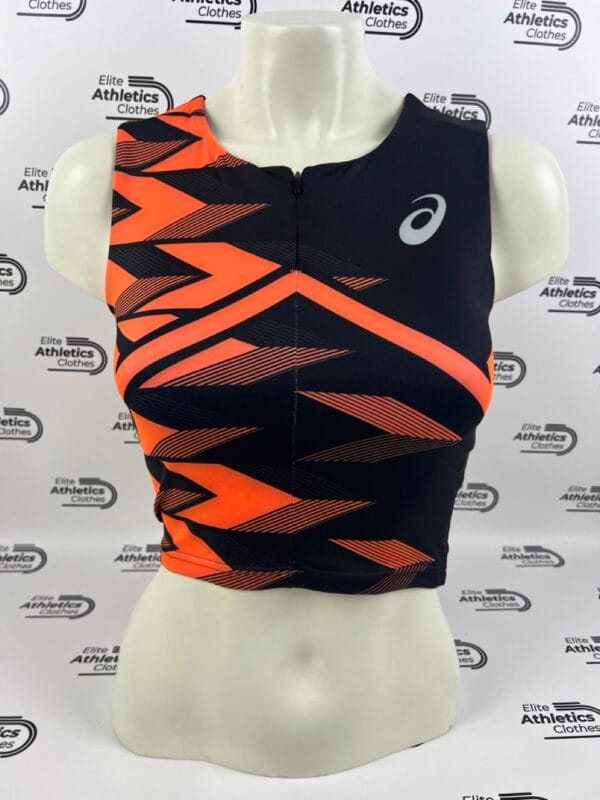 Asics Pro Elite 2024 Team Women Crop Top – Red EditionSold out · check back soonView Piece →
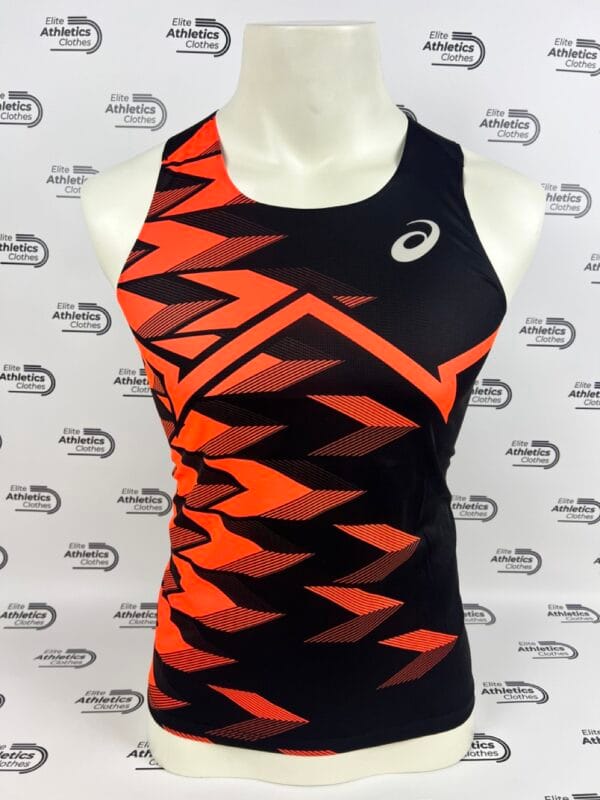 Asics Pro Elite 2024 Team Distance Singlet – Red EditionSold out · check back soonView Piece →
The technology piece of the collection: a one-piece-pattern distance singlet in French blue and safety yellow built on Asics's Actibreeze ventilation system — bonded neck and armhole, no retail run.
The Asics Pro Elite Collection
Every piece of the closed Asics athlete channel currently in the archive — brand-team issue and the Ireland 2012 Olympic piece. None of it restocks: when an issue sells, that era only gets smaller.
Asics Actibreeze Distance Singlet100,00 €View Piece →Asics Ireland Pro Elite 2012 Women Booty Short Tights60,00 €View Piece →Asics Pro Elite 2024 Team Women Crop Top – Yellow Edition90,00 €View Piece →Asics Pro Elite 2024 Team Distance Singlet – Yellow Edition120,00 €View Piece →Asics Pro Elite 2024 Team Women Crop Top – Red EditionSold out · check back soonView Piece →Asics Pro Elite 2024 Team Distance Singlet – Red EditionSold out · check back soonView Piece →What is Asics Pro Elite?
“Asics Pro Elite” is the collector-market name for Asics's athlete-issue competition kit: garments made for national federations and for the athletes the brand sponsors directly, issued for a season or a Games and never sold at retail. Asics does not market a line under that name — the label describes the closed athlete channel the kit comes from, and it appears on the kits themselves as they circulate among collectors.
Which athletics federations does Asics dress today?
Japan — Asics is the official partner of the JAAF and dressed the whole Japanese delegation for Paris 2024 — and the Netherlands, whose Atletiekunie has worn Asics since 1 January 2006, the longest federation deal in European athletics we can document. Asics is also the official partner of World Athletics through 2029 and has sponsored the Athlete Refugee Team since 2023.
Did Asics really dress France and Italy?
Yes, with dates: France from 2013 — when Asics replaced adidas after forty years — to 2021, and Italy for over 25 years until the end of 2022, when Joma took over. The Irish Olympic council wore Asics at London 2012 before moving to New Balance in 2014. Kits from all three eras live in our archive.
What is the Team Europe kit from 2019?
Kit worn at The Match — Europe versus USA, Minsk, 9–10 September 2019, the first such duel since the 1960s, won by Europe 724.5 to 601.5. Our Asics Team Europe polo and storm jacket are from that weekend; no public record of the supplier agreement survives that we can find, so the garments themselves are the evidence.
What are the MetaSpeed shoes?
Asics's supershoe series, launched in 2021 with the Sky and Edge — full carbon plate, FF Blast Turbo foam, two models for two running styles — refreshed as the Paris generation for 2024 and the Tokyo generation, plus the ultralight Ray, in 2025.
How do I know an athlete-issue Asics piece is authentic?
Structure over logos: one-piece patterns, bonded neck and armhole finishes, competition-weight cloth, era-correct labels, and scarcity that matches the athlete channel. Our step-by-step authentication guide covers the tells; every piece in this archive is verified against it before listing.
What Asics pieces does Elite Athletics Clothes carry?
Six pieces of the closed Asics athlete channel: the Team Ireland 2012 booty short tights from the London Olympic issue, the four 2024 brand-team pieces in the black/red and Safety Yellow editions, and the Actibreeze distance singlet — plus Asics federation kit from the Netherlands, France, Italy, Bulgaria and Team Europe eras filed under their countries.
Sources and References
- Asics corporate history — Kobe 1949, the basketball shoe, Marathon Tabi, Mexico line stripes, the 1977 merger, MetaSpeed
- FundingUniverse — ASICS Corporation history — the 1977 merger and JELENK as the apparel maker
- Morio Shigematsu — Wikipedia — Boston 1965 in 2:16:33 and the 2:12:00 world best
- Kenji Kimihara — Wikipedia — Boston 1966 and Mexico City 1968 silver
- Marathon Shoe History — Takahashi 2000 — the ~95 g Sortie Japan built by Hitoshi Mimura for Sydney
- Atletiekunie — partnership with Asics (renewal) — the era running since 1 January 2006, renewed in four-year terms
- SportsPro — Asics to supply France — the January 2013 FFA deal replacing adidas after 40 years
- Stadion Actu — adidas returns to the FFA — the end of the French Asics era after 2021
- FIDAL — Joma new technical partner — Italy’s move to Joma from 1 January 2023 after 25+ Asics years
- The Irish Times — OCI signs with New Balance — the end of the OCI’s Asics era in December 2013
- Joma — new sponsor of Bulgarian athletics — the September 2025 Bulgarian federation deal
- World Athletics — Asics partnership — official partner since 2017, extended to 2029
- World Athletics — The Match, Minsk 2019 — Europe 724.5 – 601.5 over the USA
- Asics corporate — Team Japan for Paris 2024 — Asics dressing the entire Japanese delegation
- Asics corporate — Kerley joins Team Asics — the February 2023 signing
- Sportskeeda — Kerley and Asics part ways — the June 2024 split, before Paris