

Brazil
Two triple jump world-record holders, the marathon’s most famous act of sportsmanship, a home pole vault gold at Rio 2016 — and a race walker who turned Paris silver into a world title. Brazil has 21 Olympic athletics medals, and every one of them has a story.
Brazil’s athletics history runs on 21 Olympic medals — five of them gold — from Adhemar Ferreira da Silva’s five triple jump world records and back-to-back titles in 1952 and 1956, through Joaquim Cruz, Maurren Maggi and Thiago Braz, to Alison dos Santos’ world 400 m hurdles crown and Caio Bonfim’s 2025 race-walk world title.
The country entered the sport late and all at once: nothing before 1952, then two medals at a single Games and a world record broken repeatedly inside one Olympic final. Since then Brazil has produced record-holders on the track, the runway and the road — and, in the last two years, its first world champion race walker. This is the complete history of athletics in Brazil.
Every era of national-team athletics lives on in authentic, athlete-issued kit. Explore the race-issued archive at Elite Athletics Clothes — real pro elite gear, straight from team channels.
- Federation
- Confederação Brasileira de Atletismo (CBAt), member of World Athletics
- Olympic athletics medals
- 21: 5 gold · 4 silver · 12 bronze — the first two arrived at the same Games, Helsinki 1952
- World Championships
- 19 medals: 3 gold · 8 silver · 8 bronze, through Tokyo 2025
- The founder
- Adhemar Ferreira da Silva: 5 triple jump world records, Olympic gold in 1952 and 1956 — then played Death in Black Orpheus
- Still standing
- Joaquim Cruz’s 1:41.77 for 800 m (Cologne, 1984) — South American record 42 years on
- The centimetre
- Maurren Maggi won Beijing 2008 long jump gold by exactly 1 cm (7.04 m) — first individual gold by a Brazilian woman
- The walker
- Caio Bonfim: Paris 2024 silver → Tokyo 2025 20 km world title — Brazil’s first Olympic race-walk medal and first walk world title
- Kit supplier
- Puma, through the 2032 Brisbane Games · the Brazilian brand Olympikus in the late '90s and 2000s
The Origins of Track and Field in Brazil
Brazil won nothing in Olympic athletics before 1952. Not one medal, of any colour, in three decades of trying — and then two arrived at the same Games. That is the strange shape of the country’s athletics history: no slow build, no gradual accumulation, but a sudden entrance through a single event and a single man.
The event was the triple jump, and it has never really let go. Six of Brazil’s 21 Olympic athletics medals come from the hop, step and jump: two golds, a silver and three bronzes across three generations of jumpers. The man was Adhemar Ferreira da Silva, who by 1951 was already unbeatable on the continental circuit — he won the Pan American Games title in 1951, 1955 and 1959 and never lost the event there.
What happened in Helsinki turned a national federation’s hope into a habit.
Helsinki 1952 and the Adhemar Era
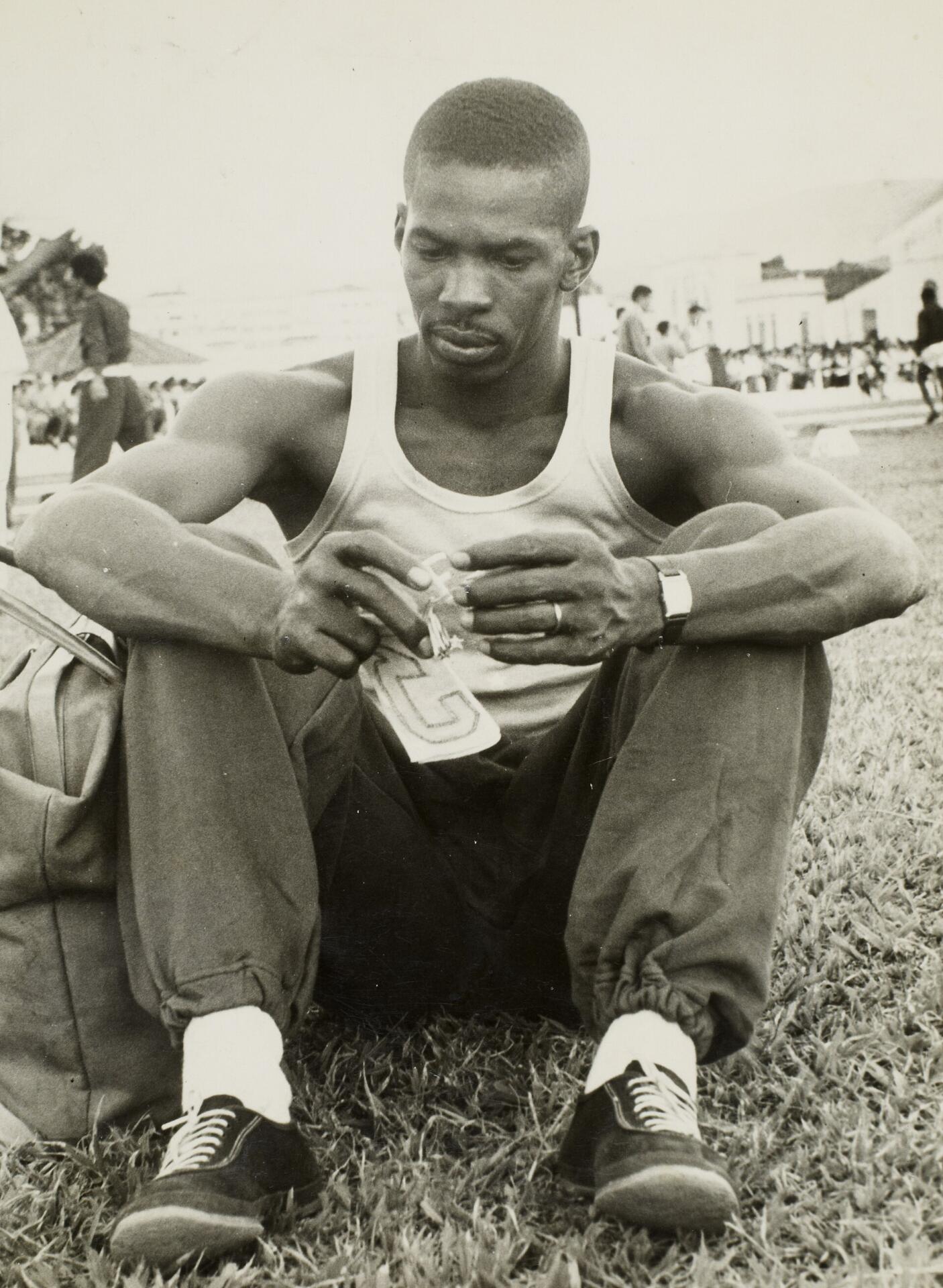
On 23 July 1952, Adhemar Ferreira da Silva won Brazil’s first Olympic athletics gold — and he did it by breaking the world record repeatedly during the final itself, finishing at 16.22 m. At the same Games, José Telles da Conceição took bronze in the high jump. Brazil’s first two athletics medals arrived together.
.jpg)
Adhemar set five world records in all: 16.00 m in December 1950, 16.01 m in September 1951, the marks inside the Helsinki final up to 16.22, and a fifth and final 16.56 m in Mexico City on 16 March 1955. In Melbourne in 1956 he defended the Olympic title with 16.35 m in round four — no other Brazilian has won two Olympic athletics golds.
Then he did something no other double Olympic champion has done: he played Death. In 1959 Adhemar appeared in Black Orpheus, the Rio-set retelling of the Orpheus myth that won the Academy Award for Best Foreign Language Film. He died on 12 January 2001, aged 73.
Brazil’s Greatest Athletes
Six careers carry most of the story: the double champion who started it, the jumper whose record outlived his health, an 800 m runner whose time still tops a continent, the first Brazilian woman to win individual gold, a marathoner remembered for what was taken from him, and the hurdler who owns the present.
Adhemar Ferreira da Silva
Five world records between 1950 and 1955, Olympic gold in Helsinki and again in Melbourne, three Pan American titles without a defeat — then a turn as Death in the Oscar-winning Black Orpheus. He died in 2001, still the only Brazilian with two Olympic athletics golds.
João Carlos de Oliveira
João do Pulo jumped a 17.89 m world record in Mexico City in October 1975 that held for almost ten years, and took Olympic bronze in 1976 and 1980. A car accident near São Paulo cost him a leg in 1981; he spent his last years as a disability-rights advocate and died in 1999, one day after turning 45.
Joaquim Cruz
Won the Los Angeles 1984 800 m in 1:43.00, breaking Juantorena’s Olympic record, then ran 1:41.77 in Cologne weeks later — still the South American record 42 years on. Silver in Seoul 1988. Today he coaches at the Olympic Training Center in Chula Vista, guiding Paralympic athletes.
Maurren Maggi
Beijing 2008 gold at 7.04 m, one centimetre clear of Tatyana Lebedeva — the first individual Olympic gold by a Brazilian woman. Her 7.26 m from 1999 is still the South American record. She retired in 2014 and became a television commentator.
Vanderlei de Lima
Led the Athens 2004 marathon until a spectator dragged him off the course past the 35 km mark; he finished third in 2:12:11 and received the Pierre de Coubertin Medal for sportsmanship. Twelve years later, Brazil gave him the honour of lighting the Rio 2016 cauldron.
Alison dos Santos
World champion in Eugene 2022 with 46.29, a championship and South American record, plus Olympic bronze in both Tokyo and Paris and world silver in 2025. Diamond League champion in 2022 and 2024; he opened 2026 by winning the 300 m hurdles in Shanghai in 33.01.
The triple jump lineage deserves its own line. Nelson Prudêncio took silver in the 1968 Mexico City final won by Viktor Saneyev, then bronze in Munich 1972. João do Pulo’s 17.89 m held as the Brazilian record for 32 years, until Jadel Gregório went one centimetre further in Belém in May 2007. And on the track, Robson Caetano’s 200 m bronze in Seoul was Brazil’s first Olympic sprint medal — his 19.96 from 1989 led the world rankings that year, and it took Claudinei da Silva’s 19.89 in 1999 to beat it as the national record.
Olympic Achievements
Brazil has won 21 Olympic athletics medals: 5 gold, 4 silver and 12 bronze. The golds belong to Adhemar Ferreira da Silva (1952 and 1956), Joaquim Cruz (Los Angeles 1984), Maurren Maggi (Beijing 2008) and Thiago Braz (Rio 2016). Cruz’s 1:43.00 broke Alberto Juantorena’s Olympic 800 m record; four years later in Seoul he added silver behind Paul Ereng.
Beijing, 22 August 2008, is the densest date in the ledger. Maurren Maggi won long jump gold that day by a single centimetre over Tatyana Lebedeva — and both Brazilian 4×100 m relays ran finals that only became medals years later, when doping disqualifications moved the women’s team onto the podium in March 2017 and the men’s in 2018. The sprint relays were already a Brazilian speciality: bronze in Atlanta 1996, silver in Sydney 2000.
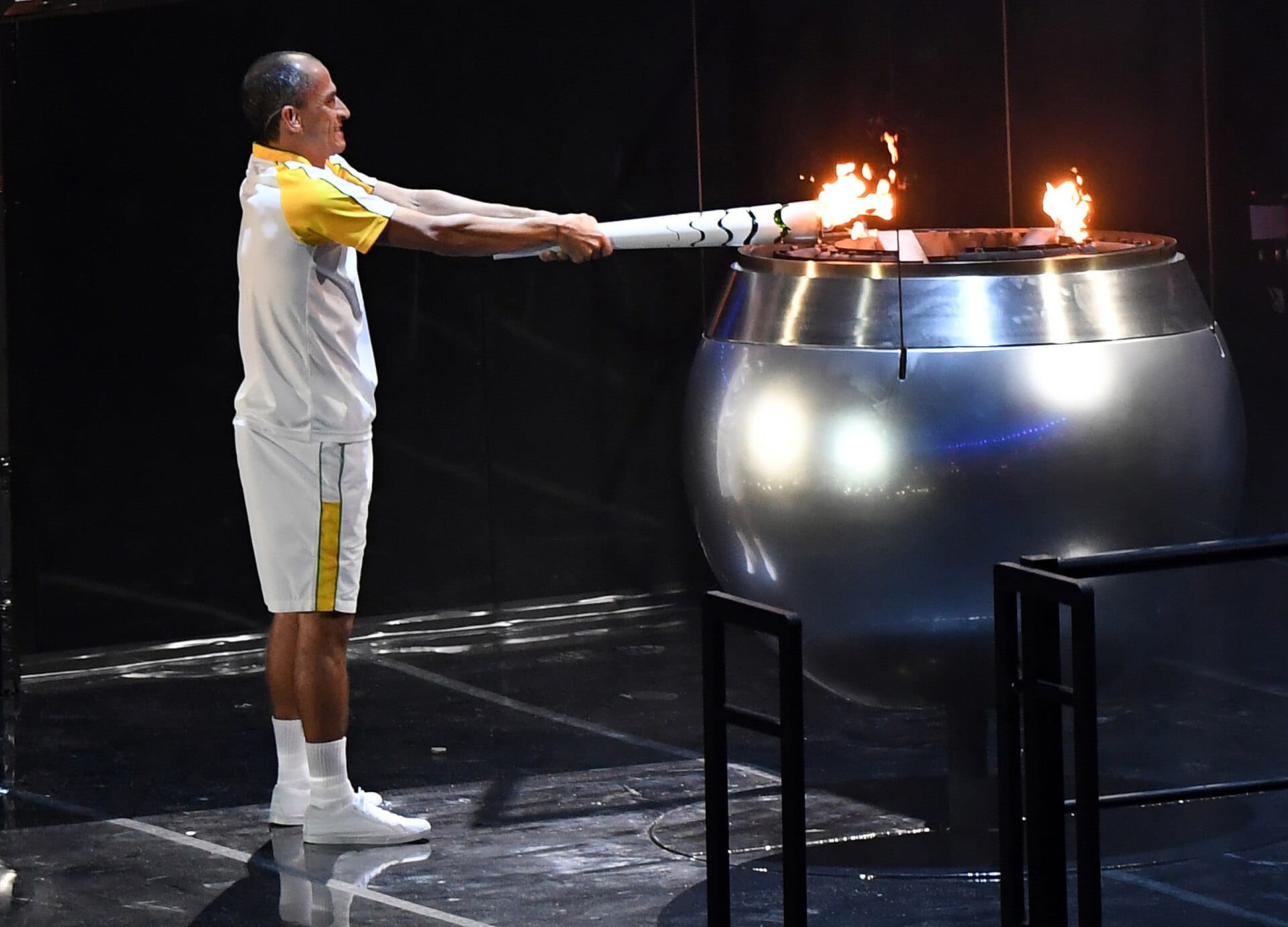
Rio 2016 gave the home crowd its moment. On 15 August, Thiago Braz beat Renaud Lavillenie with a 6.03 m Olympic record — ten days after Vanderlei de Lima, the marathoner attacked mid-race in Athens 2004, lit the cauldron at the opening ceremony. Braz added bronze in Tokyo at 5.87 m; he later tested positive for ostarine, was provisionally suspended in July 2023 and served a backdated 16-month ban, becoming eligible again from 27 November 2024. His 6.03 m remains the national record. In Paris 2024, Caio Bonfim’s 20 km walk silver in 1:19:09 was Brazil’s first Olympic race-walk medal, and Alison dos Santos took his second straight 400 m hurdles bronze.
And through it all runs one event. Here is what Brazil’s triple jump looks like laid out on a measuring tape.
One event, measured out on a ruler
Brazil’s great triple jump marks drawn to true scale between 16 and 18 metres: Adhemar’s world-record climb, João do Pulo’s 17.89 from 1975, and Gregório’s 17.90 — one centimetre further, 32 years later, and still the South American record. Hover or tab onto a pin for venue and date. Sources: Wikipedia (Adhemar Ferreira da Silva; João Carlos de Oliveira; South American records in athletics).
View the data
| Mark | Athlete | Where | When | Status |
|---|---|---|---|---|
| 16.00 m | Adhemar Ferreira da Silva | — | Dec 1950 | World record (1st of 5) |
| 16.22 m | Adhemar Ferreira da Silva | Helsinki, Olympic final | 23 Jul 1952 | World record · Olympic gold |
| 16.56 m | Adhemar Ferreira da Silva | Mexico City | 16 Mar 1955 | World record (5th and last) |
| 16.35 m | Adhemar Ferreira da Silva | Melbourne, Olympic final | 1956 | Olympic gold, title defended |
| 16.90 m | João Carlos de Oliveira | Montreal, Olympic final | 1976 | Olympic bronze |
| 17.89 m | João Carlos de Oliveira | Mexico City, Pan American Games | 15 Oct 1975 | World record, stood until 1985 |
| 17.22 m | João Carlos de Oliveira | Moscow, Olympic final | 1980 | Olympic bronze |
| 17.90 m | Jadel Gregório | Belém | 20 May 2007 | South American record |
World Championship Achievements
Brazil has 19 outdoor World Championship medals — 3 gold, 8 silver, 8 bronze — counting Tokyo 2025. Joaquim Cruz opened the account with 800 m bronze in 1983; Zequinha Barbosa added bronze in 1987 and silver in 1991 over the same distance. The 1999 championships were the busiest of the early era: Claudinei Quirino’s 200 m silver, Sanderlei Parrela’s 400 m silver and a 4×100 m bronze, with relay silver following in 2003 and Jadel Gregório’s triple jump silver in 2007.
The first gold took until 2011. Fabiana Murer cleared 4.85 m in the Daegu pole vault final to become Brazil’s first world champion in athletics; she added silver in Beijing 2015, and her 4.87 m from 2016 is still the South American record.
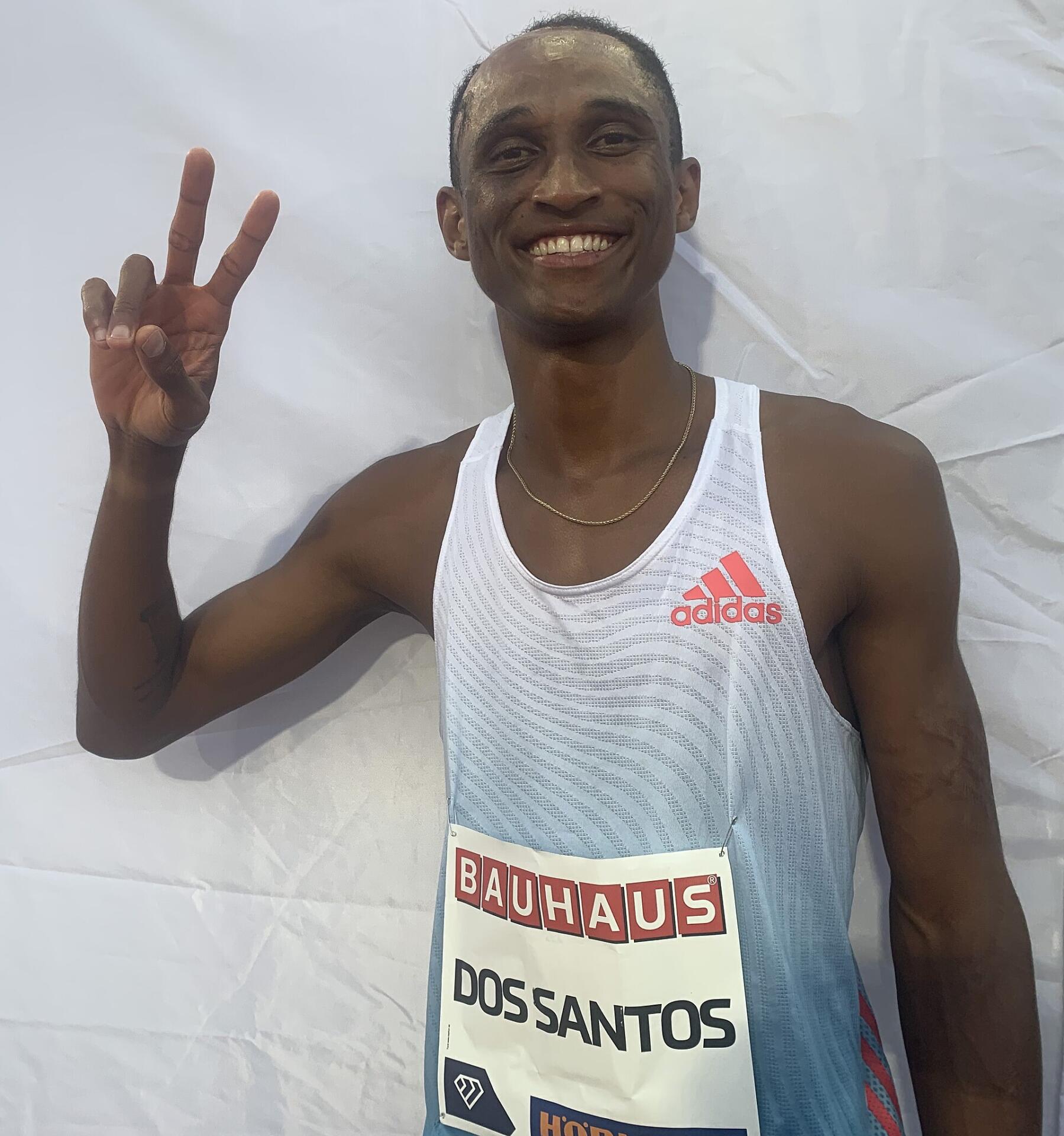
2022 brought two champions in four months. Darlan Romani won world indoor shot put gold in Belgrade in March with a 22.53 m championship record, and in July Alison dos Santos ran 46.29 — another championship record — to win the 400 m hurdles in Eugene, where Leticia Oro Melo also took long jump bronze. Caio Bonfim, a walk bronze medallist in 2017 and 2023, completed the climb in Tokyo in September 2025: silver over 35 km on the 13th, then the 20 km world title on the 20th — Brazil’s first in race walking. Dos Santos added 400 m hurdles silver in 46.84 the day before.
Running Culture in Brazil
Brazilian distance running lives on the roads. The marathon carries the country’s most famous single act of sportsmanship — Vanderlei de Lima refusing to let the Athens attack take his medal — and its fastest frontier is recent: Daniel Ferreira do Nascimento’s 2:04:51 in Seoul in April 2022 took the South American record into territory no runner from the continent had touched.
The discipline growing fastest, though, moves at a walk. Caio Bonfim comes from a race-walking family — his mother, Gianetti Bonfim, walked internationally for Brazil — and his run of four world medals and an Olympic silver has made the event a national concern.
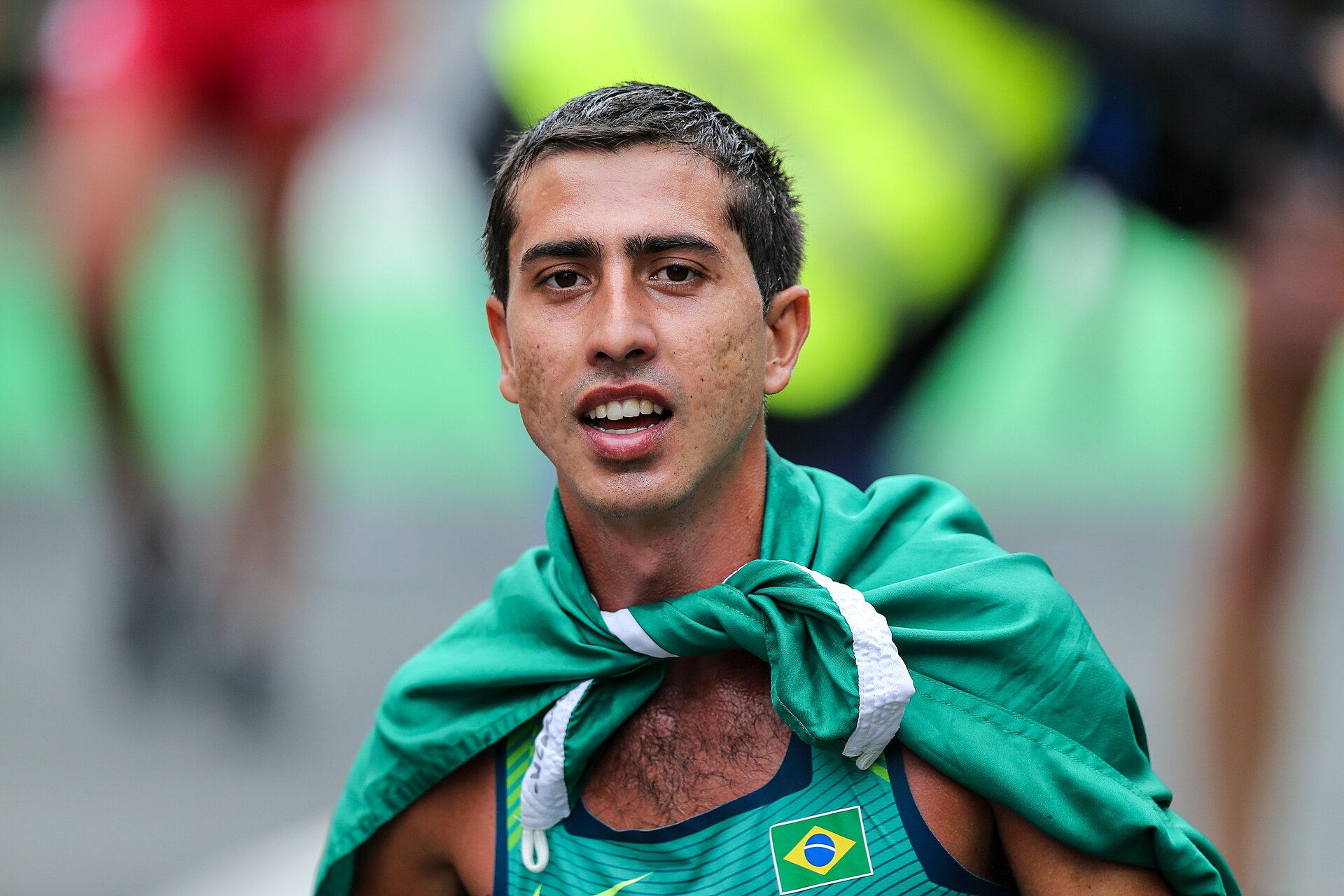
In April 2026 the sport came home: Brasília hosted the World Race Walking Team Championships, and Bonfim led the half-marathon field through 20 km before finishing third in 1:27:36, behind Italy’s Francesco Fortunato and Ethiopia’s Misgana Wakuma. His 1:21:44 from Kobe that February was, at the time, the fifth-fastest half-marathon walk in the world that season.
How Brazil Develops Its Athletes
The federation is the Confederação Brasileira de Atletismo — CBAt — and its current supply deal says something about where the sport sits at home: Puma’s contract covers the adult and youth national teams, men and women alike, and runs through the 2032 Brisbane Games. For the first time, CBAt team kit is also being sold at retail.
Brazilian careers have long been built across borders. Joaquim Cruz coaches at the Olympic Training Center in Chula Vista, California, where his athletes include Paralympic sprinters. Alison dos Santos joined the Grand Slam Track circuit when it launched in September 2024 and won repeatedly on it in 2025. Bonfim’s pipeline, by contrast, is the family kitchen table — a second-generation walker who turned inherited technique into world titles.
The gap the system still has to close is depth. Brazil sent 19 athletes to the 2026 World Indoor Championships in Toruń and came home without a medal; the stars deliver, but the layer behind them is thin. Hosting events like the Brasília walking championships is one way the federation is trying to widen the base.
The Current State of Brazil Athletics
The scoreboard reads well. Brazil took 44 track and field athletes to Paris 2024 and won two medals — Bonfim’s historic walk silver and dos Santos’ bronze. At the Tokyo 2025 World Championships the team grew to 47 and the return grew with it: three medals, 13th place in the medal table, and a first race-walk world title.
2026 has been a season of consolidation. The world indoors in Toruń produced no medals from 19 entrants, but Bonfim took third on home soil in Brasília after leading for most of the race, and dos Santos opened his Diamond League year by winning the 300 m hurdles in Shanghai on 16 May in 33.01, a personal best. Erik Cardoso’s 9.93 national 100 m record from July 2025 gives the sprints their sharpest tool since the relay era.
The kit tells its own story. Puma supplies CBAt through 2032 — World Championships plus the Paris, Los Angeles and Brisbane Olympics — and replica team kit has reached shops for the first time; in the late '90s and 2000s the team wore the Brazilian brand Olympikus. Race-issued pieces are a different market entirely: they leave team channels in tiny numbers, and authentic team-issued gear surfaces in the Pro Elite archive when it does.
Future Stars and Emerging Talents
The next Brazilian generation is being built on three fronts at once: raw sprint speed, road-running depth and the jumps tradition that started everything.
Erik Cardoso
Lowered the Brazilian 100 m record to 9.93 on 31 July 2025. The sprint tradition that produced Robson Caetano’s Seoul bronze and the Sydney relay silver has a new fastest man.
Daniel Ferreira do Nascimento
Ran 2:04:51 in Seoul in April 2022 — the South American marathon record, territory no Brazilian road runner had reached before. The next step is turning that speed into a championship medal.
Leticia Oro Melo
Took World Championship bronze in Eugene in 2022, in Maurren Maggi’s old event — a sign that Brazil’s jumps production line did not stop at Beijing 2008.
Brazil Records & Historic Milestones
No Brazilian holds a senior world record today — the last was João do Pulo, from 1975 until Willie Banks’ 17.90 in June 1985 — but seven South American records belong to Brazil, and the oldest of them has outlasted every challenger for four decades.
Three milestones frame the rest: Brazil’s first two athletics medals arriving at the same Games in Helsinki in 1952; the Beijing 2008 relay finals that became bronze medals nine and ten years later through doping reallocations; and Vanderlei de Lima’s arc from being dragged off the Athens course in 2004 to lighting the Olympic cauldron in his own country twelve years on.
Shop Athletics Apparel
Brazil’s team wears Puma, and race-issued CBAt kit almost never leaves team channels — there is no Brazil rail in the archive today, and that scarcity is the point: when a piece surfaces, it appears here first and rarely comes back. In the meantime, these are the latest athlete-issued arrivals in the Elite Athletics Clothes archive — real pro elite gear, never replicas.
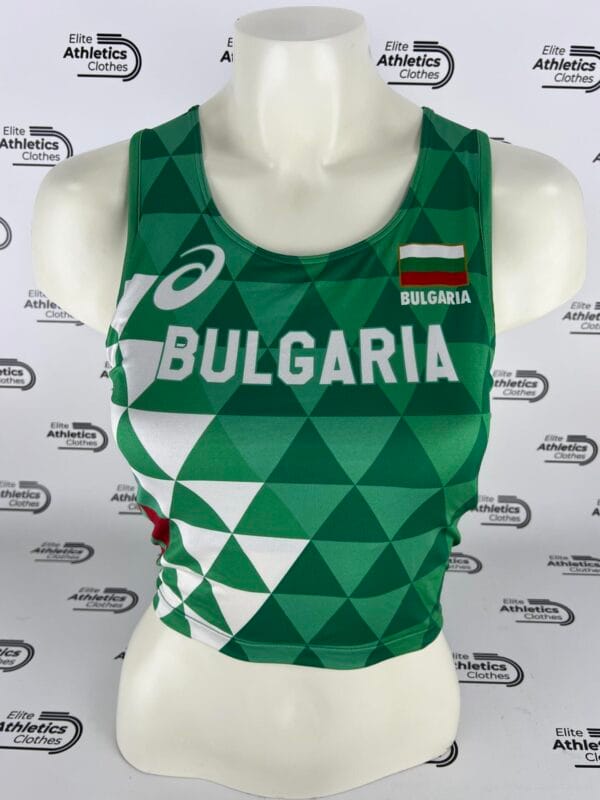 Asics Bulgaria International Team Pro Elite 2018 Women Crop Top90,00 €View Piece →
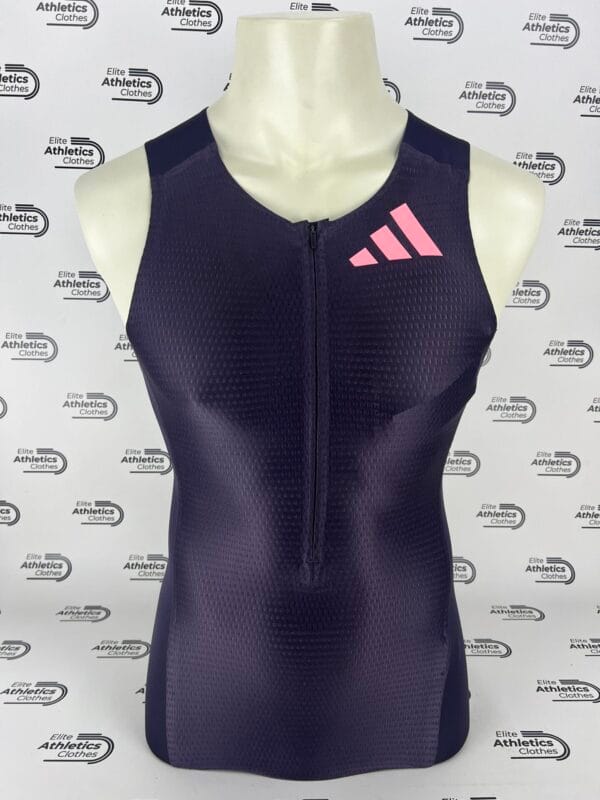 Adidas Pro Elite Team 2024 Rheon Singlet160,00 €View Piece →
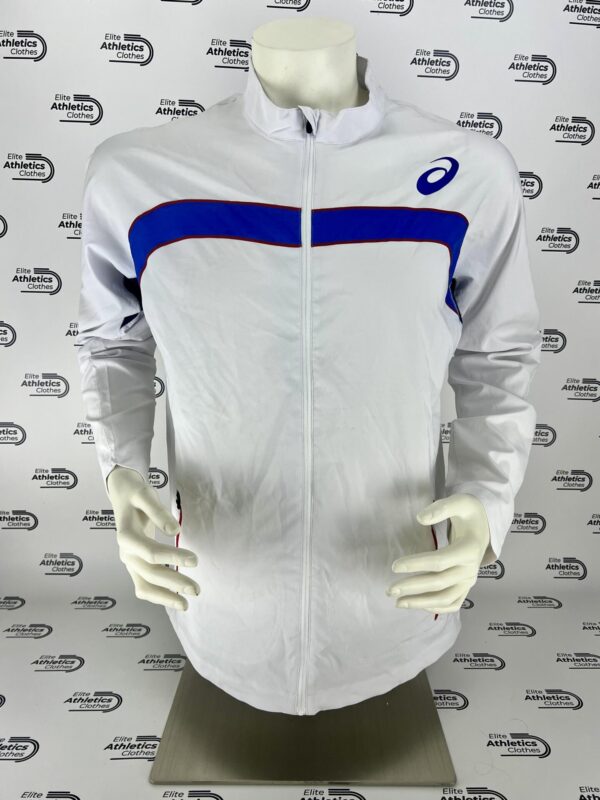 Asics France Pro Elite 2015 Lightweight Jacket80,00 €View Piece →
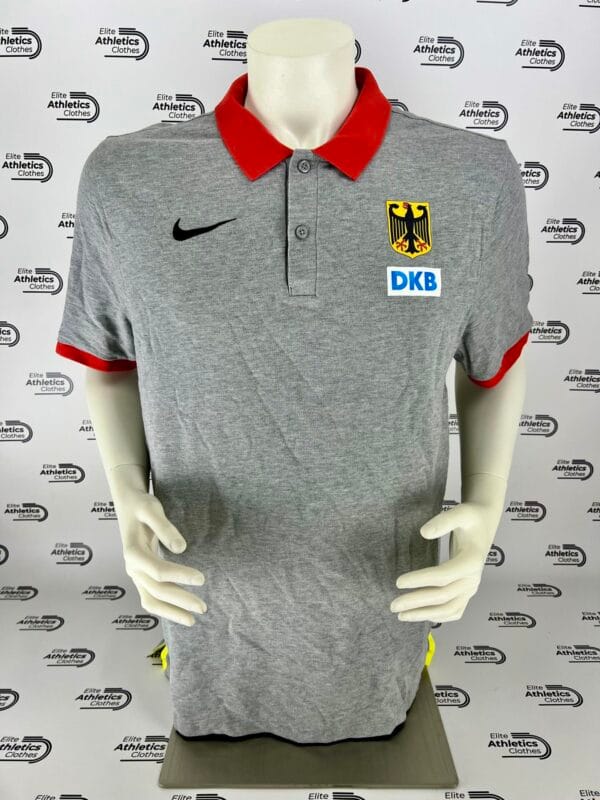 Nike Germany International Team Pro Elite 2019 Polo Shirt
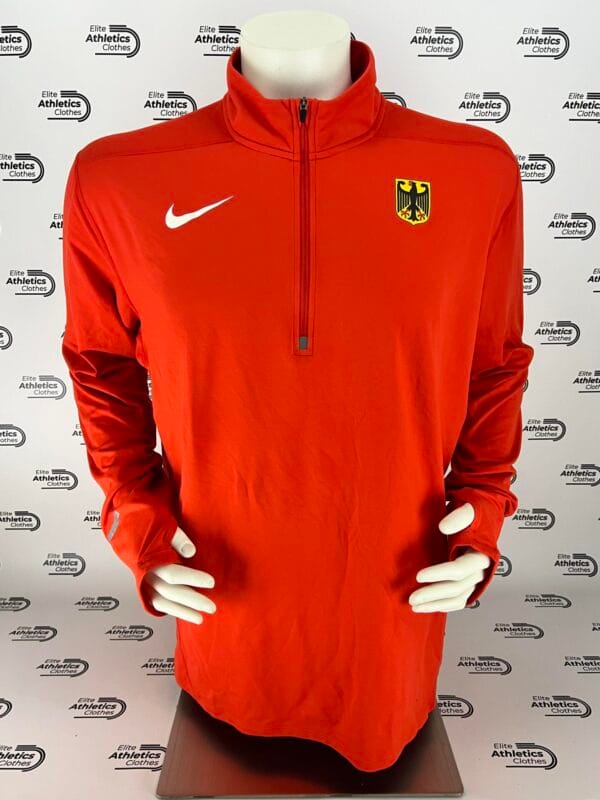 Nike Germany International Team 2019 Pro Elite Half Zip Jersey
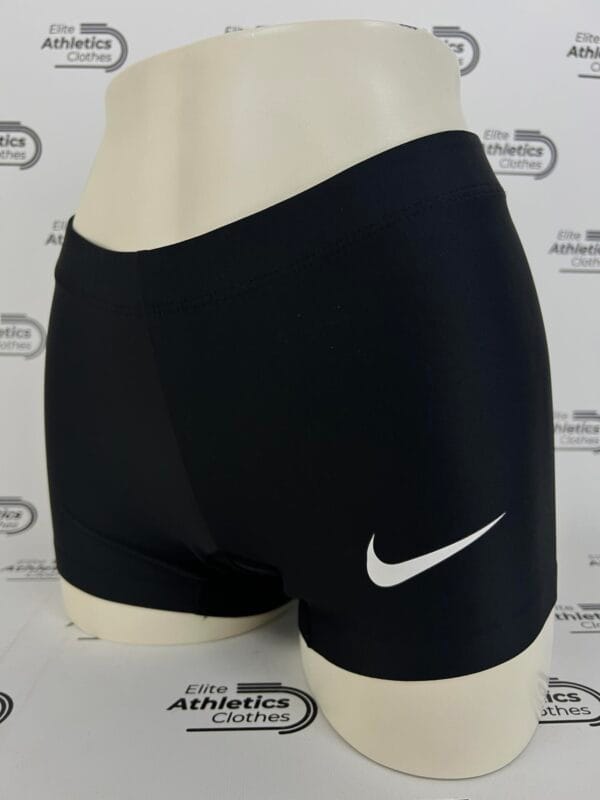 Nike Pro Elite Team 2012 Women Booty Short Tights80,00 €View Piece →
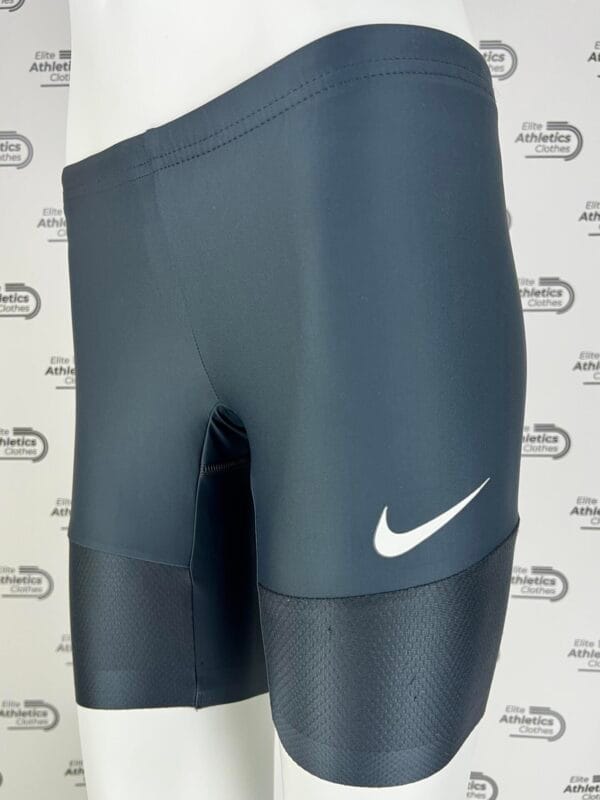 Nike Pro Elite Team 2009 Women Short Tights80,00 €View Piece →
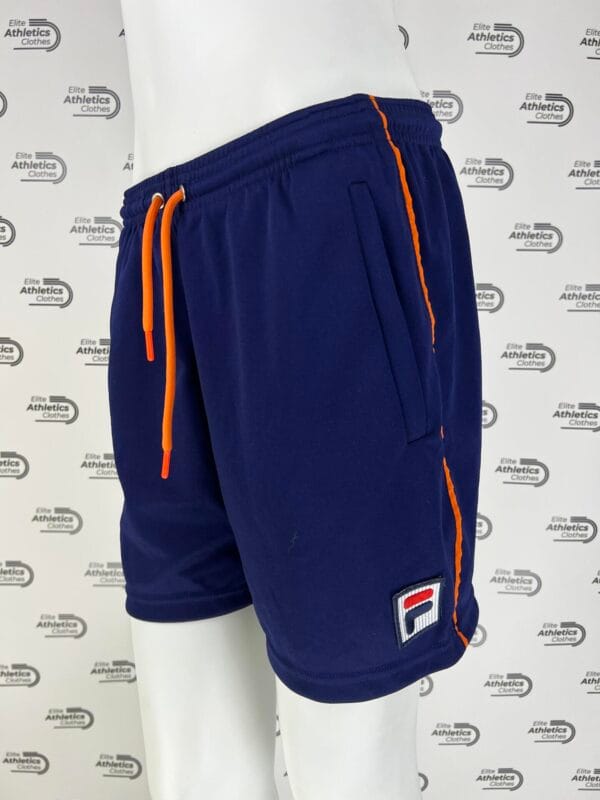 Fila Netherlands Pro Elite 2020 OLY Women Short Pants
How many Olympic medals has Brazil won in athletics?
Twenty-one: 5 gold, 4 silver and 12 bronze, from Helsinki 1952 to Paris 2024. The golds belong to Adhemar Ferreira da Silva (1952 and 1956), Joaquim Cruz (1984), Maurren Maggi (2008) and Thiago Braz (2016).
Who is Brazil’s greatest track and field athlete?
Adhemar Ferreira da Silva has the strongest claim: he is the only Brazilian with two Olympic athletics golds and he set five triple jump world records. The modern contenders are Alison dos Santos — world 400 m hurdles champion with two Olympic bronzes and three global medals — and Caio Bonfim, whose four world medals and Paris 2024 silver made race walking a Brazilian event.
Has a Brazilian ever held an athletics world record?
Yes. Adhemar Ferreira da Silva set five triple jump world records between 1950 and 1955, and João Carlos de Oliveira’s 17.89 m from 1975 lasted almost a decade, until Willie Banks passed it in 1985. No Brazilian holds a senior world record today.
What happened to Vanderlei de Lima at the Athens 2004 marathon?
He was leading past the 35 km mark when a spectator — Neil Horan, a defrocked Irish priest — dragged him off the course. He recovered to take bronze in 2:12:11, received the Pierre de Coubertin Medal for sportsmanship, and twelve years later lit the Olympic cauldron at the Rio 2016 opening ceremony.
Who was the first Brazilian world champion in athletics?
Fabiana Murer, who won the women’s pole vault at the 2011 World Championships in Daegu with 4.85 m. Alison dos Santos (400 m hurdles, 2022) and Caio Bonfim (20 km walk, 2025) have won Brazil’s other two world titles.
Who makes Brazil’s athletics kit?
Puma supplies the Brazilian Athletics Confederation (CBAt) on a contract running through the 2032 Brisbane Olympics, covering the adult and youth teams — and for the first time, replica CBAt kit is sold in retail stores. In the late 1990s and 2000s the national team wore the Brazilian brand Olympikus.
Where can I buy authentic Brazil athletics apparel?
Race-issued Brazil kit is genuinely scarce, and there is currently no dedicated Brazil collection at Elite Athletics Clothes. Authentic athlete-issued pieces surface in the Pro Elite archive as they leave team channels — that archive of race-issued gear from national teams worldwide is the place to watch while you wait for a Brazilian piece.
Sources and References
- Brazil at the Olympics (Wikipedia) — confirms the 5-4-12 (21) Olympic athletics medal count.
- Brazil — Olympedia — independent cross-check of the athletics medal table (5/4/12).
- List of Olympic medalists for Brazil (Wikipedia) — medal-by-medal ledger through Athens 2004, including the 1952 double and the relay medals.
- Brazil at the World Athletics Championships (Wikipedia) — confirms the 3-8-8 (19) World Championships count and the full medal list.
- Adhemar Ferreira da Silva (Wikipedia) — confirms the five world records (16.00 to 16.56), both Olympic golds, the Pan American streak and Black Orpheus.
- João Carlos de Oliveira (Wikipedia) — confirms the 17.89 m world record of 15 October 1975, the two Olympic bronzes, the 1981 accident and his death in 1999.
- Joaquim Cruz (Wikipedia) — confirms the Los Angeles 1984 gold in 1:43.00, the Seoul 1988 silver and his coaching role in Chula Vista.
- Vanderlei de Lima (Wikipedia) — confirms the Athens 2004 attack, the 2:12:11 bronze, the Pierre de Coubertin Medal and the Rio 2016 cauldron.
- Brazil at the 2008 Summer Olympics (Wikipedia) — confirms Maggi’s 7.04 m gold by one centimetre and both reallocated relay bronzes (2017, 2018).
- Thiago Braz (Wikipedia) — confirms the 6.03 m Olympic record at Rio 2016 and the ostarine suspension of 2023–24.
- Brazil at the 2024 Summer Olympics (Wikipedia) — confirms Paris 2024: Bonfim’s walk silver in 1:19:09 (Brazil’s first race-walk Olympic medal) and dos Santos’ bronze.
- Brazil at the 2025 World Athletics Championships (Wikipedia) — confirms Tokyo 2025: Bonfim 20 km gold and 35 km silver, dos Santos silver, 13th in the medal table.
- South American records in athletics (Wikipedia) — confirms the South American records held by Cruz, dos Santos, Gregório, Romani, Nascimento, Murer and Maggi.
- List of Brazilian records in athletics (Wikipedia) — confirms Cardoso’s 9.93, Braz’s 6.03 and Bonfim’s 1:17:37 national records.
- Puma amplia presença no atletismo brasileiro (Exame) — confirms Puma as CBAt supplier through 2032 and the first-time retail sale of CBAt kit.
- World Race Walking Team Championships Brasília 2026, men’s half marathon report (World Athletics) — confirms Bonfim third in 1:27:36 on home soil after leading through 20 km.
- Shanghai Diamond League 2026 (Olympics.com) — confirms dos Santos’ 300 m hurdles win in 33.01 on 16 May 2026.