
NCAA
Championships
College track's national title meet is the NCAA's oldest championship: 48-deep regional gauntlets, a 10-to-1 scoring table, four days in Eugene — and in 2026, a world record from a 20-year-old in a college vest.
The NCAA Division I Outdoor Track and Field Championships are the national title meet of American college athletics, held every June — since 2021 at Hayward Field in Eugene, Oregon. First contested in 1921, it was the NCAA's first championship in any sport; the 104th edition ran 10–13 June 2026, and Arkansas (men, 56 points) and Georgia (women, 50) took the team titles.
Athletes qualify through East and West First Rounds — 48 per event, 12 advancing from each — and the top eight in every final score 10-8-6-5-4-3-2-1 for their universities. The 2026 meet broke five collegiate records and one world record: 12.75 in the 110 m hurdles by Auburn's Ja'Kobe Tharp, pending ratification.
Part of our Competition Files — one competition at a time, explained. The kits behind the championships live in the Pro Elite archive. Jump to the federation kits or start with the USA's story.
- What it is
- The national championship of US college track and field (Division I), men's and women's titles decided over the same four days
- First edition
- 1921, Stagg Field, Chicago — the NCAA's first championship in any sport; women's championship added 1982
- 2026 edition
- The 104th: 10–13 June 2026, Hayward Field, Eugene — host through 2027, with 2028 already awarded
- 2026 team champions
- Arkansas men (56 pts, first outdoor title since 2003) · Georgia women (50 pts, back-to-back)
- How you qualify
- East & West First Rounds: 48 per event at each, only 12 advance — 24 per event reach Eugene
- How teams score
- Top eight in every final: 10-8-6-5-4-3-2-1. No other currency counts
- The 2026 record
- Ja'Kobe Tharp (Auburn), 12.75 in the 110 m hurdles — a world record pending ratification; the meet's first since 1976
- The all-time mark
- Jesse Owens: 8 individual titles (four in 1935, four in 1936) — still unmatched
The Championship the NCAA Started With
Before the basketball tournament, before any bracket existed, there was this meet. On 17 and 18 June 1921, at Stagg Field in Chicago, the National Collegiate Athletic Association staged a track and field championship — the first championship the NCAA had ever put on in any sport. Illinois won that first team title, and the event has anchored the American college calendar ever since.
For six decades it was a men's meet only. The women's championship arrived in 1982, first contested in Provo, Utah, and today the two run together: one stadium, four days in June, two team trophies. The edition of June 2026 was the 104th.
The oldest number in the book belongs to the meet's most famous name. Jesse Owens of Ohio State won four individual titles in 1935 — the first athlete ever to do it in a single championships — and four more in 1936, weeks before Berlin. Eight individual NCAA titles in two Junes. Ninety years on, nobody has matched it.
Forty-Eight Run, Twelve Survive
There are no invitations and no rankings doors. The only way into the championships is to run, jump or throw your way through the First Rounds: two regional meets, East and West, held at the end of May. Each accepts the 48 best declared athletes per individual event — 24 teams per relay — and each advances exactly twelve. In 2026 the East ran in Lexington, Kentucky, and the West fed the field the same way it always does: 12 from each side of the country, 24 per event on the start lists in Eugene.
At the championships the top eight in every final score for their university — 10, 8, 6, 5, 4, 3, 2, 1 — and the two team titles are decided on nothing else. The margins are small enough that a single final can settle a season: in 2025 the men's trophy was shared by USC and Texas A&M on 41 points apiece, the first split title since 2013.
In 2026 the math came out cleaner. Arkansas took the men's title with 56 points over Georgia's 49 and Tennessee's 46 — the Razorbacks' first outdoor crown since 2003 and the eleventh in program history. The Georgia women scored 50 to Florida's 43 and repeated as champions, one year after winning the program's first title with 73.
Read the team race like a scorer: with 10 points for a win, a national title costs roughly five good finals. That is why the trophy so often follows depth in one event family — and why a single dropped baton can erase a season.
The Meet That Rewrote Its Own Book
The 2026 edition will be remembered for one Wednesday semifinal. On 10 June, Ja'Kobe Tharp of Auburn — a 20-year-old junior from Murfreesboro, Tennessee — ran the 110 m hurdles in 12.75 with a legal +1.0 tailwind. Aries Merritt's world record of 12.80 had stood since September 2012. The mark is still going through World Athletics' ratification process, and this page will say so until that is done. No world record had been set at an NCAA championships since Dwight Stones cleared a high jump bar in 1976. Two days later Tharp came back and won the final in 12.90, defending his title.
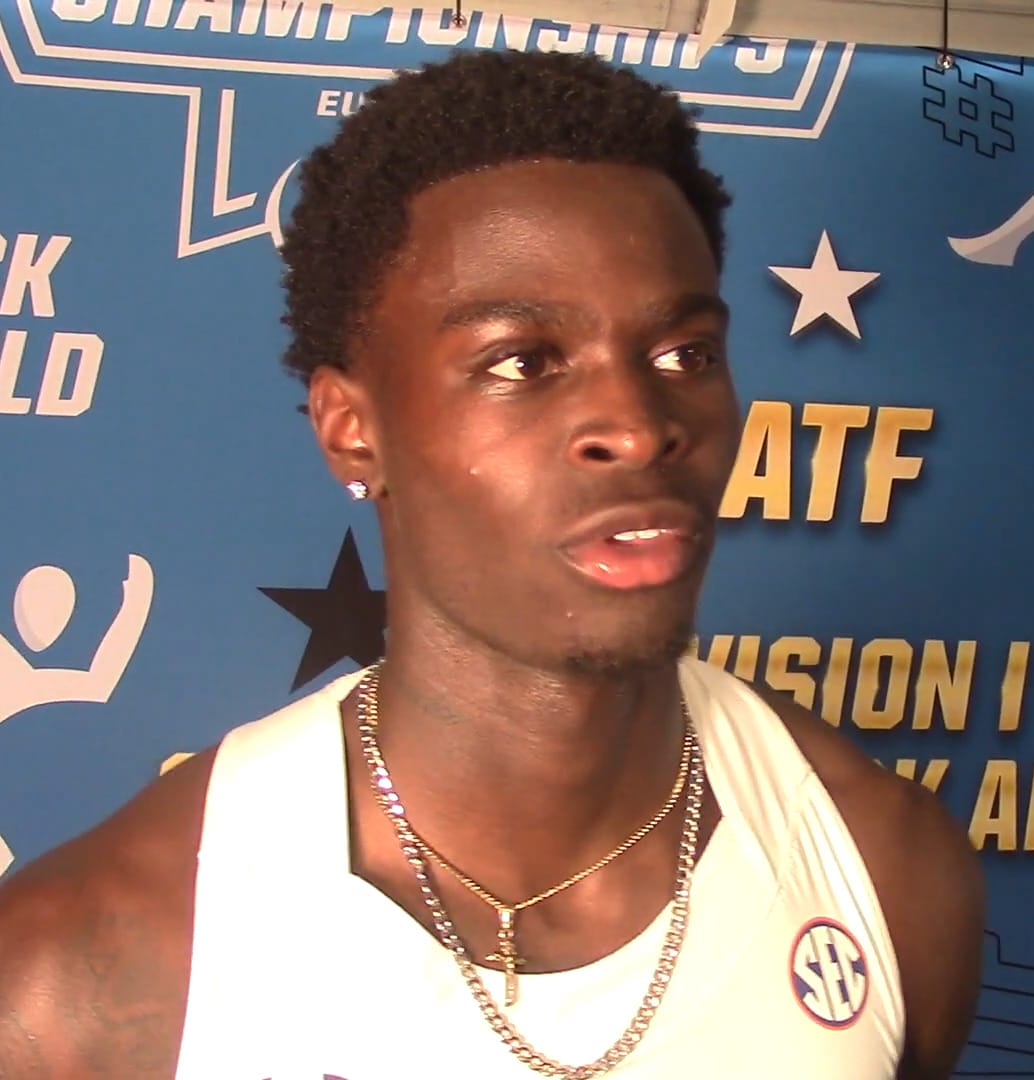
The world record was the headline, but the meet broke five collegiate records around it. Jaiden Reid of LSU ran 19.63 in the 200, taking down a mark Walter Dix had held since 2007. Samuel Ogazi of Alabama ran 43.38 in the 400. Adaejah Hodge of Georgia won the women's 200 in 21.68 — on her NCAA outdoor debut, equalling the eighth-fastest time ever run by a woman — her teammate Dejanea Oakley took the 400 record to 48.79, and Sanu Jallow-Lockhart of Arkansas moved the 800 record to 1:56.85, a mark she had missed by one hundredth two weeks earlier in the First Round.
Hover or tab on a row for the detail. Bar length = years the old record had stood. Sources: World Athletics, NCAA.com, Olympics.com and FloTrack meet reports, June 2026. Verified September 2026.
The six records of Eugene 2026, one by one
| Event | New mark | Set by | Previous mark | How long it had stood |
|---|---|---|---|---|
| Men's 200 m | 19.63 | Jaiden Reid (LSU) | 19.69 · Walter Dix, 2007 | 19 years |
| Men's 110 m hurdles | 12.75 (world record, pending ratification) | Ja'Kobe Tharp (Auburn) | 12.80 · Aries Merritt, 2012 | 13 years, 9 months |
| Men's 400 m | 43.38 | Samuel Ogazi (Alabama) | 43.61 · Michael Norman, 2018 | 8 years |
| Women's 800 m | 1:56.85 | Sanu Jallow-Lockhart (Arkansas) | 1:57.73 · Athing Mu, 2021 | 5 years |
| Women's 200 m | 21.68 | Adaejah Hodge (Georgia) | 21.80 · Abby Steiner, 2022 | 4 years |
| Women's 400 m | 48.79 | Dejanea Oakley (Georgia) | 48.89 · Nickisha Pryce, 2024 | 2 years |
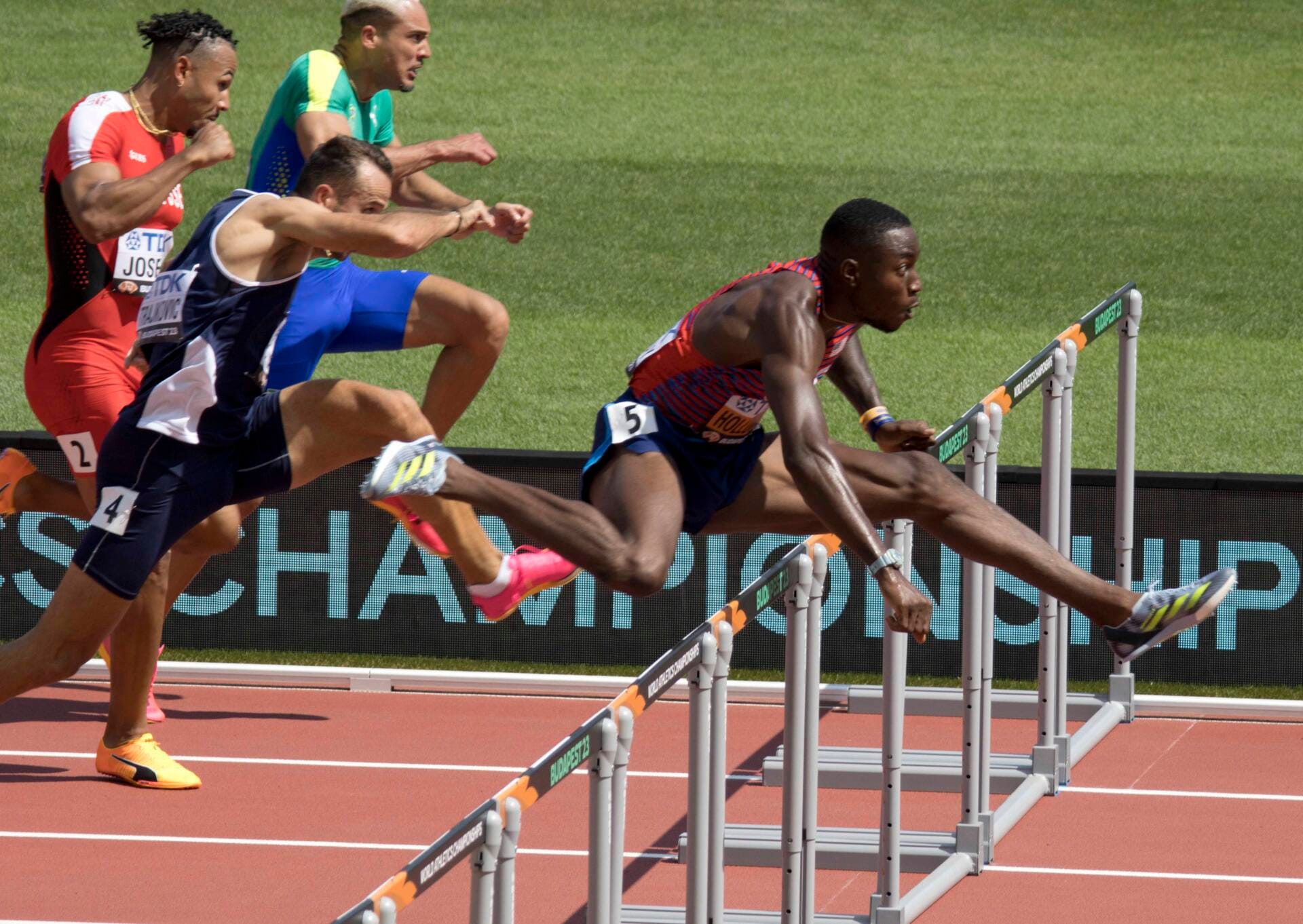
College hurdling has been building to a night like this for a while. Renaldo Nehemiah of Maryland set the collegiate 110 m hurdles record at 13.00 in 1979; it took forty years and Grant Holloway of Florida to break it, 12.98 in 2019, the first collegian under 13 seconds, sealed with a third straight NCAA title. Holloway left Gainesville and won three world titles and Olympic gold in Paris. Tharp, still enrolled at Auburn, went one further than all of them — under the world record while still in a college vest.
Track Town, on a Standing Booking
The championships have an address. Hayward Field, on the University of Oregon campus in Eugene, holds the meet through 2027 — the 2027 edition is already dated, 9–12 June — and in October 2024 the NCAA awarded it 2028 as well. When that edition is run, Eugene will have hosted 14 of the previous 18 championships. College track calls the city Track Town, USA, and treats the annual trip like the sport's own convention.
The stadium itself is the newest big track venue in America: torn down and rebuilt between 2018 and 2020 for roughly US$200 million, paid for by gifts from Penny and Phil Knight and more than fifty other donors — 12,650 permanent seats, expandable to nearly 25,000. The street address, 1530 Agate Street, is a wink: 1:53.0 was Phil Knight's 800 m personal best as an Oregon runner. The co-founder of Nike ran here, his coach Bill Bowerman built the company's first soles here, and the whole origin story lives in our history of Nike Pro Elite.
College Kit Today, Federation Kit After
Look again at the record board of 2026: Reid runs internationally for the Cayman Islands, Ogazi for Nigeria, Hodge for the British Virgin Islands, Oakley for Jamaica. An American college meet is also the closest thing world athletics has to an under-23 final — the fastest young athletes from five continents on scholarship, in university colours, two steps from a national team vest.
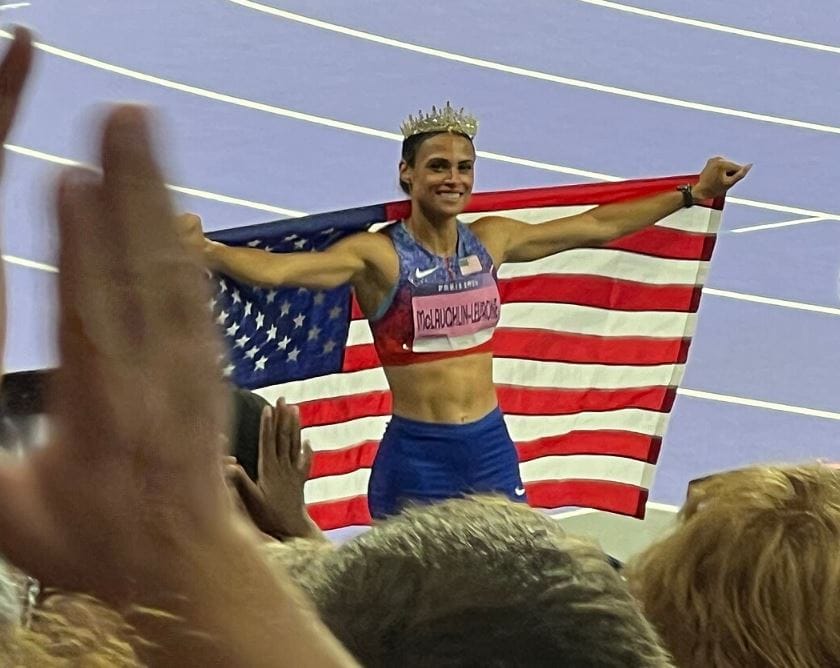
The graduation can be brutally fast. Sydney McLaughlin spent exactly one season at Kentucky: in 2018 she won the NCAA 400 m hurdles title through rain and hail, set the collegiate record of 52.75 at the SEC championships in May, and turned professional before her sophomore year. What followed — two Olympic titles, a world record of 50.37, and a world title on the flat 400 in Tokyo in 2025 — started in a college lane.
The house rule of this series sorts every competition into a kit universe: championships mean federation kit, leagues and meetings mean sponsor kit. The NCAA is the third case — college kit, school uniforms supplied under each university's own apparel contract. None of it is sold at retail, and none of it is what we archive. What we collect is the kit these athletes graduate into: the athlete-issued national team pieces they earn the day the college vest comes off.
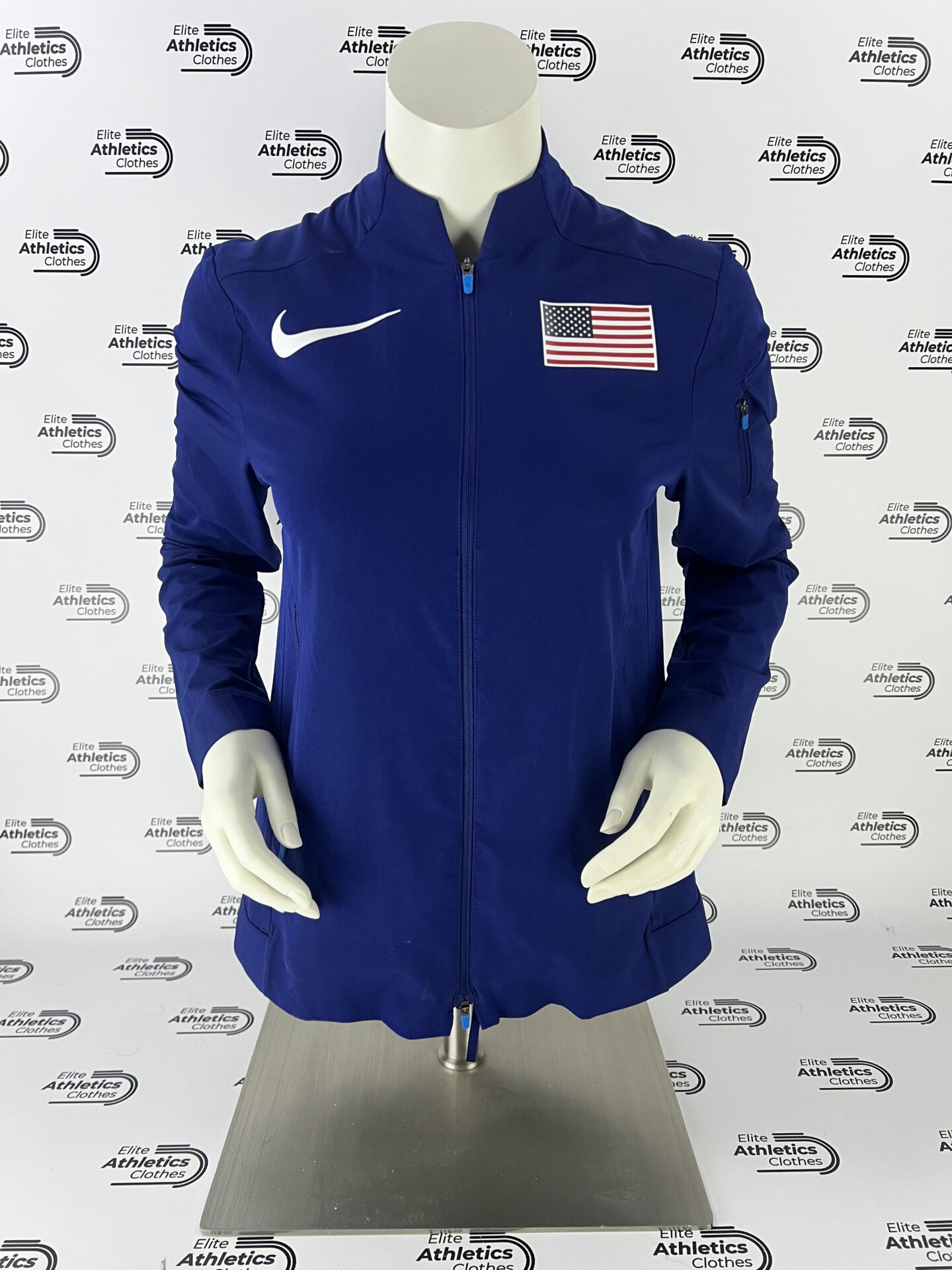 Federation kit · in the archiveNike USA Pro Elite 2023 Women Podium JacketNike USA Pro Elite women's Podium Jacket from the 2023 cycle — the team-issue layer that waits on the other side of a college career.300,00 €View piece →
That is the thread to pull from this page into the archive: the sprinters of Eugene 2026 will spend the next decade in federation kit, and the athlete-issued versions of those pieces — starting with Team USA's — are what the rail below holds.
The Kit After Graduation
The NCAA is raced in university uniforms that never reach retail. What the archive holds is the next jersey: athlete-issued federation kit — here, Team USA's — the pieces a college career is run in pursuit of.
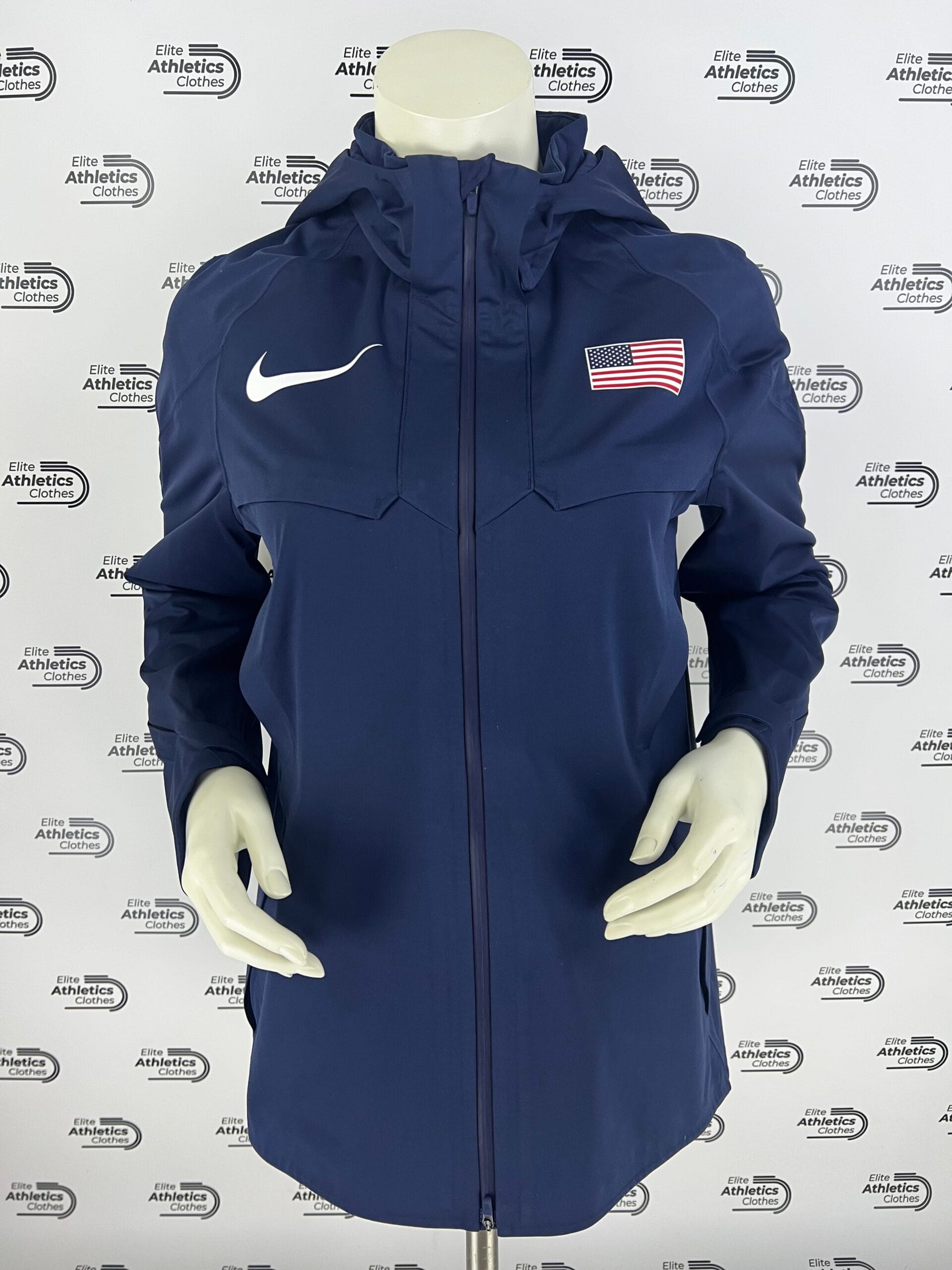 Nike USA Team Pro Elite 2026 Women Storm Fit Jacket240,00 €View Piece →Team USA · 2025
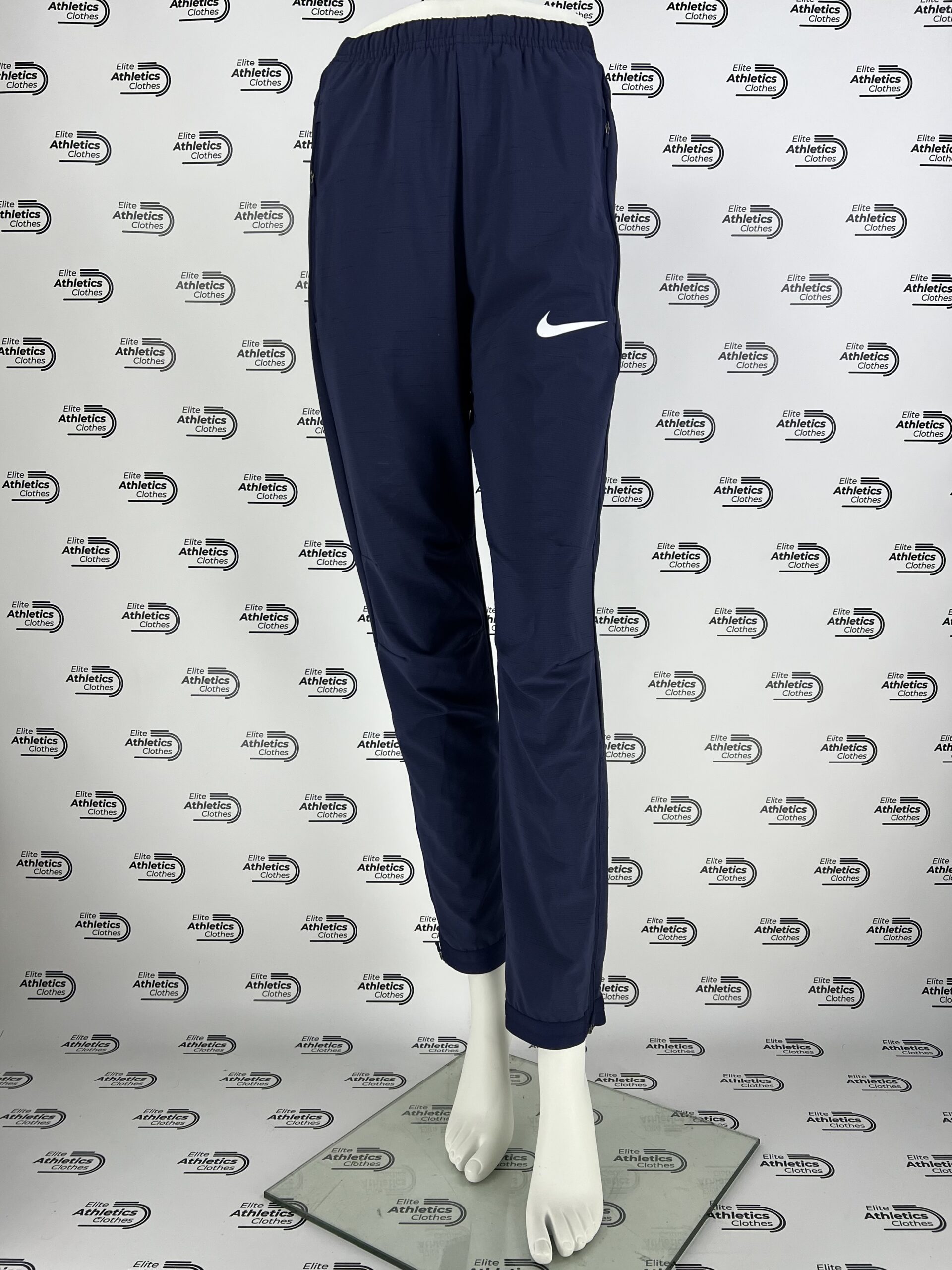 Nike USA International Team Pro Elite 2025 Women Lightweight Pants140,00 €View Piece →Team USA · 2025
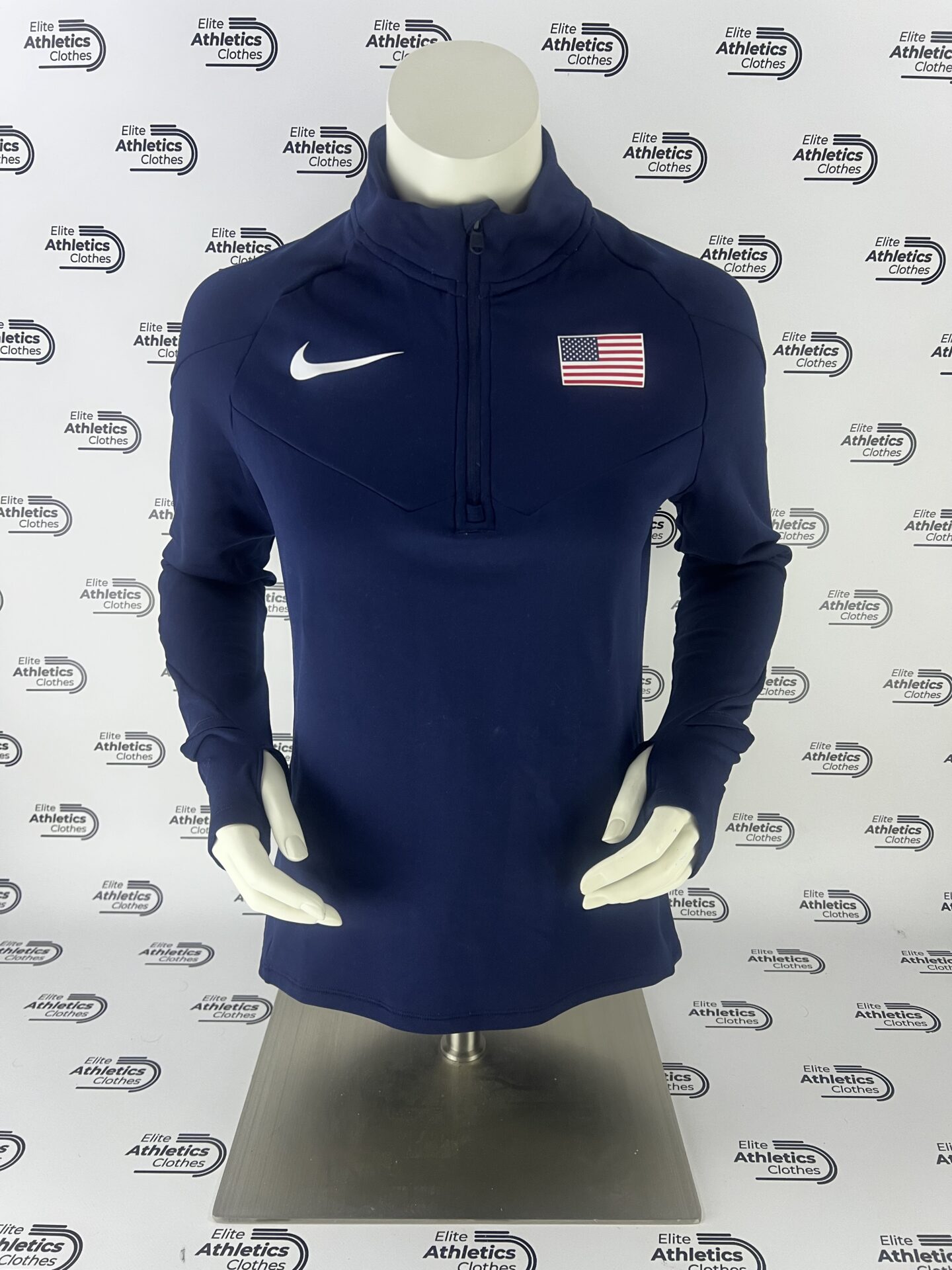 Nike USA Pro Elite 2025 Women Half Zip Jersey200,00 €View Piece →Team USA · 2023Nike USA Pro Elite 2023 Women Podium Jacket300,00 €View Piece →Team USA · 2019
 Nike USA Pro Elite 2019 Calf Warmers70,00 €View Piece →Team USA · kit bag
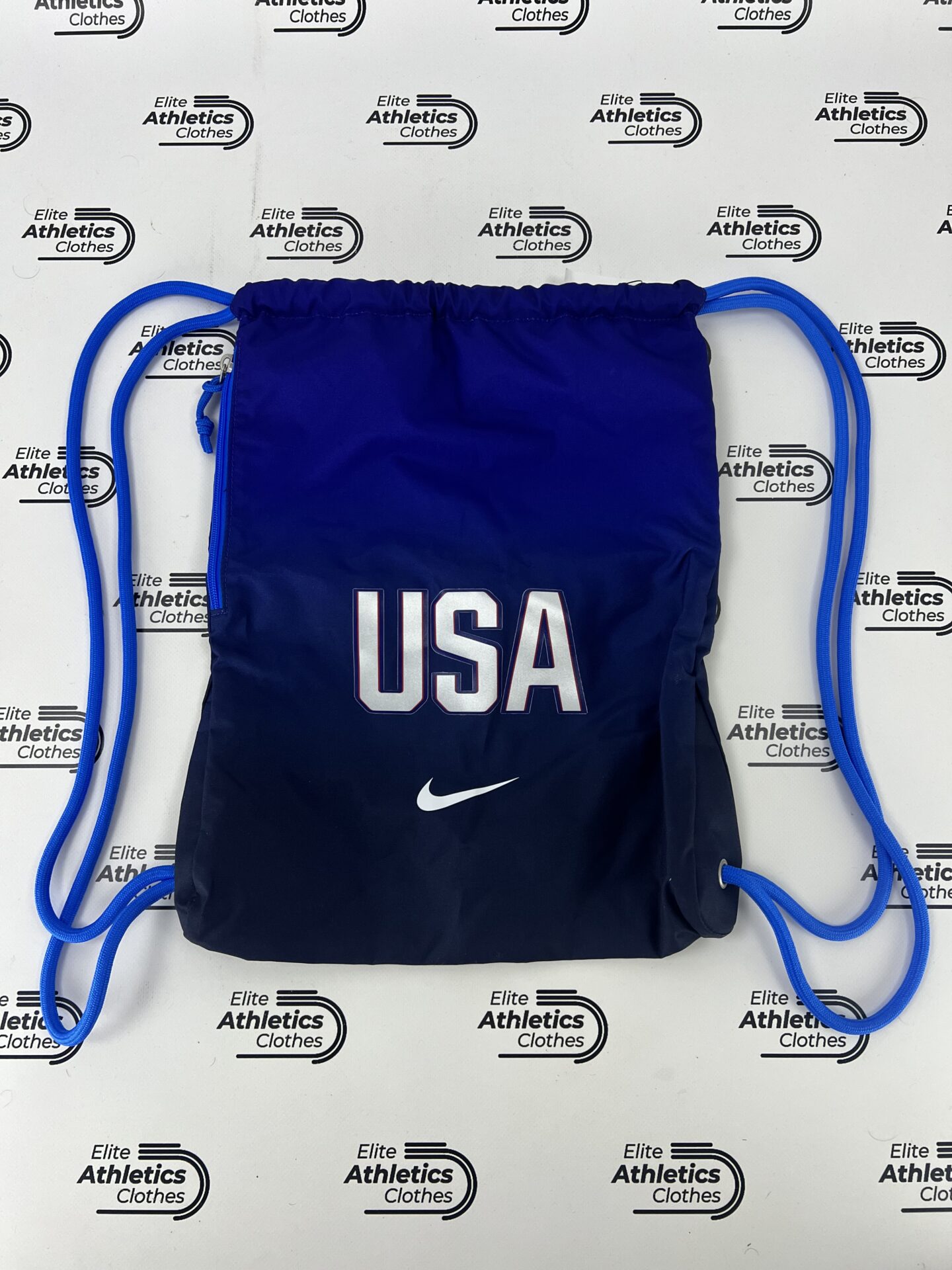 Nike USA International Team Pro Elite Spikes Bag100,00 €View Piece →
What are the NCAA Outdoor Track and Field Championships?
They are the national championship meet of American university track and field (NCAA Division I), first held in 1921 as the NCAA's first championship in any sport. Men's and women's team titles are decided over four days each June — since 2021 at Hayward Field in Eugene, Oregon, which hosts through 2027 with 2028 already awarded.
How do athletes qualify for the NCAA championships?
Through the East and West First Rounds at the end of May: each regional meet accepts the top 48 declared athletes per individual event and advances exactly 12, so 24 athletes per event reach the championships. At the final, the top eight in every event score 10-8-6-5-4-3-2-1 points for their university, and the team with the most points wins the national title.
Who won the 2026 NCAA outdoor championships?
Arkansas won the men's team title with 56 points — the program's first outdoor crown since 2003 — ahead of Georgia (49) and Tennessee (46). The Georgia women repeated as champions with 50 points ahead of Florida (43), one year after winning their first title in 2025.
Has a world record ever been set at the NCAA championships?
Yes. On 10 June 2026, Ja'Kobe Tharp of Auburn ran the 110 m hurdles in 12.75 in a semifinal at Hayward Field, breaking Aries Merritt's 12.80 from 2012; the mark is pending World Athletics ratification. It was the first world record at the meet since Dwight Stones' high jump in 1976. The 2026 championships also produced five collegiate records.
Sources and References
- USTFCCCA — History of the NCAA Championships — 1921 as the first NCAA championship in any sport, and the meet's growth
- NCAA.com — How the outdoor track and field championships work — the First Rounds, the 48/12 cut and the 10-8-6-5-4-3-2-1 scoring
- NCAA.com — Arkansas wins the 2026 men's championship — the 56–49–46 men's team race and Arkansas' first title since 2003
- NCAA.com — Georgia wins the 2026 women's championship — the women's repeat at 50 points, after the first title of 2025
- World Athletics — Tharp breaks the world 110 m hurdles record in Eugene — the 12.75 semifinal, the +1.0 wind and the ratification process
- Olympics.com — records rewritten on day three in Eugene — the Reid 19.63 and Ogazi 43.38 collegiate records
- University of Oregon — Hayward Field awarded the 2028 NCAA Championships — the hosting run through 2028 and Eugene's 14 of 18
- University of Oregon — About Hayward Field — the 2018–2020 rebuild, the Knights' funding and the 12,650 seats
- USTFCCCA Collegiate Athlete Hall of Fame — Jesse Owens — the eight individual NCAA titles of 1935–36