
Olympic
Athletics
Track and field at the Summer Games: 48 finals, 1,810 athletes, on the programme of every Olympics since 1896 — how it is structured, how a gold is won, and what one pays now.
Olympic athletics is the track and field programme of the Summer Games: 48 medal events — 23 men's, 23 women's and two mixed relays — spanning the track, the field, the road and the combined events. It is the sport the modern Olympics were built around, contested at every Games since Athens 1896, and at Paris 2024 it fielded 1,810 athletes — with, for the first time, the same number of men's and women's events.
The next edition runs at Los Angeles 2028, where athletics moves to the first week and the Memorial Coliseum becomes the first stadium to stage Olympic track and field three times. Every athlete in it will wear federation kit — the universe our archive collects.
Part of our Competition Files — one competition at a time, explained. The kits behind the championships live in the Pro Elite archive. Jump to the federation kits or start with a nation's story.
- What it is
- The track and field programme of the Summer Games — on the programme of every Olympics since Athens 1896
- The programme
- 48 finals: 23 men's, 23 women's and 2 mixed events, as raced at Paris 2024
- The field
- 1,810 athletes competed in athletics at Paris 2024
- First champion
- James Connolly (USA), triple jump, 6 April 1896 — the modern Games' first title
- Women's events
- Since Amsterdam 1928; equal event count with the men since Paris 2024
- Oldest record
- Bob Beamon's 8.90 m long jump, Mexico City 1968 — never beaten at a Games
- Prize money
- US$50,000 per gold since Paris 2024, paid by World Athletics — a first for any federation
- Next edition
- LA28, 14–30 July 2028 — the Coliseum's third Games; athletics opens week one
The Original Olympic Sport
When the modern Games opened in Athens on 6 April 1896, the first final decided was an athletics final: the American James Connolly won the triple jump and became the first Olympic champion in more than fifteen centuries. The programme that day was tiny by current measures — twelve events, sixty-three athletes from nine nations, all of them men — and the United States took nine of the twelve titles. Every event except the marathon was held inside the Panathenaic Stadium.
Athletics has been on the programme of every Summer Games since. No Olympics has ever been staged without it, and a core of twelve events — the triple jump among them — has been contested at every single edition. Over 128 years that dozen grew into today's forty-eight, and the sixty-three men became 1,810 athletes of both sexes in Paris.
Forty-Eight Golds, One Map
The current programme — as raced at Paris 2024, the most recent Games — is 48 medal events: 23 for men, 23 for women and two mixed relays. That equal count matters, because it had never happened before: Paris was the first Olympics with the same number of men's and women's athletics events, after the men's 50 km race walk gave way to the marathon race walk mixed relay.
The two mixed events are the newest layer of the sport. The mixed 4×400 m entered at Tokyo 2020, where Poland won its first running; the marathon race walk mixed relay arrived at Paris 2024, and Spain's Álvaro Martín and María Pérez won it in 2:50:31, almost a minute clear of Ecuador. A third mixed event, the 4×100 m relay, has been approved for its Olympic debut at LA28.
Hover or tab on a family for the detail. Sources: World Athletics key information and entry lists for Paris 2024; Olympics.com results by discipline. Verified August 2026.
The full Olympic athletics programme, group by group
| Event group | Finals | Events | Who |
|---|---|---|---|
| Sprints | 6 | 100 m, 200 m, 400 m | Men and women |
| Middle and long distance | 8 | 800 m, 1500 m, 5000 m, 10,000 m | Men and women |
| Hurdles and steeplechase | 6 | 110 m hurdles (men) / 100 m hurdles (women), 400 m hurdles, 3000 m steeplechase | Men and women |
| Relays | 5 | 4×100 m, 4×400 m, mixed 4×400 m | Men, women and one mixed team event |
| Road | 5 | Marathon, 20 km race walk, marathon race walk mixed relay | Men, women and one mixed team event |
| Jumps | 8 | High jump, pole vault, long jump, triple jump | Men and women |
| Throws | 8 | Shot put, discus, hammer, javelin | Men and women |
| Combined events | 2 | Decathlon (men) / heptathlon (women) | One per sex |
Half the Programme, Built Slowly
Women first competed in Olympic athletics at Amsterdam 1928, with five events: the 100 m, the 4×100 m relay, the high jump, the discus and the 800 m. Poland's Halina Konopacka won the discus and with it the first women's athletics gold in Olympic history. Germany's Lina Radke won the 800 m — and then that distance disappeared from the women's programme for 32 years, not returning until Rome 1960.
The rest of the programme was added piece by piece across nearly a century. The first women's Olympic marathon was run at Los Angeles 1984 and won by Joan Benoit of the United States. Full numerical parity — 23 events each — only arrived at Paris 2024. The stadium sessions themselves make no distinction: men's and women's finals share every evening.
How a Gold Gets Won
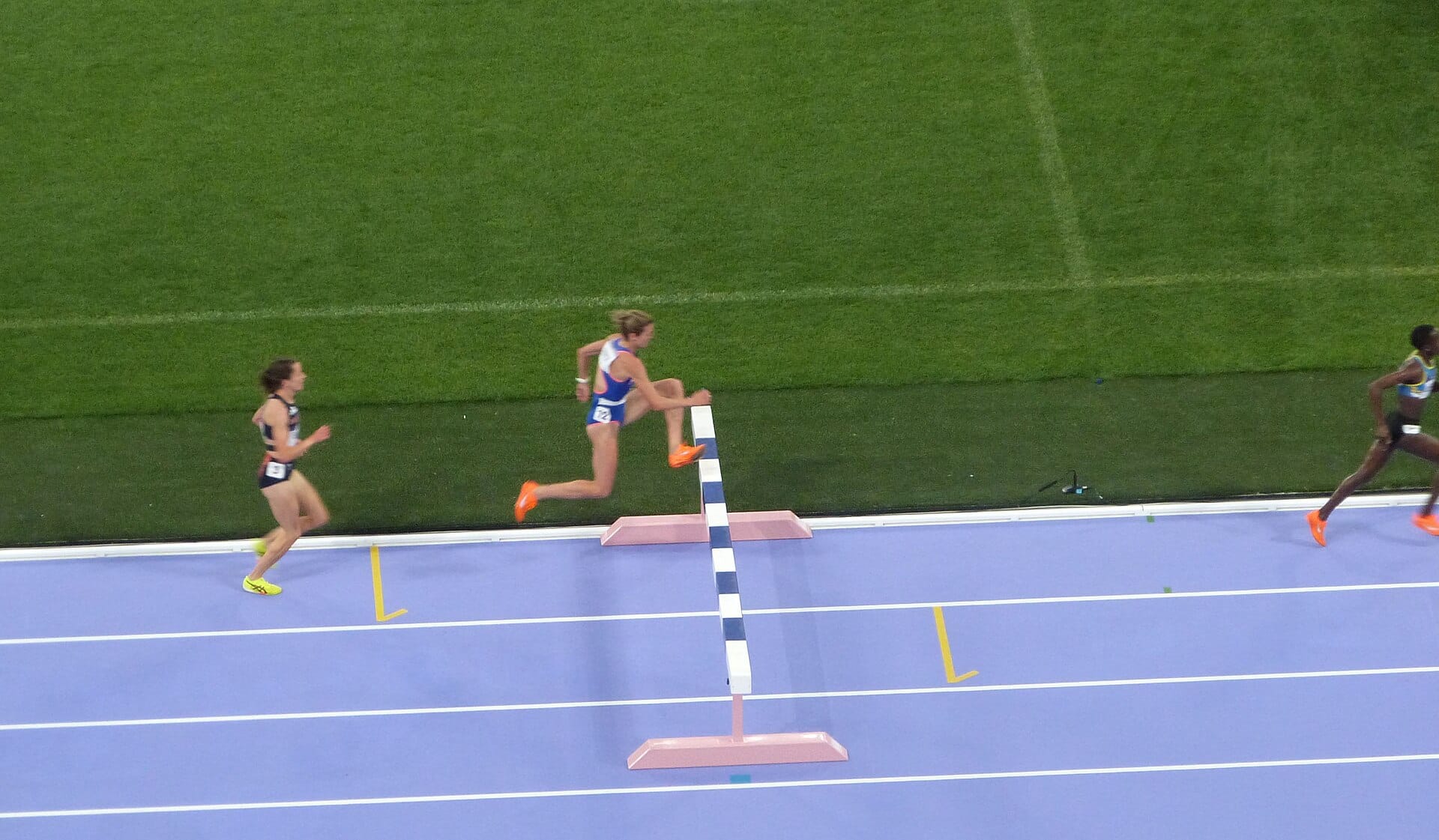
Getting to the Games takes either an entry standard — a mark set by World Athletics for each event — or a high enough place in the world rankings. Once there, track athletes work through rounds: heats, then semifinals, then a final of eight in the sprints and hurdles, larger in the distance races. Field athletes jump or throw in a qualifying round, and the best advance to a final. In the combined events there is no second chance at all: ten disciplines in two days for the decathletes, seven for the heptathletes, and the points table is the race.
Paris 2024 added a new step. In the individual track events from 200 m to 1500 m, hurdles included, anyone who missed automatic qualification from the heats got a second race — the repechage round — to fight for the remaining semifinal places. It replaced the old system of rescuing the fastest losers by time, and it guarantees every athlete in those twelve events at least two races at the Games. The 100 m keeps its own extra layer instead: a preliminary round before the heats.
Records That Only Fall at the Games
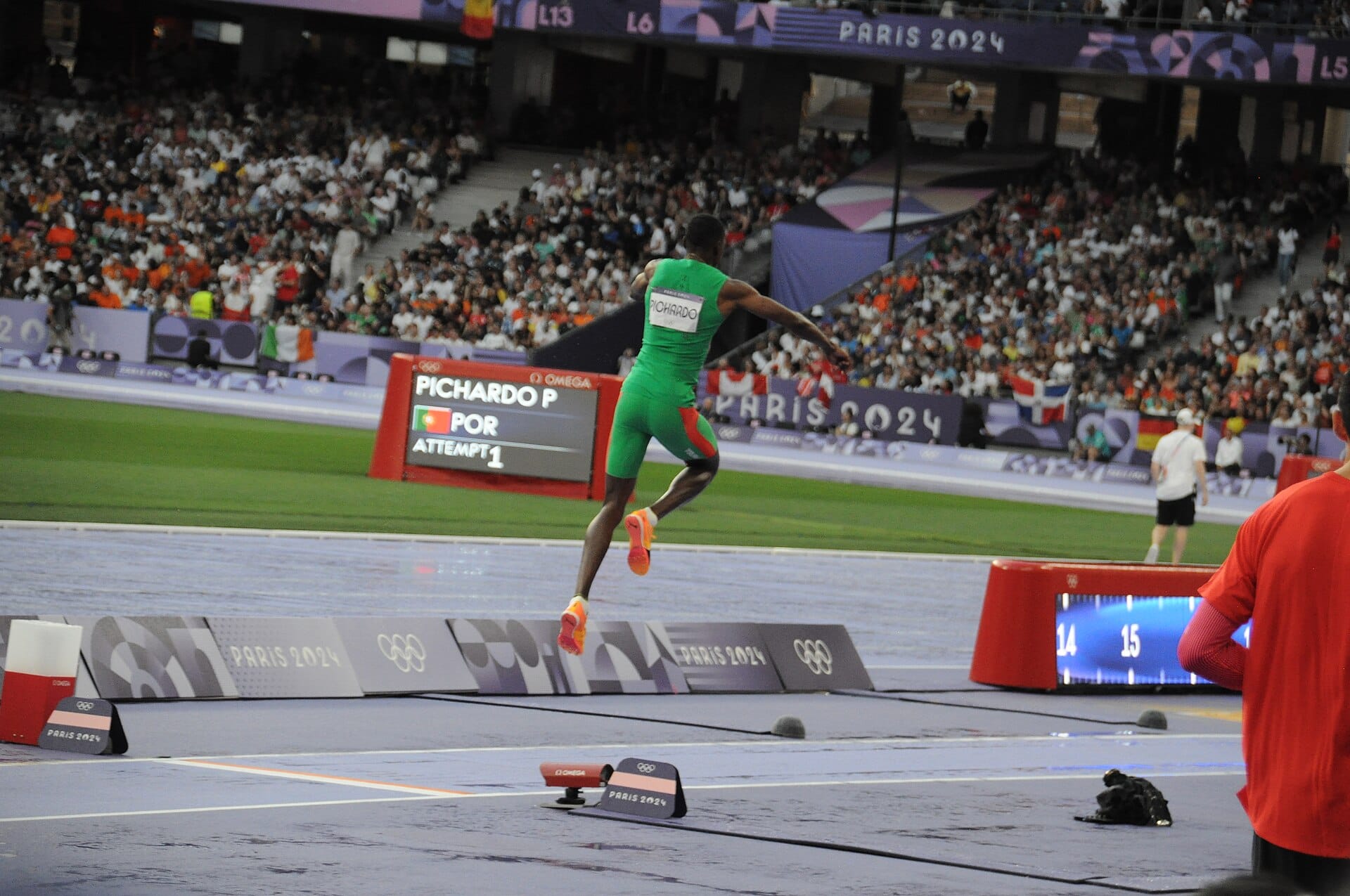
An Olympic record can only fall at an Olympics — one chance every four years — and the oldest of them all belongs to Bob Beamon: 8.90 m in the long jump at Mexico City on 18 October 1968, never bettered at a Games in more than half a century. Guinness lists it as the longest-standing Olympic record in athletics, twelve years clear of the next one. Florence Griffith-Joyner's 21.34 in the 200 m, from Seoul 1988, remains the women's benchmark of the same kind.
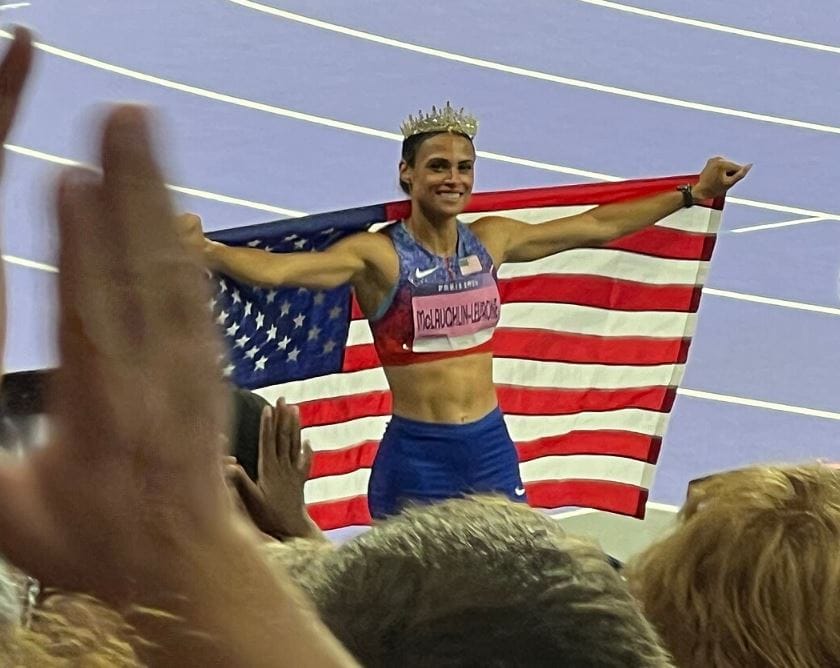
World records fall at the Games too. In Paris, Sydney McLaughlin-Levrone won the 400 m hurdles in 50.37, breaking her own world record for the gold — a mark that still leads the event today. The season around those Games is a story of its own; our France 2024/25 season file covers the home side of it.
The medal table has its own ceilings. Paavo Nurmi of Finland collected twelve Olympic medals between 1920 and 1928, still the athletics record, and his nine golds have been equalled only by Carl Lewis, who won nine across 1984–1996 — four of them in the long jump alone. Usain Bolt swept the 100 m and 200 m at three straight Games from 2008 to 2016 and finished with eight golds, after the 2008 4×100 m title was disqualified years later over a teammate's doping case.
What a Gold Pays Now
For most of Olympic history the answer was: nothing. The IOC awards no prize money, and the sport spent its first decades formally amateur. That changed in April 2024, when World Athletics became the first international federation to pay for Olympic medals: US$50,000 for each of the 48 golds in Paris, from a US$2.4 million pot funded out of its share of IOC revenues, with relay teams splitting the same figure.
World Athletics has also announced a commitment to extend the payments, on a tiered scale, to silver and bronze medallists at LA28. Even so, the Olympic title remains the one prize in the sport whose value has never depended on the cheque attached to it.
Next Stop: The Coliseum, a Third Time
The next Olympic athletics programme runs at Los Angeles 2028, from 14 to 30 July, in the Memorial Coliseum — the first stadium to host Olympic track and field three times, after 1932 and 1984. The published schedule breaks with a century of habit: athletics opens in the first week instead of closing the Games, and for the first time it spans the entire Olympic period, thirteen days of competition from 15 July, with the marathons back in their traditional closing slot on the final weekend.
Day one belongs to the women's 100 m, chosen by the organisers to open the athletics programme. The event list adds the mixed 4×100 m relay, making its Olympic debut after being run at the World Relays and at the sport's new Ultimate Championship. Who lines up in any of it will be decided across the 2027–28 qualifying window — and predictions are not what this series does.
Federation Kit: The Olympic Rule
One rule shapes everything we collect: at the Games, athletes compete in the uniform of their national federation, not in their sponsor's racing colours. An Olympic final is the biggest stage federation kit ever gets — the same Nike USA, adidas France and Joma Spain team-issue lines whose athlete versions live in our archive.
The house rule for reading any competition: championships mean federation kit, leagues and meetings mean sponsor kit. The Olympics sit at the very top of the federation side — every athlete in national colours for two weeks. That is why this page points at the nations archive, from the USA to Great Britain.
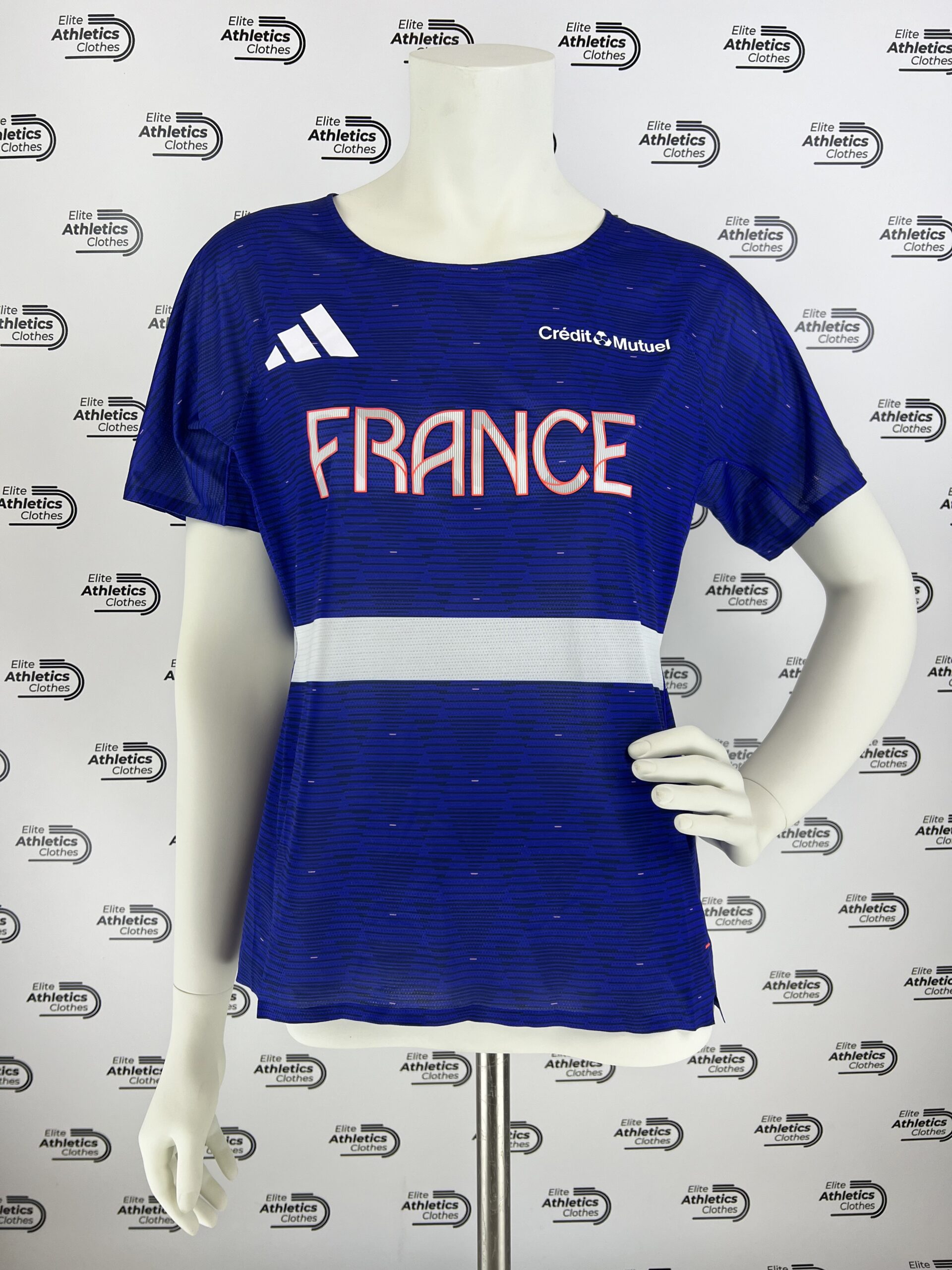 Federation kit · host seasonAdidas France Pro Elite 2024/2025 Women T-Shirtadidas France women's tee from the 2024/25 federation cycle — the team-issue line France wore in the season it hosted the Games.150,00 €View piece →
The Kits the Games Are Raced In
Every Olympic final is run in national team kit. These are athlete-issued federation pieces from the archive — one per nation, from the same universe that fills the Olympic stadium.
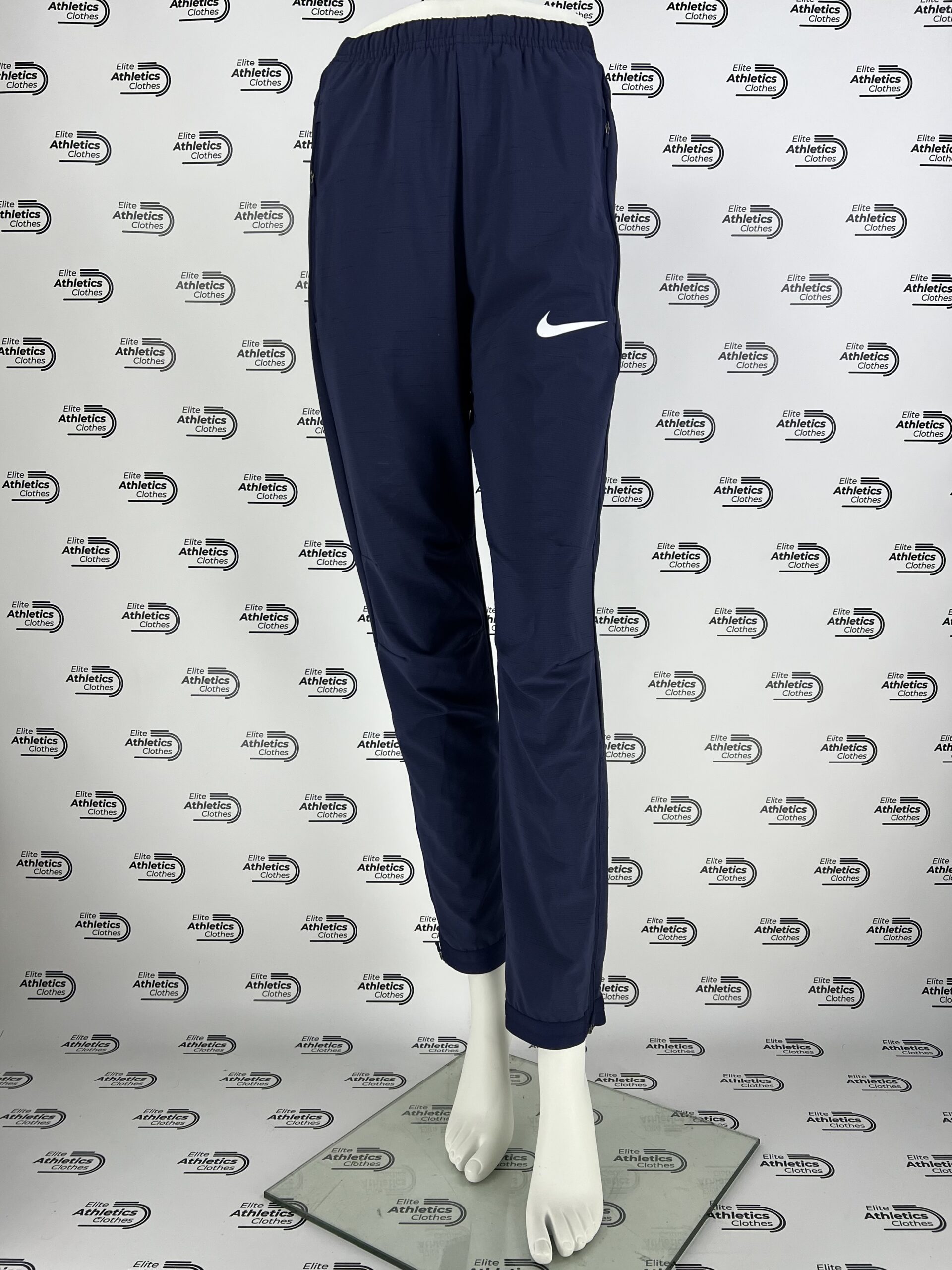 Nike USA International Team Pro Elite 2025 Women Lightweight Pants140,00 €View Piece →Great Britain
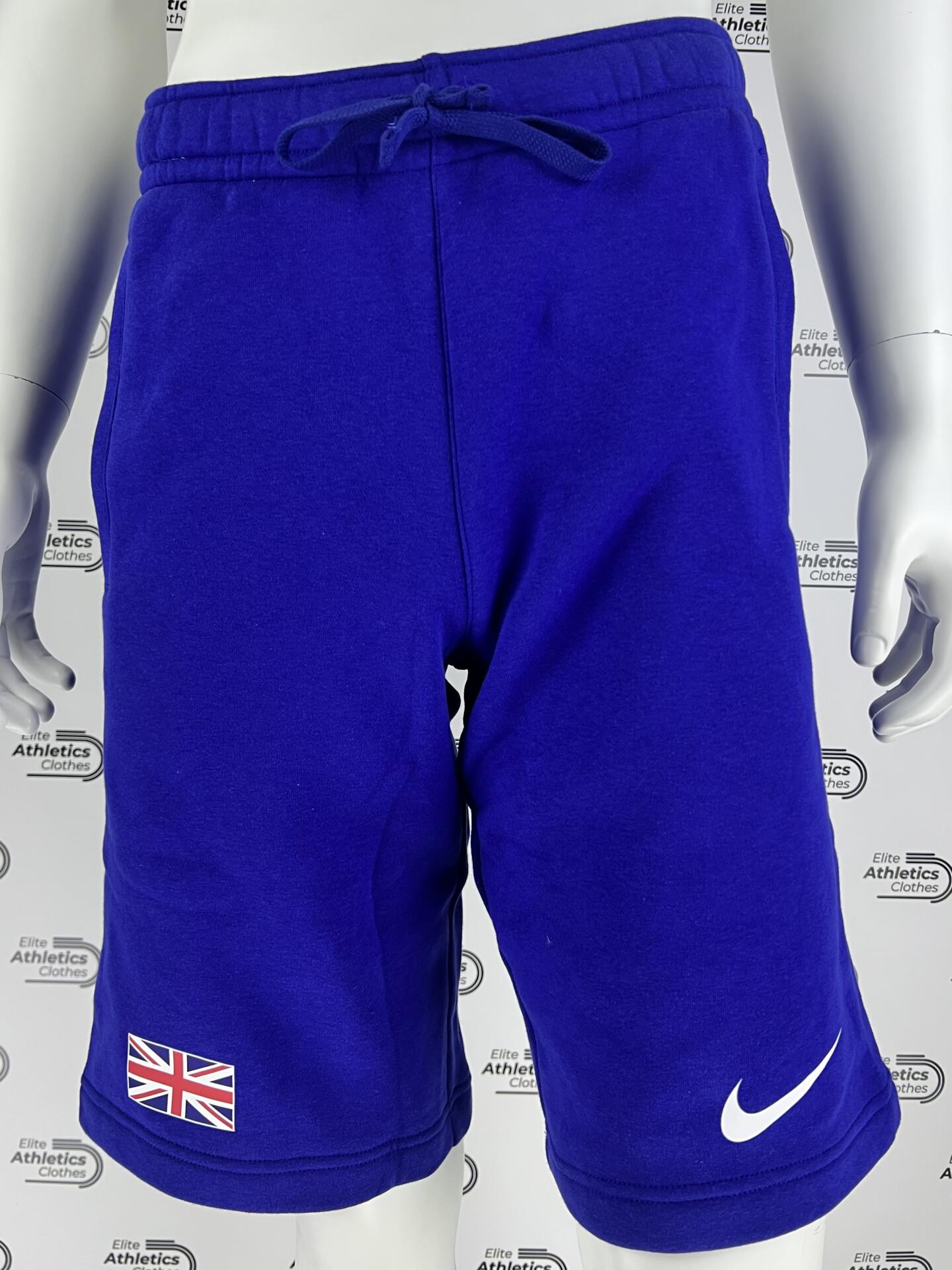 Nike Great Britain Pro Elite 2019 Cotton Short Pants50,00 €View Piece →Ethiopia
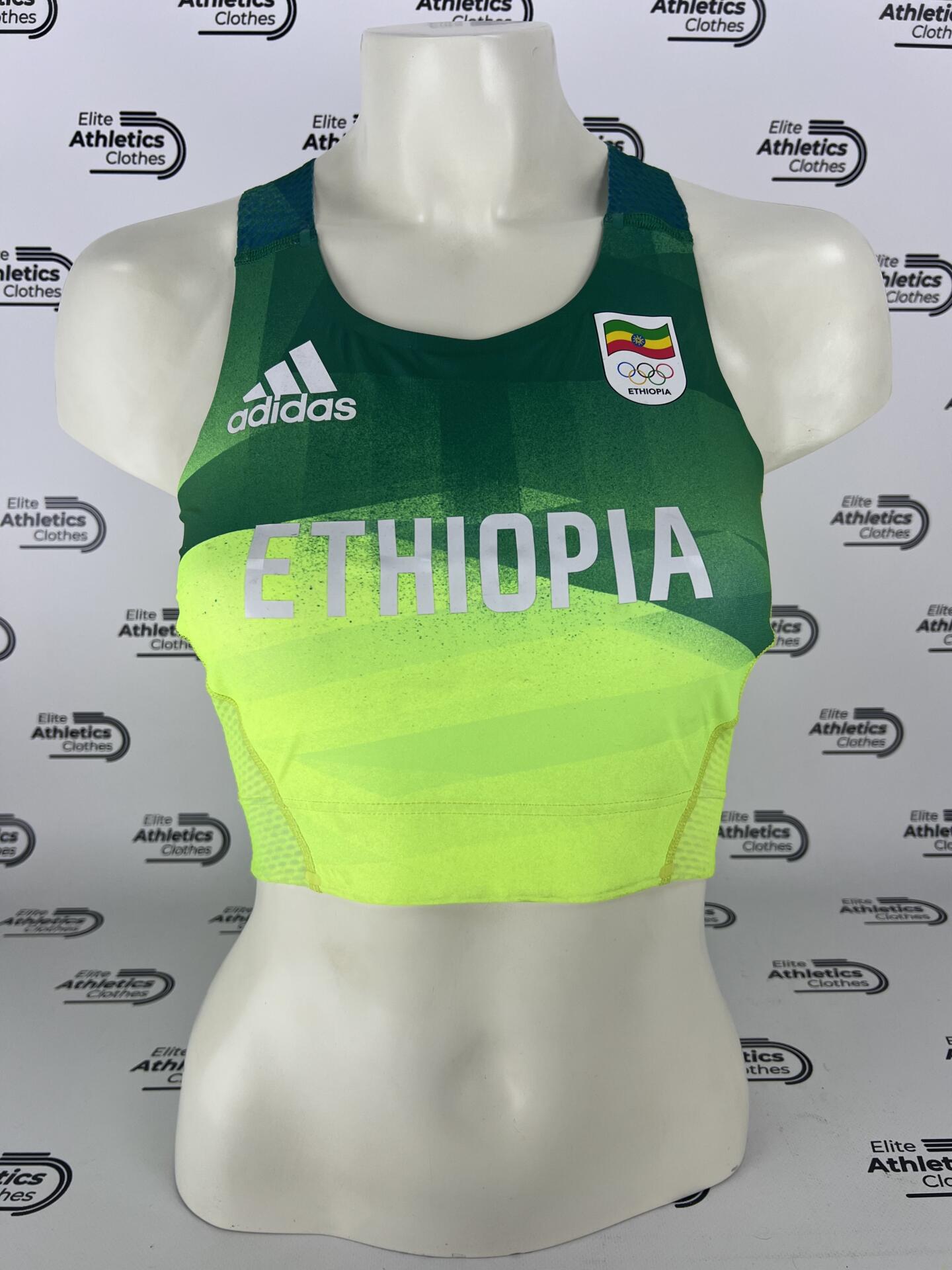 Adidas Ethiopia Olympic Team Pro Elite 2020 Women Crop Top90,00 €View Piece →Germany
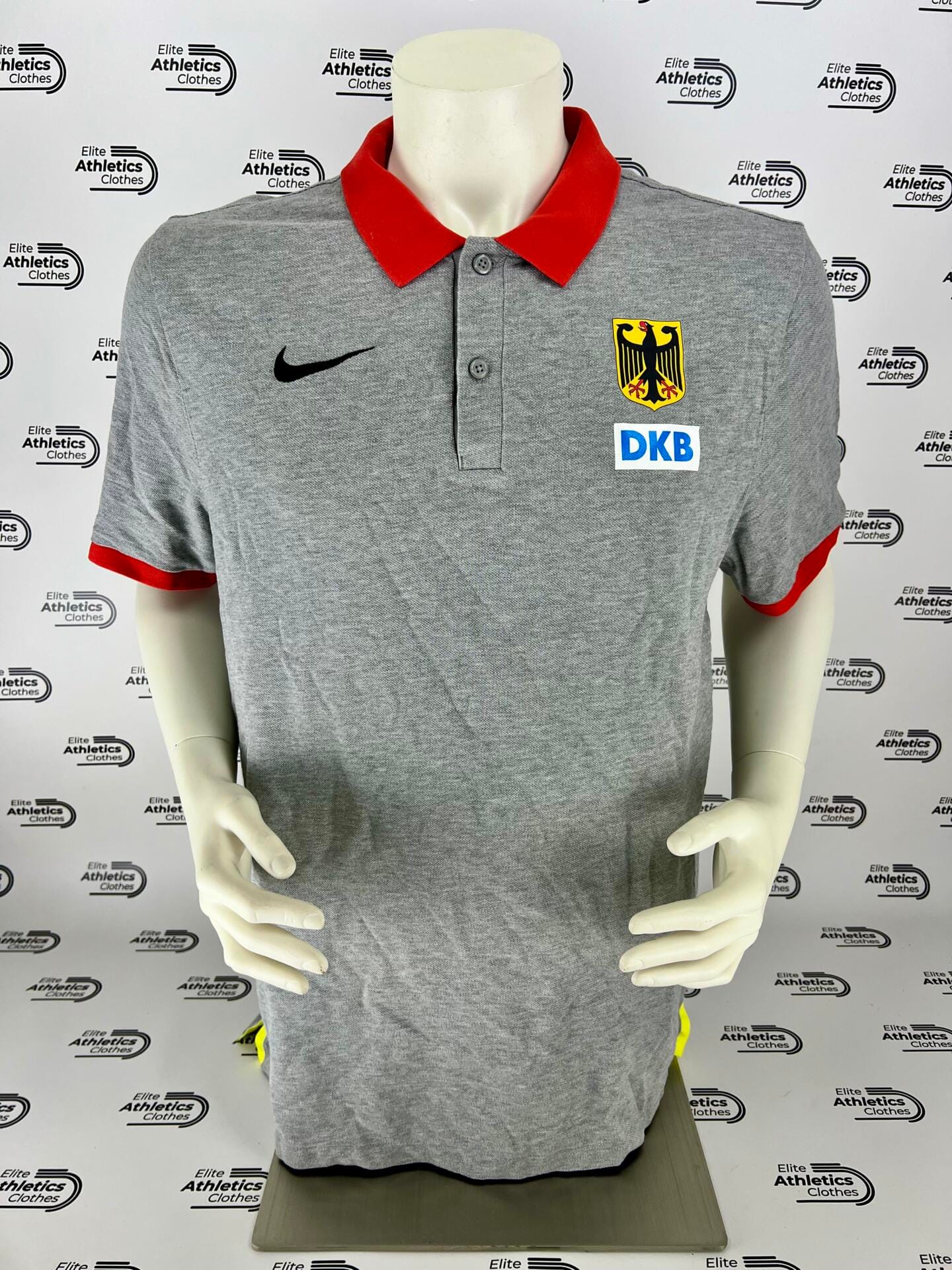 Nike Germany International Team Pro Elite 2019 Polo Shirt70,00 €View Piece →France
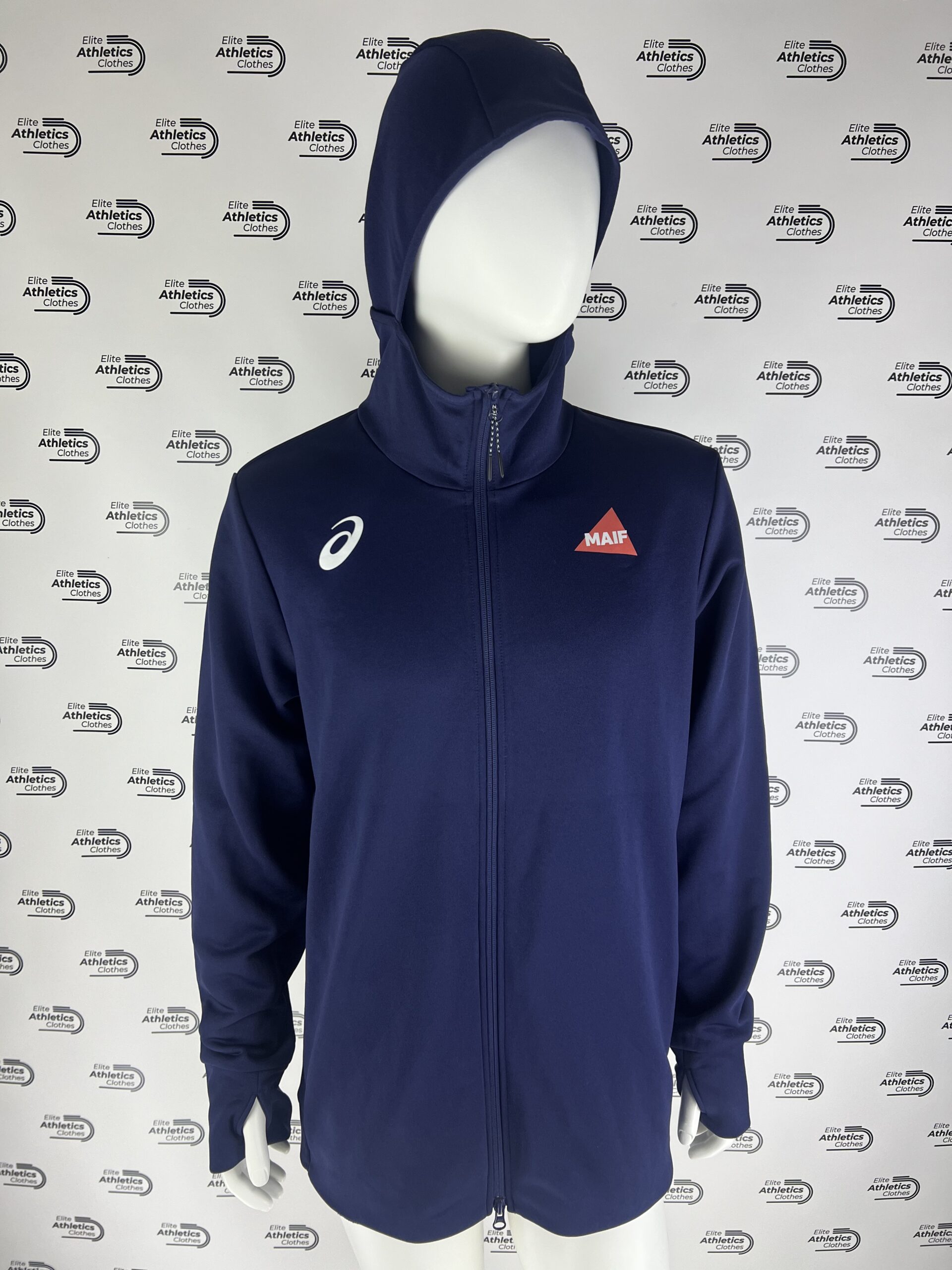 Asics France International Team Pro Elite 2021 Hoodie Jacket120,00 €View Piece →Netherlands
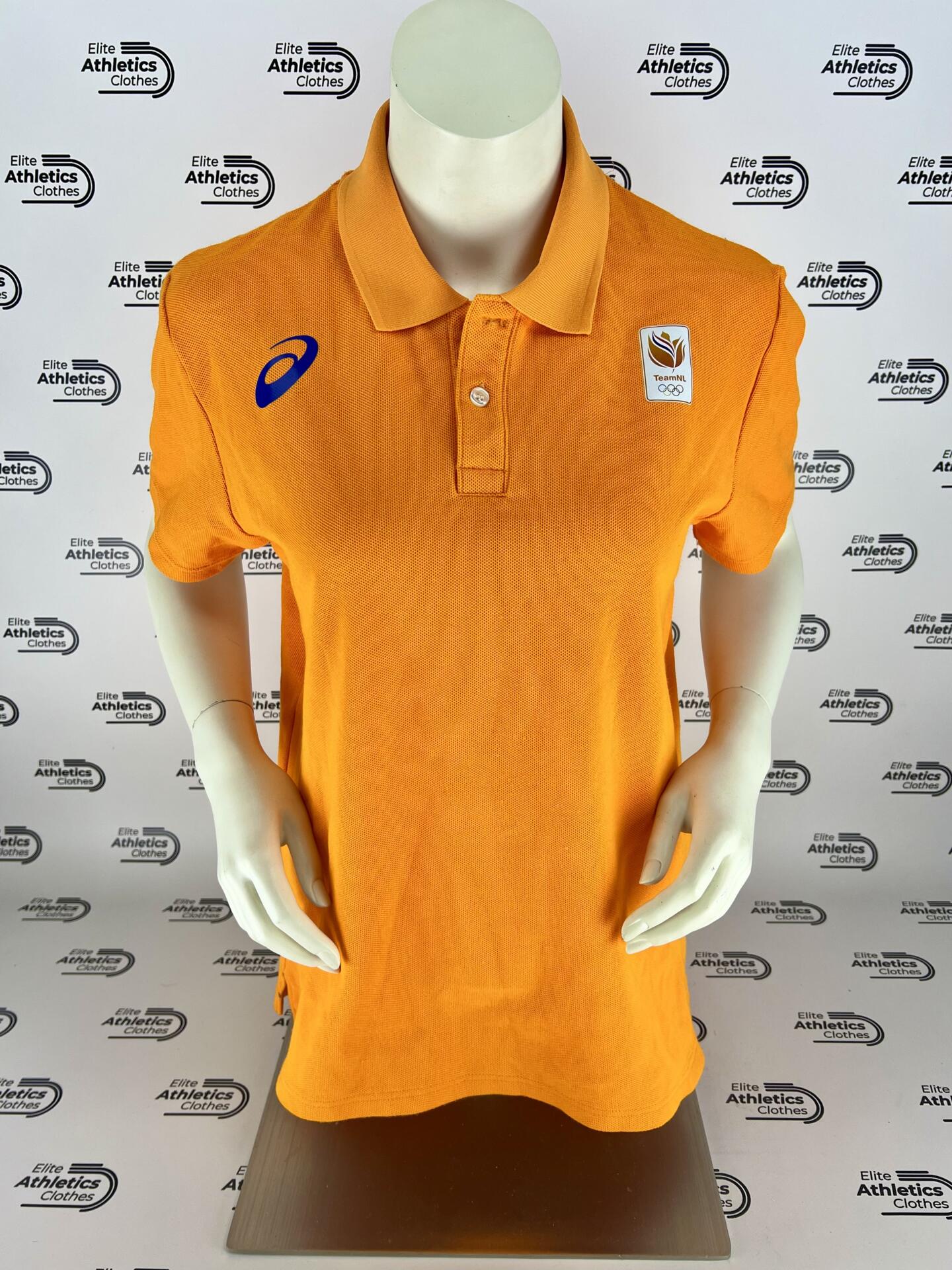 Asics Netherlands International Team Pro Elite 2018 Women Polo Shirt60,00 €View Piece →Spain
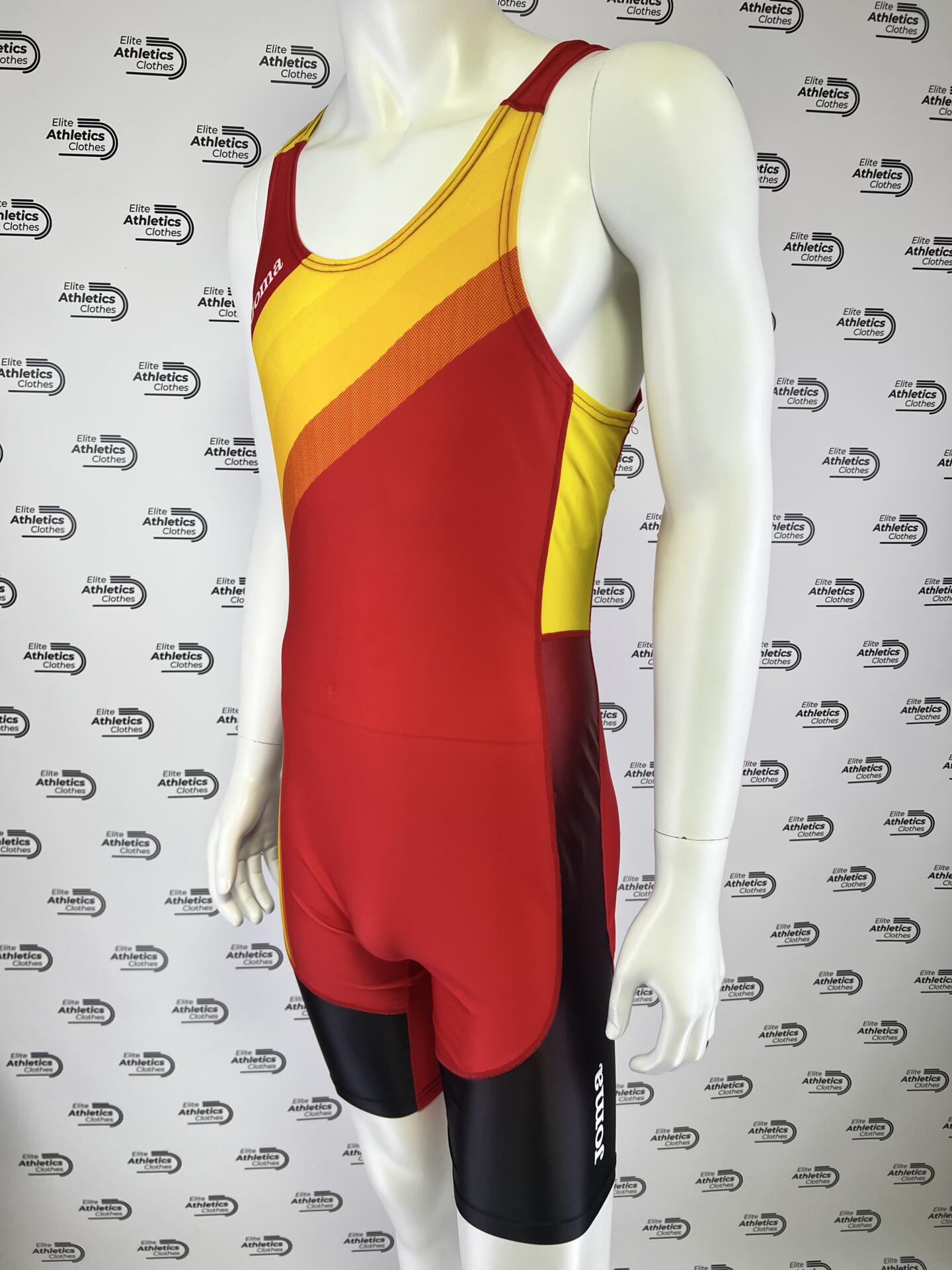 Joma Spain Pro Elite Team 2018 Speedsuit100,00 €View Piece →Poland
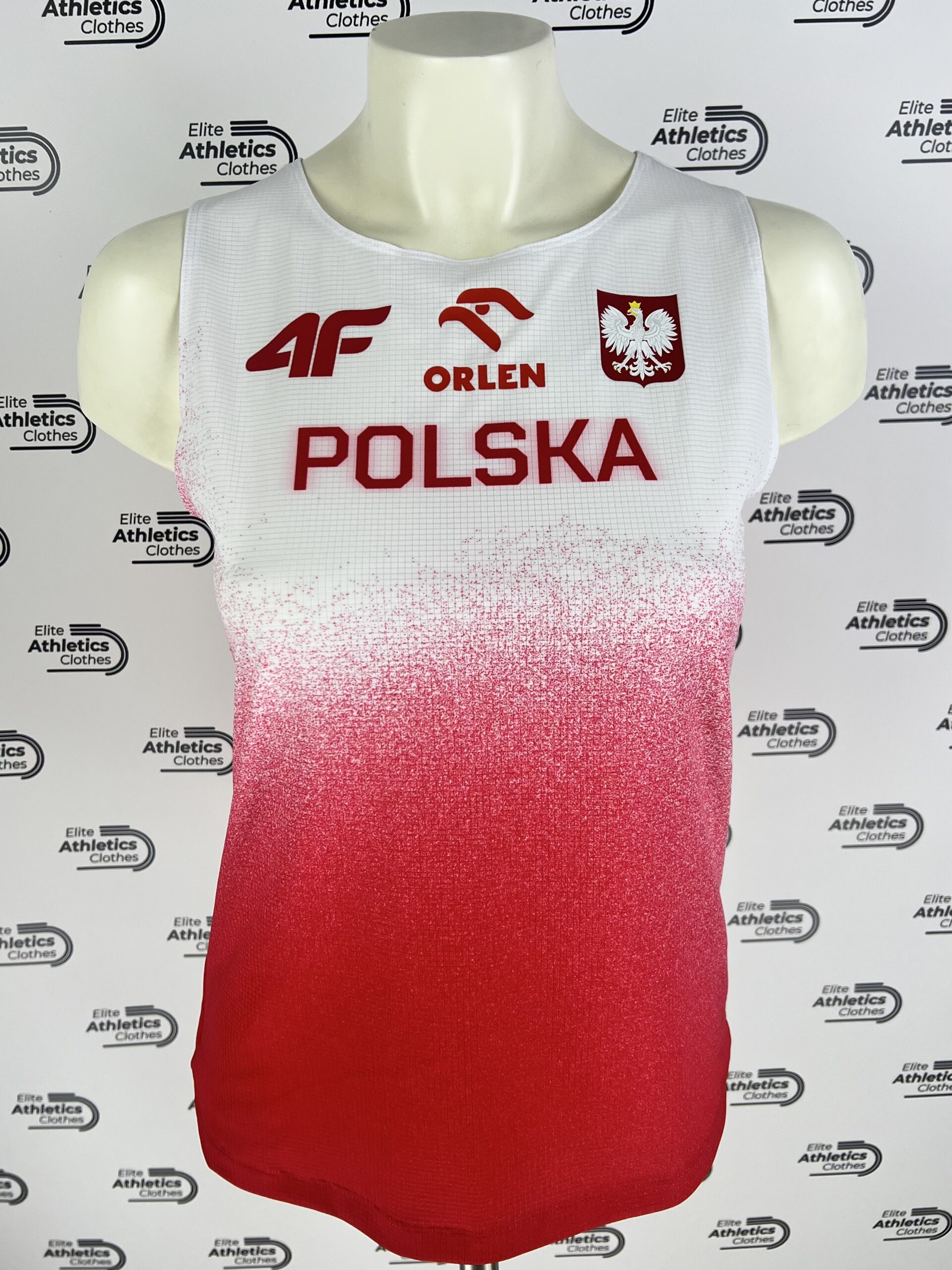 4F Poland International Team Pro Elite 2026 Women Distance Singlet160,00 €View Piece →
How many athletics events are there at the Olympics?
There are 48 medal events: 23 for men, 23 for women and two mixed relays — the mixed 4×400 m and the marathon race walk mixed relay. Paris 2024 was the first Games with the same number of men's and women's events, and a mixed 4×100 m relay has been approved for its Olympic debut at LA28.
Do Olympic athletics champions win prize money?
The IOC itself pays none, but since Paris 2024 World Athletics pays US$50,000 for every athletics gold — the first international federation to reward Olympic medals — from a US$2.4 million pot, with relay teams sharing the sum. It has announced a commitment to extend tiered payments to silver and bronze medallists at LA28.
What is the oldest Olympic record in athletics?
Bob Beamon's 8.90 m long jump, set at altitude in Mexico City on 18 October 1968. No jumper has matched it at any Games since, and Guinness World Records lists it as the longest-standing Olympic record in the sport.
When did women first compete in Olympic athletics?
At Amsterdam 1928, with five events; Poland's Halina Konopacka won the discus to become the first women's athletics champion. The 800 m then left the women's programme until 1960, the marathon arrived in 1984, and Paris 2024 was the first Games with as many women's events as men's.
Sources and References
- World Athletics — key information for athletics at Paris 2024 — the 48-event programme, the 1,810 athletes and the venues
- World Athletics — repechage round introduced for Paris 2024 — which events run a repechage and how it works
- World Athletics — prize money for Olympic gold medallists — the US$50,000 per gold, the US$2.4m pot and the LA28 commitment
- World Athletics — women's 100m to kick-start LA28 — the week-one move, the 13 days and the day-one women's 100 m
- Olympics.com — the mixed 4×100m relay comes to LA28 — the Olympic debut approved for 2028
- Guinness World Records — longest-standing Olympic record in athletics — Beamon's 8.90 m of 1968
- Olympics.com — Lina Radke and the women's 800 m of 1928 — the 1928 programme and the 32-year gap in the 800 m
- World Athletics — McLaughlin-Levrone's 50.37 in Paris — the world record in the Paris 400 m hurdles final
- World Athletics — Martín and Pérez win the first marathon race walk mixed relay — Spain's 2:50:31 in the event's debut