
Golden
Gala
Rome's night of athletics since 1980: born days after the Moscow boycott, named for Pietro Mennea, home to nine world records — and to the 3:26.00 that nobody has touched in 28 years.
The Golden Gala Pietro Mennea is Italy's biggest one-night track and field meeting, held almost every June at the Stadio Olimpico in Rome and part of the Diamond League since the circuit began in 2010. Founded by Primo Nebiolo on 5 August 1980 to reunite a sport split by the Moscow Olympic boycott, it has staged nine world records — including Hicham El Guerrouj's 3:26.00 for the 1500 m in 1998, still the world record 28 years later.
Since 2013 the meeting has carried the name of Pietro Mennea, winner of its very first 200 m and still the European record holder at 19.72. The 46th edition, on 4 June 2026, saw Italian wins for Leonardo Fabbri, Andy Díaz and Matteo Sioli in front of the home crowd.
Part of our Competition Files — one competition at a time, explained. A meeting night is raced in sponsor kit: that universe lives in the Pro Elite archive. Jump to the brand lines or start with a brand's story.
- What it is
- Rome's annual invitational meeting, first held 5 August 1980 — 60,000 filled the Olimpico
- The founder
- Primo Nebiolo, to reunite a sport split by the Moscow Olympic boycott
- The name
- Dedicated to Pietro Mennea since 2013 — his 19.72 is still the European 200 m record
- The venue
- Stadio Olimpico — 41 of 46 editions; exiles to Verona, Pescara, Bologna and Florence
- World records
- Nine — plus Duplantis' 6.15 of 2020, the highest outdoor vault ever at the time
- The deepest mark
- El Guerrouj's 3:26.00 (1998) — still the 1500 m world record, 28 years on
- The circuit
- Stage of the Golden League launch in 1998; founding Diamond League meeting in 2010
- The 2026 edition
- 4 June, 46th edition — Fabbri, Díaz and Sioli all won for Italy
Born in a Boycott Summer
The Golden Gala exists because 1980 broke athletics in half. The Western boycott of the Moscow Olympics meant the best sprinters of the United States never faced the men who took their titles, and Primo Nebiolo — then head of the Italian federation, later of the IAAF — saw the gap in the calendar for what it was: a stage nobody else could offer. Days after the boycotted Moscow Games closed, on 5 August 1980, he filled the Stadio Olimpico for the first Golden Gala. Sixty thousand people came.
They came, above all, for one man. Pietro Mennea had just become Olympic 200 m champion in Moscow, and in Rome he beat Jamaica's Don Quarrie in 20.01 — a mark that stayed the meeting record for sixteen years. Mennea arrived as the fastest 200 m runner alive by any measure: his 19.72 world record from Mexico City, 12 September 1979, would hold as the world mark for almost seventeen years, and in 2026 it is still the European record.
The meeting skipped exactly one summer: in 1981 the IAAF World Cup took over the Olimpico, and the Gala stood aside. It has run every year since, which is why 2026's meeting was the 46th edition, not the 47th. And since 2013, the year Mennea died in March at 60, the meeting has carried his name — officially, the Golden Gala Pietro Mennea.
Nine Records, Plus One
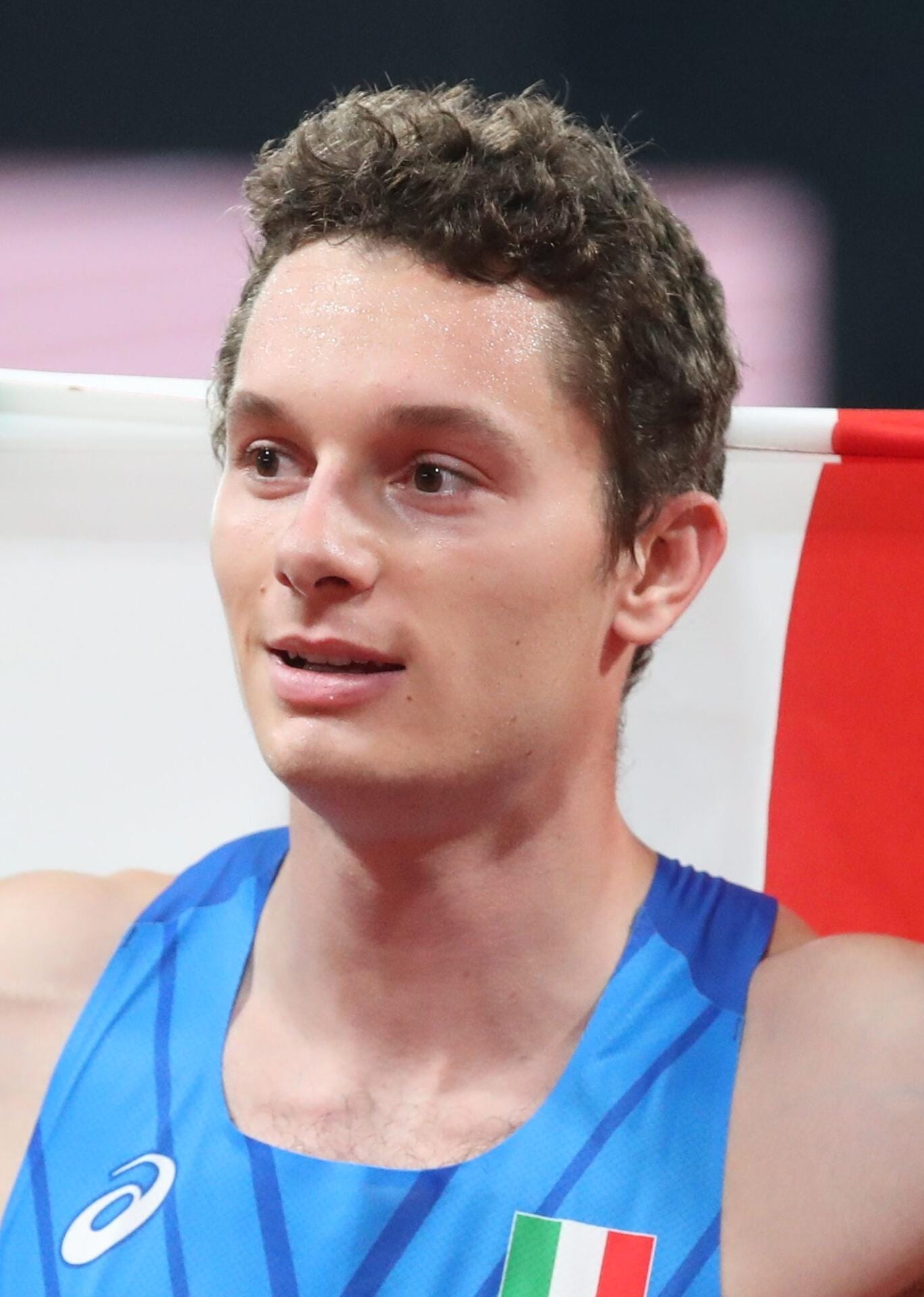
The Italian federation keeps the official count: nine world records set at the Golden Gala, plus one asterisk. The first came from Thierry Vigneron, who vaulted 5.83 in 1983. A year later, on 31 August 1984, came the night the meeting is still famous for: Vigneron took the world record back with 5.91, and Sergey Bubka answered him minutes later with 5.94 — two pole vault world records in a single Roman evening.
The distance races gave the Gala its deepest marks. On 22 July 1987, Said Aouita ran the first 5000 m in history under 13 minutes — 12:58.39 — and Moses Kiptanui lowered the same record to 12:55.30 on the same track on 8 June 1995. Then came Hicham El Guerrouj. His 3:26.00 for the 1500 m on 14 July 1998 has not been touched in 28 years — only three men have even broken 3:27 since — and his 3:43.13 mile from 7 July 1999 lasted 27 years, until Josh Kerr ran 3:42.66 in London on 18 July 2026. Two of the sport's oldest track records were both built in Rome.
Trine Hattestad added a javelin world record of 68.22 on 30 June 2000, and Yelena Isinbayeva opened her 2008 season by vaulting a world-record 5.03 on 11 July. The asterisk is the tenth: on 17 September 2020, in an Olimpico emptied by the pandemic, Armand Duplantis cleared 6.15 — one centimetre above Sergey Bubka's best and, at the time, the highest outdoor vault in history. His absolute world record then lived indoors, so FIDAL counts Rome's share of it separately: nine records, plus one.
The Orbit of the Olimpico
More than any other meeting in the sport, the Golden Gala is its stadium. Forty-one of its 46 editions have run at the Stadio Olimpico, and every time the building became unavailable, the meeting did not die — it went into orbit and came back. When the Olimpico was torn down and rebuilt for the 1990 football World Cup, the Gala spent three summers on the road: Verona in 1988, Pescara in 1989, Bologna in 1990. When football and scheduling squeezed it out again in the 2020s, Florence's Stadio Luigi Ridolfi took the 2021 and 2023 editions.
Hover or tab on a marked dot for the detail. Sources: FIDAL's meeting record list, World Athletics meeting history and the edition pages. Verified September 2026.
The 46 editions, year by year (key stops)
| Year | Where | What happened |
|---|---|---|
| 1980 | Rome | First Gala, 5 August — 60,000 watch Mennea beat Quarrie in 20.01 |
| 1981 | — | No Gala: the IAAF World Cup took the Olimpico |
| 1983 | Rome | Vigneron 5.83 — the meeting's first world record |
| 1984 | Rome | Vigneron 5.91 and Bubka 5.94 in the same evening |
| 1987 | Rome | Aouita 12:58.39 — the first sub-13 5000 m |
| 1988 | Verona | Olimpico rebuilt for the 1990 World Cup |
| 1989 | Pescara | Second year of the rebuild exile |
| 1990 | Bologna | Third and last year away |
| 1995 | Rome | Kiptanui 12:55.30 — 5000 m world record |
| 1998 | Rome | El Guerrouj 3:26.00 — still the 1500 m world record |
| 1999 | Rome | El Guerrouj 3:43.13 — the mile record for 27 years |
| 2000 | Rome | Hattestad 68.22 — javelin world record |
| 2008 | Rome | Isinbayeva 5.03 — pole vault world record |
| 2020 | Rome | Behind closed doors; Duplantis 6.15, the highest outdoor vault ever at the time |
| 2021 | Florence | Stadio Ridolfi stand-in |
| 2023 | Florence | Stadio Ridolfi again |
| 2024 | Rome | Moved to 30 August, after the Paris Games |
| 2026 | Rome | 46th edition, 4 June — Fabbri, Díaz and Sioli win for Italy |
The stadium's emptiest night might be its most famous one. In 2020 the meeting was pushed from May to 17 September and run behind closed doors — and that was the evening Duplantis chose for his 6.15. In 2024 the Gala moved to 30 August to land after the Paris Olympics, and the fields came stacked with fresh Olympic champions. The pattern holds across five decades: whatever the calendar does, Rome ends up with the night everyone remembers.
On the circuit map, the Gala has been a fixture of every era: it was the stage where the IAAF launched the Golden League in 1998 — El Guerrouj's 3:26.00 came that same July — and it has been part of the Diamond League since the series was founded in 2010, alongside sibling nights like Weltklasse Zürich and the Bislett Games.
The 46th Night
The 2026 edition, on 4 June, was the fourth stop of the Diamond League season and its first European one, with a start list the organisers counted at 43 Olympic and world champions. Noah Lyles won the 100 m in 9.88 from Emmanuel Eseme and Letsile Tebogo, Julien Alfred beat the reigning world champion Melissa Jefferson-Wooden in the 200 m — 21.93 to 22.17 — and Marcell Jacobs, the Tokyo Olympic 100 m champion, dipped under ten again at 9.99.
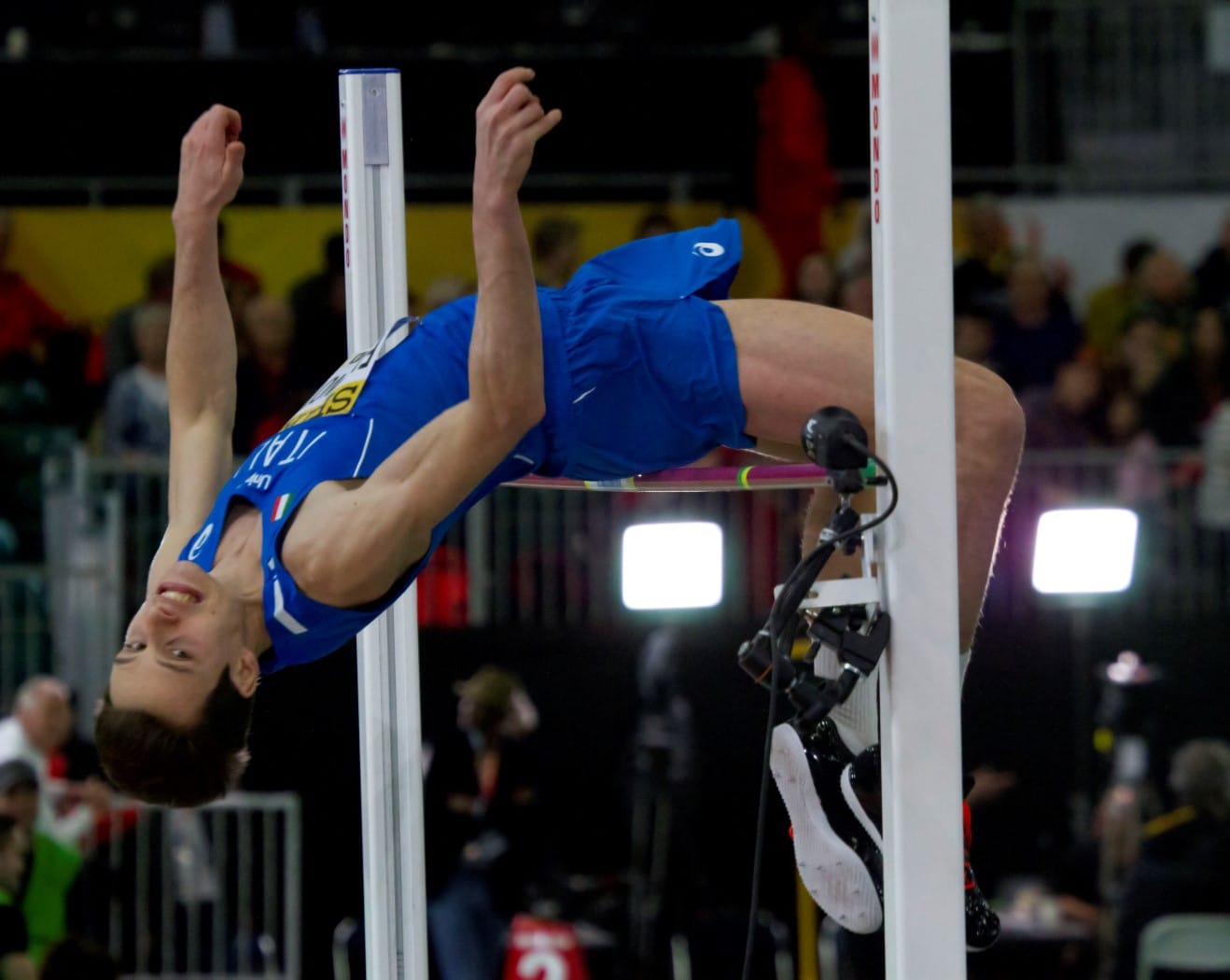
The night belonged to the home team. Leonardo Fabbri won the shot put with 22.14, putting both Joe Kovacs (21.87) and the world record holder Ryan Crouser (21.50) behind him. Andy Díaz, the Cuban-born Italian who is world indoor triple jump champion, took his third straight win at the meeting. And 20-year-old Matteo Sioli cleared 2.28 to become the first Italian ever to win the men's high jump at the Golden Gala — a fact that says less about Italian high jumping than about how deep the Gala's fields have always been. The one absence was Mattia Furlani, the Tokyo 2025 world long jump champion at just 20, sidelined by an injury picked up in Xiamen.
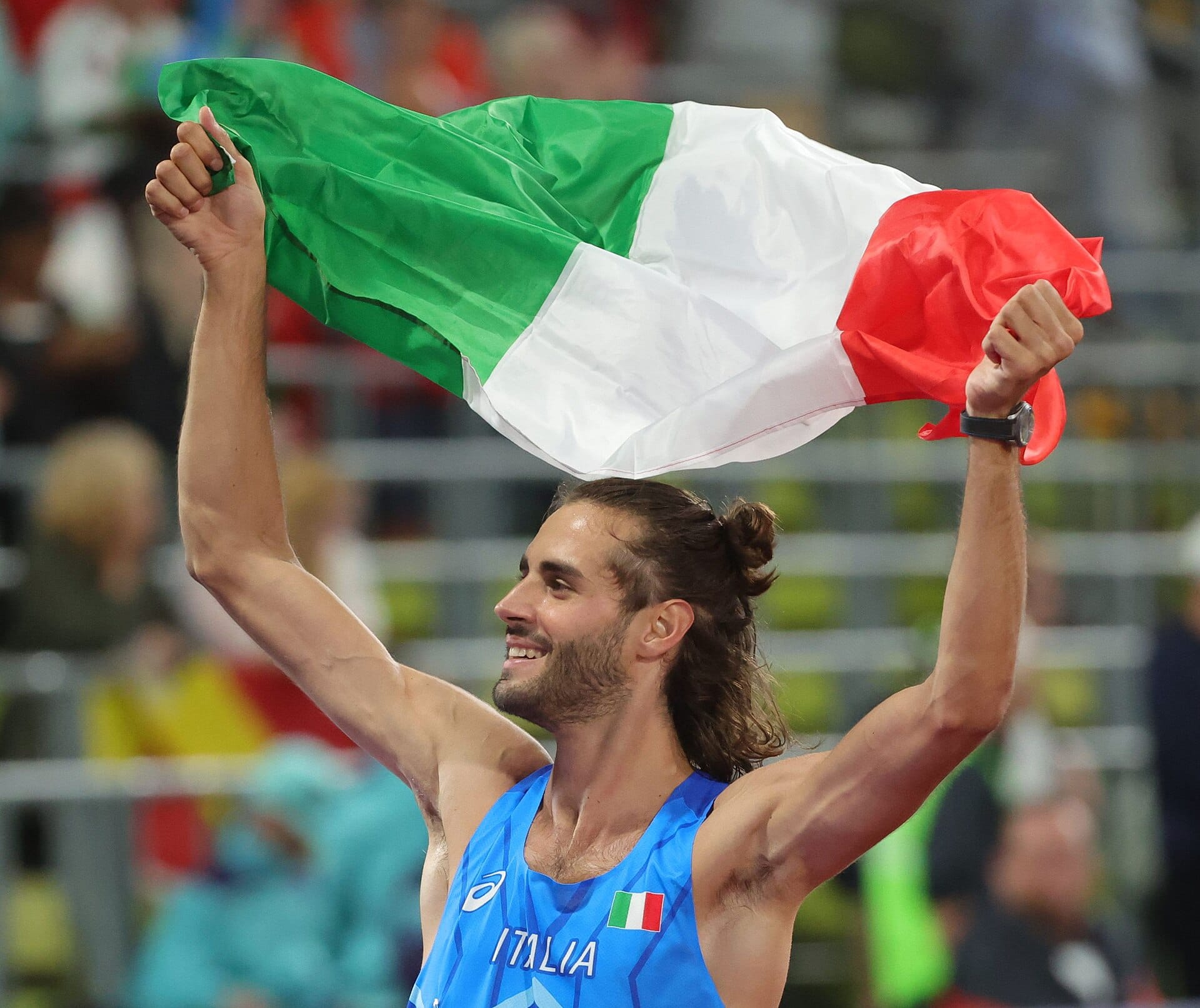
The name Sioli beat to that first is the measure of it. Gianmarco Tamberi never won the Gala's high jump — but at this same Stadio Olimpico in June 2024 he cleared 2.37 to take European gold in front of the home crowd, pulling springs out of his spikes to celebrate, a year after completing his set of titles as world champion in Budapest 2023. And he is not finished: on 13 September 2026, at 34, Tamberi cleared 2.37 again — a world lead — to win the first Ultimate Championship high jump title. The arc from Italy's quiet 2019 to all of this runs straight through the azzurri story.
Sponsor Kit, Club Colours
One rule sorts every competition we cover: championships are raced in federation kit, meetings in sponsor kit. A Diamond League night like the Gala is the second universe — contracted athletes in their brand's gear, not national colours. That is why this page points at the brand lines of the archive rather than at any federation rail.
Italy adds a third layer the rest of the circuit barely has: the military and club sports groups. Many Italian professionals are enrolled in corps like the Aeronautica Militare — Leonardo Fabbri, who won the Gala's shot put in 2026, is one of them — and their vests share Italian start lists with the sponsor kit. The Aeronautica Militare story covers that universe piece by piece.
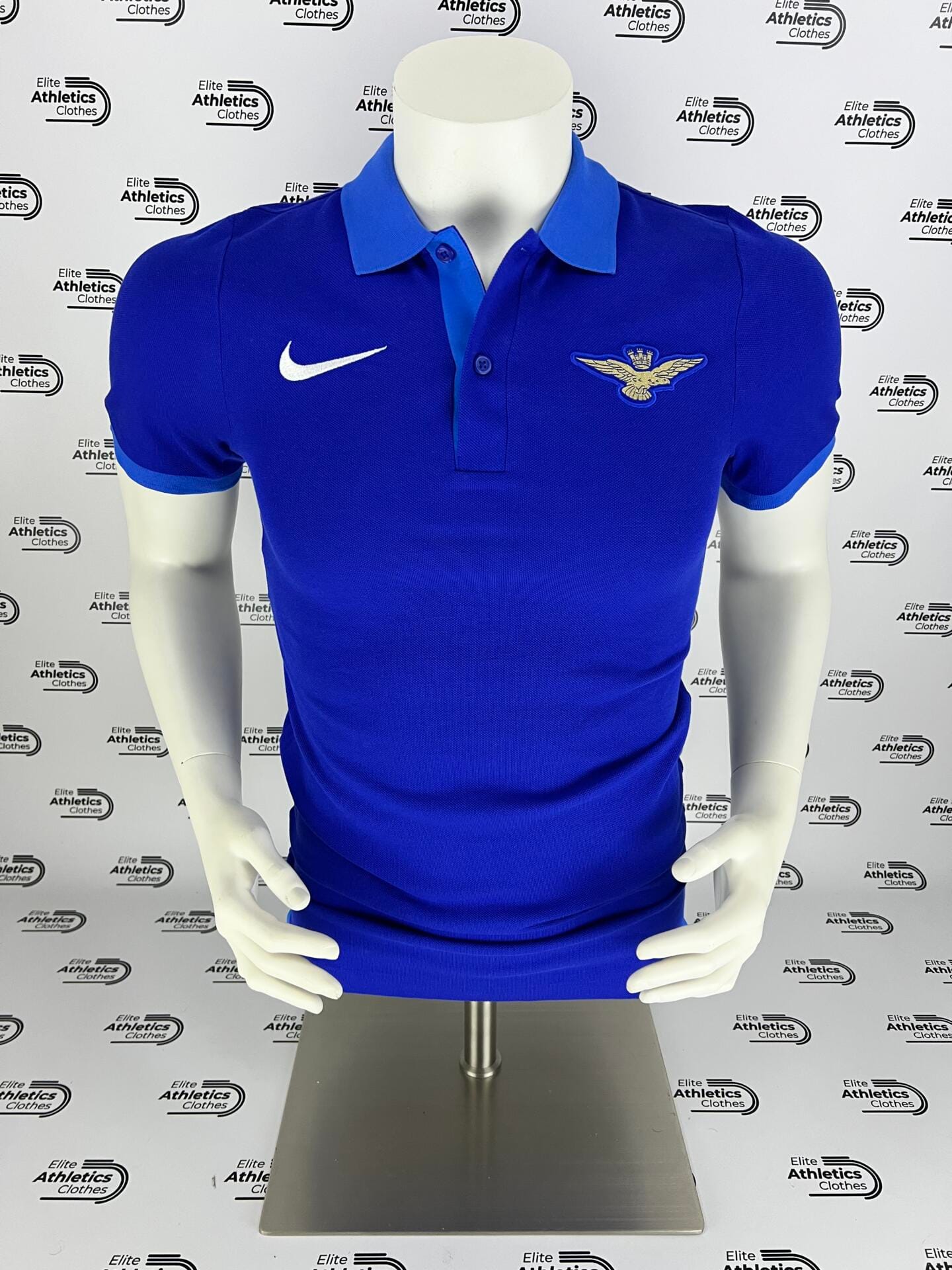 The Roman club line · in the archiveNike Aeronautica Militare Pro Elite PoloTeam-issue polo from the Aeronautica Militare line — the Rome-based military sports group whose shot putter won the Gala in 2026.100,00 €View piece →
The kits those meeting nights are raced in — Nike Pro Elite, adidas, the club lines — are exactly what the rail below holds, athlete-issued and never retail.
What a Roman Night Wears
Diamond League nights are raced in brand gear, and Rome adds its own club colours on top. One athlete-issued piece per line, from the same universe that takes the track at the Olimpico.
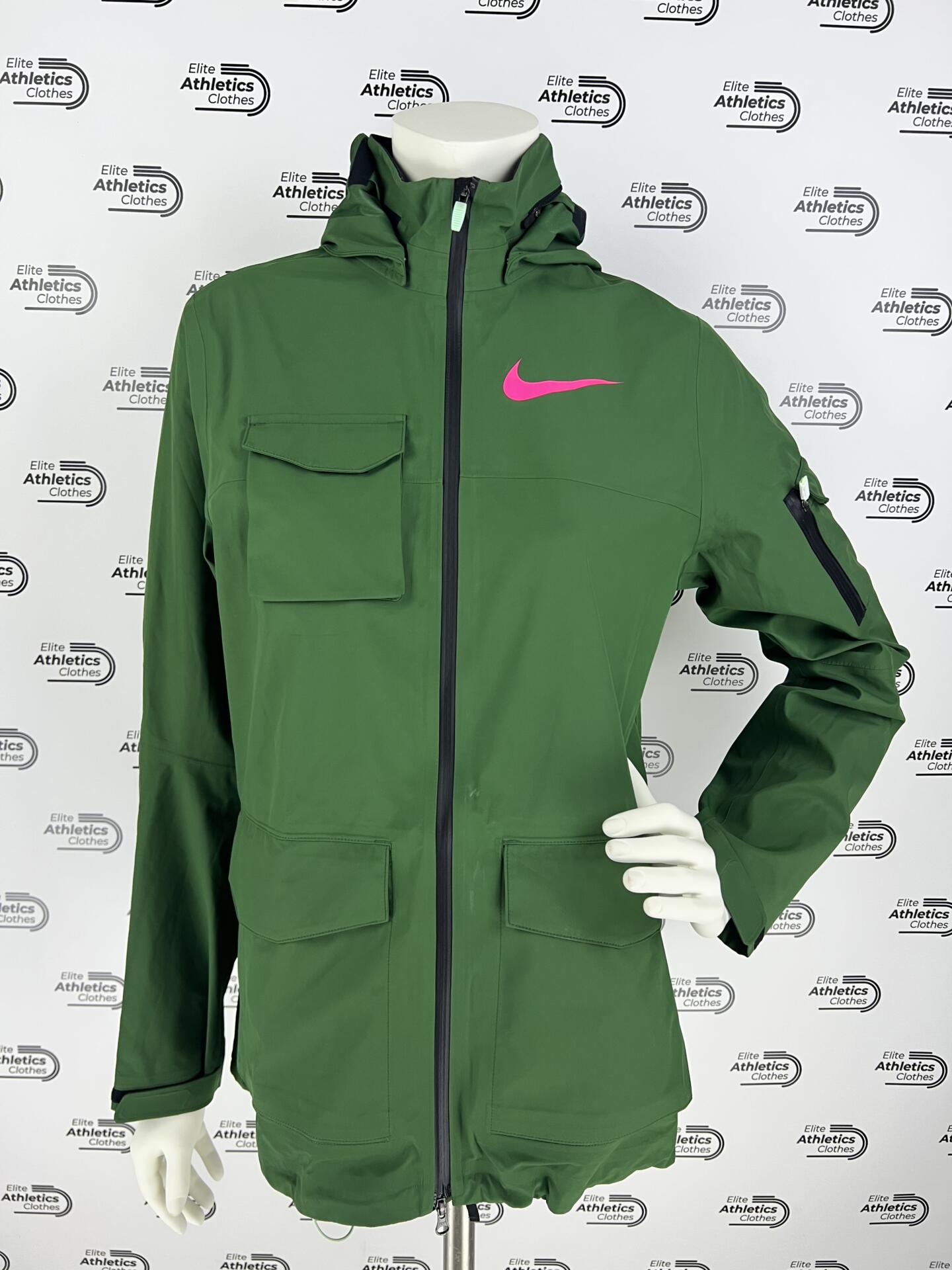 Nike Pro Elite 2023 Women Storm Fit Jacket150,00 €View Piece →adidas
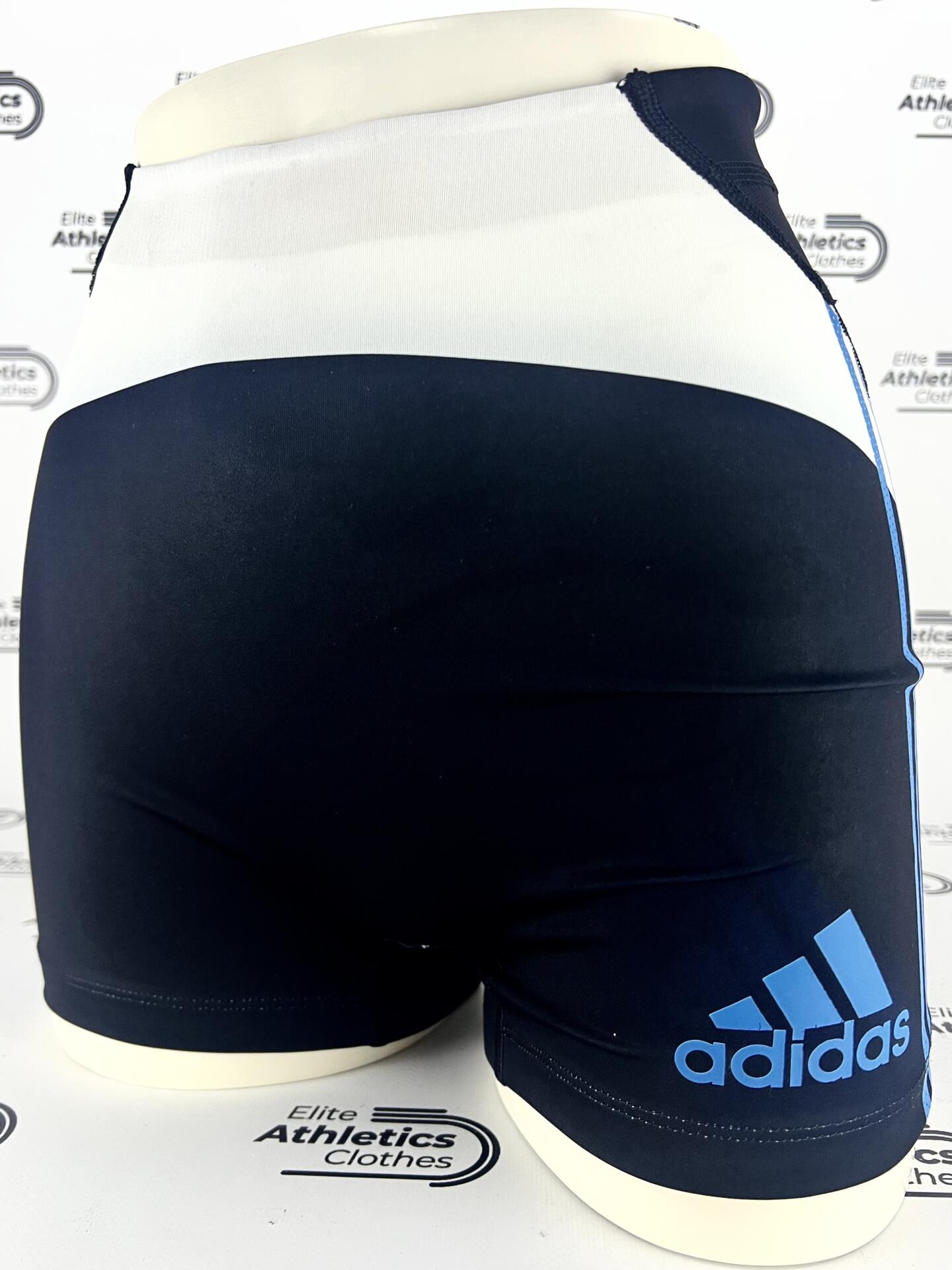 Adidas Pro Elite 2022 Women Booty Short Tights100,00 €View Piece →NN Running
 INEOS X Nike NN Running Team Pro Elite 2020/2021 Women T-Shirt150,00 €View Piece →Rosa & Co
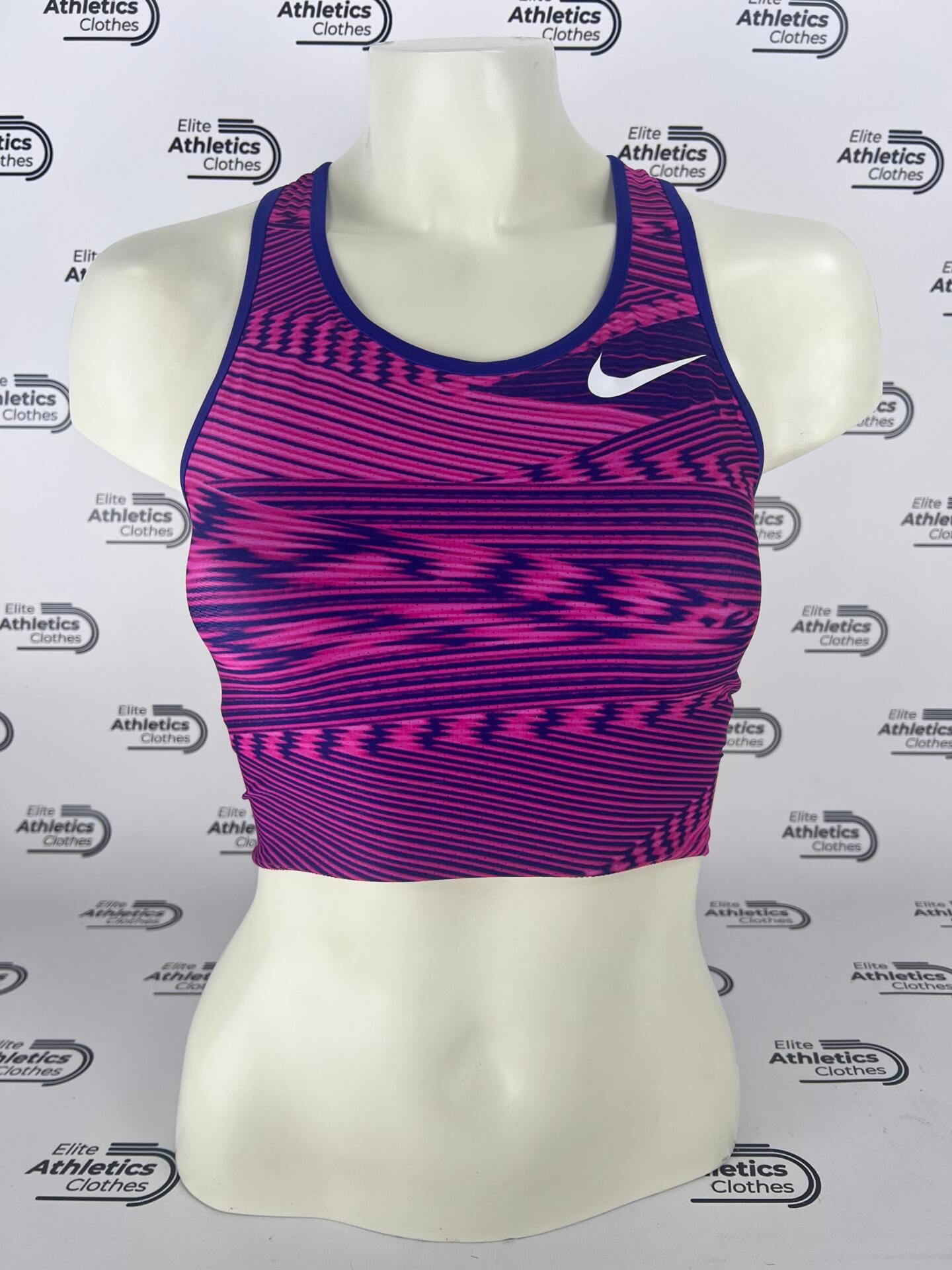 Nike Rosa & Co. Pro Elite 2019 Women Crop Top250,00 €View Piece →Asics
 Asics Actibreeze Distance Singlet100,00 €View Piece →On
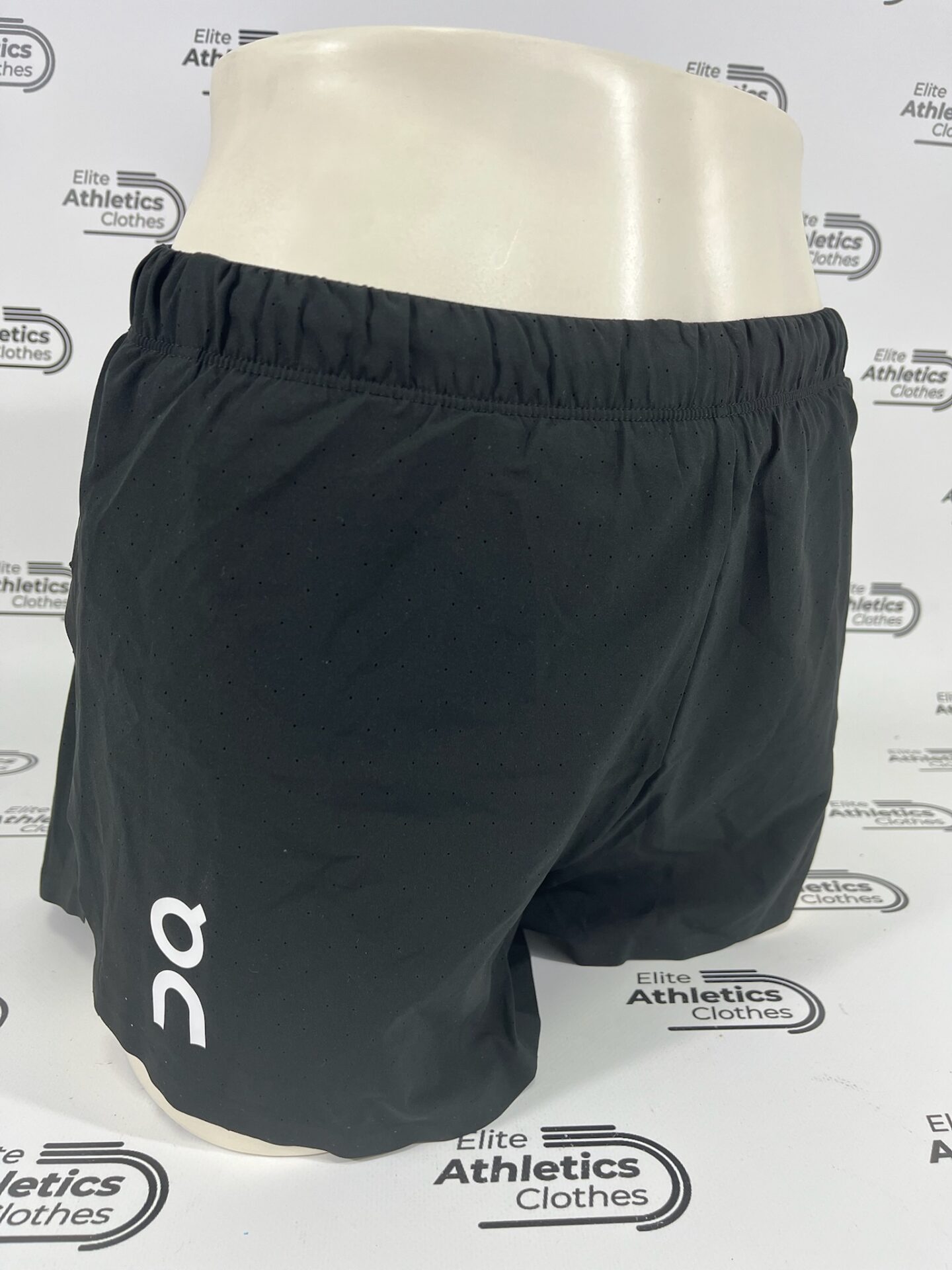 ON Running Pro Elite 2025 Women Black Racing Shorts120,00 €View Piece →Gold Medallist
 Nike Gold Medallist Pro Elite 2019 Women T-Shirt140,00 €View Piece →Aeronautica · Roma
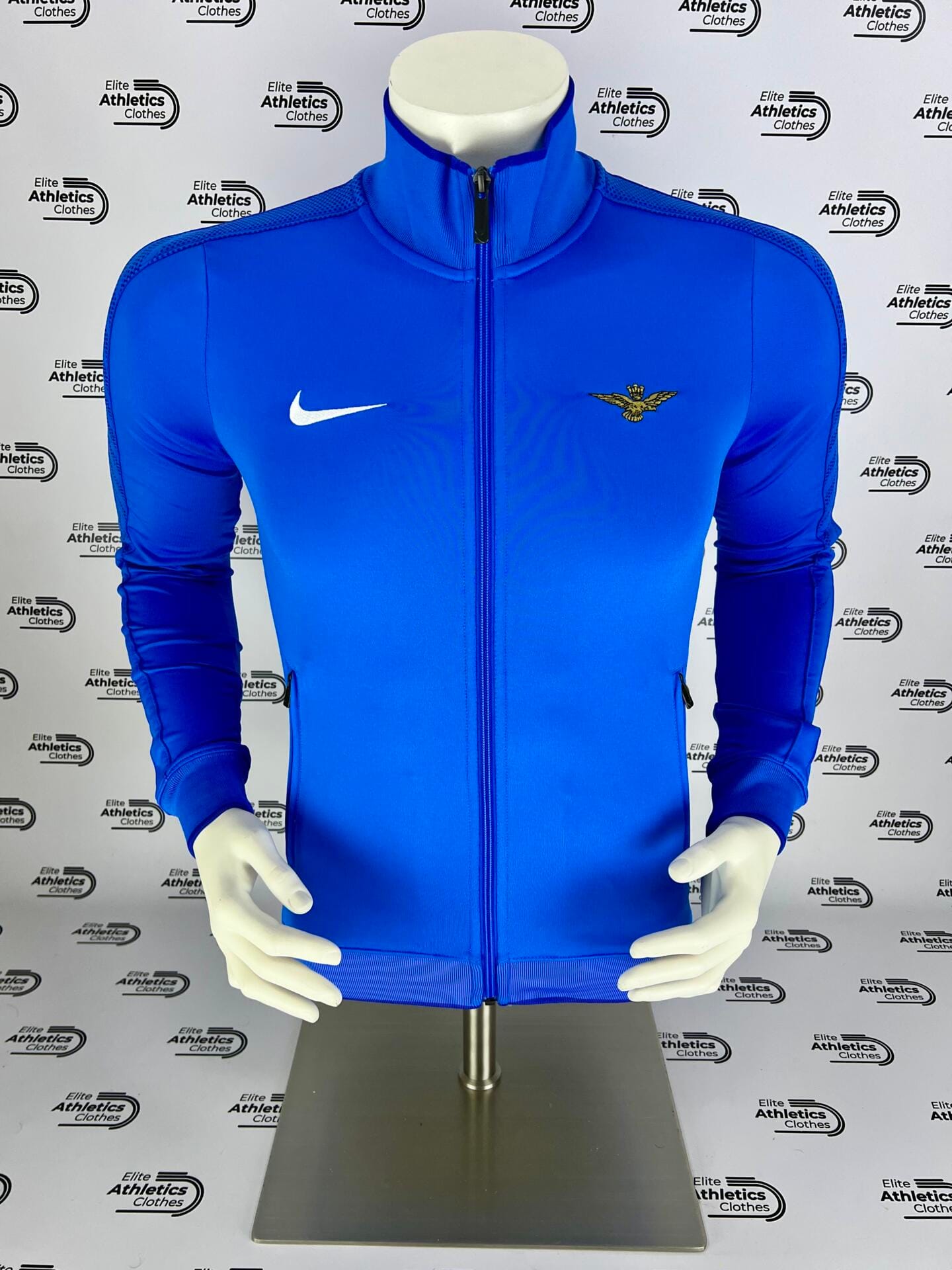 Nike Aeronautica Militare Pro Elite Jacket150,00 €View Piece →
What is the Golden Gala?
The Golden Gala Pietro Mennea is an invitational track and field meeting held in Rome, almost always at the Stadio Olimpico, since 5 August 1980. It was founded by Primo Nebiolo to reunite a sport split by the Moscow Olympic boycott, and it has been part of the Diamond League since the circuit was created in 2010. The 2026 meeting was its 46th edition.
Why is the Golden Gala named after Pietro Mennea?
Pietro Mennea, Italy's 1980 Olympic 200 m champion, won the 200 m at the very first Golden Gala in 20.01, days after his Moscow triumph. When he died in March 2013, the meeting was dedicated to him and officially became the Golden Gala Pietro Mennea. His 19.72 from 1979 is still the European 200 m record.
What world records have been set at the Golden Gala?
Nine, by the Italian federation's count: pole vault records by Vigneron (5.83 in 1983; 5.91 in 1984) and Bubka (5.94, minutes later that same 1984 night), Aouita's 12:58.39 — the first sub-13 5000 m — in 1987, Kiptanui's 12:55.30 in 1995, El Guerrouj's 3:26.00 (1500 m, 1998, still the record) and 3:43.13 (mile, 1999), Hattestad's 68.22 javelin in 2000 and Isinbayeva's 5.03 vault in 2008. Duplantis added the highest outdoor vault in history at the time — 6.15 — in the empty stadium of 2020.
Has the Golden Gala always been held in Rome?
Almost. Forty-one of its 46 editions have run at Rome's Stadio Olimpico. The meeting moved to Verona in 1988, Pescara in 1989 and Bologna in 1990 while the stadium was rebuilt for the 1990 football World Cup, and to Florence's Stadio Ridolfi in 2021 and 2023. In 1981 there was no Golden Gala at all: the IAAF World Cup took the stadium that year.
Sources and References
- World Athletics — Golden Gala's glorious history — the 1980 founding, the 60,000 crowd, Mennea's 20.01 and the record nights
- FIDAL — Golden Gala story: 9 record del mondo (più uno) — the official list of the meeting's nine world records, plus the 2020 asterisk
- Wikipedia — Golden Gala — the 1981 World Cup gap and the Verona, Pescara, Bologna and Florence editions
- World Athletics — Duplantis scales 6.15m in Rome — the 17 September 2020 night behind closed doors
- World Athletics Heritage — El Guerrouj's 1500m record — the 14 July 1998 record, still unbeaten
- European Athletics — Mennea's long-standing European 200m record — the 19.72 as the continental mark
- Olympics.com — Rome Diamond League 2026 results — Lyles, Alfred, Fabbri, Jacobs and the 4 June results
- OA Sport — Sioli wins the Golden Gala high jump — the 2.28 and the first Italian men's high jump win at the meeting
- World Athletics — Tamberi wins Ultimate high jump in Budapest — the 2.37 world lead of 13 September 2026