
European
Championships
Track and field's oldest continental title: 27 editions from Turin 1934 to Birmingham 2026, a women's championships that started in a different city, a merger in Oslo — and a modern era decided by hundredths and thousandths.
The European Athletics Championships is the continental championships of European track and field, first held in Turin in 1934 — 49 years before the sport had a world championships. It has run 27 editions, every two years since 2010, and Birmingham 2026 was the first ever staged in Britain: 1,645 athletes from 49 nations, with Italy topping the medal table — 10 gold, 6 silver, 6 bronze — for the second edition in a row.
The history has real seams in it: a women's championships that began in a separate city in 1938, a merger at Oslo in 1946, a cadence that doubled in 2010, one edition lost to the pandemic — and, in 2026, a team title decided by 0.03 seconds in the last final. All of it raced in national federation kit, the universe our archive collects.
Part of our Competition Files — one competition at a time, explained. The kits behind the championships live in the Pro Elite archive. Jump to the federation kits or start with the nation on top of the table.
- What it is
- The continental championships of European athletics — the oldest continental title in the sport
- First edition
- Turin, 7–9 September 1934 — 23 nations, men only
- Women's events
- From Vienna 1938, held in a separate city; men and women combined since Oslo 1946
- How often
- Every four years after the war (except 1969/1971); every two years since 2010
- Editions
- 27 through Birmingham 2026 — the first ever held in Britain; Paris 2020 was cancelled outright
- Latest table
- Italy: 10-6-6 (22 medals) at Birmingham 2026, its second win running — sealed by 0.03 s in the last relay
- Most decorated
- Dina Asher-Smith, 11 medals (8 gold); Matthew Hudson-Smith leads the men with 9
- The kit rule
- A championships, so federation kit: every athlete competes in national team colours
Older Than the Worlds by Half a Century
When 23 nations sent their men to Turin on 7–9 September 1934, there was no world championships in athletics and there would not be one for another 49 years. The Olympics came round every four summers, and that was the entire global calendar. So Europe built its own title — the first continental championships in the sport — and in doing so invented the habit that the rest of the world would copy: a standalone meet where the continent's best race each other for a title, not a ranking.
The first star was the home one. Luigi Beccali, the reigning Olympic 1500 m champion from Los Angeles 1932, won the metric mile in 3:54.6 — the first European title ever won by an Italian. Ninety-two years later, that fact reads like a prophecy: Italy has finished on top of the medal table at the last two editions. The full line from Turin to today runs through our history of Italian athletics, and the championships the world eventually built in 1983 has its own page in this series.
Two Championships Before There Was One
The second edition, in 1938, is the strangest entry in the whole record book: it happened in two cities, two weeks apart. The men stayed in Paris, at the Stade de Colombes that had hosted the 1924 Olympics, from 3 to 5 September. The first women's European events in history were held separately, at the Praterstadion in Vienna, on 17 and 18 September — in a city that had been annexed into Germany six months earlier. It remains the only edition ever split between venues, and the last before the war shut the championships down entirely.
When the event returned, at Oslo's Bislett Stadion from 22 to 25 August 1946, it returned as one meet: men and women in the same stadium, on the same days, for the first time. The star of that first combined edition was Fanny Blankers-Koen, who won the 80 m hurdles and anchored the Dutch 4×100 relay to gold — two years before she made history with four golds at the London Olympics. Every European Championships since has run on the shape Oslo set.
Hover or tab on any node for the detail. Sources: European Athletics and the edition records listed under Sources below. Verified September 2026.
The editions the chart marks, in one table
| Edition | Host | Why it matters |
|---|---|---|
| 1934 | Turin | First edition — 23 nations, men only |
| 1938 | Paris (men) & Vienna (women) | First women's events; the only split-venue edition |
| 1946 | Oslo | First combined championships, at Bislett |
| 1969 & 1971 | Athens & Helsinki | The only break in the four-year rhythm |
| 2010 | Barcelona | First of the two-year era (decision of 9 Nov 2009) |
| 2020 | Paris | Cancelled in April 2020; never rescheduled |
| 2022 | Munich | Second and final edition inside the multi-sport European Championships |
| 2024 | Rome | Italy tops the table at home: 24 medals (11-9-4) |
| 2026 | Birmingham | 27th edition; first in Britain; Italy again, by 0.03 s in the last relay |
A Four-Year Habit That Doubled Its Pace
For six decades after the war the championships kept Olympic time: one edition every four years, with a single wobble — Athens 1969 and Helsinki 1971 — before the pattern locked back in. The big change came on 9 November 2009, when the European Athletics Congress voted to double the pace. Barcelona 2010 opened the new era and Helsinki 2012 began the regular two-year cycle that still runs today: a European title is now on the line in every even year.
The modern calendar has two asterisks. Paris 2020, scheduled for the Stade Charléty in late August, was cancelled outright in April 2020 as the pandemic closed the season — and never rescheduled, because Munich already held the 2022 slot. And for two editions the athletics championships raced inside a bigger wrapper: the multi-sport “European Championships” that pooled athletics with cycling, rowing and more — Berlin in 2018, with the other sports in Glasgow, and Munich in 2022, the second and final edition of that experiment. Since Rome 2024 the athletics championships stands alone again.
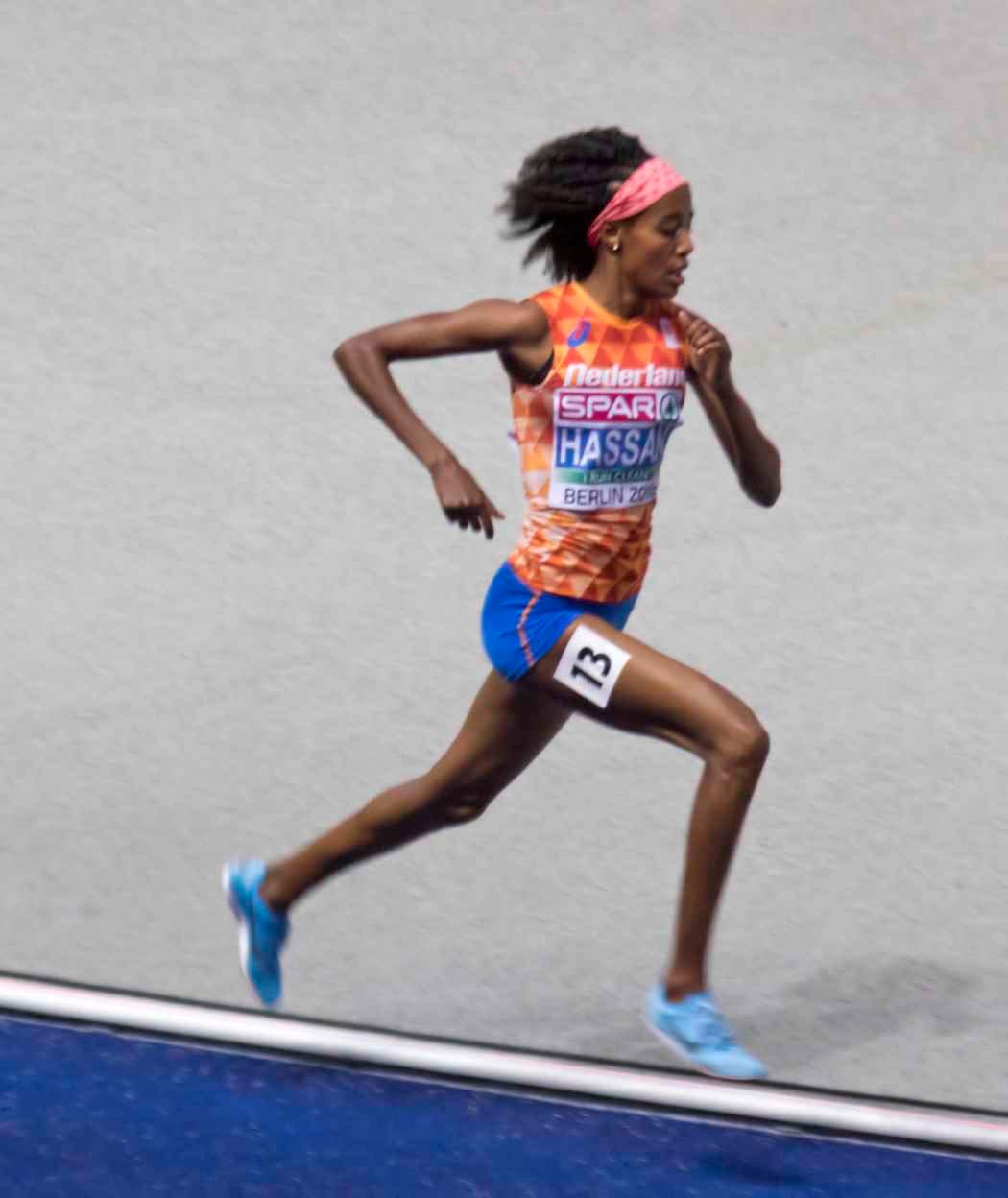
Home Crowds and Thousandths: The Modern Editions
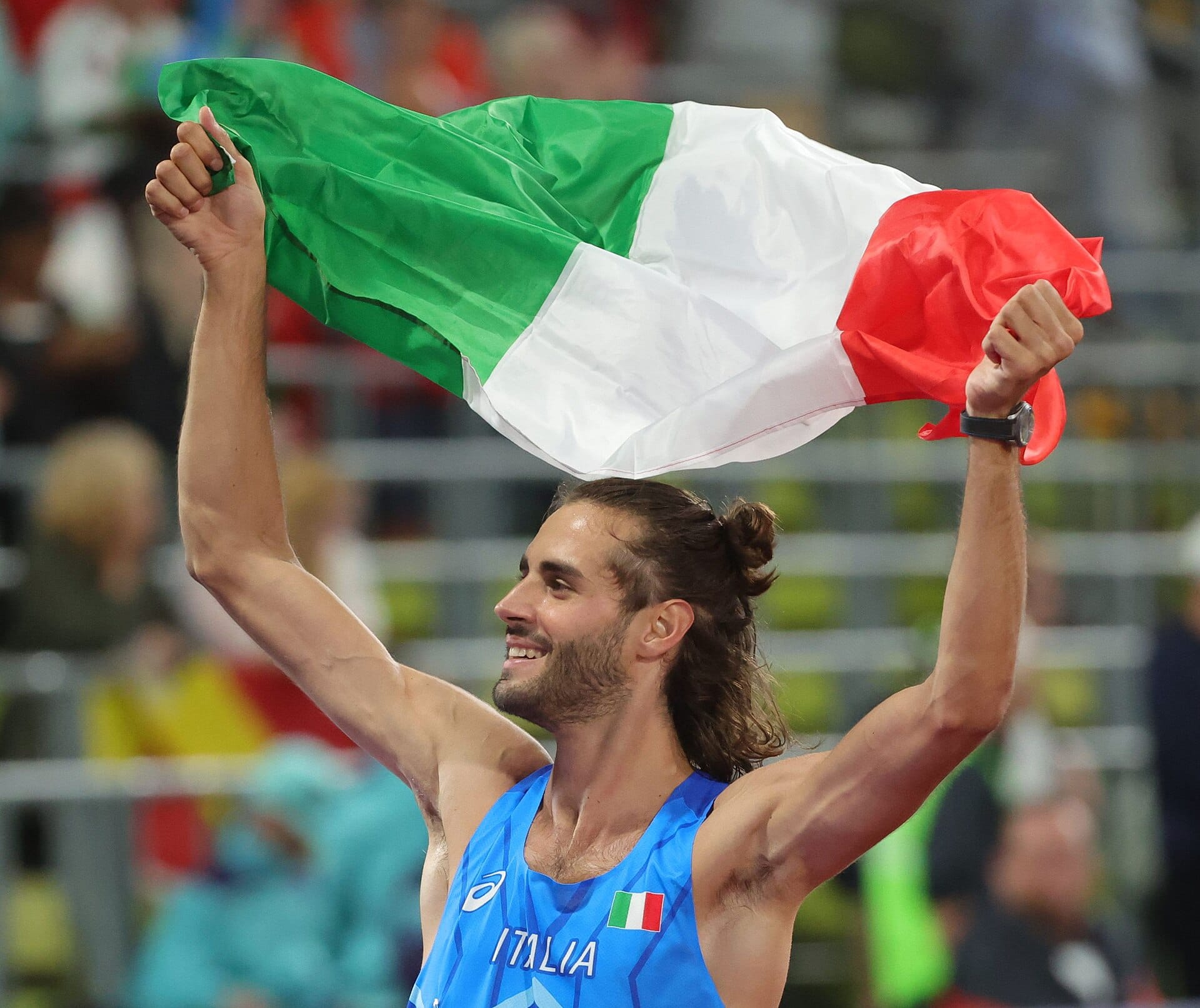
The two-year rhythm has produced a run of home-crowd stories. Munich 2022 belonged to Germany: 16 medals and top of the athletics table in a packed Olympiastadion — our Germany 2022 season post walks through all seven golds. Rome 2024 belonged to Italy on another scale entirely: 24 medals — 11 gold, 9 silver, 4 bronze — the country's best European haul ever, with Gianmarco Tamberi clearing a championship-record 2.37 on his first attempt in the high jump. France banked 16 medals in that same Rome week, and Ireland had the finest championships in its history — both stories told in our France 2024–25 post and the Ireland hub.
Birmingham 2026 — the 27th edition, and the first ever held in Britain — distilled the whole event into one week at the Alexander Stadium: 1,645 athletes from 49 nations, 10–16 August. The team race came down to the final baton. Italy needed the last final of the championships, the men's 4×400, to overhaul the hosts — Lorenzo Benati held off Charlie Dobson by 0.03 seconds, 2:59.16 to 2:59.19 — and finished on top of the table for the second edition running: 10 gold, 6 silver, 6 bronze against Britain's 9 golds and 19 medals. The full stories of British and Spanish athletics at these championships live in their own hubs.
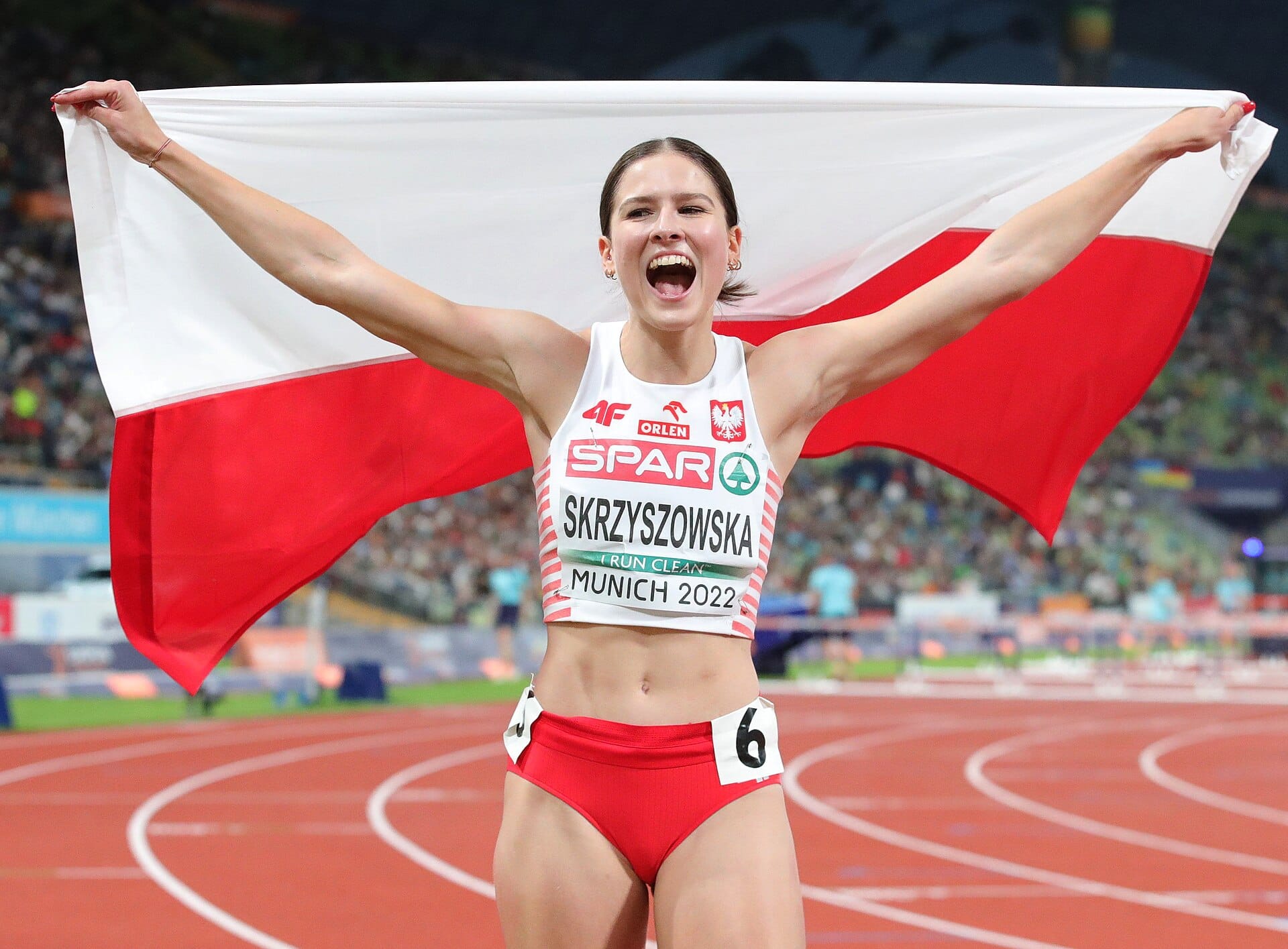
The record book got rewritten anyway. Amy Hunt became the first athlete to win four golds at a single edition — 100 m, 200 m, the women's 4×100 and a mixed 4×100 taken in a European record 39.97. Dina Asher-Smith's gold in that same mixed relay made her the most decorated athlete in the history of the championships, with 11 medals and 8 golds; Matthew Hudson-Smith's relay silver made him the most decorated man, with nine. Armand Duplantis won a fourth consecutive pole vault title with a championship-record 6.15 on the final night, and Karsten Warholm and Tamberi joined him on four titles. And Poland went home with eight medals, seven of them won by women — including a 100 m hurdles final lost by two thousandths of a second — a week our Poland 2026 post covers walk by walk and hurdle by hurdle.
Federation Kit, Not Sponsor Kit
The house rule of this series sorts every competition into one of two universes, and the European Championships sits firmly in the first: it is a federation-kit event. In Turin in 1934 and in Birmingham in 2026 alike, every athlete on the start line wore national team colours — the Joma of Spain and Italy, the Nike of Great Britain and Germany, the 4F of Poland, the adidas of France. At a Diamond League meeting those same athletes race in their sponsors' gear; at a European Championships the federation dresses everyone.
Reading any competition: championships mean federation kit, leagues and meetings mean sponsor kit. Ninety-two years of European Championships means ninety-two years of national team uniforms — and the athlete-issued versions of those uniforms are exactly what the Pro Elite archive collects.
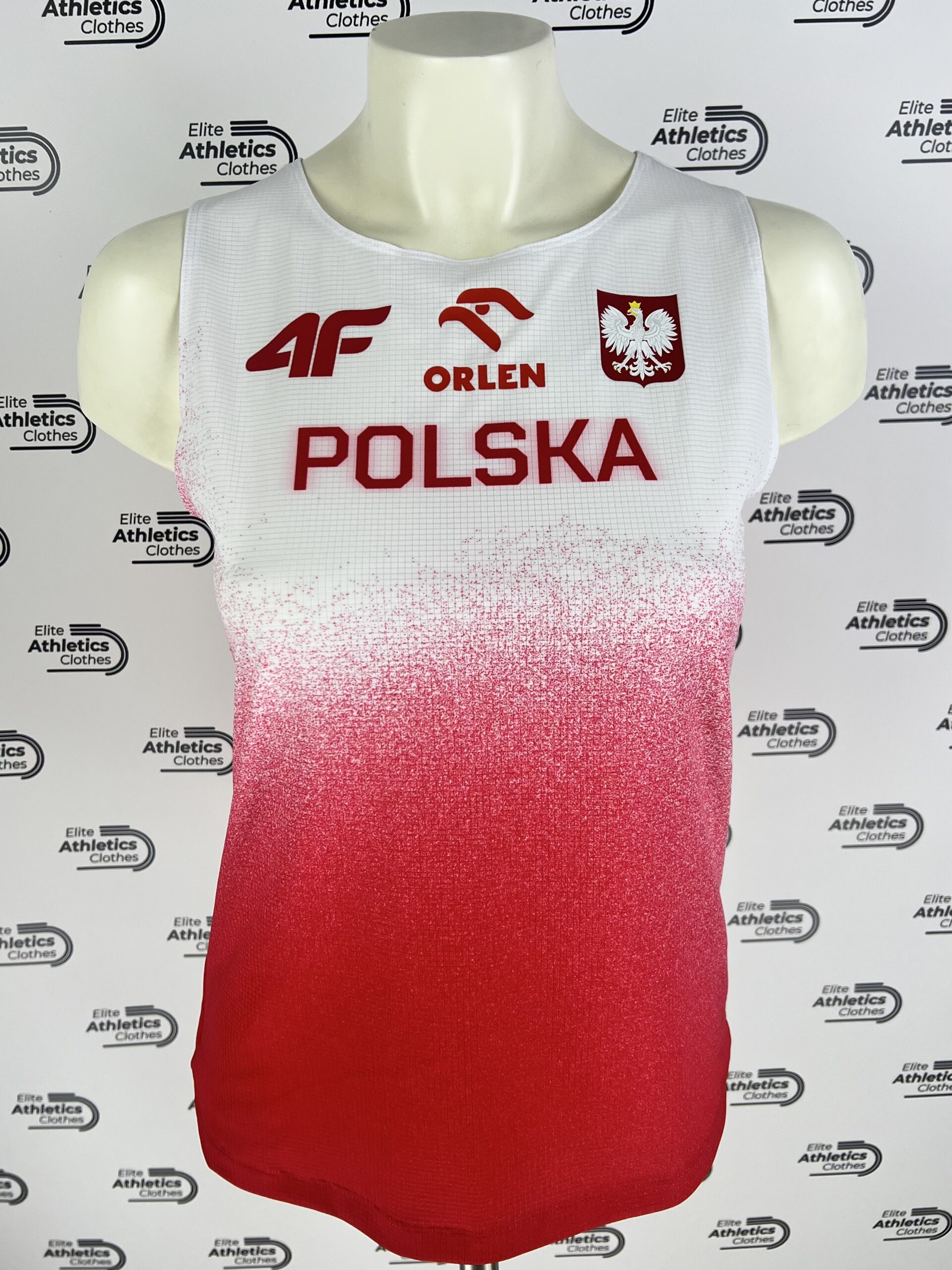 Federation kit · in the archive4F Poland International Team Pro Elite 2026 Women Distance Singlet4F Poland women's distance singlet marked for 2026 — team-issue federation kit from the season Poland's women carried seven of the country's eight Birmingham medals.160,00 €View piece →
That is why the rail below is organised by nation, not by brand: one athlete-issued federation piece per country, from eight of the federations that took the track in Birmingham. The deeper stories — who supplies each federation, since when, and how the kits changed — live in the country hubs, from Italy to Poland.
Championship Colours
Ninety-two years of European Championships have been raced in national team kit. These are athlete-issued federation pieces from the archive — one per nation, eight of the federations that lined up in Birmingham.
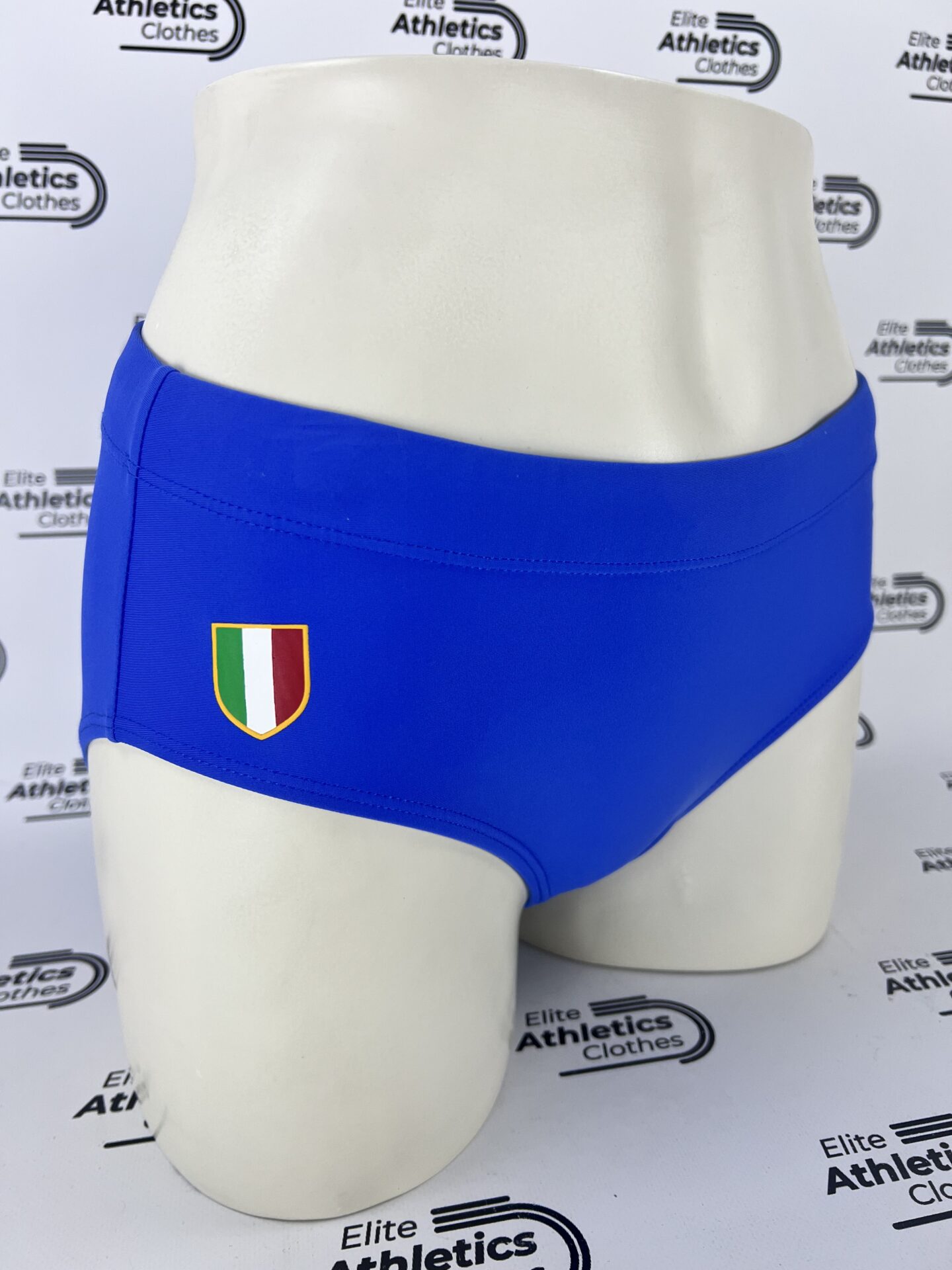 Joma Italy Pro Elite 2023 Competition Briefs90,00 €View Piece →Great Britain
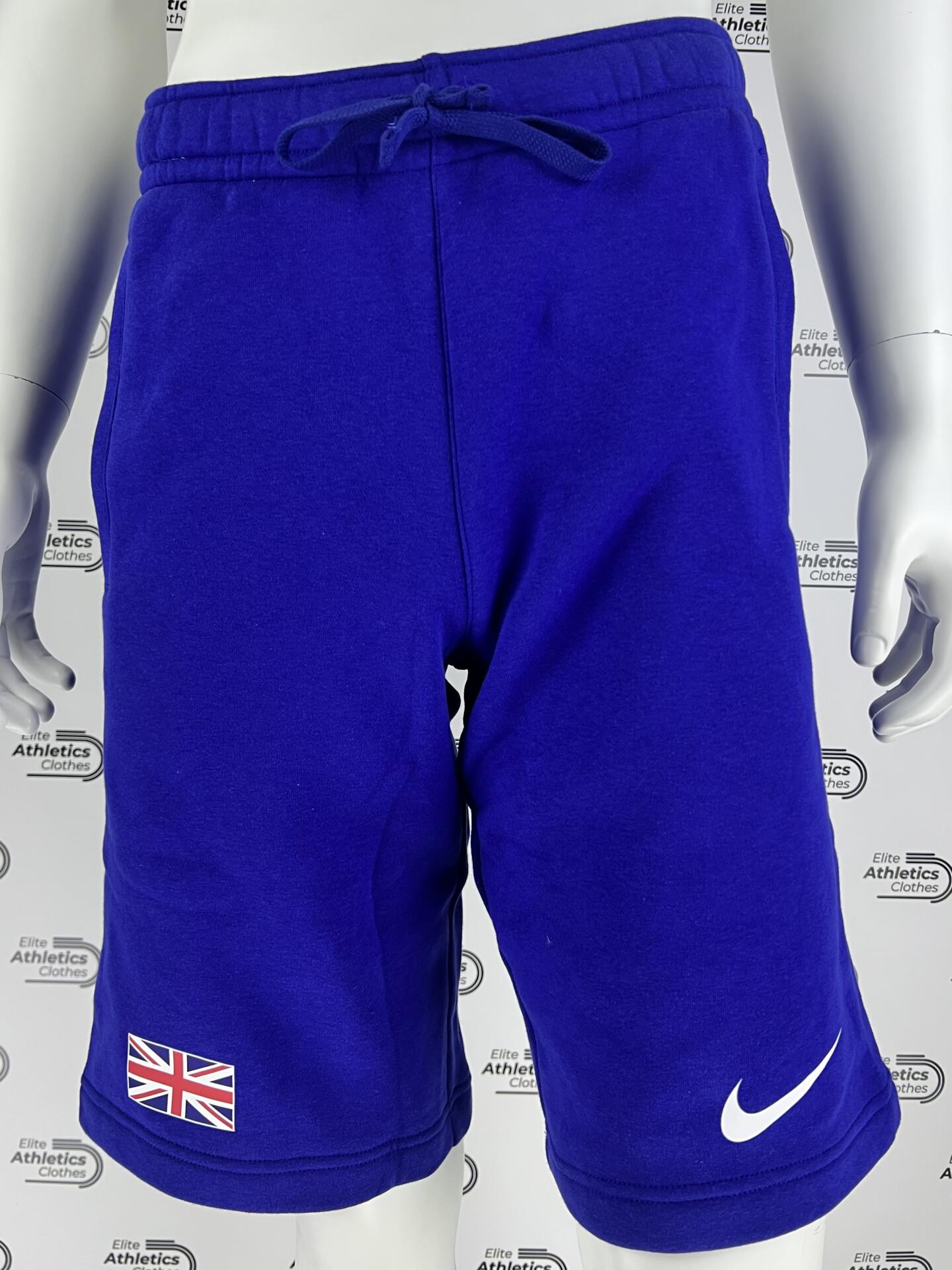 Nike Great Britain Pro Elite 2019 Cotton Short Pants50,00 €View Piece →Germany
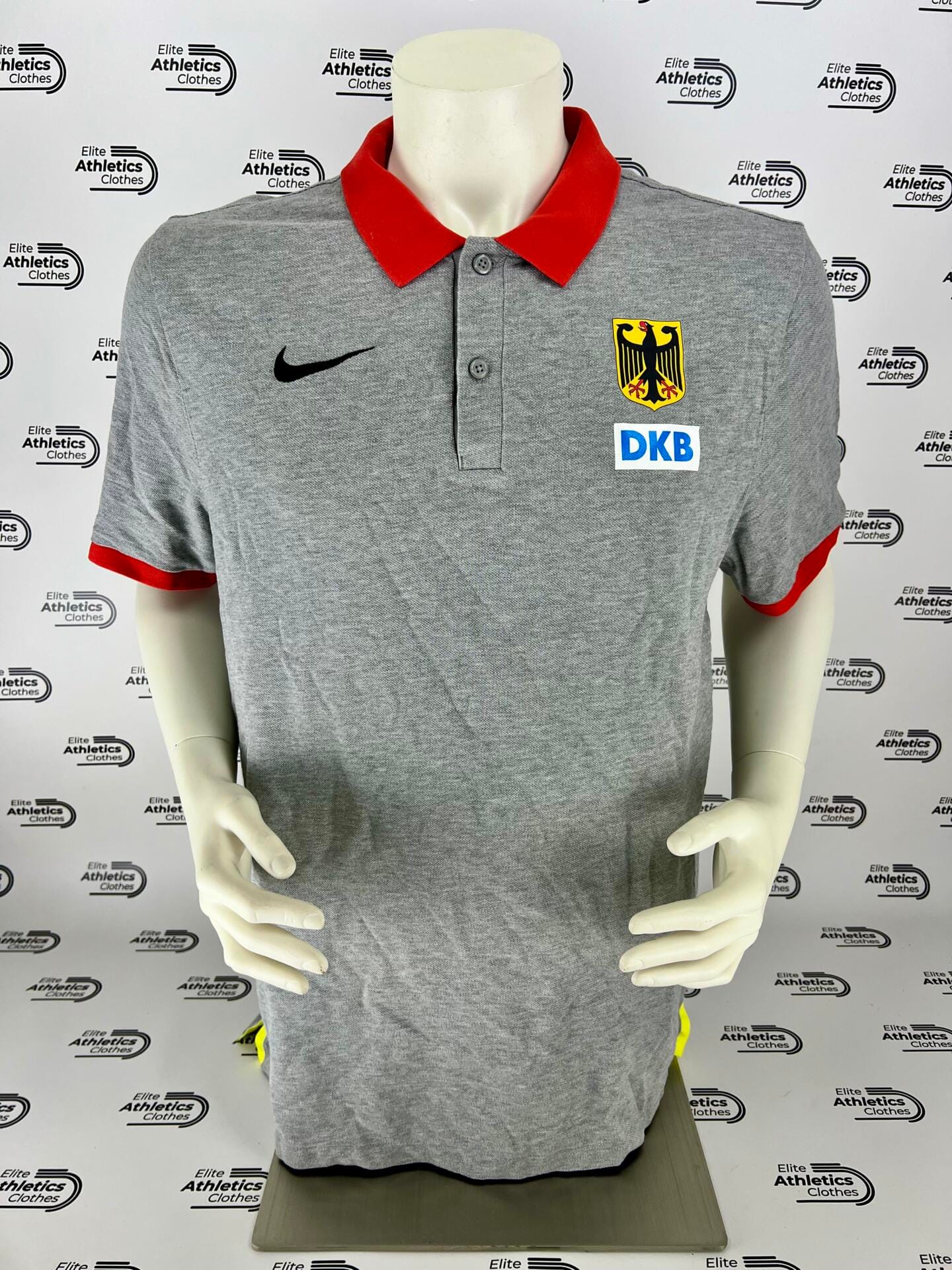 Nike Germany International Team Pro Elite 2019 Polo Shirt70,00 €View Piece →France
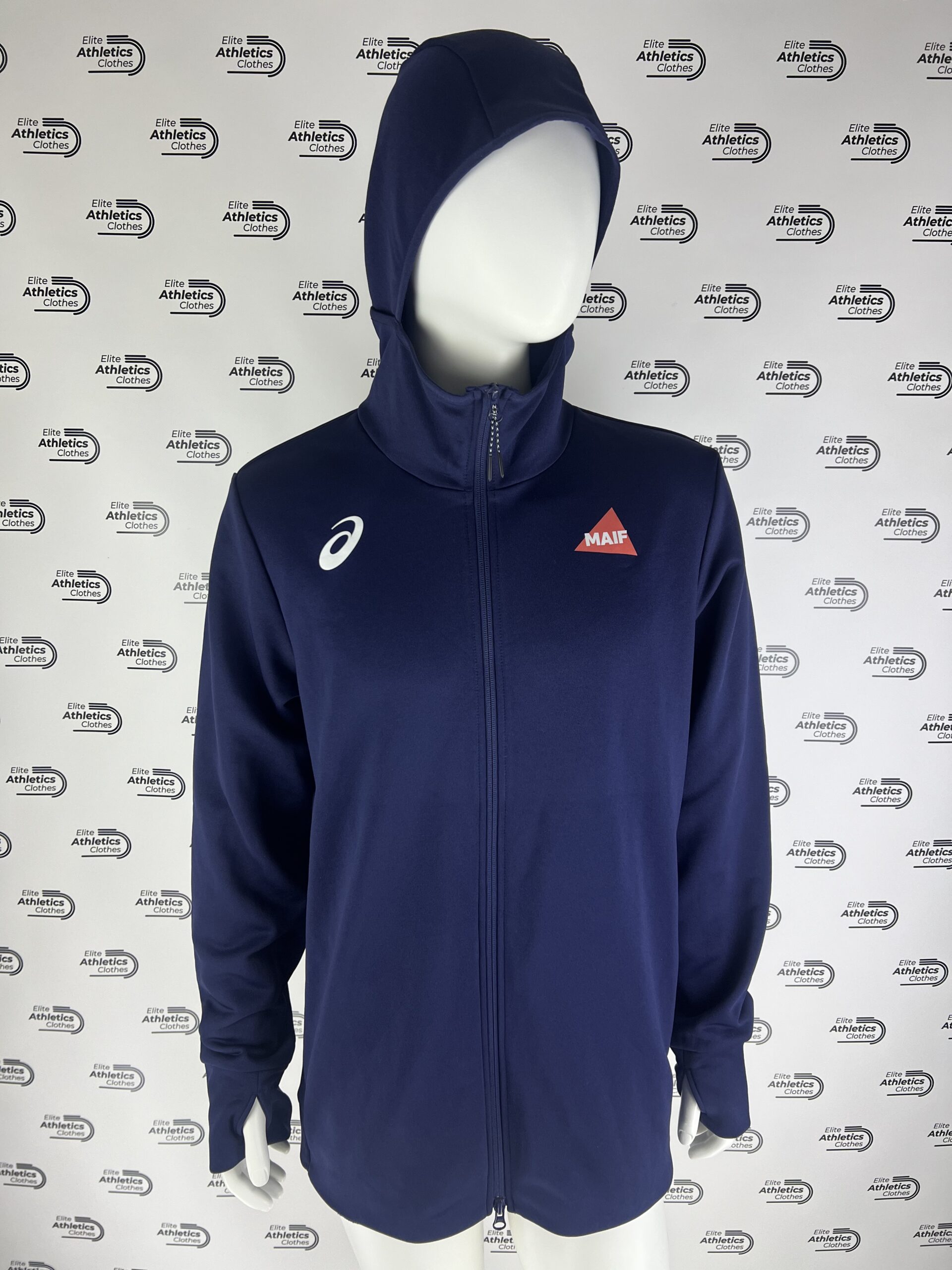 Asics France International Team Pro Elite 2021 Hoodie Jacket120,00 €View Piece →Netherlands
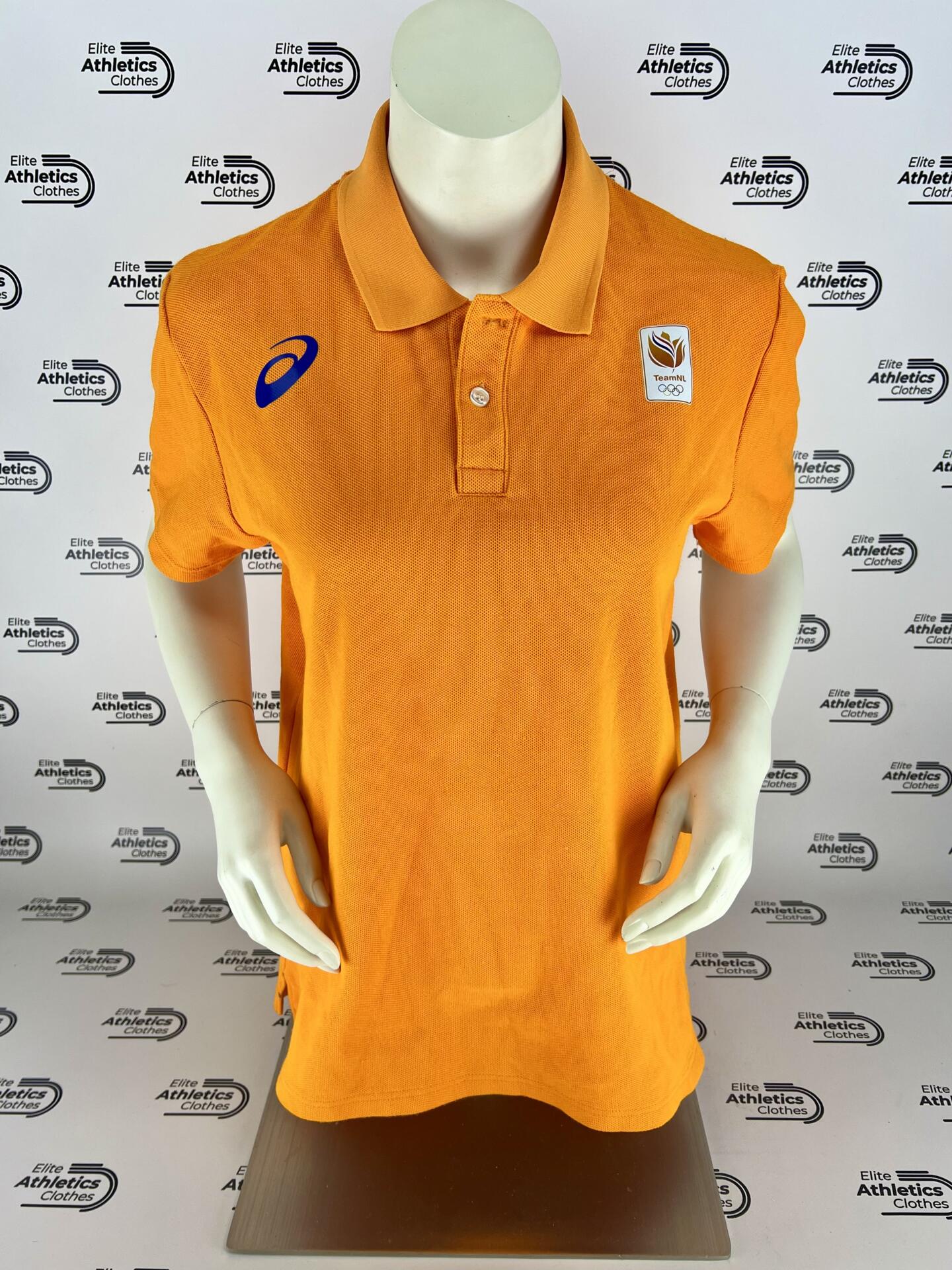 Asics Netherlands International Team Pro Elite 2018 Women Polo Shirt60,00 €View Piece →Spain
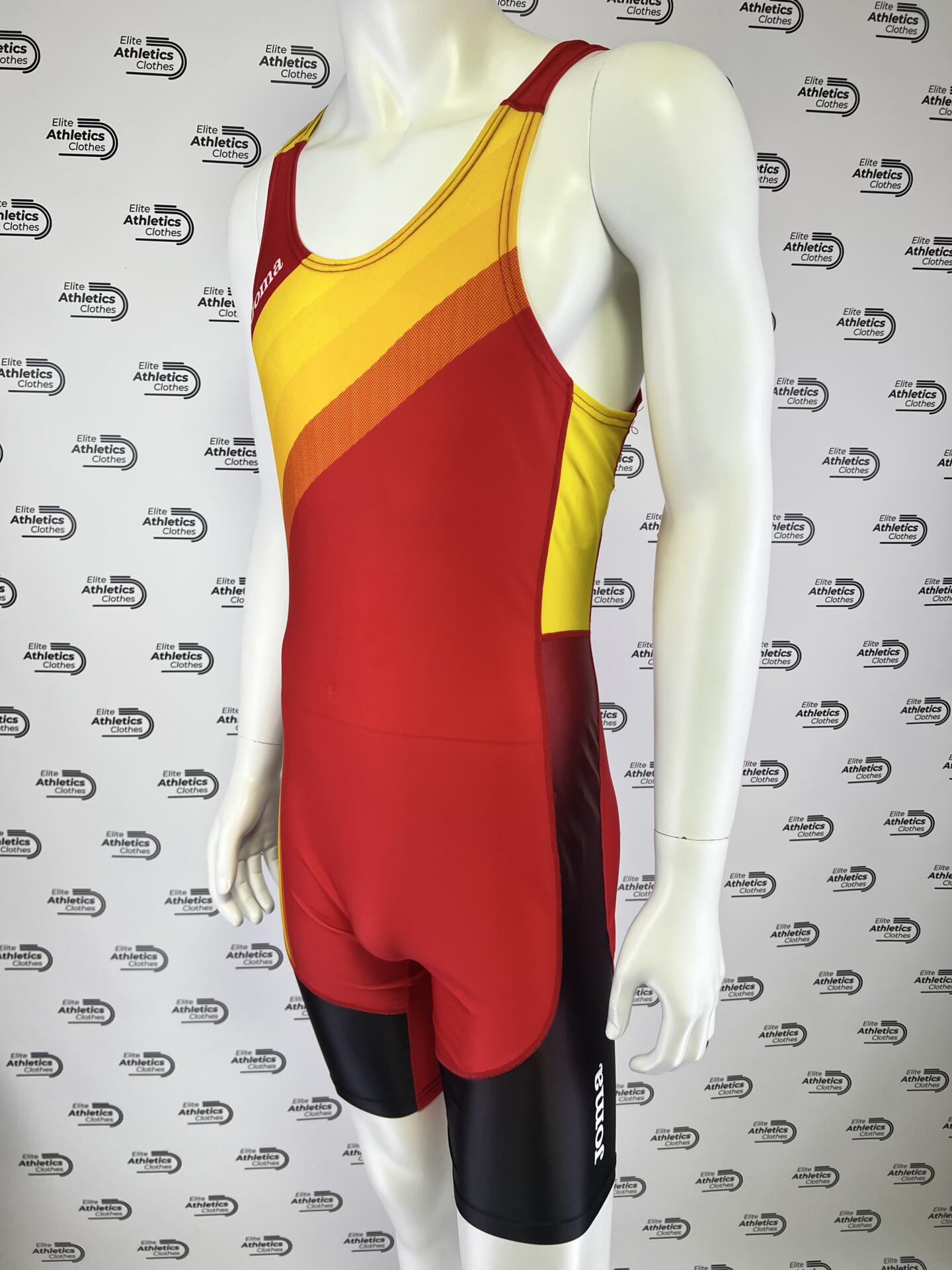 Joma Spain Pro Elite Team 2018 Speedsuit100,00 €View Piece →Ireland
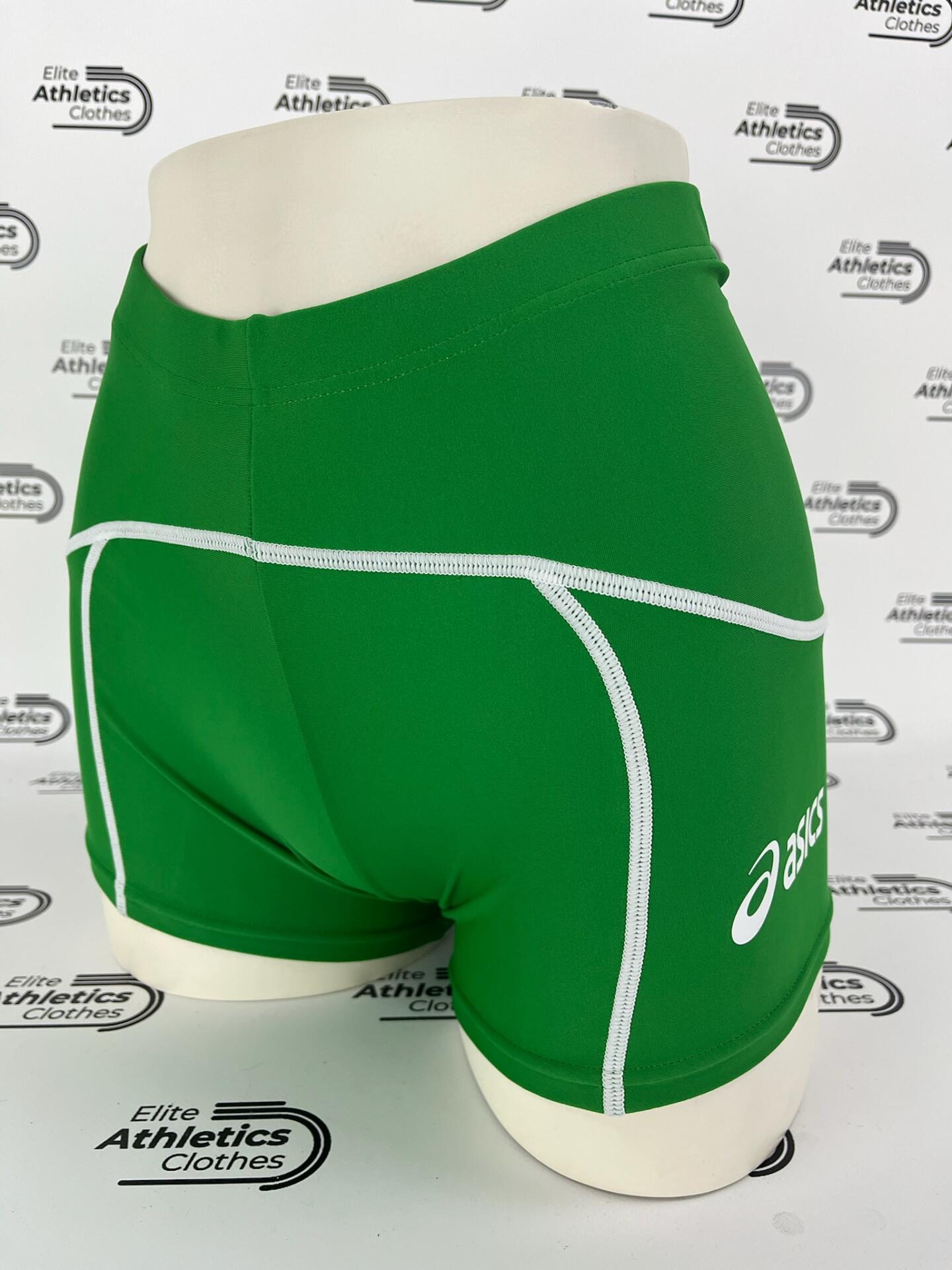 Asics Ireland Pro Elite 2012 Women Booty Short Tights60,00 €View Piece →Poland4F Poland International Team Pro Elite 2026 Women Distance Singlet160,00 €View Piece →
What is the European Athletics Championships?
It is the continental championships of European track and field, organised by European Athletics — the oldest continental title in the sport. First held in Turin in 1934 with 23 nations and men only, it has run 27 editions and has been held every two years since 2010. Birmingham 2026, with 1,645 athletes from 49 nations, was the first edition ever staged in Britain.
When did women first compete at the European Championships?
In 1938 — but in a different city from the men. The men competed in Paris on 3–5 September and the first women's events were held at the Praterstadion in Vienna on 17 and 18 September, the only time the championships was split between venues. Men and women have competed together since the Oslo edition of 1946, where Fanny Blankers-Koen won two golds.
Who has won the most medals at the European Athletics Championships?
As of Birmingham 2026, Dina Asher-Smith is the most decorated athlete in the history of the championships with 11 medals, eight of them gold. Matthew Hudson-Smith leads the men with nine medals. At a single edition the record is Amy Hunt's four golds, set in Birmingham in 2026.
Who won the last European Athletics Championships?
Italy topped the medal table at Birmingham 2026 with 10 gold, 6 silver and 6 bronze — 22 medals in all — ahead of Great Britain's 9 golds and 19 medals. The team race was decided in the final event, the men's 4×400 relay, which Italy won by 0.03 seconds, 2:59.16 to 2:59.19. It was Italy's second consecutive win after Rome 2024.
Sources and References
- Wikipedia — European Athletics Championships — the editions list, the four-year cadence and its 1969/1971 exception, and the two-year era since 2010
- Wikipedia — 1938 European Athletics Championships — the split edition: men in Paris 3–5 September, women in Vienna 17–18 September
- Wikipedia — 1946 European Athletics Championships — Oslo, Bislett Stadion, 22–25 August 1946 — the first combined edition
- European Athletics — Paris 2020 cancelled — the April 2020 cancellation of the Paris edition
- Olympics.com — Rome 2024 medal table and results — Italy's 24 medals (11-9-4), France's 16 and Great Britain's 13 in Rome
- Wikipedia — 2026 European Athletics Championships — the 27th edition, first in Britain: Alexander Stadium, 1,645 athletes, 49 nations
- Olympics.com — the Birmingham 4×400 finals — Italy 2:59.16 – Great Britain 2:59.19, the 0.03 that settled the medal table
- Reuters (via AOL) — Hunt and Asher-Smith set medal records — Hunt's four golds in one edition, Asher-Smith's 11 medals, Hudson-Smith's nine
- World Athletics — Birmingham 2026 reports — Duplantis' championship-record fourth straight title; Warholm and Tamberi on four titles