
Bislett
Games
Oslo's Diamond League night and the mile race that made it famous: some 70 world records on one small track, a closing act called the Dream Mile, and the only city where the mile's world record ever lived twice.
The Bislett Games are Oslo's stop on the Diamond League, held at Bislett Stadium since 1965. The meeting's signature race is the Dream Mile, run under that name since 1974 — the race where Sebastian Coe (1979), Steve Ovett (1980) and Steve Cram (1985) all broke the mile world record, and where Cram's 3:46.32 is still the fastest mile the stadium has seen. Around 70 athletics world records have been set on this ground, more than at any other stadium in the sport.
The rebuilt Bislett keeps the habit: Karsten Warholm's 46.70 world record in the 400 m hurdles fell here on 1 July 2021, Jakob Ingebrigtsen became the Dream Mile's first Norwegian winner in 2022, and the 2026 edition came down to a photo finish at 3:48.21 and a 17-year-old beating the Olympic 800 m champion by a hundredth. As a one-day meeting it is raced in sponsor kit, not national kit — the brand universe our archive collects.
Part of our Competition Files — one competition at a time, explained. The sponsor-kit universe behind meetings like this lives in the Pro Elite archive. Jump to the brand rail or start with what Pro Elite clothing is.
- What it is
- Oslo's Diamond League meeting, held at Bislett Stadium every year since 1965
- The signature race
- The Dream Mile — the meeting's closing mile, run under that name since 1974
- The records
- Around 70 athletics world records set at Bislett (69 on some lists), plus 25 on speed skates
- The golden habit
- The mile world record fell here three times: Coe 1979, Ovett 1980, Cram 1985
- The house mark
- Cram's 3:46.32 (27 July 1985) — still the fastest mile ever run at Bislett
- The home night
- Warholm's 46.70 400 m hurdles world record, 1 July 2021 — a 29-year-old mark beaten at home
- The stadium
- Rebuilt 2004–05, 15,400 seats; staged the ceremonies and skating of the Oslo 1952 Winter Games
- Latest edition
- 10 June 2026 — Cheruiyot and Nuguse both 3:48.21 in the Dream Mile; Lutkenhaus 1:42.08 at 17
The Track That Hoards Records
Bislett is a small stadium with a large ledger. The most-quoted count puts 70 athletics world records on this ground — some lists say 69 — plus another 25 set on speed skates, from the winters when the same oval froze over and Oslo 1952 held its Winter Olympic ceremonies and skating races here. No other stadium in the sport keeps books like these.
The meeting arrived in 1965, when three Oslo clubs pooled their calendars and a sports official named Arne Haukvik began four decades of playing host. Haukvik's trademark was not a race but a garden: every year he invited athletes, sponsors and the press to a strawberry party at his home the day before the meet, and the tradition outlived him into the Diamond League era. That first summer set the tone — on 14 July 1965, Ron Clarke ran 10,000 m in 27:39.4 at Bislett, the first man under 28 minutes, taking 36.2 seconds off the record in one evening. It is still the largest single improvement the event has seen.
The women's book opened the same decade the mile fever started. Grete Waitz — an Oslo schoolteacher then still racing under her maiden name, and remembered today by a statue outside the stadium's curve — broke the 3000 m world record here in June 1975 with 8:46.6 and again in 1976 with 8:45.4. Ingrid Kristiansen made Bislett her own laboratory: the first sub-15:00 women's 5000 m in 1984, a 10,000 m record in 1985, and then 30:13.74 in 1986 — 46 seconds off her own mark, in one race.
The old horseshoe was demolished in 2004 and rebuilt on the same triangular block by the summer of 2005 — 15,400 seats wrapped tight around the track. The address did not change, and neither did the habit.
The Dream Mile: Four Laps of House Speciality
The mile has been run here under its own name since 1974: the Dream Mile, the closing act of the meeting and the race the whole evening leans toward. In 1979 it wore the IAAF's Golden Mile branding, and Sebastian Coe made it famous — 3:48.95 on 17 July, four tenths off John Walker's world record, in a race the meet's own history records as the first with ten men under four minutes.
One year later, on 1 July 1980, Bislett staged the strangest hour British athletics ever exported. Coe opened the evening by breaking the 1000 m world record in 2:13.4. Less than an hour later, Steve Ovett won the Dream Mile in 3:48.8 — and took Coe's mile record away while Coe was still catching his breath on the infield. Two world records, two rivals, one night, one track.
The pair spent August 1981 trading the record across Zürich, Koblenz and Brussels — three marks in nine days, none of them in Norway — and then the story came home. On 27 July 1985, Steve Cram beat Coe himself down the Bislett straight in 3:46.32, more than a second inside the record. The same evening, Saïd Aouita took the 5000 m record with 13:00.40 — beating the 13:00.41 David Moorcroft had run alone on this same track in 1982, by one hundredth — and Ingrid Kristiansen rewrote the 10,000 m with 30:59.42. Three world records in about three hours, on a Saturday in Oslo.
Hover or tab on a block for holder, mark and dates. Segment widths are proportional to days held; the two 1981 slivers are widened to stay visible and shown true in the lens. Sources: World Athletics Heritage and the Bring Back the Mile record progression. Verified September 2026.
The mile world record, holder by holder, 1975–2026
| Athlete | Mark | Where it was set | Date | How long it stood |
|---|---|---|---|---|
| John Walker | 3:49.4 | Gothenburg | 12 August 1975 | 1,435 days |
| Sebastian Coe | 3:48.95 | Oslo (Bislett) | 17 July 1979 | 350 days |
| Steve Ovett | 3:48.8 | Oslo (Bislett) | 1 July 1980 | 414 days |
| Sebastian Coe | 3:48.53 | Zürich | 19 August 1981 | 7 days |
| Steve Ovett | 3:48.40 | Koblenz | 26 August 1981 | 2 days |
| Sebastian Coe | 3:47.33 | Brussels | 28 August 1981 | 1,429 days |
| Steve Cram | 3:46.32 | Oslo (Bislett) | 27 July 1985 | 2,962 days |
| Noureddine Morceli | 3:44.39 | Rieti | 5 September 1993 | 2,131 days |
| Hicham El Guerrouj | 3:43.13 | Rome | 7 July 1999 | 9,873 days |
| Josh Kerr | 3:42.66 | London | 18 July 2026 | Still standing (September 2026) |
Forty-one summers later, nobody has run a faster mile at Bislett than Cram's 3:46.32. It stood as the European record until 18 July 2026, when Josh Kerr — another Briton, in another country — ran 3:42.66 in London and moved the record's residence one more time. The mile's world record has lived in Oslo for 3,726 days across its two stays. No other city, in the record's modern history, ever got it back after losing it.
The New Bowl Keeps the Habit
The rebuilt stadium waited sixteen years for its own world record, and when it came it was Norwegian. On 1 July 2021 — the same calendar date as the Coe–Ovett double, 41 years on — Karsten Warholm ran the 400 m hurdles in 46.70, taking down Kevin Young's 46.78 from the Barcelona Olympics after 29 years. A pandemic-thinned crowd of about five thousand saw the home hero do it; five weeks later in Tokyo he went 45.94, the record he still owns.
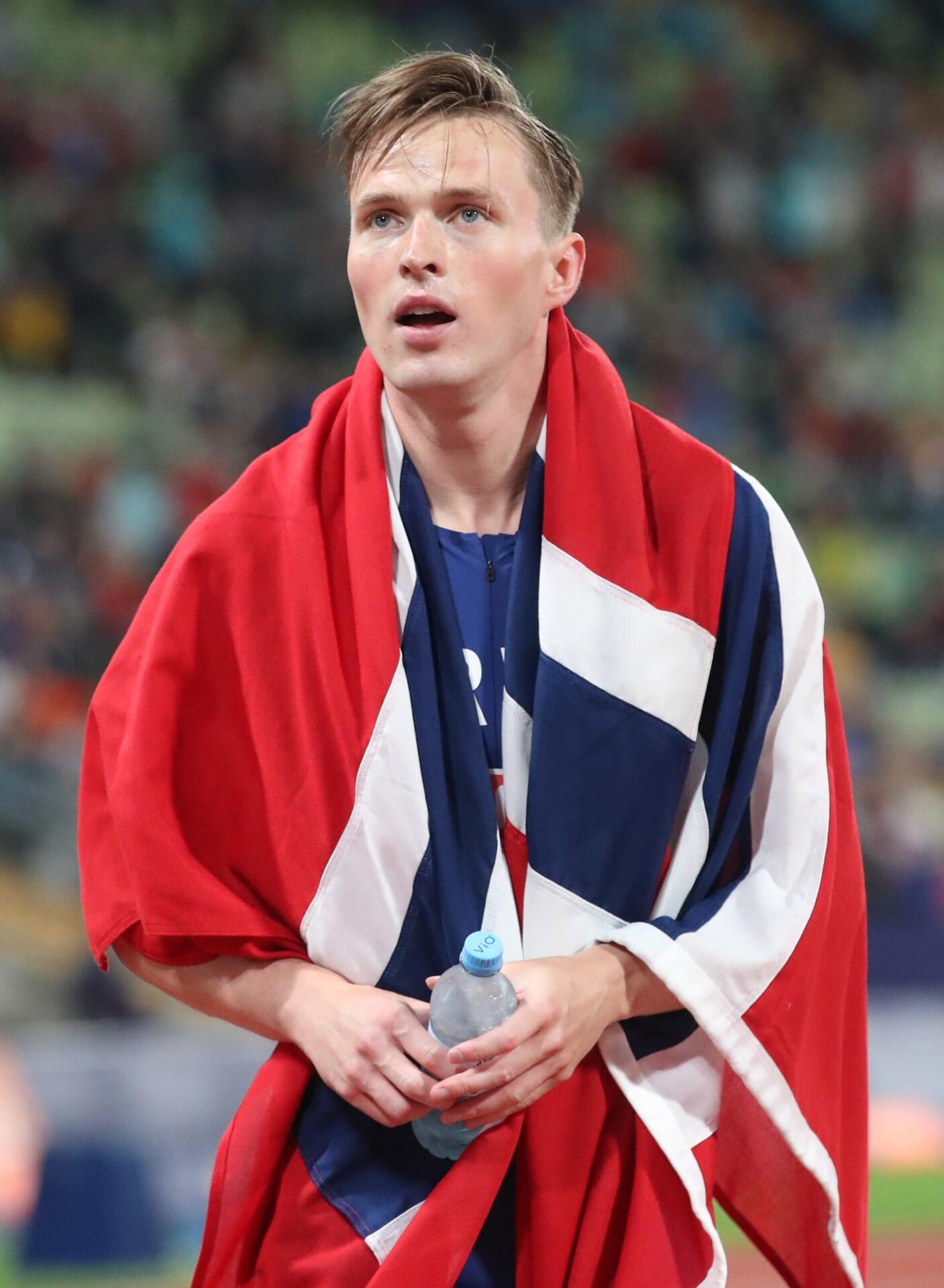
The next summer the Dream Mile finally got a Norwegian winner. Jakob Ingebrigtsen ran 3:46.46 in June 2022 — a national record, a Diamond League record, the fastest mile anywhere in 21 years, and fourteen hundredths short of Cram's stadium mark. In 2024, with the meeting programming a 1500 m instead, he beat Timothy Cheruiyot by throwing himself over the line in 3:29.74. Bislett finishes have a way of coming down to the last stride.
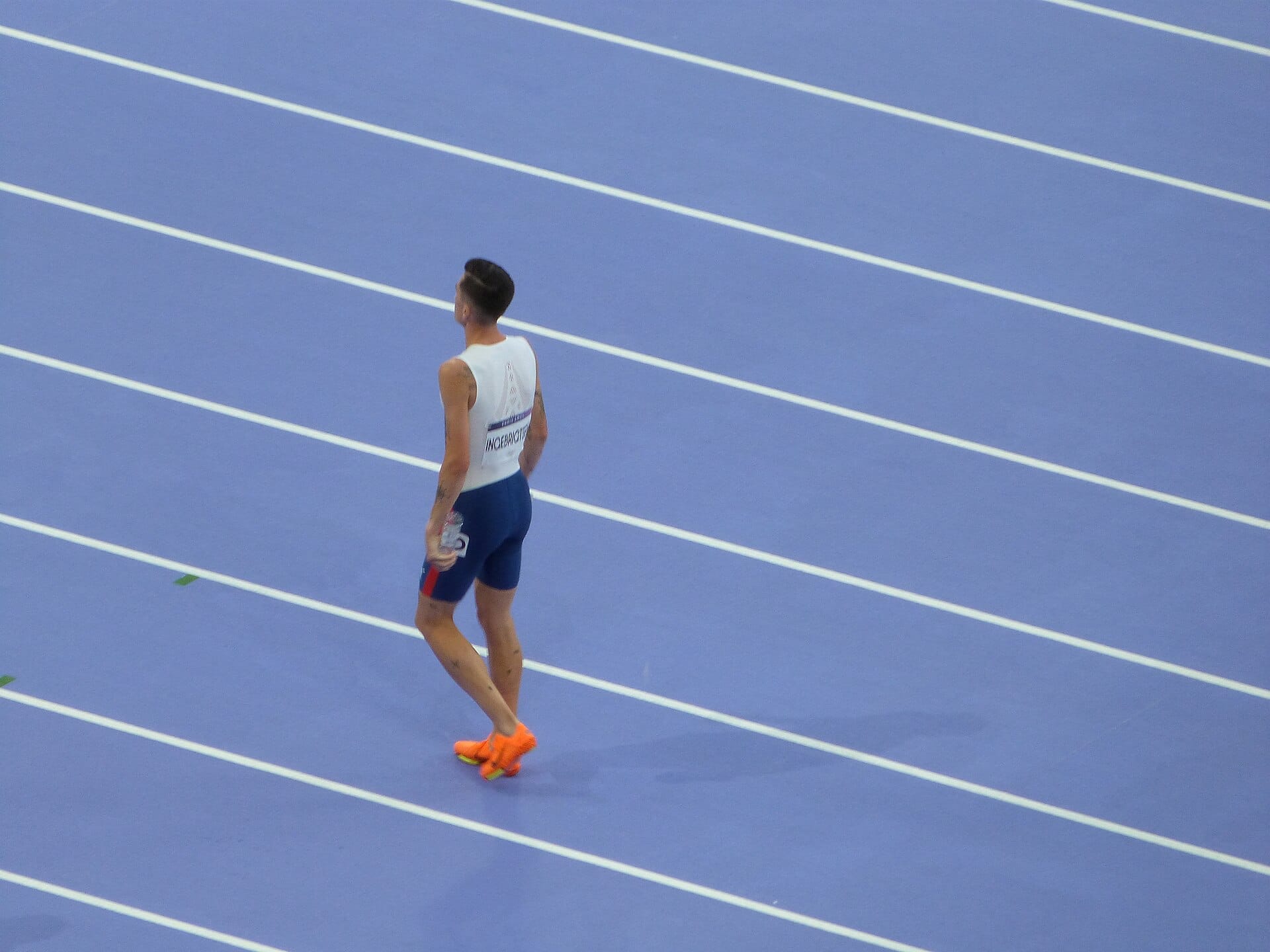
Ingebrigtsen's 2026 read like two different seasons. Achilles surgery in early February was expected to erase his year; instead he returned at the European Championships in Birmingham in August, and on 11 September — seven months and five days after the operation — he won the 5000 m at the first World Athletics Ultimate Championship in Budapest in 12:59.24, closing the last 100 metres in 12.60. The Bislett prodigy is back to collecting titles.
The 2026 Edition, by Hundredths
The Dream Mile keeps minting champions on its way out of the stadium. Portugal's Isaac Nader won the 2025 edition in a national record 3:48.25 — eleven men broke 3:50 behind him — and three months later he was the world 1500 m champion in Tokyo. The race reads like a preview sheet: win at Bislett in June, collect medals in September.
The 2026 meeting, on 10 June, needed a photo to settle it. Timothy Cheruiyot and Yared Nuguse both clocked 3:48.21 — the fastest outdoor mile in the world at that point of the season. The scoreboard first named Nuguse, who celebrated; the official reading reversed it, and Cheruiyot, the 2019 world champion, had his first Diamond League win since 2021. Cameron Myers took third in 3:48.35.

The 800 m went even closer to the wire. Cooper Lutkenhaus, seventeen years old and unbeaten as a professional over the distance, dived across the line to beat Olympic and world champion Emmanuel Wanyonyi by one hundredth, 1:42.08 — a world lead and joint 14th on the all-time list, from a boy who cannot yet vote in his own country. Elsewhere on the night Julien Alfred won the 100 m in 10.76, Letsile Tebogo took the 200 m in a season's best 19.84, and Alison dos Santos beat Karsten Warholm at home again, 46.89 to 47.40.
Sponsor Kit: The Meeting Universe
One rule sorts every competition this series covers into two universes: championships mean federation kit, meetings mean sponsor kit. The Bislett Games sit squarely in the second. Nobody lines up in Oslo for a national team — every athlete is invited as an individual and races in the gear of the brand or squad that pays them, which is why a Dream Mile start list reads like a catalogue of liveries rather than flags.
The house rule for reading any competition: championships mean federation kit, leagues and meetings mean sponsor kit. At a Worlds, an Olympics or the Ultimate Championship, everyone wears national colours; on a Diamond League night like Bislett's, contracted athletes race in their brand's gear. That second universe — the sponsor and team lines — is what our brand archive collects. How the whole circuit works has its own chapter in this series.
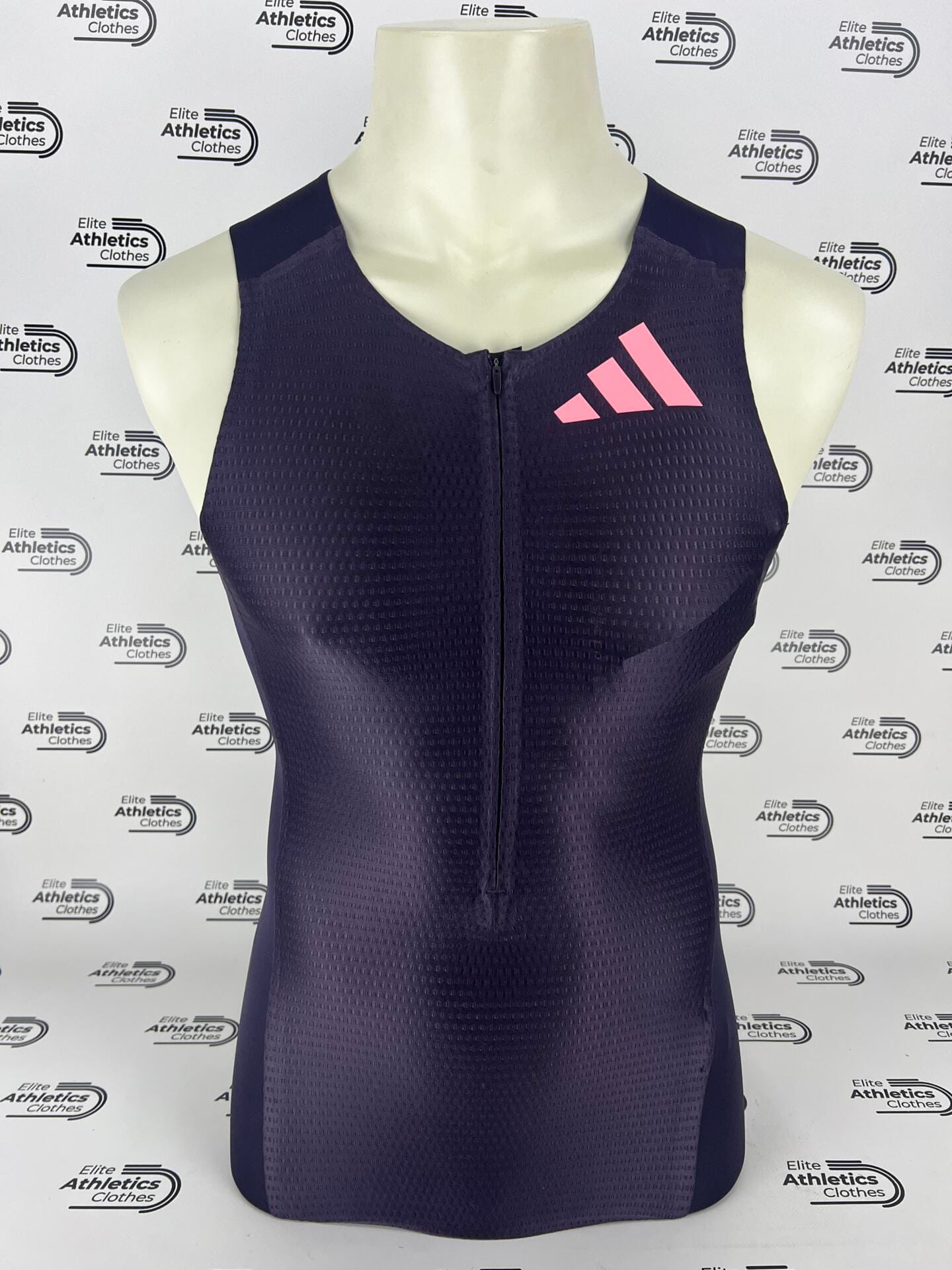 Sponsor kit · in the archiveAdidas Pro Elite Team 2024 Rheon SingletA race singlet from the adidas Pro Elite line — athlete-issue, never retail. Meetings like the Bislett Games are raced in exactly this universe of kit: the gear of whoever pays the athlete, not the flag.160,00 €View piece →
That is why this page points at the brand shelves rather than any single nation's rail — though the nations are one click away: the British trio's story runs through our Great Britain hub, the home heroes' through the Norway hub, and Nader's through Portugal's. The athlete-issued lines behind the start lists live in Nike Pro Elite and adidas Pro Elite, and the rail below holds one piece from each of the eight lines in the archive.
Raced in Sponsor Kit
A Dream Mile field wears brand liveries, not flags. These are athlete-issued pieces from the sponsor and team lines in the archive — one per line, from the same universe that fills a Bislett start list in June.
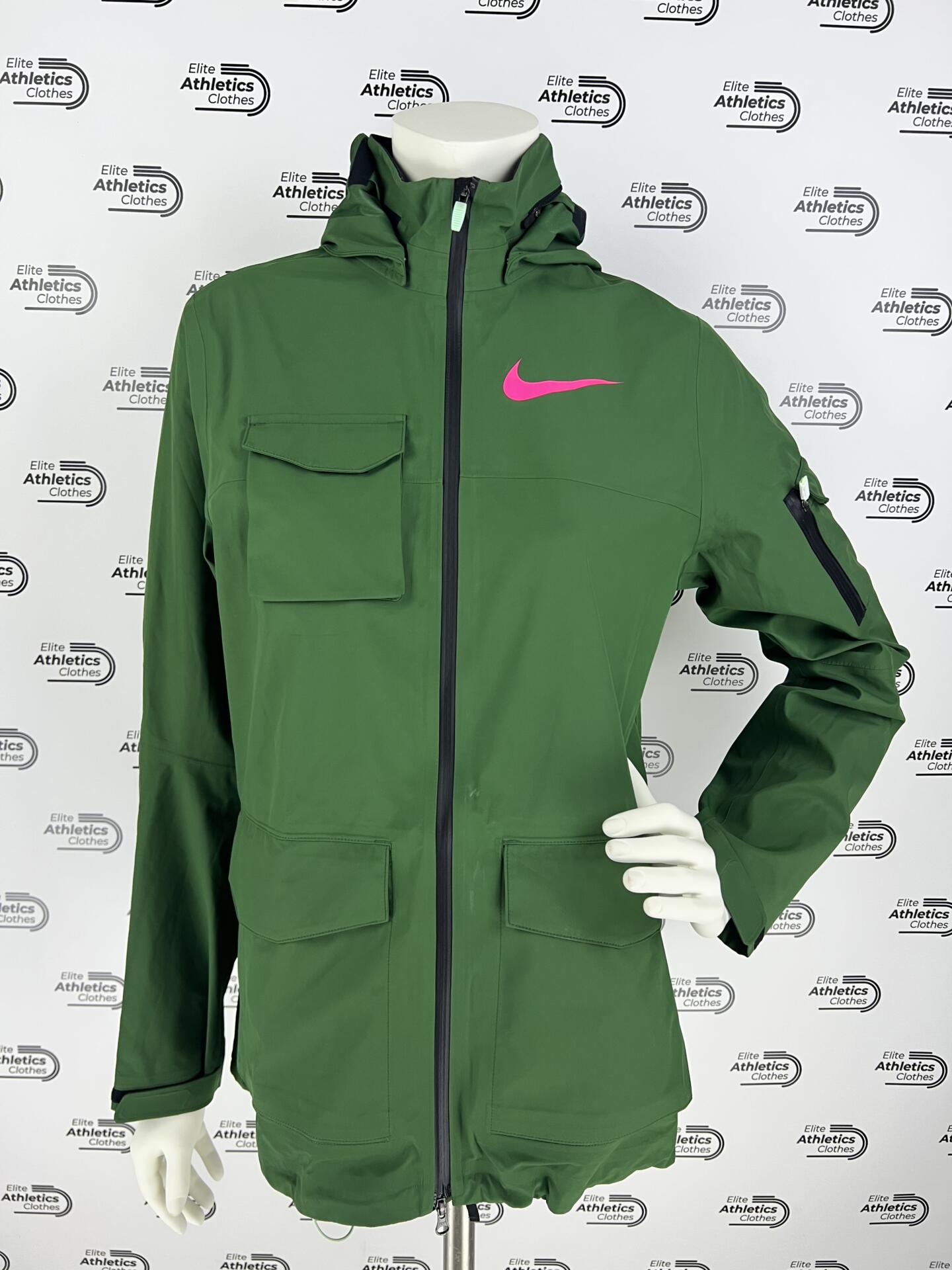 Nike Pro Elite 2023 Women Storm Fit Jacket150,00 €View Piece →adidas
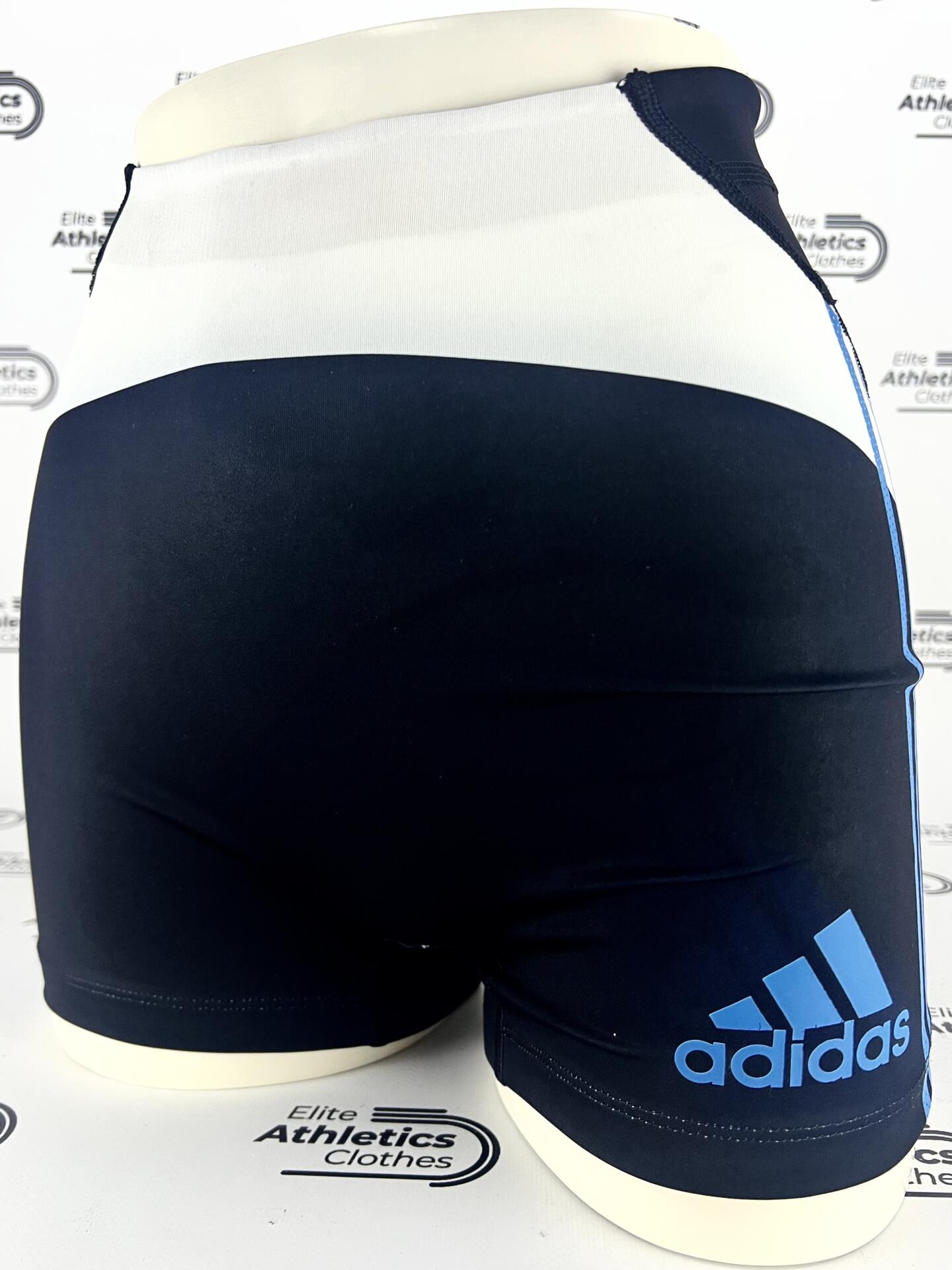 Adidas Pro Elite 2022 Women Booty Short Tights100,00 €View Piece →NN Running
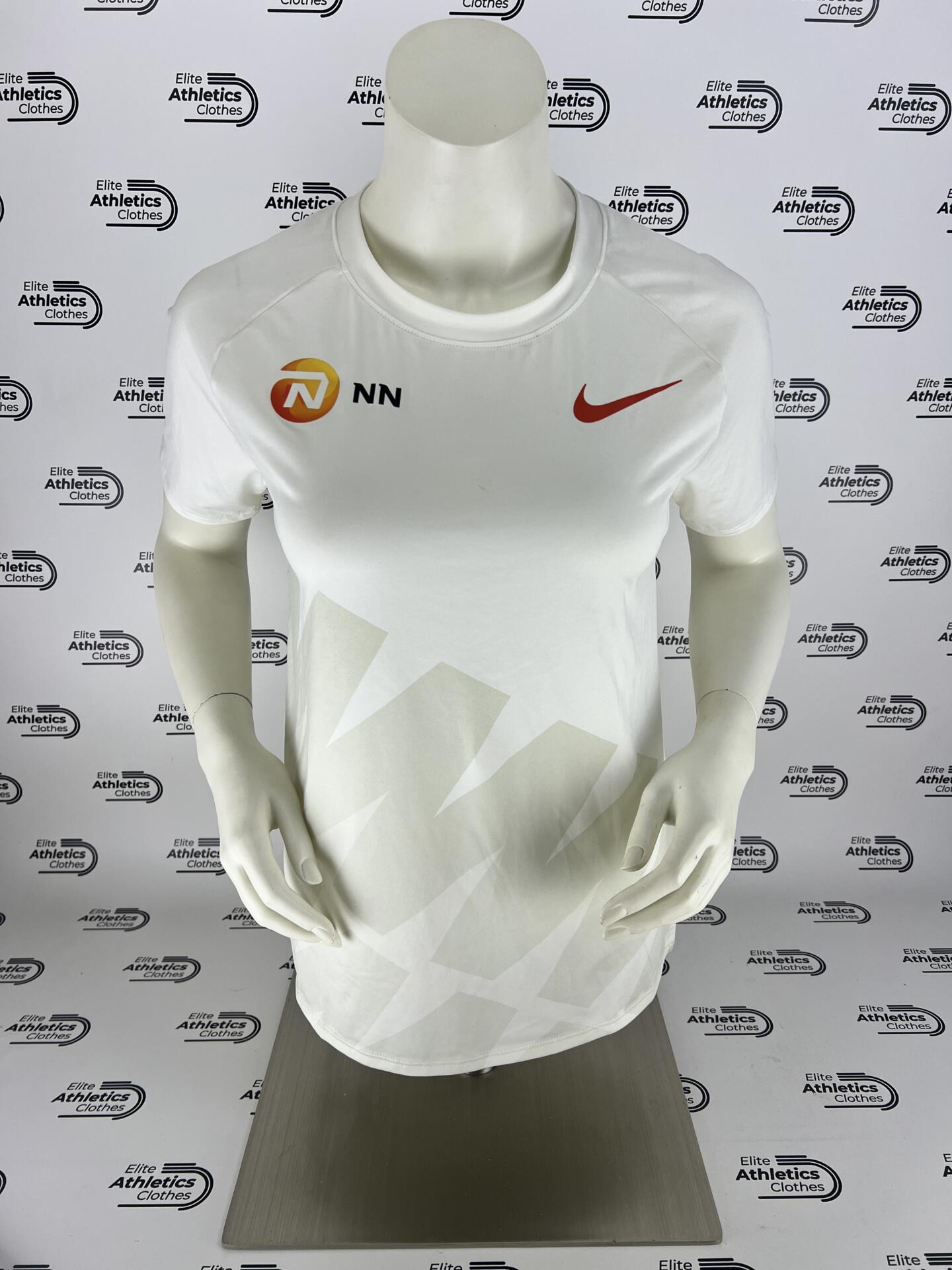 INEOS X Nike NN Running Team Pro Elite 2020/2021 Women T-Shirt150,00 €View Piece →Rosa & Co
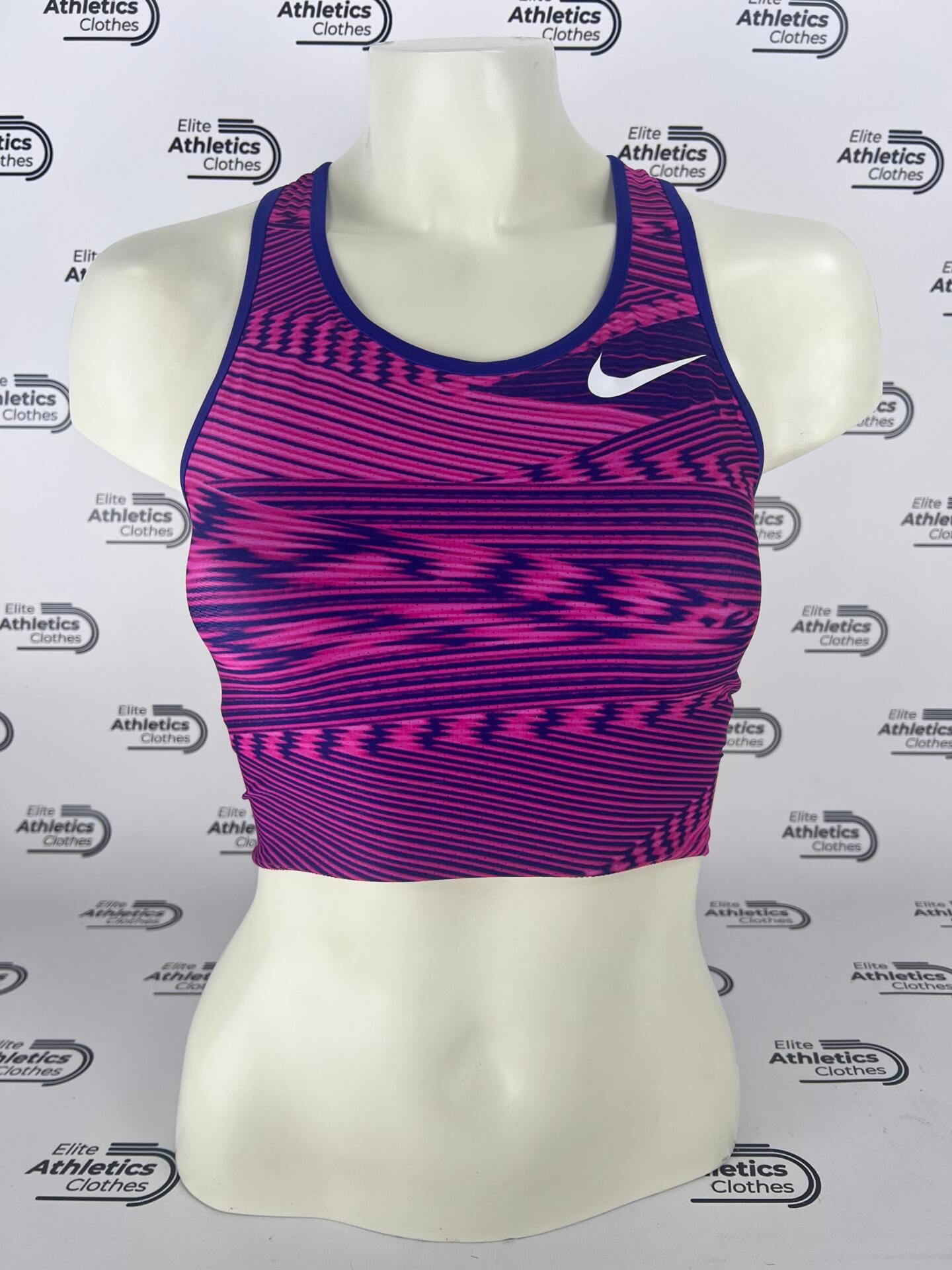 Nike Rosa & Co. Pro Elite 2019 Women Crop Top250,00 €View Piece →Asics
 Asics Actibreeze Distance Singlet100,00 €View Piece →On
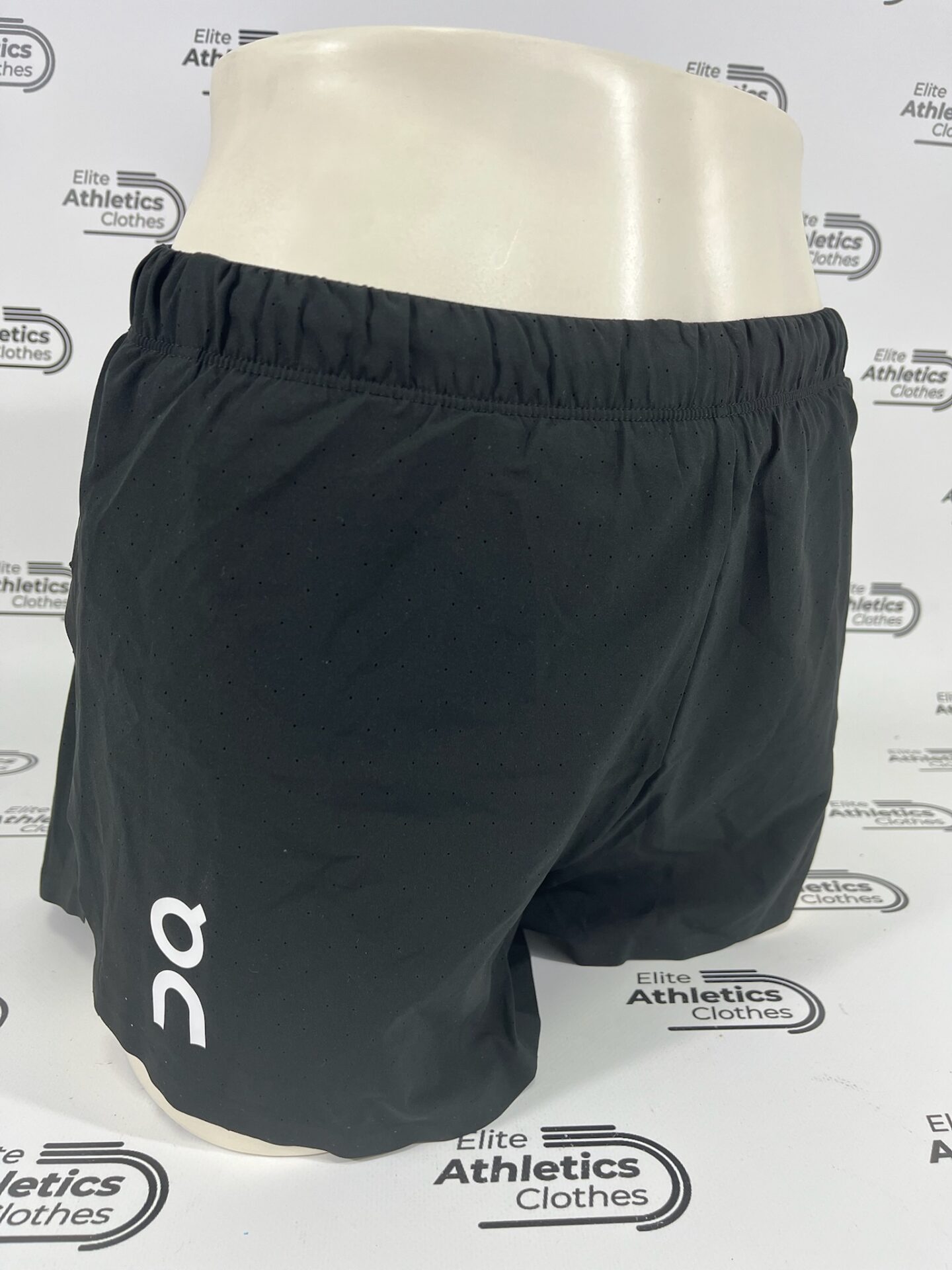 ON Running Pro Elite 2025 Women Black Racing Shorts120,00 €View Piece →Gold Medallist
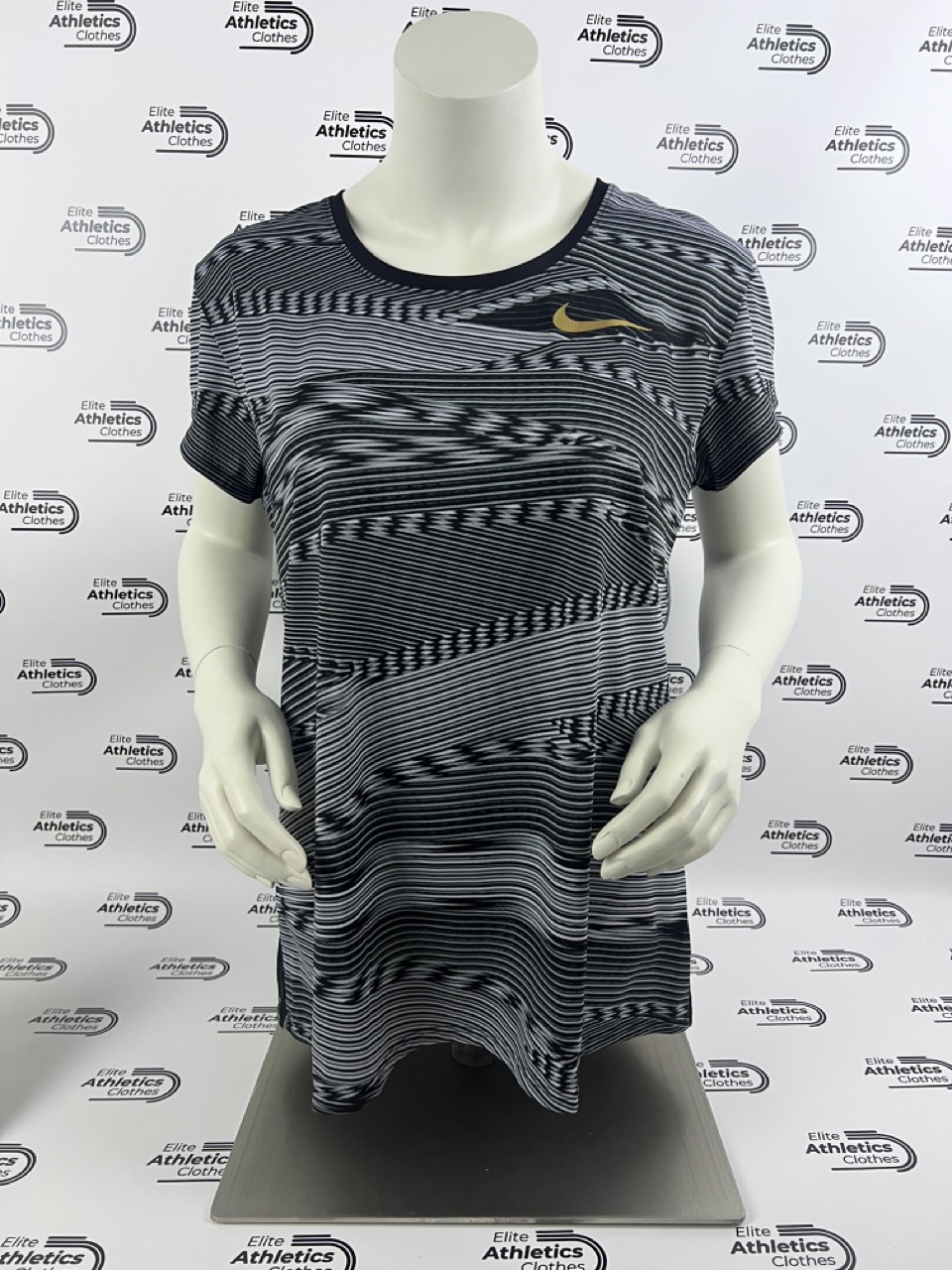 Nike Gold Medallist Pro Elite 2019 Women T-Shirt140,00 €View Piece →Clubs
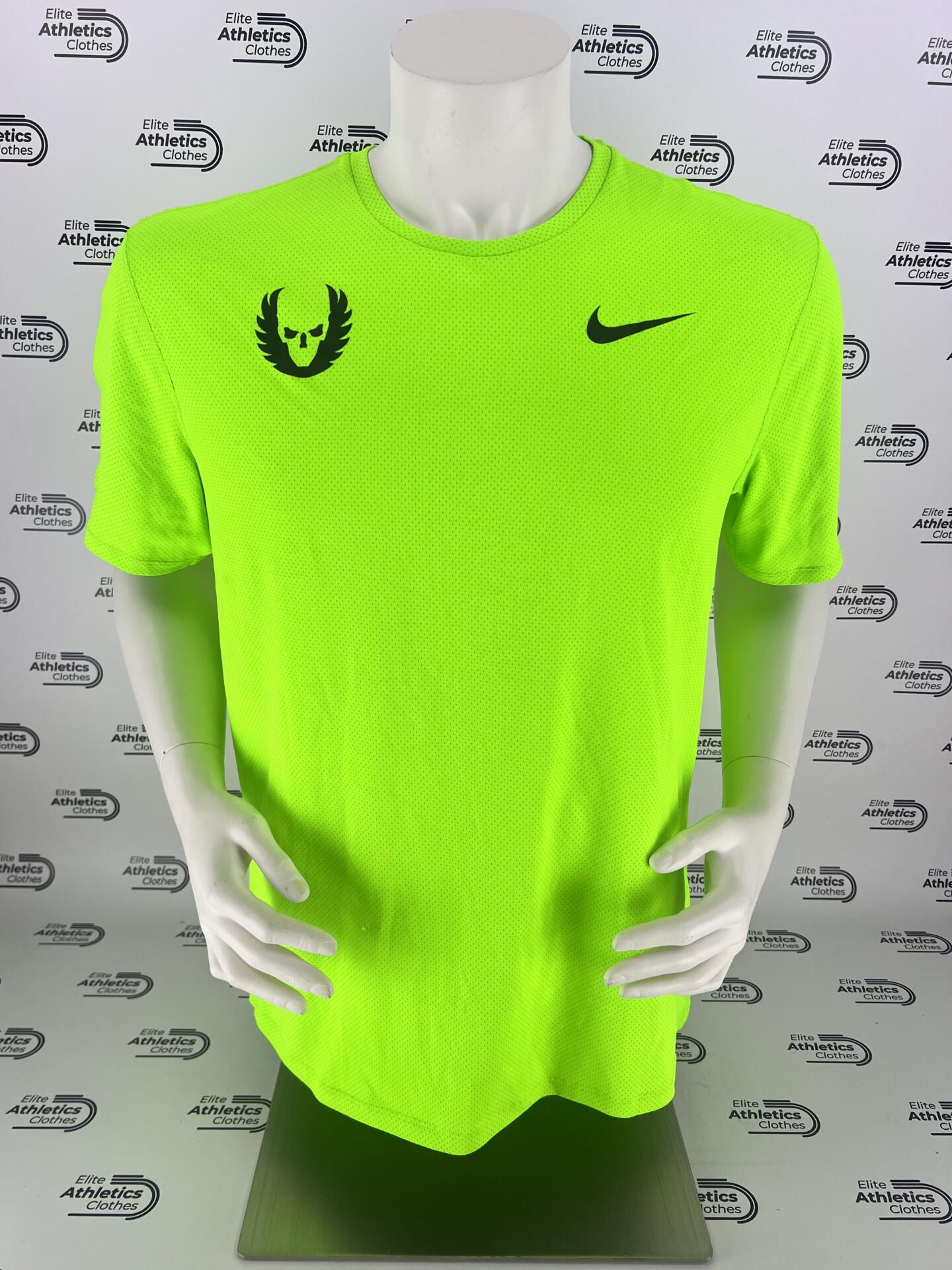 Nike Oregon Project Team Pro Elite T-Shirt240,00 €View Piece →
What are the Bislett Games?
The Bislett Games are Oslo's annual stop on the Diamond League, held at Bislett Stadium since 1965. The stadium is the most prolific record ground in athletics — around 70 world records, with the meeting's signature race, the Dream Mile, closing the programme since 1974.
What is the Dream Mile?
The Dream Mile is the mile race that traditionally closes the Bislett Games in Oslo, run under that name since 1974. The mile world record was broken in it three times — by Sebastian Coe in 1979, Steve Ovett in 1980 and Steve Cram in 1985 — and Cram's 3:46.32 remains the fastest mile ever run at the stadium. Jakob Ingebrigtsen became its first Norwegian winner in 2022; Timothy Cheruiyot won the 2026 edition in a photo finish, with both he and Yared Nuguse timed at 3:48.21.
How many world records have been set at Bislett Stadium?
The most-quoted count is 70 athletics world records — some lists say 69 — plus 25 speed skating world records from the years the stadium doubled as an ice oval. Recent additions include Karsten Warholm's 46.70 in the 400 m hurdles on 1 July 2021, set in front of his home crowd.
Who has run the fastest mile at Bislett?
Steve Cram, with the 3:46.32 world record he ran to beat Sebastian Coe on 27 July 1985 — part of a night that produced three world records in about three hours. No one has run a faster mile at the stadium since; Jakob Ingebrigtsen came closest with 3:46.46 in 2022. The world record itself has moved on and now stands at Josh Kerr's 3:42.66, run in London in July 2026.
Sources and References
- World Athletics Heritage — 40 years on: Kristiansen, Aouita and Cram — the three world records of 27 July 1985
- Sports Illustrated Vault — Warming up at world-record pace (July 1980) — the Coe–Ovett double night of 1 July 1980
- Bring Back the Mile — mile record progression — the world record chain from Walker 1975 to Kerr 2026
- World Athletics Heritage — the night Moorcroft took Bislett's breath away — the 13:00.41 of 7 July 1982
- World Athletics — Warholm breaks world 400m hurdles record with 46.70 in Oslo — the home world record of 1 July 2021
- European Athletics — Ingebrigtsen storms to a 3:46.46 mile in Oslo — the first Norwegian Dream Mile win, 2022
- World Athletics — Lutkenhaus and Cheruiyot win brilliant battles in Oslo — the 2026 results: the 3:48.21 photo finish and the 1:42.08
- World Athletics Heritage — remembering Waitz's first world record — the 8:46.6 of 24 June 1975
- Olympics.com — Bislett Stadium — the record counts, the 1952 Winter Games and the 2005 rebuild